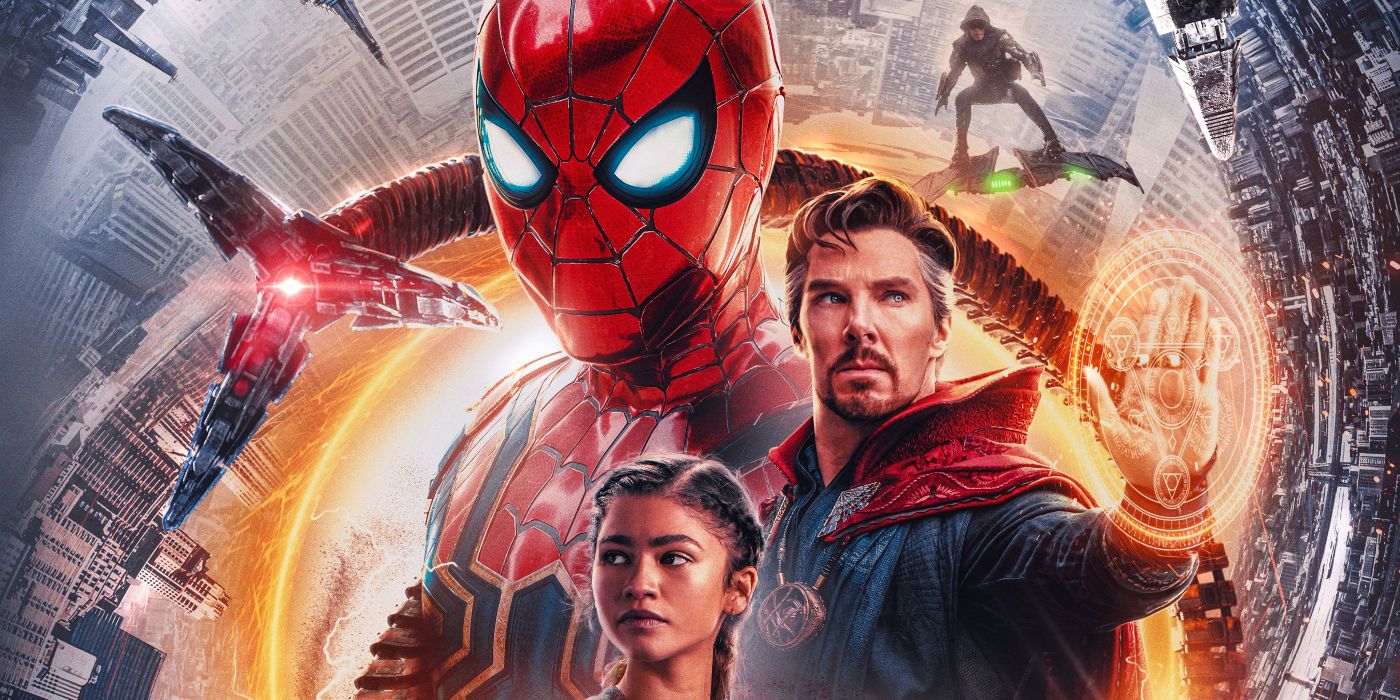
Rated PG-13 for sequences of action/violence and some language
Profanity:
Some strong language
Alcohol/ Drugs:
None
Violence/ Scariness:
Extended comic book action and violence, characters injured and reference to sad deaths
Diversity Issues:
Diverse characters
Date Released to Theaters:
July 31, 2026
Copyright 2026 Sony
We’ve been warned even more than ususal not to allow any spoilers in our reviews, so this is the best I can do while leaving the best surprises in “Spider-Man: Brand New Day” for you to discover.
I can remind you that in the last episode, “No Way Home” Peter’s beloved Aunt May (Marisa Tomei) was killed by the Green Goblin and to protect the rest of the people he loved he caused them to lose all memories of him.
We’re brought up to date with a terrific montage of Spidey capturing one villain after another, including Scorpion (Michael Mando). Headlines congratulate him for just about eliminating crime from the city.
Now, Spider-Man (Tom Holland) is an adult and dealing with being utterly alone by spending every waking moment fighting crime and pretending he is not being crushed by loneliness. He brings flowers to Aunt May’s grave. He misses his best friend, Ned (Jacob Batalon) and the love of his life, MJ (Zendaya) and watches their Instagram posts about their time at MIT. His only real human contact is with an appreciative Detective Jean DeWolff (Liza Colón-Zayas).
The strain takes a toll. “Sometimes Spider-Man does the right thing even if it breaks Peter Parker’s heart.” Being full-time Spider-Man without any time for Peter may be a factor in some changes that are occuring in his spider-powers. We will see other characters struggle with the duality of their super-ness and their humanness, a theme of the film.
And then a new villian seems impossible to find, much less stop. Someone is able to “jump” into the minds of just about anyone, and breaks the Scorpion out of prison. The government Damage Control department led by Bill Metzger (Tramell Tillman of “Severance”), which adapts bad-guy technoloy for good-guy purposes, asks him to track the mystery villain down. With some guidance by three familiar characters from the MCU, he gets a little closer.
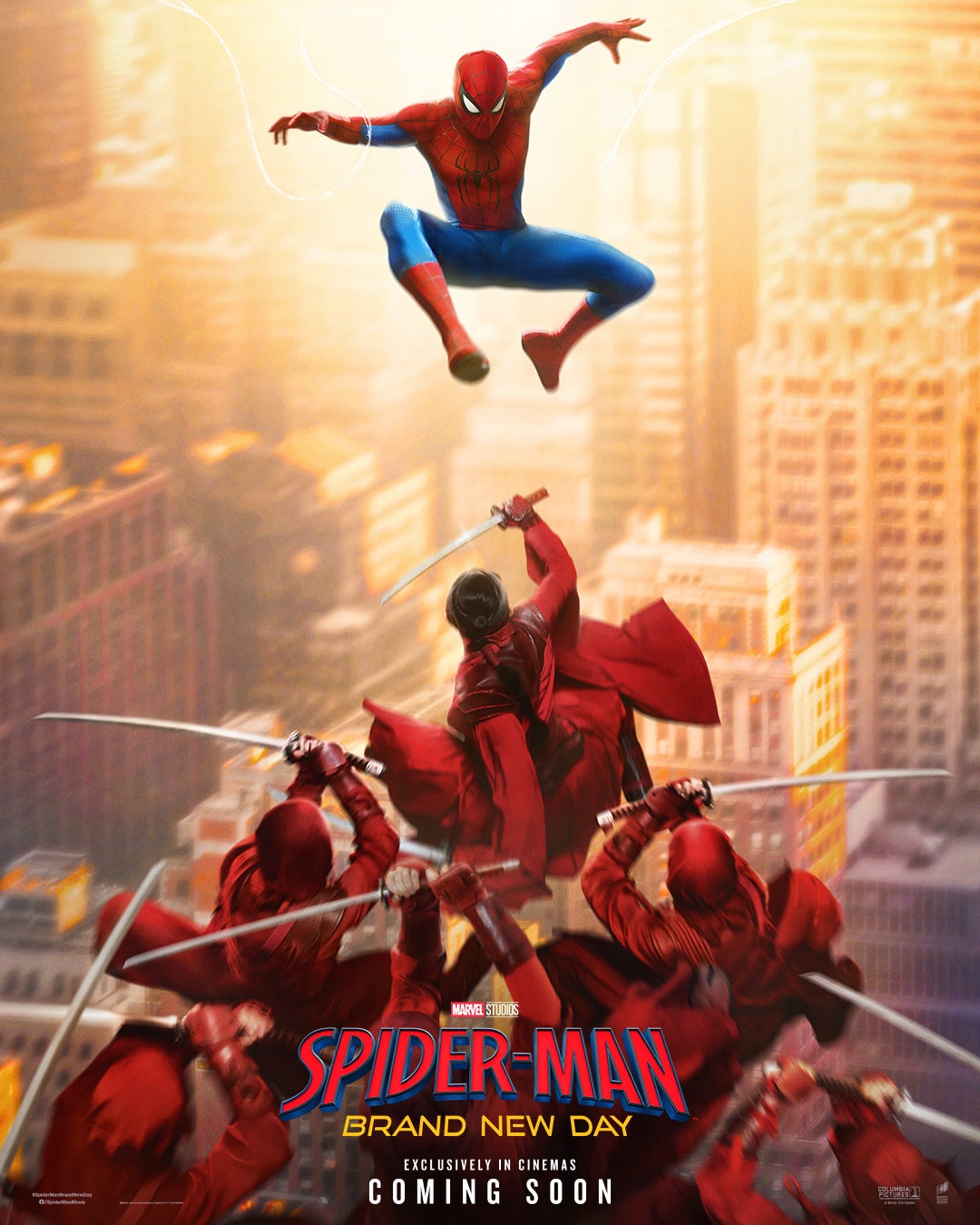
Director Destin Daniel Cretton handles the drama and the action well, especially a great fight with The Hand, evil, red-cloaked ninja assassins.
Spider-Man and Tom Holland have come a long way. Peter Parker was just 14 when we first saw Holland play a small role in “Captain America: Civil War” and 15 as lead in “Spider-Man: Homecoming.” He was gone a few years in the Snap, but came back as a 16-year-old. Both he and Zendaya have gracefully grown with their older but wiser characters and their performances are thoughtful and as grounded in a way that balances the heightened tone of any story that involves a person swinging on spider-webs can be. It is sweet to see chemistry of the real-life newlyweds and impressive to compare their performances (and one other actor’s) to what they did a couple of weeks ago in “The Odyssey.” Clearly, they not only treat both with seriousness and commitment, but they also give each genre and its fans the respect it deserves.
Now, who’s ready for “Avengers: Doomsday!”
Parents should know that this is a comic book movie with extensive peril and action. Characters are badly injured and dealing with two very sad, off-camera deaths. There is also some strong language.
Family discussion: Did you catch the Gandolf reference? How do you know what is a big potato and what is a small potato? Do you agree with Spider-Man’s decision about who to help? Which character’s powers would you most like to have, and how would you balance your superhero (or supervillain) life with your human life?
If you like this, try: ALL of the Spider-Man movies, so you can compare the Tobey Maguire, Andrew Garfield, and Tom Holland versions.
Extenseive war-time peril and violence, monsters, many characters injured and killed, graphic and disturbing images
Diversity Issues:
None
Date Released to Theaters:
July 17, 2026
Copyright 2026 Universal
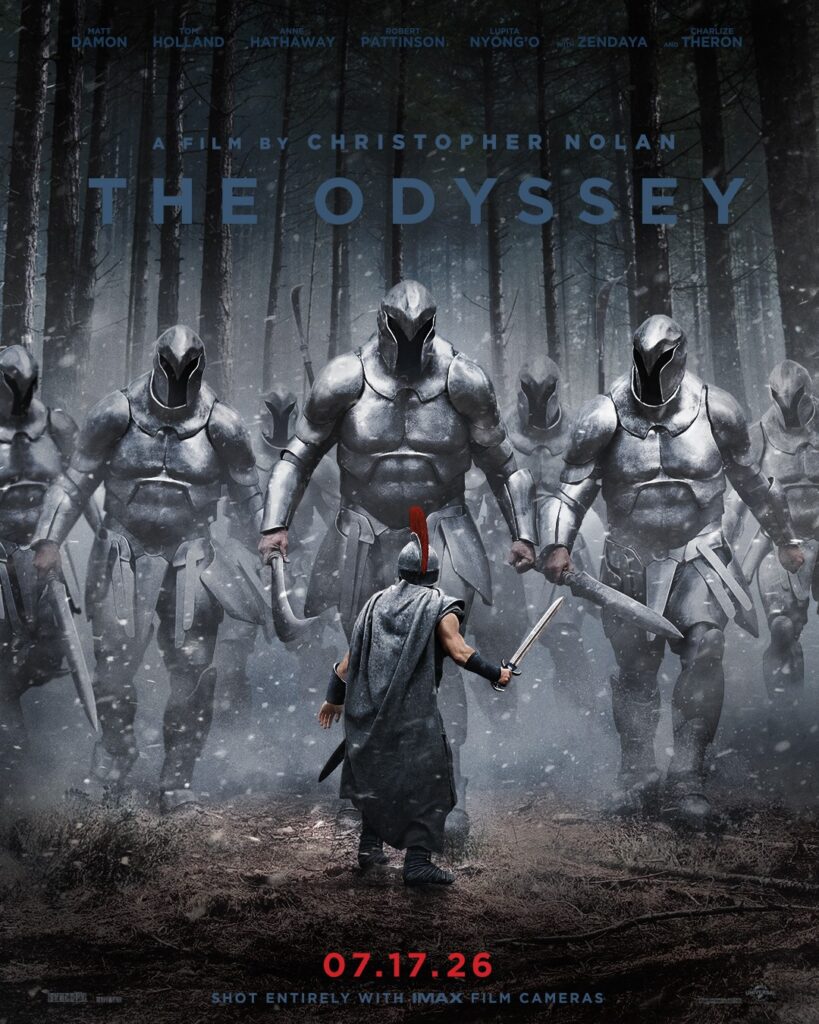
One of the foundational stories of the Western canon has a grand, sweeping, meticulously diligent new version in writer/director Christopher Nolan’s epic film, bristling with Oscar-winning talent and impressive seriousness of purpose. It is, with a few significant exceptions, true to Homer’s story dating back to 700-800 BC. But there are also vestigial reflections of Nolan’s previous film, “Oppenheimer,” both stories of men who must grapple with the consquences of their destructive, even ruthless, acts during wartime.
Matt Damon plays one of history’s most complex heroes, Odysseus, whose name and story still define journeys of adventure thousands of years later. The Odyssey follows Odysseus on his long voyage home after the victory of the Greeks, led by Agamemnon, with Achilles, Ajax, and Odysseus, in the Trojan War. Paris, a Trojan prince, had been asked to decide which of three goddesses was the most beautiful. Aphrodite, the goddess of love, bribed him by saying that if he picked her, she would give him the most beautiful human woman in the world. That woman was Helen (Lupita Nyong’o). She was the wife of the Greek king, Menelaus of Sparta (Jon Bernthal). But she is known throughout history as Helen of Troy, because she was kidnapped (or ran away with) Paris, leading to the war that made her known as “the face that launched a thousand ships.”
That war lasted ten years. It was Odysseus, known for his trickery, who came up with the idea of getting the soliders inside the Trojan’s impenetrable city by hiding in a gigantic statue of a horse, with a soldier named Sinon (Elliot Page) left behind to lie that the Greeks had retreated, leaving the horse as a tribute to the goddess Athena (Zendaya). When the Trojans drag it into the city, the Greek soldiers come out to win a decisive battle and end the war. This story is told in Virgil’s Anead, and in Nolan’s film we see parts of it more than once in flashbacks, part of elliptical, non-linear story-telling that may be confusing to those not familiar with Homer’s tale. (To refresh your memory or just get a quick recap, try this.)
But really, all you need to know is that Odysseus is on his way home, leading his men in (to start with) three boats, hoping to make it back before Agamemnon reaches his home just to be competitive. (Agamemnon will get home first but then be murdered by his wife, Helen’s sister (also Nyong’o).
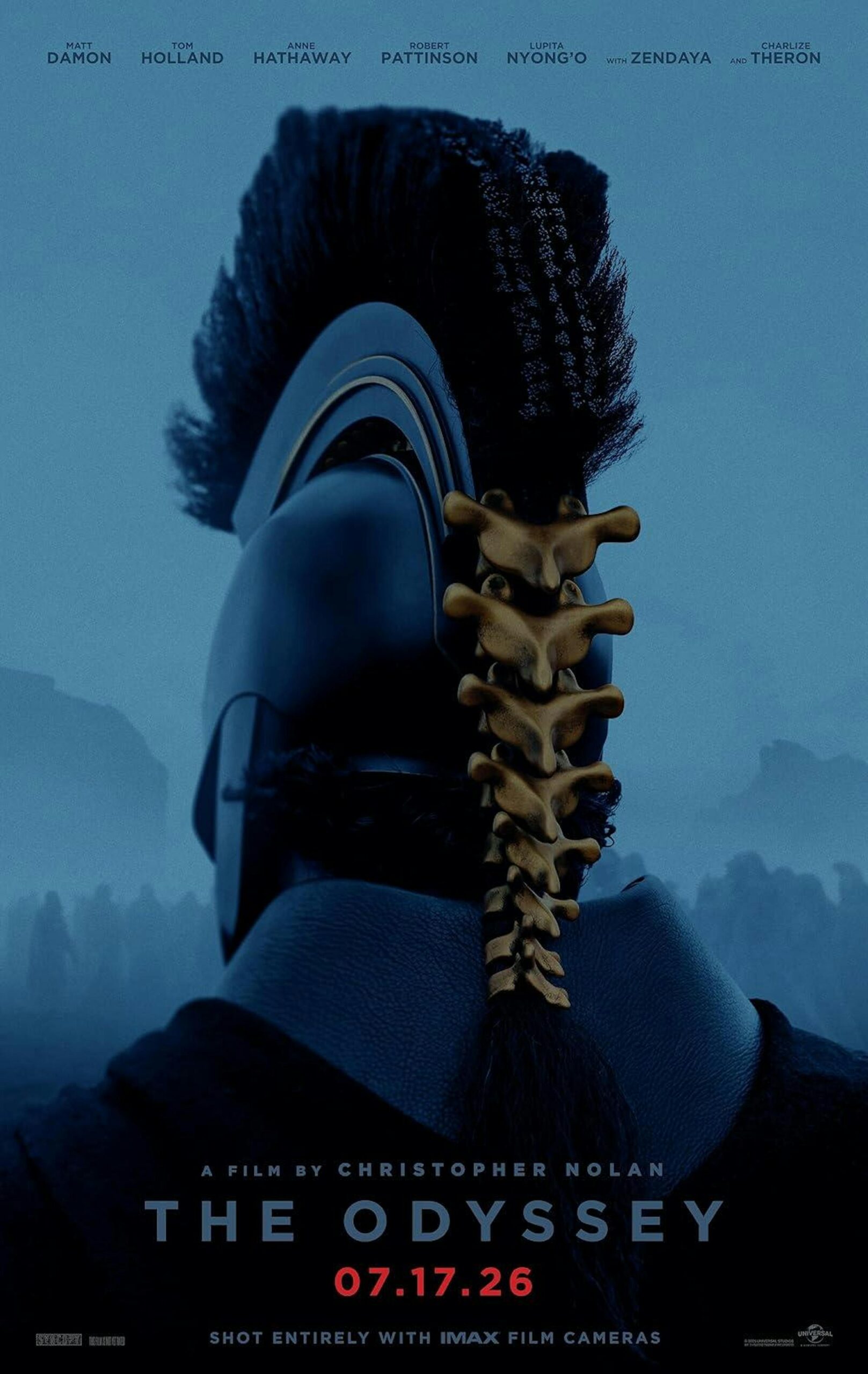
It will take Odysseus a decade, with many stops along the way as the crew tries to replenish their provisions. The most well-known of their adventures are all brought to screen in unprecedented splendor by Nolan, and his “Oppenheimer” team, editor Jennifer Lame, production designer Ruth De Jong, and Oscar-winning cinematographer Hoyte van Hoytema, filming in Greece, Italy, Iceland, Morocco, and Scotland. This is the first-ever feature movie filmed entirely with IMAX cameras (in tribute, you can even get an IMAX camera popcorn bucket) and shown in 70 mm. The visuals are never less than spectacular. Odysseus and his men are traveling by boat and the sky and “the wine-dark sea” Homer described is filmed with a power and grandeur of a true epic. We get a visceral feeling of just how alone these men are, not just before GPS but before maps and navigation, entrusting to the gods to guide them home but knowing that the gods may be even more devious tricksters than Odysseus himself.
Odysseus tries to follow the “laws of Zeus,” particularly with regard to hospitable treatment of strangers, and killing even animals with honor, plucking his bow string to give them a chance to escape. When lives are at stake, though, he will do what is expedient. On their first stop, he leads his men onto an island where a cave is set up as a home, with a cozy fire. According to his beliefs about what the laws of Zeus require and assuming that the inhabitant of the cave will believe the same, he orders his men to stoke the fire to welcome their host. But the inhabitant is not a man. He is a gigantic cyclops, and in a genuinely terrifying moment, as soon as he enters the cave, he grabs one of the men and bites his head off. It is hard to understand why Nolan chose to omit one of the key elements of the story, Odysseus refusing to give the cyclops his name, instead saying he was called “Noman.” This is a very significant part of the story that is parallel to his not using his own name when he returns home, both relating to his sense of himself and his identity.
After a few more deaths, Odysseus is able to lead his men to an escape. But he violates his obligation to give the murdered men a decent burial. The conflict between his obligations under the law of Zeus and the choices to save as many lives as possible are a theme.
Copyright 2026 Universal
This conflict is presented in the immediate consequences of killing the cyclops. Odysseus learns that the monster was the son of the god Poseiden, who will now express his grief and anger by keeping them from reaching home. As in Homer’s original story, it explores the theme of human agency and the interference of the gods. We often see Odysseus near the goddess Athena.
Other adventures include two enchantresses. Calypso ( Charlize Theron) feeds Odysseus lotus flowers that make him forget the PTSD of his agonizing choices but also the fact that he has a family. Circe (Samatha Morton) turns his famished men into pigs (an extraordinary scene of transformation and body horror), and we see how clever Odysseus is in figuring out what she has done and forcing her to reverse the spell and help him get home. He travels to Hades where he meets the ghost of Sinon. He straps himself to the mast of his ship while his men have their ears blocked with wax to pass through the jagged rocks where the sirens sing men to their deaths.
Meanwhile, his wife, Penelope (Anne Hathaway) and son Telemachus (Tom Holland) are back in Ithaca, with dozens of suitors eating their food, drinking their wine, and trying to get Penelope to marry one of them so he can take over the kingdom. The most odious of the suitors is Antinous (Robert Pattinson), a maniuplative schemer who got Sinon to take his place in the war. Telemachus leaves Ithaca to see if he can find any news of his father from Menelaus.
It will take all of Odysseus’ craftiness and strength to defeat the suitors and reunite with his wife and son. Damon’s performance shows us all of the complexity that makes Odysseus an eternally enthralling hero. Pattinson continues to impress as he subverts his considerable looks and charisma to create a despicable, cowardly character. John Leguizamo is superb as the loyal Eumaeus. Even the three-hour run time cannot find enough time for Theron, Zendaya, and Morton, but each of those encounters could be an entire movie.
Nolan’s screenplay veers into colloquialisms that take us out of the movie now and then. But he has an unsurpassed gift for the language of cinema. The scenes of exploration, combat, and in Penelope’s castle in Ithaca are striking and narratively clear. Penelope fends off the suitors by telling them she cannot move forward until she finishes weaving a burial shroud for her late father-in-law. She weaves during the day and then unravels it at night. She appears modestly behind a screen as the suitors crowd the dining hall.
Nolan’s style is chilly and cerebral, with the female characters thinly sketched and too often just creating problems for or taking power away from men. That may be one reason that draws him to a story where a military hero has encounters with literal enchantresses who impede his progress. His exploration here of the conflicts even successful warriors feel about what they have done and what they have seen is moving. He made very significant changes to Homer’s concluding scenes (admittedly, contested by some scholars as added by others later). But the ending he chose has the same problems as the disputed version and it undermines the weight of what he has presented so compellingly throughout the story.
Parents should know that this film is extremely violence with many characters injured and killed, many with throats slit, monsters, ghosts, and graphic and disturbing images. Odysseus is drugged and characters drink wine. There is some strong language.
Family discussion: Why is this one of the most enduring stories in history? What does Odysseus regret the most? What decisions did he make that you think were wrong?
If you like this, try: the book (Fagles or Wilson translation) and a modern re-imagining from the Coen brothers, “O Brother Where Art Thou.”
Extended discussion of school shootings, rifle, accident causes deafness
Diversity Issues:
Diverse characters
Date Released to Theaters:
April 3, 2026
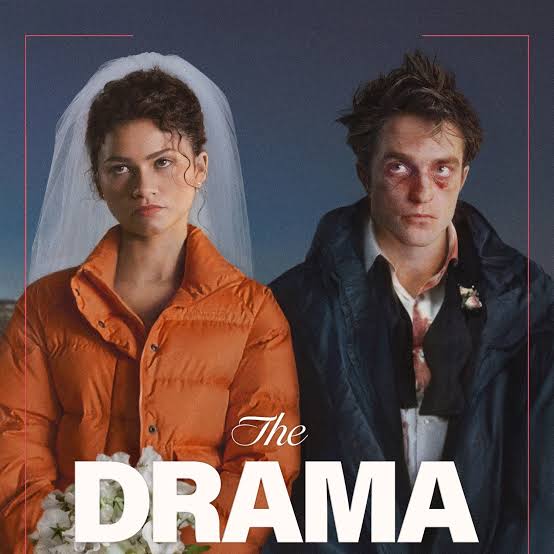
Love is the great human adventure but it is also the great human conundrum, which is why it drives us crazy. And also by there are so many stories, songs, paintings, novels, and theories about it. We all want it. And we are all terrified about being vulnerable enough to accept it, knowing we might come to depend on it and then lose it. And that presents itself in the core conflict. We want to be loved, which means being known. But if we allow ourselves to be known, we understand that we might scare off the very person we most want to love us. That is the precipice of intimacy that is very seldom . And that is the subject of “The Drama,” which has the courage to take on this conflict. It just doesn’t do a very good job. It’s non-stop cringe.
Copyright A24 2026
It’s also the kind of movie actors like to be in because it presents them with some very intriguing acting challenges, and if you can handle the cringe, you will appreciate the performances. They are as excellent as we would expect from four of the best young actors working today.
The movie begins with a close-up of a very pretty ear. It belongs to Emma (Zendaya), who is reading a novel in a coffee shop. She has an earbud in the other ear. Charlie (Robert Pattinson) wants to find a way to talk to her, so he quickly looks up her book on GoodReads so he can pretend he read it. She does not respond. He thinks he’s blown it. But she did not hear him. She is deaf in that other ear. She encourages him to try again. And she forgives him on their first date when he has to confess that he never read the book.
That’s a flashback. In the movie’s present time, it is just a couple of days before their wedding and they are working on the speeches they will make after the ceremony, explaining what they love most about each other. Charlie is getting some help from his best man, Mike (Mamoudou Athie). Everything seems all set for happily ever after.
But then, at a tasting dinner with Mike and his wife, Rachel (Alaina Haim), who is Emma’s maid of honor, they all get a little tipsy (“This isn’t a bar,” the caterer mutters), and everyone makes the first of a series of excruciatingly painful mistakes. They decide they should each tell the story of the worst thing they ever did. And Emma’s is so shocking to the other three that it shatters their understanding of their relationship. Charlie starts to panic. He pesters Emma with questions, not trying so much to understand as he is to find a way to feel better about making a lifetime commitment. There’s a certain amount of projectile vomiting. And some more mistakes that just make things worse.
Some viewers may think Charlie should be concerned about another of Emma’s actions, one happening in the present, more concerning than the one from her mid-teens she picked as her worst. She makes a decision based on questionable evidence and without regard for the consequences. But the script makes this seem more like a distraction than a central counterpoint to the theme.
As noted, the performances are outstanding. In one scene, just after the big reveal, the couple are posing for the wedding photographer and it is an acting class to watch the hesitations and performative re-enactments of their pre-reveal comfort with each other. Their scenes together have an electricity beyond what the script intends. Athie understands the subtlety of Mike’s internal struggle to make everyone to get along, Hailey Benton Gates gives a vivid but layered performance as Charlie’s colleague, who tries to find a way to respond to Charlie’s inappropriate hypothetical as a subordinate who socializes with him (she and her plus one are wedding guests).
There are some sharp moments in the script but it is not up to the level of the settings, the score by Daniel Pemberton, or the performances. There’s not enough substance and way too much cringe.
Parents should know that this movie includes very disturbing content and references to school shootings. Characters use strong and crude language, drink, and use drugs, there are sexual references and explicit situations,
Family discussion: What would you have done if you were Emma? If you were Charlie? What will happen next?
If you like this, try: “Bad Sabbath” and “The Trouble with Jessica”
Rated R for some sexual content, language throughout, and graphic nudity
Profanity:
Very strong language
Alcohol/ Drugs:
Alcohol, smoking
Violence/ Scariness:
Character is injured
Diversity Issues:
Diverse characters
Date Released to Theaters:
April 26, 2024
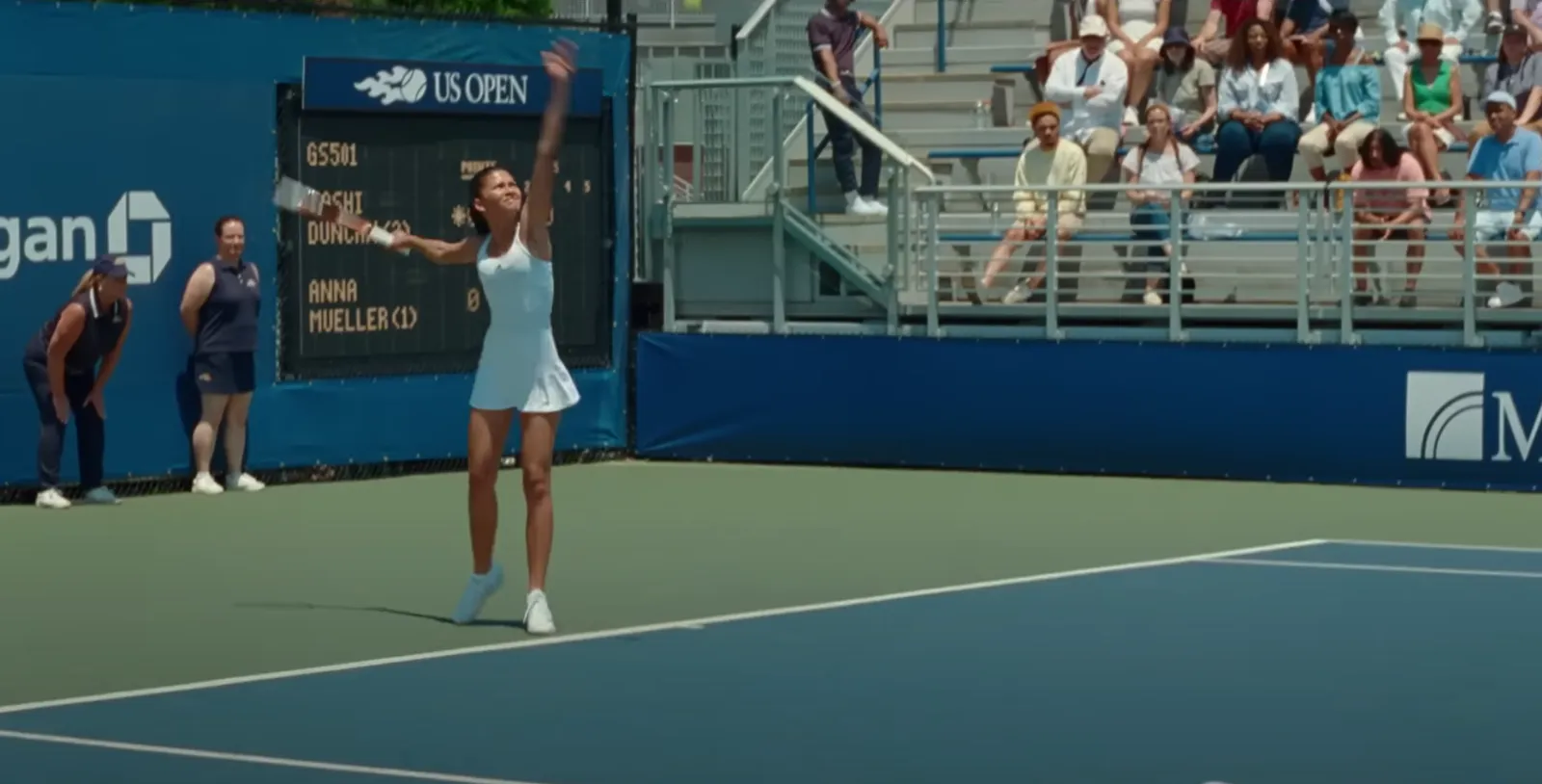
“Challengers” is about a love triangle set in the world of professional tennis. We follow the configurations of the various romantic and sexual encounters like we follow the ball being hurled over the net left to right, right to left. It is beautiful to watch, with cinematography by Sayombhu Mukdeeprom, but more perfume commercial than story. The characters have almost no complexity, increased understanding, or consequences.
Zendaya, who also produced the film, plays Tashi, a young superstar turned coach after a knee injury. Art Donaldson (Mike Faist, Riff in Spielberg’s “West Side Story”) and Patrick Zweig (Josh O’Connor, young Prince Charles in “The Crown”) are best friends, doubles partners, and tennis boarding school roommates. All three are, even by movie star standards, impossibly gorgeous and erotically compelling. In their world, all that matters is using their physicality in the strongest, most competitive manner. This is the film that should be called “Bodies, Bodies, Bodies.”
As in his earlier films, like “Call Me By Your Name” and “Bones and All,” director Luca Guadagnino makes “Challengers” intensely charged with sensual pleasures and, in their more extreme form, obsessions. Unlike “Bones and All,” these characters are not literal cannibals. Only spiritual, metaphorical cannibals.
“I love you,” Art tells Tashi. “I know,” she answers. And not in an endearing Han Solo way. Early on in the film (but late in the timeline), we see her marking up a proposed ad featuring her and Art as coach and tennis champion, wife and husband. The text says “Game Changer.” She adds an s, giving herself equal prominence. In a later scene, a flashback set when Art and Tashi are in college and she and Patrick are in a relationship, she gives him feedback about his tennis game during foreplay. The sex never happens, though, because he does not want her to coach him. “I’m a peer,” he insists before they part in a fury. What he cannot seem to understand is that intensely competitive tennis is all she is.
Challengers trailer
The story takes us back and forth in time, and you have to watch the characters’ hair to remind yourself whether they are teenagers, college students, or in their early 30s, and who is sleeping with who. Note the A to Z in the male characters’ names, and their nickname during their doubles years, Fire and Ice, amplifying their opposition and connection. The three characters are like charged ions, pulled toward each other, unable to touch or to break away.
Parents should know that this is a very explicit and erotically charged film, with non-sexual male nudity (steam room, locker room), very strong language, smoking, and drinking.
Family discussion: How would the story have been different if Tashi had not been injured? Do you think she will try to make her daughter into a tennis star?
If you like this, try: “Personal Best” and “Malcolm and Marie”
Rated PG-13 for sequences of action/violence, some language and brief suggestive comments
Profanity:
Some strong language
Alcohol/ Drugs:
None
Violence/ Scariness:
Extended comic-book/fantasy peril and violence, characters injured and killed, very sad death, some graphic and disturbing images
Diversity Issues:
None
Date Released to Theaters:
December 17, 2021
Date Released to DVD:
April 11, 2022
Copyright Sony 2021“Spider-Man: No Way Home” is everything a comic book movie should be, filled with excitement, heart, humor, and details to delight the fans. There were audible gasps of joy and more than a few tears in the audience when I saw it, and some of them were mine.
It is tough to say much more without spoilers, but I am going to try. I recommend that you see the movie before reading the rest of the review, though, if you want the delight of all of the surprises. Then come back here and see what I have to say to find out if you agree.
It takes off where “Spider-Man: Far From Home” left us, with the public revelation that Spider-Man is high school student Peter Parker. Now, helicopters are hovering outside of the apartment Peter (Tom Holland) shares with Aunt May (Marisa Tomei). Blowhard J. Jonah Jameson (J.K Simmons) is a Limbaugh/O’Reilly-style media personality who calls Spider-Man a terrorist and vigilante, leading to public protests. Aunt May, Spidey’s best friend and “chair guy,” Ned (Jacob Batalon) and girlfriend MJ (Zendaya) are all being harassed. Almost as painful, his high school teacher has set up something of a shrine and the principal tries to reassure him by telling him he is welcome to swing through the halls or crawl on the ceiling.
Peter cannot live his life or help anyone else in this situation, so he goes to one of the other Avengers for help: Dr. Strange (Benedict Cumberbatch). What he needs is a way to make everyone forget they know his secret identity. Strange agrees to help, but Peter interrupts the spell and something goes wrong.
Spoiler alert, last warning: this opens up a portal to the multi-verse, and that lets in some of the classic Spidey villains, including my all-time favorite, Doc Oct (Alfred Molina). There is also an appearance by my least favorite Spider-Man villain, but this film gives him a vastly better role. This leads to some show-stopping confrontations, staged with exceptional dynamism, pacing, and even wit. There are some very funny moments when the super-villains refer to each other as “a brilliant scientist” and when they compare notes. “You fell into something? I fell into something!”
There are more delicious meta-moments, but it is all anchored by real emotion. Peter is a teenager, so the anguish of college applications and the drama of first love are as wrenching as the battles with supervillains to save the planet. Just as the previous entry upended the usual structure of the superhero/supervillain conflict, this one remixes it again, raising the fundamental question about what it is we want or should want from those battles, but cleverly letting us have it both ways. Peter’s mentor, Tony Stark, is gone, and so the person he seeks help from is Dr. Strange. Like Stark, he is arrogant and impatient but not unmoved by Peter and he provides some critical (in both senses of the word) direction, ordering Peter, Ned, and MJ to “Scooby-Doo this s**t.” If it glosses quickly over the actual problem-solving (requiring chemical stuff and mechanical stuff and computer stuff) it’s fine because we would not want to watch that for too long when there are action scenes ahead and they are bangers.
Peter gets some guidance and support from an unexpected source that adds to the humor and to the emotional heft of the story, touching on love, loss, chance, and regret and, as they say in “The Good Place,” what we owe each other. What Marvel/Sony/Columbia owes the audience is a terrific comic book movie, and they have delivered.
NOTE: Stay all the way through the credits for TWO extra scenes.
Parents should know that this film features extended superhero/fantasy peril and violence. Characters are injured and killed and there is a very sad death and discussion of loss and regret. There is some strong language and a kiss.
Family discussion: Was Aunt May right about second chances? What was the most important thing Peter learned from his counterparts?
If you like this, try: the entire Spidey-verse of movies, including the three each for Tobey Maguire and Andrew Garfield and the Oscar-winning “Spider-Man: Into the Spider-Verse”