Interview: Anna Fricks of “Wish for Christmas”

Posted on December 22, 2016 at 8:00 am

Anna Fricks stars in Wish for Christmas, a sweet Christian faith story about a high school girl who impulsively wishes that her parents were not so religious, mostly so she can go to a school dance on Christmas Eve. When her wish comes true, she is happy at first but then misses the compassion and warmth of her parents’ faith. Her mom and dad are played by the gifted comic actors Leigh-Allyn Baker (best known from “Will and Grace”) and Joey Lawrence (“Blossom”).

It was a pleasure to speak to Ms. Fricks about being in the film.

How did you first get involved with the movie?

I had a friend who was a director and she knew Alexandra Boylan, the co-writer and co-producer. She reached out to me and told me that she had these friends that were casting a movie and if I was interested then she could try to get me in the room for it. So, it kind of just fell into place. I was the first person to audition for the role of Anna and I went in and it just kind of fit. It was really awesome and I had a few more callbacks after that and I went to go meet them again to do a few more scenes and then I got the phone call.

What were they were looking for and how did they describe the character to you?

She was a mean girl. She is pretty straightforward like that and she’s very selfish, very conceited, and self-absorbed but she also had a big heart. That really helps me connect to the character, knowing that she still loves people even though she is very caught up in her own world and her own things. That’s what carries throughout the whole film. If you really pay attention you can see that even when she is not very nice to anybody she still treats people she cares about with love in her own way. So that to me was important to get across in my audition, her humanity. Mean people aren’t just mean people, they still have their loves and their joys. That was really important for me to show in her from the beginning. And as far as the change went and the way that she progresses throughout the movie, that was important as well. It’s easy to make it seem unreal. Because it’s a wish movie, you’re kind of like, “Oh that doesn’t really happen,” but it does have a little different twist because of the faith aspect of it. So making it real, making it seem really real was difficult but I really enjoyed that.

I particularly enjoy the interaction between your character and her parents, both before the wish and after the wish.

Yes, it was really fun, the first few days on set it was just me. And then they came in and it was totally different, not what I was expected because they just brought a new life to the set. There was never a dull moment. It was really fun. The first scene we did together was the scene at the breakfast table. It was interesting to just have that energy, and talking and laughing before the shooting and then they said “Action” and in an instant going into the character, but also including improv. We all added our own things and words and stuff and so that was really fun too. It made it a lot more loose and comfortable. So, they made it a lot easier to get work done.

Your parents are played by such experienced and talented comic actors. What would you say that you learned about acting from working with them?

Leigh-Allyn really helped me a lot just because she is very comedic and improvs a lot. I’m more of a traditional actress but working with her really made me love comedy and the improv aspect of it. So, talking with her about that and working with her on that just made me see the beauty of adding your own thing to the lines and just kind of having your own take on things, so that was really cool. It’s always inspiring to work with other actors anytime on any set and so when they’re really that good it’s absolutely awesome and I can walk away from that learning so much.

One thing I think that anybody who sees the movie can identify with is the stress between a teenage girl and her parents where she wants to do whatever she wants and they want to impose rules on it. Was that something that you could draw from your own life or people you observed around you?

Yes, I could totally draw from my own life. It was very easy to relate to that because I’ve been there, not as much anymore now that I’m older but when I was a preteen and a young teenager it was difficult. I grew up in a Christian home so it was very much that way when my friends could do things that I couldn’t and it just didn’t make sense to me. Now looking back, I think, “Thank goodness that they were like that because I would be a completely different person.” So, it’s really a “be careful what you wish for” type of situation that I can totally relate to.

When did you first know that you wanted to act?

The first time I ever did anything with acting, I was three years old and I somehow still remember being on that stage and loving it. So, it’s kind of crazy because I have been acting my whole life. I’ve always loved it. I’ve always wanted to do it. So when I was younger I don’t think I really knew what it meant to be an actress and to have a manager and agent. So my mom actually told me when I was younger, “Okay, we’ll wait until you’re about 16 and then, if you’re still serious about it, if you still want to, then we’ll pursue it.” So I took some classes in Atlanta, which is where I am from, all through my preteen years. I stayed serious about it, I learned about it, took classes, everything I could do and then when I was 16 I said, “Hey mom, you remember that promise you made me? I’m still interested. I want to do it.” So, that’s when I started pursuing it seriously, so sort of all my life but it definitely took some time to really start making it a career.

What’s the best advice you ever got about acting?

Just to make sure that you really love it because it’s a really difficult business to be in. Hollywood is a difficult place and the industry is kind of crazy at times. So make sure that you love it and make sure that it’s what you think you’re supposed to do. I think the only way that things have worked out for me is truly because of Jesus and following him because I’m striving to do it for His glory. So, I don’t know how else to explain that but I think if it’s truly what you think you should be doing then you should actually pursue it with all your heart.

Do you have a favorite Bible verse?

I do, Jeremiah 29:11 For I know the plans I have for you,” declares the Lord, “plans to prosper you and not to harm you, plans to give you hope and a future.”

And Psalm 37:4, it is “Delight yourself in the Lord and he will give you the desires of your heart.” In anything you do, delight yourself in the Lord and the desires of your heart will be His and not your own. So, He’ll make your heart full of His desires. So, that was really important for me to understand going into acting which was that this might be something I want but it’s also something that He has for me.

And you hope in your acting to exemplify some of the principles that are important to you?

Absolutely. I hope it will go far but for now I’ll just give Him the glory and I hope I can really be a light in the darkness that is Hollywood or on sets to be an example because you are actually going into people’s homes when you’re on their television screens or their computer screen. It’s like you’re a part of them for a second. So, I think it’s really good to be a good example for them and important as a Christian in this industry to really be that light and stay in Christ.
Related Tags:


Actors Interview
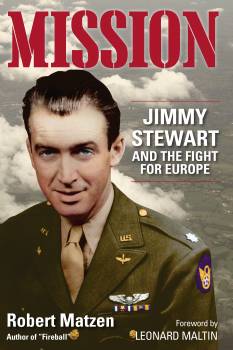
Mission: Jimmy Stewart and the Fight for Europe, by Robert Matzen

Mission: Jimmy Stewart and the Fight for Europe, by Robert Matzen

Posted on December 21, 2016 at 2:43 pm

Copyright GoodNight Books 2016
Copyright Paladin 2016
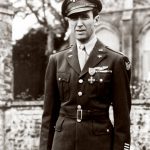
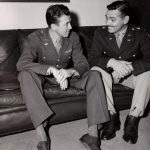
Mission: Jimmy Stewart and the Fight for Europe by Robert Matzen, tells the story of the extraordinary war service of the man we all know as the genial actor who always seemed to exemplify American values. He seldom spoke about his combat missions, so the stories of his war service in this book are new and the impact that experience had are critical in understanding his body of work. the first in-depth look at Stewart’s life as a Squadron Commander in the skies over Germany, and, his return to Hollywood the changed man who embarked on production of America’s most beloved holiday classic, reflecting his more sober, complex, but still hopeful view of the world, “It’s a Wonderful Life.”

Matzen sifted through thousands of Air Force combat reports and the Stewart personnel files; interviewed surviving aviators who flew with Stewart; visited the James Stewart Papers at Brigham Young University; flew in the cockpits of the B-17 Flying Fortress and B-24 Liberator; and walked the earth of air bases in England used by Stewart in his combat missions of 1943-45. If he had not been an Oscar-winning actor, we would still recognize him as a war hero.

The introduction by film scholar Leonard Maltin notes:

It’s a Wonderful Life was a challenging project for him and his director, Frank Capra. Both of them had been reshaped by the war and were understandably nervous about resuming their careers. It is fitting that Matzen bookends his story by describing Stewart’s return to the world of make-believe that this job represented in 1946.

This is not to say that he was a one-trick pony in the 1930s and early 40s. His earnestness was his stock in trade, but he reveals a comedic cynicism in The Shop Around the Corner and an unexpected sophistication in The Philadelphia Story, which earned him his only Academy Award.

But It’s a Wonderful Life calls on him to express a range of emotions he had never tapped into before. After all, here is a man so overcome by despair and the feeling of failure that he tries to commit suicide. The scene in which he breaks down while sitting at Nick’s Bar was so draining that the actor begged his director not to make him do it a second time. After the first take, Capra wanted to do another and have his camera push in toward Stewart; he accomplished the effect with a laboratory blowup instead.

This meticulously researched book provides important insights into one of the finest actors — and, as we now know, one of the finest combat pilots, in history.

Related Tags:


Actors Books
Interview: Kevin Costner on “Hidden Figures”

Interview: Kevin Costner on “Hidden Figures”

Posted on December 20, 2016 at 3:48 pm

Copyright 2016 Nell Minow
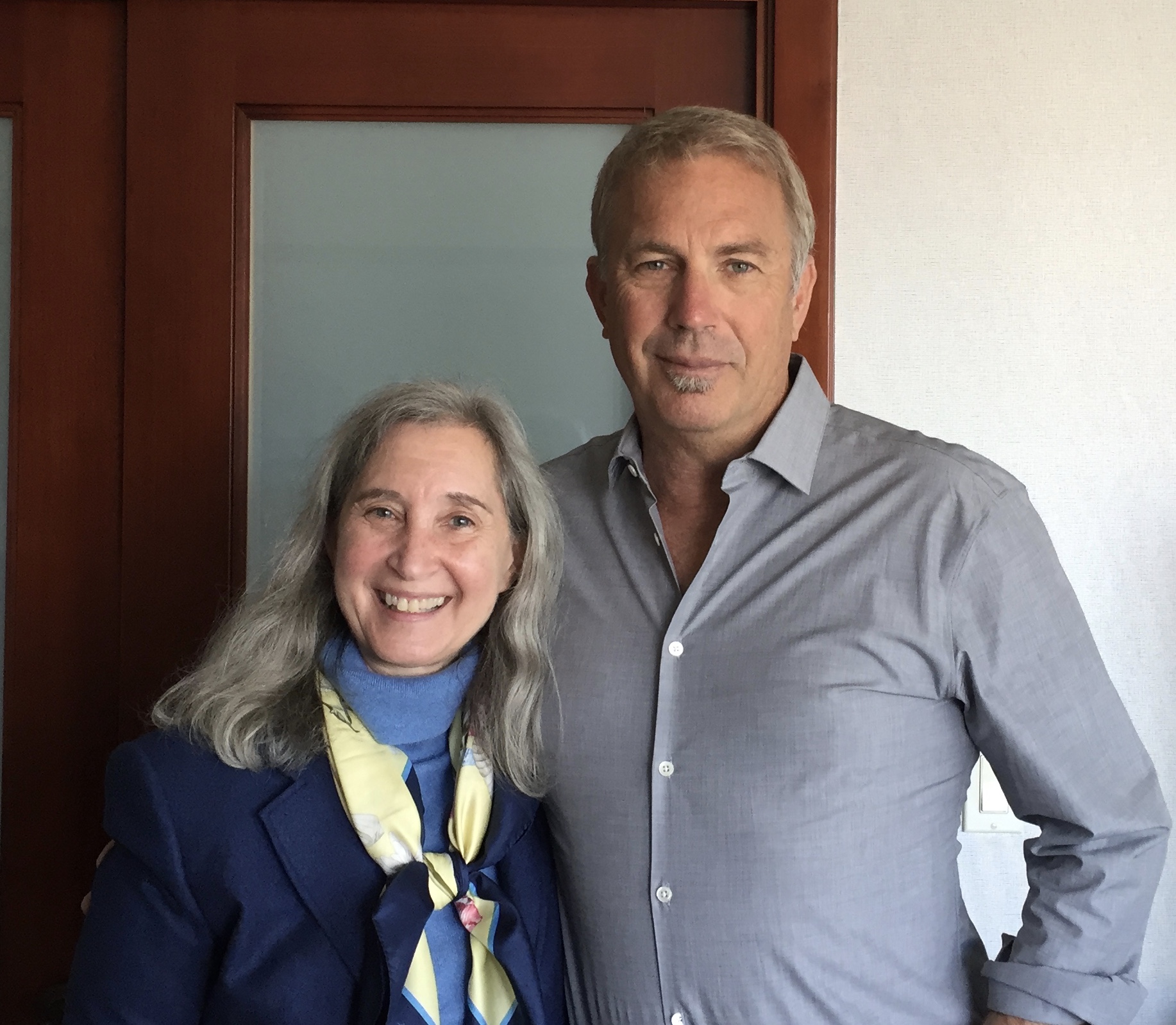
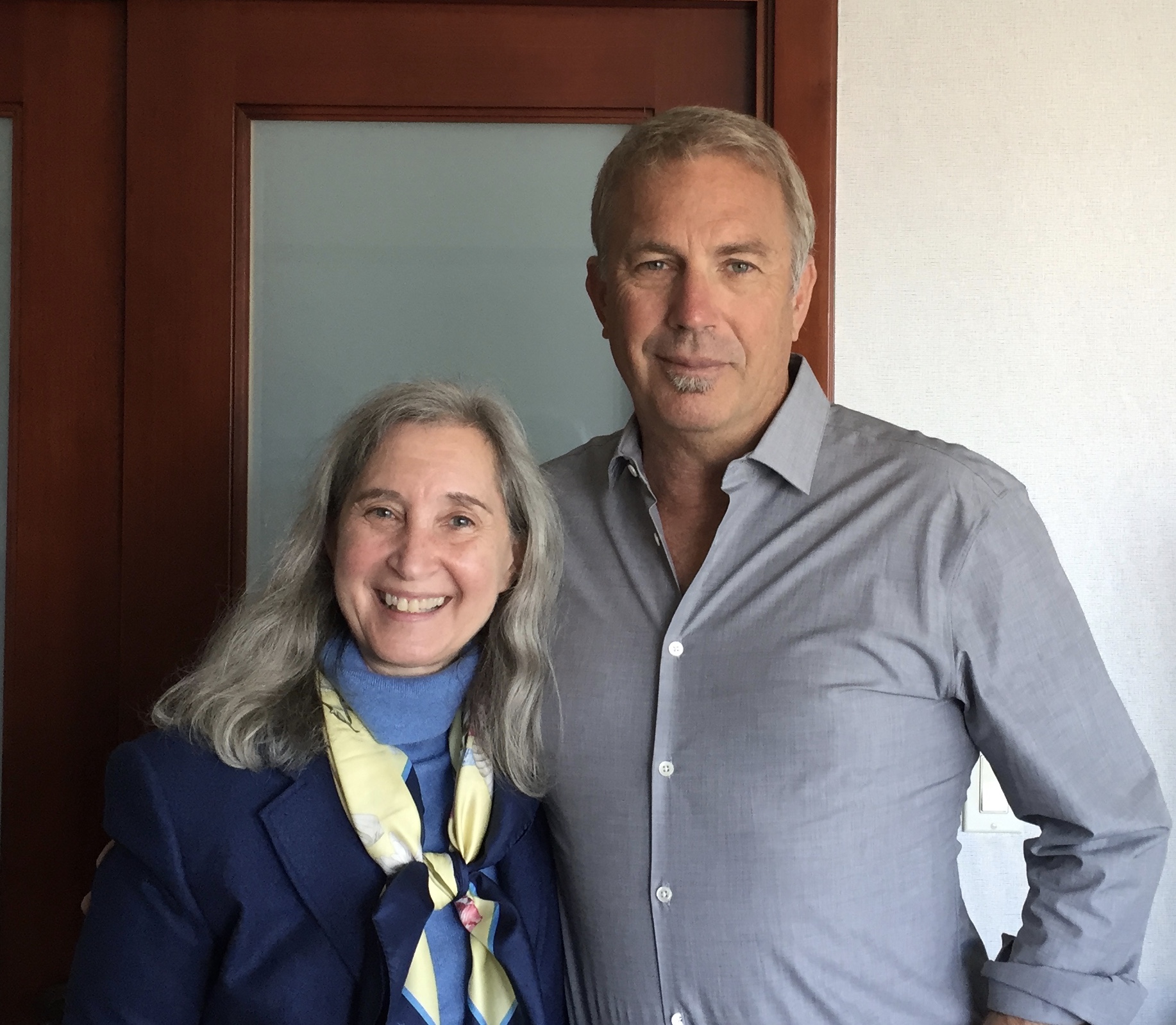
Kevin Costner almost turned down his role in “Hidden Figures.” Based on the remarkable true story of African-American women mathematicians at NASA in the 1960’s, it is an inspiring, uplifting story of the triumph of intelligence, hard work, dedication, and integrity, despite the powerful obstacles they faced as women of color. But the supervisor character played by Costner was the weakest part of the original script. “My character was one they didn’t have the rights to. So he really was an amalgamation of three people and it read like that. I almost didn’t do the movie because the character didn’t make a lot of sense to me, his contributions weren’t enough to prop up the girls. It was just kind of moving from room to room and saying things that were very contradictory. So when I approached the director about that I said, ‘Look, I like the movie, I think the girls are written beautifully. It’s not an MO of mine to want to increase my part or do whatever but there’s something very schizophrenic about this, and Theodore Melfi said, ‘Well you got me.’ and I said, ‘Okay, explain,’ and he said, ‘I couldn’t get the rights to that character, I spend the least amount of time with him and he is not one person. I know, it reads like three.’ And so I said, “That character doesn’t survive in this screenplay that well and he is also not propping other people up because he is saying some inconsistent things. He is giving some mixed signals. So we don’t have to make him better, we don’t have to make him bigger. We have to make them real.'”

He researched the era to understand how limited the technology was. The film shows the first mainframe computer being installed at NASA at a time when “computer” was the term assigned to the women who performed complex calculations by hand. “That was a first click, it was interesting to see that. It was a very crude time. We tend to think of it as very sophisticated, but my children have some toys at home that are more sophisticated than all the technology they had in that room.”

Even though the technology was very limited, Costner related to the role of a man supervising engineers and mathematicians. “I have technologies that I have supported and own and funded, so I deal with scientists and engineers. So I know what it is like to prop them up so that they can do their best work. I know their mindset and I know that they are not always possessed of managerial skills. They’re very individual and they are very creative. I think of them as artists but they have to be managed. But I can’t talk their language because once I quit doing percentages I was done with math.”

The haircut and the clothing helped him imagine the past, but some elements of the story are timeless. “There some things that are constant when it comes to behavior, when it comes to people who are insecure, who are selfish, who can’t give credit. That kind of person has emerged throughout time, the one that’s insecure, so the men are somehow not allowing the cream of the crop to have a chance. The best are not getting through the eye of the needle because of insecurity, not necessarily racism. There’s a big difference but the reality is, that’s a very human quality. So that existed in the 60’s and racism exists now, too. We can be very pleased with looking back and being happy that the story is told and how absurd it seems that woman had to be off-campus so to speak, how absurd to see that they had to be divided. Then the separate bathroom, the separate coffee pot and things like that. I hope people are feeling how absurd it was. I hope they are feeling a sense of shame because every time they do that means we have a chance to go forward. When they walk out of the theater they just have to hold up a mirror to where we are at today and we can still be found wanting in a very severe way. Ask yourself and then answer honestly. We have come a long way but there are other areas where we’ve just not. We have not evolved enough. There are more evolved people now than ever. There are more people that don’t want to accept racism, don’t want it to be here. There are more people that want to protect the planet now than ever. But the noise of the people that are not thinking that way is just louder. There are more of us than ever but they are louder than ever and it’s disappointing that people can’t have a level of empathy.”

Even with all of his experience and honors, Costner finds something new in every project. “I am still learning. I think I’m a better actor than I was three years ago because I tried.”

Related Tags:


Actors Interview

The Best Performances of the Year

Posted on December 19, 2016 at 3:30 pm

Thanks to Rogerebert.com for including my tribute to Viola Davis in the annual round-up of especially memorable performances. Many of these performances were in film that are small-budget or genre and thus are usually overlooked when it comes to awards. Each of the write-ups is a gem. Be sure to check out Angelica Jade Bastién on Natalie Portman, Sheila O’Malley on Trevante Rhodes, Simon Abrams on Stephen Lang, Alan Zilberman on Joel Edgerton, Christy Lemire on Lily Gladstone, Odie Henderson on Hugh Grant, Nick Allen on Tika Sumpter, Noah Gittell on Sarah Paulson, Brian Tallerico on Adam Driver, Sean Mulvihill on Alden Ehrenreich, Scout Tafoya on Gabriel Byrne, and Matt Zoller Seitz on Susan Sarandon.

Related Tags:


Actors

Tribute: Zsa Zsa Gabor

Posted on December 18, 2016 at 7:17 pm

We mourn the loss of one of the 20th century’s most glamorous figures, Zsa Zsa Gabor, who went from teenage Hungarian beauty queen to much-married movie star and died today at age 99.

Long before social media and personal brands, she was a master of self-promotion, including perpetuating and mocking her own image. She said, “I am a marvelous housekeeper. Every time I leave a man I keep his house.” Her nine husbands included hotel magnate Conrad Hilton, actor George Sanders, and the one who survives her, Frédéric Prinz von Anhalt, who paid a princess to adopt him when he was in his 30’s so he could (arguably) gain a title and who claimed to be the father of Anna Nicole Smith’s child (he was not). He was more than 20 years her junior.

In later years, her sister Eva Gabor was better known because she starred in the popular television series “Green Acres.” But Zsa Zsa had a lead role in “Moulin Rouge,” directed by John Huston and also appeared in “Gigi” as the subject of the song, “She’s Not Thinking of Me.”

May her memory be a blessing.

Related Tags:


Actors Tribute
THE MOVIE MOM® is a registered trademark of Nell Minow. Use of the mark without express consent from Nell Minow constitutes trademark infringement and unfair competition in violation of federal and state laws. All material © Nell Minow 1995-2026, all rights reserved, and no use or republication is permitted without explicit permission. This site hosts Nell Minow’s Movie Mom® archive, with material that originally appeared on Yahoo! Movies, Beliefnet, and other sources. Much of her new material can be found at Rogerebert.com, Huffington Post, and WheretoWatch. Her books include The Movie Mom’s Guide to Family Movies and 101 Must-See Movie Moments, and she can be heard each week on radio stations across the country.

Website Designed by Max LaZebnik