Interview: Ravi and Geeta Patel on the Adorable Documentary “Meet the Patels”

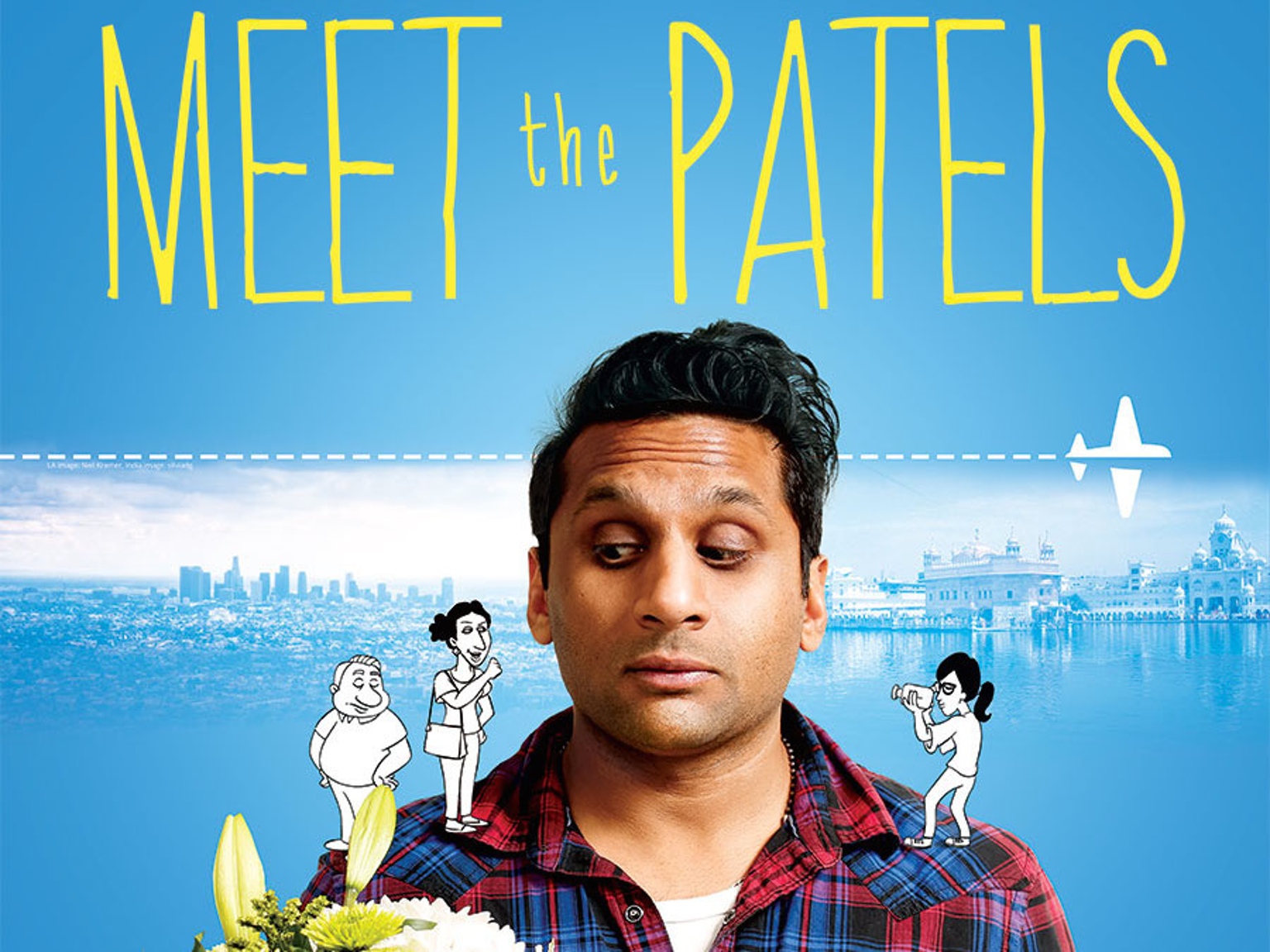
Interview: Ravi and Geeta Patel on the Adorable Documentary “Meet the Patels”

Posted on August 26, 2015 at 3:29 pm

Copyright 2015 Alchemy

“Meet the Patels” is a warm, funny, and irresistibly captivating romantic comedy documentary about Ravi Patel’s efforts to find love according to the traditions of his family’s culture. His parents, Vasant and Champa Patel, are immigrants from the Gujarati region of India. For centuries, marriages have been if not exactly arranged than lovingly orchestrated by the extended families. This system continues, now with computer assistance but still powered by parents, aunts and uncles, most of them named Patel. Geeta is a documentarian who was trying out a new camera on a family trip to India, just after Ravi, an actor (“Scrubs,” “It’s Always Sunny in Philadelphia”) broke up with his non-Indian girlfriend of two years, in part because he was worried he would not be able to make a life with someone who was not a part of his culture. When he agreed to try out the intricate system of Patel matchmaking, involving speed-dating, a sort of Match.com for Gujaratis, a huge gathering like a combination convention and mixer, Geeta and Ravi decided to keep filming and see what developed. The chance to find out about this extraordinary system is fascinating, but what makes the film so much fun is that anyone with a family can relate to the pressure from parents and the often-daunting search for love. And the adorable Patel parents, whose very happy and devoted marriage was a result of this system, really steal the movie. I really enjoyed talking to Ravi Patel and his sister, Geeta, who co-wrote and directed the film.

Who is meeting the Patels here? Is it you meeting 10 million Patel brides-to-be or is this the rest of the world meeting your family?

Ravi: It’s both. Yes, it’s about this time in my life when I had a non-Indian girlfriend that I didn’t tell my parents about. And I was approaching the age of 30, and my parents are freaking out because I was single and I’m married and there is this thing where I’m supposed to marry a girl also named Patel. Not in an incestuous way, like in a caste and the same culture type of way.

How many people who have seen the film who are not Patels and who are not even Indians have said, “Oh my God, that’s my family?”

Ravi: You would not believe it. It’s been such a pleasant surprise. We sold out every screening we’ve had last year, won a ton of audience awards and probably the audience is represented by 98% non-Indians. I would have never seen or foreseen that response with such a diverse group of people from every walk of life, every ethnicity, every nationality, every culture. It’s been really cool. Because I guess everyone knows what it’s like to look for love and everyone knows what it’s like to have a family.

How did making the film affect your relationship as siblings?

Ravi: I didn’t think this movie was going to take so long. We started this filming about 2008. Geeta has another documentary that she just made for PBS. And I thought we would just make like a cool little Michael Moore or Morgan Spurlock-type thing where I’m a journalist. I didn’t know it was going to be such an incremental thing and I didn’t know what it took to cooperate with someone as a director especially when that person is your roommate, especially when your roommate is your sister.

So it was hard. We both are pretty opinionated. The whole family is very opinionated and it was hard. We fought a lot, we butted our heads creatively. You tend to be a little more real with your siblings. I got really mean, we made each other cry but then somewhere in the process knowing that we couldn’t fire each other because we are related, we had to find a way to get through it. We wanted to make a good movie, we wanted to be siblings. And so I think ultimately we had to learn how to love each other more, how to respect each other more, how to see the world through each other’s lenses. I think the result was a better movie and we are a million times closer as siblings than we could have ever dreamed of. I could say that for actually the entire family and as writers and directors where collaborators. I would have never said a few years ago that after this we would do another one, yet here we are writing and directing and developing other projects as well.

Oh, I love to hear that. Well Geeta, why don’t you give me your side of things?

Geeta: It was one of those things where Ravi drives me crazy, he is impossible. In just the process of like picking the restaurants for dinner I’m about to kill him. And so every day of making this movie was excruciating and I thought, “One more day, one more day, we can get through a year.” And you can imagine the film took 6 1/2 years to make and I think halfway through the film like Ravi said we wanted to kill each other, we realize we don’t want to do this anymore. And dad has always been very influential in our lives. He has always been someone who, as you saw in the film, is incredibly spiritual and he said to us, you guys need to love more. And you think that you have tried, you are throwing your hands up and saying, we have done everything this is just the way it is going to be but he says, “Try again, try harder, there is no limit.” Because I wanted to get along with him, I had for the first time in my life I had to see things through his eyes and see my own flaws. Because of him I feel like I am a better person, I’m a healthier person, I have adjusted so many things about myself and it has made my life a lot richer. And I definitely think that I have changed his life, let’s be honest, I feel like he is so much better because of me. It’s been great.

Your parents are just completely adorable and wonderful. Tell me a little bit about the challenge of presenting them on screen and how they feel about it now.

Geeta: Well first of all they didn’t know they were going to be in the movie. So that was the best part of the whole thing. They were so raw and so open because they had no faith that we were really making a movie. They thought we were doing one of our gazillion projects that never get finished and we were just messing around with the camera. So they were completely kind of oblivious to what it really would turn out to be. Wouldn’t you say Ravi?

Ravi: They are who you saw in the movie. They are cinema gold I think. They’re just charming and totally unaware of the camera and they are just comfortable. So that part of it was in retrospect, I’m shock that it was so easy.

Geeta: And Ravi and I were like, “Okay mom and dad, you’re going to walk on the stage and we’re thinking they’re going to be nervous, they’re going to stumble. Oh my God! They got up on stage as if they are walking to the living room. Like all these people, standing ovation, you know Michael Moore I remember was sitting there waiting for them and they are just talking as if there were hanging out by the pool.”

And are they trying to fix people up that they meet?

Geeta: Yes. And everybody asked them to set them up and it has been really hilarious and really awesome that they actually do. And they follow through.

We have a lot of views in Western culture about what we look for in a romantic partner. Is the traditional Indian way less focused on romance?

Ravi: Yes, for sure I think being raised here as Americans the things we look for are more related to kind of chemistry in love, the spark, personality traits like sense of humor. Whereas my parents come from this model of marriage where love is actually the least important thing because it happens after you find that person. The two things that matter first when you are looking for someone are commitment and the compatibility. And these are the kind of biodata statistics that you see in these Indian biodatas forms in the film.

Geeta: What is interesting is that we see a lot of stories about arranged marriages being kind of strange and alien and weird and even when we were growing up we would tell our friends our parents were arranged and they want us to marry Petals. They look at us like, “Oh my God I’m so sorry.” Like, “Oh, that’s so weird,” but for us we never felt that way because the thing is honestly our model for love, our parents are the happiest couple we’ve ever met. Our cousins who have been married through the matchmaking system, they are really happy. These families are really healthy. And look at this country, it has the highest divorce rate, over 50%.

This idea of marriage is in crisis, so many people are choosing to live alone because they just don’t want to bother with the complications of kids and a relationship is so hard. We seriously have a problem. And yet there are all these kind of — for lack of a better word — what people think are orthodox families from different cultures who were actually doing all right. Even though we may not agree with certain political things about it, I’m sure there’s room for growth and movement. That doesn’t mean we see things as black and white. I think this film is really about the gray area, what is there that we can learn from these communities? I mean, yes we may not agree on everything but we all have the same questions in life, and it’s the greatest enigma, which is what is love? And how do we find it and when we find it how do we keep it?

Tell me about the animation which I thought was very effective in the film. How did you come up with that style and what do you think is the purpose of the animated segments?

Geeta: “When we started making the documentary we didn’t want to film our parents going through hard moments.

Ravi: We would set the camera on their faces in these times and it would make them uncomfortable.

Geeta: We had to think about this, we are like, “Wait a minute, we don’t want to film the turning point,” and we needed to find a way to tell the story of those moments. And we both love radio and we listened to “This American Life” all the time and as Ravi always says, radio is more visual than visual. And so we decided to challenge ourselves with making those animations that were basically the missing moments, bringing them to life through storytelling, and not just storytelling but really good storytelling and really honing each of those sections in the way that “This American Life” does.

And so we met with Ira Glass, we studied radio, all those manifestos. We really kind of made sure and I think we spent about two years just on the animation sections. First we made sure that the audio was solid and we tested like crazy and closed our eyes, and once that was solid we started looking into animation after we tried a million other things. Animation was also the last thing we came upon. We didn’t know how it was going to work but everything kept feeling too contrived, way too polished, and we needed something raw. And when we did the audio storytelling it felt really perfect. We then went to maybe four or five animators and at one point we were doing a test screening and there were storyboards put in. And Ravi was like, “Wait a minute these storyboards are so raw and unfinished and it fit. So we told the animators, “Stop there, we don’t want any more.” They are like, “What, we don’t want people to think that we are bad animators” and we said, “You’re not bad animators, but please stop right here” and that was a hilarious conversation because they were so confused and we were like, “This is it right here!”

So will the next project be about marrying Geeta off?

Ravi: That’s what my mom says.

Geeta: Oh God no! God no!
Related Tags:


Actors Directors Interview
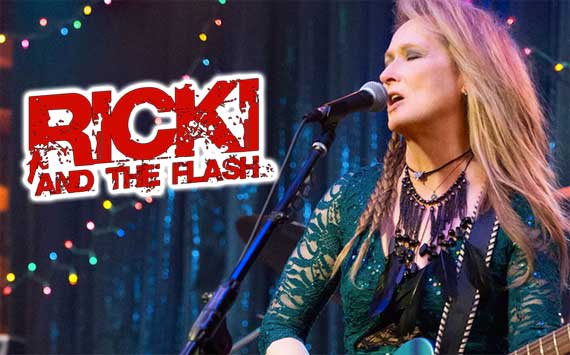
Interview: Neil Citron Talks About the Music in Meryl Streep’s “Ricki and the Flash”

Interview: Neil Citron Talks About the Music in Meryl Streep’s “Ricki and the Flash”

Posted on August 22, 2015 at 10:00 am

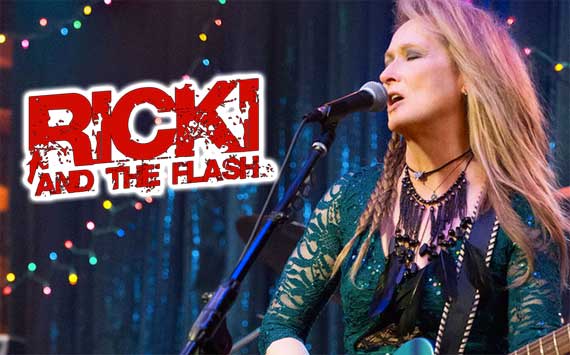
Neil Citron was the Musical Director for Ricki and The Flash starring Meryl Streep, Kevin Kline, and Rick Springfield, written by Diablo Cody and directed by Jonathan Demme. It was a lot of fun talking to him about helping Streep learn how to portray a singer/guitarist in a cover band and the challenges of recording live performances instead of the usual highly controlled studio sessions.

What was it like recording live performances for the film?

It was kind of fun. We found out early that Jonathan Demme wanted to do it all live, no play backs. We were sort of okay with that. Mark Wilson and I had the task of doing it. The problem was that Jonathan didn’t want to see any microphones on stage. That is when it became terror. It was supposed to be this club in Tarzana and they wouldn’t have real mics and amps and stuff. We had the overhead mics on drums, and we had to hide everything else as we sort of finagled our way through. So we used these things called drum triggers. I, smartly I think, sampled Joe’s drums before we started so I got to use his real drums, sounds for his real drums so they are not just somebody’s drums.

You had some very, very experienced musicians but you also had a lead singer who was not an experienced musician. How did that work out?

Meryl was fun. She was a good egg. I spent months with her eight hours a day playing, singing, standing up in her house practicing for the movie. She could play the songs within a week, I had her pretty much being able to play. But then we just had to drill, drill, drill so that she could act and not have to worry about playing. And it’s amazing; she’s a really good musician and you can’t teach that. She has good timing, good feel, and she played in the movie. That’s her playing in the movie, there is no finger double or any of that stuff. And the biggest obstacle I think for her was that she had not been in a band obviously. So I tried to warn her it’s pretty loud, she got used to it after a day or so but it was pretty shocking.

Copyright 2015 Walden Media

Tell me a little bit about the culture of a band like this. What kind of an experience would that be like and how is that reflected in the film?

In my own case I had a record deal early and I didn’t make it, like Ricki. She had a record out and didn’t make it. And you are playing around and I don’t know when you’re supposed to confront yourself with, “Hey I’m a little too old! Probably should get a regular job but I don’t want to give up on my dreams.” And so I think that it’s hard to put aside the fact that music makes you feel alive and it’s worth having the bad job and no real money coming in. In the film she loses her car, her cell phone gets turned off. This is really typical of a lot of musicians thus the joke – “What do you call a musician without a girlfriend? Homeless.” So I think that even though we make jokes about it, it’s hard to stop the passion and the dream that you grew up with. And I think that the thought of fame is one thing but financial security isn’t something you think about. And so in the film just as in reality you just sort of keep doing it and even though she is struggling there is that moment on stage when she’s really, really happy. So it’s hard to give that up.

There’s a great moment near the beginning where Ricki with good spirit but some reluctance plays a Lady Gaga song.

That’s a really funny point because that just shows how well Diablo Cody understands this situation. When I was playing Top 40 songs, we were trying to play Deep Purple and that stuff and the kids wanted to hear Brick House. Stuff that you don’t want to play as a rock ‘n roller but people want to hear it. So it’s really true and I liked the way she said it very pissy when she played the Pink song, “Okay let’s get this party started.” The one thing that some people did pick up on is that “American Girl” is a same song that Jonathan used in “Silence of the Lambs.” That was his pick, it was kind of his little thing. Jonathan did all the music selection except for “My Love.” the Bruce Springsteen song and that was picked by Meryl. We needed a song for that scene and I think they put out feelers for someone to write a song, then Meryl said, “What about this?” and it was just like the perfect and so there we go, there’s our music background. She is just great.

What makes these songs so enduring?

I think that songs today because, because we have so much more quicker access via the Internet or whatever, I think people are thinking about singles versus bands content. And so in those days of Tom Petty it was band content. I really remember if a band didn’t have a first record that was huge it was just not a big deal, it was always a three record deal and it was always assuming that it would take two or three records to get that kind of stability and hugeness. Now it’s sort of like you have one song and it doesn’t sell a lot you are gone. And so I think that Tom Petty there was a style there, more so than what’s happening today. I mean his singing was unique. Look at Bob Dylan. His musicianship was a throwback to the blues. The Yardbirds and that kind of stuff is pure Americana. And I think that there is a warm spot in people’s hearts for that stuff. And I also think that it’s not as aggressive, therefore it’s more inviting. I think as a listener you don’t have to think about it; you just enjoy it.

Tell me about Rick Springfield. It was great to see him on the screen. And boy, I was super impressed by his guitar playing.

I had worked with Rick, I knew Rick from before. But I haven’t just sat down and played guitar with him. And so I agree with you it’s really shocking how good a guitar player he but mostly it also comes from the knowledge of the songs. He knows inversions and chords and stuff really well. And so like even the introduction of “Drift Away,” the fact that he knew that I was like, wow! So it’s really cool and his tone and his fingers — he’s a rock star.

The guitar used by Rick Springfield is an important part of the movie. What is the difference between the one he likes and the one he does not like?

Basically a good guitar is like driving a Ferrari. They are solid, they don’t go out of tune, anything you want to play is not sort of running up hill, it sort of feels like you’re running downhill, super simple, easy. There’s a few kind of differences between guitars that suit people’s personalities, like David Gilmour on the strat, it’s just what it is. But there are really bad copies of those guitars and if you saw David Gilmour play that with really high strings and bad pickups and bad sounding wood so there is no vibration and that kind of thing, you would see him struggle like a beginner, it’s not easy, it’s not fun. So Rick goes from this classic SG which is worth thousands of dollars to one I think retail costs 250 bucks. So it’s got high action and the wood feels like balsa wood, it doesn’t really feel like mahogany are anything. In fact that guitar wasn’t set up and we had problems with it staying in tune.

What was the first instrument you learn to play?

I played clarinet and saxophone while I was in grade school. I have a kind of a well-known cousin whose name is Howard Leese. He was in Heart and he is in Bad Company now. Howard one day said to me, “Do you ever want to date women?” And I said, “Yes”, he said, “Then you got to quit playing saxophone, dude.” He’s the reason I’m a guitar player.

Related Tags:


Behind the Scenes Interview
Interview: Raffey Cassidy of “Molly Moon and the Incredible Book of Hypnotism”

Interview: Raffey Cassidy of “Molly Moon and the Incredible Book of Hypnotism”

Posted on August 19, 2015 at 7:25 pm

Copyright Amber Entertainment 2015

Raffey Cassidy gives a performance of endless charm in “Molly Moon and the Incredible Book of Hypnotism,” following her breakthrough appearance in “Tomorrowland,” where she stole the film from the grown-up stars including George Clooney. I was thrilled to get a chance to interview her and can’t wait to see what she does next.

You wore some really crazy outfits in this movie. Which one was the most fun? Which one took the longest to get into?

The Hardwick House Orphanage look was probably the outfit I most enjoyed wearing. It was the costume where molly was really herself and the one I felt most comfortable in. It was also the outfit that took the longest to get into due to the amount of layers the outfit had. I did have fun ‘glamming up’ and wearing the fabulously glittery costumes for the fashion shoot scenes.

If you could hypnotize someone, who would you pick and what would you have them do?

I would hypnotize my parents because I could get them to let me stay up really late and get them to say ‘yes’ to all the things they normally say ‘no’ toJ I might also have a go at hypnotizing my teachers – but that could get me into lots of trouble I think!

Did you have to work hard to learn to sing badly?

Well I would like to say that I had to work hard to sing badly but unfortunately it came as pretty easily – sort of a natural talent. If I ever got stuck I could always get plenty of tips off my dad!

What was it like to work with the dog who played Petula?

It was so fun having the chance to work with a dog. There were actually two, George and Lola. They were very co-operative and smart. It was very interesting seeing the trainer working with them, able to communicate with an animal.

You have worked with some great actors. Did George Clooney play any of his famous pranks on you?

He did keep reminding my set tutor that it was time for school, which he thought was really funny (and so did I – sort of) but otherwise I got away lightly. I did witness a lot of pranks so being on set with him was always a lot of fun.

Did Leslie Manville, Emily Watson, or Celia Imrie give you any advice about acting?

It was more a case of watching and learning from them. I saw how professional they were and how they were still able to keep the set so relaxed and enjoy what they were doing. It was very cool to have the chance to be able to work with such amazing actresses and learn off them – so many in the same film.

What is the most important lesson Molly learns in the film?

Molly learns that family and friends are the most important thing that you could possibly have. She thinks that the grass is greener on the other side but she learns that actually it’s not at all. I think that that was a very important lesson for Molly. She also learns to have hope and that things usually can get better, even if you feel at the time that they won’t.

What did you and the other kids do for fun when you weren’t filming?

I had so much fun working with all the other children, we all really got along. After a long day of filming with the other children we would all go for a nice meal, it was great and fun we could all talk about the day that we had had. On set me and Jake, who played Roger, would mess around doing different accents – I do this a lot at home so it was nice to have someone to mess around with when I was filming.

Would you like to make another Molly movie?

I would absolutely love to make another Molly Moon and be part of all of the different adventures that she embarks on. I know the books and they are packed with lots of exciting Molly Moon adventures

Related Tags:


Actors Interview

Interview: Daniel Pemberton, Composer of the “Man from UNCLE” Score

Posted on August 18, 2015 at 6:58 pm

When director and co-screenwriter Guy Ritchie needed someone to write a cool, sexy, sophisticated score for “The Man from UNCLE,” he went to Daniel Pemberton. The soundtrack is one of the best of the year and I had a lot of fun talking to him about how it all came together.

At what stage of the process did you get involved?

I came on just before they started editing. So I normally try to get involved in films early on, kind of work alongside the film makers and actually kind of have an input and it means you write music that’s kind of a) more unique and b) you can experiment more, you can kind of come up with ideas that don’t work and you’ve got time to throw them out and start again and try to find a way through. It also means you can temp the movie with your own music that you write for that movie. And I think the biggest problem with film music is the fact that so many films are temped with music that that has been temped with other films. It’s all dog eating itself and I like to try and break out of that. It’s a lot more work, it takes up so much more time but I think the end result is worth it because you get something hopefully that people kind of listen and go, “Oh, it’s new, I haven’t heard this kind of thing before.”

How do you create something that feels like it fits in the 60’s but is appropriate for contemporary listeners?

The 60’s was one of the greatest eras of music that we’ve had. I think a lot of that was because there was so much experimentation at that time. The rules were still being written. You remember that at the start of the 60’s it was still three chords played on the guitar and by the end there was this explosion of ideas and I think everyone was influencing everyone else. Everyone would try to outdo each other.

Music was such a big part of the culture and it really pushed people to try out new ideas and so it was a very fertile time. And I think we’ve changed a bit from that and it was great to go back and just kind of pick up on all of those kinds of sounds and ways of writing music and ways of recording music that were around then. That’s how I approached the score. I tried to take the spirit of the 60’s. Everyone has got their own version of the 60’s but I got to try to capture what I liked of the 60s to work. Time generally erodes the bad things and the good stuff sticks around. So you want to find all of the stuff you like about those ideas and then try to put your own spin on that.

You have major characters from four different countries in the film: the US, Germany, the Soviet Union, and England. Do you think about that when you are working on the score?

I see it like a kaleidoscope of international color because you are taking all of these influences from different cultures and the style felt very international. Spy stuff is often international, just from traveling the world and seeing different cultures. They are all being experienced at the same time and that means you can have more fun and pinch from all of those cultures. If it was all set in a grimy London street it could have been amazing but it would be harder to pull off those kinds of sounds. At the London premiere I told Guy we should do the next one in China because I want to do crazy Chinese instruments. He was like, “I don’t want to do stuff in China. We could just do Istanbul.” And I’m like “We can do Istanbul. There are loads of great Turkish instruments like kanoon that I’ve worked with before. And I would have so much fun doing like kind of funky takes on that.”

It seems like spy movies always have to have a fancy party scene, and this movie has a great one.

That scene was hard work. I had to jump between Ilya’S story and Napoleon’s story and have it be a groove that everyone liked. It is really hard because you’ve got this beat and you can’t stop it midway through and jump to something else. Guy would want to do the opposite of what you would expect on these scenes normally: “What would be the normal way of doing that scene? Okay let’s not do that. Let’s do the opposite and try to find a different way of doing something you have seen before.”
Because in a lot of ways this film is sort of a homage to all the great 60’s spy films and action films. And one of the great ways to make it feel new is to take some of those ideas and put a new fresh spin on that and music is a great way to do that. I tried loads of different ideas it’s like, “Hush, this is boring. I have heard this like a million times before in other films” and you would be like, “Oh, okay. Let’s try something else if you don’t like it.” And you know what? He was right because we were doing stuff that was conventional and it was only when I started doing really crazy stuff, that’s when it really came to life. What was clear about this film is that I got pushed to write madder and madder music and I like that.

What was the first instrument you learned to play?

The piano. Badly. Technically I learned the violin when I was about five and then I didn’t like it; it was rubbish. I did about two days on it and then I decided I wasn’t musical. And then I became 10 and I found the piano and started writing songs on it and then I sort of went from there.

Were there any kinds of instruments or technology that you used that were kind of retro?

Oh yeah. I mean we did the whole score at Abbey Road, which was kind of the spiritual home of 60’s music. It was where all of the big music records were made. I worked with a guy who is the number one specialist on all of that stuff and all the antique gear. Abbey Road an amazing studio that is still used today and all the corridors are full of old pieces of equipment, literally like old 60’s things that the Beatles probably used. They are just lying in corridors because there was so much of it. We basically commandeered it all for a recording session. There was a tiny control room full of these old tape machines. There was not a lot of space to fit because these things were ginormous and we kind of nicked them all in the recording. So we had old mixing desks, looking something like a nuclear submarine, I mean they looked insane. They were ginormous and you’ve got the mixing knobs that are like these giant levers you pulled. We had old tape machines. We even used echo chambers studio too which is a room where they used to make echoes. That’s a room in the building where you sent sounds into and record the reverb of the room. The room is all tiled and we used that to create some drum echoes because that was how they used to do it in the 60s before reverb units existed. And then the same instruments, we got like vintage 60s harpsichords, guitars, bases. Everything like even the flute, the main flute, there is a really, really old flute.

I wanted to ask you about the flute because it had that great feathery sound.

That is a great flute player called Dave Heath. He normally plays more kind of classical concertos. A friend always says, “You’ve got to meet Dave, he’s crazy, you would get on with him.” I’m sort of like, “Yeah right, okay let’s meet Dave.” So I met Dave and he is crazy and I did get on with him. He would play some stuff and I would be like, “Okay, show me the sort of sounds you can make that no one asks you to make.” So he would play it and he would start making these crazy noises and I would be like, “Hang on, that, what was that?” He would play something and I would go, “Yeah you’re right, let me write something for that.” So I would go away and I would write some ideas and he would play it and I would be like, “Okay, that’s cool.” And we would work like that a bit and try to come up with how we get these unusual sounds for the score. A lot of that is just him playing. I mean we almost killed him during recording, perfectly intense. It’s like a guy running out of breath. Yeah, I wanted to get these bits where he was running out of breath and I would be like, “Keep playing, keep playing!” There would be someone in the control room saying, “Is he all right? Are you going to kill him?” I am like, “No, don’t worry, he likes this sort of thing.” Most of the effects are analog effects. Everything ended up in a computer but it all went through a bit of analog processing. And I’ve got to tell you, analog distortion on a red desk which is one of these old desks is phenomenal. It just sounds insane. It’s like something you never really heard. You are like, “Wow, what is that?”

Follow Daniel Pemberton on Twitter to get updates on his next big score — for “Steve Jobs.”

Related Tags:


Composers Interview

Interviews: Jewish Views on Sex and Intimacy in “The Lost Key”

Posted on August 14, 2015 at 3:48 pm

“The Lost Key” is a documentary that explores contemporary society’s confusion of sex and intimacy, and how the ancient principles from Jewish theology can restore the holy connection between husbands and wives. I spoke to director Ricardo Adler, whose own divorce inspired him to explore these traditions, and Rabbi Manis Friedman, who introduced him to Kabbalah’s ancient secrets to attain the highest form of intimacy. The film portrays the dramatic transformation of Ricardo’s new marriage, and the reactions of other couples to this revolutionary way to sexual connection. Adler says that “‘The Lost Key’ reveals forgotten wisdom that could inspire society to rediscover intimacy, one bedroom at a time.”

I asked Adler how he got started with this project.

Adler: I grew up in just a regular, modern, traditional, secular Jewish home. And at some point when I was getting divorced, as the film says, I just decided to start exploring different things, and I ended up discovering that in my own Jewish roots there’s all the answers I need in life. In fact, a lot of the things that I discovered in Judaism and in Kabbalah include some of the ideas that I used to like about other belief systems. You know, Buddhism, Taoism, and etc, so that was kind of nice. And then that process, you start going to school and meeting rabbis and talking to different types of people. After about a year of having started that process, the local Chabad house here in Venezuela organized a shabbaton with Manis Friedman. So he came down, and I must say, I was fascinated by him and his talks and just the way he conveys the knowledge. In fact, he gave one talk where he answered a question I was asking myself for over 20 years, which is,
“What’s the purpose of life? Why are we here?” In one hour, he answered a 20 year search. So I just loved him. So I proposed the idea to him and to my surprise he said yes. And here we are.

https://www.youtube.com/watch?v=9ogZMUCX3lA

What is the difference between sex and intimacy?

Rabbi Friedman: So the difference is a number of things. Number one, what we’re referring to generally, casually to as sex is impersonal. It’s an activity, it’s a performance, it’s a thing. It’s something you do. And this thing can be good, it can be bad, it could be better, it could be worse, like anything. Intimacy means connecting person to person beyond all things. So if we have to put it in a simple phrase, the lost key is the ability to connect to a person beyond all things, which is really what we all want and need.

Why do we get so many contrary messages?

Rabbi Friedman: Actually I think that the experts of the mental health field very recently are saying that it was a mistake to emphasize the pleasure of the relationship and to make people paranoid about whether they’re getting the maximum pleasure, the greatest pleasure, the 25 new secrets to greater sex, constant, constant bombardment, when in fact, people don’t really need more pleasure, they need closeness. Because with all the freedom that we have, and with all the openness on the subject, I think Americans are pretty much, and even so-called happily married couples, the moment they’re quiet and sober, they would admit that they basically feel alone. It’s a very lonely society. Even though we’re very social and we’re very cosmopolitan and we’re outgoing, everything is open, everything is free and casual, but in the end, we feel alone. Because until relate intimately, we really are isolated and alone.

Adler: I think this started with the so-called sexual revolution of the 60’s which emphasized pleasure-based sex and you should have sex with as many people as you want and all this stuff. And then that led to a sexual invasion of society. Sex is used to sell everything. And so that’s what sells because it’s an emotional directive. They are talking to something that is very dear, very important and intimate to any human being, and that’s the pleasure of sex. So it sells, it works, that’s who we are today. The story’s not over. Here we come, hopefully, with a different message. And it’s not just us. I think there’s a lot of people that are really looking at sexuality views today and just saying there’s something wrong here. I mean, if sexuality is your number 1 cause for divorce, along with financial issues, there’s something going on, right? We have a new thing called sexual addictions we didn’t have before. Something’s going on. You have all these young people with these self-esteem problems; something’s going on. We think it’s the lack of intimacy in sexuality.

The adults in the film seem to know very little about intimacy. Who should teach kids and teenagers about this? And when?

Rabbi Friedman: It should be the parents or the teachers. It shouldn’t be a secret subject, a taboo subject that you have to find an expert to talk to your children about it. It should be a natural part of life. You don’t sit your children down and your child and say, “We’re going to have the talk. Now you’re old enough or whatever it is and we’re gonna have the talk.” That sends a bad message. Why don’t you just talk about it the way you talk about anything else in casual conversation? I don’t mean make it casual. It’s not different from the rest of life. You don’t have “the talk” about money, you don’t have “the talk” about jobs, about career, it comes up in casual conversation—you talk about it. So you hear a story of kids who got in trouble or whatever, so you talk about it. It’s not “the talk”. Don’t treat it like something other than life itself.

In the film you talk about not having any devices like phones or television in the bedroom. How do couples create physical and emotional space for intimacy?

Rabbi Friedman: If the bedroom is sacred, then walking into the bedroom actually supports the intimacy that you’re going to engage in because it promotes that feeling of intimacy. You set it aside for that purpose and that kind of generates that kind of energy. So when a husband and a wife walk into a bedroom and close the door, it creates an intimate atmosphere, an intimate mood that supports the emotions that you’re supposed to feel but you can’t always. So you come into a bedroom with all sorts of concerns and distractions, and you’re worried about your bills and you’re worried about your job and you’re worried about your extended family, and now all of a sudden you have to focus to become intimate? That’s not easy. So if you can have some support from the room, from the environment, from the atmosphere, it’s very helpful. I mean, you need help. You do. We all need help to achieve intimacy.

Are there lessons in the film for those who are not Jewish?

Adler: The film is for any married couple. The idea is that you are one before you got married and you can reclaim that oneness within marriage. So intimacy is for any couple whether you are Jewish or non-Jewish, old or young, black or white etc. etc. If you are married you can be intimate. You can have a beautiful healthy marriage and this is one way to get there.

Rabbi Friedman: Absolutely, absolutely. I mean, just thinking about the benefits to the children born from the relationship. When husband and wife are truly focused on each other, it invites the baby into a world in a much healthier way than if the baby is an afterthought. Nothing you get from your spouse can be more important than your spouse. And that includes love, the love you get from him is not as important as him, otherwise you’re married to love. And it includes the physical pleasure of intimacy, because if that’s what you’re looking for, then you’re married to it, not to him. And also, the difference between sex and intimacy is that after sex, you feel a little diminished. You feel a little loss of dignity or self-respect or respect for the person you’re with. It’s just the nature of the behavior of the act that it takes you down a little. Whereas intimacy, after you’ve experience intimacy, each time you feel more innocent than before. Because to be intimate, you have to get past all things to just be you and I, the I and thou, and that is the most innocent part of ourselves.

Related Tags:


Directors Documentary Interview Spiritual films
THE MOVIE MOM® is a registered trademark of Nell Minow. Use of the mark without express consent from Nell Minow constitutes trademark infringement and unfair competition in violation of federal and state laws. All material © Nell Minow 1995-2026, all rights reserved, and no use or republication is permitted without explicit permission. This site hosts Nell Minow’s Movie Mom® archive, with material that originally appeared on Yahoo! Movies, Beliefnet, and other sources. Much of her new material can be found at Rogerebert.com, Huffington Post, and WheretoWatch. Her books include The Movie Mom’s Guide to Family Movies and 101 Must-See Movie Moments, and she can be heard each week on radio stations across the country.

Website Designed by Max LaZebnik