Interview: Lillete Dubey of “The Second Best Exotic Marigold Hotel”

Interview: Lillete Dubey of “The Second Best Exotic Marigold Hotel”

Posted on July 23, 2015 at 3:36 pm

Copyright DNA 2015
Copyright DNA 2015

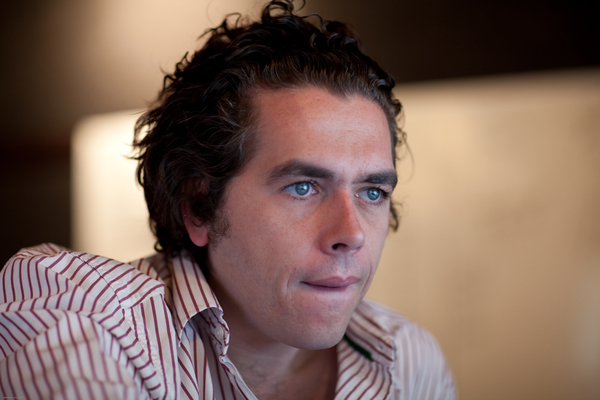
Lillete Dubey stars with Maggie Smith, Judi Dench, and Richard Gere in The Second Best Exotic Marigold Hotel, available now on DVD, Blu-Ray, and streaming video. Dubey plays the formidable Mrs. Kapoor, the disapproving mother of the eternally optimistic proprietor of the hotel in the title. Dubey is one of India’s most distinguished directors and actors and it was a very great pleasure to talk to her about the movie.

In the first film, your character was mostly there to disapprove. In this one, she has to respond to romantic overtures from an American played by Richard Gere. Was that a surprise?

Well, yes it was. In the first one she was quite a tough little biddy. And I joked when I heard that there is a second one that I hoped there is going to be more dimension and maybe hopefully a little romance for Mrs. Kapoor. So I was so pleased that he sort of took me up on that. Everybody is having a romance so I felt really left out. All the older people in the film are all having this lovely autumn romance or winter romance or whatever and I was the only one who was feeling very left out. If you see more of a character you want to see a little more dimension. I felt in the first one it was a nice little part but it was really to do with the son and her relationship with him and how it took that part of his story forward. She didn’t have much to do with the rest of the cast. She didn’t interact too much with them. So I just thought it would be fun to have something else to do as Mrs. Kapoor.

It’s one of my favorite parts of the film. Had you met Richard Gere before?

No, no. You know I had run theater company, I also directed and occasionally act also on my own shows, so I was mentally casting when I was reading the script and I said, “Who would I pick if I had my choice?” When I put on my director’s cap, not so much who would be nice as a romantic character but who would work really well in this role and I thought of two or three American names who could be a charming man who could break the ice which Mrs. Kapoor had surrounded herself with. and had to have a certain sort of personality. When John Madden called, he said, “I think you will be quite happy, he’s adorable in a very pristine English way, I think you’ll be quite pleased with the lad, it’s Richard Gere.” And Richard always said, “Are there any more scenes with us together?” because it was a very cute little part of the story and he felt there should’ve been more. It’s nice because it was the older romance and a lot of bits could be sub-textual and unsaid which was nice because I think at that age we don’t need to say a lot and it was all there. I wish we had more scenes. At the premiere, people were already asking if there was going to be a third one, so maybe we will.

Is there a difference in technique or process between the British, American, and Indian actors?

Oh yes, Indians are very emotional and carried away with feelings so the whole style is very strong; it’s a very strong style. What you see in “Monsoon Wedding” iss extreme Indian acting.  I don’t have a problem with it because that’s the way Indians are as a race. So it is a cultural context in which they are a little bit like Italians, they are volatile, they are riding high all the time and feelings come out on the surface and everything is out there and it’s a little loud so their acting reflects that.  It always reflects the ethos and the culture from which you’ve come. And the English are very pristine and dry and so their style of acting very much reflects that. It’s quieter, very internalized, very restrained, very contained and they are looking forward to lots of internal truth rather than external.  And Americans… I mean there is Richard and there was David Strathairn, David of course had a quieter style of acting. It’s not like it is Indian acting at all but it’s a little more spontaneous, it’s not that pulled back, you let yourself go a little bit. I’m not saying you go over the top or you are melodramatic but you are certainly, you let go a lot more. You can see it, you can see the styles in the movie. So I was sort of trying to be between the tones by my own sort of rhythm. You just have to keep feeling the rhythm of both the movie as a whole and that scene as it is being played out with your co-actor.

That’s what’s nice about working in international film because I was talking with Judy and Maggie.  Of course they have their own league but they also come from the theatre like me, and they got into film late. I got into films in my early 40’s so it was very late and I have done about 40 films.  I’ve always hugely admired them as actresses really and it was such a thrill to work with them. I want to grow up to be Judi Dench.

The best thing about the movie I think, Nell, is that these guys really exemplify the film for me.  They have such a zest for life, they are all still working, they are all still looking forward to this might happen professionally or otherwise. I think why it appeals to people, young old, it’s the sense of optimism that it has about life, that you could just turn a corner and anything is possible I mean yes, it could be negative also but if you are up for it, and up for life many things are possible, if you just open yourself to the possibilities and I think that’s a very appealing quality about the film.

What else are you working on?

A series called “Indian Summers.” It’s channel 4’s biggest hit in the last 20 years drama series, and it’s actually a PBS Masterpiece and Channel 4 co-production. It’s already on in Australia and New Zealand and we’re shooting season 2. It’s beautifully shot in India and it will be on “Masterpiece” in the US.

Here is more from Ms. Dubey.

Related Tags:


Actors Interview
Comic-Con 2015: Interview with Bella Heathcote and Douglas Booth on “Pride and Prejudice and Zombies”

Comic-Con 2015: Interview with Bella Heathcote and Douglas Booth on “Pride and Prejudice and Zombies”

Posted on July 14, 2015 at 2:16 pm

Bella Heathcote (“Dark Shadows”) and Douglas Booth (“Romeo and Juliet”) play Jane and Mr. Bingley in the latest of innumerable movie and television adaptations of Jane Austen’s novel, Pride and Prejudice. While I have not seen them all, I feel confident in saying that this will be the first that has the five Bennett girls fighting zombies with swords and martial arts, based on the best-seller Pride and Prejudice and Zombies by Seth Grahame-Smith. I was lucky enough to get to interview Heathcote and Booth at Comic-Con.

Copyright Nell Minow 2015 All rights reserved

In the original book, Jane is so sweet natured she finds it almost impossible to think badly of anyone. In the film, Heathcote said, “The thing about Jane in the book is she also feels responsible for her sisters. There are other aspects of Jane in the book that also hold true to this film. Because of sense of responsibility she has to be a great fighter. She wants to protect her family. But she is still sweet and she is still a woman who wants to love someone and be loved. Those relationships are important to her, perhaps even more so because its’ such heightened stakes.”

The entire cast had fight training before filming. But “Bingley isn’t the best zombie killer,” admitted Booth. “He often finds himself being saved by the wonderful Bennett sisters or his very dear friend, Mr. Darcy. The film definitely focuses on the talents of the Bennett sisters. They are known throughout the land as an awesome pack of death machines.” He did learn some important zombie-fighting tactics, especially “always travel in packs.” “And anything can be a weapon,” Heathcote added firmly. “A hairpin, a boot, anything can be used to kill a zombie. My most satisfying kill was with a boot heel.” “A spiky heel straight through the eyeball,” said Booth, with an admiring glance.

Booth had read the book and was very happy to join the cast. “I’ve done straight costume dramas before and it is thrilling and exciting and different and sexy to see something like this.” All of his friends were texting him, “Can I be an extra?” “Can I be a zombie?” “But wait — how do you kill them? There’s no guns!” “The props department had a fun time creating a whole bunch of killing instruments and it is fascinating to see all the ways they had of defending themselves. It wasn’t like a zombie movie where everyone’s being chased from A to B. It’s about how this love story can endure; how would the upper classes protect themselves?”

The zombies in the film go through stages. When they are first bitten, they act normally and try to cover the bite so no one finds out and tries to attack them. “They can get into society, and that breeds a sense of paranoia in society.”

“It’s everything I loved about the original and then there’s thrill thrown in,” said Heathcote. “I first thought, ‘How could this possibly work as a concept?’ But it does!”

Related Tags:


Actors Based on a book Interview
Interview: Dana Nachman of “Batkid Begins”

Interview: Dana Nachman of “Batkid Begins”

Posted on July 6, 2015 at 3:37 pm

Copyright 2015 Warner Brothers

Dana Nachman is the director of the heartwarming documentary “Batkid Begins.” She talked to me about how one five-year-old cancer survivor’s Make a Wish story captivated the entire world.

At the screening I attended there was audible weeping.

I also hear there is a lot of laughter also and cheering sometimes when people see the film. So I hope that was all there too.

It definitely was, especially when the family is asked if this is what they expected and the parents are stunned and the kid casually says yes.

I love that.

Me, too. So tell me how you got involved.

I had heard about it actually after the fact and I was lucky enough to get a meeting with the Make A Wish Foundation and we actually meet for two and a half hours. We totally hit it off. But my main question I had for them was what they intended to happen.
They said they wanted about 200 people to show up. I thought that that was such an amazing thing that like something could balloon really out of nowhere. They wanted 200 people to come support a child and then 25,000 people showed up and 2 billion people followed it online. So I really wanted to tell that story of how that happened, basically a memento forever for San Francisco and everybody else.

Do you think that this story is very specific to San Francisco?

Certainly I consider San Francisco one of the main characters of the movie because I think there is something about the whimsicality of San Francisco that enables this to happen. But I think it’s a very human story that any community can relate to. I think there is something a little different about San Francisco, but I think it’s a universal story for sure.

San Francisco does seem to be the kind of city where if you need a superhero costume it would be easy to find.

The people I interviewed from the San Francisco Chronicles said Halloween is kind of a city-wide holiday. So if you ask people to dress up in costume, they’re there.

Those thousands of people — were they showing up for Miles or for themselves?

I’m speaking from my own personal perspective. Whether I work at a food bank and whatever else we do and you think you’re going into benefit others but really when you leave there usually you feel better about yourself you know. And so I think that this day was very emblematic of that concept of that volunteerism and community service really does end up helping you as much as if not more than the person you’re trying to help. There are many people that said it was the best day of their lives, like bar none the best day of their lives. I think just the concept of going out there for no other reason than just trying to cheer a little boy on was enough for people to just feel good.

What is the fascination with superheroes?

The concept of a superhero is something that everybody relates to. Most of us wanted to be some kind of superhero when we were little. At some point you lose track of those fantasies that you had as a young person. This enabled adults to come out and experience that childlike wonder and excitement for Miles but then also for themselves.

How is Miles doing?

He’s great. He’s in remission. He just got through with Little League and he’s a great kid. He’s home for the summer. He’s going to have a nice relaxing summer. His family just bought their first house. He’s awesome.

You had some amazing characters in this movie and I wanted to ask you about Eric, who plays Batman and organized the feats. He is really extraordinary.

You know I had a list of people to call to see if they wanted to participate in the film and I actually called him last because I was a little intimidated by him which is funny because he is actually the most amazing person and you never should be intimidated by him. But he does do everything. You know my son was talking to him about trying to invent a hovercraft or something and he was like you can invent anything you want, anytime you want you just have to say you want to do it. And that’s I think the way that he goes about the world. He’s this magnetic personality that just wants to do good, live life to the fullest. He an amazing person, really. I think you could relate to Nick, Miles’ dad as a father what he went through and Natalie as a mother and what she went through. And then you can relate to Eric, who is like an older brother to Miles now. And I think it’s probably his human connections we can make as the audience that draws us into the story more. And he’s so infatuated with his wife. It’s so cute.

How do you as a filmmaker tell the story in a way that is going to still surprise people and not repeat what they already know?

I definitely thought about that. But I also realized that what people had in terms of information on the day was really like 140 characters on Twitter or a Facebook post or a photo here and there. Or you know something on the news that was probably 90 seconds. As I came to it I realized that not one of the people that participated in the day of knew everything else that was happening at the same time they were so busy making this happen. For instance nobody had ever met the couple that flew from Akron Ohio or LA for the day. Nobody met them, nobody had, we unearthed the Uber driver that saved Lou Seal before he even got kidnapped by the Penguin. The circus center scene which I think is one of the funniest scenes of the film — there were no cameras there except for the family shot home video of it and that was when he trained to become a superhero. I think also the 25,000 people who were there was such a mob scene. Most people only went to one or maybe two of the capers. So nobody really saw the whole thing. So you have to realize and kind of put it together what exactly happened on that day. I realized that there wasn’t anybody except EJ and Miles who had been at everything. So I thought that it actually is good whenever the people in the film watch and say oh I didn’t know that person, I didn’t know that happened. I’m really like pleased about that.

How did the Make a Wish people feel when it got world attention?

Their goal is just to make the wish the best it could possibly be. So all the hoopla that was around that kid that day wasn’t what they were intending. They just wanted to make sure it was a good day for Miles. They kind of figured that 200 people really was the same in terms of Miles’ eyes and his perspective. So they just wanted it to be a great day for Miles. You know I’ve heard a lot of Interviewers ask Patricia at Make A Wish if this has changed what kids want. And she said not really because most of the kids, a vast majority of the wishers are private wishes. They don’t ask for things that are public at all. They do more than 370 wishes a year. So I think when there is one that kind of lends itself to creativity they kind of jump on it because they are just those kind of people who make it cooler. They have these amazing volunteers just like EJ and all the rest of them who go in there just wanting you know literally to be the wish of a lifetime for every kid.

Why did it go viral?

My opinion on it is there was kind of this perfect storm and the main element of it was that it was so authentic. They weren’t trying to make it go viral. I think so many people try to make things go viral and that doesn’t really work. It has to hit a nerve and that’s what really happened with this. They weren’t asking for donations. They weren’t really asking for anything other than come cheer on this little boy either virtually or in person, and just experience the wonder of his wish.

Related Tags:


Directors Documentary Interview
Interview: Lorne Balfe, Composer for “Terminator Genisys”

Interview: Lorne Balfe, Composer for “Terminator Genisys”

Posted on July 1, 2015 at 3:32 pm

Copyright Paramount 2015

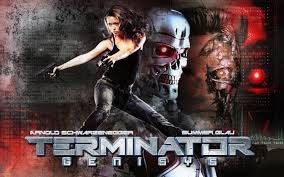
Lorne Balfe composed the score for “Terminator Genisys,” the fifth in the series, which takes place in three different time period, some very dystopian. He talked to me about creating a sound that conveyed the mechanistic themes and how he kept the music connected to the earlier films. “Some people may describe some of the melodies as noise but I think the whole score really is like envisioning what we’re looking at. It’s a hybrid score. We spent a long time in London recording with a fantastic orchestra. We also spent a very long, long time trying to create a sonic world that could represent the world of the Terminator.” He said it was “a great experience” to build on the iconic themes of the earlier films. “Especially coming from watching the classics, ‘Terminator’ 1 and 2; it’s a very iconic world, sound as well as visuals. It really is a total hybrid and a mixture of the orchestra world and electronics. There is obviously a nod to the past. There are the scenes that visually look the same. The very famous theme has one of the most iconic rhythms of all time, which we use. Being able to use that was a great experience, especially because I always remember it when I was young. Definitely, there are scenes in the film where if you’re a fan of 2 all of your senses will come alive. It’s also hitting the feelings of what you heard when you watched the original. A lot of films when it’s a franchise wants to make their own original concept and with the music, especially coming from a background of video games, the themes get forgotten about. But right from the beginning you know that you’re in a Terminator film musically. And then the story evolves. It’s a bit of a rollercoaster really.”

Copyright Peter Oso Snell 2015

Balfe wanted the music to reflect the themes of the film in the way humans and machines are both integrated and oppositional. “The thing is that ironically, when I’m writing a score it’s based around the electronic world because you’re dealing with electronic samples of organic instruments. So you’re automatically beginning purely electronic and then yes, you’re coming up with different colors and textures, with a brass section or a woodwind section. You need to create the same colors with your electronics. So you start coming out of those elements and then you go and the real musicians and that then becomes organic. The other film haven’t ever really fully delved into the whole guardianship connection and the relationship between Sarah Connor and the guardian, played by Arnold Schwarzenegger. And with this I think we really wanted to try to emotionally get a piece of music that really could bond them together. That was a great kind of experiment and we ended up with ironically taking an ‘organicness’ of it but manipulating it because that’s exactly what their relationship is. It’s real and yet something’s not.”

He was brought into the film after filming, when the movie was being edited. “You sit there and it’s very like when you work on an animation and a lot of the detail is missing. So you’re still visually learning and seeing everything change right until the bitter end. It’s also like video games because you start a project and it’s not necessarily finished. The process is fascinating because it just evolves and changes every couple of days. You have to think ahead when writing because it’s all very well sitting there and you look at a green screen and you go, well that person is going to fight that person and there is nothing there sometimes. I can only imagine what it is like for an actor to have to do it because it must be difficult but musically, I in my head try to imagine what the end product is.

I asked him whether working on the film has made him more nervous about technology and artificial intelligence. “I have a long list of things that makes me nervous and that’s one of them. I think you now ironically when the world we kind of live in, I’m not going to go down it but I sat next to somebody in a meeting last week and they had a certain company’s new phone watch and it was monitoring how many times they had actually stood up for the day and done any exercise. So the whole concept of Big Brother has been around for a long, long, long time.”

Related Tags:


Composers Interview
Interview: Stephen “tWitch” Boss of “Magic Mike XXL”

Interview: Stephen “tWitch” Boss of “Magic Mike XXL”

Posted on June 30, 2015 at 3:45 pm

copyright Nell Minow 2015

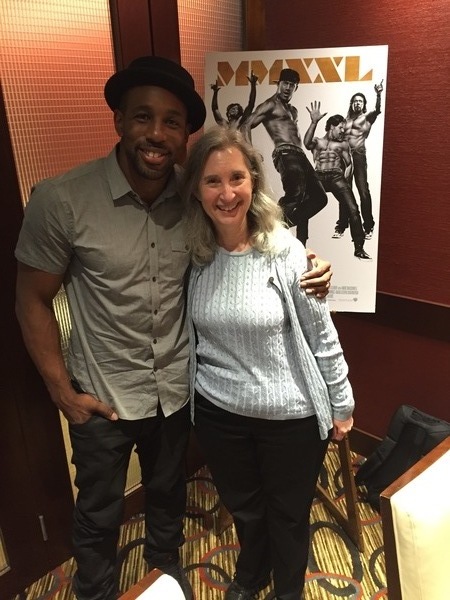
I asked actor/dancer Stephen “tWitch” Boss whether it was as much fun to make “Magic Mike XXL” as it looked, and he said, “Absolutely and even more. People have been asking me what I would say to guys that are hesitant to see the movie?”You might not be big on male nudity but there is an underlying bro movie, a road trip movie that they will love. I think that all guys would like to jump on the road and take a road trip with their friends, an epic road trip with their friends.” He said there was as much bro-bonding off-screen as on. He also enjoyed the dancing, especially his first big scene in a very special club for ladies. “All of the moments of research, all of the anxiety of what it would be like to be dancing around women like that and acting seductive and dancing seductively you know. What was it going to be? And then it happened in that moment and it was a very, very special time. It was great actually. Some guys have a natural, built in smolder, but not everybody is Ryan Gosling. So, the challenge was finding the approach and the fine line and what actually worked for me. What happened was I just found elements of my dance style that I could just tweak a little bit. I dance very aggressively. That is just my style. I dance very aggressively so I had to find a way to balance that out to where it’s not scary but it’s just like a sexy aggressive kind of thing. So it just took practice. We had a great choreographer, Alison Faulk and also Theresa Espinosa who were in rehearsal with us. They helped hone and the sexy, hone and the nasty and then just blend them and put it on screen.” They made sure each character had a distinctive style. “We read through the script and made sure that each performance was remarkably differently from the next and that each character could actually have their moment to shine in the individual pieces. And again, you know, shout out the choreographers, Theresa and Alison for being able to use people’s individual strengths. That was perfect and that’s one of the greatest things too is that, this movie, it’s going to go beyond this film. It’s going to shift the way that male entertainment packages are going to offered as opposed to just like a Chippendale’s-style show. We’re mixing all kinds of different elements, more individual and contemporary.

He enjoyed the “healthy competition” among the actors in “Magic Mike XXL.” “We just wanted to be at our best because we knew that everybody was going to be at their best. And because these are a professional group of gentlemen. They were 100% yin there. Like he’s either going incredibly full out or he’s not going to do it and that was the attitude. Anytime we stepped on stage we had to be the best.”

tWitch said that his earliest dance inspiration came from music videos, especially Michael Jackson, Paula Abdul, and Janet Jackson. “It’s what I latched on to in my heart.” Later he studied the movies of Gene Kelly, Fred Astaire, and the Nicholas Brothers. And he loved Sammy Davis, Jr. “And you know who I have been getting into it recently here even though he was a singer, Jackie Wilson.” His favorite style of dancing is locking. “That derived from the Funky Chicken back in the early 70’s. There is a subculture that has taken it and studied it and taken it down to a technique and a science. Overseas they’ve broken it down to university level. You have a curriculum of Locking so you know I love that.

Coming up next is the new season of “So You Think You Can Dance.” “This season is called ‘Stage vs Street.’ We take the top 20 and we split them in half, 10 stage dancers and 10 street dancers. I am the mentor for the Street contestants and that starts July 3rd. It’s going to be a great show and I have faith in my Street team. We bring a very raw energy and we have some things to say.”

https://www.youtube.com/watch?v=Un_jz2DBCV4
Related Tags:


Actors Interview
THE MOVIE MOM® is a registered trademark of Nell Minow. Use of the mark without express consent from Nell Minow constitutes trademark infringement and unfair competition in violation of federal and state laws. All material © Nell Minow 1995-2026, all rights reserved, and no use or republication is permitted without explicit permission. This site hosts Nell Minow’s Movie Mom® archive, with material that originally appeared on Yahoo! Movies, Beliefnet, and other sources. Much of her new material can be found at Rogerebert.com, Huffington Post, and WheretoWatch. Her books include The Movie Mom’s Guide to Family Movies and 101 Must-See Movie Moments, and she can be heard each week on radio stations across the country.

Website Designed by Max LaZebnik