Interview: “The World’s End” Composer Steven Price

Posted on August 21, 2013 at 5:12 pm

The fifth and best end of the world movie of the summer is called “The World’s End,” and it is the last in what is now being called the Cornetto Trilogy from Simon Pegg, Nick Frost, and co-writer and director Edgar Wright.  “Shaun of the Dead” was a zom-rom-com (zombie romantic comedy) that featured red Cornetto ice cream.  “Hot Fuzz,” a send-up of over-the-top action films, featured blue.  Stay through the credits of this one to find out what flavor, or, I guess I should say, flavour since it is British, appears in this one.world's end poster
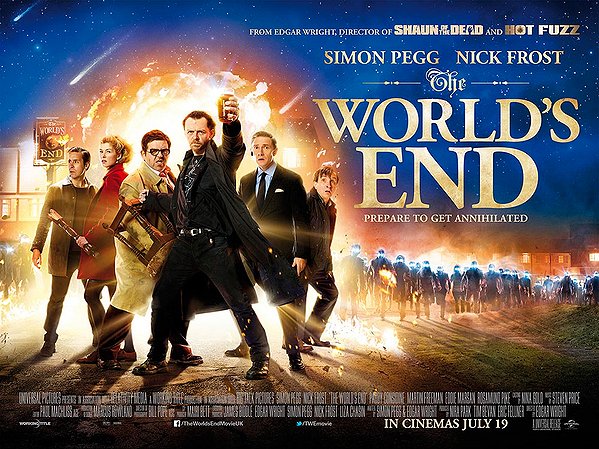
I spoke to Steven Price, who composed the score.

You were writing for the wonderful Pegg/Frost/Wright trio and the movie has robot aliens!  Was this the most fun movie project ever?

It’s certainly up there!  It was an amazing gift for someone who does music to play with because you’ve got the big action sequences and the sci-fi mystery stuff and relationship scenes.  So it’s everything you might want to do as a composer and the team involved were pretty good as well.

How did you get involved?

I met Edgar quite a while ago now.  The first film I worked on was “Scott Pilgrim vs. the World.”  It is wonderful to work with him because everything is so well-planned so choreographed, but he is very, very open to different ways of doing things, so as a collaborator he is great fun. Edgar exec produced “Attack the Block,” which was my first feature film, so when this one came up, and he explained what he had in mind, it was an exciting time, really.  The characters were all friends and getting out of school.  Now they’ve all moved on with their lives, with wives and kids, except for Gary King, who was one of the most popular ones in school and never got over that night.  Everything seems to have gone wrong for him so he persuades them to do this pub crawl but none of them really want to.  You can’t go back, really.  That’s the main theme.

This is a comedy action sci-fi film.  How do you set the mood for that musically?

One of the first things that Edgar and I talked about was that everything musically we would do would be serious because for the characters none of it is a joke for them.  Whenever we did err on the side of doing anything at all funny you realize very soon that it doesn’t help at all.  We took it incredibly seriously and the action music was meant to drive along what was happening.  The performances in the fight sequences are so amazing and convincing and the actors genuinely did it themselves.  It’s not like there are a lot of cutaway for stunt people. It’s all very choreographed and well put together that it was great of fun to do.  It’s not like when you have to cover up a lot of cuts.  You could play along with the action and progress the whole tension of the scene as it went.  It was fun to do those fight scenes and get the energy right up there.  There was so much on scene you find yourself just playing along and enjoying it, really.

At what stage did you get involved?

Edgar’s great because he involves you early on.  I saw the script a while before they shot and we talked about what he was doing.  There’s a lot of great pop tracks in the film, really evocative songs from the years when these characters were growing up that Simon and Edgar put into the script.  We talked a lot about that and Edgar wanted to make sure that it was not like, here’s a song and here’s the score but the whole thing weaved around it so that the music should feel connected to that.  That was something we were very keen to do, incorporate some of those sounds into the score itself so you feel like the whole thing’s a body of work, this rhythm going through and connected to the characters.  Simon plays a character named Gary King.  Quite often you’ll hear a kind of slide guitar thing for his character.  The connotation is the Western and getting the gang back together and all of that kind of thing.  That came out of me listening to “Loaded” , which is a huge song in the film.  In my mind, he lives that era, and the slide guitar became a kind of character thing for Gary.  So all along I was playing it, and I always intended to replace it with some great player because my slide guitar playing is a little bit shaky.  But toward the end I realized it was was absolutely the thing to do to leave it as it was.  This version is in Gary’s mind.  There are a lot of things wrong in Gary’s life and it’s not a bad thing to have the guitar a little shaky.

And what about the female lead, played by Rosamund Pike?

We’ve all looked back on things in our youth, so that was a great one to do.  We played it very pure.  We didn’t steer away from being emotive.  We didn’t try to make it arch or a bit knowing.  Steven, played by Paddy Considine, always genuinely wondered how it would have worked out.  So we played it very purely.  That is, until it is interrupted by aliens!

The characters were in high school in the 90’s? Was that your era?

Yes, we hark back to the early 90’s, like ’91.

I’m a little younger than them but music-wise that was when I was first old enough to have my own money to buy records and some of the tracks we used were real blasts for me like Suede’s “So Young.” Scary that it was 20 years ago!  It evokes that whole  time so well and it was nice to reflect that in the score.  There’s music of the era like the Stone Roses.  I remember vividly getting Stone Roses records, comparing the vinyl and it was almost like a currency at the time, which records you had.  The Blur track — I remember being obsessed with that in the day and trying to learn the guitar part.

It’s not a traditional Hollywood film score.  It’s embedded in the British sounds from what we would watch in science fiction programs and the  Radiophonic Workshop stuff.  They we a BBC unit who did the 80’s-era “Dr. Who” — a lot of those early synth sounds came in very useful.  They evoked a peculiarly British thing.  We also have an orchestra.  The film does get very big.  But it’s combined with a lot of the electronic stuff and interesting noises and experiments, things that felt very rooted in this small town where it takes place.


Related Tags:


Composers Interview Music

Interview: Lily Collins of “The Mortal Instruments: City of Bones”

Posted on August 19, 2013 at 8:00 am

It was great to catch up with Lily Collins, star of this week’s release “The Mortal Instruments: City of Bones,” based on the best-selling series by Cassandra Clare.  The last time I spoke to Lily, she was playing a princess in the Snow White story, Mirror, Mirror.  This is another fantasy story, though with a lot more action.  This time, she plays a girl who discovers that she is not human.  She is the descendant of a line of warriors who protect the world from demons that cannot be seen by ordinary people.

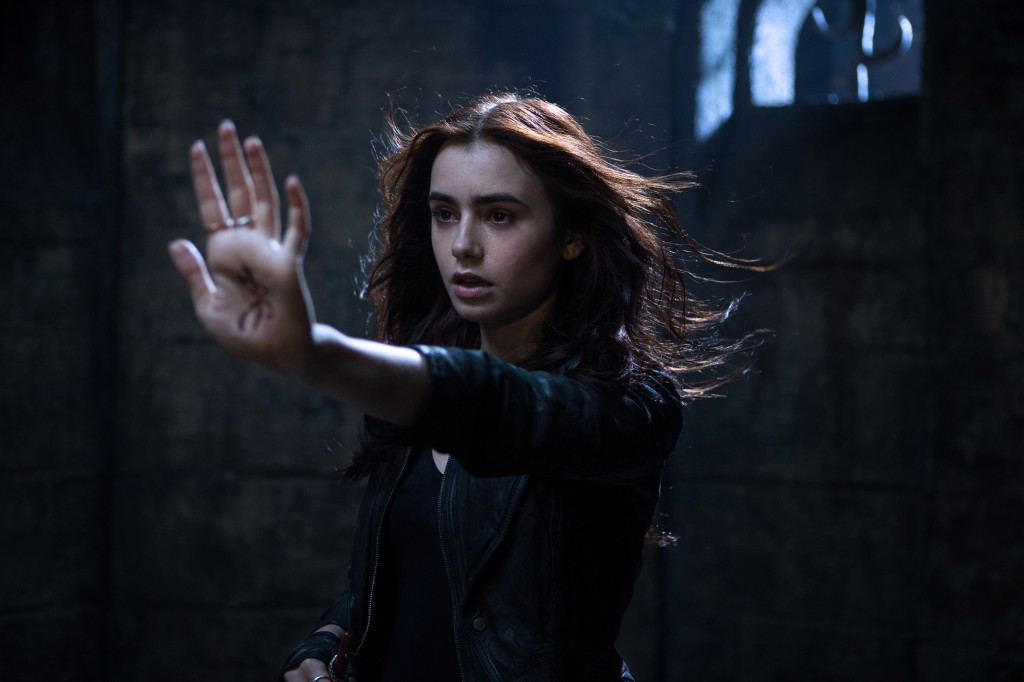
Lily-Collins-as-Clary-Fray-1024x682You were a fan of the books before you were cast in the film, right?

I was.  I had read the first book and so when I heard there was going to be a movie I sent out a bunch of emails saying, “I have to get in on this!”  Then it happened very organically.  I got the call that I had the role.  I was a huge fan of the series and to be cast as a heroine I admire so much was a huge honor for me.

Tell me a little about what makes her such an admirable character.

She is on this whole journey because her mom has been taken.  She has this entire adventure story based on finding her voice in this fantasy world that is new to her.  What drives her the whole time is is getting her mom back.  I am really close with my mom so I could relate to that.  She is this really passionate, feisty, determined young woman who never lets herself be victimized, and I really admire that about her.

These books have some very committed fans.  What have you heard from them about their hopes for the film?

I’m a fan as well, so like them there were certain things I wanted to see on screen.  They want that connection to all of the characters that they have read about in the books.  Cassandra wrote it in such a way that you really do feel like you could be friends with everyone in the books.  Even though it is fantasy, everyone is down to earth and realistic.  And Cassandra wrote comedy in there, too.  You just laugh out loud reading some of the lines.  And the action, of course.  They’re hoping to see that brought to life, and the spark, the romance between Clary and Jace.  It’s one thing to envision all the fight scenes and the weapons and another to bring it to life on screen.  You’re going to be on the edge of your seat the whole time.

The characters in the book get markings on their skin called runes.  What was that like?

My character only has two in the first book because I am just discovering that I am a shadow hunter and discovering my power.  But the other guys had them all over their bodies.  They had hours of makeup because they had to cover their real ones and then get the tattoos for the story put on top.  I didn’t have as much time in the makeup chair getting them put on but when I did it was a cool process.  Clary gets bit by a ravener demon, the reason I have the first one put on me, and there was a lot of prosthetic that took about two hours to put on.  But it was cool and it really helps enhance the translation to fantasy out of reality.

This is your second big fantasy film.  What are some of the challenges of fantasy?

In this film we luckily didn’t have that much green screen.   Harold really wanted the set to be very realistic and for us to have the depth and the sense of being immersed in the world that Cassandra wrote.  But of course there was some guy in a green suit where I was being pulled into something and had to imagine what it was.  Having to emote to a stick or a piece of paper is very strange and not something you’d get in an independent drama.  But you’re surrounded by other people who are going through the same thing and understand how it can seem ridiculous and you can have fun with it together.

There’s one scene where I have a newfound power and use one of the runes that basically freezes time and motion.  So we had to avoid certain things in the environment but all we had were tennis balls on sticks showing us where things would be.  How ridiculous do you look — there are lots of outtakes where we are laughing.  But you get over it after two or three takes and you get through it.

And now you’re going to film the next chapter, right?

We start filming in September!

Related Tags:


Actors Interview

Interview: Cuba Gooding, Jr. of “Lee Daniels’ The Butler”

Posted on August 16, 2013 at 3:58 pm

the_butler cuba gooding jrI spoke to Oscar-winner Cuba Gooding, Jr. about his role in “Lee Daniels’ The Butler” as Carter, a colleague and friend of Cecil, the character played by Forest Whitaker.

My favorite scene with your character is when you had to post bail for Cecil’s son, Louis.

The whole idea behind it and reason I was so attracted to this screenplay was that it is an expose of the times all the way back from slavery to the inauguration of Barack Obama, and specifically the turmoil of the era after JFK and Martin Luther King were assassinated.  There were different thoughts about how best to respond to racism.  One was the view of Martin Luther King, Jr. mindset that we should be seen as accessible and approachable and lead by example, and the other more aggressive frame of mind, the “by any means necessary” views of the Black Panthers and Malcolm X.  What’s beautifully expressed in this movie is how it doesn’t alienate people but shows these two approaches in a way that’s accessible and open and un-opinionated.  That’s what makes Lee Daniels such a brilliant director.  I always say to him, “If Spike Lee did this movie, no one would see it.  He would have had his opinions and his personal beliefs encroaching on it.  As a gay, black filmmaker, there is so much truth in his life that Lee’s willing to expose.  There will be raw and uncomfortable moments because he does not know anything but the truth.  And in that scene, you have Carter, a butler who is forced to wear a certain face to those around him, dignitaries, he has to be professional to the nth degree.  Louis is trying to find his way with a more aggressive stance. But he knew he could come to Carter because they had a relationship.  My character is there to show that even though they had to act in a particular way, they had to be representative of something they were still human.  That is a very humanistic scene, so people can identify that this is a family with very real issues.

Yes, your character had an upstairs face and a downstairs face.

I fell in love with the idea of doing this script when Lee sent it to me five or six years ago.  This is a powerful, encompassing tale of what African-American men have been dealing with since the formation of this country.  I’m a huge fan of boxing and I have studied the history of pugilism.  When Jack Johnson was the first black heavyweight.  He was dominating boxers.  He was only looking to fight white boxers because they wouldn’t fight him.  When they finally did get rid of him, they looked for any opportunity and finally found it.  It took 40, 50 years for another black champion to come along because it was like “we’re not going to have that scenario again.”  And then came Joe Louis.  Was he any less talented or ferocious?  No.  But he knew he had to act different to be accepted.  He was the polar opposite of everything Jack Johnson did.  That’s what makes this movie great.  You have these butlers who have to be “invisible in the room — the room should feel empty with them in it,” as it says in the script.  That is their job.  And then there are the locker room scenes, which are full of life!  You see that these were living, breathing, powerful men.  And that is why being in this film has been such a blessing.

That’s one of the reasons the first scene with Richard Nixon is so meaningful — he comes into the kitchen, the private, backstairs, backstage space.

My favorite scene!

What do you hope the teenagers and  who are too young to remember the 60’s and 70’s will get from this film?

There’s such a disconnect with today’s youth in understanding the atrocities that happened on American soil.  That’s how “Django Unchained” can be a huge hit because they aren’t identifying what it really meant to be a slave, to watch a man rape your wife and allow it to happen.  This next generation of kids will be making decisions for us and they’re not up to date on understanding the past.  It’s horrifying to me.  I want people to talk in the car on the way home — about the love story or about the freedom riders or about the politics. As long as they’re talking, we know we did our job.

Related Tags:


Actors Interview

Interview: Kirk Cameron on “Unstoppable”

Posted on August 13, 2013 at 3:59 pm

Kirk Cameron is one of the leading figures in faith-based and inspirational entertainment.  For the first time he has taken on the role of producer for a film he calls his most personal project.  It is the story of his own journey to discover the answer to one of the central questions of faith and indeed of human existence: Why do bad things happen?  The film is called “Unstoppable,” and it will be shown in theaters on a special one-night event on September 24. The trailer was initially misidentified as spam on YouTube and Facebook. After protests from a couple of million people, they apologized and put it back up with full access and, according to Cameron, “tickets are flying off the shelves.”

Cameron was nice enough to talk with me about “Unstoppable” and about his new project to help fathers guide their sons to manhood.

Is this a documentary or a feature film?  It’s kind of mysterious.

Cool, I like mysterious!  That’s great.  People think of documentaries as dry, informational, fact-finding kinds of stuff.  This is similar to what I did last year, “Monumental,” a journey with an exciting story, lots of artistic re-enactments of things that have taken place.  It delves into the question: Where is God in the midst of tragedy and suffering?  Why does God let bad things happen to good people?  We’re discovering the answer to that question in a documentary, but it is done in a very dramatic, action-packed narrative story.  It’s hard to slip it neatly into either one of those categories.  I just call it my new film.

You’ve called this your most personal project ever.

It is a personal journey and I know it will be for everyone who watches it, not because I know everyone but because it is a universal question.  It is in the top five questions in the world for everyone, atheist, Christian, Jew, Muslim, Hindu, Buddhist, everyone is rocked by this question.  Where is God in the midst of tragedy?  If He can heal me, why doesn’t he?  Is He not listening?  Is He not there? Are the atheists right?  This is personal for me.  We’ve been volunteering for 25 years at a place called Camp Firefly, for children who are seriously ill.  My own family members are experiencing tragedy.  I have skin in the game.  I have a horse in this race.  I want to understand why my 15 year old friend Matthew died. That sent me on this personal, transparent journey, to his funeral, to his burial, and then back to the Scriptures to understand the character of God, a God who would flood the world, who would pronounce a death sentence for the human race, who would allow tragedy and suffering, who would allow his own son to die on the cross and still say He is a God of love, mercy, and grace.  I want to understand that.

Where do you begin?

I did not call Deepak Chopra, Rick Warren, Oprah Winfrey or any of the go-to guys for a lot of folks .  I didn’t just want an academic answer to the problem.  I can do that.  I can solve the problem of evil logically, rationally, philosophically, theologically.  I can wrap an atheist up in a bow and put him up on a shelf if he thinks I will question my faith with an argument like that.  But that doesn’t solve the heart-crushing pain of a mother who is watching her child die of cancer.  I wanted to take a journey into the heart and character of God and the only way I know to do that is by reading the book that He wrote, where He tells us the hows and the whys, going back to the Garden of Eden and the very first tragedy.  That was not a fairy tale in a cartoon book.  These were people making choices, and this is when tragedy and pain and fear entered the world.  Then a brother murders a brother and then a whole culture becomes wicked and corrupt and God flooded the world and started over with a new man and a new woman and a new family and a garden and a promise that God would fix and change all of this.  And that takes us to Moses, and then to Christ, the crucifixion and resurrection and then the destruction of the temple in Jerusalem.  I’m taking a narrative story approach to this God who allows pain and suffering and steers all of it, to use what He hates to accomplish what He loves.  All of this will work to the good for those who love Him.  Ultimately, my authority is the Holy Bible.  Everyone else is second banana.

What do you hope to accomplish with this film?

I want to do it this way so that everyone will watch it together, same night, same time, and then let the conversations begin, with atheists, believers, people from all different backgrounds.  I hope people come out of the theater and say, “I love God!  He is good and I can trust Him!  He never takes His hand off the wheel, even though I am experiencing trials at the moment.”  I want people to ask “Why?”  Some people say you shouldn’t ask, or it’s not ours to ask.  But if you don’t ask the questions, you miss out on the faith-building answers.  The whole Book of Habakkuk would not have been written if she had not asked the question “Why?”  It begins “Oh God, why do the heathen rage?  Why is it that the wicked seem to prosper and Your people seem to be buried under tragedy?”  It’s a fantastic book that starts with the question, “God, where are You?  Why is this happening?”

How has being a dad influenced your feelings about these issues?

When you’re a teenager, you can say, “I love kids; I want to be a camp counselor.”  When you have kids of your own, you say, “What did I let myself in for?”  But there’s this deepening of love and compassion as a human being when you’re a parent because you’re responsible for this little soul.  They look to you for everything.  They trust you.  They depend on you.  When my friend called and told me that his 15-year-old was lying in the bed, dying of cancer and saying, “Daddy, can you fix me?” the only thing he could say was that God was the only one who could heal him.  He could say, “I’m praying like a wild man that He will, but He knows what’s best.”  As a father, that shreds you up.  This has affected me very deeply as a father.

Tell me about the Boy’s Passage, Man’s Journey project.

It’s a plan to help fathers make a plan for transitioning their boys into manhood. The subtitle is “Destination: Manhood.” Ask your husband, “When did you become a man?” Some will say when they moved out of the house, or got married, or became a dad, or joined the military. A lot of guys don’t really know when they became a man; they just slid into it sometime in their 30’s. In a lot of other cultures, there’s a marked time, a very significant moment, usually in the community of other men. In our culture, we don’t usually have that. Kids sometimes do that by being initiated into a gang or fathering a child outside of marriage as a way of proving their manhood. This is a way for fathers to help their boys become men in a positive way.


Related Tags:


Actors Interview

Interview: Lee Daniels of “The Butler”

Posted on August 12, 2013 at 7:00 am

“Lee Daniels’ The Butler” is inspired by the real-life story of a black man who worked in the White House for decades, serving eight Presidents from Truman to Reagan.  Born in the Jim Crow-era South of lynchings and segregation, he lived long enough to cast a vote for Barack Obama.  Forest Whitaker plays Cecil, the butler, Oprah Winfrey his wife, Gloria, and David Oyelowois their son, Louis, who becomes a leader in the Civil Rights movement.  The cast also includes Robin Williams as Dwight D. Eisenhower, Alan Rickman and Jane Fonda as Ronald and Nancy Reagan, John Cusack as Richard Nixon, and Vanessa Redgrave as a plantation owner.

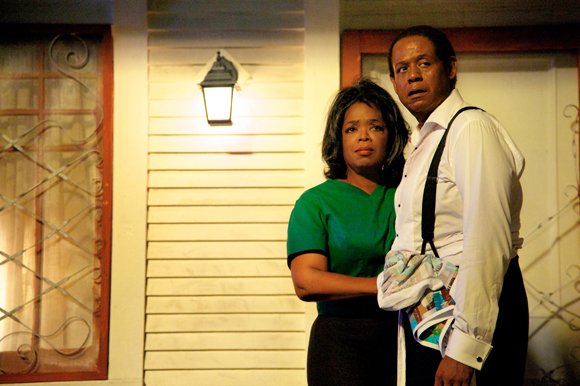
One of the challenges of a film like this is dressing all the characters over decades of changes in style and fabrics.  How did you manage that?The-Butler-Winfrey-Whitaker_t620

That is the formidable and brilliant Ruth Carter, who does not get enough credit for her work.  She’s worked with Spike Lee on “Malcolm X” and some of his other films.  She’s an Academy Award-nominated African-American costume designer, the first I think, who really understood the period, really understood the generational differences as time passed and gave me her heart and soul.  She was as exciting to work with as Oprah.

How do you evoke the important details of such a large swath of history without getting lost?

We don’t focus on history.  History is the backdrop.  The focus is the family.  I have to tell what I know.  I’ve never been in the White House.  So that was really a specific choice to focus on the father and son love story and make the rest of it a backdrop, the White House and the Civil Rights movement.  Otherwise it is not a story; it’s a history lesson.  Danny Strong wrote an incredible script.  He know so much about history.  I had to do some research on the White House, but the sit-ins, the bus rides, the different drinking fountains, those were things my family and I experienced.  I once drank from a “whites only” fountain and got slapped by my dad.  I thought there would be Sprite coming out of there!  My experience is that experience, either from personal experience or from my mom or my dad, or my aunts and uncles and grandparents.

How did you talk with Forest Whitaker, who plays the title character, about the way his character would show his age over the course of the film?

He is one of if not the premier actors of our generation.  He brings a load of stuff that he’s studied and thought about.  For me, it was really about being a puppeteer, guiding him, telling him maybe a little too much here or there but it’s all him.  I just told him when to bring it down or bring it up, like adjusting the volume.  He comes at you like a cannon, but with humility.

Why was it so important to you to get Oprah Winfrey to appear in this film?

We are friends, because she produced “Precious.”  We were looking for something to do together.  But then she got nervous.  And I said, “Wait a minute.  You told me you were looking for something.  Now I done brought you something.  Now you’re getting nervous because of something called OWN.  I don’t care about OWN.  I care about seeing you as an actress, the way you were in ‘The Color Purple.'”  I pushed her, pushed her, begged, pleaded.  Cried.  Until she came to Poppa.  Then once I got her, it was intimidating.  Not because of her.  It was in my head.  I was “Oh, my God, it’s OPRAH!  What do I do?”  So it was about un-knowing her.  That’s what excites me as a director, taking people and confusing the audience about who they are, who they think they know.  Because I remembered the actor she was and the work she’d done for “The Color Purple.”  So it was about me stripping her down and once that happened she was vulnerable.  She was raw.  She was nervous.  She was anxious.  She was like a little girl.  And I felt very protective of her.  She was just one of the crew, lining up for that messy food at craft services with everyone else, one of the gang.  The only ego was the film.

What do you want people to talk about on the way home from this film?

How they could laugh and cry at the same time.  How I didn’t take it too seriously.  In the research I did with the slaves and the Civil Rights movement, they didn’t take it too seriously.  If they didn’t laugh, they got terrified.  So they had to laugh through the tears.  I hope people will say, “Lee Daniels did not take it too seriously, and by that he told the truth.”

There is a strong theme in the film about the meaning of service.  What does it mean to serve?

To help.  To help in any way possible.  Louis helped his country by doing what he did and Cecil helped his country by doing what he did.

Related Tags:


Directors Interview
THE MOVIE MOM® is a registered trademark of Nell Minow. Use of the mark without express consent from Nell Minow constitutes trademark infringement and unfair competition in violation of federal and state laws. All material © Nell Minow 1995-2026, all rights reserved, and no use or republication is permitted without explicit permission. This site hosts Nell Minow’s Movie Mom® archive, with material that originally appeared on Yahoo! Movies, Beliefnet, and other sources. Much of her new material can be found at Rogerebert.com, Huffington Post, and WheretoWatch. Her books include The Movie Mom’s Guide to Family Movies and 101 Must-See Movie Moments, and she can be heard each week on radio stations across the country.

Website Designed by Max LaZebnik