Interview: Dante Brown of “Won’t Back Down”

Posted on October 13, 2012 at 8:00 am

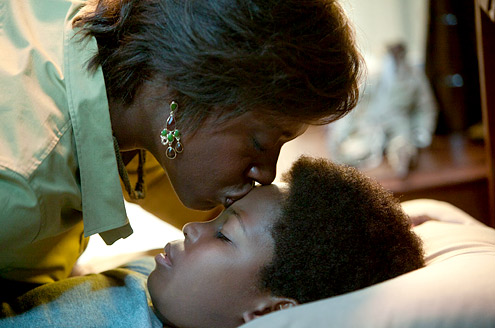
Oprah called him one of her all-time smartest and most talented kids.  And now Dante Brown is appearing in the new movie “Won’t Back Down,” a touching performance as the son of the teacher character played by Viola Davis.  He was nice enough to answer my questions about the film.
What do you see as the biggest challenge facing schools today?

I feel that when your parents are not as active in your life, then disruptive behaviors come out in other places… home, after school programs, interacting with classmates & friends, etc.  I feel the biggest challenge that teachers face in schools, today, is… kids’ inappropriate behavior in class and a lack of respect for authorities.  As for schools in general, probably, a lack of resources and funding for students to have access to the latest technology, supplies and other stuff needed to make for a great school.

What happened to the school that inspired this story?

I’m not really sure there was one particular school that the movie was “inspired” by… at least that’s what I’ve heard Mr. Daniel Barnz say in some of his interviews, so I don’t really have an answer for that directly, but overall, for school’s that have experienced this or something similar to what takes place in the movie, I’d venture to say that the result might have been difficult at first, but like anything, if you keep at it and continue seeking excellence, the Principal and teachers prevail… the parents & students will prevail, so the school eventually is a success.  As long as there’s mutual respect and cooperative efforts toward the one goal of making the school successful.

How can families be more effectively involved in supporting local schools?

By taking an active role… when the school/kids have different events, go.  Know what’s going on with your child.  Attend the parent-teacher conferences.  Sign up to receive the emails, voice broadcasts and other communication.  Show that you care.  Take the time to attend different school events and if you have the time, volunteer and participate.  If you have ideas, share them and see them through.  That’s all it takes. Lead by example for your child that’s a student at the school, so that they, too, will be encouraged and excited about participating and being active in the school’s activities, whether it’s a school clean up day, a fundraiser, a movie night or talent show.

If you could make one change in the law to help schools, what would it be?
Every Principal would be required to have successful scores on their evaluations before being given a school.  I say this because my parents told me that the way a business or organization functions, depends heavily on its leaders.  I’m not really sure about school laws, haven’t really given that much thought, but if there’s not a law monitoring how effective a Principal or Teacher is, then perhaps there should be one. A law that would somehow monitor their effectiveness in helping their students to thrive, because after all, that’s the whole purpose, right?

How did you become involved with this project?
When my agent sent over the sides for my audition on the tape, the project was originally named “Still I Rise.” I immediately thought of Maya Angelou’s poem and was very interested in getting to know my character more, as well as the story. My name means poetic, so it’s ironic that I love poetry, and I was like, “Wow, interesting movie!   Then I read the sides and the character was very different than me. But since the movie is a drama, and I love drama, I wanted to nail my audition to make sure I got a callback and be strongly considered for the role. So, I auditioned for it, is how I became involved with Won’t Back Down. LOL

Can you tell me about your casting process?
Sure.  My agent submitted me for the role and I auditioned for it.  My first audition was on video tape.  My Mom took me to someone in LA that tapes actors for auditions… it came out really nice… it was in high definition and looked great.  So we forwarded the link to my agent and my agent forwarded the link to casting in NY, I believe, because that’s where the Director Mr. Daniel Barnz is based… I think.  At least I know his family is from the east coast.  I didn’t know that until recently. *smiles*  Anyhow, I guess Mr. Barnz liked what he saw, so I was called in to meet him in person, out here in LA, for callbacks.  During callbacks he complimented me alot and before I left, said that he’d see me later, which they often do, but I don’t think anything of it, until my manager or agent actually calls to tell me I got the part.  Anyhow, a couple of weeks later they called and told me I booked it and I was super excited, especially after learning that I would play the son of Mrs. Viola Davis and Mr. Lance Reddick.

Related Tags:


Actors Interview

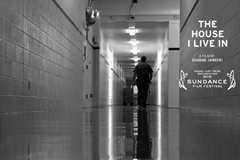
Interview: Eugene Jarecki, Director of “The House I Live In”

Posted on October 12, 2012 at 8:00 am

Eugene Jarecki’s new documentary about the failure of the drug wars by any standard — economic, practical, moral — is a powerful and sobering call for treating drug abuse as a public health problem and not a criminal problem.  I spoke to him about the film, his decision to include a very personal story, and what he has learned about programs that are more effective in addressing the problems caused by drugs.

You begin with a home movie about your own family and bring in a very personal story of drug abuse in a family close to you, unusual choices for a documentary about an important public policy issue.  Why did you do that?

You ask yourself at a certain point when you’re making a film of this kind whether and how to be most honest about the role that you are playing as a pursuer of this information in these stories.  Sometimes staying very much out of the way has its place, particularly in a movie like this where there are so many characters and there’s so much to tell.  It seems like a clumsy vanity that I would be in the movie at all. I would have thought, “What business do I have being in this movie when the people who really need to occupy screen-time are the people whose the stories will appear in the film, who have so much to say about this broken system, whose lives are such a testament to its carnivorous behavior?” So what role do I have? And then at the end of the day, I played that game for a long time, but I was making a movie where it was very hard to understand what was the modus operandi of the filmmaker, because these stories were chosen in 20 or 25 states; they were all over the place at all levels of the war on drugs.  When we would do early screenings for our friends and in the editing room it felt a little bit like there is a driving force in this film that is inside Eugene’s feelings about the country he lives in that is somehow missing here—and how do you inject a little bit of that without getting in the way at all? And so it meant the occasional glimpse of me as a pursuer of this national story, of trying to unravel this national mystery as well, was at least a role I could play.  But to have me in there at all, of course, that brought up the fact that I had a deep, intimate, personal relationship with one of the stories I had been telling.  In my early cuts in the film that early on, Nannie Jetter appears in this film just as a character, with no mention of the fact that I had an intimate reason for being interested in her. So that changed.

As a filmmaker, I’d like you to talk a little bit about the sometimes glamorous images that we see of the drug world in films, mostly fiction from feature films like “Scarface” and “American Gangster,” but also television shows.

Don’t lump “American Gangster” in with other movies that have been made about the drug war in America because American Gangster is already a post-modern take the drug war in that it is a movie that understands what my movie understands. It’s a movie made from a very critical perspective, where Steve Zaillian’s script really examines the war on drugs and the hypocrisy and the humanity of it all with a lot of wisdom,  I was very impressed by “American Gangster,” particularly for a Hollywood movie. It’s hard to get good substance through Hollywood. Hollywood is a town driven by fear and by economics and the people in it, unfortunately whatever their inner politics are, they tend to make movies that portray images that are serviceable to some exploitative vision of industrialized film-making.  So you end up seeing over and over dehumanization in the service of making a big box office, and the movies tend to exploit that in us which is our least and our worst rather than looking for that in us which is majestic and human. And so what I can do if I have my little camera and my little team and the idea of a movie, is to be an antidote to that, and to try and portray majesty in the human condition.  That includes the majesty of a survivor like Nannie Jetter who survives slings and arrows I couldn’t imagine, or the majesty of a security chief in a prison who finds a way from his position of power to nonetheless risk his own job in talking to me and being so candid, to people up and down the chain of command who, in one way or another, demonstrate tremendous personal reserves.  That’s the best antidote I can give to the dehumanized, cartoonish portraits that the industrial system produces.

You’re quite right about the conclusion of “American Gangster,” but it does perpetuate this notion of the kind of glamorous, killing machine that is at the root of drugs and I think is often part of the popular perception.

Yeah, but it does that in the middle of an argument that the U.S. government aided and abetted the injection of drugs into the inner cities. This is an extraordinarily dark aspect of the American story, one so dark I was probably too cowardly to go into it in my movie, and yet that movie, for all of its other Hollywood tropes, notwithstanding that, went into some very intense territory there.  And I don’t think portrays Frank Lucas as a hero. I think it portrays Frank Lucas as a human, and as such, he does some stuff which looks and feels like a movie because there’s killing and there’s cut-throatedness, but he also is a human being trapped inside a cycle of ongoing degradation and despair in the African American community. So for him to want to get his, but he does so at the expense of his own people.  That is the bitter irony of that character and it is a super-sensitive movie to have understood that.  Look, Hollywood is what it is, it needs to sell some tickets, they’re going to do certain things that are conceits that are time-proven, and I don’t want them to do that. But if you gave me the choice to not have a movie or have a rather substantive movie like “American Gangster” that’s going to have just enough of those to get over and get some box-office, I’ll probably choose the second because this needs to be more talked about, not less, and I’ll lose my religion over some of those details.

You have mentioned Portugal as a good counter-example to the US approach of criminalization.  Tell me a little bit about what they do well.

They pursued wholesale decriminalization, and you can Google the statistics online. The statistics of success in Portugal, in the early phases but relatively substantive phases of their process, are exemplary. And they speak to the possibility, they speak to what all of us would know to be the case, I mean, we’ve learned in New York City for example, that one of the primary determining factors of why New York City has a reduced crime rate over what it had in the past is that New York State is one of the only states in the country that has actually reduced its prison population. We know in this country statistically from criminology that the prison is criminogenic, that prisons create more crime. So this mass incarceration system creates a spiral towards increased crime and increased incarceration, and when you reduce it, you defuse that spiral, you de-energize that spiral and so when you see other countries in the world that, from a starting point, don’t have our commitment to mass-incarceration and from a starting point do not have industrialized systems of mass-incarceration like ours, you already see that they don’t have that kind of explosive tragedy unfolding and that means their spiral is not getting worse and worse all the time as ours is.

You touch on some very important stuff in the movie, the follow-the-money incentives, like federal programs now that reward local jurisdictions based on the number of drug arrests that they make.

Michelle Alexander talks about them in her book, The New Jim Crow, and she talked to me quite a lot in our interview with her, that stuff was a little bit in the weeds, it’s so specific. But yes, the grant programs that reward police departments for increased drug arrests create a climate of incentivized, low-level law enforcement harassment, so it should be no wonder, for example, that in New York City, we have several hundred thousand stops a year, 350,000 of them become frisks. Of these, 90% of these people are young blacks and Latinos.  Of those 350,000 frisks a year, only 10% lead to an arrest. So 90% are just harassment.  This is a grotesque system. So once you know that that’s at work, this has to be stopped.

Are there any politicians who are on-front in this issue or are they all terrified?

Congressman Bobby Scott is an exemplar on the matter of the drug war. Senator Jim Webb, who could not get sufficient support for his omnibus crime bill, but should, and should be given support for the setting up of a blue-ribbon commission to study our criminal justice system and overhaul it.  Cory Booker’s one of the leading voices against the drug war in the nation and from his mayorship in Newark.  And there are others across the country in their small ways, here and there, who matter deeply and who’ve gone up against the country’s drug policies. And the occasional judge will do that, and the occasional public figure will do that, but of course, it’s far too few. The real headline is, it’s far too few.

What do you think the fascination is with shows like “Weeds” and “Breaking Bad” in glamorizing small-time drug-dealers?

I think people are fascinated by drugs in America. We’re one of the most addicted countries in the world for a lot of reasons. I think drugs are a place that despairing people find solace in and escape, I think there’s an increasing level of despair in this country over a sense of existential meaninglessness. The point of being a country has been undermined by capitalism in this country.

Related Tags:


Directors Interview

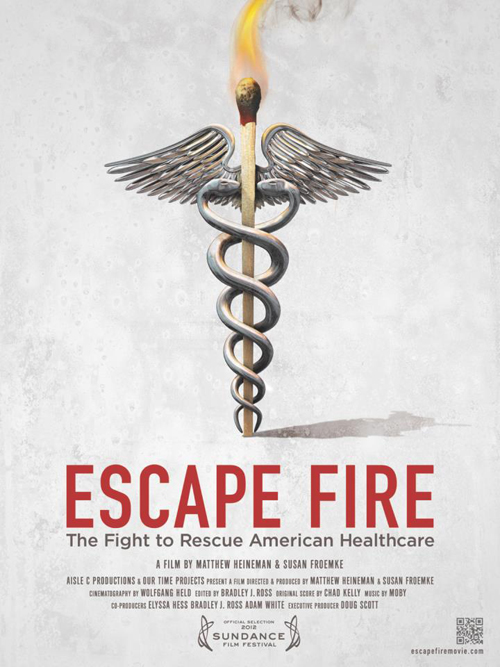
Interview: Matthew Heineman of the Health Care Documentary, “Escape Fire”

Posted on October 11, 2012 at 6:56 pm

“Escape Fire” is a new documentary about what does not work in our system for preventing and treating illness, and what some people are doing to make it better.  I spoke to Matthew Heineman, co-director and co-producer of the film.

Tell me about the reactions you have been getting from people who see this film.

I think one of the most inspiring things for us is to really see what happens when a local community screens the film. Just two weeks ago we screened the film at 62 medical schools across the country, all on one night.  There is an outpouring of optimism, that this is a problem that we can fix, a problem that we don’t have to wait, necessarily, for someone to come in from Washington, that change can really happen on the local level, sort of doctor-by-doctor community, system-by-system, and that’s how change can happen quickly.  One of the real goals of the film is to transform how our country views health and habit.  Medical school is the future, so their response is important.  We also screened last week at the Pentagon, hosted by the U.S. Army Surgeon General, and have sort of a room full of leadership generals and medical leadership at the Pentagon. And again, they recognize this problem that they have with over-medication, recognize that the status quo’s not working, and the Surgeon General said herself that she really thinks that this film can help change the culture of medicine in the army to begin with, but hopefully with the military at large. So it’s pretty amazing, we’re already seeing impact happening.

A big light-bulb moment for me comes fairly early in the film when somebody says, “We don’t have a healthcare system, we have a disease-management system.”

We did 6-8 months of research on the topic and almost everyone was saying that.  It’s a system that profits from sickness, not on health. 75% of healthcare costs go to preventable diseases, so how did this system come to be? Why did it not want to change? We wanted to try and find people out there who are trying to change it. Just to quickly mention one thing I didn’t say about your first question,

It seems to be that the problem which you touch on in the last part of the film, the inevitable corruption of corporate money and politics, is the real insoluble problem.  You can have the good will in the world and you can have all the data in the world, but when people are getting paid hundreds of millions of dollars under the current system, it’s very hard to get them to change it.

There’s no question about that.  As Andrew Weil says in our film, there’s rivers of money flowing to very few pockets, and the owners of those pockets don’t want to see anything changed.  I think what’s different now, and one of the reasons why we made the film is that things can’t get any worse.  We’re spending 2.7 trillion dollars a year on healthcare. That’s just a number, but when it comes down to individual companies or healthcare systems or cities or towns or small businesses or individual people, it’s bankrupting us. So, we’re being forced to change, we’re being forced to adapt, because what’s happening now is unsustainable.  We see that with the military in our film, we see that with Safeway Corporation in our film, we see that at the Cleveland clinic, that these major institutions are being forced to change, and so I think, yes, the system is making a lot of money out of the way things are, but many of the players in the system recognize how unsustainable it is and thus are being forced to change.

Your movie makes the case that when you spend more money it doesn’t necessarily correlate to better outcomes.

That was one of the most eye opening things for us.  In America we have this fascination with faster, bigger, better, now; we want the quick fix. We want that pill, we want that procedure, we view healthcare as something that somebody gives to us or does to us or something that we put in our throat, and I don’t think we really recognize that more isn’t necessarily better when it comes to healthcare, that more can often hurt us, that there’s this term called ‘over-treatment.”  We reward for quantity and not for quality. Doctors, we pay for the diabetics to get their foot amputated when they’re 60, but we don’t pay for simple nutritional counseling when they’re 20, 30 or 40 to prevent that from happening in the first place. It’s just a perverse system.

What got you interested in this as an issue?

We started the film three years ago just as the healthcare debate was heating up, and I think like many Americans we were just confused by the traditional media coverage of the topic, I mean, it was so hyperbolic and so confusing; healthcare was really dividing our country. So, I think we really wanted to try to understand, systemically, how it was broken, why it was broken, but also highlight people out there who were trying to fix it.  So many films like this are just polemics, that you walk out of there, head hanging low and just hopeless, and I think we knew from day one that we didn’t want to do that. We also knew from day one that we wanted to have real, powerful human narratives that would provoke audiences to want to keep watching.

What can a movie do that an op-ed or book or politician could not do?

I’m obviously biased; I’m a film-maker. I think documentary film has the power to really bring an issue that to life, with real human stories in a way that facts or articles or tweets don’t or can’t.  What we really tried to do was make a film that would not only move you intellectually but move you viscerally.  We look at healthcare through a number of different lessons and through a number of different characters that I think almost anyone in American can identify with, at least one, two, three or all of our characters in this film and say, “I know somebody like that,” “that’s sort of like me.”  It is just the power of film to associate at a more visceral level with an issue. I think that’s what documentary has the power to do.

Why did you choose to name the film after a technique for stopping a forest fire by setting a small controlled “escape fire?”

Escape fire is a metaphor between our healthcare system and a forest fire from 1949 that happened in Mann Gulch, Montana.  The fire fighters were filled with hubris, with the latest and greatest technology, they thought they’d have it beat by 10 o’clock the next morning—then the wind shifted directions and they found themselves running down this hill for dear life.  The foreman, the leader of this group, came up with this ingenious idea on the spot, where he lit a match and he burned the area around him to consume the fuel, so that when the fire came over to them, he’d be safe in what is now known as an “Escape Fire.”  He called to allow his fellow smoke-jumpers to join him, but nobody listened, and they kept running up the hill.  They all died, but he survived, basically, unharmed. And I think it’s a really powerful metaphor because it shows that the status quo is so strong, especially in healthcare, it’s so easy to keep doing what we’re doing, and we’re making a lot of money continuing to do what we’re doing, but we really need to look outside the box and think outside the box to come up with an escape fire for our system.  Otherwise we’re doomed.


Related Tags:


Directors Documentary Interview

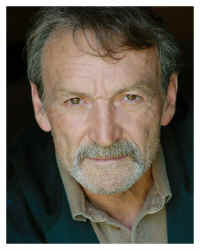
Interview: Muse Watson

Posted on September 19, 2012 at 8:00 am

Actor Muse Watson is a familiar face.  He has been a regular on “NCIS” and “Prison Break” and has appeared in movies that range from “Austin Powers II” to “I Know What You Did Last Summer.”  I’m a fan of his film A Christmas Snow, so I was very happy to get a chance to talk to him about his appearance in a live musical version of the story in Branson and about his work on behalf of children and families dealing with autism.

This is the second year you’ve done the show, right?

Yes, the show in Branson is called “A Christmas Snow Live” and it’s based on a movie that we shot, A Christmas Snow.  We actually turned the movie into a musical and we’re lucky enough that the leads in the movie have musical theater training, and so we were able to bring everybody from the movie. The first year we brought everybody from the movie straight to Branson to do the show and I’m going back for the second year. We’ll have a new cast in some of the other roles, but I’m going back for the second year, this year. I love Branson and love the positiveness of that community. You couldn’t go into many small communities where the attitude is, “Nothing good ever happens around here,” and see things built like are built in Branson. There were some people there with some real vision and some real positive attitudes.  So, I love going to Branson and of course, we’re at the Starlight theater there, and the greatest thing about this show is that every afternoon and every night after the show, we come out of the dressing rooms, go out front and meet the people who are at the show, and to hear the stories of inspiration and how the story grabbed them and to have them say things to you like, “When I get home, I’m going to call my dad.”  It’s stories like that that really make you know that doing the show is the right thing, you know?

Have you done much singing before?

Yes, I have.  Most people don’t watch me do the kinds of roles that they’ve seen me do on television and think of me as a singer, but when I first got started in this business years ago musical theater was one of my fortes. I did three different productions as Quixote in “Man of LaMancha,” singing numbers like ‘The Impossible Dream.’ And I’ve done “Guys and Dolls” and all kinds of musical stuff. It’s something that I hadn’t done for years but I was tickled to death to be able to go back and do another musical. In fact, my daughter is at the Chime School in Los Angeles, part of the Chime Institute, and a bunch of us do a fundraiser every year.  This year my friend Amy Brenneman, you know, from “Judging Amy,”  her daughter and my daughter are like best friends, so Amy and I are good friends and Amy led the fundraiser this year. I’ve been doing it now for three, four years I guess, and over the years we involve people who have children at Chime and we’re talking about people like Benjamin Bratt, Collin Farrell, Steven Stills did a couple of numbers last year…and so this year, I was trying to figure out something that I could do for the fundraiser and this year, as it happens, I got to thinking, you know, people back East know me for musicals and stuff like that, but people on the West coast, they know me sometimes for how well I kill people and stuff like that, so…

You have played a lot of bad guys!

Well, ‘”misunderstood,” I like to say. But you know, I decided, this is a free gig and I’m not getting paid for this gig and it’d be a good opportunity for me to show Hollywood how I can stretch a little bit, and so what I did was I did a cover of Coldplay’s “Fix You.”  Now Amy decided, she told me that she thought it was a little against our town spirit to sing a song called ‘Fix You,’ and so I got to thinking about what she was saying and so I just changed the words of the song to “Help You,” but that came off, I think, fairly well. I asked some of the Chime people to join me for the last chorus on stage and so they came out of the wings and stuff, and Andrew Keresztes, who is a dear friend of mine, he invited the software called ‘LA Scoring Strings’ which is the way most independent films put orchestral backgrounds to their films, and he did an orchestra backed-up and then he played guitar.  I’m an actor who sings, not a singer who acts, so generally speaking, I’m selling a song, probably, more than I got chops, but it works.

You were in another movie I love, Songcatcher.  

Well then you’ve seen me play the fiddle!  When they talked to me about doing the movie they wanted me to play the banjo, and then a couple of weeks later they called me and they said, “Oh, you’re not going to play, we’ve arranged for Taj Mahal to be part of the show, and since Taj Mahal’s going to be part of the show, we need you to switch and play the fiddle,” and I very seriously said to them, “Well, if he’s a professional musician, he ought to be the one changing instruments, not me!”   And of course, the studio producer thought I was being serious, you know!  I hired a guy from the Warner Brothers symphony to come over to my house and I video-taped his left hand and then I video-taped his right-hand.  The problem with portraying someone playing the fiddle is that people who play the fiddle don’t play a song twice the same way, you know? In the bow strokes they’ll be going up two notes and down one, and then the next time they play the song they’ll be going up one note and down two, and so the bow strokes are a lot different. Finally I just said, “You know, I’m a musician, I went through college on the music side for clarinet and sax, so I know what it takes to make music. I’m just going to feel this thing,” and I did it, and when we got to Sundance Film Festival, where we won a Grand Jury award for ensemble acting, there was a lady that came walking out at one of the screenings and she said, “I’m a violinist and I have never been fooled in a movie. You played a fiddle.” And I said, ‘Gosh, that’s one of the greatest compliments I’ve ever gotten, but I’m sorry, I don’t.”

Tell me a little bit about your work with families dealing with autism.

Well, my wife and I, of course, knew nothing, absolutely nothing, and at about 16 months my daughter started losing words that she had already learned, and we noticed things like we went to the circus and we’d be sitting there and as soon as the circus parade opened the big gates at the end of it, at the hall and started in, she just about went into a coma, she just passed out. We just left, you know? It was just overstimulation.  And so we got involved with Chime, with their infant-toddler program, and at about 18 months we started with them, and the more we studied and everything the more we saw that there was definitely going on, perception and whatnot, and of course at that time (I think it’s different today) but at that time you couldn’t get a real diagnosis until 3 years old. So then when 3 years old came along we had been going to therapy for a year and a half or so and of course, they gave us our diagnoses then of “moderately severe autism.” And my wife and I have made it our lives’ work.

Once you’ve met one autistic child you’ve met one autistic child, because there are no similarities.  We find ourselves just continually trying to be open. You know, one of the things we definitely wanted to stay away from was the chemicals. We didn’t want to give her any medication and there’ve been several times in the process where we’ve gone to conferences, whether it be where Temple Grandin was or her mother or the Autism Society of America, and we would go to the conferences and we would just say to ourselves, “Okay, we’re going to be open-minded about this. If we need to think about a medicine of some sort of if they’ve come out with a medicine, then we’re not going to be idiots about it,” you know? So far, we’ve not gone that route, and this last conference that we went to in San Diego, we were open once again to it, went to a couple of sessions and I guess we decided that there are still some natural homeopathic things that we can try before we try the medicine.  There may be 15 medicines out there and each one may work with a person, but none of them have been proven to work with a lot of people, so everything you do is a real trial and error.

What kind of things are you doing to reach out to other families?

Well, the Chime institute in itself is a place where children of all diagnoses and normal children all get together and they all have the same opportunities as what the school would like to do. It’s total inclusion, and so because of that, we find ourselves involved with parents of all kinds of children, but naturally of course, you gravitate towards some of the people who have, not necessarily similar diagnoses, but at least, diagnoses. And you find yourself being friends with those folks and comparing notes with those folks, but particularly on how it is best to relate in a school situation. So one of my jobs, I feel like, is to explain to folks, “You’ve got to go get a special-needs trust, and you’ve got to get this done, because if you don’t get this done, if you and your husband died, then nobody’s there to take care of the child,” you know? And so, it’s little information like that, that I learned about this process, and I try to share that with other parents. We’ve devoted our lives to the OTs, to the different perception doctors and speech teachers and to giving her the best shot that we can get her. But it’s sad, at the same time, to think that there are so many people out there that have maybe their husband or maybe their wife, either one, that goes into denial about a diagnoses and then when the child gets 10 or 11 years old and the behavior gets to be to the point where you can’t deny anything, you’ve missed all those wonderful years that we had with Sophie of early intervention.

What is it that you wish that parents of neuro-typical kids would understand about autism?

I’m going to confess something to you. After becoming a father of a young lady with autism, I look at the entire world differently.  I would hope that I could do something for folks that understand what I’ve come to realize…and that’s that, as I watch YouTube and I watch the videos on YouTube, it’s a crazy, stupid, look-how-weird, how freaky, any of those words—generally speaking, when you get to the video, it’s someone of special needs. And rather than just autism, I wish folks would stop for a minute and instead of taking comfort in their own existence and saying, “look, I ain’t that weird,” I wish they would just take a moment when they see someone and instead of criticizing or throwing them out of their lives or somehow putting any kind of label on them, they would give them just a moment to see what’s good about that person, and what they do right, because there are those things there.  I’ll tell you, I think about the kids in school when I was in school, and that kids that were bullied, the kids that were made fun of—I look at them so differently now, because I look at them as being special needs, and it’s…I’m admitting it, I’m a part of that, I understand it; I understand it. I’m just saying, I’m in a better place, now, and I would hope to be able to say something that would allow these people to be in a better place and to look at people a little differently.


Related Tags:


Actors Interview Live Theater

Interview: The Directors of the New Toastmaster Documentary “Speak”

Posted on September 12, 2012 at 8:00 am

Jerry Seinfeld pointed out that when people are asked what scares them the most, more people say public speaking than death — which means that at a funeral, most people would rather be the person who died than the person giving the eulogy.

The new documentary, Speak, is about that fear and about the people who work to overcome it with the help of Toastmasters, an international non-profit providing support and inspiration to help its members find their voices.  Much of the film focuses on the participants who have been so successful in telling their stories in public that they are competing for the Toastmasters World Championship.  The success of story-telling organizations like The Moth and StoryCorps has increased interest in telling and listening to stories, which made it even more fun to talk to the people behind this film, Brian Weidling and Paul Galichia.

http://www.youtube.com/watch?v=lPmSmklamKc

How did you get started on this project?

BW: I was out to dinner with my wife, who had her best friend in town from college.  She started telling us a story about when she was at American Express, she worked with a woman who was terribly shy and couldn’t look anybody in the eye.  One day their group had to go and give a speech or a presentation to the entire set of executives at American Express, like 500 guys, and she was the one who volunteered for it. She did really great, she got all their information across.  It felt a little formal at times but it was so out-of-her box, she couldn’t believe that this woman was able to do it. So she asked her afterwards, “Pat, you could barely look me in the eye, how did you do that?” She said, “I joined Toastmasters.”

And so my wife’s friend was like, “You should look into Toastmasters, there’s something there.”  That gave us the first kernel about the fear of public speaking and Paul went and started to check out the meetings and we started to talk to some people and that got us involved with wanting to talk with Toastmasters international headquarters.  When we went to talk with them, they said, “Oh, you should come out to our convention and check out the world championship for public speaking,” and at that moment Paul and I looked at each other and knew there was an interesting set of stories to be had here.

What is it that people are so afraid of in public speaking?

PG: Chris Matthews says it: “You’re just scared you’re going to make a fool of yourself.” That’s the biggest thing, that you’re going to fumble and lose your place and everyone is listening to every single word that you’re saying and at some point you’re going to stumble and everyone is going to laugh at you, and you’re going to be embarrassed. There’s something very primal about that fear, and that’s kind of what I think is at the core of public speaking fear.

And at toastmasters, is it just the support of the group? Is it really the same sort of effect as Weight-Watchers or Alcoholics Anonymous and groups like them? Is it because they all share the same fear that they’re able to support each other or are there specific techniques that they use?

PG: There are definitely a set of techniques that they use.  But the beginning of it–when I first walked into my first meeting I thought, “Oh my god, this is like AA.” I felt that warm, supportive sort of feeling from everybody, there was a smile on everybody’s face and every person got up there and you could tell they might be a little nervous, they were looking back at all these friendly faces—and I can’t remember which Toastmaster said it, I think it was Darren McRoy that at Toastmasters, the meetings become a place where you feel comfortable enough to fail.

If your fear is failure, that seems to be step one to overcome that fear, so if you fail, it’s fine.

BW: Something that is key to getting over your fear of public speaking is just actually doing it, and that seems to be the value a lot of people find in the Toastmaster world. It’s not only the warm environment (because it is very warm and forgiving and all that) but also you get a chance to get up and do it on a regular basis. More than anything, one of the things that we noticed, was in the way people got over the fear of public speaking, they just got encouraged to do it and they built on the self-confidence from the first speech, then the second speech, then the third speech…and I think it gives them a forum to do that.

You focused not so much on the people who were terrified as the people who were really superb; everybody that you featured was world-class.

PG: I feel like we had a place where we figured that was a great launching pad, for fear of public speaking, and to get into this world and to put it in a context of what this entire setting is going to be. And then you start meeting the people who really excel at it and then you get into their human story.

It was hard for me to imagine that any of the people who were competing came to Toastmasters because they were ever afraid of speaking. It seemed to me they all must’ve been comfortable in front of an audience their whole lives.

Paul: One of our contestants says she always felt like she never had a voice. It’s not necessarily a fear of public speaking, but they didn’t feel they had a place to express themselves.

What makes somebody a great public speaker? When you think of the great orators of our time, Martin Luther King, John F. Kennedy, Barack Obama, Bill Clinton—what gives someone the power to move and inspire?

BW: Something to say is the first thing. They had a message.  A lot of people get up there and they don’t really know what they’re going to say—that really hurts you as a public speaker.  But when you talk about those great orators, they had very important things to say, and I think the biggest thing is the message. You have to start with a message and they all started with very important messages.

PG: They also have a great self-confidence when they’re up there. They have that presence, they have that essence of “I’m in control, I have a message to deliver and I’m going to stick to that,” so they have that self-confidence and belief. A lot of them work on their voices, they work on their body language, all those things, and I also think they have an element of empathy to draw you in, to get you personally involved in what they’re talking about.

The competitors all had these very, very personal stories of challenge and triumph. They were not talking about great ideas or visions or policy implications, they were talking about their own lives. One thing that I did learn from the movie is the way they do focus on the body language—because when you think about giving a speech, you just think about standing behind a podium, but it’s very choreographed in a way.

BW: I think those speeches are like one-man-shows. It’s one of the things, it’s like a solo-performance piece as opposed to just sitting there and reading something into a microphone.  That was one of the cool things about the film, I thought, was that we had these performers and it was really exciting to watch them practice speeches, rehearse it, block it out, and then go for it.

That’s kind of like what you do as filmmakers, of course.  Tell me a little bit about how you put the pieces of this film together to make a compelling presentation.

BW: Well, we started with 420 hours of footage and just culling that down to a two and a half hour cut was pretty difficult.  Taking it from there, cutting out that final hour, making the decisions about what stayed and what went, that was tough.  We had a lot of characters that we loved that you never get to meet because we followed them early on in the contest and then they would lose in the third or fourth round, so their story wasn’t going to resonate all the way through and it was like a red-herring taking you down one path. So, we did a lot of cuts. We looked at so many different characters and at the end, the biggest thing that we had to work on was how we take you through sort of the backdrop of the fear of public speaking and introducing you to Toastmasters without getting you stuck in that world.  We knew that once you got to meet Rich and the rest of the characters, from there the movie really takes off.  We tried to entertain and inform at the beginning, but then really get to the place where you get these personal stories. That was probably the biggest burden of our post-production process, what did we trim out at the beginning, how did we smooth those corners over to finally get you around the curb to where you meet the characters.

PG: They have so many conflicts, I mean, Rich puts it all on the line to win this line and Lashunda is battling through with her disease that is very severe and you’ve got that heart-warming story with the older couple—and I mean, great personal stories that everyone can kind of connect to on a certain level.

I had a feeling as I was watching it that there was probably going to be a deleted scene section on the DVD with some great stories on it that you just didn’t have time for. Is there something that just broke your heart to cut out?

BW: A lot. There are so many instances of that. Just from sometimes it being just a quirky quote that we had heard so many times that was still making us laugh, but then you’d see it in the context of the overall story and you realize…just not going to work, the audience may not even get it because they weren’t there when it originally happened, that kind of stuff.

PG: We had a lot of people that we met who were just such quirky people and kind of so entertaining in their way—you know, the trapeze artist who is trying to be the world champion of public speaking, you know? Things like that that were very compelling on their own, but once we cut them into the film they just didn’t work.

BW: Took us away from what was really happening.

PG: Yeah, it kind of diminished the rest of what we were really doing. It was sad to see those things go, all of a sudden be like, “Oh, well, that whole trip to Montana….might as well not happened.” So…

Did spending time with these people change your own approach to public speaking? Sounds like you’re both not at all shy, but did you learn anything from it?

BW: Hugely, hugely. The biggest thing for me was that I’m an and-um person. So, when you go enough Toastmasters meetings and watch them hit the buzzer every time someone says and or um, you know, filler words, that really changed me. The other thing that really changed me as a public speaker was the idea of watching these people who are preparing and realizing that the biggest thing that they’re doing is that they’re practicing. They’re working on crafting their speech, they’re spending enough time on that to really make a good message and they’re getting in front of a mirror, in front of their friends in their living room or in front of their Toastmasters club and they’re doing that speech over and over and over again—then you start to see the process of how they become better with that speech and that changed me. I know that it’s all about hard work at this point when it comes to public speaking. If you spend enough time crafting your message and then you spend enough time practicing your message, you’ll do okay.

PG: And I think knowing what you’re talking about really helps you. Another thing that I learned in the process is you kind of learn through osmosis, in a way—just being in the room is a lot, and filming a lot of speeches. You kind of start taking on the good qualities of what a good speaker is, and it was kind of a funny phenomenon at the beginning, because you’re like, “Eh, I’m not that good a public speaker,” and then it’s two years later, you’ve spent so much time in that world…

BW: As well as in the front of Toastmaster’s groups explaining what we’re doing.  That’s when we first started to get our belts tightened on being good public speakers.

Do you feel that in 2012 that we are losing the ability to become a great public speaker, that the kids who are growing up today spend so much time texting each other back and forth, that we are losing the ability to communicate that way?

PG: Yes.

BW: I don’t know if that’s happened yet, I feel like when I talk to, like my old communication studies professor, I went to Emerson College in Boston.

It was a great experience. While I was there, one of the first things you do is you have to take a public speaking course.  So I think that there’s a movement to try and preserve that type of oratory in the midst of texting and IM’ing and every other sort of digital way that we communicate for the most part, nowadays. I think there’s almost a struggle going on in that there is more of a premium on all this technological information being thrust on us, that the people who can speak and can look you in the eye and deliver a message are the ones who are sort of holding an advantage in society, still, and the ones who are hiding behind texts and emails and stuff like that, they’re going to have a little more difficulty. But I think that at this point, the battle hasn’t been won either way as far as whether texting is going to take over oratory forever—but you look at even the elections. There’s still something that comes down to how a person can present themselves in front of an audience and I’ll make no predictions about our upcoming election but I bet you it will have a very important role, who is a better orator, during the last few months.

 

Related Tags:


Directors Documentary Interview
THE MOVIE MOM® is a registered trademark of Nell Minow. Use of the mark without express consent from Nell Minow constitutes trademark infringement and unfair competition in violation of federal and state laws. All material © Nell Minow 1995-2026, all rights reserved, and no use or republication is permitted without explicit permission. This site hosts Nell Minow’s Movie Mom® archive, with material that originally appeared on Yahoo! Movies, Beliefnet, and other sources. Much of her new material can be found at Rogerebert.com, Huffington Post, and WheretoWatch. Her books include The Movie Mom’s Guide to Family Movies and 101 Must-See Movie Moments, and she can be heard each week on radio stations across the country.

Website Designed by Max LaZebnik