Tracks

Posted on September 25, 2014 at 6:00 pm

B+
Lowest Recommended Age: High School
MPAA Rating: Rated PG-13 for thematic elements, some partial nudity, disturbing images and brief strong language
Profanity: Some strong language, one F-word
Alcohol/ Drugs: Drinking
Violence/ Scariness: Animals and humans in peril, sad animal death, references to suicide
Diversity Issues: Diverse characters
Date Released to Theaters: September 26, 2014

tracks-movie-posterIn 1977, a 27-year-old woman named Robyn Davidson took a dog and four camels and walked 1700 miles across the Australian desert. A National Geographic photographer met up with her four times to cover it for the magazine. That led to a book, the international best-seller Tracks.  And now it is a film, starring Mia Wasikowska, with Adam Driver as photographer Rick Smolan, and directed by John Curran, whose previous films (“The Painted Veil,” “We Don’t Live Here Anymore”) show a gift for letting the environment be an essential part of the story-telling.  The result is a journey set in surroundings of punishing conditions but spectacular beauty that manages to be meditative and internal, and all the more illuminating for it.

This is the first of two movies based on soul-restoring real-life hikes taken by real-life women that we will be seeing this fall, both based on best-selling books, with Reese Witherspoon’s more high-profile “Wild” coming out December 5, 2014.  While there are flashbacks to suggest that Davidson took on the trip to deal with some family losses, in real life Davidson has not just refused to give a reason; she has insisted that it is a foolish question to ask.  She walked across Australia for the same reason that Mallory climbed Mount Everest.  “Because it’s there.”  Her version of a response: “Why not?”  It’s pretty clear why not.  It is very dangerous.  The terrain is blisteringly hot and with very little water.  If she is injured or lost, no one will be there to help her.  But she is determined to go, indenturing herself with camel dealers to learn how to train camels and earn some to take with her.  When the first one cheats her out of what is due to her, she reluctantly agrees to allow National Geographic to sponsor the trip, though it means she will have to allow Smolan to meet up with her four times to take photos.

This is not the usual travelogue, with adventures that include quirky characters, daunting dangers, and lessons learned, though all are there.  Along the way, she meets up with Aboriginal people, including one who serves as a guide for a part of the journey because it includes sacred land which she is not permitted to travel on without him.  She comes across a farmhouse, and the couple who live there welcome her in a beautifully understated manner.

You’d also expect spectacularly gorgeous and exotic scenery, and that is there, too.  And, with just one person on screen much of the time, a lot of voiceover narration, though that’s not too bad.  Most of all, this is a spiritual saga, a pilgrimage.  Davidson wanted to be alone — she admits that she is much more comfortable with animals than with people.  And she wanted to accomplish something difficult by herself.  It almost seems at moments as though we are intruding in her beautiful solitude.  But mostly, we are sharing it, and feel grateful for the privilege.

Parents should know that this film includes sad and disturbing material including suicide of a parent (off-screen) and putting down animals, dangerous activities, peril, animals shot and poisoned, some disturbing images of dead animals, some strong language (one f-word), and non-sexual nudity (female rear).

Family discussion: Why was Robyn happiest away from people? What was the hardest moment of her trip and why?

If you like this, try: other movies set in the Australian desert, including “Walkabout” and “Priscilla, Queen of the Desert”

Related Tags:


Action/Adventure Animals and Nature Based on a book Based on a true story Drama Movies -- format

This is Where I Leave You

Posted on September 18, 2014 at 5:59 pm

B-
Lowest Recommended Age: Mature High Schooler
MPAA Rating: Rated R for language, sexual content and some drug use
Profanity: Very strong and crude language
Alcohol/ Drugs: Drinking, smoking, drugs, references to pharmaceuticals
Violence/ Scariness: Scuffles, sad death
Diversity Issues: None
Date Released to Theaters: September 19, 2014
Date Released to DVD: December 15, 2014
Amazon.com ASIN: B00K2CI008
Copyright 2014 Warner Brothers

A toddler carries his little potty out in front of the house so he can try out his new-found skill in public. Twice. Plus another time when the contents of the potty are first displayed for the family and then kind of accidentally tossed onto one of the relatives. This is pretty much the theme of “This is Where I Leave You,” one of those estranged relatives gathering under pressure movies that tries to put the “fun” in dysfunctional.” It’s pretty much great actors trying to make sense of characters who are continuously inappropriate, unpleasant, and miserable, with boundary issues that make Russia/Ukraine seem manageable. And they almost succeed.

Jonathan Tropper wrote the screenplay based on his novel about four siblings returning home for their father’s funeral. Their mother Hillary (Jane Fonda) is a family therapist and the author of a best-selling book on child development that (boundary issue alert) revealed many embarrassing details about the siblings and is now celebrating the 25th anniversary of its initial publication with a re-release. She is given to wildly inappropriate revelations about her sex life with their father (another boundary alert), and showing off her newly enhanced breasts.

She tells her four children that their father’s last wish was for them to observe the Jewish tradition of sitting “shiva,” a seven-day period of mourning where the family stays at home together and receives visits from those who wish to pay condolences.  They understand that “it’s going to be hard and it’s going to be uncomfortable, and we’re going to get on each other’s nerves.”  But, Hillary says, they have no choice.  “You’re grounded.”

They try to protest, but reluctantly agree. Paul (Corey Stoll) is the only one who has stayed in their hometown, the responsible brother who took over the family business, and married Annie (Kathryn Hahn), who is struggling with fertility issues. Wendy (Tina Fey) is married to one of those guys who is always on his cell phone talking about some big financial deal. She has two children, the aforesaid toddler and a baby. Judd (Jason Bateman) is in freefall, having just learned that his wife has been having an affair with his skeezy boss (Dax Shepard), the host of a shock jock radio show called “Man Up.” And then there is Philip (Adam Driver), the irresponsible baby of the family, who arrives in a Porsche convertible, with a new girlfriend named Tracy (Connie Britton), who is much older and a therapist.  You don’t need to be a therapist to figure out that there are some mommy issues there.  Everyone but Phillip is aware that Tracy is way out of his league and he does not deserve her.

The three out of town siblings all encounter past loves.  Wendy’s is Horry (Timothy Olyphant), who was brain-damaged in an accident and still lives with his mother Linda (Debra Monk), Hillary’s neighbor and close friend.  Phillip sees Chelsea (Carly Brooke Pearlstein), who looks, as Tracy notes, like a Victoria’s Secret model.  And Judd sees Penny (a terrific Rose Byrne), living back in their home town and teaching figure skating.  Each presents temptations as the siblings struggle to make sense of their choices, and struggle even more to communicate.  “Deflecting emotion with logistics.  Nice.” “It’s what we do.”  Some secrets will be revealed (though not always intentionally) while others are protected.

Tropper’s screenplay is better than the book because we are not limited to Judd’s depressed narration and because it corrects what I thought was a mistake in the final resolution of Judd’s relationship with his wife.  And it is helped a great deal by performances that give the characters more believability and complexity than the book did.  But director Shawn Levy (“The Internship,” “Night at the Museum”) has always been stronger with broad comedy than with narrative, romance, and sentiment, and this storyline plays into his tendency to meander. Are we supposed to laugh at the Altmans because they are so awful or sympathize with them because all families are crazy at times? The bad choices, lack of respect, and wild swings of character keep us distant from the characters, despite the best efforts of the terrific cast.

Parents should know that this film includes very strong and crude language, sexual references (some vulgar) and explicit situations, nudity, adultery, drinking, smoking, marijuana and pharmaceuticals

Family discussion: How are the Altman siblings alike? How are they different? How do you feel about “complicated?”

If you like this, try: “This Christmas” and “Flirting With Disaster”

Related Tags:


Based on a book Comedy Drama Family Issues Movies -- format

The One I Love

Posted on September 4, 2014 at 6:00 pm

B+
Lowest Recommended Age: Mature High Schooler
MPAA Rating: Rated R for language, some sexuality and drug use
Profanity: Very strong language
Alcohol/ Drugs: Drinking, drugs
Violence/ Scariness: Scuffle, some creepy themes
Diversity Issues: None
Date Released to Theaters: September 5, 2014
Amazon.com ASIN: B00MB7KXPM

“The One I Love” is pretty good as a movie and sublime as an exercise, especially an acting exercise. Just describing details about the story will require a huge spoiler alert, which I will insert below before giving away some of what happens in the film (omitting the ending, of course). But first, we can mention the acting challenge presented by the film. Two actors are on screen for almost the entire running time and are required to display small but distinctly different characteristics to help us and the characters keep everything straight. That is a pleasure to watch on a whole other level aside from the storyline. The-One-I-LoveElisabeth Moss (“Mad Men”) and Mark Duplass (“The Mindy Project”) play Ethan and Sophie, a married couple seeing a therapist (Ted Danson) for counseling. Ethan remembers with great warmth when they first met, and impulsively went for a swim in a stranger’s pool. The sense of fun and freedom they had is something he misses. Sophie is having trouble trusting Ethan again because he had an affair and he is embarrassed and defensive. “I felt like our happiness used to be so easy and there used to be so much of it,” she says sadly. The therapist recommends a weekend getaway to a beautiful, remote cabin, assuring them that every couple he has sent there has returned “renewed.”

They arrive at the cottage, which is lovely, and discover that it has a guest house. SPOILER ALERT: As each of them enters the guest house separately, they encounter what they at first think is each other, but then realize is some other version of the person they married, a little brighter, sweeter, more considerate, more agreeable. Sophie’s new Ethan apologizes sincerely and contritely for his transgression and paints a portrait of her to show his devotion. Ethan’s smiling, slightly Stepford wife-ish new Sophie makes him bacon for breakfast, which the old Sophie didn’t like. At first, each thinks that the other is somehow making progress, becoming more cooperative, more committed to intimacy and rebuilding the relationship. But then it becomes clear that only one of them can enter the guest house at a time, and that the spouse they experience inside is someone new, different, and possibly some sort of projection, not a real person at all.

Ethan and Sophie respond very differently. He takes it on as an opportunity for rational detective work. “Of course you thought the fun was the investigation,” Sophie says, reminding him of the magic show where she enjoyed the show but he insisted on deconstructing all the tricks.

The original Sophie and Ethan at first decide to leave. It is just too creepy. But then they decide to return, making a pact about how each of them will handle the guest house doppelgangers. Is that the therapy? Giving them a shared experience so bizarre that it jolts them into working together to puzzle it out may be part of rebuilding their relationship, after all. “It’s like an exercise in trust,” Ethan says.

Screenwriter Justin Lader plays out the possibilities very cleverly, and it would be unfair to spoil it further. If the ending is not all one might hope, more of a trick than a conclusion, the performances and the ideas are provocative, fun, and something of a therapeutic trust exercise of their own.

Parents should know that this film includes very strong language, sexual references and situations, drinking, and drug use.

Family discussion: What is your explanation for how this retreat came together? If you had a chance to enter the guest house, would you? What would you find there?

If you like this, try: “Safety Not Guaranteed”

Related Tags:


Fantasy Movies -- format Romance VOD and Streaming

The Identical

Posted on September 4, 2014 at 5:51 pm

C-
Lowest Recommended Age: Middle School
MPAA Rating: Rated PG for thematic material and smoking
Profanity: Mild language
Alcohol/ Drugs: Drinking, smoking
Violence/ Scariness: Some scuffles
Diversity Issues: None
Date Released to Theaters: September 5, 2014

Copyright 2014 City of Peace Films
“The Identical” is an incompetent mishmash of mawkish sentimentality larded with a few pleasant musical numbers and some random asides about Israel.  I’m not making this up.

It is inspired by an intriguing fact.  Elvis Presley was a twin.  His brother was stillborn.  Screenwriter Howard Klausner (“The Grace Card”) changes the names and imagines what would have happened if the twin had lived but been raised in a different family.  The focus of this story is on Ryan Wade (Elvis impersonator Blake Rayne), the boy who was given up, adopted by a kindhearted Baptist preacher and his wife, played by Ray Liotta and Ashley Judd.  We don’t know much about the child who stayed with his biological parents except that he grew up to be a rock and roll superstar known as “The Dream.” Ryan is a good kid who loves music.  After a stint in the army, he tells his father that he won’t be following him into the clergy.  He works as a mechanic until he wins a Dream impersonation competition and gets hired to perform at state fairs and other venues. We get glimpses of The Dream (also played by Rayne), performing, riding in a limo through a cornfield, flying in a private plane, looking haunted, but we never find out anything about what his life was like, or what music means to him.

The dramatic possibilities in this story surely have to be in the nature/nurture saga that explains the enduring popularity of real-life stories of identical twins separated at birth as well as fictional tales from “The Man in the Iron Mask” to “Big Business.” And there is some potential for pointed satire along the lines of “Walk Hard” or a thoughtful exploration of the racial and cultural divides that melded into the early years of rock and roll. But “The Identical” bypasses all of this for a story that is both lightweight and dreary and a hero who is too good to be true, played by performer who is much more comfortable with the musical numbers than he is with the dialog. I do give him credit for holding his own despite a series of some of the most appalling wigs ever put on screen.

Even supremely talented actors like Liotta and Judd can’t make much of this movie’s dialog, which is stilted and pedestrian. Among the missed opportunities here is the chance to see what Liotta could do delivering a stem-winding sermon to his Baptist congregation. He does deliver some nice thoughts about kindness and tolerance. But all we get from his appearances in church is a watered down commentary on the importance of supporting Israel (with candles burning on a menorah behind him!) during the 6-Day War of 1967. While the film is being marketed as faith-based, there is very little content relating to the role of faith in the lives of any of the Christian or Jewish characters. It is awkwardly written and uncertain in tone, failing as commentary and as story.

Parents should know that this film includes drinking, smoking, difficult family issues, sad deaths, and family conflicts.

Family discussion: Should Reece have told Ryan the truth? Why do audiences like tribute groups that imitate star performers?

If you like this, try: “August Rush” and “The Buddy Holly Story”

Related Tags:


Drama Family Issues Movies -- format Musical

When the Game Stands Tall

Posted on August 21, 2014 at 5:59 pm

C
Lowest Recommended Age: Middle School
MPAA Rating: Rated PG for thematic material, a scene of violence, and brief smoking
Profanity: Mild language
Alcohol/ Drugs: Smoking
Violence/ Scariness: Shooting, very sad death, serious illness, parental abuse, tense confrontations
Diversity Issues: Diverse characters
Date Released to Theaters: August 22, 2014


Copyright 2014 Sony Pictures
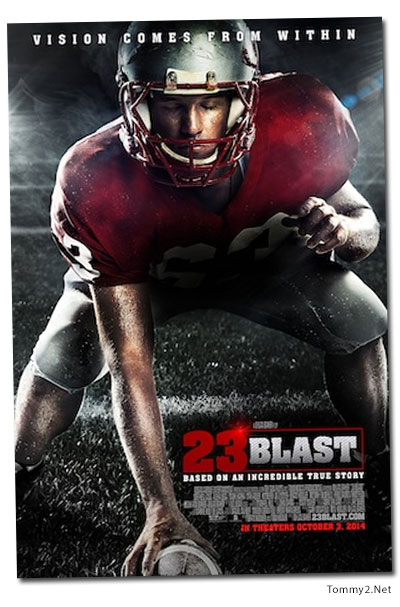
This dreary assemblage of every possible sports cliché has one thing in common with the game it portrays. Every time it seems to be going somewhere, it stops.

More frustratingly, it wastes the opportunity to tell a good story by trying to squeeze in too many great ones. There are too many crises, too many story arcs, too few resolutions, too few reasons for us to invest in the outcome. When a movie is based on (or even “inspired by”) something that really happened, the first step has to be deciding what the theme is and streamlining all of the real-life details that are not central to that theme. Or, as a coach might say, “Don’t lose focus.”

The real-life high school football team that inspired this story is Concord, California’s De La Salle Spartans, from a small, all-boys Catholic school. They hold the all-time winning streak record for any sport in any category and at any level. We meet the team just as the streak is about to end. The last game of the season is the 151st win in a row. But then Coach Bob Ladouceur (Jim Caviezel) has a heart attack.  A player is killed in a drive-by shooting.  Another one becomes an orphan, responsible for his younger brother.  The other teams do not want to play the Spartans anymore, so they take on the number one team in the state (in a game that is the subject of a book. The winning streak that went from 1992-2004 came to an end.

That’s an interesting place for a sports movie to begin, a refreshing change from the over-familiar sports movie storyline of a scrappy group of underdogs who have to learn to work together.  And the film is sincere and good-hearted, though not much we haven’t learned from reading Kipling’s If, especially the part about understanding that winning and losing are both imposters.  But the dramatic force of the narrative keeps being mowed down by so many over-familiar sports movie lines that the film’s greatest appeal may be as a drinking game.  How many times do we have to hear about how the teammates are family, especially when we hear it more than we see it?  (Though I did enjoy seeing the team come on the field holding hands like a kindergarten field trip.)

There is a lot to explore here about what we learn from winning and how much more we learn from losing.  Ladouceur’s techniques include “commitment cards” with training goals, practice goals, and game goals, each one written by a player and shared with a teammate to help them understand they are responsible for each other’s performance as well as their own.  It is good to hear a coach say that end zone antics are inappropriate and that the purpose of the training is not to produce great high school football players but responsible men.

A number of issues are set up or glancingly referred to without any real connection or follow-through, including some of the coach’s lessons about what matters more than winning.  The coach’s son says that when he needed a dad he got a coach and when he needed a coach all he got was a “lame dad.”  The coach’s wife (a criminally under-used Laura Dern) says he does not share himself with her or their children.  Ladouceur acknowledges that he has been “a bad husband and a worse dad.”  But all we see as a response is Ladouceur burning some burgers when he tries to grill.

We do not get enough of the history between the two players who struggle over whether they will stay together through college for it to be meaningful.  A brutish father (Clancy Brown) pushes his quarterback son to break the state record in scoring, but the resolution is not set up in a way that makes it a triumph for anyone.  Intrusive product placement from a sporting goods store is a distraction as well.  As though to keep us on track, equally intrusive sports announcers keep reminding us what the stakes are.  Even more intrusive is a musical score that is ploddingly obvious, with hip-hop in a black player’s home and syrupy pop over the white characters. Meanwhile, over on the sidelines (literally), Michael Chiklis as the assistant coach turns in the film’s most intriguing performance.

“It’s no longer about who the bigger, stronger, faster players are,”  the coach who has the bigger, stronger, faster players says about playing against the Spartans.  (You can tell what’s coming next, right?) “It’s about who plays with more heart.”   The heart in this film is mostly over the end credits, where we see the truly inspirational Ladouceur and wish we had just seen a documentary about him instead.

Parents should know that this film includes the tragic murder of a teenager, serious illness of a parent, death of a parent, parental abuse of a teenager, scenes of wounded warriors in rehab, smoking, and brief crude sexual references

Family discussion: What goals will you put on your commitment card? Why didn’t the coach want his players to pay attention to the streak? What was his most important lesson?

If you like this, try: “Friday Night Lights” (the movie and the television series) and “Remember the Titans,” as well as the books about the Spartans: When the Game Stands Tall: The Story of the De La Salle Spartans and Football’s Longest Winning Streak and One Great Game: Two Teams, Two Dreams, in the First Ever National Championship High School Football Game

Related Tags:


Based on a book Based on a true story Drama High School Movies -- format Sports
THE MOVIE MOM® is a registered trademark of Nell Minow. Use of the mark without express consent from Nell Minow constitutes trademark infringement and unfair competition in violation of federal and state laws. All material © Nell Minow 1995-2026, all rights reserved, and no use or republication is permitted without explicit permission. This site hosts Nell Minow’s Movie Mom® archive, with material that originally appeared on Yahoo! Movies, Beliefnet, and other sources. Much of her new material can be found at Rogerebert.com, Huffington Post, and WheretoWatch. Her books include The Movie Mom’s Guide to Family Movies and 101 Must-See Movie Moments, and she can be heard each week on radio stations across the country.

Website Designed by Max LaZebnik