Fed Up

Posted on May 8, 2014 at 5:11 pm

Here’s another inconvenient truth.  Our food is killing us.  And that’s because of something even more poisonous, the corruption of our political system through diversion of corporate money to politicians through campaign contributions and lobbying.fed up poster

Laurie David, producer of the Oscar-winning Al Gore documentary about climate change, is back with “Fed Up” (the poster charmingly shows M&M’s labeled FU), co-produced by Katie Couric.  The message of the movie is that it isn’t a lack of self-discipline and exercise that is making us the most obese generation in history.  It is what we are eating.  The bigger message is about why we are eating what we are eating.  It is because we have outsourced public policy decisions about health and nutrition to corporations that don’t mind making our bottoms fat as long as it makes their bottom lines fatter.

For the first time ever, obesity presents a greater threat to human health than hunger.  And for the first time ever children are facing obesity.  This is in part because budget cuts in the Reagan years led schools to shut down their cafeteria kitchens and turn over the school lunchrooms to fast food operators, piling high-fat, high-sugar processed food onto children’s trays.  How much high fat and how much sugar?  What are the health effects of processed food?  We don’t really know because corporations spend a lot of money to thwart government regulations and academic research that would give us that information.  In one shocking segment of the film, we learn that a US cabinet official traveled to a global conference to threaten the cutting off of hundreds of millions of dollars in US funding if the portions of a report on the detrimental health impacts of sugar (putting it in almost the same category as tobacco) were not removed.  That doesn’t make it less true, of course.  It just makes it less known.  The comparisons to the tobacco companies are not unwarranted.

The documentary is less effective when it follows several of kids and their families as they struggle with diets and self-loathing.  But it is devastating when it documents the pernicious effect of corporate lobbying in thwarting government attempts to make healthier choices — or even better information — available.  Think I’m exaggerating?  See how they’re responding to the movie.  Hint: the answer is not a candid conversation with a commitment to rigorous scientific examination of the health effects of sugar, fat, and processed food.

Parents should know that there is brief bad language, smoking, and references to the dire effects of poor food choices.

Family discussion: What would you advise the families in this film?  What surprised you the most?  What will you change about the way you eat?

If you like this, try: “Super Size Me,” “Food Fight,” “The Price of Sugar,” and “Food, Inc.”  And try some healthier recipes!

Related Tags:


Not specified

My eBook About Moms in Movies is FREE Until Sunday

Posted on May 7, 2014 at 1:00 am

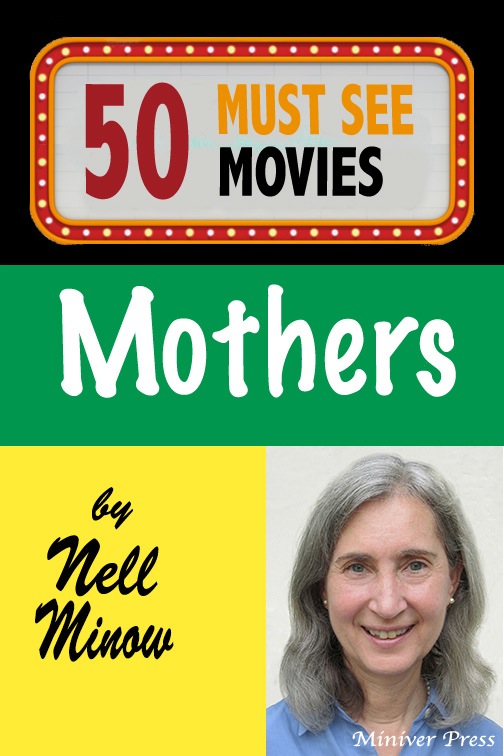
In honor of Mother’s Day, my ebook 50 Must-See Movies: Mothers will be free on Amazon through Sunday.Image

No relationship is more primal, more fraught, more influential, more worried over, more nourishing when good and more devastating when bad that our connection to our mothers. Mom inspires a lot of movies in every possible category, from comedy to romance to drama to crime to animation to horror, from the lowest-budget indie to the biggest-budget prestige film. A lot of women have been nominated for Oscars for playing mothers and just about every actress over age 20 has appeared as a mother in at least one movie. From beloved Marmee in “Little Women” and Mrs. Brown in “National Velvet” to mean moms in “Now Voyager” and “Mommie Dearest.”  Oscar-winnng classics and neglected gems, based on real-life like Sally Fields in “Places in the Heart” or fantasy like Dumbo’s lullabye-singing elephant mom, these are all must-see movies.

Related Tags:


Not specified

Finding Vivian Maier

Posted on April 24, 2014 at 6:00 pm

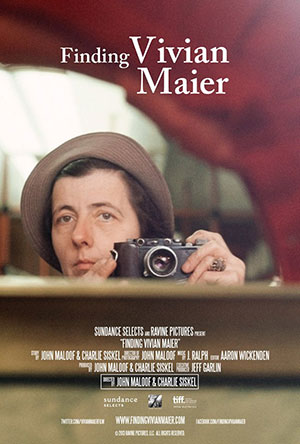
vivian maier posterVivian Maier was a Chicago-area nanny.  Only the children in her care knew how much she loved taking pictures.  After her death, the possessions she had in storage were auctioned off and a man named John Maloof bought some boxes of negatives, thinking he might finds some images for his research about a Chicago neighborhood.  The quality of the photos surprised him.  He put them online and the response was swift and passionate.  Who was this photographer who captured these striking images?  And why had no one ever heard of her?

Maloof bought up the rest of Maier’s negatives and anything else she left behind.  She was something of a hoarder, so there were piles of ephemera as well as rolls of undeveloped film.  Maier’s passion for privacy came up against someone equally obsessive about uncovering her secrets as well as her photographs.   As co-producer of the film, Maloof’s own motives do not get the scrutiny they otherwise might, but it is clear that he has something to gain from promoting her work, and that he is at least aware of the moral dilemma of creating such a public persona for such a private person after she no longer has a say.  Though he is clear about his purpose: “My mission is to put Vivian in the history books.”

It is very rare in this country, where fame and braggadocio are considered virtues and we put people on magazine covers who are just famous for being famous, that gifted people are also private people.  Those who decide to leave the limelight — Salinger, Garbo — are a source of great curiosity for us.  What are they thinking?  And then there are people like Maier and another Chicagoan, Henry Darger (also the subject of a documentary), and James Hampton, who are drawn more by compulsion as well as inspiration.  If there is an intended audience, it is not of this world.

People who knew her, or thought they did, describe her: paradoxical, eccentric, private, loner.  And there is the inevitable snobbery: “Why is a nanny taking all these photos?”  But photographers recognize one of their own.  Joel Mayerowitz, the film’s most engaging voice, says she had “an authentic eye and a real savvy about human nature and photography in the street.” She has human understanding, warmth, playfulness, at least in her photos. An employer said she has “an eye for the bizarre, the grotesque, the incongruous, the folly of humanity.”

Her camera of choice was a twin-lens Rolleiflex, a “great disguise camera…to generate a moment where two presences vibrate together.” Her subjects could look her in the eye while her camera was unobtrusively at her waist. She took up nannying so that she would not have to worry about shelter and she would have an excuse to be out and about. Her charges, now grown, remember her taking them all over, always with her camera, sometimes to rather odd places, like a stockyard.

Some of her secrets are revealed, including her efforts to hide her origins. Some are only indicated. And of course the photographs tell as much about Maier as they do about the people she captured.
As we look at them, though, we realize she captured much of us as well.

Parents should know that this movie includes discussions of abuse, an auto accident, and a sad death.

Family discussion: Which of Maier’s images is your favorite and why? Should her photos be made public after her death even though she kept them secret while she was alive?

If you like this, try: Martha & Ethel and Annie Leibovitz: Life Through a Lens and the book Vivian Maier: Street Photographer

Related Tags:


Not specified
THE MOVIE MOM® is a registered trademark of Nell Minow. Use of the mark without express consent from Nell Minow constitutes trademark infringement and unfair competition in violation of federal and state laws. All material © Nell Minow 1995-2026, all rights reserved, and no use or republication is permitted without explicit permission. This site hosts Nell Minow’s Movie Mom® archive, with material that originally appeared on Yahoo! Movies, Beliefnet, and other sources. Much of her new material can be found at Rogerebert.com, Huffington Post, and WheretoWatch. Her books include The Movie Mom’s Guide to Family Movies and 101 Must-See Movie Moments, and she can be heard each week on radio stations across the country.

Website Designed by Max LaZebnik