Aaron Sorkin receives the Zeitgeist Award for “The Trial of the Chicago 7” during the 16th annual Final Draft Awards on March 02, 2021 in UNSPECIFIED, United States. (Photo by Getty Images/Getty Images for Final Draft)
Final Draft is the most popular word processing software used for writing movie scripts, which have to be in a particular (and peculiar) format. This week, Final Draft recognized the creative minds who use their programs to imagine great films.
In a Zoom ceremony, Aaron Sorkin was presented with the Zeitgeist Award for “The Trial of the Chicago 7,” a movie about events in 1969 that has been in the planning stages since 2006, when Steven Spielberg first approached him about writing the screenplay. But somehow, in the way of movie synchronicity, it seemed to arrive at just the right moment. As he said, “The zeitgeist crashed into us.”
Radha Blank receives the New Voice Award for “The Forty-Year-Old Version” during the 16th annual Final Draft Awards on March 02, 2021 in UNSPECIFIED, United States. (Photo by Getty Images/Getty Images for Final Draft)
“The 40 Year Old Version’s” Radha Black, who starred in as well as writing and directing the semi-autobiographical film, got the New Voice Award.m and Ramy Youssef was presented the New Voice Award.
The full list:
Aaron Sorkin, “The Trial of the Chicago 7” (Netflix) – The Zeitgeist Award
presented by Sacha Baron Cohen
Sofia Coppola, “On the Rocks” (A24/Apple TV Plus) – Storyteller Award: Film
presented by Paul Schrader
Steve McQueen, “Small Axe” (Amazon Studios) – Storyteller Award: TV
presented by John Boyega
Radha Blank, “The Forty-Year-Old Version” (Netflix) – New Voice Award: Film
presented by Mary Harron
Ramy Youssef, “Ramy” (Hulu) – New Voice Award: TV
presented by Laith Nakli
Rated PG-13 for thematic elements, sexual material, strong language, and some teen drinking
Profanity:
Some strong language
Nudity/ Sex:
Sexual references, offscreen rape
Alcohol/ Drugs:
Teen drinking
Violence/ Scariness:
References to rape, predatory behavior
Diversity Issues:
A theme of the movie
Date Released to Theaters:
March 3, 2021
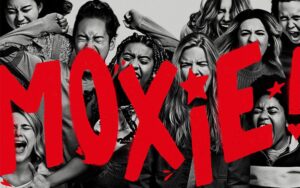
Copyright 2021 Netflix“It’s so nice not to be on anyone’s radar,” Vivian (Hadley Robinson) says to her BFF Claudia (Lauren Tsai). It’s the first day of school and we might detect just a hint of wistfulness in her voice. Everyone is waiting for The Ranking, an annual list of female students selected based on how attractive they are. Some are selected based on how attractive individual body parts are. So, there are names attached to “Most Bangable,” “Best Rack,” “Best Ass.” And presumably the young women are supposed to feel flattered.
Vivian is shy and unsure of herself. Asked to write an essay on what she is passionate about and what steps she has taken to pursue it, she draws a blank. But we see in a dream she has the night before school starts, she has some strong feelings she does not know how to express. The arrival of a new student named Lucy (Alycia Pascual-Peña) will give her a new perspective and help her find her voice.
The school’s alpha male is Mitchell (Patrick Schwarzenegger), arrogant and predatory. But his behavior is dismissed by the school’s principal (Marcia Gay Harden as Ms. Shelley) and the students. When he finds he cannot intimidate Lucy, he becomes even more aggressive. Vivian tells Lucy to ignore him so he will move on to someone else. “Keep your head down,” she advises. Lucy says she will be keeping her head up, and Vivian for the first time considers how pernicious the behavior of Mitchell and his friends is. It is more than teasing.
Vivian is close to her single mom, Lisa, played by director/producer Amy Poehler. When Lisa says that at Vivian’s age she was trying to burn down the patriarchy (crucially, she admits that as engaged as she was, she made a lot of mistakes and was not as inclusive as she should have been). Vivian goes through Lisa’s old files and sees the “zine” she and her friends created. And so Vivian follows in that tradition (and in the tradition of “Bridgerton’s” Lady Whistldown and A in “Pretty Little Liars”), Vivian creates an anonymous zine called Moxie (1930s slang for spirited determination), calling out the behavior of the boys who publish the rankings and insult girls. She leaves copies in the girls’ rooms at school, asking everyone who supports her ideas to draw stars and hearts on their hands. And some of the girls too. So does one boy, Seth (Nico Hiraga of “Booksmart” and “Edge of Seventeen”).
“Moxie” is based on the novel by high school teacher Jennifer Mathieu, and you can see the lived experience of working with teenagers, at the same time righteous and vulnerable, in the film. At times, it becomes didactic, as though it is running through a checklist of abuse, and some of the items on that list (the right to wear a tank top to school) are out of proportion to the others. And the resolution in the end is far tidier than anyone who has seen or read about real-life cases will buy.
What works better is the portrayal of the strain on Vivian’s friendship with Claudia as she becomes closer in both the relationship and the style of Lucy. This is more than the usual teen drama about outgrowing childhood connections. It is about developing a deeper understanding and empathy, and that extends not just to Claudia, but to the other girls in the school as well. The emphasis on finding ways to support each other despite differences is well handled. The film should spark some important conversations, some second thoughts about the line between “boys will be boys” and recognizing and stopping damaging behavior. It even might inspire some stars and hearts, some zines, and other ways for girls to tell their stories.
Parents should know that this film concerns toxic masculinity and abuse ranging from insults and objectification to rape. It includes sexual references and some mild language.
Family discussion: Does this movie make you see some incidents at your school differently?
If you like this, try: “Nine to Five,” “Booksmart,” and the documentary “Roll Red Roll”
Rated PG for some violence, action, and thematic elements
Profanity:
None
Nudity/ Sex:
None
Alcohol/ Drugs:
None
Violence/ Scariness:
Extended fantasy peril and violence, sword fights, martial arts, characters turned to stone
Diversity Issues:
A theme of the movie
Date Released to Theaters:
March 5, 2021
“Raya and the Last Dragon” is a gorgeously animated fairy tale with thrilling action, irresistible characters, a heartwarming message, and Disney’s magic touch to lift the hearts of all ages. It has the scope and grandeur of a Fellowship of the Ring-style quest. It has a heroine of great courage, humanity, and integrity. And it has Awkwafina, the most inspired Disney choice to voice a fantasy animated character since Robin Williams in “Aladdin.”
Raya (Kelly Marie Tran) is a fiercely brave girl. Her adored father is Benja (Daniel Dae Kim). He guards a precious gem that protects his people from a wispy but toxic monsters called the Druun. They can lay waste to the land and turn people into stone.
Benja dreams of reuniting the five communities that were once one dragon-shaped land called Kumandra. Now the communities are separate, each named for a part of the dragon: Tail, Talon, Spine, Fang, and Heart, all at war with each other. Raya explains the history with the help of charming paper puppets that illustrate what happened when the dragons that always protected Kumandra were killed by the Druune, “A mindless plague that spreads like wildfire.” The last act of the last one, Sisu, was the creation of the magic gem.
Benja brings the leaders of the other communities together in the spirit of friendship and cooperation. But, as Raya says, “people being people,” they fight. Everyone else is turned to stone, but Benja saves Raya, and she goes off to find the last dragon so she can save her people and maybe even accomplish her father’s dream of a united country.
It goes very badly because of, well, people being people. The gem is shattered. The Druun return. And six years later, Raya is still looking for the last dragon.
This is one of the most purely beautiful films ever made by Disney, and that is as good as it gets. Each of the five lands and populations is distinctive, filled with inviting detail, and even the harshest and most intimidating landscapes are gorgeously imagined. Raya has been alone for six years, but after she finds the dragon she picks up some other characters as well, each one surprising and surprisingly endearing. The Infinity Stones-style structure, where Raya and her crew have to retrieve the pieces of the gem from the different lands provides a solid structure and forward momentum, and the smart script makes each mini-heist fresh and iterative, each building on the lessons of the last. Avoiding spoilers here to let you discover its pleasure on your own, I will just say that the dragon in the title has more than one persona, both equally adorable, but the second is especially well-designed and perfectly suited to Awkwafina’s literally off-beat vocal rhythms. Her comment about group projects where everyone gets the same grade even though everyone knows there’s that one member who did not do the work is a treat and a half.
In the final credits, we learn that this film was made by over 400 people working from their homes due to the pandemic. Whether that experience helped to shape the story or not, certainly the experience of the past year has made its themes of building trust and questioning our assumptions are even deeper and more meaningful. This is a wonderful film for children, but let’s face it, the ones who need to see it are the grown-ups.
Parents should know that this film includes extended peril and violence including characters turned to stone, martial arts and sword fights.
Family discussion: Why do humans have a hard time cooperating? Which of Sisu’s powers would you like to have? Where in Kumandra would you like to live? How do you know when to trust someone?
If you like this, try: “Brave,” “Moana,” and the original animated “Mulan“
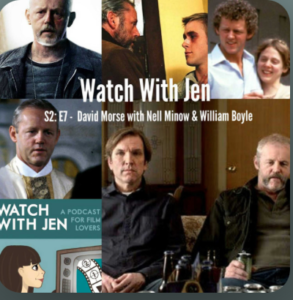
I love a chance to pay tribute to under-sung Hollywood figures, especially utility infielders who show up in movie after movie, genre after genre, handling every role with precision and commitment. David Morse fits that description perfectly, and it was a pleasure to join my friend and fellow critic Jen Johans and novelist William Boyle on Jen’s Watch With Jen podcast to talk about some of our favorite Morse performances, including “Inside Moves,” “The Slaughter Rule,” “Diary of a City Priest,” “The Indian Runner,” and more.
Rated PG PG for rude humor, cartoon violence, and brief language
Profanity:
Some schoolyard language
Nudity/ Sex:
Some potty humor
Alcohol/ Drugs:
Social drinking
Violence/ Scariness:
Comic mayhem
Diversity Issues:
Diverse characters
Date Released to Theaters:
February 26, 2021
Copyright 2021 Warner Bros.Making a live action movie about the cartoon characters Tom (the cat) and Jerry (the mouse) was a bad idea. These “let’s see what we can dig up from the intellectual property hiding in our files” reboots usually end up as lifeless as we can expect when they are inspired by balance sheets instead of characters. But “Tom and Jerry” misses even that low bar, dispiriting in its waste of the iconic cartoon characters in the title, a usually reliable director, and some of the most talented performers in movies today.
It may be impossible to make a feature film out of a one-joke set-up that more likely to be sustained in a seven-minute animated short. Certainly, if that question ever goes to court, this movie will be introduced as evidence.
A refresher: Tom wants to catch Jerry and Jerry outsmarts him. Think Road Runner and Wile E. Coyote without access to Acme explosives and anvils. But while Road Runner is being chased around spare western landscapes, Tom and Jerry often create chaos and mayhem indoors. So a lot of Tom and Jerry is things falling over and crashing and smashing.
None of that is especially well staged here. The mayhem/slapstick scenes seem to have been set up based on what they could convey with technology given the interaction between two-dimensional cartoon characters and physical reality, rather than what is involving or engaging. Slapstick has its charms, but it requires a precision of timing that allows us to appreciate the destruction before moving on to the next faceplant. And even though they are 2D cartoon characters, and thus instantly restored to perfect condition after every encounter, setting it in a 3D environment hampers some of the ebullience of the forces of id.
The biggest mistake, though, is expecting, even demanding, more affection from the audience for the characters than it earns. There doesn’t have to be a likable character to root for in a movie, but it helps.
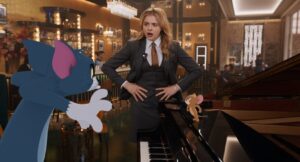
Tom plays the piano in Central Park, busking to make money (what is he going to use it for?), pretending to be blind to make even more from guilt and pity. Jerry comes along, covers his sign with one of his own, and starts collecting from the crowd until Tom sees him and the crowd sees that he can see. Chases ensue.
Meanwhile, Kayla (Chloë Grace Moretz) loses one job because Tom crashes into her bike and spills all the clean laundry she is delivering (which is not even in a bag, but okay). And so she gets another by lying about her credentials. So 20 minutes in, two of our main characters are cheaters.
Kayla’s new job is as a temp at a super-luxurious hotel which needs support for a very high-profile, no expenses spared wedding of two mega-celebrities. (Note to Hollywood: It is time to stop trying to seem relevant by creating characters who are influencers.) Kayla is there to help make everything go smoothly, even when the groom wants elephants and military-grade drones, when the bride’s ring goes missing, and when Jerry is spotted in the kitchen. At the hotel, she has a rival who sees her as a threat and gets help from a ditsy bell girl.
Kayla brings in Tom to help catch Jerry. It does not go well. That’s it. That’s the movie.
The excellent cast does its best, and believably interacts with the animated characters. But no one can make the dreary dialogue sound smart or even interesting. The problem is not that the animated characters are 2D. The problem is that the script is 1D.
Parents should know that this film includes comic violence and mayhem including fire, chases, and crashes. There is brief potty humor.
Family discussion: Why did Kayla lie? Why couldn’t Ben and Preeta tell each other the truth? How did Kayla try to fix the problems she created?
If you like this, try: the original Tom and Jerry cartoons and the Road Runner cartoons.






 “Raya and the Last Dragon” is a gorgeously animated fairy tale with thrilling action, irresistible characters, a heartwarming message, and Disney’s magic touch to lift the hearts of all ages. It has the scope and grandeur of a