What kind of movie do you feel like?

Ask Movie Mom

Find the Perfect Movie

My Interview with the Costumes Designers of Amazon Prime’s The Boys

Posted on May 14, 2020 at 11:19 am

Many thanks to The Credits, the website of the Motion Picture Association, for publishing my interviews with Carrie Grace and Laura Jean Shannon, costume designers for the Amazon Prime superhero series The Boys.

In part one, they talk about constructing the look for the only member of the Seven who actually qualifies as wholesome—Starlight, played by Erin Moriarty, and how her look was shaped both behind-the-scenes and in the show itself.

When this project happened, it was right on the cusp of MeToo, when we were getting greenlit. What we’ve done with the series is we’ve taken some of the aspects of the original story and brought them to light in a way that really does show the woman’s struggle in the workplace. A lot of times as a costume designer, you are promoting a fantasy, as well as a reality. I think it’s really interesting, watching that scene, it’s the two men sitting on the couch who are selling the story, selling the pitch to Starlight. Telling her how this is the development of her character, and how she’s owning her sexuality and stepping out, showing any skin that she wants and everything. It is a costume that the character wears in the comic book. It’s a variation because what the comic book character wore when she wore the sexy outfit was kind of impossible to actually create.

In part two, they explain all of the different techniques that go into creating a superhero costume:

I always say: They play superhero suits on TV. But in real life, they’re actually unconventional materials and custom fabrics fused together in interesting ways, in innovative ways. We start by creating a design that not only takes into account making it look like a badass superhero suit but knowing that this is not a massive film where we have a giant CGI budget, where you can basically paint everything in we need to. This is a TV project that has a limited amount of time and money and resources to get each episode, and each episode is chock full of fighting and violence. So, we really need to make these suits wearable, and the actors and the stunt people really need to be able to wear these suits comfortably enough that they can facilitate all of this action.

Hamilton — Original Cast!! — Coming to Disney Plus

Posted on May 13, 2020 at 5:28 pm

The original Broadway cast of Hamilton film is coming to Disney+ on July 3.

The show was filmed live on stage with the original cast at the Richard Rodgers Theatre in 2016.

The original Broadway cast appearing in the film include Tony Award® winners Lin-Manuel Miranda as Alexander Hamilton; Daveed Diggs as Marquis de Lafayette/Thomas Jefferson; Renée Elise Goldsberry as Angelica Schuyler; Leslie Odom, Jr. as Aaron Burr; Tony Award® nominees Christopher Jackson as George Washington; Jonathan Groff as King George; Phillipa Soo as Eliza Hamilton; and Jasmine Cephas Jones as Peggy Schuyler/Maria Reynolds; Okieriete Onaodowan as Hercules Mulligan/James Madison; and Anthony Ramos as John Laurens/Philip Hamilton.

The cast also includes Carleigh Bettiol, Ariana DeBose, Hope Easterbrook, Sydney James Harcourt, Sasha Hutchings, Thayne Jasperson, Elizabeth Judd, Jon Rua, Austin Smith, Seth Stewart, and Ephraim Sykes.

Scoob Watch Party!

Posted on May 11, 2020 at 8:15 pm

Copyright Warner Brothers 2020
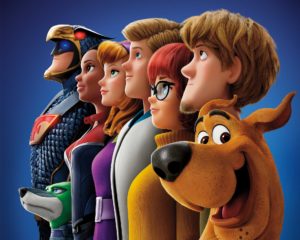
“Scoob” is coming to your home this week and Warner Brothers wants to make it a party.

On Friday, May 15 everyone is invited to the Twitter #ScoobMovieNight premiere event, hosted by the big dog himself, to celebrate the release of the brand new, fully animated, full-length action adventure feature “SCOOB!” on Premium Video on Demand or Premium Digital Ownership. Starting at 7p.m. ET/4 p.m. PT, this Twitter special event preshow for all audiences features fun Scoob moments with stars from the movie, including Will Forte, Gina Rodriguez, Zac Efron, Amanda Seyfried, Kiersey Clemons, Ken Jeong, Tracy Morgan, Frank Welker, Iain Armitage, Arianna Greenblatt, Mckenna Grace and Pierce Gagnon, and director Tony Cervone. Lennon Stella will exclusively premiere an acoustic version of lead single “Summer Feelings” featuring Charlie Puth, while Thomas Rhett, Kane Brown and Ava Max will be on hand to showcase their newly released single “On Me,” both from “SCOOB! The Album,” the movie’s official musical companion arriving this Friday and available to pre-save now here. Check out TikTok dance videos from the hugely popular #ScoobDance challenge that has over 3 billion views; plus Scoob trivia questions, interviews and, yes, in honor of the beloved Great Dane with the great big heart…dogs, dogs and more adorable dogs; along with a new Scoob-themed PSA from Best Friends Animal Society (bestfriends.org) about helping homeless dogs and cats find their own best friends, just like Scooby and Shaggy did.

Following the preshow, fans across the U.S. and Canada who then want to watch the movie can rent or buy “SCOOB!” and share Tweets about their favorite moments using #ScoobMovieNight. “SCOOB!” will be available for a 48-hour rental via Premium Video On Demand for $19.99, or premium digital ownership for $24.99, beginning on Friday, May 15.

Enjoy the movie even more with a fun family activity pack.

“SCOOB!” reveals the never-before-told story of Scooby’s origins. It shows how one of history’s most famous friendships began when an adorable, homeless puppy met a lonesome young boy named Shaggy, and how the two of them joined forces with aspiring young detectives Fred, Velma and Daphne to become the celebrated Mystery Inc. Now, with hundreds of cases solved and adventures shared, Scooby and the gang face the biggest and most challenging mystery of their careers: a plot that will unleash the legendary ghost dog Cerberus upon the world. As they race to stop this “dogpocalypse,” they discover that Scooby has a secret legacy and an epic destiny greater than anyone imagined.

“SCOOB!” features an all-star ensemble cast led by Will Forte, two-time Oscar nominee Mark Wahlberg, Jason Isaacs, Gina Rodriguez, Zac Efron, Amanda Seyfried, Kiersey Clemons, Ken Jeong, Tracy Morgan, Simon Cowell, and Frank Welker.

How We Got to Sesame Street

Posted on May 11, 2020 at 8:00 am

Copyright Simon and Schuster 2020

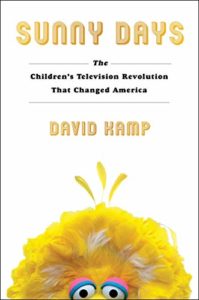
There’s a terrific history of Sesame Street by Jill Lepore in The New Yorker, based in part on a terrific new book called Sunny Days: the Children’s Television Revolution that Changed America by David Kamp. I appreciated the mention of my dad, who, as Kamp’s book reveals, played a critical role in obtaining the first funding for the show. I remember his telling us about it at family dinners, and I was lucky enough to watch the very first episode, which I loved instantly.

Half a century ago, before “Sesame Street,” and long before the age of quarantine, kids under the age of six spent a crazy amount of time indoors, watching television, a bleary-eyed average of fifty-four hours a week. In 1965, the year the Johnson Administration founded Head Start, Lloyd Morrisett, a vice-president of the Carnegie Corporation with a Ph.D. in experimental psychology from Yale, got up one Sunday morning, at about six-thirty, a half hour before the networks began their day’s programming, to find his three-year-old daughter, Sarah, lying on the living-room floor in her pink footie pajamas, watching the test pattern. She’d have watched anything, even “The Itty-Bitty, Farm and City, Witty-Ditty, Nitty-Gritty, Dog and Kitty, Pretty Little Kiddie Show.”

Not much later, Morrisett fell into a dinner-party conversation with Joan Ganz Cooney, a public-affairs producer at New York’s Channel 13. The first time Cooney had seen a television set was in 1952, when she watched Adlai Stevenson accept the Democratic nomination. She’d gone on to champion Democratic causes and had moved from Phoenix to New York to work at Channel 13, where her documentary projects included “A Chance at a Beginning,” about a preschool program in Harlem. As David Kamp reports in “Sunny Days: The Children’s Television Revolution That Changed America” (Simon & Schuster), both Cooney and Morrisett were caught up in Lyndon Johnson’s vision of a Great Society, his War on Poverty, and the promise of the civil-rights movement, and they’d both been stirred by a speech delivered in 1961 by Newton Minow, President Kennedy’s F.C.C. chairman, which called television a “vast wasteland.” Minow, a former law partner of Stevenson’s, had gone on to rescue Channel 13’s public-broadcast mandate during a takeover bid. At that dinner party, Cooney and Morrisett got to talking about whether public-minded television might be able to educate young kids.

Educational television for preschoolers seemed to solve two problems at once: the scarcity of preschools and the abundance of televisions. At the time, half of the nation’s school districts didn’t have kindergartens. To address an achievement gap that had persisted long after Brown v. Board of Education, it would have been better to have universal kindergarten, and universal preschool, but, in the meantime, there was universal television. “More households have televisions than bathtubs, telephones, vacuum cleaners, toasters, or a regular daily newspaper,” Cooney noted in a Carnegie-funded feasibility study, “The Potential Uses of Television in Preschool Education.” With that report in hand, Morrisett arranged for a million-dollar grant that allowed Cooney to begin development of a show with no other title than “Early Childhood Television Program.” In a fifty-five-page 1968 proposal, “Television for Preschool Children,” Cooney reported the results of a national study of the increasingly sophisticated scholarship on child development: she’d travelled the country, interviewing scholars and visiting preschools to find out about what was called, at the time, the “sandbox-to-classroom revolution”—the pressing case for intellectual stimulation for three-, four-, and five-year-olds.

That proposal brought in the eight million dollars in foundation and government funding that made possible the founding of the nonprofit Children’s Television Workshop and the production of the first season of the still unnamed “Early Childhood Television Program.” “Nothing comparable to such a program now exists on television,” Cooney observed. “Captain Kangaroo,” broadcast on CBS beginning in 1955, had educational bits, but it was mainly goofy. (Bob Keeshan, who played the captain, had started out as a Sideshow Bob clown named Clarabell on “Howdy Doody” and then starred as Corny the Clown on ABC’s “Time for Fun.”) “Mister Rogers’ Neighborhood,” a half-hour show produced by WQED, in black-and-white, had gone national in 1968, but reached mainly a middle-class audience. The new show would be broadcast nationally, every weekday, for an hour, in color; it would be aimed at all children, from all socioeconomic backgrounds; it would be explicitly educational, with eight specific learning objectives drawn from a list devised by experts; and its format would be that of a “magazine” made up of “one- to fifteen-minute segments in different styles”—animation, puppetry, games, stories. The “Early Childhood Television Program” would also be an experiment: its outcome would be measured.

Cooney put together a board of academic advisers, chaired by the developmental psychologist Gerald Lesser, and in 1968 she began a series of seminars loosely affiliated with the Harvard School of Education, where Lesser was a professor. To one of those seminars, she later recalled, “this bearded, prophetic figure in sandals walks in and sits way at the back, ram-rod straight, staring ahead with no expression on his face.” She thought that he might be a member of the Weather Underground. She whispered to a colleague, “How do we know that man back there isn’t going to throw a bomb up here or toss a hand grenade?”

“Not likely,” he said. “That’s Jim Henson.”

Running in Movies — Showing Character as Well as Story

Posted on May 11, 2020 at 8:00 am

Great piece by James Parker in The Atlantic about how actors use running styles to show character in movies. Well, most actors.

Running in movies is always toward danger or away from it. No one in movies is ever just running.

And like ballet dancers, the great runners in movies express character through movement, through the whirling and thumping of their limbs. Matt Damon, as Jason Bourne, is a brain-wiped super-soldier having an identity crisis, so he runs like a frightened washing machine. Carrie-Anne Moss, as Trinity in The Matrix, runs like an equation from the future—which is what she is. Harrison Ford in his prime had a distinctive bowled-over running style: Look at him in The Fugitive, blundering and floundering and grimacing and reeling, an everyman dislodged—as if by an explosion—from the everyday, knocked out of his life, and frowningly, head-buttingly determined to get back in there.

(Tom Cruise is different. Whatever part he’s playing, Jerry Maguire or Jack Reacher, he runs like Tom Cruise, with piston knees and piston elbows and the face of an angry Christ. And that’s okay.)

Bradley Cooper in Silver Linings Playbook, pounding around the burbs with a garbage bag sort of medievally layered over his hoodie, is jogging. People do jog in movies, for fitness—but interiorly, as they jog along, they’re still firmly located on that into-trouble/​out-of-trouble axis. They’re still going one way or the other. Cooper is running—so he hopes—away from madness.