

What kind of movie do you feel like?

Ask Movie Mom

Find the Perfect Movie

Interview: Allen Zadoff

Posted on July 12, 2011 at 8:00 am

Thanks to Allen Zadoff, author of the terrific new book, My Life, the Theater, and Other Tragedies, for answering my questions!

The actors and techies don’t speak to each other in your book, but one character says that in her other school, they are on friendlier terms.  What is the more typical relationship, and why?

There are a lot of variations on the theme.  In my novel, techies and actors are at war. That’s definitely the extreme.  In a perfect world, techies and actors work together as part of the same team. It’s synergistic and there’s mutual respect.  Think about Spiderman on Broadway. The actors’ survival literally depended on the tech crew!  In many theater programs, actors are required to do some tech work, and techies will do at least a little acting. It’s much easier to respect someone when you’ve walked a mile in his shoes, right?  In the real world, my experience is that there’s often a divide between the two cultures.  I’ve been on both sides of it as actor and as stage manager.  There’s tension, even if it’s unspoken. In My Life, the Theater, and Other Tragedies, I took that tension and magnified it.

The perspective of a lighting tech, hidden from the audience and looking down on the show, is something like the perspective of a writer and his characters and story.  How did your experiences as a tech help your observation skills and insights as a writer?

My real observation skills come from being an overweight kid, a subject I wrote about in my first novel Food, Girls, and Other Things I Can’t Have. As a heavy kid, I was a loner and I spent a lot of time watching the world go by and fantasizing about what it would be like to join it. It made for a painful adolescence, but in hindsight, what better training to become a novelist?  I drew on that experience as well as my theater background to create the characters in Life/Theater.

Adam and his best friend Reach have to renegotiate their relationship in the story.  Is that an inevitable part of growing up?

I think when you’re a kid, relationships are on autopilot. (Wait, that’s true for a lot of adults, too!)  You don’t examine the relationship; you just have it.  Then something happens that shakes you up.  Your friend falls in love. You have a fight. You lie. You get betrayed.  Suddenly you wake up to the relationship, what it means in your life, and what you want from it.  That moment of waking up could be called maturity.

What do you like about writing for a YA audience?

The YA audience is passionate in a way no other audience is.  It’s not just the teens. It’s the librarians, the parents, the bloggers, the booksellers.  They’re not YA readers. They’re YA fans and aficionados. I can’t think of a better audience with whom to share my books.  I feel lucky to be a YA author.

What were the books and movies you most enjoyed as a teenager?  

The films of John Hughes were very influential for me when I was a kid.  “Sixteen Candles,” “The Breakfast Club,” Ferris Bueller’s Day Off, even Uncle Buck. (Oh, I miss John Candy.)  Although I was a voluminous reader and could tell you all the novels I read and loved, these films were my YA.  Funny, real, and heartbreaking. I try to capture those same dynamics in my novels.

You and Adam share initials — did any of the experiences in the book happen to you?

Here’s a little secret. I share initials with all my heroes. So I’ll just say this in response to your question.  My first kiss happened in the theater. To everything else, I plead the Fifth.

Why did you choose “Midsummer Night’s Dream” for the play?

Actually, Midsummer chose me. It’s always mysterious where these things come from, and I was in the early stages of planning Life/Theater, trying out different plays, when Shakespeare popped into my head.  I had the image of the lovers in Midsummer running through the forest in the dark, confused by shifting passions, shocked by sudden loss, unsure whether they were awake or dreaming.  Those same themes were the ones I wanted to explore in the book.  Here’s a little inside scoop for readers: Check out the chapter titles in the novel.  Every one is a line (or phrase, or partial line) from Midsummer. I’ve used Shakespeare’s text in a very modern way, something like sampling in hip hop.
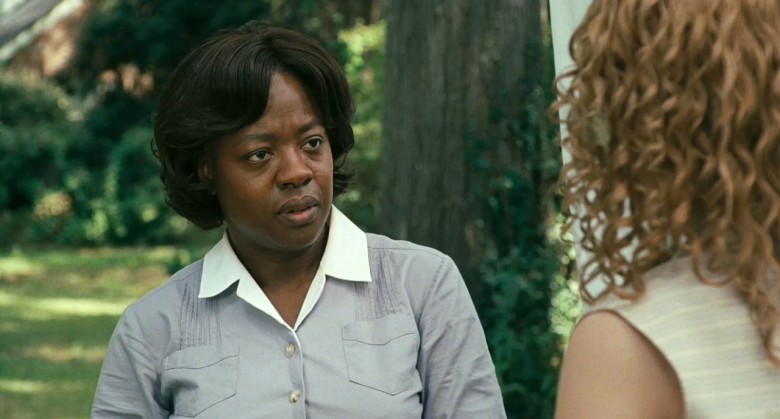
‘The Help’ — Viola Davis

Posted on July 11, 2011 at 12:00 pm

In my opinion, Viola Davis is the finest actress in movies today.  In “Doubt,” she gave the best performance of the year in one short but very powerful scene as the mother of a boy who may have been abused.  She has made an indelible impression in brief appearances in movies as sympathetic therapists in “It’s Kind of a Funny Story” and “Trust,” best friends in “Eat Pray Love” and “Nights in Rodanthe,” as a mayor in “Law Abiding Citizen” and as a space ship captain in “Solaris.”  It was truly a thrill to speak to her about playing the strong, quiet, principled maid Aibileen in “The Help.”

Like the other people working on the movie, she was very aware of the about the influence of the setting.  “It’s easier to do this because you’re in Mississippi.  It’s a different world.  A different energy that informs everything you do.  Going into Baptist Town you feel the spirits of the past.”

We asked about developing a Mississippi accent.  “The accent is a work in progress.  I was born in South Carolina and raised in Rhode Island. It’s my mother’s voice I hear in my head.  I don’t want the accent to be as strong as it is in the book.  I’ve read the criticism about the dialect online.  I don’t want anything to distract from the character.  I want to make it accessible.”  Her research about the era included books, the Eyes on The Prize PBS series, “a documentary about maids, my mother, relatives, everybody.”  She also remembered a teacher in college who was part of Freedom summer and came back to campus to talk about it.

Asked about the challenges of the story, she frankly acknowledged, “There’s a lot of pressure.  There are two stories going on.  It’s the experience of a lot of Caucasians with substitute mothers and the story of these maids, my mother’s story, who these women were when they went home.  That’s the part that makes it a dirty secret, not palatable.  That’s the story of those who worked for other people.  Abeline was born in 1911.  By she has has 53 years of incredible history.  You feel an incredible responsibility not to make it sanitized.  That’s what Hollywood always does.”

And she spoke of the challenges of playing a character who by nature and culture seldom says what she is thinking.  “Your internal dialog has got to be different from what you say…. makes it so rich.”  It was sometimes very difficult to do.  “You feel the rage, the frustration, the repression, the intense level of sadness, of going to your grave without ever realizing your dreams and hopes.  Now we can speak our minds more.  To be silent so much – it’s hard not to carry that rage when you leave the set.”


Interview: Nadia Costa of ‘Crime After Crime’

Posted on July 10, 2011 at 12:50 pm

“Crime After Crime” is the story of Deborah Peagler, serving a 25-to live sentence for killing the man who abused her, and the lawyers who fought for her release.  California is the only state to adopt a law that permits the courts to re-open cases if there is evidence of abuse as a factor in the crime.  Peagler was severely abused by Oliver Williams, who forced her into prostitution at the age of 15, beat her with a bullwhip, and abused her daughter as well.  In desperation, Peagler asked friends of hers who were in a gang to beat him up.  They killed him.  She went to prison.  Twenty years later, land use lawyers Joshua Safran and Nadia Costa, with little experience of criminal law but a strong commitment to helping survivors of abuse, took her case to see if the new law would help her to get out of prison.

Costa took time to speak to me about the case, the movie, and mostly about Peagler, whose extraordinary courage, dignity, principle, and wisdom illuminate the film.  Her co-counsel came to the case because of obligation as an Orthodox Jew to “free those who are bound” and from his own experience as a child unable to protect his mother from abuse.  Costa’s connection was less direct but just as personal, based on her experiences as a social worker and her spiritual commitment to helping others.  As she says in the film, she was also inspired by running ultra-marathons, which provided a physical and spiritual level of endurance necessary for what proved to be a six-year process with many devastating setbacks.

The hardest part, she told me, was when the prosecutor’s office reversed its decision to support Peagler’s release.  She dreaded having to tell her client, who was already making plans for seeing her grandchildren and visiting the ocean.  But Costa said that Peagler’s grace, peace, and compassion even in receiving such painful news were a sustaining force in maintaining her own dedication and inspiration.

My Visit to the Set of ‘The Help’ — Coming Next Week

Posted on July 9, 2011 at 8:00 am

One of the biggest surprise best-sellers of the past ten years is The Help, the first novel by Jackson, Mississippi native Kathryn Stockett.  It is now one of the most eagerly anticipated movies of the year.  The story of the book takes place in Jackson in the early 1960’s, just before the Civil Rights era.  It is told in the alternating voices of black and white female characters including two maids, one quiet and thoughtful, one impulsive and outspoken, and a naive and awkward but earnest young Southern woman just out of college.  She decides to write a book with the stories of the maids of Jackson.  The book was rejected 60 times before it was published, but Sockett persisted and it became an international best-seller.

But her lifelong friend believed in the book from the beginning.  Actor Tate Taylor grew up with Stockett in Mississippi and he loved the book immediately.  He optioned it before it was published so that by the time the big movie studios came to her with offers she explained that she had already sold the movie rights and if they wanted to make the movie Taylor would have to direct it.  She knew his understanding of Jackson in the 1960’s was essential for the film.  Fortunately, one of the most successful directors in Hollywood, Chris Columbus (the first two “Harry Potter” movies) agreed.  He signed on as a producer to assure the studios that an experienced film-maker would be on hand.  And another close friend, Octavia Spencer, the actress who inspired one of the key characters, the irrepressible Minny, was cast in the role.

I could not have been luckier in making my very first-ever visit to a movie set a trip to Mississippi eleven months ago to see the filming of “The Help.”  And I am thrilled to be able to bring you the insights and interviews from my trip, including comments from Taylor, Columbus, Spencer, and co-stars Viola Davis, Bryce Dallas Howard, and Emma Stone, beginning Monday, July 11.