What kind of movie do you feel like?

Ask Movie Mom

Find the Perfect Movie

Talking to Children about Poverty

Posted on October 15, 2008 at 4:56 pm

Families may find that their children have picked up some of the concerns about the economy from the news or overheard adult conversations. They will need to be reassured that even if their families have suffered some financial setbacks, they have all of the love and courage they need to keep them safe. And they will also need to be reassured that there is something they can do to help those who are less fortunate.
This summer’s American Girls movie, Kit Kittredge, is a very good way to begin a conversation with children about the current economic problems and their consequences. I particularly appreciate the way that it makes clear that the homeless characters are less fortunate but no less filled with dignity, decency, and humanity. The range of responses to poverty depicted in the film gives families a lot to talk about. So does the way that even the poorest find ways to help others in need.
Slate has a superb discussion of children’s books that discuss poverty by Erica S. Perl. From classics like Five Little Peppers and How They Grew, Little House on the Prairie, and Ramona and Her Father to more recent books like Spuds, these stories give families a chance to talk about difficult issues with that all-important distance because it is happening to other people at other times.
And Perl includes that most irrepressibly sunny survivor of hard times, Annie , who reminds us that even the most hard-knock life will be sunnier “Tomorrow.”

McCain and Obama for Children

Posted on October 15, 2008 at 8:00 am

There are very fine illustrated biographies of both candidates for children, a good way to begin a conversation about how we select our leaders and the importance of being able to disagree in a respectful and honorable manner.

Smoking in Movies

Posted on October 14, 2008 at 11:13 pm

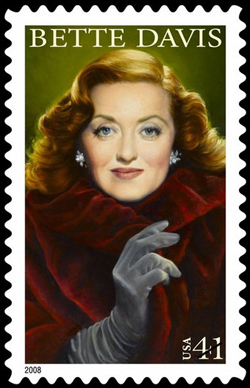
davis stamp.jpg
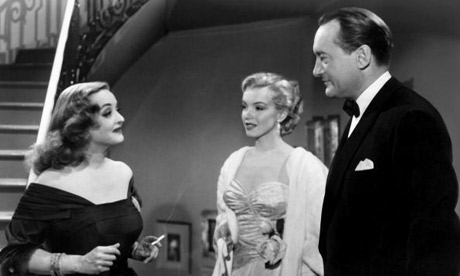
Roger Ebert hates smoking — except in movies. And he really objects to the kind of revisionism that has produced one of Bette Davis’ iconic images from “All About Eve” for a new postage stamp but left out her ever-present cigarette.
Ebert’s parents died from smoking-related diseases. He does not permit smoking in his home. But he cannot resist the romanticism of cigarette smoking in movies, especially classic movies.
Two of the most wonderful props in film noir were cigarettes and hats. They added interest to a close up or a two-shot. “Casablanca” without cigarettes would seem to be standing around looking for something to do. These days men don’t smoke and don’t wear hats. When they lower their heads, their eyes aren’t shaded. Cinematographers have lost invaluable compositional tools. The coil of smoke rising around the face of a beautiful women added allure and mystery. Remember Marlene Dietrich. She was smoking when she said, “It took more than one man to change my name to Shanghai Lily.”eve460.jpg
Everybody smoked cigarettes in the movies. Even Katharine Hepburn. Even Loretta Young. Ronald Reagan posed for Chesterfield ads. On the radio, it wasn’t “The Jack Benny Program,” it was “The Lucky Strike Program with Jack Benny,” although in that PBS documentary you only see him smoking cigars. Robert Mitchum smoked so much, he told me, that when the camera was rolling on “Out of the Past,” Kirk Douglas offered him a pack and asked, “Cigarette?” And Mitchum, realizing he’d carried a cigarette into the scene, held up his fingers and replied, “Smoking.” His improvisation saved the take. They kept it in the movie.
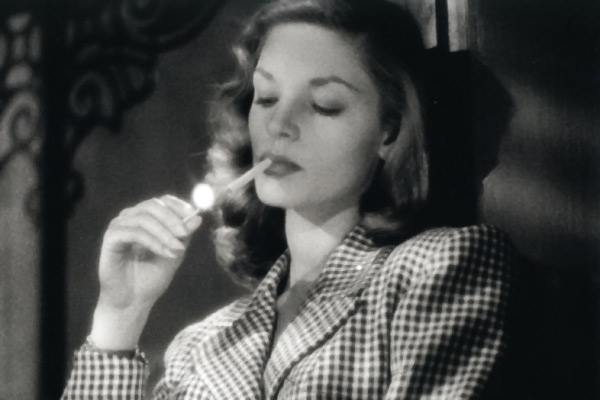
My favorite smoking scene is Lauren Bacall’s first on-screen moment in “To Have and Have Not” — she was an instant star with her first line: “Anybody got a match?”
bacall.jpg
Ebert acknowledges that in today’s world it almost seems absurd to have a character smoking anywhere but standing outside a building on a brief break. Even James Bond no longer smokes. And we no longer need the lighting of a cigarette and the softly rising smoke to demonstrate gallantry and symbolize romance and seduction. in this era of overshares and TMI, perhaps it isn’t the cigarettes we miss so much as the metaphors.

Great Movie Costumes for Halloween

Posted on October 14, 2008 at 9:00 am

Rotten Tomatoes has some wonderful ideas for the best (and easiest) Halloween costumes inspired by movies. It includes classics like Indiana Jones and Carrie, current hits like Nurse Joker and some good ideas for friends to coordinate like Gogo Yurbari and the Crazy 88 from “Kill Bill” and costumes that are so easy to make that you can pick up everything at Goodwill for under $5, like The Dude from “The Big Lebowski” and Jay and Silent Bob from the Kevin Smith movies. Happy trick or treating!

Expelled: No Intelligence Allowed

Posted on October 14, 2008 at 8:00 am

There may be a good argument to make on behalf of teaching Intelligent Design in science class, but this documentary from Ben Stein does not make it. The movie itself is an example of design by faith and emotion rather than intelligence, defined as rationality grounded in proof. Instead of making a straightforward case for Intelligent Design as a scientific theory, Stein employs misdirection and guilt by very tangential association to try to make his case.

Intelligent Design advocates believe that certain features of the universe and of living things are best explained by an intelligent cause, not an undirected or random or mechanical process such as Charles Darwin’s theory of natural selection. Stein begins by interviewing scientists who lost their jobs for even mentioning the theory, baits some Darwinian scientists in selective clips from interviews, and then visits Dachau and the Hadamar euthanasia center, where the Nazis murdered thousands of disabled people. Stein tells us he is not saying that Darwinism leads to mass murder, but the connection he draws is unmistakable.

Like the tobacco companies once they could no longer question the legitimacy of the scientific evidence connecting cigarettes and disease, Stein quickly shifts the debate from a head-to-head assessment of analysis of data to frame the issue as one of freedom of speech. The movie opens with archival footage not of science labs or the animal life on Galapagos Island, where Darwin first began to develop his theory, but of the construction of the Berlin Wall. Stein tries to draw a parallel between the wall that divided Germany and the impenetrable wall that keeps Intelligent Design out of the science establishment. But he is also associating Darwinian science with Godlessness, communism, and totalitarianism, with detours into Nazi atrocities and atheism so over-the-top that it becomes shrill and irrational.

And irrationality is the opposite of scientific inquiry. Stein says that freedom of speech requires that both Intelligent Design and Darwin’s natural selection should be taught in America’s classrooms. But he never subjects Intelligent Design to the kind of scrutiny required by scientific analysis, which is based on observation and experimentation. Intelligent Design is based the fact that (1) there are questions that natural selection does not answer — which Darwinian scientists admit, and (2) therefore, some intelligent force must be behind creation — which cannot be proven by scientific means and therefore is more appropriately considered within the fields of philosophy or religion.

Science is all about challenging, refining, and refuting established theories, as the movie concedes, with Albert Einstein’s improvement of the theories of Isaac Newton as an example. But both Newton and Einstein agreed on what science was and how to evaluate scientific theories. As presented by Stein, Intelligent Design and Darwinian theory make the same observations, but come to different conclusions. Darwin says that life forms evolved through random mutation and natural selection, the survival of the fittest. Intelligent Design says that life is so complex that it is all the evidence we need to show that some intelligent (conscious, intentional) force must have created it. Stein never shows that Intelligent Design can go from theory to explanation as it must to be considered science. As a lawyer, he should understand that freedom of speech also guarantees the freedom not to have to listen to mangled, manipulative, and disingenuous rhetoric like this.