Copyright Universal 2016We all love the sweet holiday movies with snowflakes gently falling on the upturned faces of happy families, where any conflict is minor enough to be resolved in 90 minutes and there are lots of hugs and cookies. But there are also a lot of holiday movies about dysfunctional families, some comic, some darkly comic, and some bittersweet. Here are some that may not be classic but are favorites for a lot of people.
“The Family Stone” and “Love the Coopers”
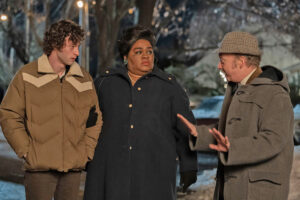
These two dysfunctional family perennials sometimes get mixed up because Diane Keaton plays the family mother and grandmother in both of them and both are about families that keep secrets, disappoint each other, get mad about disappointing each other, and get on each other’s nerves. In “The Family Stone,” Sarah Jessica Parker plays a woman who is spending Christmas with her brother’s family. In “Love the Coopers,” Olivia Wilde impulsively asks a solider she meets in the airport (Jake Lacy) to pretend to be her boyfriend. The most entertaining part of that film may be the chance to see very early appearances from big stars Timothee Chalamet and Molly Gordon.
“The Holly and the Ivy”
One of the earliest of the film in this genre is a 1952 British film about a clergyman whose adult children are all hiding secrets from him. The outstanding cast makes this a very touching story.
“The Ref”
The darkest comedy on this list has Denis Leary as a thief who takes a bickering couple (Judy Davis and Kevin Spacey) as hostages. They start to drive him crazy and then things really get out of hand when the family shows up, including Glynis Johns and Christine Baranski.
“Nothing Like the Holidays”
A Puerto Rican family is thrown into a tizzy when they get together at Christmas and the parents (Alfred Molina and Elizabeth Pena) announce they are getting a divorce.
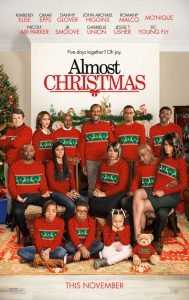
Almost Christmas
A widower gathers his family for Christmas. They drive each other crazy, but — spoiler alert — it all works out. The terrific cast includes Danny Glover, Mo’Nique, Omar Epps, JB Smoove, Romany Malco, and John Michael Higgins.
“This Christmas”
A secret wife. A loan shark’s goons on the trail. A sleepover with Santa. A cheating husband. These are just a few of the issues that arise in a big California family celebrating the holidays. The terrific cast includes Loretta Devine. Regina King, Delroy Lindo, Idris Elba, Lauren London, and Columbus Short.
Also: “National Lampoon’s Christmas Vacation,” “Home Alone,” “Almost Christmas,” and this year’s “Family Switch”
I love the Christmas classic movies and watch as many as I can every year. But there are many great Christmas films that don’t get mentioned as often and I like to remind families that these are worth making time for as well.
1. The Nativity Story This sincere and respectful story is a good way to remember that Christmas is about more than presents and parties. “Whale Rider’s” Keisha Castle-Hughes has a shy but dignified and resolute air and she glows believably as the very young woman who is selected as the mother of Jesus. And “Drive’s” Oliver Isaac effectively conveys tenderness, doubt, courage, and transcendence as Joseph.
2. A Christmas Memory Truman Capote’s bittersweet memory of his childhood Christmas making fruitcakes with his elderly cousin, the only relative who cared about him is beautifully filmed with the magnificent Geraldine Page and Capote himself reading the narration.
3. Will Vinton’s Claymation Christmas The California Raisins guys put together this Christmas special, with the highlight the funniest-ever performance of “Carol of the Bells.”
4. Come to the Stable Loretta Young and Celeste Holm play French nuns trying to raise money to build a hospital. Their faith and goodness transforms those they meet.
5. Little Women “Christmas won’t be Christmas without any presents” is the first line of this classic novel based on the loving if sometimes tumultuous family of author Louisa May Alcott. The movie opens with an important Christmas lesson about the joy of giving. All three versions of the story, with Katharine Hepburn, Winona Ryder, and Saoirse Ronin, are superb.
6. The Best Christmas Pageant Ever Based on the classic book, this stars Loretta Swit as the mother of six rambunctious kids who insist on playing roles in the church pageant.
7. This Christmas I love this movie about a family with five adult children who return home to celebrate Christmas with their mother and youngest brother. The outstanding cast includes Regina King, Idris Elba, Loretta Devine, and Chris Brown. Be sure to watch through the credits to see the actors perform a great dance number.
8. Desk Set Before Google, companies had human beings to track down information. Katherine Hepburn plays the head of the all-female research department for a television network and Spencer Tracy is the engineer who is installing the company’s first computer, which takes up a whole wall and uses punch cards and vacuum tubes. Sparks fly — and not just in the equipment.
9. Die Hard Yes, it is a Christmas movie. Bruce Willis plays a cop visiting his estranged wife at her office Christmas party when the building is taken over by bad guys led by Alan Rickman in this action-movie classic.
10. The Polar Express Tom Hanks stars in this animated story based on the book by Chris Van Allsburg about a magical train ride to the North Pole.
11. Home Alone This comedy smash hit stars Macauley Culkin as a little boy who is accidentally left home when his family goes away for the holidays and has to take care of himself and guard the house from a couple of inept thieves. The slapstick is a bit over the top but the message of Christmas is surprisingly touching.
12. Annie The story of the plucky orphan from the comic pages became one of the biggest Broadway musicals of all time and one of its highlights is Christmas with Daddy Warbucks.
All of Us Strangers
Producers: Graham Broadbent, Pete Czernin, Sarah Harvey
American Fiction
Producers: Cord Jefferson, Jermaine Johnson, Nikos Karamigios, Ben LeClair
May December
Producers: Jessica Elbaum, Will Ferrell, Grant S. Johnson, Pamela Koffler, Tyler W. Konney, Sophie Mas, Natalie Portman, Christine Vachon
Passages
Producers: Michel Merkt, Saïd Ben Saïd
Past Lives
Producers: David Hinojosa, Pamela Koffler, Christine Vachon
We Grown Now
Producers: Minhal Baig, Joe Pirro
Copyright Amazon 2023
BEST FIRST FEATURE (Award given to director and producer)
All Dirt Roads Taste of Salt
Director: Raven Jackson
Producers: Maria Altamirano, Mark Ceryak, Barry Jenkins, Adele Romanski
Chronicles of a Wandering Saint
Director: Tomás Gómez Bustillo
Producers: Gewan Brown, Amanda Freedman
Earth Mama
Director/Producer: Savanah Leaf
Producers: Sam Bisbee, Shirley O’Connor, Medb Riordan, Cody Ryder
A Thousand and One
Director: A.V. Rockwell
Producers: Julia Lebedev, Rishi Rajani, Eddie Vaisman, Lena Waithe, Brad Weston
Upon Entry
Directors: Alejandro Rojas, Juan Sebastián Vásquez
Producers: Sergio Adrià, Carlos Juárez, Alba Sotorra, Carles Torras, Xosé Zapata
JOHN CASSAVETES AWARD – Given to the best feature made for under $1 million
The Artifice Girl
Director/Writer: Franklin Ritch
Producers: Aaron B. Koontz, Ashleigh Snead
Cadejo Blanco
Director/Writer/Producer: Justin Lerner
Producers: Mauricio Escobar, Ryan Friedkin, Jack Patrick Hurley
Fremont
Director/Writer: Babak Jalali
Writer: Carolina Cavalli
Producers: Rachael Fung, Chris Martin, Marjaneh Moghimi, George Rush, Sudnya Shroff, Laura Wagner
Rotting in the Sun
Director/Writer: Sebastián Silva
Writer: Pedro Peirano
Producer: Jacob Wasserman
The Unknown Country
Director/Writer/Producer: Morrisa Maltz
Writer: Lily Gladstone
Writers/Producers: Lainey Bearkiller Shangreaux, Vanara Taing
Producers: Katherine Harper, Laura Heberton, Tommy Heitkamp
BEST DIRECTOR
Andrew Haigh
All of Us Strangers
Todd Haynes
May December
William Oldroyd
Eileen
Ira Sachs
Passages
Celine Song
Past Lives
BEST SCREENPLAY
David Hemingson
The Holdovers
Cord Jefferson
American Fiction
Laura Moss, Brendan J. O’Brien
Birth/Rebirth
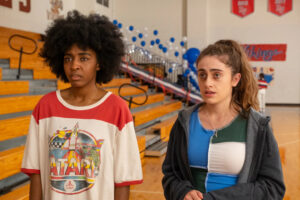
Emma Seligman, Rachel Sennott
Bottoms
Celine Song
Past Lives
BEST FIRST SCREENPLAY
Samy Burch; Story by Samy Burch, Alex Mechanik
May December
Noah Galvin, Molly Gordon, Nick Lieberman, Ben Platt
Theater Camp
Tomás Gómez Bustillo
Chronicles of a Wandering Saint
Laurel Parmet
The Starling Girl
Alejandro Rojas, Juan Sebastián Vásquez
Upon Entry
BEST LEAD PERFORMANCE
Jessica Chastain
Memory
Greta Lee
Past Lives
Trace Lysette
Monica
Natalie Portman
May December
Judy Reyes
Birth/Rebirth
Franz Rogowski
Passages
Andrew Scott
All of Us Strangers
Teyana Taylor
A Thousand and One
Jeffrey Wright
American Fiction
Teo Yoo
Past Lives
BEST SUPPORTING PERFORMANCE
Erika Alexander
American Fiction
Sterling K. Brown
American Fiction
Noah Galvin
Theater Camp
Anne Hathaway
Eileen
Glenn Howerton
BlackBerry
Marin Ireland
Eileen
Charles Melton
May December
Da’Vine Joy Randolph
The Holdovers
Catalina Saavedra
Rotting in the Sun
Ben Whishaw
Passages
Copyright 2023 MGM
BEST BREAKTHROUGH PERFORMANCE
Marshawn Lynch
Bottoms
Atibon Nazaire
Mountains
Tia Nomore
Earth Mama
Dominic Sessa
The Holdovers
Anaita Wali Zada
Fremont
BEST CINEMATOGRAPHY
Katelin Arizmendi
Monica
Eigil Bryld
The Holdovers
Jomo Fray
All Dirt Roads Taste of Salt
Pablo Lozano
Chronicles of a Wandering Saint
Pat Scola
We Grown Now
BEST EDITING
Santiago Cendejas, Gabriel Díaz, Sofía Subercaseaux
Rotting in the Sun
Stephanie Filo
We Grown Now
Daniel Garber
How to Blow Up a Pipeline
Jon Philpot
Theater Camp
Emanuele Tiziani
Upon Entry
ROBERT ALTMAN AWARD – Given to one film’s director, casting director and ensemble cast
Showing Up
Director: Kelly Reichardt
Casting Director: Gayle Keller
Ensemble Cast: André Benjamin, Hong Chau, Judd Hirsch, Heather Lawless, James Le Gros, John Magaro, Matt Malloy, Amanda Plummer, Maryann Plunkett, Denzel Rodriguez, Michelle Williams
BEST DOCUMENTARY
Bye Bye Tiberias
Director: Lina Soualem
Producer: Jean-Marie Nizan
Four Daughters
Director: Kaouther Ben Hania
Producer: Nadim Cheikhrouha
Going to Mars: The Nikki Giovanni Project
Directors/Producers: Joe Brewster, Michèle Stephenson
Producer: Tommy Oliver
Kokomo City
Director: D. Smith
Producers: Bill Butler, Harris Doran
The Mother of All Lies
Director/Producer: Asmae El Moudir
BEST INTERNATIONAL FILM
Anatomy of a Fall
France
Director: Justine Triet
Godland
Denmark/Iceland
Director: Hlynur Pálmason
Mami Wata
Nigeria
Director: C.J. ‘Fiery’ Obasi
Tótem
Mexico
Director: Lila Avilés
The Zone of Interest
United Kingdom, Poland, USA
Director: Jonathan Glazer
PRODUCERS AWARD
Rachael Fung
Graham Swon
Monique Walton
SOMEONE TO WATCH AWARD
Joanna Arnow
Director of The Feeling That the Time for Doing Something Has Passed
Laura Moss
Director of Birth/Rebirth
Monica Sorelle
Director of Mountains
TRUER THAN FICTION AWARD
Set Hernandez
Director of unseen
Jesse Short Bull, Laura Tomaselli
Director of Lakota Nation vs. United States
Sierra Urich
Director of Joonam
BEST NEW NON-SCRIPTED OR DOCUMENTARY SERIES
Deadlocked: How America Shaped the Supreme Court
Executive Producers: Vinnie Malhotra, Aaron Saidman, Eli Holzman, Dawn Porter
Dear Mama
Executive Producers: Lasse Järvi, Quincy ‘QD3’ Jones III, Staci Robinson, Nelson George, Charles D. King, Peter Nelson, Adel ‘Future’ Nur, Jamal Joseph, Ted Skillman, Allen Hughes, Steve Berman, Marc Cimino, Jody Gerson, John Janick, Nicholas Ferrall, Nigel Sinclair
Murder in Big Horn
Executive Producers: Matthew Galkin, Vinnie Malhotra
Co-Executive Producers: Lisa Kalikow, Joshua Levine
Stolen Youth: Inside the Cult at Sarah Lawrence
Executive Producers: Mindy Goldberg, Dan Cogan, Liz Garbus, Jon Bardin, Zach Heinzerling, Krista Parris, Daniel Barban Levin, Felicia Rosario
Co-Executive Producer: Julie Gaither
Wrestlers
Executive Producers: Greg Whiteley, Ryan O’Dowd
Co-Executive Producers: Alejandro Melendez, Adam Leibowitz
BEST NEW SCRIPTED SERIES
Beef
Creator/Executive Producer: Lee Sung Jin
Executive Producers: Steven Yeun, Ali Wong, Jake Schreier, Ravi Nandan, Alli Reich
Co-Executive Producers: Alice Ju, Carrie Kemper
Dreaming Whilst Black
Creator/Executive Producer: Adjani Salmon
Creators: Maximilian Evans, Natasha Jatania, Laura Seixas
Executive Producers: Tanya Qureshi, Dhanny Joshi, Bal Samra, Thomas Stogdon
I’m a Virgo
Creator/Executive Producer: Boots Riley
Executive Producers: Tze Chun, Michael Ellenberg, Lindsey Springer, Jharrel Jerome, Rebecca Rivo
Co-Executive Producers: Marcus Gardley, Carver Karaszewski
Jury Duty
Creators/Executive Producers: Lee Eisenberg, Gene Stupnitsky
Executive Producers: David Bernad, Ruben Fleischer, Nicholas Hatton, Cody Heller, Todd Schulman, Jake Szymanski, Andrew Weinberg
Slip
Creator/Executive Producer: Zoe Lister-Jones
Executive Producers: Ro Donnelly, Dakota Johnson, Katie O’Connell Marsh, David Fortier, Ivan Schneeberg
BEST LEAD PERFORMANCE IN A NEW SCRIPTED SERIES
Emma Corrin
A Murder at the End of the World
Dominique Fishback
Swarm
Betty Gilpin
Mrs. Davis
Jharrel Jerome
I’m a Virgo
Zoe Lister-Jones
Slip
Bel Powley
A Small Light
Bella Ramsey
The Last of Us
Ramón Rodríguez
Will Trent
Ali Wong
Beef
Steven Yeun
Beef
BEST SUPPORTING PERFORMANCE IN A NEW SCRIPTED SERIES
Murray Bartlett
The Last of Us
Billie Eilish
Swarm
Jack Farthing
Rain Dogs
Nick Offerman
The Last of Us
Adina Porter
The Changeling
Lewis Pullman
Lessons in Chemistry
Benny Safdie
The Curse
Luke Tennie
Shrinking
Olivia Washington
I’m a Virgo
Jessica Williams
Shrinking
BEST BREAKTRHOUGH PERFORMANCE IN A NEW SCRIPTED SERIES
Clark Backo
The Changeling
Aria Mia Loberti
All the Light We Cannot See
Adjani Salmon
Dreaming Whilst Black
Keivonn Montreal Woodard
The Last of Us
Kara Young
I’m a Virgo
BEST ENSEMBLE CAST IN A NEW SCRIPTED SERIES
Jury Duty
Ensemble Cast: Alan Barinholtz, Susan Berger, Cassandra Blair, David Brown, Kirk Fox, Ross Kimball, Pramode Kumar, Trisha LaFache, Mekki Leeper, James Marsden, Edy Modica, Kerry O’Neill, Rashida Olayiwola, Whitney Rice, Maria Russell, Ishmel Sahid, Ben Seaward, Ron Song, Evan Williams
December is a time for families and celebrating and time off from school and work. It is also a time that the movie studios like to release films they hope will win Oscars and other awards. So there will be great movies in theaters and on streaming for families to share over the holidays. Here’s some of what they can look forward to.
Already in theaters: Disney’s “Wish” and Dreamworks’ “Trolls Band Together” are already in theaters and both are sure to delight children and their parents. And for mature teens and adults, “The Holdovers,” one of the best films of the year, is the story of the most disliked teacher at a posh boys’ boarding school in 1970, and the students he is stuck with over the Christmas holidays because they cannot go home. Watch for Paul Giamatti and Da-Vine Joy Randolph to get some awards in a few months. Every performance in this movie is a gem.
December 1
Renaissance: A Film by Beyonce — Queen Bey’s concert film.
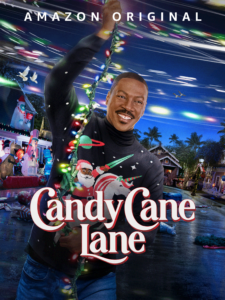
Candy Cane Lane — A comedy/horror film with Eddie Murphy as a man who sells his soul to have the best decorated house in the neighborhood.
How the Gringo Stole Christmas — George Lopez stars in this “Guess Who’s Coming to Dinner”-style farce.
December 7
“Waitress” — The Broadway musical version of the beloved indie about the pregnant pie-maker will be in theaters for just five days.
December 8
The Boy and the Heron — The latest from Hayao Miyazaki and Studio Ghibli is a dreamy and sometimes nightmarish story of a boy mourning the loss of his mother who travels to an enchanted land.
Leave the World Behind — Oscar-winners Julia Roberts and Mahershala Ali star in a story about two couples stuck together as it seems the world may be ending.
December 15
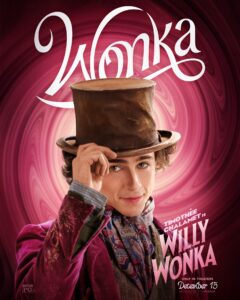
Wonka — The people behind the “Paddington” films have made another endearing treat with this origin story of the world’s greatest candy-maker.
Chicken Run: Dawn of the Nugget — Finally, a sequel to the Aardman classic from the “Wallace & Gromit” studio.
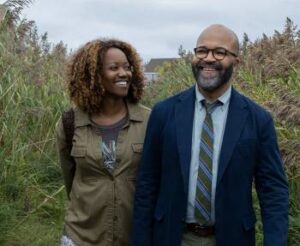
American Fiction — Percival Everett’s satiric novel, Erasure, about a Black professor whose savage parody of “ghetto” literature, was written more than 20 years ago but this pointed, hilarious, and brilliantly acted film is sure to be one of the most talked-about of the year.
December 20
Maestro — Bradley Cooper wrote, directed, and stars as composer/conductor Leonard Bernstein, one of the central cultural figures of the 20th century. This film focuses on his loving but often fraught relationship with his wife, played by Carey Mulligan.
Copyright Disney 2023
December 22
Aquaman and the Lost Kingdom — Marvel’s underwater superhero is back.
Anyone But You — Two people smarting from recent break-ups pretend to be a couple to make their exes jealous. I can’t imagine what happens next. Festival audiences loved the chemistry between Glen Powell and Sydney Sweeney.
All of Us Strangers — Andrew Scott and Paul Mescal are sizzling as a couple tentatively exploring a relationship as Scott’s character finds a way to return to the house he grew up in, where his parents, killed before he turned 12, seem to be still there waiting for him.
The Iron Claw — Zac Efron and “The Bear’s” Jeremy Allen White star in the story of one of professional wrestling’s most cherished and tragic families.
December 25
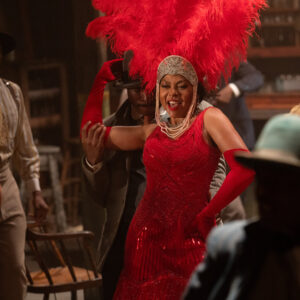
The Color Purple — The Alice Walker book and Stephen Spielberg movie turned Broadway musical is now a movie musical with knockout performances by Taraji P. Henson, Danielle Brooks, and American Idol’s Fantasia.
The Boys in the Boat — George Clooney directed this fact-based story of an American rowing team in the 1936 Olympics, held in Berlin as Hitler was trying to show the world the superiority of the German athletes.
Freud’s Last Session — Anthony Hopkins plays the pioneering psychoanalyst and atheist and Matthew Goode plays “Narnia” author and Christian C.S. Lewis.
Ferrarri — Our year of movies about the origin stories of consumer products (including Air Jordans, Blackberry, Beanie Babies, and Flamin’ Hot Cheetos) concludes with Adam Driver as Enzo Ferrari.
Rated PG for language throughout and some suggestive references
Profanity:
Some schoolyard language
Nudity/ Sex:
Mild references
Alcohol/ Drugs:
None
Violence/ Scariness:
Comic/fantasy peril
Diversity Issues:
Diverse characters
Date Released to Theaters:
December 1, 2023
Copyright Amazon 2023Chris (Eddie Murphy) loves Christmas so much his children are named Nick (Thaddeus J. Mixson), Joy (Genneya Walton), and Holly (Madison Thomas). Possibly, it’s not a coincidence that his wife is named Carol (Tracee Ellis Ross). The family lives in the Southern California town of El Segundo, on a street called Candy Cane Lane that is famous for the elaborate Christmas (and, at one house, Hanukkah) decorations.
As the movie begins, Chris has an extra reason to try to win the competition for best decorations. His across-the-street neighbor Bruce (Ken Marino) has won the past four years. But this year, Chris has just been laid off and for the first time the local television channel that covers Candy Cane Lane is offering a $100,000 prize for the winner.
He discovers a pop-up Christmas store called Kringle’s, run by Pepper (Jillian Bell). He sees a gigantic tree-shaped, “!2 Days of Christmas”-themed decoration and buys it, so enthusiastic and in such a hurry to get it home that does not check to see how much it costs, not just in money, but in more. He signs without reading the fine print. It turns out Pepper was once an elf at the North Pole. She was thrown out for putting too many people on the Naughty list. Now she sets impossible tasks and when people cannot complete them she turns them into little ceramic Dickensian Christmas figurines, charmingly CGI-animated and endearingly voiced by Nick Offerman, Robin Thede, and Chris Redd, with the fabulous a cappella group Pentatonix as a carol-singing choir.
The “12 Days of Christmas” ornaments start to come to life, creating chaos at Carol’s job, just as she is up for a promotion and at Joy’s track meet, just as a scout from her dream college is in the stands (the lords a leaping are very impressive). The impossible task for Chris is to get the golden rings from each of the ornaments before midnight, or he will be trapped forever as one of the ceramic figures.
Murphy gives a lower-key, nearly anti-less performance than we’ve seen from him in the past, letting the concept and the special effects take the lead, with him grounding the fantasy by focusing on Chris as a devoted father. The strength of the family keeps the story from getting lost in the silliness. Some elements of the film are less successful, especially the cut-aways to the local television show, with one of the hosts increasingly irritated with the other. But it all comes together at the end, with David Alan Grier as Santa and a satisfying resolution for Chris and his family.
Parents should know that this film has extended fantasy peril and some schoolyard language.
Family discussion: What made Chris and Carol change their minds about Joy’s school choice? What’s your favorite Christmas decoration?



 Truman Capote’s bittersweet memory of his childhood Christmas making fruitcakes with his elderly cousin, the only relative who cared about him is beautifully filmed with the magnificent Geraldine Page and Capote himself reading the narration.
 The California Raisins guys put together this Christmas special, with the highlight the funniest-ever performance of “Carol of the Bells.”
 Loretta Young and Celeste Holm play French nuns trying to raise money to build a hospital. Their faith and goodness transforms those they meet.
 “Christmas won’t be Christmas without any presents” is the first line of this classic novel based on the loving if sometimes tumultuous family of author Louisa May Alcott. The movie opens with an important Christmas lesson about the joy of giving. All three versions of the story, with Katharine Hepburn, Winona Ryder, and Saoirse Ronin, are superb.
 Based on the classic book, this stars Loretta Swit as the mother of six rambunctious kids who insist on playing roles in the church pageant.
 Before Google, companies had human beings to track down information. Katherine Hepburn plays the head of the all-female research department for a television network and Spencer Tracy is the engineer who is installing the company’s first computer, which takes up a whole wall and uses punch cards and vacuum tubes. Sparks fly — and not just in the equipment.
 Yes, it is a Christmas movie. Bruce Willis plays a cop visiting his estranged wife at her office Christmas party when the building is taken over by bad guys led by Alan Rickman in this action-movie classic.
 Tom Hanks stars in this animated story based on the book by Chris Van Allsburg about a magical train ride to the North Pole.
 This comedy smash hit stars Macauley Culkin as a little boy who is accidentally left home when his family goes away for the holidays and has to take care of himself and guard the house from a couple of inept thieves. The slapstick is a bit over the top but the message of Christmas is surprisingly touching.
 The story of the plucky orphan from the comic pages became one of the biggest Broadway musicals of all time and one of its highlights is Christmas with Daddy Warbucks.