What kind of movie do you feel like?

Ask Movie Mom

Find the Perfect Movie

Cruella

Posted on May 26, 2021 at 5:13 pm

B-
Lowest Recommended Age: Middle School
MPAA Rating: Rated PG-13 for thematic elements and some violence
Profanity: Some strong language
Nudity/ Sex: None
Alcohol/ Drugs: Social drinking, character gets drunk in response to stress
Violence/ Scariness: Extended fantasy-style peril and violence, murder and references to murder and attempted murders, child feels responsible for death of parent, characters are thieves and con artists
Diversity Issues: None
Date Released to Theaters: May 29, 2021

Copyright Disney 2021
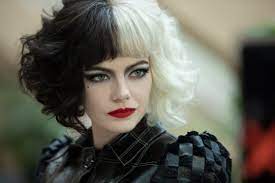
“Cruella” has the same problem as “Maleficent.” Origin stories of iconic villains have to make the characters relatable enough to hold our interest but also damaged enough to lead them toward the most despicable cruelty. So it never decides whether Cruella is some sort of Jekyll and Hyde character or a “Bad Seed” struggle between nature and nurture.

“Cruella” has some pleasures, particularly the performances of the two Emmas, Stone and Thompson, as the title character and her own ultra-wicked nemesis. But it never resolves that problem, and it sits uneasily in the PG-13 space, too dark for children who are fans of the original animated film with Betty Lou Gerson as the husky-voiced Cruella or its live-action remake with Glenn Close. And it is too cartoony for most of the audience old enough to see it.

Our anti-heroine begins life as Estella, also the name of the Dickens character who is raised to be cruel by Miss Havisham in Great Expectations. But this Estella is raised by a loving, understanding single mother (Emily Beecham as Catherine), who recognizes that Estella is a bit different, and not just because of her striking hair: jet black on one half of her head and snow white on the other. The kids at school bully her, except for Anita, who becomes her friend. But Estella can’t stay out of trouble. She seems to like trouble. She gets kicked out of school, and her mother decides they should move to London. They stop on the way there so Catherine can ask an old acquaintance for some money. But she is killed in a fall, and Estella believes it is her fault. She is left with no one to care for her.

She makes it to London and meets up with a couple of Artful Dodger types, Horace and Jasper. They invite her to share their home in an abandoned building and soon they are picking pockets and, as they get older, coming up with more complicated ways to steal. But Estella dreams of being a fashion designer and when she turns 18 (now played by Stone) Jasper (Joel Fry) helps her get an entry-level job at the legendary Liberty of London, where the closest she gets to fashion is scrubbing the bathrooms. But some mishaps bring her to the attention of the country’s imperious fashion impresario, The Baroness (Emma Thompson). At first, Estella just wants to do a good job. But various developments and revelations bring out the fury and, it must be said, the megalomania and cruelty that does not necessarily make sense in the context of what we’ve seen so far but gets her where she needs to be for the original story. Cruella (as she now calls herself) goes from being somewhere between Little Orphan Annie and Oliver Twist to being, well, the meanest movie villain of all time.

And she has some pretty fabulous gowns along the way. The Disney design team never fails to bring their magic. And it was a very shrewd idea to set the film in the moment as the swinging London of the 60s is moving into the punk era of the 70s with a soundtrack that includes a bunch of bangers. The movie is not very good but much of it is fun to watch.

Thompson is clearly having a ball playing a character who could fit the description of the character she played in “Much Ado About Nothing,” “My Lady Disdain.” She is a kind of “Devil Wears Prada” boss known as The Baroness. (It’s not a coincidence that both films share writer Aline Brosh McKenna). The Baroness rules her fashion line with a ruthlessness that makes “Devil Wears Prada’s” Miranda Priestly look like Little Miss Muffet. (Gosh, I hope we don’t have to sit through any of their origin stories some day.) And Stone does her considerable best with a character who does not make much sense.

Many years ago, a poll of the most evil villains of all time put Cruella De Vil at the very top, ahead of Hannibal Lecter. It’s right there in her name! She wanted to murder 99 puppies to make a coat! (Dodie Smith, who wrote the charming book 101 Dalmatians, was inspired to create the character of Cruella by an actress friend who admired Smith’s Dalmatian puppies and jokingly suggested their fur would make an elegant coat.) Cruella was the most fun when that was all she was, a wealthy lady with a husky voice who wanted to make a coat out of puppy fur. What a shame that the original animated Cruella was a more vibrant character than anyone in this film.

Parents should know that this movie has some dark themes. A child sees the murder of her mother and blames herself. Orphans band together as thieves and never find homes. A character gets drunk to deal with stress. A character admits to murdering more than one person. The story includes toxic and cruel behavior.

Family discussion: If you were going to change your name, what name would you pick? Why do Jasper and Horace do what Estella tell them to? Why is Anita the only girl who is friendly to Estella?

If you like this, try: the original animated film and the book by Dodie Smith

P!nk: All I Know So Far

Posted on May 20, 2021 at 5:00 pm

B +
Lowest Recommended Age: Middle School
MPAA Rating: Not rated
Profanity: Some strong language
Nudity/ Sex: References in lyrics
Alcohol/ Drugs: Wine
Violence/ Scariness: Brief scene of accident
Diversity Issues: Acceptance of diversity a theme of the movie
Date Released to Theaters: May 21, 2021

Copyright 2021 Amazon Studios
As I watched “P!nk: All I Know So Far,” I thought tof what W.H. Auden wrote in a poem called “Tonight at Seven-Thirty:” “The funniest mortals and the kindest are those who are most aware of the baffle of being, don’t kid themselves our care is consolable but believe a laugh is less heartless than tears.” P!nk, one of the world’s biggest rock stars, exemplifies that deep appreciation of humanity. Her tour, like her most recent album, is titled “Beautiful Trauma.” She embraces all of life’s struggles, losses, problems, and joys with laughter.

The film documents a portion of her pre-pandemic tour. Skillfully directed by Michael Gracey, who showed his appreciation for backstage stories with “The Greatest Showman” and “Rocketman,” the film follows P!ink and her family as they approach one of the highlights of the tour, her appearance at the legendary Wembley Stadium. There is the usual mix of rehearsal and concert footage, with perhaps more than usual of the star herself, who also produced, telling her story, which is about living at the intersection of art, commerce, and life, not trying to balance it all but trying to embrace it all at once, to integrate every part of it as seamlessly as she can. “I enjoy seeing the world with my kids as much as I enjoy nailing it on stage,” she says. “I want it to be perfect for everyone buying a ticket and in my kids’ minds.”

Essentially, she is responsible for three different jobs, though, all unimaginably all-consuming. She is the mother of Willow (age 8) and Jameson (age 3) and the wife of Carey Hart, formerly a Motocross champion, now a full-time dad. She is a Grammy award-winning mega-rock star who fills stadiums like Wembley for her concerts and thrills audience with acrobatic stunts that would be a challenge for Cirque du Soleil performers, belting out the hit songs that she wrote as she swings above the crowd, sometimes upside-down. And she is essentially the CEO of P!ink, Inc. as we see after a concert performance when she sits across a table from the people who work her show with a list of changes. For example, this venue has a stage 85,000 square feet larger than the one they had blocked the choreography on, so they need to figure out a way to adapt so that she can be where she needs to be without having to race so fast to get there that she does not have enough breath to sing. Just as she has to manage simultaneously singing and dancing (and swinging from the ceiling) she has to manage simultaneously touring and mom-ing. She laughs (of course) at one point remembering her wild child days, when she thought being a rock star meant freedom from anyone else’s rules only to find that she not only had to obey rules like being on time, she had to enforce them.

That applies to parenting, too, of course. It is a pleasure to see the patience and love P!nk and Carey show Willow and Jameson. Willow shyly asks if she can take some time off from the tour to see her friends and in one of the film’s sweetest moments, P!nk says she is proud of Willow for being able to express her feelings.

Hart does not get much time on camera until about halfway through the film, and when he refers to Alecia, it took me a moment to remember who that was. For her family, she is Alecia. And Mommy. The musical performances are thrilling, but what is most memorable about this film is Alecia/P!ink herself. She says that when you’re struggling, you imagine that if you ever get a Grammy you will take the opportunity at the podium to call out the high school principal who didn’t believe in you. But after all of the work it takes to get there, you find you are just grateful for everything that got you to that point. Watching her helps us to reframe our own lives with gratitude as well.

Parents should know that this film has some strong language and explicit lyrics and some drinking of wine. There are references to past wild behavior.

Family discussion: What is P!nk’s biggest challenge, performing or being a mom? How are they different? What will her children remember about the tours?

If you like this, try: “The Other F Word” about punk and metal musicians and fatherhood.

Dream Horse

Posted on May 20, 2021 at 12:00 pm

B +
Lowest Recommended Age: Middle School
MPAA Rating: Rated PG for language and thematic elements
Profanity: Some mild language
Nudity/ Sex: Some potty humor
Alcohol/ Drugs: Drinking, scenes in pub, alcoholic portrayed as cute and funny
Violence/ Scariness: Sad death of a parent, off-screen serious injury of a horse
Diversity Issues: Class issues
Date Released to Theaters: May 21, 2021
Date Released to DVD: July 5, 2021

Copyright 2020 Bleeker Street
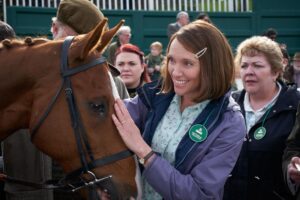
Dream Horse” is a fact-based underdog, or maybe under-horse story about an improbable equine champion. But the real thoroughbred in the movie is the endlessly talented Toni Collette, who plays Jan Vokes, a cashier at a big box store in Wales, who dreams of breeding a racehorse. This is a solidly constructed feel good movie, with performances and details that make it better than it needs to be.

Even those who do not know the story and have not seen the popular documentary, “Dark Horse,” about the real story, have a pretty good idea of where this is going. There will be an impossible dream, some early signs of success, setbacks, struggles, and a triumphant conclusion, with glimpses of the real people (and horse) in the final credits. Those credits, by the way, are one of the film’s highlights; don’t miss them, as the actors and the Welsh villagers they portray sing a classic song by Wales’ favorite son Tom Jones together.

It is Collette who helps to make the story feel fresh and authentic, along with the staging of the race scenes by Welsh director Euros Lyn, so exciting we lean forward in our seats, as though it will help our favorite be first over the finish line. She is called upon in the film to sit in various owners’ seats at various racetracks and make each expression of worry, excitement, fear, and ecstatic joy look different and real and she, well, crosses the finish line ahead of the pack every time.

Jan feels stuck as the film begins. Her husband, Brian (Owen Teale) snores at night and bores in the daytime, watching reality television shows about veterinary procedures and ignoring Jan except when absent-mindedly asking what’s for tea. She has two jobs, cashier at the store and barmaid at the pub. When she isn’t being ignored by Brian, she is caring for her elderly parents. There is nothing to make her feel a sense of hope or purpose.

And then she overhears a customer at the bar talk about his time as part owner of a racehorse. He is Howard (Damian Lewis), an accountant who nearly went broke when the syndicate failed. Jan realizes that if she can just get everyone to give ten pounds a week, she can breed a racehorse by buying a retired mare and paying the stud fee to get her pregnant. A lovably quirky group of people from the village and a couple of Howard’s friends agree to join. And they agree it isn’t for the money or for the craic (Celtic term for fun, but for the hwyl (pronounced hoyle, and a Welsh term meaning more than fun, fun plus enthusiasm, spirit, and purpose). The film’s wisest choice is making it clear that the miracle is not the horse. It is the chance to believe in something and to be part of a community.

The foal is born, but the mare dies. In some other versions of the story we might spend time on how the syndicate members care for the motherless colt, named Dream Alliance, but in this one we skip ahead to bringing him to the training facility of the country’s top racehorse trainers, played by Nicholas Farrell (“Chariots of Fire”). No training montage here. We skip right from his initial no to, the “wait a minute, that horse is really fast” to, well, being off to the races.

That leaves perhaps too much time with the overly cutesy townsfolk. I think we are past the time when the town drunk is supposed to be funny or adorable. And the resolution of Howard’s conflict with his wife, who is understandably worried about a repeat of his past losses, is improbably easy. But then there is another chance to hold our breath at the races, and to cheer for Dream Alliance, for dreams, and the alliances that make them come true.

Parents should know that this film includes some potty humor, scenes in a bar, a town drunk whose alcoholism is played for humor, a sad death, and a serious injury of an animal.

Family discussion: What dream would make a difference in your community? Why was it so difficult for Jan’s father to tell her he was proud of her? How did money change the way the group made decisions? What would you do just for the “hwyl?”

If you like this, try: “Dreamer” (also inspired by a true story), “Phar Lap,” and “The Black Stallion”

Newton Minow’s “Vast Wasteland” Speech: 60 Years Ago Today

Posted on May 9, 2021 at 10:17 am

On May 9, 1961, my father, Newton Minow, delivered a speech that continues to inspire the conversation about media and has even been an answer on Jeopardy!
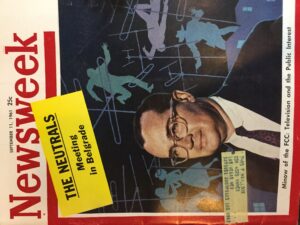
I interviewed him about the speech for Emmy Magazine. LA Times columnist Michael Hiltzik interviewed him about media and the news.

He appeared on his favorite news program, the PBS Newshour, to talk to Judy Woodruff about television then and now.

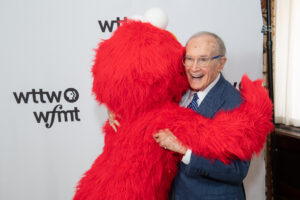
NPR celebrates its 50th anniversary this week, and its official history gives my dad some of the credit. He also helped launch the first telecommunications satellite, helped get the original funding for “Sesame Street” and helped create the Presidential Debates, involved in every one going back to the original, Kennedy-Nixon, and designed the current bi-partisan commission, where he still serves as Vice Chair.

Today Dad was the Power Player of the Week on FOX with Chris Wallace.

In 1961, Dad was President Kennedy’s new Chairman of the FCC, just 35 years old, and in his first major address he told the National Association of Broadcasters that while there was much to admire on television, too much of it was a “vast wasteland.”

He told the audience about the day before the speech, when President Kennedy brought Commander Alan Shepherd, who had just become the first American in space, and his wife, to the National Association of Broadcasters event Dad would be speaking to the following day. President Kennedy invited Dad to come upstairs while he changed his shirt, to give him some ideas about what to tell the broadcasters. Dad suggested that he talk about the difference between the way Americans and the Soviet Union conducted their space program. In the US, we had all the television cameras there to show the American people, good or bad, what was happening.

At the time Dad called on the broadcasters to do better, there were just three national television networks. There was no PBS, just a National Educational Television which was not even available in most of the country, including Washington DC itself. My father told the broadcasters that as long as the airwaves were a scarce resource, they would have to do better to live up to their statutory obligation to serve the public interest, convenience, and necessity, especially with regard to coverage of news and programming for children.

Copyright Newsweek 1961

Dad worked over the next half-century to make more choices available, including cable and satellite as well as the creation of a robust public television station. He served as chairman of PBS and of the Chicago affiliate WTTW, served on the board of CBS, pushed for closed captioning to make television programming available to hearing-impaired viewers and those learning to read or speak English, and argued one of the only cases in history to have a broadcast license rescinded - a station that spewed hatred across the airwaves. In protest of his critique of television, the sinking ship on “Gilligan’s Island” was named after him, the S.S. Minnow! He is so proud he has a lifesaver from the SS Minnow on his office wall, a gift from his law partners for his 90th birthday. He was presented with the nation’s highest civilian honor, the Medal of Freedom, by President Barack Obama, in 2016.

PBS has a great documentary about him which is free to watch online. He is also the world’s best dad and we are all so proud of him.

Happy Mother’s Day! And Some Great Movie Mothers

Posted on May 9, 2021 at 7:00 am

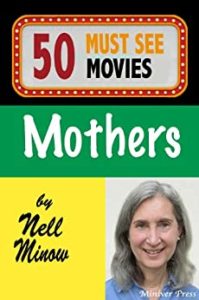
The movies have given us warm, loving, mothers, evil, abusive mothers, even alien mothers. Some of my favorites are featured in my book, 50 Must-See Movies: Mothers, including these.

Claudia Before they went on to co-star in the luminous romance, “The Enchanted Cottage,” Dorothy McGuire and Robert Young played a young married couple in this sweet neglected gem based on the books by Rose Franken.  Claudia and David love each other very much and he finds her innocence very appealing.  But her immaturity leads to many problems.  A neighbor thinks Claudia is flirting with him and without consulting David she impulsively decides to sell their farm.  And she is very dependent on the loving mother she adores but takes for granted.  Claudia’s is about to face two of life’s most demanding challenges – her mother is dying and Claudia and David are going to become parents themselves.  So Claudia’s mother has to find a way to help Claudia grow up.  Watch for: a rare film appearance by the exquisite Broadway star Ina Claire as Claudia’s mother

Guess Who’s Coming for Dinner There are two great mothers in this talky, dated, but still endearing “issue movie” about inter-racial marriage from 1967.  Katharine Hepburn’s real-life niece Katharine Houghton plays her daughter and what Houghton lacks in screen presence and acting experience is less important than the genuine connection and palpable affection between the two of them.  The question may seem quaint now, but as filming was underway, inter-racial marriage was still illegal in 17 states.  The Supreme Court ruled those laws unconstitutional that same year.  Hepburn is electrifying in what she knew would be her final film with her most frequent co-star and real-life great love, Spencer Tracy.  And the distinguished actress Beah Richards is brilliant as the mother of a son who says his father thinks of himself as a “colored man,” while he just thinks of himself as a man.  Watch for: Hepburn’s expression as her daughter describes falling in love

Claudine Diahann Carroll was nominated for an Oscar for her performance as a single mother in this ground-breaking 1974 film, one of the first to portray a domestic employee as a real person with her own home and family, and one of the first to provide an honest look at the perverse incentives of the “Great Society” welfare programs.  Claudine is the mother of six who has to keep her work as a housekeeper and her relationship with a genial garbage worker (James Earl Jones) a secret from the social worker because they put at risk the payments she needs for her children.  Watch for: the very romantic bathtub scene

Dear Frankie Emily Mortimer plays Lizzie, the divorced mother of a young deaf son in this heartwarming story set in Scotland.  She is devoted and very protective.  She does not want him to know the truth about his abusive father (the source of his deafness), so she tells him that his father is a merchant seaman.  The letters he receives from all the ports of call full of details about all the places he has been are really written by Lizzie. When the ship comes to their town, she has to find someone to pretend to be his father.  Watch for: Lizzie’s explanation of the reason she writes to Frankie —  “because it’s the only way I can hear his voice”

Imitation of Life This melodrama about two single mothers, one white and one black, who join forces has been filmed twice and both are worth seeing.  The best remembered is the glossy, glamorous 1959 version with Lana Turner and Juanita Moore.  Lora (Turner) and Annie (Moore) are brought together by their daughters, who meet at Coney Island.  Lora, a struggling actress, needs someone to help look after her daughter and Annie needs a job and a place to live.  Annie moves in to be the housekeeper/nanny.  She and Lora have a strong, supportive friendship, though Lora and both girls take Annie for granted.  As the girls grow up, Lora’s daughter is resentful of the time her mother spends on her career and Annie’s daughter resents the racism she confronts even though her skin is so light she can pass for white.  Watch for: the most elaborate funeral scene ever put on film, with a sobbing apology from Annie’s daughter (Susan Kohner)

Please Don’t Eat the Daisies Doris Day stars in this film loosely based on Jean Kerr’s hilarious essays about life as Kate, the wife of a theater critic (David Niven) and mother of four rambunctious boys.  While most of the film’s focus is on the marital strains caused by her husband’s new job and the family’s new home, the scenes of Kate’s interactions with her children are among the highlights.  It is clear that while she tries to be understated about her affection and sometimes frustration, she adores them.  Watch for: Kate’s affectionate interactions with her own mother, played by Spring Byington