Interview: John Ottman, Editor and Composer of “X-Men: Days of Future Past”

Posted on May 27, 2014 at 8:00 am

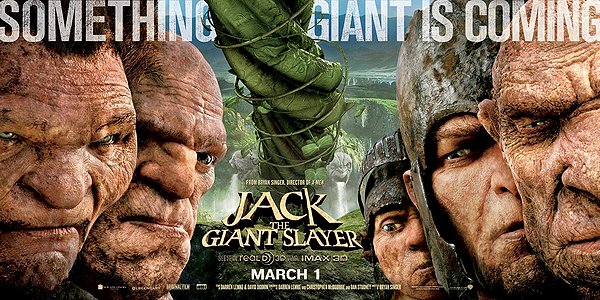
I last talked to editor/composer John Ottman about “Jack the Giant Slayer” and loved hearing about his unique combination of roles, often working with his former classmate, director Bryan Singer.  They collaborated again on X-Men: Days of Future Past and it was a pleasure to catch up with him to discuss the challenges as both editor and composer of working with so many characters and two different time periods.

You have so many characters in this film and some of them change their appearance a lot, either due to use of their superpowers or being played by different actors in different time periods.  How do you as an editor help the audience keep everybody straight?

The hardest thing when you have many characters in a room in one scene is to basically keep their presence alive in the scene.  If you spend too much time with one character talking, your mind inevitably wants to know what the other characters are thinking or how they are reacting.  And if you spend too much time away from showing their reaction to the other character talking, the more I think you feel uncomfortable in the scene. So the challenge is sort of the keep everybody alive even if they’re not speaking.

What are some of the ways that you do that?

I just put myself in the mind of the audience. I’m watching someone speak and I as soon as I start to wonder what the other character or character being spoken of might be a reacting, I want to see them. I use my own reaction to cut to another character.

And there are different time periods in this film also.

Yeah, there’s a dreary future and then there is 1973.  Logan’s consciousness was fed back into his younger self so that he can change an event that happens in the past so that the future might be fixed or not be so dreary.

How do you keep the audience constantly aware of where they are in time?

It’s pretty obvious where you are.  Nevertheless, we did have internal debates sometimes where people were like, “Are you sure people know that we are in 1973?” “I think so.”  But that wasn’t a huge problem. It was just basically the timing and keeping the storyline as clear as possible. It’s extremely convoluted and a very complex story.

Ottman_1You’ve got the young and old version of some of the characters, right?

Correct, yes. And the other biggest challenge of the film was the time travel aspect.  It’s like the “whack a mole” game where you whack one mole and then you create another problem. It’s sort of like you have to keep whacking a mole until you can live with the smallest problem. But there will always be imperfections in time travel stories so that was a big challenge; sort of building consensus with everyone to try to accept what we were going to accept.

Did you once again do the editing first and then composing second?

Of course, yes.  It’s overwhelming to actually deal with all of the management of the film to get it together. The editing is not just putting pieces together.  At least for me it’s also storyboarding scenes, it’s designing the pre-visualization of the scenes with the pre-vis artists, it’s generating the shot list with the second editing director, visual effects issues, looping the actors and all that endless stuff.  I have no hope of even starting to write the score until I have some sort of editor’s cut.

So do you work with a temporary music track as you are editing?

Yes, but people would be surprised to know that I don’t really use music to cut my scenes together. I wait until I get my full editor’s cut together before I put any temporary music in. And working without music, I know where the film is strong and it’s not reliant on the score. Once I get to that point, I spend about two weeks putting temporary music in so we can have screenings and show the studio.

I’d like to go back to that same challenge of two time periods and so many characters.  How do you use the music to help the audience keep it all straight? You don’t have different themes for the characters, right?

In fact this has fewer characters themes than X-Men 2. It’s not so typically superhero-like when a character walks and you hear a motif for them.

This film is different so it does not really lend itself to have numerous character themes. There is the overall theme of the film; the X-Men world, which is my theme from X-II but then there are really three other themes in the film. The main one is Charles Xavier’s theme because it’s really his story about how his character has lost all the hope when we see him in the 70’s.

And it’s Logan really trying to get him to rekindle that hope. That’s the centerpiece of the score; at least subliminally, his music. And also he’s trying to fight for Raven’s soul so she has a little bit of a motif in the movie and then Magneto himself has a very simple very accessible motif. There’s not much time in modern movies to establish a beginning, middle and end theme for each character so you barely have time to do signature sound that you can recognize, so his is very simple but very sort of malevolent.

For lack of a better description, there’s a metallic sort of sound. And Mystique has her transformation swishy kind of sound. So I obviously left room for those things. I am very involved in the sound design so I think I surprise people when I am directing the dub as the editor, how I often bury the music or intertwine it with the sounds I use.

What about the time period differences? Are there different instruments or different time indicators?

The 70s gave me an excuse to use some analog synthesizers; we use some old keyboard synthesizers and electric piano and guitar, sometimes very subtly but it was fun to do that. And especially for the sentinels of the past, I was able to do some sort of electronics that were of the period. The score for me is unlike Jack in that Jack was a very pure orchestral swashbuckling score where you had basically everything emulated from the orchestra. This score was very synthesizer heavy with orchestral supplementation. So that was just our decision because every movie is different and that’s what felt right for this film.

If you could take one of the X-Men, which powers would you pick?

I guess I would have Mystique’s power so I can sort of… I can be really out of shape and morph into someone has a great body.

Yeah, I think we’d all like that one!
Related Tags:


Behind the Scenes Composers Interview Music

Interview: John Ottman, Editor/Composer of “Jack the Giant Slayer”

Posted on February 27, 2013 at 8:00 am

John Ottman is not just editor of this week’s exciting fantasy, “Jack the Giant Slayer” — he also composed the score.  I had a lot of fun talking to this polymath about his work on the film.

When you think about doing a movie set in another period and especially a fantasy movie what kind of signals can you send with the soundtrack?

Well I think the obvious thing is to be intentionally medieval or have music in line with the time or period but I didn’t do that. I just wanted to try to make the score timeless in terms of just good old fashioned movie adventures as opposed to something that is categorized into a certain time or period, doing stuff that was too fairy tale-like or obvious. I try to do that with the music as much as I could. It’s sort of a fine line between pushing the popcorn buttons but trying to keep the bar a little higher as much as possible without sacrificing popcorn fun.

Like any good popcorn movie you have romance and adventure.  How do you begin to put that together in the soundtrack?

I just looked at my deadline and I panicked and something comes out of my head. But just frankly this was all about story and these are timeless themes in this movie. You have the princess that doesn’t want to be a princess. But she gets saved by a pauper and they fall in love. I mean it’s not something we haven’t seen before so the challenge was how to keep it fresh and basically take a time old story and make it interesting for people.

Well it is a time old story but as you said these are themes that are perennially appealing. What is it about the story that makes these themes so enduringly popular?

People still fall in love. So I guess a love story is something everyone can still relate to.  And I guess there’s also the fantasy on the boy’s part of being a hero. And so I think those things will be true forever.

And at what point do you start working on the music?  Had you seen any of the visuals and special effects?  Did you have a sense of what the world was going to look like?

I’m the editor so I know everything. By the time I started writing the score I had probably seen the film hundreds of times. I was the one storyboarding the sequences and these motion capture shots and nurturing every visual effect for a year and a half. So by the time I go to write the score I am well aware of what the visuals are and it’s difficult because I have very little time to actually write and give time to my other responsibilities on the film, managing the movie.

Wow. You really surprised me. I though the music would come before the editing.

If I weren’t the editor I would have been on a maybe like a month before the editor’s cut was put together to watch the film and write the score. You have to tailor the music exactly to the images on the screen.  They have to be in sync with what’s going on. You really can’t write anything ahead of time.

As you’re editing are you thinking about the music, the rhythms?

As I’m editing I’m just thinking, “I have to write all this music. I’m don’t know when I’m going to have the time.” From day one I’m tormented by the fact that I somehow have to write this score but I don’t know when I am actually going to have the time to do it. That’s what I’m thinking about. As I’m making the movie of course I’m thinking about the types of music that it’ll need but I don’t specifically write anything while I am cutting because it’s such a life encompassing job just to cut a movie together. I wish I could. I would have less to do later.

I’ll intentionally create like a pregnant area in the movie so I’ll know that’s it’s going to be a big score moment for the drama. What the score is going to be I have no idea. I know generally the kind of music it is going to be.

Tell me a little bit about some of the challenges of editing such a special effects intensive movie.

I don’t recommend it to anybody. Special effects are one thing. Motion capture is a whole ‘nother world. Because basically you are taking raw data that is not even on film or videotaped.  It is just basically computer data based upon the movements of the actors and you can make anything of it you want. So I would take that data and lens the shot which is what creating the shots.  It’s very complicated because from that point on I would create a shot and storyboard how the real people are going to be integrated within that shot. So then I would take the shot to set and then based upon the storyboard would dictate how much of a set they would have to build and then becomes the battle between the production designer and the visual effects team. Who’s going to help? How much stuff are they going to build? How much is going to be CGI? So it’s enough to make your head explode on a daily basis because it’s just a lot of creating something from nothing. So each one of those shots, I don’t know how many there are, over 1000, is its own separate project that you have to basically baby until it’s finished. All the way from the original lensing to creating the textures of the skin to the lighting and integrating it with the real actors.

So all the giants were motion capture?

Yes.

Wow.

Those are real people walking around in motion capture outfits. But again it’s just the general movements of the faces that are caught and the general movements of the bodies. We embellish if we have to. But the animators do it and they create all the skin textures, and the outfits, and the background and the whole bit. It’s just a massive project. Process I should say.

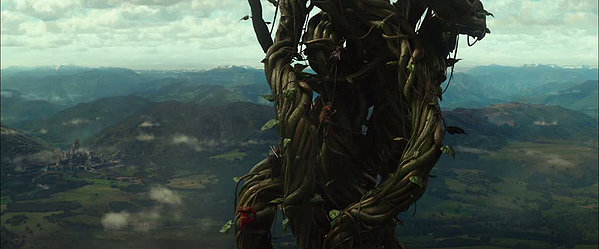
Disney set a very high bar for beanstalks with “Mickey and the Beanstalk” but I thought you really did an amazing job.

That’s a relief to hear because I was the number one cynic of the bean stalk.  I was the non-believer because I thought it looked like a chunk of plastic all the time. I was aghast. I never thought anybody would ever buy it and it seems that in the end it worked through creative lighting and so forth on the set and then the CGI people spent a lot of time on the animation and the coloring to try as best as possible to try to make it look real.

I understand that you started making movies when you were very young.  What were the movies that inspired you to want to make movies?

Well actually they weren’t movies; they were the original “Star Trek” series. It actually pretty much trained my brain how to score movies because they has to reuse a lot of their existing music.  It taught me how they would reuse thematic ideas and so forth. And they scored those episodes in a very classic way. That was a huge influence on me, that series and then when “Star Trek: The Motion Picture” came out, the movie version. And of course “Star Wars.” That was the catalyst that woke all of us up inside, especially the resurrection of the classic film score.


Related Tags:


Interview
THE MOVIE MOM® is a registered trademark of Nell Minow. Use of the mark without express consent from Nell Minow constitutes trademark infringement and unfair competition in violation of federal and state laws. All material © Nell Minow 1995-2026, all rights reserved, and no use or republication is permitted without explicit permission. This site hosts Nell Minow’s Movie Mom® archive, with material that originally appeared on Yahoo! Movies, Beliefnet, and other sources. Much of her new material can be found at Rogerebert.com, Huffington Post, and WheretoWatch. Her books include The Movie Mom’s Guide to Family Movies and 101 Must-See Movie Moments, and she can be heard each week on radio stations across the country.

Website Designed by Max LaZebnik