
Disclosure Day
Posted on June 16, 2026 at 6:56 am
A-| Lowest Recommended Age: | Middle School |
| MPAA Rating: | Rated PG-13 for action/violence, some bloody images, and some strong language |
| Profanity: | A few strong words |
| Alcohol/ Drugs: | None |
| Violence/ Scariness: | Extended sci-fi action peril and violence, intense chase scenes, car crashes, explosions, guns, characters injured and killed |
| Diversity Issues: | Diverse characters |
| Date Released to Theaters: | June 12, 2026 |
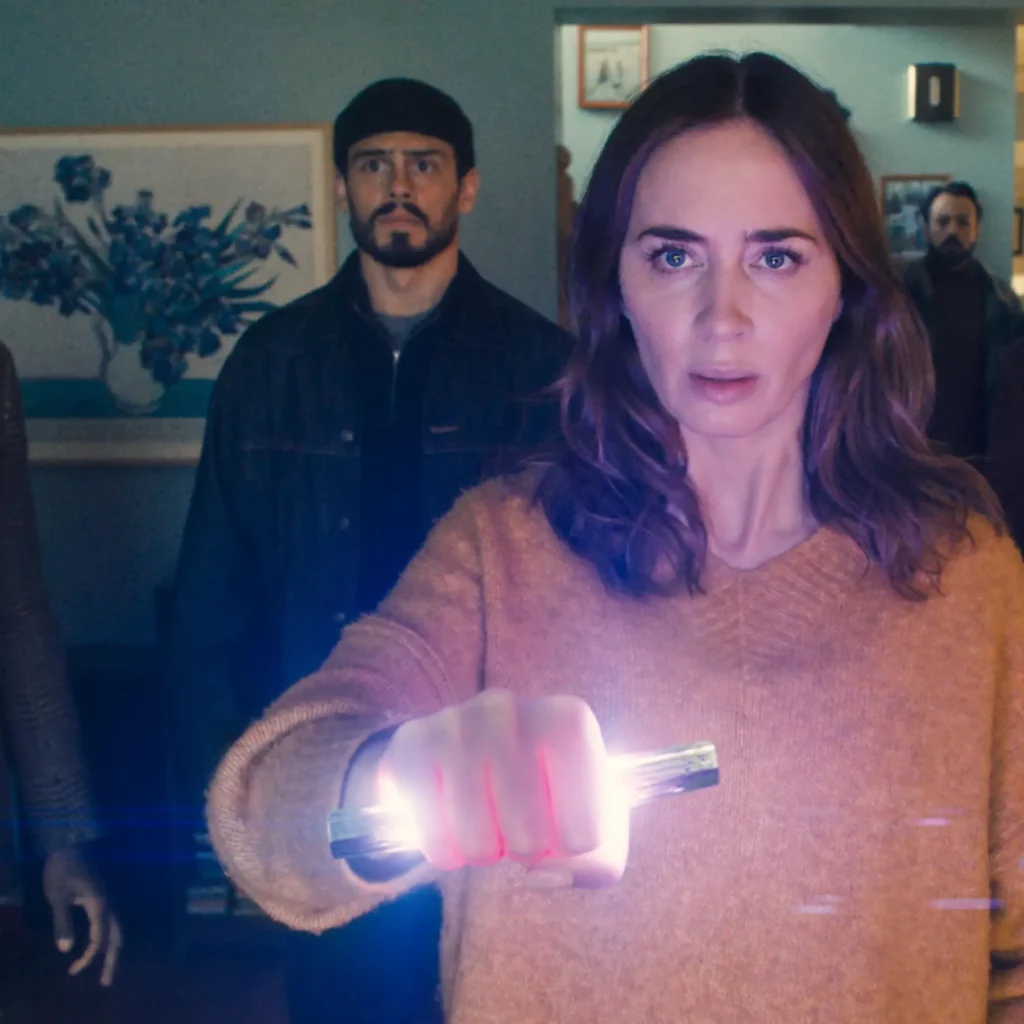
It’s not a spoiler; it’s right there in the title. Steven Spielberg’s latest film is not about whether there are aliens. There are. It’s about whether the government should tell us what it knows about them, and, if they don’t, whether someone should leak the information. And it is about empathy as the highest form of human — or other entity — communication, understanding, and evolution.
Daniel Kellner (Josh O’Connor) is the one who wants “disclosure day,” a global release of all the information. As the movie begins, his girlfriend, Jane (Eve Hewson) has been kidnapped by some very intense and well-equipped people who work for Wardex, the shadowy government contractor that keeps the secrets. It is led by Noah Scanlon (Colin Firth). They will echange her for the contents of Daniel’s backpack, thumb drives that contain the entire history of alien encounters and their technology, meaning that it’s also the history of the government secrets about them. Daniel arrives to make the exchange, turns over the thumb drives, and then he and Jane escape with the help of a mysterious sort of carved metallic slightly twisted block about the size of a small bluetooth speaker that must be handled very gently and carefully. It kind of looks like that thing Ryland grabs on his space walk in “Project Hail Mary.” Hmmm.
Meanwhile, television meterologist Margaret Fairchild (Emily Blunt) is talking to her boyfriend Jackson (Wyatt Russell) as they have breakfast and she gets ready to go to work. There’s a restlessness about her. She can’t seem to sit still, and Jackson complains that she always wants to move. And then things start to get strange. She gets stopped for speeding on the way to work and somehow when she looks the cop in his eyes she knows all the details about his morning and what he needs to do to take care of his wife and baby. And then, when she goes on camera to give the weather report, instead of words, gutteral clicks come out instead, and she collapses.
The rest of the story is about Noah trying to stop Daniel from going public, Margaret trying to figure out what is going on with her and how she suddenly knows all kinds of information from different languages to what the people in front of her are thinking and feeling to urgent messages about a man she has never heard of — Daniel.
It is unnecessary to say that Steven Spielberg is one of the most extraordinary masters of cinematic storytelling of all time, but it may be worth saying that he brings every bit of that plus the heart and wisdom of a man who will turn 80 later this year to this film, with a story he created as the final chapter that began with “Close Encounters of the Third Kind” and continued with “E.T. The Extra-terrestrial.” The man whose company logo is a boy and his alien friend bicyling in front of a full moon has always looked to the skies and found it filled with wonder. (Yes, there were scary and desctructive aliens in Spielberg’s “War of the Worlds,” but he says that was more a reaction to 9/11 than a part of this vision.)
While “The Fablemans” was explicitly autobiographical, this film seems even more revealing about Spielberg’s perspective and values. Like most of his movies, the theme of home is central, with a return to a replica of a character’s childhood home is significant and deeply moving to the character and the audience. Anyone who saw “The Fablemans” will remember the impact a train crash scene the young Spielberg saw in “The Greatest Show on Earth” impressed him so viscerally he created it in the first footage he shot. Here, there is an extraordinary train scene, brilliantly shot and edited, harking back to that first moment that began his life as a filmmaker.
Spielberg says this film comes straight from his own beliefs and the consistenct reports from people who have seen…something…that may be known to authorities who do not share it. It also comes from his own spirit, his gorgeous sense of wonder and optimism and spacious humanity. It even encompasses faith. One of the most significant characters in the film is a nun, beautifully played by Elizabeth Marvel, and another character also has a strong connection to Catholicism. She is there to show Jane and us that faith and science are more than compatible; they support and enhance each other. The better we understand science and all aspects of reality, the better we understand that no matter what or how clear our concept of a diety is, science helps us embrace it with more clarity.
The movie rewards rewatching to be aware of all of the choices that went into every shot to tell us everything we need to know about the characters and what was happening but also to appreciate the bigger concepts, the challenge of being aware, the vital imporance of fearless curiosity, and above all, no matter how much our fragile hearts try to resist, the central purpose of finding understanding and connection.
Parents should know that this movie has some intense and exciting scenes of action and peril with chases, guns, and explosions. Characters use a few strong words.
Family discussion: If you met an extra-terrestrial, what would you say? What would you ask? Why was re-creating the childhood home so important? Who should decide what we know?
If you like this, try: “Close Encounters of the Third Kind, “E.T..” and “Project Hail Mary”