Sense and Sensibility
Posted on October 14, 2026 at 5:41 pm
B +| Lowest Recommended Age: | Middle School |
| MPAA Rating: | Rated PG for some thematic elements, partial nudity and brief violence |
| Profanity: | None |
| Alcohol/ Drugs: | Social drinking |
| Violence/ Scariness: | Duel (no one hurt) |
| Diversity Issues: | Class issues |
| Date Released to Theaters: | October 16, 2026 |
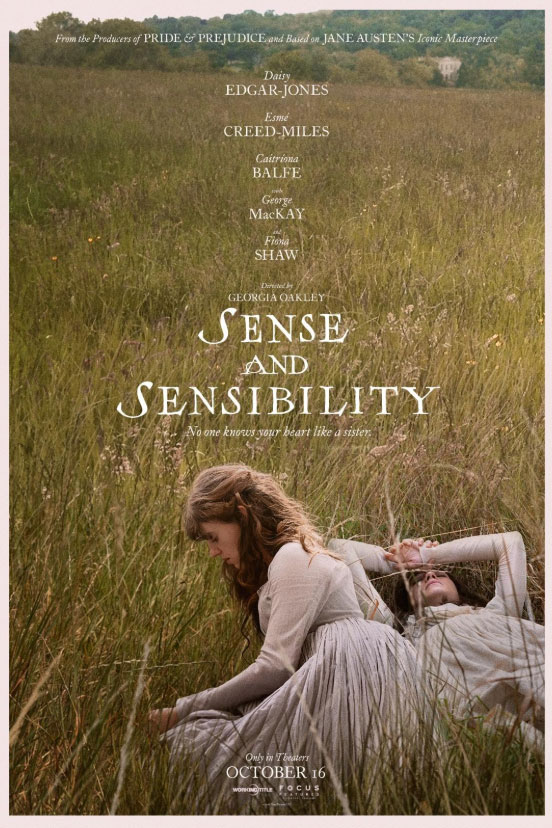
The new version of “Sense and Sensibility” is based on the classic Jane Austen book about two sisters, which has already inspired a beloved 1995 film starring Emma Thompson and Kate Winslet with Thompson’s Oscar-winning screenplay, as well as a 1971 four-part BBC miniseries, a 1981 seven-part BBC miniseries, a three-part BBC miniseries, two Hallmark movies, as well as many lightly inspired variations including one starring the Duff sisters and one called “From Prada to Nada.” So, any new version should find some way to justify itself by showing us some new insight or some improvement in acting or script. This latest version does not meet that test, but it does remind us why the story endures over the generations. The Emma Thompson version directed by Ang Lee is still the best, but this one, written and directed by women, is a pleasure to watch, despite some odd departures from the source material.
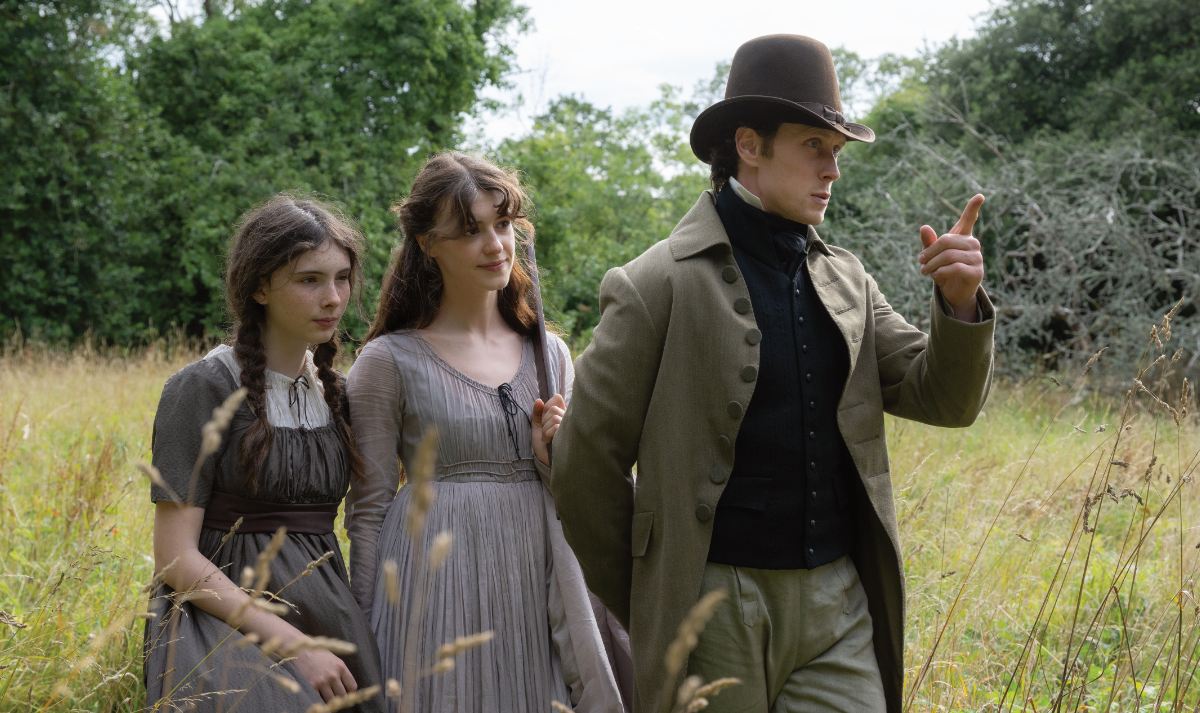
As in all of the previous versions and as indicated by the title, the two devoted sisters represent two different ways of looking at the world. Elinor Dashwood (Daisy Edgar-Jones) represents sense with an outlook that is practical and analytical. Marianne (Esmé Creed-Miles) is passionate, impulsive, and dreamy. Director Georgia Oakley and screenwriter Diana Reid introduce us to Marianne as she is peacefully lying in a field and she is most often seen outdoors, while Elinor is usually inside.As the story begins, the girls’ father has died. As we know all too well from the literature of and about the period, that means their home will be inherited by their brother John (Tom Brooke of “Slow Horses”), because property almost always was entailed – automatically inherited by — the male heirs. John arrives with his selfish wife Fanny (Stacy Martin), who makes no effort to hide her wish that Marianne and Elinor, along with their mother, (Caitríona Balfe of “Outlander) and sister Margaret (Bodhi Rae Breathnach) would leave as soon as possible. While they try to find a place they can afford, Fanny’s shy brother Edward (George MacKay) comes for a visit. He and Elinor quickly become friends. While her behavior is perfectly proper, she and her mother begin to think he might propose. But he does not. And soon the Dashwoods have to accept the only offer of a new home they have, on the property of a distant relative, the warm-hearted but raucous and gossipy Mrs. Jennings (Fiona Shaw). Marianne, outdoors as usual, twists her ankle and is rescued by the handsome and very dashing Mr. Willoughby (Frank Dillane, who played the teenaged Tom Riddle in “Harry Potter and the Half-Blood Prince”). Despite Elinor’s pleas to be careful, Marianne loses her heart to him immediately and is certain he will propose to her. When he leaves abruptly, she is devastated.
One wise choice in this film was casting actors closer to the ages of the characters in the book. Winslet was 19 when she played Marianne, but Thompson and Grant were in their mid-30s. Edgar-Jones and Creed-Miles are young enough to understand their characters’ more naive choices. The use of the settings, glowingly filmed by Arnaud Potier, enhances the story. MacKay and Balfe are very good, and so is Bodhi Rae Breathnach as the younger sister, Margaret. The stand-out is the always-great Shaw, who makes Mrs. Jennings less of a caricature than in some of the other versions.
It is difficult to imagine any reason for some of the departures from the book than a lack of confidence in the audience attention span. Changing the character of Lucy Steele (Ceara Coveney) from the crass daughter of a middle-class landlord to recently impoverished upper class makes her role in the story less compelling. And there is simply no possible reason to insert a ridiculous duel.
Austen’s story and characters, appealing young performers, beautiful cinematography and score (Roger Goula) make this a worthy watch and a reason to be optimistic about the inevitable future version.
Parents should know that this film has brief partial nudity and brief violence (a duel, but no one gets hurt).
Family discussion: Are you more like Elinor or Marianne? Why has this story been so beloved for centuries?
If you like this, try: the book by Jane Austen and the Thompson/Grant/Winslet/Rickman version