Forgotten Island

Forgotten Island

Posted on September 24, 2026 at 10:52 am

B
Lowest Recommended Age: 4th - 6th Grade
MPAA Rating: Rated PG for thematic elements, rude humor, language, brief tobacco Imagery, scary action, and some violence
Profanity: Some strong and crude language for a PG
Alcohol/ Drugs: None
Violence/ Scariness: Extended animation-style peril, action, and some violence, no one badly hurt, sad death (offscreen) of grandmother, parental abandonment
Diversity Issues: A theme of the movie
Date Released to Theaters: September 25, 2026

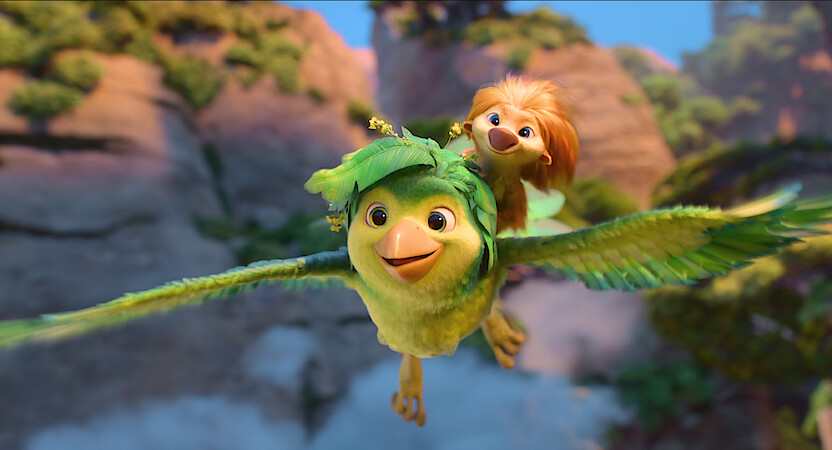
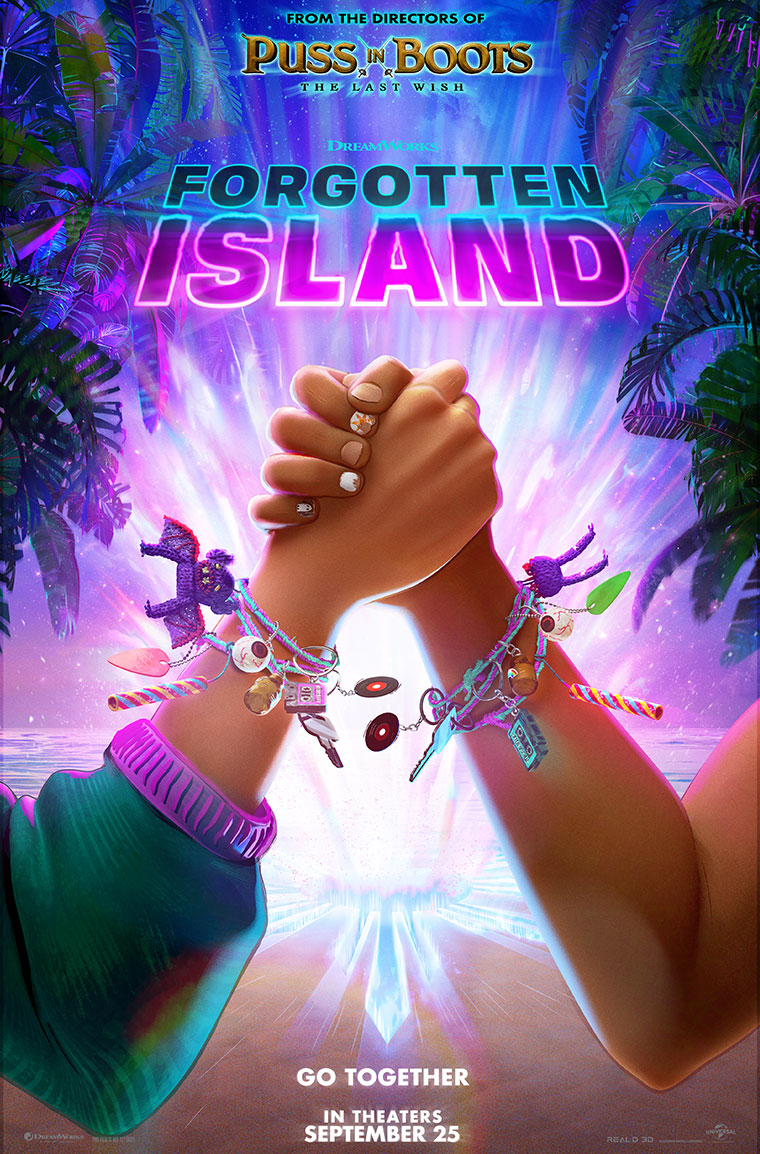
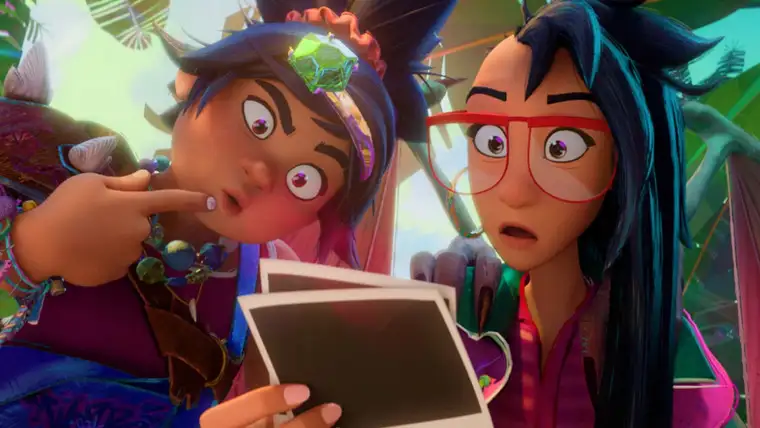
“Forgotten Island” is a colorful story about friendship and memory, inspired by Filipino folklore. Jo and Raissa meet as children in the waiting area for the principal’s office. They are very different, Jo (H.E.R.), a fierce, impulsive chaos agent and Raissa (Liza Soberano), deliberate, thoughtful, and academically-oriented. Jo lives with her beloved grandmother, Lola (Dolly De Leon) but feels abandoned by her parents, who have moved to the US. Raissa has a more comfortable life with devoted parents. But they have something in common, a passion for Lola’s stories about visiting the magical island of Nakali through a portal from an enchanted sun dollar.
Copyright 2026 Dreamworks

They have both been sent to the principal’s office for getting in trouble in the classroom by insisting that Nakali is real. But they decide not to wait, leaving behind a post-it note that simply says BRB (Be Right Back), and pledge to be best friends forever, exchanging string friendship bracelets. In a charming and joyous montage, we see their adventures as they grow up, including accidentally driving a bus to the beach where it gets stuck in the sand and becomes something of a clubhouse/art project. Many special memories get added to that friendship bracelet, and many more BRB notes are left behind. And then, as the girls are near high school graduation, we see them with Lola in a hospital bed hooked up to monitors, and then she is gone.

Jo is working (and sometimes getting fired) in fast food restaurants and Raissa is getting ready to go to America to attend Caltech. The night before Raissa is to leave, Jo persuades her to go on one last adventure. They discover an enchanged sand dollar and soon they are transported to Nakali. They wake up the next morning with no memory of what happened the night before and find that the sand dollar is missing so there is no way for them to get home in time for Raissa’s flight to California. They try to figure out how Raissa lost one whole side of her hair and how she got wings. Jo is wearing a jeweled crown but has no idea where it is from. And both girls and a strange new companion named Raww (Dave Franco) have some angry-looking, possibly infected tattoos that read: Wild Pack.

They meet a series of magical creatures. Raww is a were-dog who sometimes assumes full dog form, sometimes almost turns back into a boy, and most times is a bit of both. Batiba (Jenny Slate) is an agoraphobic cave-dweller who collects the memories of visitors to the island and keeps them for herself. Merhman (Manny Jacinto) is a preening mer-man, Bungi is a 200-year-old baby whose mother finally cuts his umbilical cord so he can travel with the group, and the Manananggal (Lea Salonga) is a fierce and angry winged creature whose upper and lower halfs can separate at the torso and operate independently.

As Jo and Raissa try to locate the sand dollar, remember the night before, and hold onto the memories of their past that Batiba wants for herself, the exciting and colorful adventures help them to understand their past and learn, sometimes painfully, how to be better friends.

The Filipino folklore contributes new characters that in the Joseph Campbell or Jungian sense each represent parts of an integrated human spirit, all the parts that make up the id, ego, and superego. The visuals are dynamic, with has great, strong, colors, some luminous, and imaginative and telling character design. The pacing is very energetic, sometimes overly so, as though worried about losing the attention of the hyped up of the TikTok generation. As is the current fashion (“Spider-Verse,” “KPop Demon Hunters,” etc.), moments of particular intensity of emotion or action switch to an exaggerated, flat, anime style, which may reduce the tension by adding some self-aware humor to reassure young audience members. There are some nice tributes to the pleasures of karaoke and some good pop songs (“Don’t Stop Believin'”, “Don’t You Forget About Me”) that fit the storyline. The discussion of memories is well handled, but what’s best is the relationship of the two heroines, very different in temperament and outlook but appreciating each other and the way their differences are a strength. A sweet concluding scene is more magical than even the most fanciful character.

Parents should know that this film has some disturbing material for a PG including scary images, peril, and violence (no one badly hurt), very risky behavior shown as fun and adventurous, as well as crude language, potty humor, and jokes about crotch hits and the “Predator” movie.

Family discussion: Who have been your best friends and what memories of your time together mean the most to you? Which is your favorite of the magical characters and why?

If you like this, try: “In Your Dreams”
Related Tags:


Action/Adventure Animation Fantasy movie review Movies -- format Movies -- Reviews Stories About Kids Stories about Teens
Coyote vs. Acme

Coyote vs. Acme

Posted on August 26, 2026 at 11:50 am

B +
Lowest Recommended Age: Kindergarten - 3rd Grade
MPAA Rating: Rated PG for cartoon violence and some language
Profanity: Some schoolyard language and potty humor
Alcohol/ Drugs: None
Violence/ Scariness: Cartoon "violence" -- explicitly, no one hurt
Diversity Issues: Diverse characters
Date Released to Theaters: August 27, 2026
Copyright 2026 Ketchup

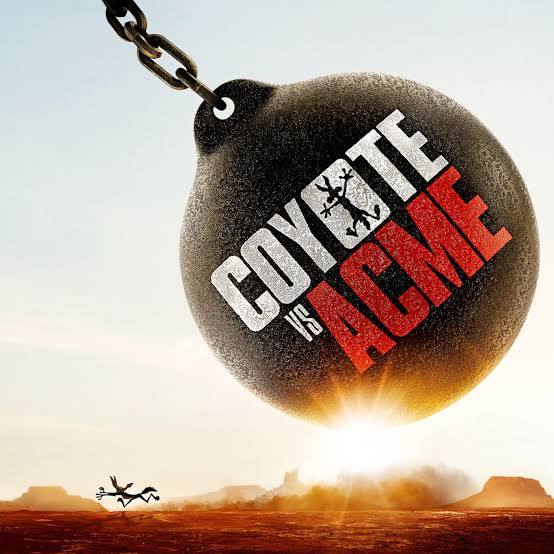
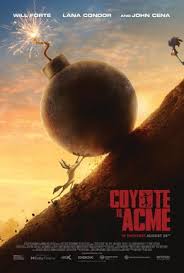
“Coyote vs. Acme” like its title character, has proved to be unstoppable. This delightful tribute to the madcap and enduringly popular world of Looney Tunes was originally conceived as a humorous New Yorker essay by Ian Frazier in 1990. Frazier was a fan of the publication “American Lawyer” and decided to compose a legal complaint filed on behalf of Coyote against the company that was a serial offender in the categories of safety and effectiveness of consumer products. “Mr. Coyote states that on eighty-five separate occasions he has purchased of the Acme Company (hereinafter, “Defendant”), through that company’s mail-order department, certain products which did cause him bodily injury due to defects in manufacture or improper cautionary labelling.” 

It was optioned for a movie but nothing happened for more than 30 years, when it was filmed by the studio behind the Looney Tunes cartoons, Warner Brothers.

And then Warner CEO David Zaslav did to the movie what Acme’s products did to Coyote: he blew it up, deciding it was better for the balance sheet as a tax write-off than as a theatrical release. Outraged fans protested. The film was picked up for distribution by plucky newcomer Ketchup Entertainment, later joined by Legion M.*

The movie is enormous fun, with deep understanding and affection for Looney Tunes, its characters and its absurd exploration of the eternal struggles of existence. Fudd will never shoot Bugs. Sylvester will never catch Tweety. And perhaps the saga of Coyote and Road Runner is the most existential, stripped down with no dialogue and always set in the spare southwestern desert.

Chuck Jones’ rules for Wile E. Coyote and Road Runner are legendary and deceptively simple. Coyote could stop any time, but he is, in today’s terms, obssessed with the Road Runner he will never catch. His failures are always the result of his own efforts, even hubris. Road Runner does nothing but run on the road and say “Beep Beep.” He never tries to outsmart Coyote or harm him in any way, as, for example, Bugs Bunny does to would-be hunter Elmer Fudd. Coyote is failed every time by the company that provides all of his equipment, Acme. The super-magnet. The parachute. The rocket-powered roller skates. Every time, they fail in spectacular fashion, often leaving Coyote falling off a cliff. Sometimes he is briefly suspended in the air before realizing that once again he is about to plummet. We stay at cliff level while he falls until we witness a puff of dust far, far below.

Coyote hires a personal injury law firm headed by Kevin Avery (“SNL” alum Will Forte). Note that the lawyers’ last names are all inspired by Looney Tunes animators. Avery’s specialty is defective products from Acme, and he settles all cases quickly for a few hundred dollars. When a clerk mistakenly files suit for hundreds of purchases instead of just the rocket roller skates, it escalates to the attention of Acme general counsel Buddy Crane (John Cena) and CEO Foghorn Leghorn (Eric Bauza, who, like his predecessor Mel Blanc, provides almost all of the voices). This threat to the company must be extinguished.

A lot of the classic Looney Tunes characters show up, and I won’t spoil which one is called as a witness to discuss Acme’s secret “Project Sisyphus,” the name a sly reference to Coyote’s perpetual inability to achieve his only objective. The integration of the cartoon and real-life characters and environments is seamless, truly impressive. The human characters are bland and underwritten compared to the cartoon characters (Lana Condor and Tone Bell are sadly wasted) and the film would benefit from being a little shorter. But it is colorful and often hilarious and its satire about the state of capitalism is just the kind of insoucient, make-fun-of-the-hand-that-feeds-you humor that the denizens of Termite Terrace specialized in. Jones, Friz Freleng, Bob Clampett, Tex Avery, Frank Tashlin and others would love this and be very glad that we never have to say, “That’s All, Folks!” to the antics of Looney Tunes.

*I have a small investment in Legion M, along with tens of thousands of other movie fans.

Parents should know that this movie has a lot of cartoon violence, but, as discussed in the film, all the cartoon immediately bounce back from whatever happens to them. There is some schoolyard language and brief potty humor.

Family discussion: Why did law school classmates Kevin and Buddy have such different careers? What do you think about Foghorn Leghorn’s explanation for Project Sisyphus? How should products be tested? Which is your favorite Looney Tunes character and why?

If you like this, try: “Who Framed Roger Rabbit?” and of course the Looney Tunes cartoons

Related Tags:


Animation Comedy Courtroom Fantasy movie review Movies -- format Movies -- Reviews Talking animals
Toy Story 5

Toy Story 5

Posted on June 18, 2026 at 11:16 am

A-
Lowest Recommended Age: Kindergarten - 3rd Grade
MPAA Rating: Rated PG for some thematic elements and rude humor
Profanity: None
Alcohol/ Drugs: None
Violence/ Scariness: Cartoon-style peril and action, no one badly hurt
Diversity Issues: A theme of the movie
Date Released to Theaters: June 19, 2026
Toy Story 5
Copyright 2026 Disney/Pixar

The toys are back in town! Thankfully, we may grow older, but they stay the same. Well, almost. It’s been 36 years since “Toy Story,” the first feature-length computer animated film, dazzled us with its technical brilliance but was unforgettable because of its heart and wit and irresistible characters. Remember that the reason Pixar’s first feature was about plastic toys was that smooth, shiny surfaces was pretty much the only thing they could create in those early years of digital animation. Even then, right at the very beginning, Pixar addressed the complications of changes in technology, in the potential replacement of a beloved cloth-covered cowboy toy who had a pull-string with a plastic space adventurer who had wings and a light-up wrist weapon. And even then, in what would become one of Pixar’s most perceptive and meaningful themes, the bittersweet changes that come with growing up. Endearingly, it is also about the beauty of imagination, with the series itself a perfect exemplar. I love Pixar’s love for the weirdos because they are the ones who grow up and create magic.

One of my favorite details from the first film was the difference in the way Andy wrote his name on the boots of the two toys. He got Woody (Tom Hanks) when he was younger, so the N was backwards. But he had learned more when he received Buzz, and wrote his name correctly. And one of my favorite details from the series overall is that the first film begins with a painted sky on Andy’s ceiling. Then, when he leaves for college, having given his toys to Bonnie, we see him leaving, with the real, endless sky above him. These show the care that goes into every detail and the vision that extends beyond each film.

Every move toward independence and adulthood means leaving something behind. The “Toy Story” series has served as something of a meta-measuring stick to help us consider our own changes, with the children who saw the first one in theaters now bringing their own children to part 5. And through the magic of animation, they are able to appreciate that Tom Hanks and Tim Allen may get older, but they are still our Woody and Buzz.

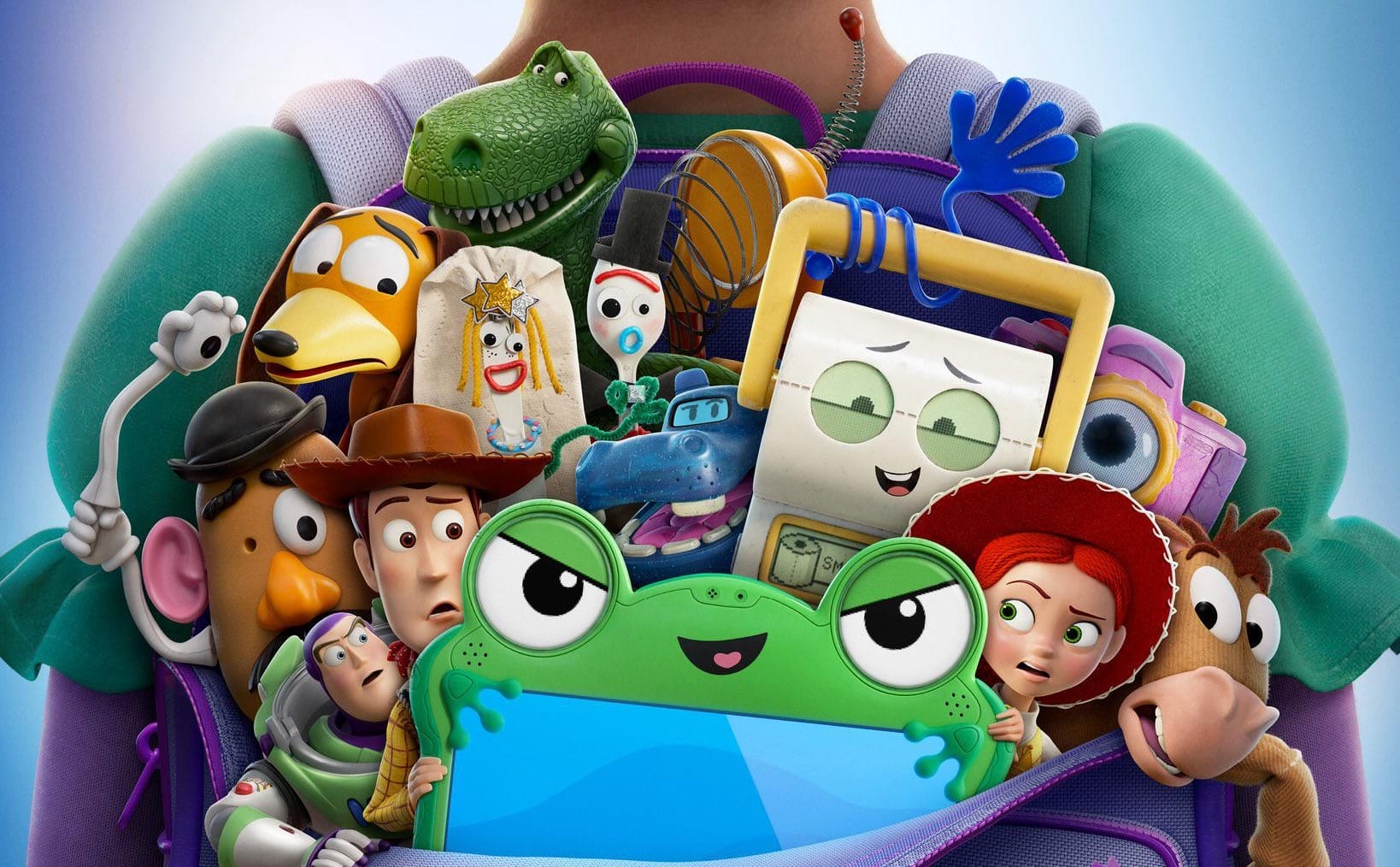
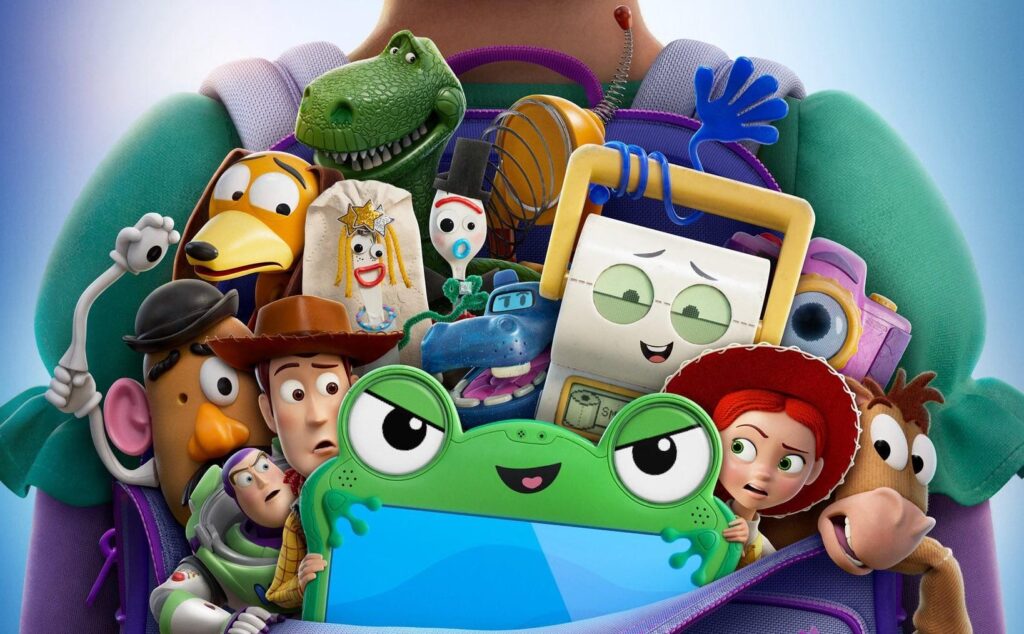
Now in the fifth episode, it is all about new technology, this time as a central theme, explored with insight, adventure, and hilarious jokes. At 8, Bonnie still loves playing with her toys, and the movie begins with a hilarious “wedding” between Forky (Tony Hale) and Karen Beverly (Knifey, voiced by Melissa Villaseñor) that is disrupted when the maid of honor, Rex the T-Rex (Wallace Shawn) is poisoned.

Two new children have moved in across the street, but Bonnie is more comfortable with imaginary friends than real ones and is too shy to ask them to play with her. Her classmates have given up toys to play with LilyPad (Greta Lee), and Bonnie’s parents think she might be able to connect with them virtually, so they get one for her.

At first, it seems to work well. Bonnie is accepted into the virtual friend group and loves playing games so much she all but forgets her analog toys. She is delighted when she is asked to a slumber party, but the girls make fun of her for bringing her Jessie (Joan Cusack) doll. Bonnie wants to be a part of the group so she pretends to be too grown-up for toys, leading to one of the best movie lines of the year. Rex says, “Extinction! Not again!”

The toys are devastated, and the story allows Woody and Duke Kaboom (Keanu Reeves) who in the last epsiode were off on their own, to come back for support. Jessie is the heart of this epsiode, though, and with her trusty horse Bullseye, she is the one who figures out how to get Bonnie a friend and leads the rest through their adventures. She also learns some important lessons that help her understand her value and heal some past hurts.

There are some new characters, including discarded toys with once state-of-the-art tech that is now charmingly nostalgic. They include a potty-training aid called Smarty Pants providing some poop humor (Conan O’Brien), a hippo-shaped map toy named Atlas (Craig Robinson), and a camera toy with pixels almost as big as a postage stamp called Snappy (Shelby Rabara). Even though we see him only briefly, I have to mention the plastic slice of pizza with sunglasses because he is voiced by Super Bowl superstar Bad Bunny.

Even Buzz gets an tech upgrade as we meet crates-full of new and improved Buzzes that have some cool new functions but just as much existential confusion as Buzz in the first movie.

As often happens in “Toy Story,” the characters get separated from their child and each other, so there is a lot of adventure along the way. And there are new human characters, including a horse-loving girl named Blaze (Mykal-Michelle Harris) who could also use a friend who shares her love of imagination. Past “Toy Story” villains have included Sid, who loved to take the toys apart and blow them up, and Al, who saw the value of toys only in what he could get from selling mint, never-played-with versions. The threat here, from LilyPad, who begins by feeling threatened herself by the analog toys and committed to helping Bonnie “reach all of her developmental goals,” is tempered by a thoughtful, nuanced exploration of what it means to be useful, and recognition that it is difficult to lose a child to aging out of the toy stage, but what you give them helps them forever.

NOTE: Stay through the credits for extra scenes.

Parents should know that this movie includes peril and action, with no serious injuries, as well as a sensitive exploration of issues of agency, identity, and loss. And some poop humor.

Family discussion: What is or was your favorite toy and why? Which is your favorite of Bonnie’s toys? When do you use your imagination?

If you like this try: The “Toy Story” series and all of the Pixar films

Related Tags:


Action/Adventure Animation Comedy Fantasy For the Whole Family movie review Movies -- format Movies -- Reviews Scene After the Credits Series/Sequel
Swapped

Swapped

Posted on May 1, 2026 at 8:55 pm

B
Lowest Recommended Age: 4th - 6th Grade
MPAA Rating: Rated PG for action/peril and some scary images
Profanity: Some schoolyard language
Alcohol/ Drugs: None
Violence/ Scariness: Characters in peril, scary villain, fire, predators
Diversity Issues: A metaphorical theme of the film
Date Released to Theaters: May 1, 2026
Copyright 2026 Skydance

“Swapped” is a “Freaky Friday”-style body switch story with lessons of empathy movie, but this time instead of a mother and daughter it is two animals who are at first frustrated and mistrustful and then learn to trust each other.

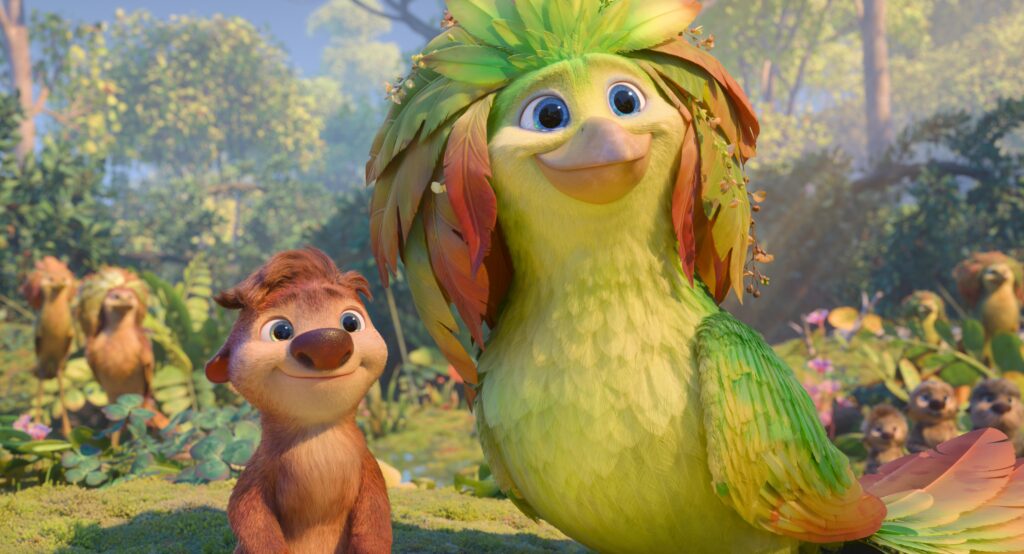
The setting is a fantasy world with colorful animals. Deer-like creatures who look like they are made out of birch bark have huge antlers made of flowering branches. Ollie, voiced by Oscar-winner Michael B. Jordan, is a cuddly little cub-like creature, a cross between a ground-hog and a teddy bear, from a species called Pookoo. Like his fellow Pookoos, he has an exceptional sense of smell, so vivid they can visualize odors. Unlike his fellow Pookoos, Ollie is curious about the world and in an early scene we see him so determined to explore the world under water that he invents a goggle/breathing mechanism requiring several failures before he figures it out. That scene under water is one of several especially beautiful settings and a lovely way to introduce us to an endearing hero.

Ollie’s grandmother (Táta Vega) tells him their community’s origin myth, with gigantic “walking orchard creatures of wisdom and kindness” called Zoe. They looked like building-sized elephants made out of redwood trees, and they carried special glowing pods that had the power to transform an animal into another species. The evil fire wolf killed some of the Zoe and banished the rest. The animals, no longer able to transform to help them understand each other, became clannish and mistrustful.

Ollie meets a young Javan bird and teachers he how to get the berries that the pookoo give on. His father (Cedric the Entertainer) is furious. The Pookoo consider the Javan their enemies. And then a flock of Javan birds arrive to devour all of the berries. Years later, when Ollie is a young adult, the Pookoo are close to starving. The Pookoo blame Ollie, his father barely speaks to him, and he is crushed with guilt and grief.

And then, he finds a glowing pod and he and a Javan named Ivy (Juno Temple) find themselves in each other’s bodies. They have to learn how to work together to find their way back home , meet a friendly fish who shows them where the glowing pods are (Tracy Morgan) and survive the predators, including the fire wolf and a cave filled with toothy snakes.

The same themes are better explored in films like ‘Hoppers,” “The Wild Robot,” and yes, “Freaky Friday,” but the animation is imaginative and colorful, Temple and Jordan give vibrant, witty performances, and the messages of inclusion and empathy are always welcome.

Parents should know that this film includes some scary predators, including one who is on fire. Characters are in peril, betrayed, and injured. There are two fake-outs when we think that some have been killed. The film also includes some schoolyard language and potty humor.

Family discussion: What human or animal would you like to trade places with? Why was the wolf so angry?

If you like this, try: “Hoppers”

Related Tags:


Action/Adventure Animation Fantasy movie review Movies -- format Movies -- Reviews
The Super Mario Galaxy Movie

The Super Mario Galaxy Movie

Posted on April 2, 2026 at 3:06 pm

B
Lowest Recommended Age: Kindergarten - 3rd Grade
MPAA Rating: Rated PG for action, mild violence and rude humor
Profanity: Mild schoolyard language
Alcohol/ Drugs: None
Violence/ Scariness: Fantasy/videogame peril and violence. kidnapping, imprisonment, fire
Diversity Issues: None
Date Released to Theaters: April 3, 2026
The Super Mario Galaxy Movie
Copyright 2026 Illumination

Fair warning. I have never played Super Mario and have only the slightest acquaintance with his world and characters. For me, the best part of the film was hearing the appreciative laughs and gasps of the fans in the theater who were very happy to recognize their favorite elements and anticipate how they would fit into the story.

The story, of course is the issue when a game becomes a film. Instead of the interaction a player has with a game, we need a narrative that puts the story where the game-y parts go. And on that basis, at least to a newbie, like the first one, “The Super Mario Galaxy Movie” does pretty well.

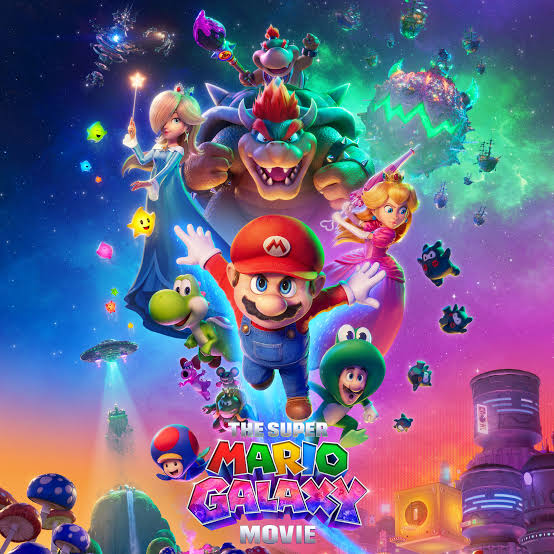
Rosalina (Brie Larson) is the devoted adoptive mother of the sweet, star-like Lumas, and watcher of the cosmos. They love her bedtime stories about the plumbers Mario (Chris Pratt) and Luigi (Charlie Day), who rescue Princess Peach (Anya Taylor-Joy).

And then a giant robot attacks and it is Rosalina who has to be rescued. She fights back fiercely until one of her star babies is in peril, and they are both captured by Bowser Jr. (Benny Safdie), son of Bowser (Jack Black), who was defeated and shrunk down to dollhouse size in the last episode. Bowser Jr. is determines to avenge his father: “From the ashes of his defeat rises a new emperor.”

Princess Peach is having a birthday celebration, but she is sitting alone. Mario arrives to give her a gift, a pretty pink parasol, and she tells him it is not her birthday but the anniversary of the day the mushroom people found her. She wishes she could find her family of origin.

All of this will come together, along with many other Super Mario characters and settings (and in-jokes) all very colorful and more silly than scary. Mario, Luigi, and Princess Peach are joined by Yoshi (Donald Glover) and by Bowser Sr., who gets his size back, improves his anger management, and joins the good guys, at least until he is reunited with his son.

Is it essentially an informercial for the games and merch? Of course it is. But is is good-hearted and colorful, and has genuine affection for the fans.

Parents should know that this film includes extended cartoon fantasy-style peril and violence. The issues of adoption and family separation are gently handled but may be upsetting for some children.

Family discussion: Should Mario and Luigi have believed Bowser when he promised to help them? Which version of Super Mario is your favorite?

If you like this, try: the games and the first film

NOTE: Stay ALL the way to the end for an extra scene

Related Tags:


Animation Based on a video game Fantasy movie review Movies -- format Movies -- Reviews Scene After the Credits Series/Sequel
THE MOVIE MOM® is a registered trademark of Nell Minow. Use of the mark without express consent from Nell Minow constitutes trademark infringement and unfair competition in violation of federal and state laws. All material © Nell Minow 1995-2026, all rights reserved, and no use or republication is permitted without explicit permission. This site hosts Nell Minow’s Movie Mom® archive, with material that originally appeared on Yahoo! Movies, Beliefnet, and other sources. Much of her new material can be found at Rogerebert.com, Huffington Post, and WheretoWatch. Her books include The Movie Mom’s Guide to Family Movies and 101 Must-See Movie Moments, and she can be heard each week on radio stations across the country.

Website Designed by Max LaZebnik