I did not like “Anonymous,” the new film speculating that Shakespeare’s plays were written by the Earl of Oxford. (They were not.) But I did enjoy Vanessa Redgrave’s luminous performance as Queen Elizabeth, with her daughter Joely Richardson playing the queen in her younger days. It completes Redgrave’s sweep of the era. In “A Man for All Seasons,” she appears briefly but unforgettably as Queen Elizabeth’s mother, Anne Boleyn, so mesmerizing it is easy to understand why a king would change the world to marry her. And she also played Elizabeth’s greatest rival in the title role of “Mary Queen of Scots.”
The two queens never met in real life, but if they had, I hope they would have shown the courage and resolve of Redgrave and Glenda Jackson.
Producer Pierre-Ange Le Pogam, who recently launched the Stone Angel production and financing company, has acquired the rights to Arash Amel’s spec script titled Grace of Monaco. It reportedly captures a snapshot of Kelly’s high-profile career, and parallels the Oscar winner’s life story with the politics of the time.
Kelly came from a well-off Philadelphia family. Her uncle wrote a successful play, “Craig’s Wife.” She modeled and became an overnight star after her first film, “High Noon,” opposite Gary Cooper. She won an Oscar for her performance in “The Country Girl” where she delivered one of my all-time favorite lines to William Holden: “When I was a kid our village had an idiot. He used to think elephant tusks came from piano keys, but he had nothing on you.” She was glamorous, beautiful, funny, and smart in Hitchcock classics “Rear Window” and “To Catch a Thief.”
And then she married royalty, Prince Rainier of Monaco. It’s certainly a story made for the movies. But who can play her?
Interview: Elizabeth Olson of ‘Martha Marcy May Marlene’
Posted on October 19, 2011 at 3:59 pm
“Martha Marcy May Marlene” is the story of a young woman who returns after living off the grid in a remote group home with a predatory, cult-like leader. She moves in with her newlywed sister (Sarah Paulson) after years of no contact. We never get the details of the source of their estrangement or why the young woman who at various times goes by all of the names in the title wanted to give herself to an abusive man. But we do see that the experience has left her almost feral, without the most basic ability to recognize social norms.
Copyright 2012 This is That
The young woman who plays Martha Marcy May Marlene is an extraordinary young actress named Elizabeth Olson, who has two more movies coming out and is still completing her studies at NYU. She is the younger sister of Mary Kate and Ashley Olson, the actresses/producers/moguls, who named one of their fashion lines after her. She and I sat down for a quiet chat that covered everything from how she came up with the way her character in the film eats, to why she’s not a method actor, and putting on a family-friendly version of “A Chorus Line” at summer camp.
Tell me about looking at the script for the first time.
You don’t get to read many good scripts and this instantly stood out. It’s a part that gets to navigate so many different experiences and emotions it seemed like something I would have to wait to do, to do the bad stuff before I would get a chance to get to the good stuff. But they wanted an unknown actress so it was like being in the right place at the right time. I read twice, first the diner scene and a lighter scene with the sister.
What was the best part of making the film?
Sean Durkin and I work really well together, really honest and direct but he is very gentle so it isn’t off-putting. I said, “I trust you. Save time and don’t beat around the bush. If I am not getting it, just tell me. Tell me if I’m not giving you what you need or if I’m having an off-time.” I wish I could say that I trusted everyone that much.
You worked with one of my favorite actresses, Sarah Paulson, who plays your sister. The movie does not tell us very much about their family history. Did the two of you work something out to fill in those blanks?
We worked six to eight weeks and filmed all the farmhouse stuff first. She came in and she and Hugh Dancy (who plays her husband) went over things together about their relationship and then she and I sat down and tried to make a timeline that was as specific as possible and understand when was the time that she left and at what point was my character fully abandoned. In order to figure out all the tensions in the script we had to be so clear with what happened in the past. Families sometimes do not talk about the things in the past that affect them today. My family is very good at communicating. But some never learn how to do that. This is one of those examples. We do mention in the film the mother passing away and living with the aunt, so there are those hints.
This character is a challenge because she is so internal. How do you convey all of her fragility and fear without being able to talk about it?
I kept thinking of the risks that she was willing to take and showing too much fear or vulnerability was a risk for her. So in every scene, even if she was by herself there had to be something she was reacting against or towards. There was always something she was in relation to, a sound on the roof, a car outside. How much she was willing to give that away was the meter I was playing with. And she has so much energy. There is an absurd humor in a way at times and projecting anger onto people. What are the instigators for when that happens? I am really an analytical person so to try to figure out at what point she was comfortable and when was the peak of her fear was really fun to navigate. You have do do work. We all gotta do work on things.
You have classical training as an actress. How did that affect the way you approached this role?
I studied at the Atlantic Theater Conservatory, founded by William H. Macy and David Mamet. It’s based off a writer’s view of approaching the script. Everything the actor does is to serve the script and the story. Every action you have is to tell the story. It has nothing to do with your own experience. It has to do with the function of what you are trying to accomplish. Another thing that is fundamental is that you are not your character. They don’t believe in method or emoting. For something like this, that couldn’t be more helpful! I had to have an outside perspective and make concrete things happen that I had control over and trust that the story-telling of the script and editing is going to tell the other part. I don’t have to do the whole thing.
One very telling detail in the movie is your character’s style of eating. Was that in the script or was it something you developed?
Those things are really fun to play. She has not eaten in the presence of a man for all the time she has been away. So at the lake house , for the first time she is eating with a man at the table. So I played with the fact that I am watching him eat and trying to figure out what our relationship is. And she is used to not being allowed to eat until late in the afternoon, so that seemed odd to her. Those things that are out of the norm added to what seemed slightly off. Because she had something happen to her that the audience is trying to figure out as the story goes on, it was fun to try to figure out how much of the backstory I understood, to unravel it myself.
What draws someone to a cult?
For this character I think it was a feeling of purpose and being part of something larger than yourself, that you actually have a home somewhere. And she felt she had unconditional love.
What movies made you want to act?
When I was young, “Singin’ in the Rain,” “Guys and Dolls,” “Gypsy,” “Pal Joey.” That is what spurred my interest and I went to musical theater camp. They wouldn’t pay for the rights so we did our own versions. We did “A Kid’s Chorus Line,” so with different lyrics, and “A Comedy Tonight,” which was our version of “A Funny Thing Happened on the Way to the Forum.” My favorite was playing Ado Annie in “Oklahoma.” I was in 5th grade and my sisters were in 8th grade and brought their guy friends and I was so embarrassed that they were there. My dream role was Adelaide in “Guys and Dolls.” My brother influenced me and he has darker taste, like “Return to Oz” and then I started to love Woody Allen and Wes Anderson and as I got older P.T. Anderson and of course “Star Wars” and “Lord of the Rings” and “Gone with the Wind.” I don’t just want to do indie films; I’d like to try it all!
As I have often said, I love character actors, and I am delighted to see one of my favorites in three movies that are now in theaters. You know Ray McKinnon’s face — probably from “The Blind Side,” where he plays the high school football coach. I first noticed him in “O Brother Where Art Thou” as the man who plans to marry George Clooney’s ex-wife, played by Holly Hunter. He also appeared in “Apollo 13” and in the television series “Sons of Anarchy,” “Justified,” and “Deadwood.” And he’s an Oscar winner for his short film, “The Accountant.”
McKinnon plays a teacher in Dolphin Tale. In “Take Shelter” he has one brief scene as the main character’s brother who awkwardly tries to provide some support. And in “Footloose” he plays the uncle of the kid who just wants to dance. McKinnon always brings a lot to his roles. He never plays a caricature. In “Footloose” it is nice to see him get a chance to show courage, loyalty, and humor. He has another movie coming out this year, “The Last Ride,” about Hank Williams Sr, the legendary country star who died at age 29. I look forward to it.
I always love the Entertainment Weekly “Reunions” issues, where they bring back co-stars to talk about favorite projects. This year’s features classics like “Fatal Attraction,” “Office Space,” “The Carol Burnett Show,” and “Home Improvement” (those boys are all grown up!). But the highlight has to be the reunion of the cast of “The Princess Bride.” Note that Billy Crystal is wearing his hat from the movie, which he kept!


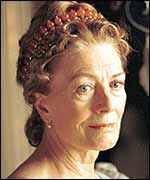 I did not like “Anonymous,” the new film speculating that Shakespeare’s plays were written by the Earl of Oxford. (They were not.) But I did enjoy Vanessa Redgrave’s luminous performance as Queen Elizabeth, with her daughter Joely Richardson playing the queen in her younger days. It completes Redgrave’s sweep of the era. In “A Man for All Seasons,” she appears briefly but unforgettably as Queen Elizabeth’s mother, Anne Boleyn, so mesmerizing it is easy to understand why a king would change the world to marry her. And she also played Elizabeth’s greatest rival in the title role of “Mary Queen of Scots.”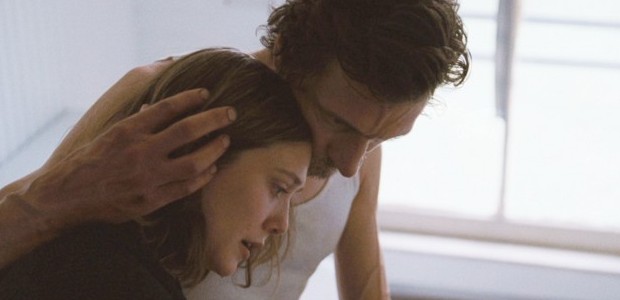



 .
.