Interview: Mike Cahill and Brit Marling of ‘Another Earth’

Interview: Mike Cahill and Brit Marling of ‘Another Earth’

Posted on July 22, 2011 at 10:27 pm

Mike Cahill and Brit Marling co-wrote “Another Earth.”  He directed, shot, and edited, and she stars as Rhoda, a gifted teenager who makes a tragic mistake.  Driving home after a party, she causes an accident that kills a young mother and her son and injures the father, a professor of music, played by William Mapother (“In the Bedroom” and “Lost”).  When she gets out of prison, she goes to see him to apologize, but when he answers the door she loses her nerve.  She tells him she is there to offer a trial house-cleaning service, and ends up going back every week.

Meanwhile, another planet has been discovered that looks exactly like earth, and an industrialist is planning to take an expedition to see if it is really an exact parallel.

It is an extraordinarily accomplished film and I was delighted to get a chance to speak with Mike and Brit.

Mike Cahill

What was it like to have your movie premiere at Sundance?

It was a dream come true, so much fun.  It was interesting to have this little baby and release it to the world there.  The programmers are so cool and thoughtful.  I loved every moment.

And what has been the reaction now that it is about to be released?

It’s been positive.  The Q&A’s have been one of my favorite things.  There’s always something new that comes out of them.  They haven’t been repetitive.

William Mapother is extraordinary in the film.  How did he work with you on creating his character?

I loved how in “In the Bedroom” he had such a fully realized character.  He had this intensity and intimidating screen energy that was wonderful because I could harness that for the beginning of his arc, and then as his character develops, we could crack that open and this joyous light that he does have inside could shine through and it would be really beautiful.  He read the script, we talked for two hours on the phone and he said, “I’m in.”  What was great was that he really dug into his character.  I really wanted to have rehearsals with Brit and he was very generous to give us two weeks.  We would meet every day at his house in Los Angeles and read the script and get on our feet and work through scenes.  I wanted to create an atmosphere that was very free and open for collaboration.  Because both Brit and William cared so deeply and did so much homework, their ideas about how things would unfold were very important to me.  So almost in a Mike Leigh way we would just freeform and feel it out.  We didn’t change too much but we did add a few scenes and tweak a little bit of dialog and subtract some things.  It was really organic and freeing and really helped me.  When someone enters the room who is living from the POV of their character so deeply, and you can tell that they’ve done that hard work of imagining the childhood, the lifelong experience prior to the first frame of the film, they have that passion for the project and what they are bringing is really valuable.

There’s a moment where he’s parked outside her house.  She comes over to the car and William said, “My character would ask her to come around the other side because he’d be scared of traffic, right?” One little line, one little idea, yet so meaningful about that person’s life and experience.  One extra beat in the film but it adds a great deal of authenticity.

One thing that surprised me about the film is how expensive it looks because I know you made it for very little money.  If you had another million dollars in the budget, what would you have spent it on?

Better craft services!  I think the budgetary constraints are a gift to the artist.  Your mind has to be creative in different ways and it opens up different channels and makes you think of interesting solutions.   I wouldn’t change it.  I’d pay everyone more if I had more money but that’s it.

One of my favorite scenes is when the earth scientist communicates with her counterpart on the other planet.  It was really well done.

That was inspired by the moon landing.  The everyman and everywoman experience of watching it on television, and all these people walking out of their houses and looking up at the moon.  I took those stories and said, we’re not the hundred million dollar Hollywood movie, where you can show the spacecraft landing.  We’re telling the story of the people who watch what is happening on television.  And somehow there is a power and connection because it affects everyone.  And that moment when she realizes she is talking to herself in a way worked on the page, in rehearsals, right from the beginning.  The performance by Diane Cielsa was wonderful, so specific.

Tell me about your ideas on the look of the film.

There were certain colors that were very important.  In the first ten minutes of the film, Rhoda has this red dress and it’s the only time we see red.  It was symbolic of her energy and vitality.  Later we only see it with the two things that remind us of John’s past, his child’s robot and his wife’s sweater.  Other than that, it’s all blue, gray, very drab.  All of it reflects the story.  As their relationship begins to blossom, the colors warm up.  As he gets his life back, he begins to dress like the man he was.  We wanted it to be subtle but enough to inform the story.

You mentioned Mike Leigh.  What other film-makers have inspired you?

Julian Schnabel’s film, “Basquiat” made me want to make films.  I’d always been interested in film but it was my hobby.  There was something about the way he made the film, so freeing, breaking convention in an artful way, it is poetry.  Then I became obsessed!  And I love Krzysztof Kieslowski, the way his films are based in realism but with something magical underneath.

You didn’t study film at Georgetown.  You studied economics.

With economics, you understand incentives, opportunity costs, efficiency, all vital elements to making a film and living life!

Brit Marling

Mike told me about how closely you worked with William Mapother on your characters and their relationship.  What was that like for you?

The moment he signed on was the moment we had a movie.  Mike and I had both seen his work in “Lost,” and when the casting director recommended him, and we were like, “He’s perfect!  The part seemed so right for him.”  He has such a gravitas on screen.  No one else could have filled out the part the way he did.  He has this intense energy and this very deep romantic side.  He is really thorough at how he approaches the character, which is really inspiring.  He thinks of every date, the times, the season, what it has been like to be on these medicines, what he is still taking, how that is affecting him.  It feels very real because he’s done his homework.  He also showed us that Rhoda and John needed a bit more time to come together.  He said, “I wouldn’t open up that quickly.  It’s going to take a few goes.”  We added more time, more breath into that and it felt more natural.

How do you as a screenwriter learn from your experience as an actress or the other way around?

When you begin the acting part of it, you’ve done a lot of the homework for the part through the writing.  You have spent so much time daydreaming and imagining Rhoda from a writing perspective that when you put on the actor hat you have already thought through quite a bit of the story.  You’re always trying to say the most through the fewest number of scenes and the least dialog.  The power of cinema is not auditory — someone once told me a play is 80 percent auditory and 20 percent visual and a film is the reverse.  You’re really thinking of everything as part of the whole.  How do you get to the heart of the relationship between two people in three scenes as opposed to five?  How can you keep whittling it away to get to the center of emotion?

You set a challenge for yourself as an actress in creating a character who does so much internally, very subdued.  You had to convey a lot through expression rather than dialog.

I didn’t really notice because when you’re in it, you feel like it is deafeningly loud.  The emotions are like nuclear bombs and fireworks are going on inside you, the sight of his house — you don’t say anything because you don’t need to.  What could you possibly say?

Rhoda is befriended by a janitor who takes a shocking and tragic step.  Tell me about his contribution to the story.

We felt that both John and Rhoda really needed to be disconnected from other people.  That’s why the connection they find in each other is so important.  But we also liked the idea of someone who has a foil or a mirror to Rhoda who is also suffering tremendous grief.  You don’t find out why but you don’t need to.  They recognize in each other the symptoms of grief.  And in the way he hurts himself, you feel that potential danger for her, too.  You see what that intensity of internal suffering can cause.

What does the element of science fiction, which is underplayed but important, add to this film?

I love “Twelve Monkeys,” the power of that final scene.  There is something about science fiction that can get to the ineffable things that we feel but cannot explain, the way we feel connected to each other and to alternate versions of ourselves.  We can’t articulate that yet through science.  Are there an infinite number of mes talking to an infinite number of yous?  Science fiction, like spirituality, gives us a vocabulary, a poetry, a breath, to get to the unsayable things.

Related Tags:


Actors Breakthrough Perfomers Directors
Interview: Neville Longbottom (Matthew Lewis), Hero of “Deathly Hallows 2”

Interview: Neville Longbottom (Matthew Lewis), Hero of “Deathly Hallows 2”

Posted on July 18, 2011 at 2:13 pm

Matthew Lewis has played Neville Longbottom, classmate of Harry, Hermione, and Ron at Hogwarts, for all eight films.  Like the character he plays, Lewis has surprised the fans by turning from an awkward child into a young man of great courage and dignity.  It was a pleasure to see Neville’s important contribution to the final movie on screen and an equal pleasure to chat with Matthew about his experiences from his first audition to the final scenes.

You really are the hero of this movie!

That’s what they keep telling me.  It’s been a lot of fun.

You’ve had an extraordinary opportunity to observe and learn from some of the greatest performers in the British theater, which means they are among the greatest performers in the world.  What did you learn from co-stars like Maggie Smith, Alan Rickman, and Michael Gambon?

I’ve learned more from them than they’ll ever know.  Being around them on set, watching their professionalism, and even watching how they hold themselves off the set.  They’re lovely people.  Michael Gambon tells filthy jokes.  Alan Rickman talks about having scrambled eggs for breakfast.  They’re really just normal people who happen to be very, very good at what they do and it is very cool to be around them.  I’m privileged.

And you’ve also worked with a variety of directors over the eight films.  What did you learn from them?  How were they different?

Chris Columbus was dealt the shortest straw, I think.  He was given a bunch of children to work with who were not actors.  Apart from his tremendous directing ability, he was brought in because of the way he worked with children.  He must have found it so difficult at times and yet he never lost his temper, well, I imagine he did lose his temper, but never in front of us!  He was so great to be around and he made us all go from being terrified young children to really enjoying what we were doing, having a great time as well as making a film.  He made it enjoyable.  And then Alfonso came in and made it much darker, but still obviously enjoyable because Alfonso is crazy!  He was always playing tricks and pranks, having as much fun as the kids were.  His directing style was quite similar to Chris in terms of working with children, but a lot crazier and wackier.  And it was much more about what drove our characters, more of a profession then, looking at it as an art form, too.

And the Mike Newell came in and we were all a bit older, and he wasn’t afraid to give us that kick up the ass.  If you weren’t pulling your weight he’d shout, “Put your back into it!” And at that age, that’s what we all needed, telling us we could do better.  I thank him for that because it was a breath of fresh air.

And then David Yates came in, and he’s the loveliest man in the world.  He took me into his office before we started the film and asked me to do some research.  We really talked about Neville in depth and it was the first time I’d sat down with one of the directors and talked about Neville, what motivated him and what pushed him.  I started to see acting as a real science.  That really helped me grow as an actor.  I owe them all.  They were different in what they brought to each film, but David Yates in particular was one who really inspired me.

Tell me a little about Neville, and why he was underestimated by so many people at first.

He’s the unlikeliest of heroes.  That shy little boy who was bullied, and no one ever thought he’d amount to anything, and turn him into this savior of the wizarding world.  It’s inspiring.  I think a lot of people can relate to his character.  School can be a pretty lousy time for a lot of people. Neville shows that it doesn’t have to define you.  You can stay true to yourself and your friends, you can do the right thing, you can do with your life whatever you want to.  I think that’s a lovely message.  I feel very proud and very humbled to have been able to play him.


Related Tags:


Actors Interview
‘The Help’ — Emma Stone and Bryce Dallas Howard

‘The Help’ — Emma Stone and Bryce Dallas Howard

Posted on July 15, 2011 at 8:00 am

Bryce Dallas Howard

On playing the movie’s villain, Hilly:

“I literally don’t want to look at it – she’s such a terrible person.  What’s interesting when you start doing a role is at first the character is really shocking.  But then you play the character 18 hours a day and I’m like – look, I have long hair!”


“It’s really fun to be such a terrible character and the feeling on set is so joyful and we’re having such a wonderful experience together.  The book and the script is the same way — It’s like a salacious read and really juicy and it does at moments get really quite heavy.  But Tate has created this environment on set of making everyone feel really playful so that in those moments when it’s really intense and obviously incredibly loaded given our history as a country we don’t fall into this lull as actors – oh, my god, this is too much.  For that reason, normally a character like this I would not be able to sleep at night, but because of the feeling Tate’s created on set when she’s evil it’s more fun than it is scary.’

On the Southern accent:

“Nadia the dialect coach has been really specific and has recorded people whose dialects were pure according to that time period.  It’s a mishmash of a bunch of different recordings.  It’s really fun and I love it and look forward to and enjoy it but really appreciate and need the support of a dialect coach.  I wouldn’t know where to begin in terms of the nuance.  The only other time I’ve done a Southern accent, I played a character in the 1920’s from Memphis – there are some similarities but also some distinct differences.”

On finding a way to make the villain a real character:

“She’s a duplicitous character, there’s always that duality.  Someone gave me some great advice about the character.  I was doing more of an arch-villain at first.  She said, ‘You have to protect these women in this time in all its devastating honesty.’  Most women were definitely not like Hilly.  She’s a particular person.  It’s important to play that she’s not a two-dimensional character.  She believes in certain things.  Obviously, it’s not only misguided, it’s evil.  But there is an origin for her beliefs.  To not just play this crazy character, it’s important to understand the psychology behind it.”

On her research:

“The research that I did was fascinatingly personal.  My mom was raised a lot in the South and when she was growing up, she was born in the 50s so in the 60s and 70s she was at times ostracized and called a Northerner.  She actually started reading The Help and had to put it down because it was so intense for her.  She’s picked it up again and she’s like, ‘It’s such a good book but I can’t read it before bed.  I can read Stephen King before bed and Anne Rice before bed, but this is too intense.’”


Emma Stone

On her connection to her character:

“Skeeter and I have a lot more in common than I would care to admit.  I’m not as brave as she is in what she is taking on.  But I do understand being a maybe a little different than your peers.  Everyone’s gone through that.  I like that she isn’t a martyr and the lessons she learns.  I love this girl so I am doing the best I can to accurately bring her to life.”

On what she gets from shooting on location:

“We’re lucky enough to be shooting in the South, which is so great.  Being surrounded by Southerners and hearing their stories and watching civil rights history like Eyes on the Prize or books about Jim Crow that kind of helped me with the back story as far as the time period.  But as far as being in the South we are so lucky that we’re in Mississippi because I never knew what the real feeling of being in the South was like, the kind of secrecy, the two sides there are to everybody.  We’re in a small town.  Everyone’s been so nice and so welcoming.  They also know everything that’s going on.  They know if I had someone over to my house last night!  It really informs what’s going on in the movie.  The secrecy required for something that’s illegal at the time is – I now understand so much more how quickly word travels in a small town in the South.  It’s good to know what it’s like.”

On the relationship of her character to her frenemy, Hilly:

“Bryce has been pretty note-perfect so far.  It’s really important to Tate to establish that Hilly and Skeeter were best friends and really did love each other.  And they really do love each other underneath it all but they haven’t spent a lot of time together for the past four years.  And in those four very formative college years their opinions on things greatly differ and it becomes more apparent now that Hilly is married and has kids.  It’s easy for me because the way she’s playing it has been so fantastic.  She can switch from sweet as pie to just awful in a heartbeat.  She’s figured out the balance really well and it’s my job to react to whatever mood Hilly’s in.”

On being in a women-centered story:

“Everyone is here to make the same movie and no one’s come with an ego – when that’s the case and its women, I don’t want to sound all girl power here but it’s been a nice empowering environment to be in.  And Tate’s keeping a calendar of when who is going through any hormonal times, he’s surrounded by nine emotional actress females.”


Related Tags:


Actors Behind the Scenes Interview
‘The Help’ — Octavia Spencer

‘The Help’ — Octavia Spencer

Posted on July 12, 2011 at 3:38 pm

Octavia Spencer knows the character of Minny in The Help better than anyone else.  Not only did she perform the part with the author on her book tour and in the audio book edition, but it was her outspoken ebullience and confidence that helped to inspire the character when Kathryn Stockett was first writing the story.  She spoke to a small group of online journalists on the set in Mississippi last August.
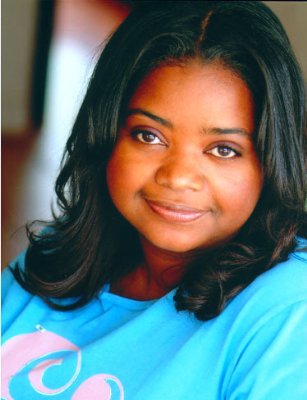
“The character of Minny is very, very loosely based on me,” she told us.

I met Tate when both were production assistants on “A Time to Kill” in Jackson.  My personality is not the best when I am hungry or hot.  Kathryn Stockett said, “I’m writing a book” and I’m like, “Who isn’t, honey?”  When I got it, I teased her about having a part — “Am I the love interest for Denzel?” I was afraid it was another Mammy.  I hate “Gone With the Wind.”  But then I read the first page – and stayed up all night.

She told us that Taylor is her best friend, like a brother.  She went with Stockett on the book tour because the book is written in alternating first-person narratives and while Stockett was willing to write in dialect, she did not want to read aloud the African-American character’s voices.  Spencer’s agents did not want her to go.  It was pilot season, and they thought she should be available for parts that came up in television.  But she went.  Still, she was afraid she would not get the part in the movie.  “Oh, God, there’s Mo’nique out there.  And Queen Latifah,” she thought.  But she got it.

Some of the challenges included driving the car from the 1960’s — no adjustable seat and no power breaks.  And the clothes of the period: “Girdles and pointy bras.  I’m a 200 lb woman – it’s all pushed in and sweaty.”  This was a different experience for her as an actress.  “I’m usually the humorous and sarcastic person in the drama.  Good to get a chance to use a different set of muscles.  There has to be that sense of what the danger was for these women.”  And, like the other people we spoke to, she was grateful for the inspiration they drew from the location and history of the community.  “Greenwood has a lot of history.  I’m still reconciling that and having it for Minnie.  The book makes that part of history palatable.  It’s about the relationships and the bonds between the characters.” And she spoke about her hopes for what we can learn from a story set half a century ago.  “What I love about this book is that we are having the conversations so that we can stop having the conversations.”

Related Tags:


Actors Behind the Scenes
‘The Help’ — Viola Davis

‘The Help’ — Viola Davis

Posted on July 11, 2011 at 12:00 pm

In my opinion, Viola Davis is the finest actress in movies today.  In “Doubt,” she gave the best performance of the year in one short but very powerful scene as the mother of a boy who may have been abused.  She has made an indelible impression in brief appearances in movies as sympathetic therapists in “It’s Kind of a Funny Story” and “Trust,” best friends in “Eat Pray Love” and “Nights in Rodanthe,” as a mayor in “Law Abiding Citizen” and as a space ship captain in “Solaris.”  It was truly a thrill to speak to her about playing the strong, quiet, principled maid Aibileen in “The Help.”

Like the other people working on the movie, she was very aware of the about the influence of the setting.  “It’s easier to do this because you’re in Mississippi.  It’s a different world.  A different energy that informs everything you do.  Going into Baptist Town you feel the spirits of the past.”

We asked about developing a Mississippi accent.  “The accent is a work in progress.  I was born in South Carolina and raised in Rhode Island. It’s my mother’s voice I hear in my head.  I don’t want the accent to be as strong as it is in the book.  I’ve read the criticism about the dialect online.  I don’t want anything to distract from the character.  I want to make it accessible.”  Her research about the era included books, the Eyes on The Prize PBS series, “a documentary about maids, my mother, relatives, everybody.”  She also remembered a teacher in college who was part of Freedom summer and came back to campus to talk about it.
Asked about the challenges of the story, she frankly acknowledged, “There’s a lot of pressure.  There are two stories going on.  It’s the experience of a lot of Caucasians with substitute mothers and the story of these maids, my mother’s story, who these women were when they went home.  That’s the part that makes it a dirty secret, not palatable.  That’s the story of those who worked for other people.  Abeline was born in 1911.  By she has has 53 years of incredible history.  You feel an incredible responsibility not to make it sanitized.  That’s what Hollywood always does.”

And she spoke of the challenges of playing a character who by nature and culture seldom says what she is thinking.  “Your internal dialog has got to be different from what you say…. makes it so rich.”  It was sometimes very difficult to do.  “You feel the rage, the frustration, the repression, the intense level of sadness, of going to your grave without ever realizing your dreams and hopes.  Now we can speak our minds more.  To be silent so much – it’s hard not to carry that rage when you leave the set.”


Related Tags:


Actors
THE MOVIE MOM® is a registered trademark of Nell Minow. Use of the mark without express consent from Nell Minow constitutes trademark infringement and unfair competition in violation of federal and state laws. All material © Nell Minow 1995-2026, all rights reserved, and no use or republication is permitted without explicit permission. This site hosts Nell Minow’s Movie Mom® archive, with material that originally appeared on Yahoo! Movies, Beliefnet, and other sources. Much of her new material can be found at Rogerebert.com, Huffington Post, and WheretoWatch. Her books include The Movie Mom’s Guide to Family Movies and 101 Must-See Movie Moments, and she can be heard each week on radio stations across the country.

Website Designed by Max LaZebnik