
Interview: Michael Bernardi of “Marshall” and “Fiddler on the Roof”

Interview: Michael Bernardi of “Marshall” and “Fiddler on the Roof”

Posted on October 20, 2017 at 1:08 pm

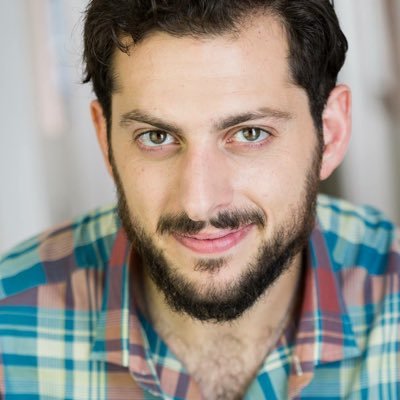
I loved seeing Herschel Bernardi play Tevye in “Fiddler on the Roof” in the 1960’s and it was a great pleasure to speak to his son, Michael, who played the role in the Broadway revival. He also appears in a brief but very compelling role in “Marshall,” the film about one of Thurgood Marshall’s early criminal cases.
Copyright 2017 HuffPost

What was your audition like for “Marshall?”

I was in the middle of Fiddler on the Roof on Broadway and I was in rehearsals for my first shot at playing Tevye as an understudy when I got word about this audition for a project with Thurgood Marshall. I got extremely excited and so I knew I had to do everything in my power to make that happen.

The scene in Marshall has a lot going on and there’s a lot of subtext. You don’t want to come in all over the place. It’s very specific what’s at stake in the scene. So I remember being in rehearsal, being in 1905 Eastern Europe wearing my shtetl wardrobe and then getting on a subway and walking into the world of Marshall and finding the Zen place within myself to just serve the story as much as possible. That probably helped because there was no time to overthink it. Also being in Fiddler was such an incredible resource of information, to be already immersed in that world, to really understand what that immigrant experience was and what was at stake, what people were fighting for as they arrived in America and what the cost would be if things didn’t work out. So I was very pleased with how the scene showed so many of those colors and just trying to plumb those circumstances as much as possible as in a very short time span tell that story of what was at stake for the Jewish people in that time period and at the same time fighting for the future and fighting for equality and fighting for acceptance.

What difference has your father’s legacy as an actor made in your life?

He died when I was one and a half. But there were family members that told me his story and he left behind such incredible legacy, so my entire life I’ve been blessed to have random people coming up to me just stopping dead in their tracks and going, “Your father meant so much to me and my family.” Just this look in their eyes of such reverence and love when they speak about him. I feel like the love that I may have missed out on from my father has been given to me through the love that he gave to so many people. So in that regard my entire life I’ve definitely have felt that the presence of the story of Fiddler and what that story means and has meant to millions of people.

It’s a very specific story, and yet it seems to have such universal impact.

Because we are human and because really Fiddler on the Roof was created structurally as an empathy machine. Especially that first act of Fiddler on the Roof was constructed to find that common humanity of human beings through humor and to really show that this is a family that you’re meeting that has the same worries and daily foibles and conflicts of any family that has ever lived.

I think Fiddler is about family and I think that’s why it’s so universal; it speaks to everyone’s kitchen table and then once you achieve that kind of familiarity with an audience and that audience recognizes themselves and their family in these people onstage that come from a completely different culture, you find that union. And then in the second act you can really start introducing the plight and the specific trials of that cultural group and once you make that connection then that audience can go on that ride and truly have an empathetic experience. I know that everything I write, everything that I’m involved in, that’s my greatest goal, is to endear an audience and find that commonality amongst people, not the lowest common denominator amongst people but the truth that we all share.

A great way of doing that is through comedy and making people laugh and literally having that experience of sitting in a theater and finding something funny on stage and experiencing that the person next to you and the person in the row in front of you is also laughing and that person is a total stranger, that person may be wearing a hijab, the other person may be transgender, but you are all sharing a communal experience.

It sounds to me as though live performance is especially meaningful to you.

It is a tradition, that’s the word, right? It is a tradition in my family because it wasn’t just my father who was a prolific performer on stage but also my grandparents; they originated a lot of the roles that Sholem Aleichem had brought into the mainstream in the Yiddish theater for American audiences. There are pictures of my grandfather on a stage in the Yiddish theater pulling around a milk cart and my grandmother was famous for playing the role of Yenta and this is all before all these stories were put together into the musical called Fiddler on the Roof. So that stage experience, that communion with an audience that you can feel in the moment is profound and extremely addictive and there’s really nothing like it and it can never really be captured on film. That being said when a film is truly great I think that it’s really filmmakers that understand those principles of reaching out to the audience and structuring things in a way to induce that community experience so it all comes back to theater ultimately. But filmmaking, you don’t have that present moment give and take with an audience and so it’s an act of faith.
Originally published on HuffPost.

Related Tags:


Actors Interview

Carlos Sanz on “Stronger” with Jake Gyllenhaal

Posted on October 19, 2017 at 2:51 pm

Copyright 2017 Lionsgate

One of the most powerful scenes in Stronger, with Jake Gyllenhaal as Jeff Bauman, who survived the Boston Marathon bombing, was the scene where Jeff finally meets Carlos Arredondo, the man who saved his life. A photograph of the two of them at the scene became instantly iconic as a symbol of humanity, heroism, and resilience in the midst of unspeakable horror.

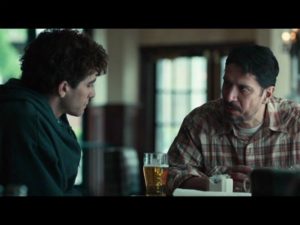
Arredondo is played by actor Carlos Sanz, who told that he and Gyllenhaal did not meet before they filmed the scene, to heighten the authentic feelings of uncertainty. “We agreed that Jake and I wouldn’t interact until we did this scene so we didn’t rehearse it at all. I was outside the bar, it was really early and David Gordon Green comes out and he says ‘How do you feel about just shooting this thing?’ And I said ‘let’s do it.’ so when I walk in and I say to him, ‘Carlos,’ and he says, ‘Jeff,’ that’s the first time we actually connect. It had this kind of real organic quality to it that I think you’d really feel, at least I did on the day. This particular type of scene is so intimate that you feel like you’re in that third chair, you feel like you’re almost sitting at that table.”

He spoke about his audition, and how he prepared to tell the film’s most emotional story. “What’s interesting is that when I got the audition and I looked at the scene in particular I couldn’t get through it. Every time I started reading it I would get halfway through the scene and I would be just like, ‘Oh my God, this poor guy,’ and it took me quite a bit of time just to put together this idea of who this guy was. When I went to the audition my goal was just ‘don’t break down like you did in your office.’ I managed to get through the whole thing and I just put my head down and I let a little sigh of release out and when I looked up everybody in the room was crying and I thought. ‘Well, that’s how you do the job.’”

“I spoke to David Gordon Green quite a bit mostly just about trying to keep it very real and grounded and centered.” He watched Arredondo interviews to get the accent right, but declined to meet him before shooting. “I did meet him I think it was the last or second to last day I was working in Boston but I didn’t want to meet him beforehand because it felt like I had a firm grasp on who this guy was and I didn’t want to do an impersonation. When I met him he was such a sweet, sweet man that I think it might have changed what I ended up doing….For me, mostly I always feel like every character I play is me. It’s a different part of me, it’s a version of me and what I have to find is the truth and the reality of every single moment. For this particular character I think the real connection was that love you have for your children and then when they’re gone the kind of devastation and the kind of fortitude that you have to have as a person to overcome that. I felt that there was not a moment in this thing where I didn’t really connect. So for me it was easy to latch onto every aspect of this character’s persona. We did the scene a myriad of different ways and each time it was more powerful. There were obviously different types of takes but the take that eventually makes the movie is probably as close to what we got at the audition than some of the other stuff that we did.”

He says that playing Carlos affected him as a person as well as an actor. “I kept thinking about how there’s a kind of a strength in caring and taking care of others. That’s what this guy is saying and that’s what he’s doing and that was his great lesson in his life and it reverberated for me when I was dealing with my mom and my brother and my family after my father died because I sort of have that role in my family. I remembered that and it’s interesting because now it’s sort of life imitating art and it is a part of who I am now.”

Originally published on HuffPost.

Related Tags:


Actors Interview
Stephen Frears and Ali Fazal on “Victoria and Abdul”

Stephen Frears and Ali Fazal on “Victoria and Abdul”

Posted on September 25, 2017 at 11:09 pm

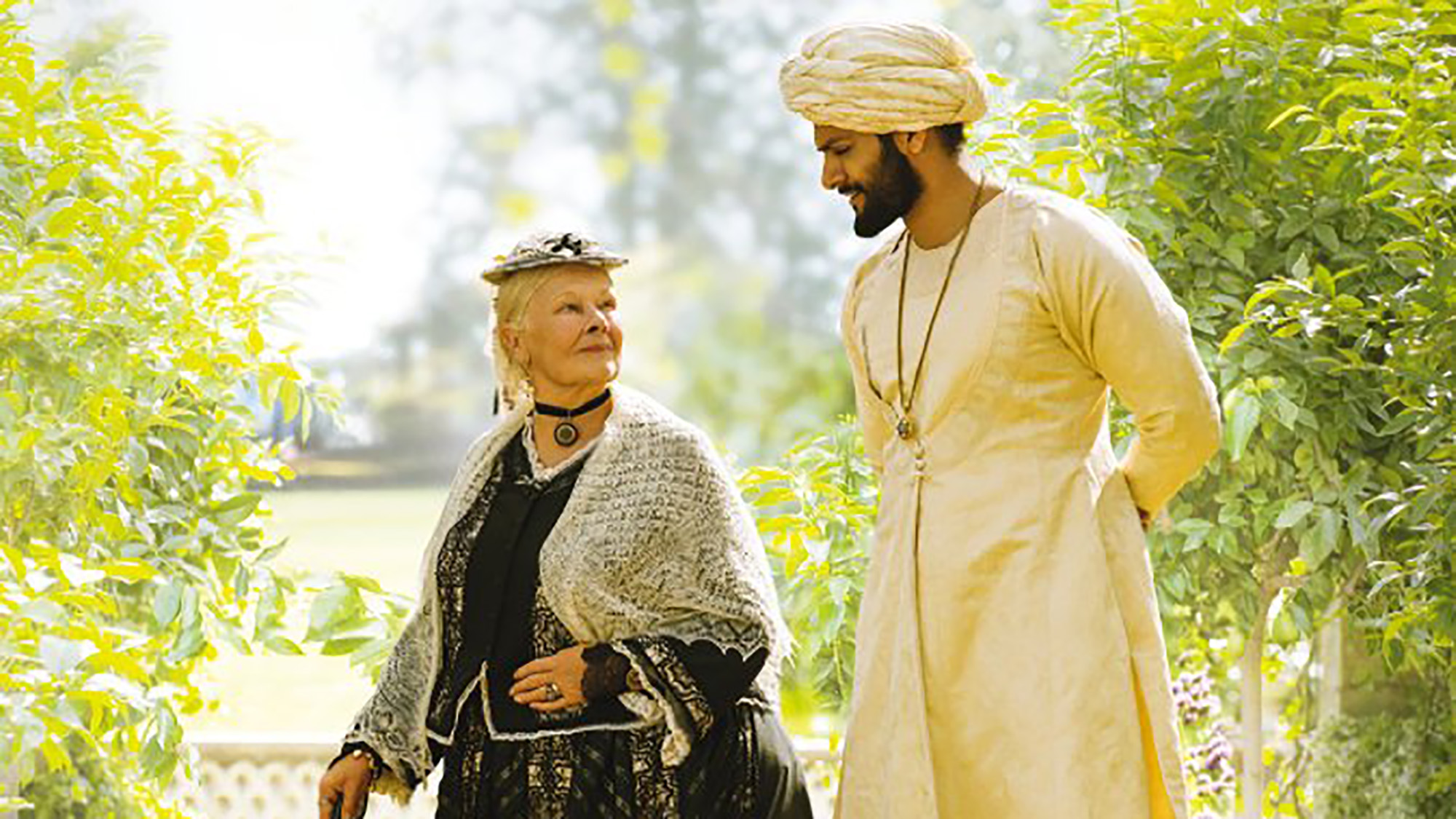
I spoke to the director and co-star of the new film, “Victoria and Abul,” based on the real-life story of Queen Victoria’s last friendship, with the Indian man she called her “munshi” (teacher).

At rogerebert.com, Stephen Frears said there was one aspect of Victorian times he’d like to have now:

Confidence. In Britain we were very, very wealthy. We were very secure and very confident. Nowadays everyone is so neurotic; the country is so neurotic. We were robbers and thieves, though, so the confidence would have been nice but unfortunately it was all based on imperialism. Very, very tricky; never have an empire.

And he explained why he had to have a native of India to play the part of Abdul.

There are a lot of Indian actors in England, Asian actors in England but you couldn’t get that sort of wide-eyed quality. We hired an Indian casting director and I went to Bombay and a bunch of Indians came in to see me. When Ali came in, by the time he left the room I said, “Well, I can see why she’ll like him.” It was really as simple as that.

For the Motion Picture Association of America website Where to Watch, Ali Fazal talked to me about the magnificent costumes.

Oh God, I loved all of them. Every time I got into something, it was almost like what do we have on the menu today? That would be the sort of marvelous majestic-looking wardrobe and costume that I had. Consolata Boyle is truly a genius when it came to the authenticity of costumes that I wore, of course my particular favorite was the one he wears in Florence the scene where we’re dancing together. I give her a lot of credit for how I was able to flesh out the scenes. It’s the costumes that really tell the passage of time and the progression. So it was a really, really intimate journey that Consolata and I had over the costumes in this film. So yeah I’m very, very deeply attached to my costumes, every single thread and the buttons and the hooks and the Angrakhas and everything.

And what he hopes people will see in the film:

I think as clichéd as it sounds, it talks of love and hope and they’re the most abused words on the planet right now. We’ve tried war and politics and diplomacy and none of it really works. I really hope people see that, that in the middle of all that chaos there was something like that, this relationship that existed. It can happen today.

Related Tags:


Actors Directors Interview

Ed Skrein Turns Down a Mixed-Race Role

Posted on September 1, 2017 at 11:54 pm

Ed Skrein (the bad guy in “Deadpool”) agreed to play Ben Daimio in the new “Hellboy” movie. But when he found out that the character is half Asian he turned down the role, saying he did not think it was appropriate for him to take the part. “Representation of ethnic diversity is important, especially to me as I have a mixed heritage family. It is our responsibility to make moral decisions in difficult times and to give voice to inclusivity. It is my hope that one day these discussions will become less necessary and that we can help make equal representation in the Arts a reality,” he wrote.

On one hand, there is the view that any actor should be able to play any part. But given the extreme disparity in the treatment of minority actors, that should not apply until as many non-white, female, GLBTIA, and disabled actors are being cast in any part that does not specifically rely on being a cis-gender white male. We salute Skrien for taking this position and hope it shames the producers into hiring an actor whose ethnicity is consistent with the character he is playing.

Related Tags:


Actors Race and Diversity

Movie Accents — Erik Singer on Actors Playing Real People

Posted on August 25, 2017 at 8:00 am

I am always fascinated by accents, in real life and in movies and I love to hear people who can switch from one to another. I was most recently very impressed with the Appalachian accents in “Logan Lucky,” especially Daniel Craig.

In this video from Wired, dialect/accent/linguistics expert Erik Singer talks about actors who take on one of the most difficult challenges of all, “ideolects,” not just a regional or class-related accent but the specific way a particular individual speaks, from Steve Jobs and Muhammad Ali to Ray Charles or Jacqueline Kennedy. We know the way these iconic figures sound. It takes a very talented and dedicated actor to get the details so right that we barely notice and can just focus on the performance.

Related Tags:


Actors Behind the Scenes Understanding Media and Pop Culture
THE MOVIE MOM® is a registered trademark of Nell Minow. Use of the mark without express consent from Nell Minow constitutes trademark infringement and unfair competition in violation of federal and state laws. All material © Nell Minow 1995-2026, all rights reserved, and no use or republication is permitted without explicit permission. This site hosts Nell Minow’s Movie Mom® archive, with material that originally appeared on Yahoo! Movies, Beliefnet, and other sources. Much of her new material can be found at Rogerebert.com, Huffington Post, and WheretoWatch. Her books include The Movie Mom’s Guide to Family Movies and 101 Must-See Movie Moments, and she can be heard each week on radio stations across the country.

Website Designed by Max LaZebnik