MVP: Josh Gad

Posted on December 1, 2013 at 8:00 am

Josh Gad is a highlight of “Frozen” as the adorable Olaf, a snowman who loves warm hugs.” It is the fourth of his very impressive performances on screen this year. (We won’t speak about his awful television series, “1600 Penn.”) Before that, he starred in the Broadway hit, “The Book of Mormon.”

This year, he also played a sex addict in “Thank You for Sharing,” and computer nerds in “The Internship” and “Jobs,” where he was Steve Wozniak. He always brings a lot of sensitivity and humanity to his characters and never lets them be caricatures or stereotypes.

http://www.youtube.com/watch?v=gdM2IggdwjQ

Coming next year — he will be in Zach Braff’s “Wish I Was Here.” Can’t wait.

Related Tags:


Actors

Interview: Antonio Vargas of “Silver Bells”

Posted on November 30, 2013 at 3:59 pm

antonio and bruceAntonio Vargas plays an angel-like character who changes the life of a type-A father in Silver Bells.  He talked to me about how he broke into show business  and singing in the airport with his co-star and fellow 70’s television icon Bruce Boxleitner.   He’s best known for playing the street-smart Huggy Bear in “Starsky and Hutch.”  The movie premieres tomorrow, December 1 on UP TV, at 7pm, 9pm and 11pm ET.

Tell me about your character in the film.

I play Major Melvin Lowell of the Salvation Army and he’s a little bit like the ghosts in “A Christmas Carol” or the angel in “It’s a Wonderful Life” because he takes this other character, Bruce Dalt, on a journey, and he comes out on the other side with an appreciation of giving through humility and giving the new eyes to see the benefits and the spirit of Christmas.  He’s very much the connector, like Huggy Bear was that connected between Starsky and Hutch.  Major Lowell is connector between Bruce’s old life like Scrooge and the spiritual sense of purpose.  It was a fun role to play.

Bruce said the two of you really bonded and had a great time on the set.

Yes, we did between having dinner or traveling together to and from the set.  It all started when we arrived together in an airport together in the blizzard.  And we sang and spent the time, I think it was almost two hours, to get to our location and that was the beginning.  And then every day, it’s sharing the same dressing room and just about the work, being a seasoned veteran that he is, and for me after 40 years to be working with him and leading these young actors, and accepting responsibility.

It’s a very important message for families, isn’t it?  Why is it people lose sight of what’s important in the holidays and get caught up in the external craziness?

It’s a lot of social peer pressure and, again, losing sight of what the essence of Christmas is about.  And for somebody like Bruce Dalt to be one of those — I’ve been around football dads and soccer dads with so much vested that they lose sight of what it’s about.  It’s about the young person having an opportunity.

Bruce is so driven in his own self that he fails to see how he’s missing the point.  And that’s what happened at Christmas.  The commercializing of it and the pressures that puts on people to have instead of knowing that it’s about what we give.  People have a tough time getting through that and it just reminds you that the meek shall inherit the Earth so I really get it when people go down and go to a soup kitchen and try to get some of the commercialism out of Christmas.  

How did your family celebrate Christmas when you were growing up?

Well I come from meager means in New York but there was still a sense of innocence.  If we got one thing, it was great.  My dad was at the Department of Sanitation.  He was a garbage man.  He picked up trash around New York.  It was dignity.  And I was one of eleven children so we knew about hand-me-downs.  And government milk, and I always said, “When I grow up, I’m going to have butter because we always had this margarine.” I grew up in the projects in New York where there was a sense of family, where people looked out for each other and someone could admonish someone else’s kids if they were wrong and we had to respect your elders.

What was the first acting job that you got paid for?

The first thing I ever did was a movie called “A Cool World” with my mother’s urging at 14, I tried out in this film about gangs sort of like West Side Story but this was set in Harlem.   And I remember I made $20 a day and first check number was 127.  I think I made $60.   Three days and I loved it.  Here I was going to the movies, RKO in New York, and I would see Cary Grant, John Wayne, and all these people up on the screen.  And to think that I was going to be up on that screen like that, it created such a hunger in me that I could get out of self and I found a family of artists that felt different like I felt.   These feelings and an opportunity to express them, it was such a liberating experience and because the times, coming out of the hippie generation, Vietnam War, and all these things that were happening to music and all.  I mean it was just a very, very rich time.  Then from 14, I got into a play called “The Amen Corner” which went to Europe, and ended up working for The Beatles, Manager, Brian Epstein. My parents had to go to high school to get my diploma on graduation because I had to be in Vienna for the opening of the play.  I bathed in the River Jordan on my 18th birthday in Israel.

Wow!

It’s just been a phenomenal ride and then to culminate as of 2013, with a Christmas themed story for television.  It’s wonderful, feels wonderful and right where I’m supposed to be and I so pleased to get an opportunity to share the gifts that I got, and to put those into motion and something that resembles a spiritual story for the people and to give hope to people because you don’t always get to choose.

Related Tags:


Actors Interview

Interview: Bruce Boxleitner of “Silver Bells”

Posted on November 30, 2013 at 8:00 am

Bruce Boxleitner stars in Silver Bells, premiering on UP TV tomorrow, Sunday, December 1st at 7pm, 9pm and 11pm ET.  It is the story of a Type A, very competitive dad who wants everything his family does to be the best, including Christmas.  He talked to me about his own family’s Christmas celebrations and making the movie in a small and very cold town in Michigan.

Are you at all like your character?  Are you kind of a pushy guy when it comes to holiday celebrations?silver_bells_inline_v2

I was more so in the past when my kids were younger.  I always felt the enthusiasm to make the most out of Christmas for my kids and decorating and all that comes with that.  You want to keep that alive with them as long as possible.  They’re all grown up young men now so they realize there’s something fishy about Santa Claus, but we would all love children all their lives to believe in Santa Claus.

What kind of holiday celebrations did you have growing up?

Well, my mom was very just sort of classic, with the anticipation when you set up the tree the week before and then you wait for that much anticipated evening.  We had Christmas carols playing all the time on the little hi-fi.  That’s how old I am, all the Andy Williams, Frank Sinatra, all those kinds of classics.  And of course there was baking going on.  I have my mother and three sisters so they always have their Christmas cookies and pies and stuff.  And then on Christmas day, when you’re up before the sun and got everybody up, you just couldn’t wait.  I don’t think that ever changes whatever generation.  We had opening of presents and celebration all day and then we went up in my grandmother’s farm for a big Christmas dinner with everybody.

Are there any special holiday movies that you try to watch every year?

I love Christmas movies.  That’s why what attracted me to “Silver Bells,” the way it had a similar theme to “It’s A Wonderful Life” with Jimmy Stewart.  I think that’s everybody’s favorite.  It’s always been my favorite.  I’m still at tears at the end.  They’re not the same, but this one also has redemption in the end, redeeming himself in the eyes of his son, and his wife, and daughter, and ultimately his community after he humiliated himself.  And the Anthony Vargas character was sort of his angel.

Also I love “A Christmas Story.”  I had that rifle Every kid in the 1960s did.  “Be careful.  You’ll put your eye out!”

Tell me about making this film, working with the other actors.

You instantly form these relationships.  Long winter days after in Manatee, Michigan, that’s the town, and was perfect.  It looks like it’s right from the 30’s or 40’s.  I blessed with actors who had a lot of chemistry and were all professional and know what’s required.  I have grown sons, my boys so it wasn’t hard to play the father of a teenage boy.  It wasn’t hard to look at Kenton as my own son.  I think you just sit around and in between sets and stuff and we all have the same cold.  And this was a low budget film so there weren’t a lot of frills involved.  We all huddled together under the service tent in the cold in our parkas.  So when you have those kind of adversities, when there’s something like that, where none of us were from there, we all had that bonding right there.

I love working with everybody and the kids are my family but I especially got along with Antonio Fargas.  We just got on because we like old rock music, blues music, and Dylan, and Elvis, and all those things so that bonding was right away.  He and I would sing, try to stump each other and sing songs on the way to location. And we all would go to the hotel at night and have dinner.  Yeah, we did.  Those are the things that we do that bonds us together to see that chemistry in the film.  

When families watch this movie together, what do you want them to talk about afterwards?

How you’ve got to take the time to enjoy the people in your family, that precious, precious time before everybody split up and go to their way in life.  And I think that my character appreciated that he didn’t get the credit, someone else did, and the satisfaction that comes with that.

Related Tags:


Actors Family Issues Holidays Interview

Interview: Tatyana Ali of “Home Again”

Posted on November 26, 2013 at 3:51 pm

tatyana-ali-home-again-movieTatyana Ali stars with CCH Pounder in the heartbreaking drama Home Again as Marva, a young Canadian mother deported to Haiti without her children. She talked to me about taking on a role so different from her work on “Fresh Prince” and “Elmo in Grouchland.”

How did you become involved with this project?

I was actually sent a script and it came as an offer which is interesting because usually, you get offered things that are similar to other parts that you’ve played before. But this one is a completely different character and also a totally different kind of story than what I’ve been used to telling.  When I got it, I called my agent and I said “Did they make a mistake? Is it Marva that they want me to play or is it another character?”  I just fell in love with her and with the script. It was a really beautiful, really thoughtful script.  I personally wasn’t even aware of the deportations that have been going on, even though my family is from the Caribbean. And then speaking with Sudz Sutherland, the director, that’s what sealed the deal because he is really brilliant. He and his wife, Jen took years to put the script together and to compile the real life stories. I just knew that there was going to be a lot of care put into telling the story.

Of all the characters in the movie, your character suffered the most visceral, personal, terrible things happening. How do you prepare yourself for that kind of anguish?

It took me a while to kind of figure her out. Having Caribbean ancestry, that part of the story, I understood. I’ve been around stories all my life from my aunts, from my mom, from my dad. I feel like I know what it’s like to feel like a stranger in a strange land, to come somewhere and not speak the language and know the culture, not knowing where you fit, to be even made a pariah in certain instances.  The hardest thing for me was being a mother because I’m not a mother. I have friends who are moms, I have a great mom and a great grandmother.  That was so central.  Marva’s entire journey is to bring her children back to her.  That is the kind of love that forces her out of her own shell, it forces her to have to stop being naïve and to become strong and gain courage. That’s all because she needs her children. For her, it’s like losing her legs.  So that was the hardest work I feel like I had to.

There’s a particularly brutal scene of sexual assault by Marva’s uncle.

Paul Campbell is such an amazing actor.  We kind of ran into each other in the lobby of the hotel we were all staying in, I think the first thing we got there. And immediately, he was like “Let’s have tea. Let’s sit down. Let’s talk…” And he talked about the scene. Luckily we didn’t shoot it until 3 weeks later but by the time we got to that space, I knew the crew, I knew we were all telling the same story, I knew Paul and I just felt really safe.

What do you want people to talk about on their way home after seeing this film?

When we were shooting the film, this debate is still going on even in California. It’s happening all over the world but I think it reminded me of what was going on in California. It reminded me of the talks that politicians had and that people had at their dining room tables about immigrants.  Your children stay because they’re Americans and you have to leave. There’s something barbaric about that and about our policies.  We’re not looking at people, we’re looking at people work, and making our decisions based off of that. I would hope that after seeing this film, I hope that it does shed light on that and that it allows you to walk in these characters’ shoes. And then when it comes time to like capture votes or state your opinion at the table somewhere when you’re talking to somebody, you actually bring up the human factor. I think that’s a really powerful part of this story. And that was the filmmakers’ purpose in telling you the story. It’s to bring a kind of blood to it and let people realize these are real people.

I was particularly moved by your performance in the scene where you explained kind of how you got into that mess.  I think we can all relate to the idea that when you love somebody, you’d do anything for them when you trust them. 

That scene was actually really, really important to me. I felt like that was in that scene, Marva switches from victim to somebody who can actually be a hero and somebody who can actually control her own destiny. Even though she’s telling the story about being duped, of being tricked into carrying illegal stuff across borders, she admits her own guilt.  That’s the first time that she really takes responsibility and for me, that’s like the turning point in her story. After she takes responsibility, she can really control her destiny and really be strong.  Being in this film changed me, like it took me someplace that I’ve never been before and I’m not the same after it. So now, I’m kind of like, “Oh, I want that again.”

Related Tags:


Actors Interview

Interview: Steve Coogan of “Philomena”

Posted on November 22, 2013 at 3:59 pm

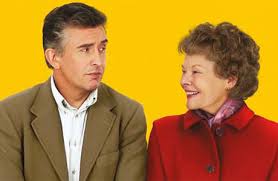
Steve Coogan co-wrote and stars in “Philomena,” based on the true story of an Irish woman searching for the son she gave up for adoption fifty years earlier.  As an unwed pregnant teenager she was sent to a convent-run home.  Her son was taken from her and adopted by an American family.  A journalist whose background was in political reporting and had never done a “human interest” story helped her find out what happened to her son.  Coogan plays Martin Sixsmith, the journalist, and Philomena is radiantly played by Dame Judi Dench.  Coogan and I chatted about his real-life experiences with Philomena and Dame Judi.

I saw in the New York Times that you are a fan of the classic British comedy Kind Hearts and Coronets.

I like it because it’s very, very British. Knowing that in cinema today, the Americans are all pervasive, and even if you make good films, if your film won’t work in America, then it’s not going to work, period. And it’s nice to do films that work in America not because you’ve made it like that but because it just happens that it’s going to work there. It’s one of the films that I watch on a rainy afternoon. It has a kind of soft twinkle in its eyes. It’s about a man murdering all the people in line between him and the Duke. And the idea that you actually like that man. It’s just a real achievement to make an audience like this pompous man. Somehow it’s like counter-intuitive. And there’s this dark humor and it’s funny, it has this sort of mischievousness.

Tell me about taking on the challenge of both a true story and a book, and adapting it into a movie.philomena
I was involved in a lot of comedy, and frequently comedy is is smart, but is also cynical. It seems to me that so many movies these days have a streak of cynicism in them. But it’s like that’s for the masses and you can’t have an intelligent movie that says something constructive and sincere. And sincerity seems to me, is in very short supply in films. The cynicism and irony, if you like, is a refuge, actually, ultimately, it’s quite a cowardly thing. I wanted to see if I could do something that’s the most avant-garde thing you can think of. The only 4 letter word left, that is, a profanity is the word “love.” And I really want to do something, a film, that there was about something sad and tragic, but I want to do something that added without something pretentious, added just a little, a tiny amount to the sum total of human happiness, rather than something that is bleak.

To me the most powerful moment in the movie is when she says “I forgive you” and your character says “I don’t.”

My background is I was raised a Catholic. A very large family. I’m not religious now, but the values that I was given for my background from people who are still religious in my life are important to me. I don’t think there’s a contradiction but to me this is a duality and I wanted to challenge my own cynicism this way through the movie. And also in my anger toward the church as an institution, I didn’t want to castigate people of simple faith. My parents are people like that. I respect them. They are good people. My parents’ foster children, they are very kind, good people basically, but all have their faults, they’re not perfect but they’re basically good people. I wanted to dignify those kind of people. All these scandals that have engulfed the Catholic Church in particular, sometimes, I’ve forgotten that it’s all those ordinary people, unremarkable people who lead quiet dignified lives, and they are not sexy. Through Philomena, I want to dignify that. I want to show both sides, show some balance. I spoke to Philomena, I spoke to Martin, to find out where they were coming from. I put a lot of myself into Martin. Philomena’s character, we exaggerated the comedy of her, she’s a little bit eccentric, but not as quite as dirty as the Philomena in the movie. That was cranked up a little. And there were a lot of old Irish women like that, so I don’t mind the audience being, sometimes you can leave the audience at the dark and invite them to judge her the way Martin judges her.

She keeps surprising you which is one of the lovely things in the film. She seems very parochial and with narrow experience but she is quite open and frank about the prospect that her son might be gay.

I saw some comments that were saying, she wouldn’t be so laid back about Martin being gay. I asked her to her face, “Did it bother you?” She said, “I was a nurse. I worked with a lots of guys who were gay. It didn’t really bother me. And in fact I kind of thought he might have been.” So it was like, “Okay, I’ll put that in the story.” And I also said to her, “Do you forgive them for what they did to you?” That’s where I got the idea of, and I said “Do you forgive them?” She said, “Yes I do. Her daughter sat next to her and said, “I don’t.” And I thought that was really interesting. If you’re very pious in the sights of others, you can’t demand that everyone forgives everyone. It’s not a thing you can prescribe, it’s up to individuals. But I always thought the audience would not be in the mood and so I had to give them a moment and that when Martin’s very angry. But also, it’s a conversation and it’s in the ebb and flows that I wanted Martin to show that the other conversation we’re having is not just about those who are religious and those who are non-religious but also the idea of intellect versus intuition and to show that how very important learning and enlightenment are. I want to show that even with all that intellect, he still learns something from the intuition of an old Irish lady.

And here you are in the road again, as in your wonderful movie The Trip.

That was just accidental, I didn’t realize that there’s a lot of scenes with me and Judi in a car. It was kind of accidental really. But what was good was it meant that they were forced to be together.

In my state as a writer, you sort of get bored with just writing comedy for its own sake. It’s very enjoyable but it’s a visceral pleasure, comedy. It’s really enjoyable and you get it right, it’s great, you laugh, and all these endorphins, it’s wonderful. But actually, I just thought, I want to talk about something that is about something. Why can’t I do something that’s about something of substance, and put comedy in it because I think reality is more like that anyway. People laugh at funerals, they do in the wake, or they talk about people, they want to laugh. They are talking about the person who has died, they tell funny stories about him, it’s totally human, it’s not an odd thing. You always see funerals in movies, everyone’s dressed in black, and always very somber, and they walk away with umbrellas. Actually people in wakes they don’t stand there in the rain, people laugh.

To me it was not completely real or truthful. But I also knew it was a way of making a film serious about, more palatable and not worthy to talk about things of substance, doesn’t mean you have to go “oh boy, do I have to do that now?” It’s like when you look at a menu of movies these days, you think I want to watch that film but…I want to make that films that I should go out to see. A film I want to go and see.

I also saw a similarity to your other film this year, What Maisie Knew. Once again, you’re playing someone who knows he can be an insensitive cad.

I like to do work which has the potential to fail. That almost, by definition, that makes it interesting. Rather than I have to do this easily. I always don’t know how to do that thing, of doing a character who has total integrity. Which is, I mean people like Harrison Ford, he’s not going to do something despicable just because of the baggage he carries. And George Clooney certainly has that, doesn’t he? But I don’t know, I actually think that’s harder because it’s more interesting when you’re trying to struggle, trying to conceal something or trying to project something. It’s to get teeth more into it.

Who else did you talk to in researching this script?

I also had to talk to some nuns when I retraced Martin’s steps. I went to the Abbey and spoke to the nuns who were there and I used that as a basis for some of the dialogue. And also, I watched some footage of Anthony with Philomena which she hadn’t seen before. I sat down in Martin’s house and she reached over to my hand and started crying because she hadn’t seen this footage. She grabbed my hand and said “I did love him you know.” And I put in the movie.  She does to Martin when they’re in a salad bar, she grabs his hand, and says “I did love him” when in fact she did that to me. I kind of lived a little bit of the movie myself.

What is it like to work with Dame Judi Dench?

I was scared through whole thing. I went to her house and read her the story. When I told her the story, in fact early on, when she just answered the door, and I was on my way up to my place in the country. She made me a cup of tea and after she sounded very excited and she offered to make me a sandwich, and she made me a sandwich for my long journey. And then I drove off, then I came back a few months later with the script. When I went back to writing process after to that, I said, “Jeff, look, we might have to use less writing for her.” So we put scenes in and I remember saying to Jeffery, “We don’t dialogue here. We just need her face, with the cameras close in on her face looking at the last time she saw her child, Judi Dench’s face will do everything.  Let’s use her, you know, we got Judi Dench, you need to use her, let’s not waste her.”  So that’s wonderful, knowing I’d be acting it with her.

I thought could probably pull this off. But there were certainly question marks from other people. No one else is going to give me; I wouldn’t be in this part without producing it so I’m going to give it to myself. That’s for start there. I thought, “Yes, well there’s a chance I could fail, there’s a chance I could be blown off screen by this hugely charismatic woman.”

I was nervous on one level but spending time with her on set, she had very good sense of humor. I have a Porsche sports car and she was more interested in looking at my sports car and going oh isn’t it cool and sexy. She has a sporty BMW soft top. She drove me for a pub lunch in her convertible sports car. Which I thought was as close as I was going to being James Bond.  She’s not precious and she’s very self-effacing and able to laugh at herself and mischievous but dignified at the same time. On the set, I was making her laugh all the time.

And also, I saw her struggling. At one point she told me, “Give me a note, give me a note, give me a note. What do you think about what I’m doing?”  She was totally open to it. She challenged me on some of the words sometimes. She made a really good observation, a very subtle one where I wrote a line when  she’s talking about her son.  In the dialogue, I wrote, “I always knew he was sensitive little soul.” She said, “You’d say that about someone else’s child.  You wouldn’t say ‘he’s a sensitive little soul’ about their own child. They’d just say ‘he was a sensitive little boy’. Soul is slightly distancing.”

And I said “Oh yeah you’re right, you’d say that about someone else’s child. ‘Oh he’s a sensitive little soul, isn’t he?’ You’d say that about someone else, you say that about your own child.” I thought “that’s really, really subtle, but actually true” She was totally game for stuff. Even now, it’s just a thing I can’t quite believe I did it and was able to counterbalance her in some small ways, that I provided a foil for her.

Although of course, it’s slightly daunting, far worse than to act with someone who couldn’t act. Because then you have got nothing.  What she’s doing is raising your game all the time because she happen to bring your A game. So it’s an atmosphere. All I’m doing to her is just reacting. All I do is react to what she’s giving me. So she’s giving you gifts all the time.

Related Tags:


Actors Interview
THE MOVIE MOM® is a registered trademark of Nell Minow. Use of the mark without express consent from Nell Minow constitutes trademark infringement and unfair competition in violation of federal and state laws. All material © Nell Minow 1995-2026, all rights reserved, and no use or republication is permitted without explicit permission. This site hosts Nell Minow’s Movie Mom® archive, with material that originally appeared on Yahoo! Movies, Beliefnet, and other sources. Much of her new material can be found at Rogerebert.com, Huffington Post, and WheretoWatch. Her books include The Movie Mom’s Guide to Family Movies and 101 Must-See Movie Moments, and she can be heard each week on radio stations across the country.

Website Designed by Max LaZebnik