Joseph Gordon-Levitt met with a small group of journalists to talk about the film he wrote, directed, and stars in, “Don Jon.” Gordon-Levitt, who has appeared in edgy independent films (“The Mysterious Skin,” “Brick”), teen romances (“10 Things I Hate About You”), ambitious, big-budget special effects films (“Inception,” “The Dark Knight Rises”), and prestige dramas (“Lincoln”), began acting as a child, first appearing in the popular sit-com “Third Rock From the Sun” when he was 13. His grandfather was also an actor-turned director whose films included the classics “Cyrano de Bergerac” and “Pillow Talk.”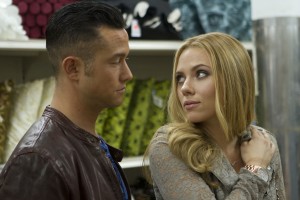
In “Don Jon” Gordon-Levitt plays Jon, a New Jersey guy who prefers pornography to real relationships, indeed to pretty much everything else. He starts dating Barbara, played by Scarlett Johansson. “This is a guy that everything has to be in the right place. He has very rigid expectations of what a man is supposed to look like and the hair is certainly part of that. And he keeps control. So he has got a pretty extreme version of it, and a lot of gel in his hair. Both the Jon character and the Barbara character are people who are very intent on fitting into the conventional idea of what a masculine man is supposed to be and what a feminine woman is supposed to be. They are both very concerned with their looks and they put a lot of effort into their looks. They use their looks to get what they want, and are disappointed with life because if you are so busy trying to fit yourself into a mold, you’re going to miss what’s actually beautiful about life, which is what makes people unique, not what makes everybody the same.”
Jon, Barbara, and many of the other characters in the film struggle to find a way to connect. “Everything in Jon’s life is sort of a one-way street. He is not connecting or engaging with anyone. That goes for the women in his life, that goes for his family, his friends, his church, even his own body. It’s an item on a checklist. He doesn’t listen; he just takes. At the beginning of the movie, he is finding that dissatisfying because there’s the sequence where he brings a young lady home from the bar and he is comparing her to this checklist that he has got of what he likes to see in a pornography video. Obviously, a real human being is not going to map onto that because there is a fundamental difference between a human being and an image on a screen. So he looks for what can satisfy him. The first thing he tries is the sort of conventional moral high ground: what your parents would want you to do, what his parents would want him to do – which is find the prettiest girl in the room and make her your girlfriend, your quasi-wife. So he does that and he follows all the rules and does what he is supposed to do. But he is still not satisfied because, again, if he is just doing what he is supposed to do, if you are just fitting into the mold, you’re not connecting. They don’t listen to each other. They are not really paying attention to who each other is. They are sort of projecting onto each other what they think the other is supposed to be. And she is doing it to him just as bad as he is doing it to her. I want to talk about how people treat each other more like things than like people sometimes and how media can play into that. And I guess this comes from my own personal experience of growing up working as an actor. Actors in our culture do get stigmatized and treated like objects on a shelf sometimes. But I don’t think it’s just actors; I think everybody experiences this. I’m sure you all have. I have, you have. You are talking to someone and you can tell they are not listening. You can tell they have already decided what you are and put you in a box with a label on it. This is what I was trying to make fun of. And I do think that the media contributes to that. That’s where I came to the idea of a relationship between a young man who watches too much pornography and a young woman who watches too many romantic Hollywood movies. They’ve both got these unrealistic expectations that they’ve learned from these kinds of media that they consume and it leads them to objectify people or to not connect. That’s the origin of where it came from.”
He talked about what he learned from the directors he worked with and how he used three different styles in this movie to create different moods. “The year leading up to shooting Don Jon, I worked with Rian Johnson on “Looper” and Chris Nolan on “Dark Knight Rises and Steven Spielberg who made “Lincoln.” So I had a lot to go on. I was certainly watching carefully. But I’ve always loved watching. I spent my whole life on sets. I started working when I was six. I’ve always paid a lot of attention to what directors have done and what everyone else has done: what they are doing over here in the camera department or how they put together the set or what the script supervisor is up to, all those notes that they take, how is it, what is that. I really like being a part of that team, being a part of something larger. I really wanted this movie to have a flair to the filmmaking. Especially comedies, it seems, often stay pretty conservative and just leave the comedy to the writing and acting and the rest of the filmmaking is very standardized. I didn’t want to do that. I wanted the filmmaking to reflect what was going on with the character and the evolution of the character. We divided it into three acts, which is the standard story structure in a 90-minute movie. In the first act, when you meet Jon and his kind of world, the camera was all very kinetic, a lot of camera movement. The cutting was really fast and the music was all made of these big shiny synth sounds. Then, in the second act, once he is getting involved with the sort of traditional romance, the cameras are on dollies a lot. There is a lot of sweet, gentle movement. The cutting is very traditional Hollywood cutting, Frank Capra/Steven Spielberg-style classic Hollywood editing style. And the music is classic Hollywood orchestra. And then, in the third act, when he is broken down and starts to get more curious and break out of his mold, the camera is almost all handheld, there is a lot less cutting, and the music gets really sparse and it is just played on a few guitars. So that was the idea to have the filmmaking move along with the evolution of the character.”
He especially appreciate the support he got from Christopher Nolan. “I told Chris that I was going to direct a movie, and he, first of all, was encouraging. And that, just in itself, just him saying, ‘That’s great, I think you would be good at that.’ And taking it seriously really meant a lot. He would start asking me important questions like, ‘What kind of budget are you going to have? How many days are you thinking about, ballpark? Where are you going to shoot?’ He asked me if I was sure I was going to act and direct at the same time, which is funny. Several journalists on this tour have said, “I heard Chris Nolan told you not to act and direct at the same time.” No, not at all. That’s not what he said. He just asked a question. People love to print negativity. He was really supportive. He even came on the set one day. We shot one day at the Warner Bros backlot and he was mixing sound for “Dark Knight Rises” at the time and he came by. He didn’t have to do that. That meant a lot. It goes to show why a lot of people really love working for him and he really cares about people that work for him. That’s why people do a really good job for him, I think.
“Rian Johnson was also super-encouraging. Rian was the first guy I showed my first draft of the script. Up to that point no one else had seen it. I was just writing this thing alone. I thought it was good. I was having fun writing it; but you never know sometimes. You can lose perspective. So him saying that, ‘I think you have something here. This feels like a movie. You have a complete story. I get it’ was encouraging. He also had important feedback and plenty of notes. But just him giving me the go-ahead was really a big turning point for me.”
These days, most movies are made digitally, but Gordon-Levitt worked with film. “First of all, it actually is easier to shoot on film at this budget level. It is not a micro-budget movie, but it’s a low-budget movie. This is like half the budget of “500 Days of Summer” and probably like a tenth of the budget of the lowest-budget movie that a studio like Warner Bros would make. So shooting on those professional digital cameras is expensive. You need more tech, you need more crew, you need more time to set up, they are harder, they are more complicated machines, they break more often, etc. So there were actually a lot of practical reasons to shoot on film and the cost of developing the film and buying the film stock is outweighed by the cost of all that other stuff that comes along with like the digital cameras. But also, I still think it looks different. Look, digital cameras have come a long way and they look gorgeous. There are some movies that are shot digitally that I think look amazing like “Life of Pi” last year, one of the prettiest movies that came out. You could tell it wasn’t film. It looked great. But I wanted to shoot this one on film. I wanted it to have that classic look of like ‘this is a movie with a capital M.’ It’s a movie that is about movies and media. So I wanted it to really send all those signals, like this is a movie. Yeah, I always wanted it to be on film.”
The title is a reference to the literary character Don Juan, an elegant, sophisticated man famous for seducing many women. But Jon lives in suburban New Jersey. “I don’t think it’s singular to any particular place or culture. He is Don Juan. Don Juan is an old classic literary figure. I did want to make it just a normal guy. I’m from the suburbs of LA and New Jersey is the suburbs of New York. I didn’t want to set it in like a cosmopolitan affluent setting where a lot of romantic comedies are set in Manhattan and London. I wanted it to be like normal, middle-income, suburban America because I think everybody knows people like this. We all are to a degree people like this.”
One challenge Gordon-Levitt took on and handled with exceptional grace was the depiction of the pornography. He had to find a way to indicate what Jon was experiencing without distracting the audience. “There are clips that are licensed from real pornography videos but very carefully selected, cut, cropped, and worked into very highly stylized sequences with voiceover and music and lots of cutting. The idea was to try to get inside his head, not to show you from an objective standpoint what it looks like. I think that would really be awkward and kind of dark. I wanted to make an entertaining comedy. It’s really more about getting inside of his head. So you don’t really see it. It’s all really close-up and it’s more about kind of his point of view. And he is an unreliable narrator. He is sort of assessing the situation the best that he can and telling how he sees it; but I think he is wrong at least as much as he is right. That was how I felt like we could approach it in a way that wouldn’t be alienating for people because it be funny and snappy and entertaining, and again, putting you inside the head of this protagonist.”
Another challenge was the portrayal of Jon’s sister, played by the very talented Brie Larson, who appears to be texting throughout the film and never speaks until the end. “She didn’t talk, but she is listening. She is in those scenes, and a crucial part of those scenes. We talked all about her character. The backstory we came up with was: here’s a girl, a young woman who is three steps ahead of her brother even though she is the younger sister. This evolution that you begin to see Jon start, I feel that’s an evolution that she probably went through when she was like 16 or something. She realized, ‘You know what? My parents expect me to be this, I’m not that and I’m out of here. No one listens anyway, so why should I talk? So that is my feeling about that character…but she is listening, and that’s the thing, and we talked about that. We didn’t want her to just be like, ‘Oh, the ditsy girl is always on her phone.’ I feel like she is talking to colleagues about something they are working on or something like that. That’s an input/output device. That’s not just a one-way street. We talked about Buster Keaton and how much you can do without saying anything. And I think she does. She kills it. Even before she speaks, she is crucial in those scenes.”
Gordon-Levitt cast his 1994 “Angels in the Outfield” co-star Tony Danza as Jon’s father. “That was a blast. Tony is such a good-natured, sweetheart of a guy which was funny having him play this character because Jon’s dad, Jon senior, has a short temper. He doesn’t listen to anything his family says and he is sort of a lecherous dude. It doesn’t come naturally to Tony because on screen, his instinct is to be likeable because that’s just how he naturally is. So I kept having to tell him like, ‘No man, I like you too much, you have to be willing to be a little less likeable’….But if the dad character was just a demon, it would be off-putting. I think he still has to have that charm and that’s important.”
His HitRecord collaborative production venture has just announced a new partnership with the Pivot channel. “I have really grand, fanciful ambitions for all sorts of things that aren’t ready to be articulated probably yet. I’m just a very grateful man. I have been doing this for a long time. On the one hand, I never necessarily thought that I would have such fortunate opportunities. But on the other hand, I have got to say that part of doing well at anything, I think, is believing that you can do it. I always had parents that told me I could, told me I was good at what I was doing and supported me with what I was doing. I think you have to have that balance between the humility of not being too full of yourself; but on the other hand, believing in yourself and recognizing. There is a quote that I think is attributed to Nelson Mandela. He said that our light is more frightening than our darkness because if you look at the darkness within yourself, you can make excuses and shirk the responsibility of having to do anything and say, ‘Well, I’m not capable.’ But if you recognize the powerful light that is in yourself, that we all have within ourselves, that’s scary because with that light comes a certain responsibility to live up to it and do something. I love that quote. I think about that a lot. I don’t know, I might be avoiding your question or something. I guess my answer is you ain’t seen nothing yet.”

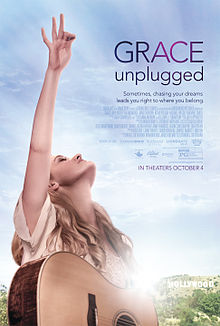 AJ Michalka stars in “Grace Unplugged,” the story of a girl who wants more out of life than singing with her church’s worship band. When she has some success as a pop singer, she has to decide whether secular success is as meaningful as a life using her gift to praise God. I spoke to AJ, best known as half of the sister duos Aly & AJ and 78Violet about playing Grace.
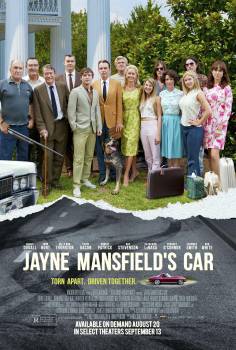
 . She has also provided the voice for characters including Barbie in the “Toy Story” movies, Weebo in “Flubber,” and Helen of Troy in Disney’s “Hercules: Zero to Hero.”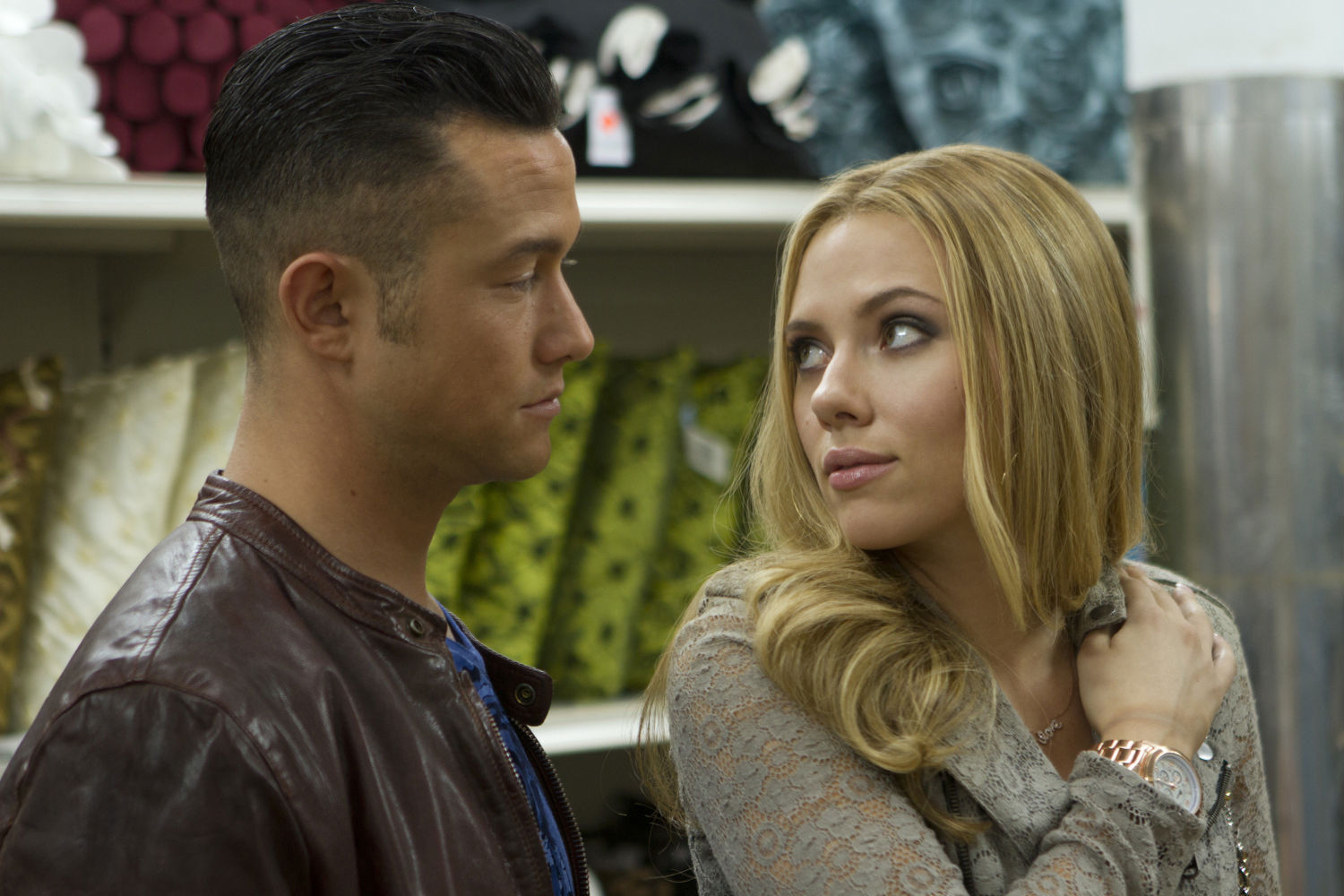
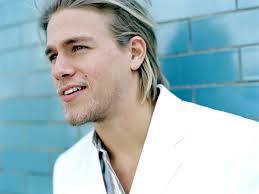

 is soon to be a movie, starring Dakota Johnson as literature student Anastasia Steele and Charlie Hunnam as billionaire Christian Grey. The book began as “Twilight” fan fiction and with its two sequels has become an international sensation. Dakota Johnson, best known for the short-lived television series “Ben and Kate” and for vivid and confident work in small roles in “The Five Year Engagement” and “21 and Over,” is the daughter of Don Johnson and Melanie Griffith. She is currently filming Shakespeare’s “Cymbeline” with Ethan Hawke and Milla Jovovich. Charlie Hunnam was most recently seen in “Pacific Rim” operating a giant robot. His roles have been exceptionally wide-ranging, from Victorian England as the title character in
  and as outlaw motorcyclist Jax Teller in
  .
.