Interview: Cuba Gooding, Jr. of “Lee Daniels’ The Butler”

Posted on August 16, 2013 at 3:58 pm

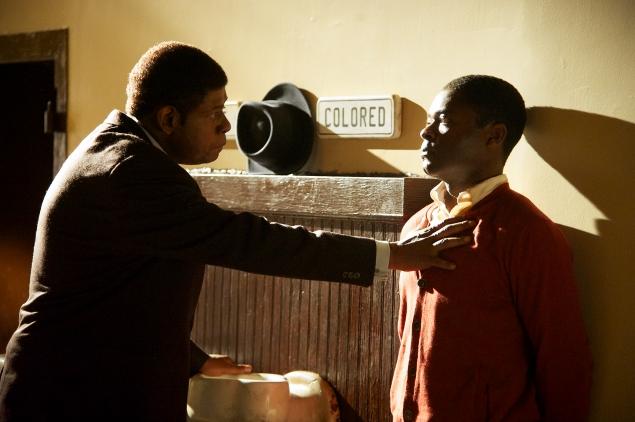
the_butler cuba gooding jrI spoke to Oscar-winner Cuba Gooding, Jr. about his role in “Lee Daniels’ The Butler” as Carter, a colleague and friend of Cecil, the character played by Forest Whitaker.

My favorite scene with your character is when you had to post bail for Cecil’s son, Louis.

The whole idea behind it and reason I was so attracted to this screenplay was that it is an expose of the times all the way back from slavery to the inauguration of Barack Obama, and specifically the turmoil of the era after JFK and Martin Luther King were assassinated.  There were different thoughts about how best to respond to racism.  One was the view of Martin Luther King, Jr. mindset that we should be seen as accessible and approachable and lead by example, and the other more aggressive frame of mind, the “by any means necessary” views of the Black Panthers and Malcolm X.  What’s beautifully expressed in this movie is how it doesn’t alienate people but shows these two approaches in a way that’s accessible and open and un-opinionated.  That’s what makes Lee Daniels such a brilliant director.  I always say to him, “If Spike Lee did this movie, no one would see it.  He would have had his opinions and his personal beliefs encroaching on it.  As a gay, black filmmaker, there is so much truth in his life that Lee’s willing to expose.  There will be raw and uncomfortable moments because he does not know anything but the truth.  And in that scene, you have Carter, a butler who is forced to wear a certain face to those around him, dignitaries, he has to be professional to the nth degree.  Louis is trying to find his way with a more aggressive stance. But he knew he could come to Carter because they had a relationship.  My character is there to show that even though they had to act in a particular way, they had to be representative of something they were still human.  That is a very humanistic scene, so people can identify that this is a family with very real issues.

Yes, your character had an upstairs face and a downstairs face.

I fell in love with the idea of doing this script when Lee sent it to me five or six years ago.  This is a powerful, encompassing tale of what African-American men have been dealing with since the formation of this country.  I’m a huge fan of boxing and I have studied the history of pugilism.  When Jack Johnson was the first black heavyweight.  He was dominating boxers.  He was only looking to fight white boxers because they wouldn’t fight him.  When they finally did get rid of him, they looked for any opportunity and finally found it.  It took 40, 50 years for another black champion to come along because it was like “we’re not going to have that scenario again.”  And then came Joe Louis.  Was he any less talented or ferocious?  No.  But he knew he had to act different to be accepted.  He was the polar opposite of everything Jack Johnson did.  That’s what makes this movie great.  You have these butlers who have to be “invisible in the room — the room should feel empty with them in it,” as it says in the script.  That is their job.  And then there are the locker room scenes, which are full of life!  You see that these were living, breathing, powerful men.  And that is why being in this film has been such a blessing.

That’s one of the reasons the first scene with Richard Nixon is so meaningful — he comes into the kitchen, the private, backstairs, backstage space.

My favorite scene!

What do you hope the teenagers and  who are too young to remember the 60’s and 70’s will get from this film?

There’s such a disconnect with today’s youth in understanding the atrocities that happened on American soil.  That’s how “Django Unchained” can be a huge hit because they aren’t identifying what it really meant to be a slave, to watch a man rape your wife and allow it to happen.  This next generation of kids will be making decisions for us and they’re not up to date on understanding the past.  It’s horrifying to me.  I want people to talk in the car on the way home — about the love story or about the freedom riders or about the politics. As long as they’re talking, we know we did our job.
Related Tags:


Actors Interview

Interview: David Oyelowo of “Lee Daniels’ The Butler”

Posted on August 16, 2013 at 8:00 am

butler oyelowoDavid Oyelowo (“Red Tails”) plays the son of the title character in “Lee Daniels’ The Butler.”  Louis is a rebellious young man who becomes deeply involved in the 1960’s and 70’s struggle for equal rights, first through sit-ins and voter registration and then with the Black Panthers.  His estrangement and reconciliation with his father, a White House butler, is the heart of the film.

Your character aged over decades and you seemed very specific about the choices you made in showing that the character was getting older. 

When Lee Daniels approached me about playing the role I was very clear that I really wanted the opportunity to play it all the way through.   Early on, he was thinking about splitting it with a younger actor.  But I had played Henry VI on stage, and he goes from age 14 to his sixties.  I learned just how much you can depict through the eyes, the body movement, what’s going on emotionally.  Even moreso on film than in the theater because you have the eyes, the small gestures that indicate a wealth of experience or a lack of that.  I had to employ more technical aspects over the three month shoot.  I would sleep for 10 hours the night before I had to play a teenager and I’d sleep four or five hours when I had to play older.  I’d go to the gym to shed weight very quickly to play the younger character and I’d eat a lot of salty food and drink a lot of water that bloats me out to play the older character.  All of those things help as well.  But when you have a good script that goes to the heart of what a character’s going through at any time that helps with the details.

How did you and Forest Whitaker, who plays your character’s father, work together to develop that relationship?

We didn’t spend a lot of time talking through it as that was appropriate because what you’re seeing for a lot of the movie is a disconnect.  The generational divide manifests because they are both products of their environment.  He grew up in the South and grew up with lynching and saw his father shot before his eyes.  That’s entirely different to my character’s experience, a middle-class upbringing, and my life by comparison is a lot nicer.  But the inequality that we both suffered, the injustice that is intrinsic to American society is undeniable and something that we both feel a need to fight but in very different ways.  We both felt a need to just trust that as we go on very separate paths, the payoff is going to be at the end of the movie, a shared appreciation of each other’s journey toward what was effectively the same goal.  It was that butting of heads internally that led to the combustive elements that led to bringing about irrevocable change, that internal argument about what it is to be a man, a woman, a human being in America regardless of the color of your skin.

You are from Great Britain and much of this happened before you were born.  What did you do to research the era?

You name it, “Eyes on the Prize,” many books.  One of the great things about the era is that it is in living memory for lots of people who are able to be very articulate about it.  The resources personally for me as an actor were infinite.  Can one person really go through all those things?  Yes, there are people who were at the sit-ins and rode on the bus and went into politics.  My character is a composite but he represents the experience of real people.


Related Tags:


Actors

Interview: Kirk Cameron on “Unstoppable”

Posted on August 13, 2013 at 3:59 pm

Kirk Cameron is one of the leading figures in faith-based and inspirational entertainment.  For the first time he has taken on the role of producer for a film he calls his most personal project.  It is the story of his own journey to discover the answer to one of the central questions of faith and indeed of human existence: Why do bad things happen?  The film is called “Unstoppable,” and it will be shown in theaters on a special one-night event on September 24. The trailer was initially misidentified as spam on YouTube and Facebook. After protests from a couple of million people, they apologized and put it back up with full access and, according to Cameron, “tickets are flying off the shelves.”

Cameron was nice enough to talk with me about “Unstoppable” and about his new project to help fathers guide their sons to manhood.

Is this a documentary or a feature film?  It’s kind of mysterious.

Cool, I like mysterious!  That’s great.  People think of documentaries as dry, informational, fact-finding kinds of stuff.  This is similar to what I did last year, “Monumental,” a journey with an exciting story, lots of artistic re-enactments of things that have taken place.  It delves into the question: Where is God in the midst of tragedy and suffering?  Why does God let bad things happen to good people?  We’re discovering the answer to that question in a documentary, but it is done in a very dramatic, action-packed narrative story.  It’s hard to slip it neatly into either one of those categories.  I just call it my new film.

You’ve called this your most personal project ever.

It is a personal journey and I know it will be for everyone who watches it, not because I know everyone but because it is a universal question.  It is in the top five questions in the world for everyone, atheist, Christian, Jew, Muslim, Hindu, Buddhist, everyone is rocked by this question.  Where is God in the midst of tragedy?  If He can heal me, why doesn’t he?  Is He not listening?  Is He not there? Are the atheists right?  This is personal for me.  We’ve been volunteering for 25 years at a place called Camp Firefly, for children who are seriously ill.  My own family members are experiencing tragedy.  I have skin in the game.  I have a horse in this race.  I want to understand why my 15 year old friend Matthew died. That sent me on this personal, transparent journey, to his funeral, to his burial, and then back to the Scriptures to understand the character of God, a God who would flood the world, who would pronounce a death sentence for the human race, who would allow tragedy and suffering, who would allow his own son to die on the cross and still say He is a God of love, mercy, and grace.  I want to understand that.

Where do you begin?

I did not call Deepak Chopra, Rick Warren, Oprah Winfrey or any of the go-to guys for a lot of folks .  I didn’t just want an academic answer to the problem.  I can do that.  I can solve the problem of evil logically, rationally, philosophically, theologically.  I can wrap an atheist up in a bow and put him up on a shelf if he thinks I will question my faith with an argument like that.  But that doesn’t solve the heart-crushing pain of a mother who is watching her child die of cancer.  I wanted to take a journey into the heart and character of God and the only way I know to do that is by reading the book that He wrote, where He tells us the hows and the whys, going back to the Garden of Eden and the very first tragedy.  That was not a fairy tale in a cartoon book.  These were people making choices, and this is when tragedy and pain and fear entered the world.  Then a brother murders a brother and then a whole culture becomes wicked and corrupt and God flooded the world and started over with a new man and a new woman and a new family and a garden and a promise that God would fix and change all of this.  And that takes us to Moses, and then to Christ, the crucifixion and resurrection and then the destruction of the temple in Jerusalem.  I’m taking a narrative story approach to this God who allows pain and suffering and steers all of it, to use what He hates to accomplish what He loves.  All of this will work to the good for those who love Him.  Ultimately, my authority is the Holy Bible.  Everyone else is second banana.

What do you hope to accomplish with this film?

I want to do it this way so that everyone will watch it together, same night, same time, and then let the conversations begin, with atheists, believers, people from all different backgrounds.  I hope people come out of the theater and say, “I love God!  He is good and I can trust Him!  He never takes His hand off the wheel, even though I am experiencing trials at the moment.”  I want people to ask “Why?”  Some people say you shouldn’t ask, or it’s not ours to ask.  But if you don’t ask the questions, you miss out on the faith-building answers.  The whole Book of Habakkuk would not have been written if she had not asked the question “Why?”  It begins “Oh God, why do the heathen rage?  Why is it that the wicked seem to prosper and Your people seem to be buried under tragedy?”  It’s a fantastic book that starts with the question, “God, where are You?  Why is this happening?”

How has being a dad influenced your feelings about these issues?

When you’re a teenager, you can say, “I love kids; I want to be a camp counselor.”  When you have kids of your own, you say, “What did I let myself in for?”  But there’s this deepening of love and compassion as a human being when you’re a parent because you’re responsible for this little soul.  They look to you for everything.  They trust you.  They depend on you.  When my friend called and told me that his 15-year-old was lying in the bed, dying of cancer and saying, “Daddy, can you fix me?” the only thing he could say was that God was the only one who could heal him.  He could say, “I’m praying like a wild man that He will, but He knows what’s best.”  As a father, that shreds you up.  This has affected me very deeply as a father.

Tell me about the Boy’s Passage, Man’s Journey project.

It’s a plan to help fathers make a plan for transitioning their boys into manhood. The subtitle is “Destination: Manhood.” Ask your husband, “When did you become a man?” Some will say when they moved out of the house, or got married, or became a dad, or joined the military. A lot of guys don’t really know when they became a man; they just slid into it sometime in their 30’s. In a lot of other cultures, there’s a marked time, a very significant moment, usually in the community of other men. In our culture, we don’t usually have that. Kids sometimes do that by being initiated into a gang or fathering a child outside of marriage as a way of proving their manhood. This is a way for fathers to help their boys become men in a positive way.


Related Tags:


Actors Interview

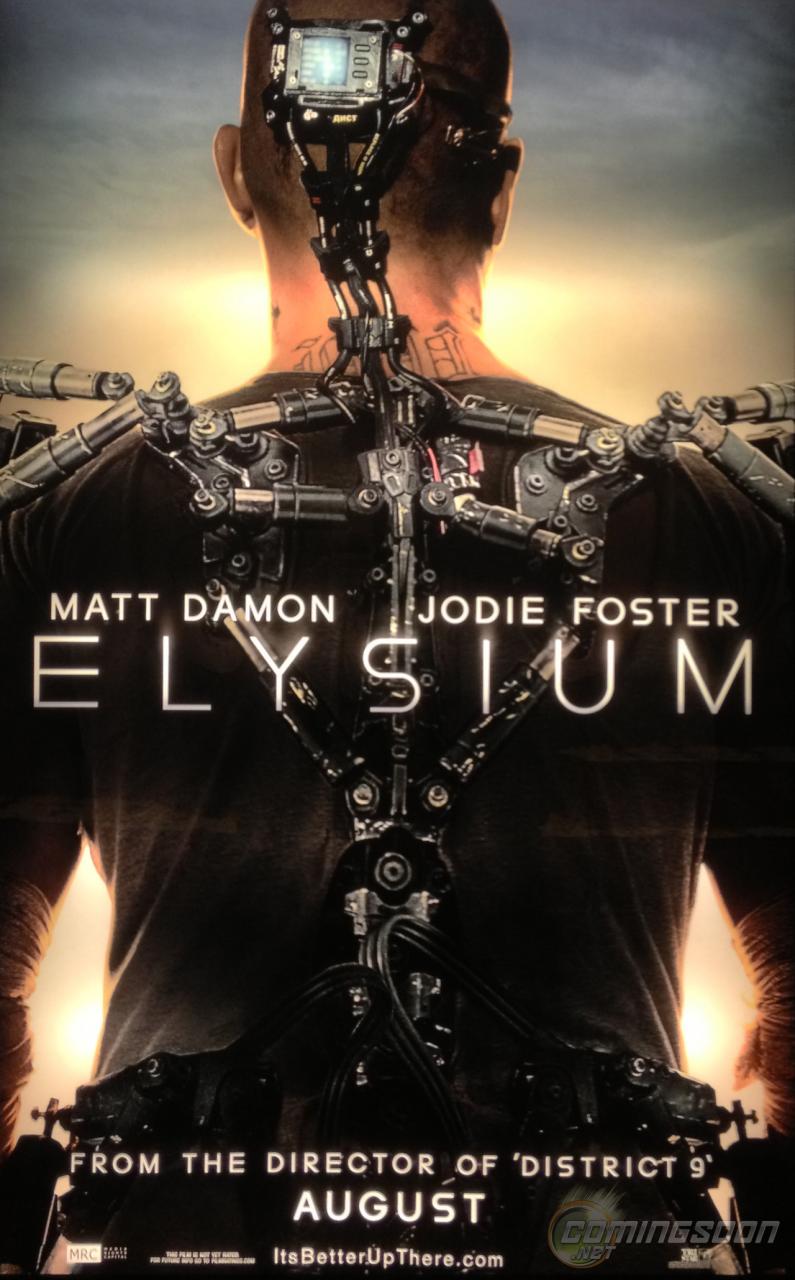
Interview: “Elysium” Villain Faran Tahir

Posted on August 9, 2013 at 8:00 am

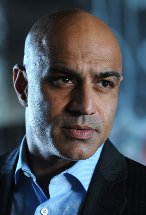
Faran Tahir comes from a family of actors.  He was born in Los Angeles to Pakistani parents and studied theater at UCLA and Harvard.  He has appeared in “Star Trek” and “Iron Man” and on the television series “Warehouse 13.” He talked to me about playing a bad guy (who happens to be the President) in today’s release, “Elysium.”

You play the President in this movie!  That must be pretty cool.faran tahir

Not a bad thing to play, right!  To be the leader of something.  The way I look at any character is, “Can the audience, can I connect to the character?”  You always build from that essential connection, making the person as human as you possibly can.  When I was living with this character, I didn’t want to put the label of “good,” “bad,” or “evil” on him.  I wanted him to be more of a person and let the audience decide where he lies in their minds and in the heart of the story.  He is a politician so you needed to see nuance and have an angle of this politicking in dealing with issues.  So that’s how I see it.

Whoever the bad guy is, he or she thinks that they’re completely justified in what they’re doing.  Their actions might be perceived as bad, but to them, they’re natural.  That’s just what they do.  The challenge is how to step into those shoes and see the world from that perspective.  Your own personal values and inclinations might play a part in it, but you do have to put them on the shelf for a little bit and just see the world from those eyes.  That’s the beauty and the challenge of acting and that’s what attracts me — to see the world from someone else’s perspective.  You learn a lot, and not just from the bad guy, just to see the world from a whole new set of eyes.

Was there a lot of green screen in this movie?  What kind of a challenge does it create for an actor to know that whatever you are interacting with will be added later by a computer?

There was nothing but green screen!  It’s very exciting because you don’t know what the final product will look like.  So your imagination is working overtime to create all that in front of your eyes as much as they will later.  To me, that is a lot of fun.  My background is in theater and that extends itself to that kind of acting because on stage you don’t have everything in front of you.  If you’re playing in “The Tempest,” you have to create that storm yourself to convey the emotions of the character.  It’s when you walk on the set that the green screen is most apparent to you.  But when you get into the reality of the character, it doesn’t make any difference.  You’re just playing the scene, the emotion of it.  A person standing and just watching  — it might look very odd.  But when you’re in the scene, it’s a non-issue.  You are given some idea of how it’s going to look and technically, you are told, “Look over here, look over there, that’s where it’s going to be,” and you take it from there.

Elysium-PosterYou are working with an exciting and visionary director, Neill Blomkamp.

Neill is a genius.  He has amazing vision, an amazing quality of taking hot-button issues that are current to us right now and setting them in the fictional zone so we all can examine them from all different angles.  As a director, you know he knows where he wants you to go, what the vision of the film is, but there’s this amazing laid-back quality and he lets you organically find your character.  He gives the trust to his actors that they will get there. He is there to guide you and stay true to his vision, but there’s never any shoving down his version.  He lets you find your reality and your truth and for an actor that’s an amazing gift.  He has an affinity and a connection to actors that is amazing to watch.

You’ve played a lot of villains.  Who are some of your favorite movie villains?

Robert De Niro in “Taxi Driver.”  He did some horrific things but there was a connection that you had with this guy, an amazing feat for someone to pull this off.  He took you on the journey.  You knew he was not a good guy but you trusted being led by him on that journey.  That is genius, both De Niro and Scorsese.

What do you want people to talk about on the way home from “Elysium?”

This movie has something for everyone.  If you’re looking for science fiction, it’s there.  If you’re looking for action, it’s there.  But the thing that I want people to be talking about is the way it raises some interesting and important issues and I’m hoping it sparks that conversation.  No matter what side of the argument or issue you fall on, it should spark a debate.

What was it like to grow up in a family of performers?

Our dinner time conversations were sometimes about sports and all of that but a lot of time about literature, television, theater and all that.  And it got heated.  We all had our point of view all points of view were listened to at least.  But they also had a very practical, pragmatic approach to the business of performing. There was the other side.  When I wanted to become an actor, they did not try to dissuade me but their question was “Why?”  They wanted to prepare me for the ups and downs of this life, how to handle success and the failures and disappointments.  As a parent, you don’t want your kids to be broken people.  There was a nice mix of dealing with the creative side and the practical side.  My parents told me to be my own best critic.  You will know when you have done a good job, a decent job, or a bad job.  Listen to your own inner voice.


Related Tags:


Actors Interview

The New Dr. Who: Peter Capaldi

Posted on August 4, 2013 at 2:41 pm

And the new Dr. Who is…Peter Capaldi, most recently seen in “World War Z” but perhaps most memorably seen in “In the Loop,” as the purveyor of the most impressively, explosively, excoriatingly profane tirades of invective ever put on screen. And that includes David Mamet. I will always remember him fondly as the sweet Scot from “Local Hero.” I look forward to his portrayal of the Time Lord.

Related Tags:


Actors Television
THE MOVIE MOM® is a registered trademark of Nell Minow. Use of the mark without express consent from Nell Minow constitutes trademark infringement and unfair competition in violation of federal and state laws. All material © Nell Minow 1995-2026, all rights reserved, and no use or republication is permitted without explicit permission. This site hosts Nell Minow’s Movie Mom® archive, with material that originally appeared on Yahoo! Movies, Beliefnet, and other sources. Much of her new material can be found at Rogerebert.com, Huffington Post, and WheretoWatch. Her books include The Movie Mom’s Guide to Family Movies and 101 Must-See Movie Moments, and she can be heard each week on radio stations across the country.

Website Designed by Max LaZebnik