
Pride

Posted on December 22, 2014 at 6:00 am

A-
Lowest Recommended Age: High School
MPAA Rating: Rated R for language and brief sexual content
Profanity: Very strong language, some crude
Alcohol/ Drugs: Drinking, smoking
Violence/ Scariness: Some peril and violence, bullying and harassment
Diversity Issues: A theme of the movie
Date Released to Theaters: October 9, 2014
Date Released to DVD: December 22, 2014
Amazon.com ASIN: B00OY7YNKI

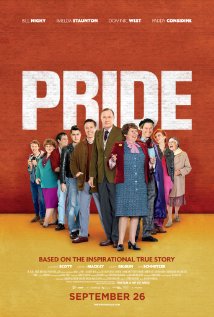
The ingredients for this film were so irresistible that it is a unexpected bonus to find that it is so much better than it needed to be.

It’s based on a true story of extraordinary kindness, generosity, and friendship and it stars a bunch of adorable English actors (Imelda Staunton, Bill Nighy) who could read the tax code out loud and make it cuddly and uplifting.  But it is also very smart, very touching, and very timely, and one of the best films of the year.
Copyright CBS Films 2014

Prime Minister Margaret Thatcher imposed a system of market-based economic changes that created massive upheavals, depicted in films like “Billy Elliot,” “Brassed Off,” and “The Full Monty.”  The miners were on strike from 1984-85 after the Thatcher government announced that it was shutting down many of the coal mines, and it was a bitter, angry time.

It was also the early stages of gay pride.  And one young activist, Mark Ashton (the enormously charismatic Ben Schnetzer) sees a connection between gay pride and the miners.  They have a common enemy.  He sets up something called Lesbians and Gays Support the Miners, and gets a couple of friends to join him in collecting money to help the miners on strike.

But most of the miners groups turn him down.  Only one responds, a group in Wales.  Their leader Dai (Paddy Considine) comes to London to pick up the money LGSM has raised, and his thanks is genuine and very moving.  “When you’re in a battle against an enemy so much bigger and stronger than you, to find out you had a friend you never knew existed, well, that’s the best feeling in the world.”

They invite the LGSM to visit, and the welcome ranges from warm to a bit stiff and uncomfortable, except for one woman who calls them perverts and tries to get them thrown out.  As one might predict, there are scenes of gay men dancing and cute country folk asking questions (“Is it true that all lesbians are vegetarian?  I heard that at the covered market!”).  And one of the local guys sheepishly asks one of the London gay men for a dance lesson to impress a girl.  There’s also a guy who’s not out to his family.  And, as time passes, the spectre of a far worse scourge than Thatcher will shift the focus of the gay pride movement to AIDS.

But for a brief moment, there was a connection that grew from a common threat to a unity of purpose to understanding and real friendship.  The final section is a reminder of how much difference we can make and how much that difference is needed.

Parents should know that this film has some mature themes and strong languages.  Characters drink and smoke and there is some peril and violence.

Family discussion: What did the gays and the miners have in common?  What groups seeking dignity and justice can you help?

If you like this, try: “The Full Monty,” “Brassed Off,” and “Billy Elliot.”
Related Tags:


Based on a true story Comedy Drama DVD/Blu-Ray Pick of the Week GLBTQ and Diversity Politics

List: YA Books About Coming Out and Same-Sex Relationships

Posted on November 23, 2014 at 4:41 pm

My good friend Sandie is my go-to for YA literature as she is not only very knowledgeable but also very insightful, with superb taste. As a part of her series of books that explore issues of diversity, understanding, and identity, she has put together a list of the best YA books that explore LGBT issues. This is of course especially important for adolescents because that is when they first begin to try to understand their own sexuality and that of those around them. Most LGBT kids grow up in cis- and gender-confirming homes. So the opportunity for them to find characters in literature who can make them feel understood and less alone is vital. Many thanks to Sandie and the rest of Teen Lit Rocks for this resource.

Related Tags:


Books Gender and Diversity GLBTQ and Diversity

Dear White People

Posted on October 16, 2014 at 5:25 pm

B+
Lowest Recommended Age: Mature High Schooler
MPAA Rating: Rated R for language, sexual content and drug use
Profanity: Very strong language including racist terms
Alcohol/ Drugs: Drinking, drug use
Violence/ Scariness: Tense confrontations
Diversity Issues: A theme of the movie
Date Released to Theaters: October 17, 2014
Date Released to DVD: February 2, 2015
Amazon.com ASIN: B00OMCCJIS

dear white people2Before I turn to whitesplaining this film, I will begin by suggesting that you read what Aisha Harris at Slate and what my friends and fellow critics Travis Hopson and Stephen Boone have to say first. If I did not have enough humility before seeing the film about my ability to provide some insight into a movie about racism, the best evidence of the power of the film’s message is that I have more now — and that I recognize it might still not be be enough. I liked the film very much and want to encourage people to see it, so I am going to weigh in with some thoughts and hope that if they come across as disrespectful or ignorant, it will lead to some good conversations and, I hope, to greater understanding.

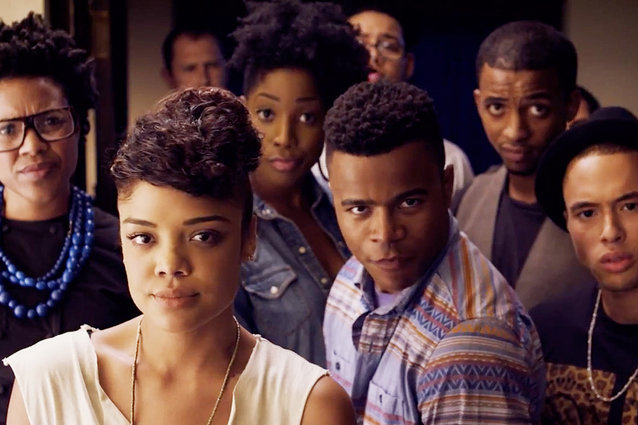
The focus is on four African-American students at an Ivy League school called Winchester University. Sam White (a biting but layered performance by standout Tessa Thompson) is the host of “Dear White People,” a controversial radio program with stinging, provocative commentary along the lines of “Dear white people: The official number of black friends you are required to have has now been raised to two. And your weed man does not count.” Coco (Teyonah Parris) is an ambitious woman who wants to be selected for a new reality TV series, even if that means creating a fabricated backstory and becoming more confrontational. Troy (Brandon P Bell) is the handsome, accomplished BMOC (and son of the dean) who says he has never experienced prejudice and is under a lot of pressure from his father to succeed. And Lionel (Tyler James Williams) is something of a loner because he feels he does not fit in with any of the rigid categories of the campus hierarchical taxonomy. He is invited by the editor of the school newspaper to go undercover to write about race relations at the school.

Each of these characters’ identities and conflicts is represented in their hair. Sam has tight, controlled coils. Coco has long, straight hair. Troy’s hair is cut very close to the bone. And Lionel’s hair is a marvel of untamed frizz that seems to be a character of its own. Each of the characters will face challenges to his or her carefully constructed identity, and all will be reflected in changes of hairstyle.

The dorm that had previously been all-black is now integrated following a race-blind room assignment policy. Sam takes on Troy in an election for head of house, never anticipating that she might win. But she does. This leads to some changes, including a confrontation with the arrogant frat-bro Kurt (Kyle Gallner), son of the white President of the university and leader of the school’s prestigious humor publication. Kurt is the kind of guy who expects to be allowed to eat wherever he likes, even if he is not a member of the house. He also explains that we live in a post-racial world because Obama is President. And he thinks it is a great idea to plan a “ghetto” party, with white students dressing up as gangsta caricatures.

Just to remind us that, while the movie may have a heightened sensibility for satirical purposes, it is not outside the realm of reality, the closing credits feature a sobering series of photos from real “ghetto” parties held on campuses across the country.

It is refreshing, provocative, and powerfully topical, respecting and updating the tradition of “School Daze” and “Higher Learning.” It deals not only with questions of race but with broader questions of gender, class, identity, and the way we construct our personas, especially in our late teens and early 20’s. Writer/director Justin Simien has created a sharp satire with an unexpectedly tender heart.

Parents should know that this film includes very strong language including racial epithets, sexual references and situations, drinking, drug use, and tense confrontations about race, class, and gender.

Family discussion: Where do the people in this movie get their ideas about race, gender, and class? Which character surprised you the most and why? Do you agree with what Sam said about racism?

If you like this, try: “School Daze” and “Higher Learning”

Related Tags:


Comedy Drama DVD/Blu-Ray Pick of the Week Gender and Diversity GLBTQ and Diversity Race and Diversity Satire School
THE MOVIE MOM® is a registered trademark of Nell Minow. Use of the mark without express consent from Nell Minow constitutes trademark infringement and unfair competition in violation of federal and state laws. All material © Nell Minow 1995-2025, all rights reserved, and no use or republication is permitted without explicit permission. This site hosts Nell Minow’s Movie Mom® archive, with material that originally appeared on Yahoo! Movies, Beliefnet, and other sources. Much of her new material can be found at Rogerebert.com, Huffington Post, and WheretoWatch. Her books include The Movie Mom’s Guide to Family Movies and 101 Must-See Movie Moments, and she can be heard each week on radio stations across the country.

Website Designed by Max LaZebnik