Interview: Joseph Dorman of ‘Sholem Aleichem: Laughing in the Darkness’

Interview: Joseph Dorman of ‘Sholem Aleichem: Laughing in the Darkness’

Posted on August 10, 2011 at 8:00 am

The writer Sholem Aleichem was born Sholom Rabinowitz.  He grew up in a Russian shtetl. Today, he is most widely remembered as the author of the stories which became the basis for Fiddler on the Roof.  But a new documentary from Joseph Dorman (“Arguing the World”) called “Sholem Aleichem: Laughing in the Darkness” makes a case for the man who changed his name to Yiddish for “Hello Friends” as not just a teller of folktales but a major literary figure.  Mr. Dorman spoke to me about making the film, which is opening around the country.

Tell me how you became involved with this project.

I really stumbled onto it.  I am not a native Yiddish speaker, nor were my parents.  Yiddish was lost in my family between my grandparents’ generation and my parents’.   I finished my last film a decade ago, “Arguing the World,” and was desperately looking for a project.  A friend of mine, a professor of Yiddish literature at Rutgers, suggested doing something about Sholem Aleichem.  He had originally thought about doing a film himself, about Sholem Aleichem as a failed immigrant in America and he had curated an exhibit on that a few years earlier.  I thought, “I don’t know much about him, I know the name from Fiddler on the Roof.  This will keep me busy until I find what I want to do.”

But in a very short time it turned out to be what I wanted to do.  It moved from a way station to a destination. I spent the next ten years of my life working on it and falling deeper and deeper in love with Sholem Aleichem’s work and fascinated by his world.

Why is “Fiddler” all most people know about him?

Fiddler on the Roof should have its due.  It is a brilliant popular entertainment, kind of a miraculous adaptation in many ways.  He did his own theatrical adaptation and really focused on the Chava story .  “Fiddler” is entertainment, re-interpreted for its time.  It’s a classic comedy in a sense because everything is wrapped up neatly at the end.  Tevye is coming to America.  But at the end of the Tevye stories, it is a tragedy in the classical sense.  Tevye is homeless.  He doesn’t know where he’s going.  He’s like Lear.  His world drops out from under him.

What’s so fascinating about the Tevye stories is that he started them when he was younger and wrote them over 20 years.  His own experience informed them and they get deeper and darker as they go along.  They become a tragedy, something larger about the nature of man’s alone-ness in the universe.

http://www.youtube.com/watch?v=-Z6cJ2_RLdA

You were able to uncover some real treasures in your research.  What were some of your “Eureka” moments?

Because of the budget I did most of the research myself.  There are 300 photographs in the film and the bulk of them come from the YIVO Institute for Jewish Research.  It is a marvelous repository for Eastern European Jewish life, originally set up in Vilna between the wars, when the intellectuals of the time realized that the world of the shtetl was beginning to disappear.  I would go there and keep looking through there — half the reason for doing a film like this is to get a chance to look at the treasure trove of these photos.

There are a number of photographers.  One of the most remarkable was Alter Kacyzne.  He was a writer, a protégé of one of the other classic Yiddish writers, Isaac Leib Peretz of Warsaw.  He took photographs for the Jewish Daily Forward in the 20’s and 30’s.  Even then he was photographing in a nostalgic way for an audience that had been separated form it.  People didn’t want to see it as it looked at this moment.  They wanted to see the eternal shtetl.   Religious Jews are shot as they had been for centuries rather than trying to capture that moment in time.

Another man I don’t know much about is Menakhem Kipnes, who also has wonderful portraits.  The last great discovery — and it wasn’t my discovery — was that I found out through one of my interview subjects was about a series of photos from the expedition of an ethnographer called An-Sky.  He’s a remarkable figure, born in a shtetl, who became radicalized and a socialist.  He decided what he wanted to do most of all was to leave the shtetl and study Russian coal minders.   He moved to St. Petersburg, continued to be a writer and an intellectual, and it was probably the post-1905 pograms that radicalized him as a Jew.  He realized he needed to turn his talents toward his own people.  He realized that the shtetls were rapidly changing and so he organized ethnographic expeditions, recorded songs, and took along his nephew to take these remarkable, remarkable photos.  Until the last few years, they’ve been unknown in the West.  Now they’ve been published in a beautiful book.  They are some of the most beautiful photos in the film.  An-Sky was also the author of the famous Yiddish play, The Dybbuk.

I was so happy to see the involvement of Aaron Lansky of the Yiddish Book Center in your film.  I am a big fan of his book, Outwitting History: The Amazing Adventures of a Man Who Rescued a Million Yiddish Books.  

The sad irony of Yiddish and its fate in the modern world is at the very moment that writers like Sholem Aleichem were bringing it to its literary flowering, taking this thousand year old language which had been looked down on as a street language or a language for women, not working of intellectual vehicle or a vehicle for literature — that was supposed to be Hebrew — at the very moment that writers were using it in all its richness, that was also the very moment it was ceasing to be the vernacular of the Jews.  90 percent of Jews in the world at that moment were speaking it but that was beginning to change as the Jews were leaving the shtetls to go to America or the big Russian cities or to Palestine.  An amazing flowering was taking place over 100 years with Isaac Bashevis Singer at the end.  This remarkable literature was produced, but it has been by the bulk of Jews forgotten, not just lost in translation but in the movement of Jews but their assimilation into other cultures.  It’s a living language for Chassidic Jews, but not for anyone else.  What’s nice about what’s happening is that generations younger than mine are realizing what’s been lost and there’s kind of an upsurge now and younger generations are studying it and learning it and that is wonderful.  But it is not going to be a living language for secular Jews again.  What is important about what Aaron is doing is the importance of being able to read this literature in whatever language you speak.  Aaron is very committed to preserving those Yiddish books for Yiddish speakers but even more important is preserving Yiddish language and Yiddish culture whether you speak it or not.

We do speak it in a certain way because it is the ghost in our machine.  It informs even the English we speak.  One of the most beautiful things I heard was from a young Russian student who said, “It didn’t feel like I was learning Yiddish; it felt like I was somehow remembering Yiddish.”

In this film you make a strong case for Sholem Aleichem as not just a folklorist but a literary figure. 

He is the equal of a Chekhov or any other great writer.  This is top shelf world literature.  It does not have to be couched in cultural terms to make him an important writer.  Another irony that exists is that he was trying to reach not an illiterate but an uneducated audience.  He created a folksy persona so undeducated people could relate to him.  But very sophisticated literature.  The very success of that persona masked how sophisticated and intentional an artist he was.  He is thought of as a stenographer who wrote down what people spoke.  But he took what seems to be everyday language and transmutes it to poetry.  He is a great of world literature.  Comedy is deceptive.  If you laugh, how can it be serious?  But of course it can be.

The stories are very particular to their place but the themes have universal appeal.

There are stories about fathers and daughters all over the world.  There’s an annual yahrzeit, a memorial for Sholem Aleichem every year.  At the last one, there were five men from China who are starting a Sholem Aleichem research center in Shanghai.  As the Chinese leave the small towns for the big cities now, they are experiencing what he wrote about.



Related Tags:


Directors Documentary Interview Spiritual films
Interview: Brendan Wayne of ‘Cowboys & Aliens’

Interview: Brendan Wayne of ‘Cowboys & Aliens’

Posted on July 26, 2011 at 8:00 am

Brendan Wayne of “Cowboys & Aliens” is the grandson of movie legend John Wayne.  He talked to me about visiting his grandfather’s movie sets and acting and doing his own stunts in one of this year’s most anticipated blockbusters.  And it was a blast to compare notes with him on our favorite John Wayne films.

I’m so excited about your movie!

We’re in the same boat!  I love the story.  I love the mash-up of the two genres.  It’s a classic Western told the only way we could tell it today since you can’t really do cowboys and Indians without insulting history and culture.  You get to tell the tried and true Western in such an exciting new way, the story we love to tell about the human spirit overcoming greater odds.  It’s really fun, Daniel Craig jumping, riding, and shooting, Harrison Ford, in and of itself making the movie exciting.

The movie takes place in the 1870’s, a small town run by Harrison’s character, Col. Woodrow Dolarhyde.  And Daniel is Jake, a kind of a loner drifter who seems to have amnesia, and we proceed to be attacked.  We don’t know what it is and it is very time period specific so we don’t have electricity or cars or computers to fight back with.  And then these flying objects come in and we have to figure out what’s going on and then take care of business.  That’s where it really gets fun, when we go after them on our horses.

And you did your own stunts!

Every single one of them.  I have to thank two people, Bobby Aldridge for helping me get on a horse and really understand what a stunt guy does and Terry Leonard for making sure I didn’t look like an idiot and making sure I didn’t make my grand-dad look like a jerk. Terry was second unit director and the first film he ever worked on was “Rio Lobo” with my grandfather.  He took care of me like a big brother and made sure that I was safe and willing to challenge myself.  I was riding flat-out on that horse getting cactus stuck on me but having a lot of fun.  I did a lot of stunts that were really just dumb, but it was great.

But you were an experienced rider already, right?

I would never denigrate those real cowboys out there by saying I was experienced.  I had been around cowboys but this was a whole other level of riding.  Taking on these things was a whole different level of physical demand and those guys really helped me understand what it is to be a stunt man.  I barely scratched the surface but a bunch of stunt guys when I did my bigger stunt (I can’t tell you the details!) shook my hand and said they were proud.  I was really proud that they acknowledged it.  You don’t get their respect unless it is the real deal.

I also had a bar fight with Daniel Craig.  He and Olivia Wilde were just great about wanting to do their own stunts.  It was pretty amazing.

How did it feel to look in the mirror and see yourself in cowboy gear?

Our costume designer, Mary Zophres, is incredible.  She was up for an Oscar last year for “True Grit.”  For wardrobe, you just hope it will fit and work right, but she added so much, really helps you create the character, helped the story.  We were able to step into another time period and understand what it was like to wear those clothes and how it affects you.  She was fantastic.

What are your favorite of your grandfather’s movies?

The Shootist,” because he was so dang good in that.  It was his last film and I visited him on the set.  “The Cowboys,” “The Quiet Man,” and “The Man Who Shot Liberty Valance” is always at the top of my list.  I still am amazed at how good he was.  “Liberty Valance” is such a great story about doing the right thing, not always being the right guy but doing the right thing.
 

Related Tags:


Actors Interview
Interview: Neville Longbottom (Matthew Lewis), Hero of “Deathly Hallows 2”

Interview: Neville Longbottom (Matthew Lewis), Hero of “Deathly Hallows 2”

Posted on July 18, 2011 at 2:13 pm

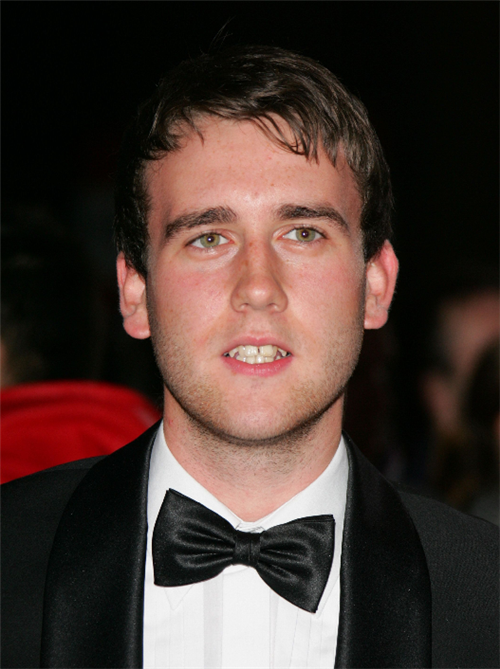
Matthew Lewis has played Neville Longbottom, classmate of Harry, Hermione, and Ron at Hogwarts, for all eight films.  Like the character he plays, Lewis has surprised the fans by turning from an awkward child into a young man of great courage and dignity.  It was a pleasure to see Neville’s important contribution to the final movie on screen and an equal pleasure to chat with Matthew about his experiences from his first audition to the final scenes.

You really are the hero of this movie!

That’s what they keep telling me.  It’s been a lot of fun.

You’ve had an extraordinary opportunity to observe and learn from some of the greatest performers in the British theater, which means they are among the greatest performers in the world.  What did you learn from co-stars like Maggie Smith, Alan Rickman, and Michael Gambon?

I’ve learned more from them than they’ll ever know.  Being around them on set, watching their professionalism, and even watching how they hold themselves off the set.  They’re lovely people.  Michael Gambon tells filthy jokes.  Alan Rickman talks about having scrambled eggs for breakfast.  They’re really just normal people who happen to be very, very good at what they do and it is very cool to be around them.  I’m privileged.

And you’ve also worked with a variety of directors over the eight films.  What did you learn from them?  How were they different?

Chris Columbus was dealt the shortest straw, I think.  He was given a bunch of children to work with who were not actors.  Apart from his tremendous directing ability, he was brought in because of the way he worked with children.  He must have found it so difficult at times and yet he never lost his temper, well, I imagine he did lose his temper, but never in front of us!  He was so great to be around and he made us all go from being terrified young children to really enjoying what we were doing, having a great time as well as making a film.  He made it enjoyable.  And then Alfonso came in and made it much darker, but still obviously enjoyable because Alfonso is crazy!  He was always playing tricks and pranks, having as much fun as the kids were.  His directing style was quite similar to Chris in terms of working with children, but a lot crazier and wackier.  And it was much more about what drove our characters, more of a profession then, looking at it as an art form, too.

And the Mike Newell came in and we were all a bit older, and he wasn’t afraid to give us that kick up the ass.  If you weren’t pulling your weight he’d shout, “Put your back into it!” And at that age, that’s what we all needed, telling us we could do better.  I thank him for that because it was a breath of fresh air.

And then David Yates came in, and he’s the loveliest man in the world.  He took me into his office before we started the film and asked me to do some research.  We really talked about Neville in depth and it was the first time I’d sat down with one of the directors and talked about Neville, what motivated him and what pushed him.  I started to see acting as a real science.  That really helped me grow as an actor.  I owe them all.  They were different in what they brought to each film, but David Yates in particular was one who really inspired me.

Tell me a little about Neville, and why he was underestimated by so many people at first.

He’s the unlikeliest of heroes.  That shy little boy who was bullied, and no one ever thought he’d amount to anything, and turn him into this savior of the wizarding world.  It’s inspiring.  I think a lot of people can relate to his character.  School can be a pretty lousy time for a lot of people. Neville shows that it doesn’t have to define you.  You can stay true to yourself and your friends, you can do the right thing, you can do with your life whatever you want to.  I think that’s a lovely message.  I feel very proud and very humbled to have been able to play him.


Related Tags:


Actors Interview
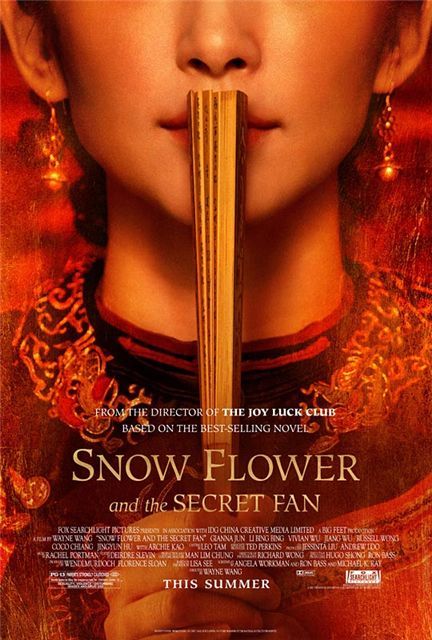
Interview: Lisa See of ‘Snow Flower and the Secret Fan’

Interview: Lisa See of ‘Snow Flower and the Secret Fan’

Posted on July 15, 2011 at 10:26 am

Lisa See is the author of literary novel and book club favorite Snow Flower and the Secret Fan, the story of a deep and loving but sometimes conflicted friendship between two women in 19th century China.  She spoke to me about what inspired her about women’s relationships and about how the story had to change when it was adapted for the screen.  The movie opens today in some cities and and expands over the next few weeks across the country.
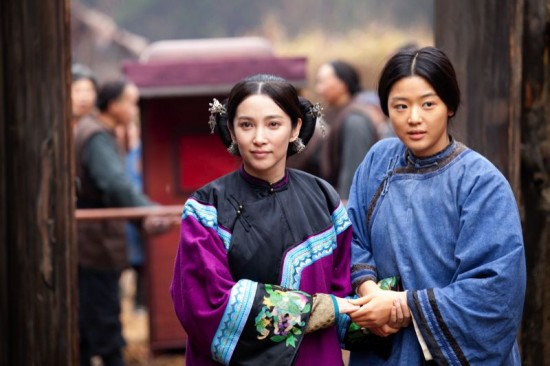
First, tell me what you think of the movie based on your book.

I really enjoyed the process.  Of course I was nervous the first time I saw it but I really loved the movie.  The part that is very true to the book is absolutely true to the book.  The readers who read it will recognize certain scenes and characters and certainly all the emotions I had included.  And there’s a modern element that has been added.  It was not a part of my original book but it is a parallel story of friendship that I think will make viewers think about their own friendships.   There are these two stories of different aspects of friendship that I think are pretty powerful.

Any adaptation of a book to a movie is a big move from the internal to the external and the addition of the modern story was a way to do that. What do you think the modern-day friendship story added?

That story is a little different, more a story of sacrifice in friendship and the consequences of sacrifice.  What I really liked about the modern story in comparison to the original story set in the past is that it takes place in Shanghai right now, today.   This is one of the biggest, most important cities now on the planet but one many people don’t know about.  They were able to film in certain places where you and I would never be able to get to.  For example there’s a nightclub scene.  The club is called Shelter because it is in an old bomb shelter underneath the city of Shanghai.  I thought, that’s so cool, I just love that, and how the old parts of the city are being torn down as all this modern life is going on.

Sometimes with Chinese stories, it can seem so much about this past, like costume drama or kung fu.  But this combines a little of both, not just in the past but a continuum that brings these people right up to the present.  Certainly now China is a global economic superpower and it is interesting to see that and Shanghai in particular in a way that has not really been seen in a film before.

How did you get interested in the issue of foot-binding and the ancient notion of laotong, or “old sames” to describe the deep and sustaining friendship between women — and are those two connected?

I had reviewed a book for the LA Times on the history of foot-binding. And in that book there was a three or four-page mention of a secret language.  And I thought, how could that exist and I didn’t know about it?  How could it exist and we all didn’t know about it?  So often you hear that in the past there were no women writers, no women historians, there were women but supposedly they didn’t do anything.  But here was an example of something women had invented and used.  They had kept a secret for a thousand years.  I was completely obsessed.  But as I was doing the book and as I was doing the research I knew that I could not really write about this language and the relationships these women had without including foot-binding.  It was part of why this even came about.  It was a combination of illiteracy in men’s writing and the isolation caused by foot-binding that caused these women to first invent the secret language and then use it.  This allowed them in a sense to fly out of their rooms, reach across the fields and find other women with whom they could connect, and how important that is for all women, whether in the past or in the United States today.  We all have a need for friends or a friend with whom we can connect.

Both the ancient and the modern story in the movie are about friends who were pretty much assigned to each other.  That seems different from our American notion of finding our own friends based on shared interests and perspectives.

Aren’t you thrown together by circumstance when you become friends?  You’re in the same kindergarten or dorm or you work together or your kids are in the same class?  They’re real circumstances, not artificial, but that’s how you meet.  I know it’s in the book but in the film as well, that whole cultivation of a friend.  Maybe you’re supposed to be friends and maybe you’ve just met them and would like to be friends but what is interesting is how you cultivate someone to become a friend.  It is a kind of a courting, I suppose.

These friendships in the movie are so close.  Is it possible to have that kind of closeness without impinging on your other relationships — your romantic relationship, your family?

You will tell your best friend things that you wouldn’t tell your boyfriend or your husband or your mother or your children.  That doesn’t impinge on those relationships.  It’s just different, a different kind of intimacy.  The downside of that closeness is that it can leave you open to betrayal — just like any relationship.

Related Tags:


Books Interview Writers
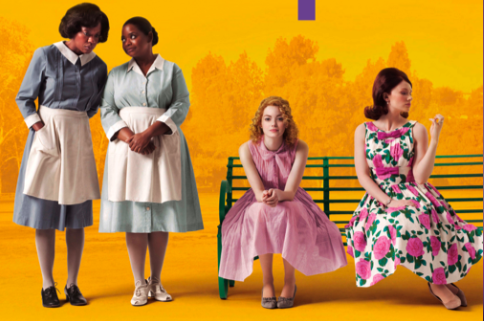
‘The Help’ — Emma Stone and Bryce Dallas Howard

‘The Help’ — Emma Stone and Bryce Dallas Howard

Posted on July 15, 2011 at 8:00 am

Bryce Dallas Howard

On playing the movie’s villain, Hilly:

“I literally don’t want to look at it – she’s such a terrible person.  What’s interesting when you start doing a role is at first the character is really shocking.  But then you play the character 18 hours a day and I’m like – look, I have long hair!”


“It’s really fun to be such a terrible character and the feeling on set is so joyful and we’re having such a wonderful experience together.  The book and the script is the same way — It’s like a salacious read and really juicy and it does at moments get really quite heavy.  But Tate has created this environment on set of making everyone feel really playful so that in those moments when it’s really intense and obviously incredibly loaded given our history as a country we don’t fall into this lull as actors – oh, my god, this is too much.  For that reason, normally a character like this I would not be able to sleep at night, but because of the feeling Tate’s created on set when she’s evil it’s more fun than it is scary.’

On the Southern accent:

“Nadia the dialect coach has been really specific and has recorded people whose dialects were pure according to that time period.  It’s a mishmash of a bunch of different recordings.  It’s really fun and I love it and look forward to and enjoy it but really appreciate and need the support of a dialect coach.  I wouldn’t know where to begin in terms of the nuance.  The only other time I’ve done a Southern accent, I played a character in the 1920’s from Memphis – there are some similarities but also some distinct differences.”

On finding a way to make the villain a real character:

“She’s a duplicitous character, there’s always that duality.  Someone gave me some great advice about the character.  I was doing more of an arch-villain at first.  She said, ‘You have to protect these women in this time in all its devastating honesty.’  Most women were definitely not like Hilly.  She’s a particular person.  It’s important to play that she’s not a two-dimensional character.  She believes in certain things.  Obviously, it’s not only misguided, it’s evil.  But there is an origin for her beliefs.  To not just play this crazy character, it’s important to understand the psychology behind it.”

On her research:

“The research that I did was fascinatingly personal.  My mom was raised a lot in the South and when she was growing up, she was born in the 50s so in the 60s and 70s she was at times ostracized and called a Northerner.  She actually started reading The Help and had to put it down because it was so intense for her.  She’s picked it up again and she’s like, ‘It’s such a good book but I can’t read it before bed.  I can read Stephen King before bed and Anne Rice before bed, but this is too intense.’”


Emma Stone

On her connection to her character:

“Skeeter and I have a lot more in common than I would care to admit.  I’m not as brave as she is in what she is taking on.  But I do understand being a maybe a little different than your peers.  Everyone’s gone through that.  I like that she isn’t a martyr and the lessons she learns.  I love this girl so I am doing the best I can to accurately bring her to life.”

On what she gets from shooting on location:

“We’re lucky enough to be shooting in the South, which is so great.  Being surrounded by Southerners and hearing their stories and watching civil rights history like Eyes on the Prize or books about Jim Crow that kind of helped me with the back story as far as the time period.  But as far as being in the South we are so lucky that we’re in Mississippi because I never knew what the real feeling of being in the South was like, the kind of secrecy, the two sides there are to everybody.  We’re in a small town.  Everyone’s been so nice and so welcoming.  They also know everything that’s going on.  They know if I had someone over to my house last night!  It really informs what’s going on in the movie.  The secrecy required for something that’s illegal at the time is – I now understand so much more how quickly word travels in a small town in the South.  It’s good to know what it’s like.”

On the relationship of her character to her frenemy, Hilly:

“Bryce has been pretty note-perfect so far.  It’s really important to Tate to establish that Hilly and Skeeter were best friends and really did love each other.  And they really do love each other underneath it all but they haven’t spent a lot of time together for the past four years.  And in those four very formative college years their opinions on things greatly differ and it becomes more apparent now that Hilly is married and has kids.  It’s easy for me because the way she’s playing it has been so fantastic.  She can switch from sweet as pie to just awful in a heartbeat.  She’s figured out the balance really well and it’s my job to react to whatever mood Hilly’s in.”

On being in a women-centered story:

“Everyone is here to make the same movie and no one’s come with an ego – when that’s the case and its women, I don’t want to sound all girl power here but it’s been a nice empowering environment to be in.  And Tate’s keeping a calendar of when who is going through any hormonal times, he’s surrounded by nine emotional actress females.”


Related Tags:


Actors Behind the Scenes Interview
THE MOVIE MOM® is a registered trademark of Nell Minow. Use of the mark without express consent from Nell Minow constitutes trademark infringement and unfair competition in violation of federal and state laws. All material © Nell Minow 1995-2026, all rights reserved, and no use or republication is permitted without explicit permission. This site hosts Nell Minow’s Movie Mom® archive, with material that originally appeared on Yahoo! Movies, Beliefnet, and other sources. Much of her new material can be found at Rogerebert.com, Huffington Post, and WheretoWatch. Her books include The Movie Mom’s Guide to Family Movies and 101 Must-See Movie Moments, and she can be heard each week on radio stations across the country.

Website Designed by Max LaZebnik