
Interview: Aviva Kempner of ‘Yoo-Hoo, Mrs. Goldberg”

Posted on August 30, 2010 at 3:59 pm

Aviva Kempner is the director of the outstanding documentary, “Yoo-Hoo, Mrs. Goldberg,” just out on DVD. I interviewed her about making the film and new material and surprising discovery she added to the DVD features.
What surprised you most in researching this film?
I never knew about the blacklisting and sad demise of fellow actor Philip Loeb, who played Jake Goldberg on first season of “The Goldbergs.” Very talented and union organizer Loeb was targeted and driven from the show even though Berg fought hard to keep him on. Losing his livelihood Loeb killed himself 55 years ago on September 1st. He taught many fine actors, including Kirk Douglas, and directed seasons of the Marx Brothers in “Room Service.” He lost his life to a disease called the blacklist.
What was it about the Goldbergs that made their stories seem so universal?
It was so delightfully about the joys and woes of family at a time that so many immigrant and accented speaking families were living together and struggling to succeed.
Is ethnic material handled differently now? What’s better and what have we
lost?

Sadly those ethnic characters are no longer the norm unlike those delightful characters on early radio and television. I was saddened to see “Ugly Betty” go off the air as it celebrated the aspirations of a Latin immigrant family. Hopefully more of those shows will emerge again.
Is there anyone today who is a performer/writer/producer the same way that Berg
was?

Tina Fey and Oprah are as multi-tasked and powerful women in popular culture today. I was honored to bring Gertrude Berg, the most famous woman in America you have never heard of, to the screen. I loved that a combination of senior citizens, who watched the show, and young viewers, especially feminists, flocked to the movie theatres. Now the DVD can expose the rest of America to talented Gertrude Berg.
What was her biggest challenge? Her biggest triumph?
Her biggest challenge was fighting the blacklist of Philip Loeb and the her biggest triumph was winning the first Emmy for an actress sixty years ago and then go on to also claim a Tony award for “Majority of One.”
What kinds of extras are on the DVD?
The jam-packed DVD includes interviews with Supreme Court Justice Ruth Bader Ginsburg, actor Ed Asner, producers Norman Lear (“All in the Family”) and Gary David Goldberg (“Family Ties”), and NPR correspondent Susan Stamberg, as well as early career appearances of Anne Bancroft and Steve McQueen. The bonus features are chock-full with over two hours of material including my own audio commentary, episodes of “The Goldbergs” (including a surprising 1954 episode featuring Molly and Jake in the same bed together!), Gertrude Berg’s guest appearances with Edward R. Murrow and on Ed Sullivan, additional scenes and interviews, a Gertrude Berg recipe, an essay from the director and much, much more.
Related Tags:


Directors Interview
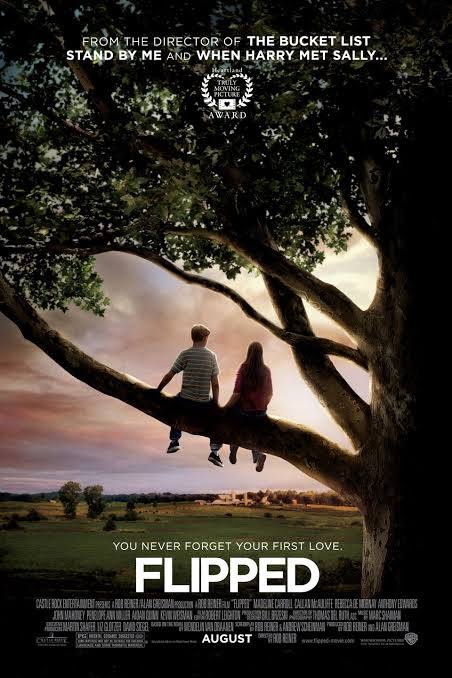
Interview: Rob Reiner of ‘Flipped’

Interview: Rob Reiner of ‘Flipped’

Posted on August 27, 2010 at 8:00 am

Rob Reiner has given us a middle-school version of one of his most beloved films, “When Harry Met Sally….” with his latest movie, “Flipped,” based on the popular book by Wendelin Van Draanen. I talked to him about what all of his movies have in common, what men and women learn from one another, and the secret tribute to his father, Carl Reiner, hidden in this film.

Copyright Warner Brothers 2013

I know for most people first love does not last….

I always believe that the two kids in the movie eventually got married. It does work out some times. My friend Billy Crystal married his high school sweetheart and they’ve only been with each other their whole lives.


This movie has some themes you have dealt with before.

I make the same movie over and over again. I always have it where the girl is much more emotionally developed and the boy can’t see beyond the end of his nose and it takes him a while to figure out that this girl in front of him is this great girl he should be with.
I think ultimately for men, they really do need a woman to help drag them into maturity. Girls, from an early age, have a much greater sense of their emotional make-up, they’re much more developed. Boys run around like idiots trying to figure stuff out and if they’re lucky they find a girl that can put up with them and help them grow up.

This is not just a love story; it is a story about two very different families and children gaining a deeper understanding of their families.

It was very important to show the difference in the two families, the values of the families, and how it affected the kids as they were growing up, laying the foundation. Juli’s mother loves her children and is so proud of them and you see that love and support. In Bryce’s family it’s more about material things. On the surface they have this idyllic post-war suburban lifestyle with the cars and the perfect house and everything but underneath they are lacking.

If Bryce’s grandfather hadn’t come to live with them, Bryce might have gone off on the wrong track. Bryce’s grandfather is the moral compass of the movie. He’s the one who points out what a great girl Juli is. The line he has: “Character is formed at a very early age. I’d hate to see you swim so far out you can’t swim back” — that to me is critical in the film because it starts putting Bryce on the right path.

It’s very difficult for a young kid. Up until those moments you look up to your father like a god in a way. You then start seeing that he’s human. But it’s very hard for a kid to go against his father.


Did you worry about confusing the audience by switching back and forth between two versions of the same incidents?

I was worried about being repetitive. It’s that way in the book but I wondered if audiences would sit through the same scene played over again. I kept going back to how the book affected me. Whenever I finished Bryce’s chapter I was dying to see what Juli’s take on it would be. It was always different. There was always new information. And so I said, “If this is keeping me engaged as a reader, it will work in the film, too.” You’re not really seeing the same thing. Girls and boys just see things differently. I think that’s true for our whole lives! I think it’s our job as men to try to understand the nature of women and women’s job to understand the nature of men. We go through our lives trying to do that.

The scene with Juli visiting her disabled uncle with her father is very touching.

That whole sequence with the uncle is really the most important sequence in the movie because it shows what’s important in the Baker family, the values that Juli is raised with. They don’t have some things because they have to take care of the uncle. Even though the mother has a momentary frustration, she tells Juli that these are the values that we cherish.

Madeline Carroll is really lovely in the part. How did you find her?

I saw her in “Swing Vote” and asked her to come in to read. We had about 30-40 girls but she was first. She was perfect! I said to the casting director, “That’s it. We’ve found Juli.”

She’s adorable but not overtly beautiful in a flashy way. It’s just this incredible depth-full beauty that she has. She’s got this great spunky character and a little bit of a tomboy quality. And her acting craft is as developed as any adult actor I’ve ever worked with. It’s just uncanny. She was 13 when we made the film and it would floor me every time.

And then with Callen McAuliffe , that was hard. You can’t find boys that age who are good actors. They’re usually running around playing sports. He was a soccer player who was injured and got into acting as a lark. Somebody sent us a tape and we looked at it and I was amazed. Here’s this kid with a thick Aussie accent and he can turn it on and off like a water faucet. He would actually spot before I did when he would go off and slip back into an Australian accent on a word.

If you’re smart you cast people who are right for the part and you’re 90 percent there. I told them to play it naturally and not to force it and if they went wrong I would tell them. But that hardly ever happened.

The name of the street the kids live on — is that from “The Dick Van Dyke Show” created by your father?

We lived at 48 Bonnie Meadow Road and my dad set “The Dick Van Dyke Show” at 148 Bonnie Meadow Road. The street in this movie is Bonnie Meadow Lane, which is my way of paying tribute to my youth and my dad’s show.

Related Tags:


Directors Interview Writers
Interview: Kevin Sorbo of ‘What If….’

Interview: Kevin Sorbo of ‘What If….’

Posted on August 25, 2010 at 3:59 pm

Kevin Sorbo (Hercules and Andromeda) stars in a new movie, “What If…” as Ben Walker, a man who gets the chance to see what his life would have been like if he had taken another path. In the tradition of “A Christmas Carol” and “It’s a Wonderful Life,” Walker meets an angel (“Cheers'” John Ratzenberger) who lets him see the effect of the choices he has made and learn some lessons about what really matters. I spoke to him about the audience for faith-inspired films, what it was like to deliver the two sermons in the movie, and his award-winning foundation, A World Fit for Kids, which creates after-school programs to promote fitness, work skills, and academic achievement.

How did you become involved with this project?

Dallas Jenkins is a friend of mine. Our kids are the same ages and play together. He asked me to look at the script. I read it, fell in love with it immediately. He said, “I’m looking for the lead.” I said, “You’re looking at him! I’d love to do this, it’s awesome.” It came together very quickly and we were shooting in a month.

I loved your interaction with Kristy Swanson (“Ferris Bueller’s Day Off,” “Buffy the Vampire Slayer”), who plays your wife.

We had a very good chemistry together. It was a good group of people and the crew was excellent. We shot it in three weeks. I wish we had had five or six. The economy is such a weapon it affects everything no matter what business you’re in right now and you have to make adjustments.

And yet I was very impressed with the quality of the production values in the film.

A lot of times in the past faith-based movies the acting, the script, the look were not all they could be. With the success of movies like “Facing Giants and “Fireproof” and especially “The Blind Side,” it’s opened up a whole new world, realizing that there’s a huge under-served market out there. The vast majority of the people in this country are people of faith. To ignore that and put out the stuff that Hollywood loves to put out — it’s kind of nice to see movies being made and I hope all the people who gripe about these kinds of movies not being made will go see this one, spread the word, and fill up the seats. We’re small, we’re independent, and we rely on word of mouth.

You have quite a character arc in the film and even the way you stand and move seems to change as your character starts to see and feel things differently.

It happened organically through the script. It was a natural slide to go from the cockiness and arrogance of the guy at the beginning, from the words on the page.

There’s a wonderful contrast between the two sermons your character has to deliver, one when he is really clueless and another when he is beginning to feel his connection to a calling.

And both were shot on the same day! They were just so funny, so well-written. The second one had a sense of humor to it, too. For me as an actor it was a huge workout. I’m in almost every scene in the movie. It was a challenge for me. I had to use some muscles I didn’t have to use before.

What roles do you enjoy most?

I get a lot of scripts. I started my own production company two years ago. There’s a lot of variety, thrillers, dramas, a mixture. Coming up I play a Scrooge type of character, a comedy, and then play the father of a young boy who has a brain tumor, a very touching heart-felt story, and then a period piece.

Tell me about your foundation.

It’s A World Fit for Kids. We support after-school programs to give kids the training, tools and support they need to achieve their goals and lead fit and fulfilling lives, and were recently recognized by Governor Schwarzenegger recognized us as a statewide model for preventing childhood obesity.

What do you want people to know about the film?

Everybody has a “what if” in their life. This will strike a chord. It could be a job, a relationship. We all have regrets about what we have done or shouldn’t have done. It’s a movie about forgiveness and redemption no matter where you are in your life.

There’s a lot of great laughs, a lot of moments to tug at your heartstrings. We had a premiere in Chicago with 3600 people and we turned 1000 away. At the end people gave us a standing ovation, applauding and crying. It’s a wonderful movie. And the whole family can see it.

Related Tags:


Actors Interview Spiritual films

Interview: Yael Hersonski of ‘A Film Unfinished’

Posted on August 19, 2010 at 8:00 am

For decades, our impressions of the Holocaust have been formed by the images that survive and by the memories of those who were there. Now, as we near a time when the experience will no longer be within the memory of anyone alive, we rely even more on the documentation that is available. Although we recognize its limits, we recognize that it is a starting point.
“A Film Unfinished” combines some of the most well-known, intensely studied, and now-iconic images of the Warsaw Ghetto with some newly-discovered outtake footage that adds context and a great deal of new information about what we thought we knew and understood. Until now, what we have seen was the story the Nazis wanted to tell about the community where Jews were sent to live before they were sent to concentration camps. With the new footage, we are better able to understand what was really going on. The film opened yesterday in New York and it opens tomorrow in LA and on Sept. 24 in Washington, D.C.
In the New York Times, Jeanette Catsoulis called “A Film Unfinished“:

remarkable as much for its speculative restraint as for its philosophical reach. Moving methodically reel by reel and acknowledging the “many layers of reality,” the director creates a palimpsest of impressions from multiple, meticulously researched sources representing both victims and oppressors.

IMG_8462.JPGI interviewed Israeli director Yael Hersonski about making the movie as she was preparing to introduce the film and lead a discussion at the Washington DC Jewish Community Center.
It is fascinating that you took footage made by the Nazis to tell a lie and combined it with outtakes to make it tell a story that is truer to the actual experience.
I don’t think I am showing the truth — it is too big of a notion. I just show what happens when we don’t decontexualize these images as if it is objective documentations of history. That is the way I was educated to see it, as though it was made by history itself. When I saw this footage, visually, I felt the cameraman standing behind the camera with his own idea of limited reality, his own choices. He was serving the purposes of his commanders. The cameraman claims he did not completely understand the purposes of what he was doing. He refers to “the rich ones” without acknowledging that it was staged.
Maybe the greatest discovery of the research of this film was finding the protocols of the cameraman who took these images. You can hear him describe what he remembers he was shooting as you see the images. When I read the protocols for the first time, I was overwhelmed. I realized that everything I thought I understood was distorted by the way it was used. It’s a general visual background for so many different stories.
Something like 95% of the imagery of the Holocaust was shot by the perpetrators for their own purposes. The Nazis were the only ones who could document during the war. We have the documentation of the liberation of the camps by Americans and others but while the war was going on the only ones to take pictures were the Nazis themselves. When we say “to remember, not to forget” in Holocaust education, our memories are formed by these distorted portrayals of what was going on. So we have to understand that this footage was shot from a very specific point of view, to separate the point of view from the image, the cinematic manipulation from what suggests itself as reality.
How were the outtakes discovered?
The old footage was found in 1954. Then in 1998, two researchers, one American, Cooper C. Graham, and one English, Edwin Wood, were looking for footage from the 1936 Olympic games. They were looking in a film vault in an Air Force base in Ohio, of all places. They saw two film cans with “Das Ghetto” written on them. They knew the old footage of course so they immediately recognized what this was. They got in touch with the Library of Congress, which got in touch with the Holocaust Museum. This included nine minutes in color, which is very rare, very powerful. I realized that my reference for the Holocaust in color is Hollywood films, not reality. It looked like a Steven Spielberg movie, not the real thing. Our vision is so defined by the black and white images we all know that it does not seem right somehow to see it in color. That, too, should make us question the way our understanding is influenced and defined by the limited documentation we have available.
It is haunting to see in the footage recently discovered the cameramen themselves, emphasizing the artificiality of the situation. And then you add to that, giving us his comments.
Suddenly he has a face, he’s looking at us for a second. It’s not this far away black and white, almost symbolic image; he’s here. I wanted to prove to myself the specificity and artificiality of these images.
What was the Nazi passion for documentation? What were they hoping to achieve?
Germany was the most advanced nation in Europe for photography and cinematography. They were obsessed about it. The soldiers traveled to their front lines with their own private cameras. The documentation was massive. Ninety percent were destroyed during the last days of the war. We can only speculate on what they were trying to achieve. We do have one clue. The Nazi minister of propaganda, Joseph Goebbels, wrote in his diary four days before this filming began that he told Himmler, now when they start to move the Jews to the east, for “the final solution” process, it is urgent to make as many films as possible to educate the next generation. They wanted to establish the museum of the future in Prague. It would have been a memorial site for the Jewish race according to their own narrative. This would be “the last snapshot” of daily Jewish life, with the upper classes corrupted, indifferent, immoral, and the cause of poverty and diseases.
They took their own atrocities and shot it as if it was caused by the Jews. The most powerful propaganda is not entirely lies; they know how to combine what is true with what they want the story to be.
How did you find the survivors who were there during this filming?
Yad Vashem, the Holocaust memorial museum in Israel, has lists of survivors. Many have already died. We found four women who were still alive. This was the most urgent part of the film-making so it was the first thing we did. I invited each one of them alone to screen the footage to make it as intense as could be so maybe they would remember things even they did not know they knew. It was one of the most emotional and exhausting part of making the film. And of course it was hard for them. But these women felt it was urgent for them to interpret this silent footage as those who were there, who were hiding from the film crew, to have the last word, the final word over these images.
It’s the most truthful way to remember something that has meaning. We cannot understand numbers like six million. We can understand someone looking at us or talking to us and saying, “I was here.”

Related Tags:


Directors Documentary Interview

Interview: Emma Thompson of ‘Nanny McPhee’

Posted on August 18, 2010 at 12:00 pm

Emma Thompson has won Oscars for both writing (“Sense and Sensibility”) and acting (“Howard’s End”). She has played a character based on Hillary Clinton (“Primary Colors”), a Hogwarts faculty member in two Harry Potter films, and last year alone, Dustin Hoffman’s love interest in “Last Chance Harvey,” a stern headmistress in “An Education,” and a former hippie in “Pirate Radio.”
This week, she plays the title character in “Nanny McPhee Returns,” the sequel to the 2005 film she wrote and starred in about a nanny who has a special — you might say magical — knack with naughty children.
Nanny McPhee says that when she is not wanted but needed she must stay but when she is wanted but not needed she must go. Is it a challenge to teach children the difference between wanting and needing?
Of course but you must understand I don’t make these films to teach people lessons — that would be awful. I make films to delight them and make them laugh and have a really wonderful time and then they’ll think about stuff if that’s what they want to do. Internally, some of the stuff that goes on in those movies is that it’s very true that when need people but don’t particularly want them that’s when they have to stay and help out, but when you are desperate for them to stay but don’t need them, that is when you have to let them go. So, yes, that’s very true but the message is carried very subtly. More importantly, she’s there to say to children, “You can solve your own problems. You don’t need an adult to solve them for you.” That’s even more important.
One of the pleasures of a movie like this one is the vicarious enjoyment of being naughty like the children in the film. Were you a naughty child?
I was profoundly obedient. I was brought up in a rather austere London by a Scottish Presbyterian. You weren’t very naughty. I do remember drawing on the bathroom walls with pencil and having to rub it all off, which took hours, sobbing gently. But I wasn’t naughty.
Is it fun for you to put on a false nose and teeth and make yourself look ugly?
Yes it is good fun and a relief from that rather fascistic insistence on glamor and you’ve got to look this way and be this shape and so there’s a small rebellion in the act itself.
How does the costume help create the character?
The costume was designed in the first instance by Nick Ede, a wonderful designer. We worked very hard on how big she was going to be, whether we would trim it with jet which is how she is described in the book, what her silhouette is like, when to introduce a waist. It was great fun and the costume and make-up is everything really. It does so much work for you. Actors often say they don’t feel like the character until they have the costume on.
Is this movie based on the books?
The first movie has a lot of story that isn’t in the books. They’re really based on a character rather than adaptations of the books. They’re wonderful books but there’s a lot of repeat behavior and the second film is an entirely new story.
Why did you decide on a WWII setting?
I was wanting the father to be absent for some reason or other. I was in Berlin when I was thinking about the story, and I thought maybe I can have this father absent because of war. I already knew I wanted it to be about two sets of children who came from different backgrounds and hated each other and fought.
Will you do another one?
I hope so. It all depends on how this one goes. Market forces will decide that for us, but I am thinking about a third one, certainly.

Related Tags:


Actors Interview Writers
THE MOVIE MOM® is a registered trademark of Nell Minow. Use of the mark without express consent from Nell Minow constitutes trademark infringement and unfair competition in violation of federal and state laws. All material © Nell Minow 1995-2026, all rights reserved, and no use or republication is permitted without explicit permission. This site hosts Nell Minow’s Movie Mom® archive, with material that originally appeared on Yahoo! Movies, Beliefnet, and other sources. Much of her new material can be found at Rogerebert.com, Huffington Post, and WheretoWatch. Her books include The Movie Mom’s Guide to Family Movies and 101 Must-See Movie Moments, and she can be heard each week on radio stations across the country.

Website Designed by Max LaZebnik