
Interview: Joe Berlinger of ‘Crude’

Posted on October 15, 2009 at 3:59 pm

Crude is the latest documentary from Joe Berlinger, whose last film was the award-winning “Metallica: Some Kind of Monster.” This movie explores a large, complex, international environmental lawsuit over damage allegedly inflicted by an oil company on a community in Ecuador. He also does the television show Iconoclasts, pairing interesting high-profile people with the people who inspire them. I spoke with him by phone about this new film.

NM: How did you gain the confidence of the people you were filming? Unlike your last subjects, Metallica, you were dealing with subjects who were not familiar with media.

JB: I would not necessarily distinguish them that way — getting the trust of a media figure like Metallica or James Hetfield is no easier than getting the trust of these people. One of the amazing things about this experience was how unguarded and open people were and how easy it was to gain their trust. Metallica are not just any rock stars, they are all about male testosterone-fueled rage and not showing any weakness and to allow that to be put on screen was even more difficult.

When I made “Paradise Lost,” a film about three teenagers falsely accused of devil-worshiping murders because of the clothes they wore and the music they listened to, and it was shot in 1993, just as the 24-hour news cycle as we know it today was kicking in and it was a very different mindset. It was the last time I felt in my career that we got that kind of access, total access to the families of the defendants, three families of the victims, the judge, the prosecutor, we filmed the trial. If we made the film today, it would not have been possible. There would be 50 satellite trucks, five Hollywood agents, book deals, that kind of thing has happened in the last five or ten years, who likes to dig in and tell a story over the long haul — not what the media does — it makes my job that much more difficult.

So one of the unexpected pleasures of “Crude” was I once again felt that freedom that I could take my camera anywhere in this country. The people involved were — in a refreshing way — un-media savvy, un-tainted, un-jaded. And these are people who have been wronged for a long time. I was surprised a little bit that a white person and an outsider had such ease. But what motivated me was not the lawsuit per se but I had an epiphany as I walked around the villages and saw the level of disregard that these people have suffered at the hands of others. For the first time I viewed this injustice toward them as part of the long continuum for the last 600-700 years. As I see people eating canned tuna instead because there are no longer fish from the nearby water, getting diseases they never got before, poisoned drinking water. Their lives have been devastated, first by missionaries and then by the oil companies. What made me want to see the film was seeing it in a larger context of displacement and mistreatment of indigenous people. I didn’t want an “oh, we have to win the lawsuit,” one-sided agitprop kind of film-making. That is not consistent with my style of film-making and it is actually less persuasive than my style which is kind of warts and all.

NM: That brings me to my next question. You make a real effort to be even-handed here. The movie certainly has a point of view but you let all sides make their own case. How do you make your point, stay even-handed, preserve your credibility, and still show what you have learned?

JB: Some filmmakers in the category of human rights and expose are afraid of a contrarian point of view, but I think it creates a viewing experience that is active instead of than passive. When a film has a singular point of view — first of all, stylistically I don’t believe in narration because I am a cinema verite film-maker. I want the audience to make up their own minds about what they are seeing. I believe the emotional truth of a situation rises clearly to the top. But a lot of film-makers start a film with a thesis and bang it over your head and have all their points adhere to that thesis. I embrace a contrarian point of view because that way the audience weighs the pros and cons and comes to their own conclusion. If you treat an audience member like a member of a jury they will make up their own minds and that is much more persuasive experience than telling them what you think they should think. Only people who already agree with you will see it. Any film where you want to affect social change you have to bring other people into the fold. You have a better chance of having people walk out of the movie and take action if they have been actively engaged. There hasn’t been a screening of this film where I haven’t had 40 people come up to me afterward and ask me what they could do. If people come to their own conclusion they will want to become more involved.

NM: How do you frame the story then?

The other thing that allowed me to be even-handed, and this was to the consternation of some of the activists and certainly to the plaintiff’s lawyers, who were surprised that it was not more overtly in favor of the lawsuit, is that the film to me is not really about the lawsuit. It is an excuse to tell a larger story. The lawsuit, while I think it’s important that there is a lawsuit and it is an historic one because it is the first time indigenous people have brought a foreign company into their own courts to hold them accountable, and it was important to deflate the issue of the for-profit lawsuit right up front instead of hiding from it, but a lawsuit is an inadequate vehicle for addressing humanitarian and environmental issues. We’re in year 17 with no end in sight. Even if there is a ruling this winter, as we expect, it will be appealed for another decade. And then try to make them pay. Look at the Exxon Valdez. Everyone agreed that they were in the wrong but it took almost two decades to pay those fines and at the last minute they got a judge to reduce the amount by 80 percent.

The other larger observation of the film is that I am not smart enough to tell you whether Chevron has wrapped itself up in enough legalities, all the legal issues and claims and counter-claims. The jurisdictional issue is interesting, the initial release from the government is an interesting issue. I’m not trained in the law. To me, there’s a much larger issue here, and that is the utter immorality about what is done. The law is not about seeking the truth; it is about presenting the best argument. For me, there is no justification for what they did originally. They came into a place where there were six indigenous tribes, and yes, the government had a hand in it, and they set up a system that was designed to pollute. There is no moral justification for that, to use methods that were not permissible in our country. Unlike everyone else, after the arguments are over, they have to go back there to God knows what existence, to that poisoned environment. Another generation will suffer because the lawsuit is taking so long.

Another reason for the stylistic approach is that it is an advocacy film but it is also a portrait of advocacy. The camera pulls back a bit in a self-reflective way and looks at the advocacy movement, what each side has to do to push their agendas forward. Some people asked, “Are you sure you want to show the coaching of the witnesses?” It wasn’t about gotcha.

NM: It was about teaching them you have to speak their language.

JB: There’s an honesty in that that I think the audience feels and it helps in their engagement to weigh the issues, including to weigh the media and celebrities. It asks why in this country unless there is celebrity attention on a social or humanitarian issue it does not get any media attention? I have enormous regard for Sting and Trudie Styler for what they did for this region long before the celebrity photo-op was fashionable, they walk the walk, but the film is critiquing why we need that.
Related Tags:


Directors Documentary Interview

Interview: Michael Stuhlbarg of ‘A Serious Man’

Posted on October 8, 2009 at 8:00 am

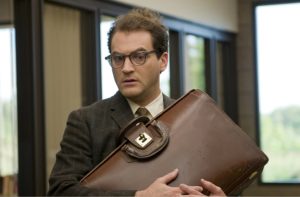
Michael Stuhlbarg stars in the Coen brothers’ “A Serious Man,” as a professor in  1960’s Minneapolis who struggles with professional and family problems.

NM: You conveyed so much in your body language when you get hugged by the Sy character. How did you create that physicality?

MS: You know what? It just happens. It just naturally happened that way. We did it once and everyone laughed and it was like the blessing for the whole movie. You do as much preparation as you can and then when you get yourself into the space and you’re asked to just do it you leave yourself open to what happens.

NM: In a conventional movie, we would have had some sort of explanation, probably very simplistic, about what led to the strained relationship between your character Larry and his wife Judith. But in the Coen brothers movies, we seldom get that kind of clarity. Did you and the actress who played your wife come to some kind of understanding about the history of your characters’ relationship?

MS: Absolutely. Sari Lennick and I got together and talked about what those things were for us. Since they didn’t explore it in front of the camera we felt like we needed to bring something to ground us in what we were going to do so we discussed that thoroughly.

NM: You said that the director of photography, Roger Deakins, is almost like a third director because the Coens wait until he thinks the light is perfect before shooting. How do you, as someone trained in theater, where there is prolonged concentration, stay ready so that you can jump into the scene the moment the sunlight is what Deakins has been waiting for?

MS: It’s just one of those things that comes with doing film work. The light is all important in terms of capturing a particular moment and part of the challenge of the job for me is to be ready. I did my work before hand and hoped that when I got in front of the camera the work would pay off.

NM: One of the movie’s greatest strengths is the specificity of the production design which does a lot to tell us who these characters are. How was your performance helped by the make-up, hair, and clothing that seem so perfect for a middle-class suburb in 1967?

MS: Fríða Aradóttir helped me with the hair and Jean Black helped me with the make-up. We did a “haggard chart” to keep track of the various stages of misery that my character was experiencing. Jean and Fríða have been working with the Coens forever. Fríða is very tall and Icelandic and Jean is short and from Texas, so they are really quite a pair, kind of opposites but they work so beautifully together. So I just threw myself at their mercy and we just played. Jean and I sat down with the script together and marked out what Larry might be like physically and how haggard he might be on an given day.
Costume designer Mary Zophres gave me the shell for my character by finding those clothes.

NM: I was very impressed with your physical and verbal fluency with the very complex physics material your character has to lecture on. How did you manage that?

MS: Just a lot of practice! I sat in my hotel room in Minneapolis and just wrote it out over and over and over until I didn’t have to think about it so much any more, until it was just part of my natural instinct.

NM: Was there one scene that was especially challenging for you?

MS: There were a couple of moments that I just couldn’t stop laughing. I just find the story so funny. My first scene with Adam Arkin, in his law office, we were both just laughing our heads off. I would start and then he would start and it took us over half an hour just to calm down. And then with Richard Kind, the scene where he is on the sofa and I am on a cot in the living room, and he says “Boy, you should have worn a hat,” that just made me giggle. And then there was the constant challenge to try to monitor the emotional emotional journey that Larry was on and I had to trust that Joel would tell me if I went too far. He did on one occasion when I gave him the option of getting a little teary, but he said that is probably what is going on with him, but put a lid on it.

NM: What do you think the response will be to this movie, especially from non-Jews, who will find much of it unfamiliar?

MS: I hope that people will just come and have a good time. There may be a word here or there that they may not understand but so much of it is universal of someone who goes these troubles and tries to find an answer to his questions and has trouble trying to get them.

NM: What inspires you?

MS: I love a sense of humor, I love intelligence, I love specificity, I love surprises. I’m inspired to get out of bed in the morning and fill my day with good things.

Related Tags:


Actors Interview

Interview: Aron Gaudet of ‘The Way We Get By’

Posted on October 7, 2009 at 8:00 am

Near the northernmost part of the eastern seaboard of the United States, tens of thousands of American military fly in and out on their way to tours of duty or on their way home. A tiny group of people, many elderly, are there to wish every one of them well and express the gratitude of our nation for their service and our good wishes for their safety. These are the Maine Troop Greeters. At all hours of the day and night, they are there to give a warm welcome and a friendly handshake to more than 900,000 service members (and more than 172 military dogs). An award-winning film called “The Way We Get By” tells the story of the troop greeters. Former U.S. Secretary of Defense (and former U.S. Senator from Maine) William Cohen says, it “is a moving and important film that encourages us to reflect upon the common bonds of mission and service that span generations.” It is one of the most inspiring movies of the year.

The movie is playing in limited release and will be available on DVD next month. It will air on PBS on Veteran’s Day.

I spoke to director Aron Gaudet about making the film over a four-year period.

NM: How did you come to this project?

AG: One of the three subjects is my mom. She is a Maine troop greeter.

NM: What is it like to make a movie about your mother?

AG: It was really interesting because it made me look at her from a completely different perspective. It gave me much more of an appreciation for her, for what she chose to do in her retirement years. At first, she wasn’t really doing much of anything. She didn’t have any hobbies. And then when she started doing this, it completely changed her life. It gave her such a sense of purpose and made me even more proud of her once I followed her around and saw what she was doing. Her and the rest of the troop greeters kind of amazed and inspired me.

NM: Did your mother work outside the home?

AG: Yes, she worked in a nursing home as a registered nurse’s aide.

NM: So at work and at home and now with the troop greeters, she has always been a caretaker.

AG: She really did spend her life taking care of people and now she is still doing the same thing.

It started out a short film about troop greeting and became a movie about life, about the universal things everyone goes through. This is a culture that defines people by your occupation and what you do, when you retire and you are no longer known for what you were doing, we tend to push people aside when we don’t see an immediate purpose in what they are doing. So these are people who all came to being troop greeters because they wanted at the end of their lives to do something that made a contribution.

We started seeing these parallels, too, all of these people going off to war are concerned about mortality and so are the older people who are greeting them. These big life issues took shape very quickly and were very interesting to us. Things they were dealing with whether it was financial heartache or losing a spouse, those are things anyone can relate to.

The Way We Get By – Trailer from The Way We Get By on Vimeo.

I am the youngest of eight, and all the others still live in Maine. But it made me realize that even with a huge support system, everyone checking in with her, she still spends a lot of time alone. Even with a big family, you still need to find something to put yourself into and give your life purpose.

NM: There were greeters during WWII who brought food for the military to the trains that were transporting them.

AG: Yes, we kind of got away from that tradition with Vietnam, they came back to nothing or were treated poorly, and one of the things that inspired the WWII veterans in Maine was wanting to do better for these troops. One of our three subjects says in the film, “We don’t necessarily support why they were sent there but we do support the troops.” They put their politics aside.

NM: How has this affected your mother’s life?

AG: Well the movie has made them into local celebrities. But in between flights, a bunch of them will go out to lunch together or do something else and so they have become friends. And it has affected my life, too. Gita the producer and I had started dating in October of 2004 and I took her home for Christmas to meet my mom for the first time. She got a call at 2 am to meet a flight and we went with her and brought a camera. We met Bill Knight, a WWII veteran, and in the movie he tells us he has prostate cancer. That night we went was the day he was diagnosed. It was a pretty dark day for him but he was still putting other people before him and that really grabbed us. People said that producers and directors don’t always get along too well together. But our relationship grew and when we finished, I said, “We didn’t kill each other,” so I proposed and we are getting married.

Related Tags:


Directors Interview
Interview: Tiffany Thornton

Interview: Tiffany Thornton

Posted on October 5, 2009 at 8:00 am

Disney star Tiffany Thornton sings the classic “Some Day My Prince Will Come” on the spectacular new release of Disney’s very first animated feature, Snow White and the Seven Dwarfs. It is a two=DVD set with both Blu-Ray and regular DVDs and a lot of extras, including a sneak peek at the upcoming “Princess and the Frog.” I got a chance to talk to Tiffany about what it feels like to take on a song that is so well-known.

How did you get involved with this project?

I did the song “Let it Go” for “Hatching Pete,” but I was more rapping, and then I did a song for DisneyMania called “If I Ever Knew You,” and I hope I impressed them enough that they were willing to give me the opportunity to do this, and they flew out a producer from Nashville named Mark Hammond who was incredible to work with. I’m blessed to have been given the opportunity. I love this song because it’s not like a techno twist which is what you do a lot of times when you want to amp up a song that was originally a ballad. It has the ballad but also a mid-tempo, almost an up-tempo feel when it kicks in, so I hope people will enjoy that.

This is one of the classic Disney songs. How do you make it yours?

Mark did such a great job reconstructing the song. I’m really going to give him all the credit. He knew how to bring my voice out, get it to sound ethereal and princess-like but also to sound also like myself. I’m from Texas so I have that country thing in my voice going on. And I do all the background vocals, the harmonies and all of that stuff.

What is the most fun thing about singing for you?

The honest of it, really. I love acting and singing so much and could never pick one. With acting it’s fun to pretend to be someone else and that’s awesome, it’s like playing dress-up. But with singing, it’s you, being vulnerable, putting this voice out there, knowing people may criticize you and ridicule you. Because people are like that with music. Music is very expressive for a lot of people. I went through a break-up a few months ago and I was listening to Taylor Swift saying “Were you in the room when we were talking about that? How do you know all those things?” Music is really close to my heart and I just want to make sure people can feel that when I sing.

And who besides Taylor Swift is on your iPod?

Demi ‘s album that just came out, Here We Go Again, is incredible. I listen to her song “Got Dynamite” every time I go to the gym. And “World of Chances” which she wrote with John Mayer is a great song. At my photo shoot yesterday I listened to a lot of Carrie Underwood. And I love James Morrison and The Script, Matt Nathanson. I love those gritty guy voices. And Sara Bareilles I think is amazing.

If you could do any Disney song next, what would it be?

“Once Upon a Dream” from “Sleeping Beauty.”

When did you know you wanted to be a performer?

From day one! We put on performances in my front yard. I was always wanting to be in the spotlight. I made up songs, I wanted to be a cheerleader.

I was super-into really powerful singers. My mom and I jammed out to BeBe & CeCe Winans, Celine Dion, Whitney Houston. I’m not a singer because I’m on a Disney show; I’m a singer because God gave me a gift and I want to share it with the world.

And so what’s next?

I’m going to be singing a duet with Kermit the Frog in the Macy’s Thanksgiving Day parade!

Related Tags:


Actors Interview Music

Interview: ‘Fame’s’ Anna Maria Perez de Tagle

Posted on September 26, 2009 at 8:00 am

Anna Maria Perez de Tagle is one of the bright new stars who “light up the sky like a flame” in the new re-booting of the 1980 classic film, “Fame.” I was lucky to get to interview her about the film.
NM: How is this version of “Fame” different from the original? If they make one 20 years from now, what will it be like?
AMPdT: “Fame” is more of reinvention rather than a remake of the 1980s hit movie. This time It follows 10 students throughout their personal and professional lives at the NY Academy of Performing Arts high school. It’s different because it’s more contemporary and modern for our generation like the music and the dance numbers. I think 20 years from now the next “Fame” would be patterned after our “Fame.’
NM: Which do you like more, singing or acting, and why?
AMPdT: When I was younger, I always wanted to be a singer. Singing was my first love then it all fell into acting, but once I started working I grew to love acting just as much as I loved to sing.
NM: What was your first performing job and what did you learn from it?
AMPdT: I was the first Asian American Cinderella in the bay area for the children’s musical theatre of San Jose performed at the Montgomery Theatre. I learned everything from musical theatre–I loved the feeling of being on stage and touching people with my talent. That’s when I realized I wanted to do more and go to Hollywood.
NM: Was there a movie or television show you saw as a child that made you say, “That is what I want to do?”
AMPdT: My obsession when I was younger was “Grease.” I watched it everyday on VHS and knew every song. I would pretend I was Sandy and sing to myself to a mirror.
NM: If you could play any part in a famous Broadway musical, what would it be?
AMPdT: I’d love to play my favorite Broadway musical character …. guess who this is and where it’s from…
“When’s it my turn? Wouldn’t I love, love to explore that world up above? Out of the sea…wish I could be……..Part of that…world….!!!” ARIEL from The Little Mermaid!!!!
NM: What would be the best part of going to a performing arts school like the one in “Fame?”
AMPdT: I actually went to the Los Angeles County High school for the Arts which is very much like the “Fame” school. The best part about the school was learning how to sing different styles of music. I was a part of the vocal department Jazz club and other singing classes so I learned how to scat, sing arias, sing operatic etc.
NM: What was your biggest challenge with this role and what helped you make it work?
AMPdT: My biggest challenge was one scene, my favorite scene, with Debbie Allen. I was so nervous to do a one-on-one scene with her because she was an original Fame cast member. Kevin Tancharoen had to talk me through it and he basically told me that that scene will be the one time everyone will remember Joy and actually see my acting chops. At the end I felt like the outcome was very good.
NM: What is it like to be on the red carpet?
AMPdT: It’s actually very hectic. The easiest part is posing for photographers. All you have to do is set one pose and smile. The crazy part is going through the interviews because you never know what will be asked, but it’s still a lot of fun.
NM: What have you learned from your co-stars about how to deal with fame (the experience, not the movie!)?
AMPdT: I think we all learned the exact message of the film which is dreaming big, sticking with that dream and still trying to achieve success. We are all trying to make a name for ourselves in the business so we still strive hard to get to where we want to be.
NM: Do you have any pets?
AMPdT: Yes! I have two teacup pet Yorkies! Timmy, he’s a boy and weighs only less than 3 and a half pounds and Nikki, she’s a girl and weighs a little over 5 pounds. They’re cute and I love them so much.
NM: What’s on your iPod?
AMPdT: I listen to everything from the Jonas Brothers, to Lady Gaga, Demi Lovato, Jordin Sparks, T-Pain and more.

Related Tags:


Actors Behind the Scenes Interview
THE MOVIE MOM® is a registered trademark of Nell Minow. Use of the mark without express consent from Nell Minow constitutes trademark infringement and unfair competition in violation of federal and state laws. All material © Nell Minow 1995-2026, all rights reserved, and no use or republication is permitted without explicit permission. This site hosts Nell Minow’s Movie Mom® archive, with material that originally appeared on Yahoo! Movies, Beliefnet, and other sources. Much of her new material can be found at Rogerebert.com, Huffington Post, and WheretoWatch. Her books include The Movie Mom’s Guide to Family Movies and 101 Must-See Movie Moments, and she can be heard each week on radio stations across the country.

Website Designed by Max LaZebnik