Screenwriter Allan Loeb on “Collateral Beauty”

Posted on December 16, 2016 at 10:27 am

I was very touched by “Collateral Beauty,” the story of a grieving father named Howard (Will Smith) who engages in a very literal way with Death, Love, and Time, and I enjoyed talking to the Allan Loeb, who wrote it.

Three of the characters in the film are actors, and we first see them rehearsing a very literary production. Was that a real play?

Oh, that’s so funny that you asked because I was watching it at the premiere last night and when that scene came on I thought, “I wonder if anybody knows that this is nothing that’s real.” I completely wrote it. I wanted to give it a cheesy, Shakespearean vibe, the kind of thing pretentious actors in The Village want to put on. That was all just improvised, spur of the moment, sitting at the computer. I was just like, “What sounds really over-the-top?” And I wrote that dialogue and when Helen Mirren delivered it you’re like, “Oh, that sounds pretty good.”

If you listen carefully, what Helen Mirren says in that kind of quasi-Shakespearean language and then what Jacob Latimore is saying and then what Keira Knightley is saying relates to the roles they take, Death, Time, and Love. When you break down the dialogue they are speaking of who they are.

I read that you write while you walk.

That is absolutely true. I’m a huge walker. That’s what I do most of my day. I walk different routes. I like to shake it up and I’ve lived both in LA and New York. New York is easier because you just hop out and you walk or you jump on a subway but in LA, I might be the only person in LA who drives to random weird LA neighborhoods, parks the car and walks for 5 miles. I’ve had people I know say, “Did I see you walking on Hollywood Boulevard the other day?” And I am like, “Yes that was me” and they’re like, “Where were you going?” “Nowhere. Just walking, just doing my thing.”

I’m in my head, I’m listening to either music, mostly listening to music and meditating on certain things, elements of whatever script I’m working on or if there is a character, dialog, and I am jotting it into my phone. I also make a lot of phone calls while walking and I listen to podcasts. It’s my exercise and it’s how I try to keep sane in a stressful world.

Did you think about possible letters to other abstract concepts?

That’s kind of the process I did when coming up with this idea: who or what abstractions should he be writing the letters to, and I did land on Love, Time and Death as the kind of godfathers of abstractions. I guess Forgiveness could be one, Patience could be one, Peace could be one, Healing or Catharsis or these things, but I think if you break them all down as I wrote out every one possible I said, “This is kind of a son or a daughter of Time, Love or Death.” I kind of thought those three sat over all the rest in some other way shape or form. And that’s kind of how I landed on Time, Love and Death.

It’s interesting that you set it up at the beginning by having it expressed in terms of exploiting those concepts for the purpose of selling products to people.

Yes and not just that, it’s not just that Howard said, “These are how we do our job, and this is the way we can connect,” but it is his worldview, it’s what he believes. He truly believes as I do, that love, time and death are the godfathers of all abstractions and the reason we’re here and the elements that connect us all. So if Howard believes that, later on in the movie when you find out that he’s been writing letters, it makes all complete perfect sense that those are the three he would be writing letters to.

Howard spends days building elaborate domino structures and then knocks them down. Where does that idea come from?

It was one of those things where I was kind of thinking, “What is this guy doing?” He’s really checked out. I wanted him showing up to work but if not working, what would you be doing? And I thought, “Well, he could be sitting in an office just staring into space, but that’s a little boring and expected so what could he be doing that just is about the passage of time?” And so the dominoes were something that made sense to me because I feel like there is the passage of time of time with dominoes. You build them all up and then knock them down, and then build them up again and to what end? It’s kind of a Buddhist belief with mandalas, sand mandalas that these monks create so meticulously and then they wipe them out. This was kind of our version of that and that’s why the dominoes were always in the script. But when Will read it the dominoes really spoke to him. He told me that he was kind of obsessed with the mandalas in the Buddhist tradition and that concept of kind of praying to time or honoring time or honoring beauty and honoring, almost celebrating the destruction of everything in a way but not in a malevolent way. Just understanding that everything beautiful perishes. It’s about relief and acceptance and all these concepts and I feel like the dominoes are kind of another expression of that but at the same time cinematically I thought, “Hey, that would look really cool,” and it did.

In a world of email and text, what is it that letters can do that no other form of communication can do?

In this day and age communication and email and digital communication creates an immediacy and it’s about getting business done and it’s a means to an end. But when you go to the mailbox, when you open up an envelope addressed by hand, with a stamp — in the olden days that was normal, that was it but now it’s something special. I like to send cards for no reason to people. I’ll send these cards, a quick post in the mail and you wouldn’t believe the response. It’s like a really quick way to get people to go crazy and say, “That was amazing.” You can just jot a note down, throw it in the mail and people basically treat you as if you flew across the world. It’s so appreciated and it’s so funny and it’s a real statement on how rare and special it is now, the art of letter writing, the art of post.

Recent films have been a little skittish about acknowledging the possibility of a spiritual element. This is more like classic films along the kinds of “Miracle on 34th Street” or “Here Comes Mr. Jordan.” Are you was fan of some of those old movies?

Oh yes, “It’s A Wonderful Life,” “A Christmas Carol,” in terms of the holiday fables and then of course I grew up on all the great high concept movies like “Big” and “Groundhog Day” and “Peggy Sue Got Married,” those magical realism movies which are really devices just to meditate on real issues in our lives and regrets and how we have lived our lives. Those are all fables. I wanted this to be a fable, too.
Related Tags:


Interview

Catching Up with Director Elia Petridis

Posted on December 11, 2016 at 10:23 pm

I loved talking to the immensely creative Elia Petridis at Comic-Con last summer, and so was glad to have a chance to catch up with him to talk about the haunting Jesca Hoop music video he directed, a small gem.

The last time I saw you we talked about a lot of very cutting edge things like virtual reality and today we’re going to start by talking about something that’s a little more conventional, “The Lost Sky.” The first thing I want to ask you is about casting because the faces of the people in it were so interesting.

Film is such a visual medium that I’ve always cast faces. I cast for character, not for physique, I guess. But all the greats do it too, you know. I’m not in it alone.

How did this project come about?

Jesca and I are old friends. This is our fourth video together. And this is very intimate story. A few years ago, I was in a car accident. I was in the hospital and my partner left me while I was recovering. Jesca wrote this song at that time because we were friends. Many years later she came to me and she said “Look, I wrote this song, I’m looking at directors to do it and would you mind talking to one of the directors?” She told me it was inspired by my experience and other things but the seed of it was sort of what I was going through. She was like, “Elia, you have done three videos for me and this is a very personal story for you. Do you think you’d want to do it?” She said, “What’s very important to me is the theme of abandonment, what it’s like to be abandoned when you can’t really fend for yourself, you’re metaphorically left for dead, what’s that like?”

I sat down with Jesca and said, “Why don’t we do what I do and what I love to do is tell stories. I’d love to have it be a page turner, like a what is going to happen next kind of a situation. We’ve got the beating heart of the piece but what’s its skin, what genre? What does it do?” I said, “Do you want to do something Hitchcock? Do you want to do something like a little ‘Vertigo’ where he is stuck in this loop and he keeps waking up and you’ve got surprise and suspense where the first time that he is surprised but the second time that he is all suspense and the third times like a synthesis of that and you wake up and you find out that there is a real twist?”

And the more I went down that way the more I started thinking about things that I’ve always loved like the unreliable narrator. Jesca is an amazing artist and each of her songs is such a distinct character unto itself that I felt like I’d like to give this song its little place in the world. So, I started playing with the unreliable narrator and the loops and Hitchcock and shooting it like that because it’s all a metaphor for a marriage falling apart. Who’s really to blame? Is it the woman who was poisoning him? Or is it the man who has something to hide? And does he really have something to hide? Or is it all in her head? And then the two women together at the end. It’s kind of like wanting to sugarcoat the pill of all those big ideas by just really doing something suspenseful in these loops. Because the song also audibly is a loop that gets more intense as it goes along. The second verse is a bit more instrumented and layered and the third verse is much more lush so the song itself is a loop. I thought of Hitchcock’s mastery of “What happens next?” He was so good differentiating between surprise and suspense and how they are two different things.

There were moments of real emotion as we made it. When Jesca is crying in that out of focus shot, she’s really crying and there’s something about her crying — I was crying, the DP started crying, the whole crew started crying. There was something old and warm between us that she had taken it into her art form and then had handed it back. And then I had given it back in my art form, two friends that were sort of confiding in each other through their art, and supporting each other through their art.

Related Tags:


Directors Interview
Interview: Office Christmas Party Directors Josh Gordon and Will Speck

Interview: Office Christmas Party Directors Josh Gordon and Will Speck

Posted on December 7, 2016 at 8:00 am

Copyright 2016 Paramount

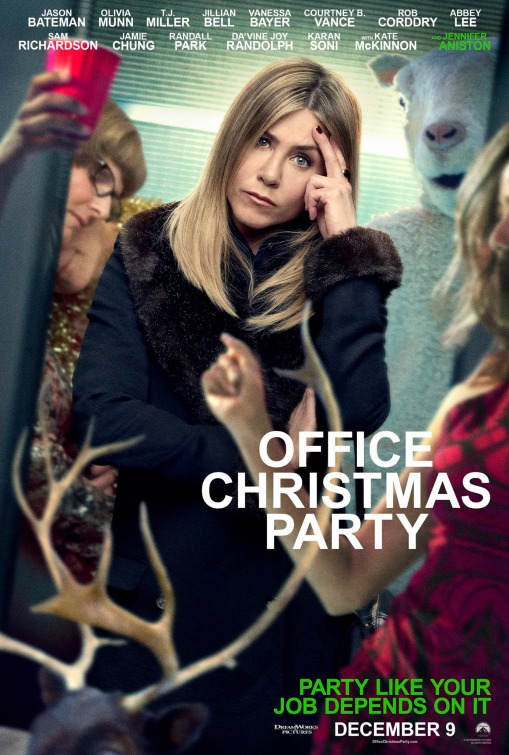
Not since “Snakes on a Plane” has there been a movie title that so perfectly conjured up exactly the kind of entertaining chaos in store for viewers. Josh Gordon and Will Speck (“Blades of Glory,” “The Switch”) have a gift for wild comedy with a tender heart. In this story Jennifer Aniston plays Carol, a tough businesswoman (and martial arts expert) who is something between the Grinch and Scrooge, cancelling the Christmas party in the branch office run by her brother Clay (played by T.J. Miller) and threatening to shut down the office entirely and fire the staff. Clay and his top executive Josh (Jason Bateman) think that if they can woo a big client (Courtney B. Vance) by entertaining him at the party, they can save the office. The cast includes Olivia Munn, “Saturday Night Live” stars Vanessa Bayer and Kate McKinnon, “Fresh Off the Boat” star Randall Park. And it takes place in my hometown of Chicago with some locations I know well, including a stunt on the Clark Street Bridge. It was a lot of fun to talk to Gordon and Speck about the fun they had making the film.

I really enjoyed your Chicago locations.

JG: Will and I grew up sort of loving the same movies and a lot of them had actually been shot in Chicago, everything from “Risky Business” to “The Blues Brothers” and “Planes, Trains and Automobiles,” so there’s something about the city. It has a character and a quality that really is like no other city, with a subversive sense of humor, and it looks great on film. So when we were developing the movie we knew we wanted to shoot it in Chicago and luckily the studio let us shoot there for a couple of weeks to really get all the exteriors. Then we based the sets on the old IBM building. The architect was Mies Van Der Rohe who built a lot of downtown Chicago in the 70.s and we just re-created basically that building.

I read that T.J. Miller agreed to be in the film without ever reading the script, just based on the title. Is that right?

JG: He did read it eventually. But we had worked together with him on a commercial campaign for Motorola a couple years before and had such a good working relationship and a good experience that based on that plus the idea of finding the character a little bit and the concept itself, he was eager to sign on.

He was one of a group of very skilled improvisers in your cast.

JG: Yes, we were really lucky with this cast. Everybody was our first choice. And when you get talent like that you don’t want them just to read the script three or four times and then move on to the scene. So we encourage improvisation and these guys are all kind of pros in it. TJ is a stand-up and obviously Jen and Jason are really good on their feet and so you go into the edit with many jokes as you can. There is a ton that we had to leave on the floor that actually will go into the extended cut.

It’s a fairly new idea, but over the past few years we have had a series of R-rated Christmas movies.

WS: We are an R but not a hard R. There’s some drugs in it and some nudity but for the most part we feel like it doesn’t go to a place that will make anyone uncomfortable. We love movies with a lot of grit and reality in a very ridiculous situation, like “Risky Business” and “Midnight Run,” movies that have the concept that is very funny but that are really grounded in the real world.

JG: And also movies that were well made. They weren’t just comedies; they had emotion and they made you invest in a story too. We wanted to make a movie that ultimately is a Christmas movie. It just arrives through an adult kind of tone but it’s really got a heart and a fun emotional center to it. It is really about Clay and it’s and around the idea that you spend most of your life working with your coworkers, who really are kind of like your other family and then one night a year, lubricated by alcohol, you meet them and it’s disastrous but there can be a breakthrough. So that was really important to us, to have both heart and comedy.

Yes, One of you said that this was comedy plus danger, which I presume is not just the physical danger but the danger of destroying your entire professional life by what can go on at a party like that.

WS: Yes or your office physically. Obviously there are a lot of different kinds of humor in the movie. There is a lot of physical comedy and a lot of verbal comedy. The thing about an office is it’s a very democratic moment when you have this office Christmas party and everybody has got a story to tell. We really wanted to tell all of those stories so the people watching the movie can really relate to it and find themselves in the movie. So there are a lot of great parts for women in the movie, from the CEO to the intern. We really wanted to look at every experience you could possibly could have at a Christmas party.

I love the diversity in the film. Was that a conscious decision?

WS: Yes, we wanted to change things up and give the actors a lot of opportunities where you don’t always see it. There is a character that is a pimp in the movie and we thought, “Let’s make her a women and not just go down the expected kind of thing you’ve seen five times before.” That’s really the exciting time that we’re in right now. Women have really proven themselves again and again in the comedy space, and so there are all these great people to pull from and we’re very excited about it.

In an ensemble movie like this where you have so many very, very strong performers, how do you give everybody their moment, their time onscreen and yet keep it cohesive?

JG: I think for the most part we follow the script, which has a very democratic structure where each character is sort of given their moment but it doesn’t feel that unbalanced. We try to be as much an ensemble movie as possible, so we wanted to give everybody their heroic moment and their funniest moment and not really feel like we were top-heavy or are favoring one energy over another. So I think at the end of the day we wanted to feel like a whole experience of a group of people versus just focusing on one storyline.

And you have worked with Jennifer Aniston and Jason Bateman before in “The Switch” and they have worked with each other in other films, too. Are you developing a repertory company? What does that bring to a movie when you have that relationship, that trust?

WS: Gosh we really hope so! We really love those guys. Jason is very much in Josh in his wheelhouse. He has a very subtle brand of comedy that brings a sort of gravity to our work. And Jennifer was just brave and funny and willing to do something really different from what we have done with her before which was more in the romantic comedy space. We worked a lot with her on her character. The one thing that we struggled with internally was we wanted her to be a strong CEO. We didn’t want to do that thing where you sort of say, “Oh she has no life and she wished that she had a relationship, that she had a family or a kid.” We wanted to stray away from some of the clichés of the powerful woman who has nothing to offer. So I think what we tried to do was dig into the idea of what was motivating her drive was very thought- out, which was her childhood, and the idea that you can actually be an overachieving kid and have a sibling who is kind of troubled and that sibling gets all the attention and it leaves you really wanting for the rest of your life and I think that’s what motivated her kind of evil. So we did talk a lot about how to balance the humanity in her and not have her be two-dimensional but also not have her a cliché with that role and try to have the warmth in her kind of sneak up on you as she is helping to sort of save Clay. But in the beginning after that first conference scene you get what drives her and she is not just mean.

We have also worked with Rob Corddry before and T. J. on the commercial campaigns. So we love collecting really smart and talented people and if we’re lucky enough to continue to work with them in the right way we absolutely will.

Did you collect a lot of stories from friends about disasters at office Christmas parties?

JG: It’s amazing when you say you are making a movie about an office Christmas party how many people come up to you and offer stories. So we just started collecting these stories and we wanted give the audience an experience that they expect, hitting all the things that you expect to see when you see this kind of movie but then also really taking the audience to unexpected places and surprising them.

What makes a successful office Christmas party?

JG: It depends on what you define as successful. I think for us it is always the typical stuff which is great music, great lighting and an open bar but I think that’s what is fun about the idea of the movie is that it can be just rife with danger. Office Christmas parties usually are really bland and when you have to actually use it to save your company and that’s the tool that you get in your quiver it’s really miserable.

WS: And by nature offices are places that are meant to repel real emotions and too much fun. They tend to be pretty dry places so as a theater to set a sort of raging party they usually don’t mix well, which is why I think they are so funny and why they are so rife with potential for a movie. We all set out to make the office Christmas party that we wish we did go to. Now we feel like we have.

Related Tags:


Directors Interview
Interview: Bryce Dallas Howard of “Pete’s Dragon”

Interview: Bryce Dallas Howard of “Pete’s Dragon”

Posted on November 28, 2016 at 3:09 pm

Copyright 2016 Disney

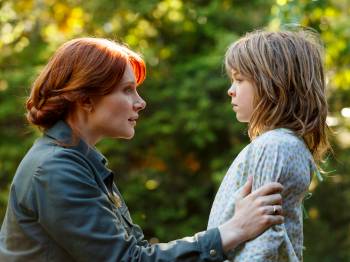
Bryce Dallas Howard stars in “Pete’s Dragon,” out on DVD/Blu-Ray this week. I had a lot of fun talking to her about making the film.

Your character’s deep love for nature is a very important part of the film. Tell me about her.

I play a woman named Grace and she is a Park Ranger. You don’t really know exactly when it takes place but it takes place before cell phones were around certainly, maybe in the early 80’s. And I find a little boy in the forest who inexplicably is alone. And he looks like he has been living there for a long time and it is my character’s job to figure out what happened and to simultaneously protect this boy. And what was amazing about shooting this film kind and the tone of it overall is that because it did take place a while back before we all were so attached to devices and because so much of it was shot in the woods, it was a really healing experience for me personally and I think when folks watch it it’s soothing. It is a very emotional film and a beautiful film but it is very soothing as well and I think it is because so much of it takes place in nature.

Talk to me a little bit about working with Robert Redford. That must have been pretty magical too.

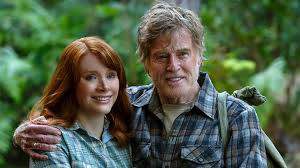
Oh my, it’s awesome. He is the real magical creature of this movie. Okay, Elliott is magical and Robert Redford is maaaaaagical. I’m always going to think back to and kind of pinch myself. He is a very cool guy and I would’ve been super intimidated being around him but he is just so chill and pleasant that you are immediately put at ease in his presence. And he himself is, as you would imagine, an incredible storyteller and so it endless fun talking with him because he’s the most interesting person I’ve probably ever met.

Copyright 2016 Disney

In that early scene, where he is telling the children that story, I thought you couldn’t find a better way to completely captivate the audience.

Exactly right! I know. I know. When I first started watching the movie I had kind of that same reaction. I was like, “Oh my gosh it’s Robert Redford telling a story to the children!”

I know you spend a lot of time on movie sets when you were growing up. What did you learn from that that really has helped you as an actress and. now that you are directing too, as a director?

Honestly everything. Because in most art forms there is some system of kind of mentorship, and apprenticeship and that is how it’s been going on for thousands of years. When it comes to a medium of arts. I think that tradition is — not that it’s lost but it’s not something that’s a huge part of this industry anymore. And I feel like I am so lucky, given that this is now what I do for a living, when I act and direct and write, I feel so grateful that I got to just spend all this time growing up on set, doing odd jobs, watching and learning, asking questions. I had over 20 years of that before I was in a movie and I remember all of it. So, it was something that I feel so lucky about because there is so much trial and error when anyone is creating anything. And to have been able to observe my dad at work and the folks that he worked with and see such a great example of collaboration, teamwork and work ethic, that is something that I definitely apply to everything that I do. At the end of the day that is what a director’s role is, to see the big picture and to create an environment where everyone is going to be able to bring all their talents and abilities to the table and then they go away and they kind of build the house. And I think that is part of what is so exhilarating and exciting about the creative process. As it’s coming together you don’t necessarily know what the end result is going to be like and yet you’re with a group of people you trust and admire and look to to contribute. That’s what is so electrifying and that’s the magic of the creative process.

So, you were in two movies this year where you were essentially pretending to interact with imaginary green lizards. What have you learned from “Jurassic World” and “Pete’s Dragon?”

What I took away from both experiences is that technology is getting better and better, more and more rapidly, especially visual technology. It’s so exciting to get to be privy to these huge strides forward. The first “Jurassic Park” was game-changing in a world of visual effects and practical effects and really ahead of its time, but nowhere near what we can do now. We are in such an exciting place right now because there are these leaps like that being taken all of the time and new technologies that are getting integrated into the creative process and new approaches. For someone who is curious and likes to learn new things, which is who I am, this is the best time to be around. I am so excited.

Related Tags:


Actors Interview
Interview: “Moana” Animator Mark Henn

Interview: “Moana” Animator Mark Henn

Posted on November 25, 2016 at 9:57 pm

Copyright Disney 1016
Copyright Disney 2016

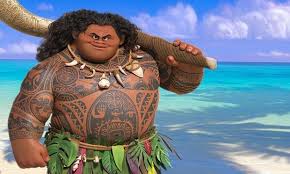
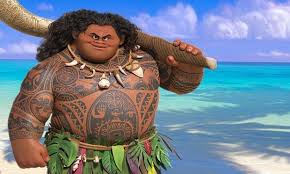
I love talking to Mark Henn, one of the greatest animation artists of all time. And I loved seeing his work in “Moana,” Disney’s new animated musical set in Polynesia. Henn worked on the animated tattoos sported by — and interacting with — Maui, a demi-god played by Dwayne Johnson.

How did the idea of animating Maui’s tattoos come about?

First off, there’s Ron Clements and John Musker. Most of their films have been traditional, hand-drawn and I’ve known them my entire career. So since this is their first CG film, I think it started with a desire from their point of view to in some way if possible to incorporate hand-drawn elements as much as they possibly could.

It had been kicked around early on in the development — how can we do this? And so as they researched when they were in the South Pacific they saw that the tattoos and all of that play a big part culturally for the people of Oceana. So, I think it became very apparent very quickly that this was a very simple but very effective way to incorporate the hand-drawn elements that they both grew up with and were involved with throughout their career and blend it with the modern, the CG computer animation that we we’re doing nowadays.

The tattoos have a very flat graphic character and design so we try to take advantage of that. At the early screenings of the film, in its story sketch phase, they would come out of the screenings and almost everybody to a person would say, “We’ve got to have more tattoos in. We need more of Mini Maui and more tattoos which Eric, we both felt… We were glad to hear that… So, they put him in as much as they possibly could and you’ve seen it… We can’t put any more in.

So, it was perfect really, and it worked out so well. And our technicians really made it very easy. We do our animation on paper and then it is practically a one-button push to get that information then mopped on as we call it and placed onto the CG characters. So it opened up a whole variety of visual things because it was not only the tattoos we did that way but part of Dwayne’s song, “You’re Welcome.” A lot of those elements were all hand-drawn, the dancing figures in the background and those singing little faces and the fish and birds and things. So those are all hand-drawn elements that open the door for more visual interpretations. Because of the limitlessness of the medium we could do all kinds of things. So it was just a lot of fun.

Oh, I love to hear that — it makes me so happy to return to an artist’s hands holding a pen or a brush.

Me too. That makes two of us.

What did you like to draw when you were a kid?

I enjoyed drawing and I drew all kinds of things. I went through my car phase when I was younger and then dogs. I had an experience once in Cleveland. I was doing a promotional tour at the time for “Pocahontas,” and I was in between presentations. A gal approached me backstage with those fateful lines: “Do you remember me?” I had to admit that I didn’t. She said, “Well, we went to high school together and I still have some of your drawings that you did on the bus.” And she pulled out drawings that I had done, and she had saved. I think we were in band together and it was probably on a band trip but she saved these drawings all these years and I was really quite touched by that, that somebody would think enough to keep them. I think they were cavemen or something.

What else did you do in “Moana?”

It was primarily the tattoos but tEric Goldberg and myself animated actually the opening part of the prologue when you hear grandmother explaining the history to the kids of how the world in their mind was fashioned. And you see these serpents and you see the crab and the first little image of Maui changing into the hawk, and the Island of the Sea raising up and spreading out. We also did a lot of these tapas which are these illustrated images that comes from Oceana the South Pacific. Those appear in the prologue and then a big part of Dwayne’s “You’re Welcome” song has that tapa look. The tapa paper, the type of paper that they use is similar to papyrus. It’s actually made from tree bark and some other organic materials so it has a real heavy texture to it. The technology allows us to create that look, to make it look like the tapa paper that they saw in person when they went on their research trips and then they were able to then give it a 3-D effect and made it look like it was torn on the edges. It was a lot of fun and as I said, it looks great.

Do you have a favorite classic Disney animated character?

I have many, no question, but one of my all-time favorites is Captain Hook and Frank Thomas, who animated Captain Hook, is still one of my inspirational animators. As for the ones I have animated, I get asked that question quite a bit and I always feel like Frank, who always said that it’s kind of like trying to pick a favorite child. But if push comes to shove and I had to pick one that just has a very, very ever so slight lead I would maybe go with Mulan.

I know your faith is very important to you. Would you like to share a favorite Bible verse?

For me like most people or a lot of people John 3:16 is foundational for me and has always been.

Related Tags:


Behind the Scenes Interview
THE MOVIE MOM® is a registered trademark of Nell Minow. Use of the mark without express consent from Nell Minow constitutes trademark infringement and unfair competition in violation of federal and state laws. All material © Nell Minow 1995-2026, all rights reserved, and no use or republication is permitted without explicit permission. This site hosts Nell Minow’s Movie Mom® archive, with material that originally appeared on Yahoo! Movies, Beliefnet, and other sources. Much of her new material can be found at Rogerebert.com, Huffington Post, and WheretoWatch. Her books include The Movie Mom’s Guide to Family Movies and 101 Must-See Movie Moments, and she can be heard each week on radio stations across the country.

Website Designed by Max LaZebnik