Interview: Kenneth Lonergan on “Manchester By the Sea”

Interview: Kenneth Lonergan on “Manchester By the Sea”

Posted on November 18, 2016 at 3:28 pm
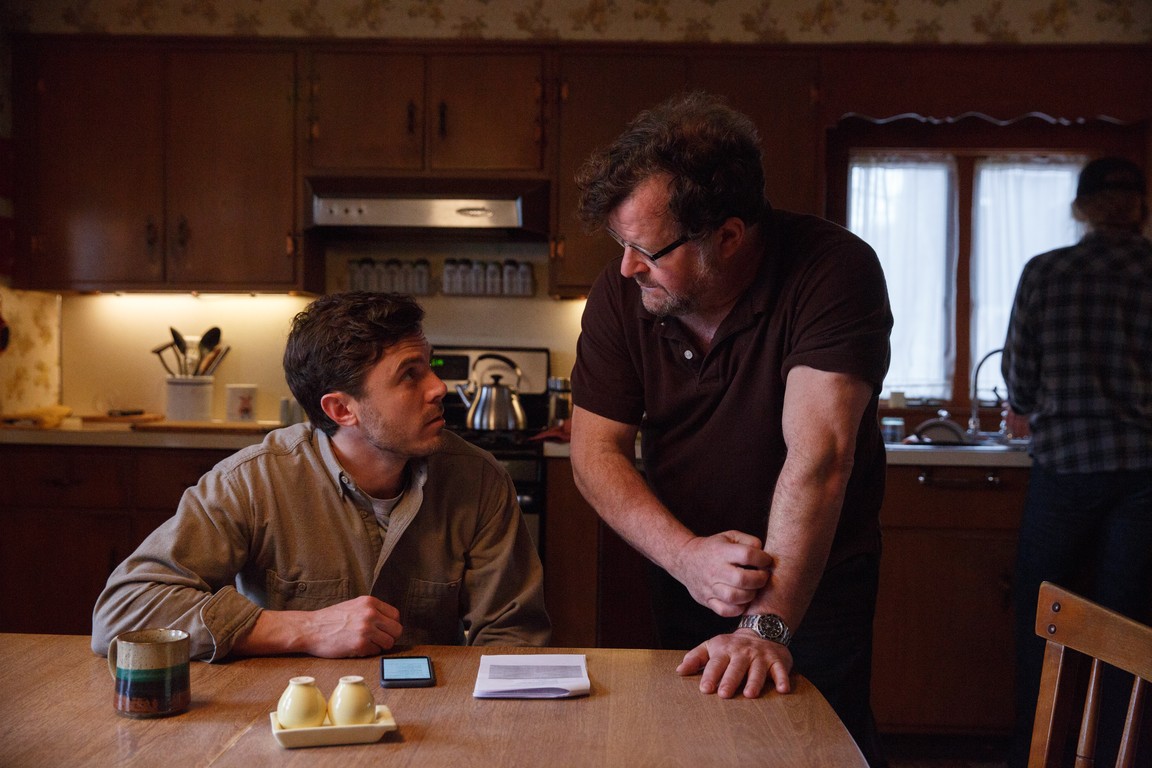
Copyright 2016 Pearl Street Films

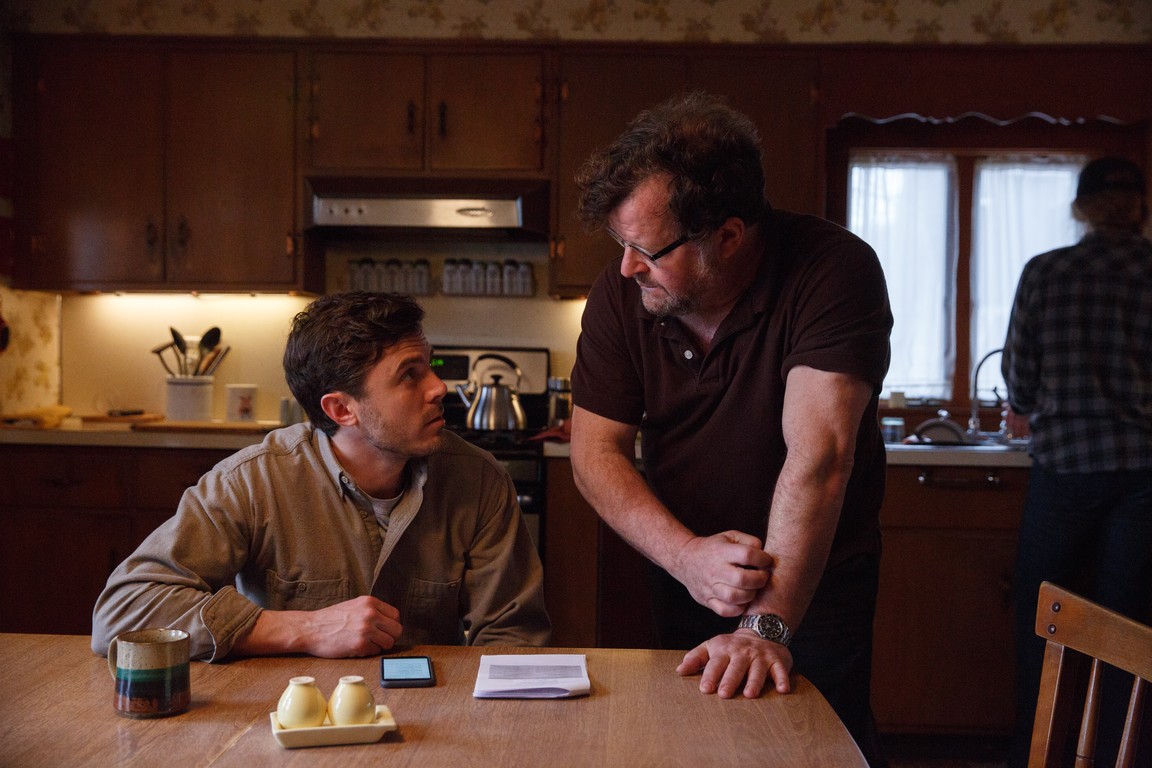
Writer/director Kenneth Lonergan spoke to a small group of journalists about his exquisite new film, “Manchester by the Sea,” starring Casey Affleck, Michelle Williams, and Gretchen Mol. Affleck plays Lee, a man who is the guardian for his teenage nephew Lucas after his brother dies. He has difficulty adjusting because he is still dealing with a loss of his own.

It is not the usual Hollywood story of redemption and it includes some surprising humor, so we began by asking him how he developed the script.”I just try to be as strictly faithful to what I imagined it would really be like as possible and hope that that would give a ring of truth to it. It was a little bit of a special challenge with this story because he does go through some things that really no one should ever have to go through and nothing like that has ever happened to me, fortunately, and I wanted to be respectful of that and not rub people’s faces in it too much and not exploit it for sentimental value. I felt a little funny writing a story about this terrible thing that really happens to people so I wanted to treat it with some respect and some verisimilitude and part of that turned out to be including other things are happening too, like the fact that the kids life is totally different. He’s had a rough time, too, but he is very resilient. He is young and he has got a lot going on and there’s a lot of life bubbling up around Casey’s character that he is not a part of. The draft before last I think was a little too heavy, like a little too grim, a little relentless. I had shown Casey the script just to get his opinion and he agreed with me. So I didn’t take out anything but I added a little bit more, some other elements around Casey’s character. We’ve all had the experience. You walk out of a hospital room in terrible distress and a bunch of kids walk by and they are shouting and laughing or you walk by a couple having some idiot fight that you have had yourself many times and it’s just the whole different level of experience side-by-side with yours and that to me felt more like life than just being grim and heavy about everything, letting the grimness and heaviness affect the whole world of the movie.”

The movie trusts its audience to be patient and lets the information about what his going on and what has happened in the past come out gradually. We asked about the jigsaw-puzzle construction of the film. “The initial draft of the script wasn’t going too well. It was started before the accident, before the tragedy, it started at the beginning and it just went chronologically and I got bored very quickly so I started over. I’ve often done this when I don’t know what to do, I just throw out everything and I only leave what I really like. And the first thing that I liked was him a shoveling snow and doing his chores as a handyman. So that’s where I started and I had written all this material about what had happened to him in his past and when I brought that in later as flashbacks when he’s going home, that felt really full and good to me so that had a side benefit of creating a certain amount of suspense. Like what’s with them? What’s going on with him? And doling out the back story in sections I think creates a little bit of interest in what’s happening with him, what happened to him to make him so seemingly detached and strange. I figured if I can follow it, I figure the audience would be able to follow it. I’m not really, really good at guessing what people are going to like or what they’re going to be interested in and so I just to interest myself and hope and figure they will come along with me.”

Affleck gives a performance of enormous sensitivity. “He’s just great and I’ve always wanted to work with him. We’ve been looking for something to do together since 2002 and I just think he’s just a really special actor. I just love him everything he does. He’s just got this strange private inner life. You don’t quite know what’s going on with that but you are interested to find out. He’s really funny, he’s got an amazing depth, he is great to work with, he’s really thorough and it just breaks your heart to watch him I think in this movie.” Lee is not very expressive emotionally, a challenge for an actor. “It’s just too much, there’s more pain than a person can express or endure and every time I had him finally cracked , it felt false to me because I just don’t think he can afford to do that. I think it becomes undone after he gets himself beaten up and when he is sitting on the sofa crying, I think that’s the most he can do, kind of just let himself be undone, but I don’t think there is an eruption coming from him because it’s too much. He is warding off too much distress. So I think that’s why it just always felt like it was false to me or too on the nose or something. I mean early drafts of the script I had him pull over to the side of the road when he is driving to town and cry in the car and I was just like, ‘No, I would do that — I cry in commercials — but he is in a lot more pain than I am and he can’t afford to do that.'”

Michelle Williams, who has a small but memorable role as Lee’s ex-wife Randy, “does like to ask a lot of questions and I really like that because I like to try to answer the questions and I like to ask them myself. So we talked about the relationship when the marriage is going well, we talked about just generally sort of person she was, we talked a lot and she did a lot of work on her own about the difference between the present and the past for Randy, the past and the Randy in the present. She worked out all that stuff about her costume and her hair in consultation with me but she sent me photographs. Her haircuts might be sound like a superficial approach but this is someone whose life has been destroyed who’s starting over and stepping out. My idea about Randy is she is one of the pretty girls in high school but she really doesn’t care about that so she wears sweatpants and T-shirts, she’s got three kids, she doesn’t have time to like doll up and she has a great, really good relationship with her husband so she’s just lying in bed with a cold. And then we discussed that after her life is undone and she comes back she doesn’t have that kind of self-assurance anymore, so she is more nervous, so she needs a little bit more of armor when she goes out. So she gets her hair done, she wears makeup now and she has a nice coat and she’s just much less relaxed and that’s a real profound change based on a really devastating tragedy that she’s getting around but she’s also someone who is trying to start over and is able to do that, not that she’s going to be able to put it behind her but she’s at least able to move forward. So, it was great having those discussions with her because she is so creative and so thoughtful and so empathetic and she really worked so hard on these small scenes. She just shows up at a set and just gives it everything. And it was really freaky because we’d be working and Michelle would come and give it everything and go away and then we’d be working some more and then like two days later and give it all. I mean it’s very impressive, I love her.”

The city in the title is, as its name shows, on the ocean, and the water is important to the story. An early flashback scene shows Lee, his brother (Kyle Chandler) and his nephew having a lot of fun fishing on a boat. “The ocean doesn’t suddenly turn into mud when something bad happens to you. It is still very beautiful there. That’s one of the problems for Lee because he used to love it and now it’s agony for him. It’s also says something about the music that I think lifts the perspective of the movie a bit above the ground and maybe, to me it’s like you’re driving and you are focused and you don’t notice that there’s this big blue sky overhead and it is there and so occasionally you just see it again. I didn’t set out to do that but I think that’s one of the things the music does.”

He talked about the decision to have a resolution that is imperfect and messy, not the usual movie ending of hope and redemption. “I find people really responding to just that. There are a lot of good movies about that but we all know there are lot of really sickening sentimental movies about that that are essentially as fictional as lies, emotional lies. We all know that life doesn’t work like that. And I think it’s an insult to people’s intelligence to be preaching to them how they are not dealing with some tragedy properly. I think people are a little bit sick of that. When it’s done well it’s beautiful but when it’s done in the same old routinized sentimental way it’s kind of insulting. People go through really horrible stuff in life and I don’t think it’s so terrible to put some of it on the screen in a way that is truthful. People find that to be somewhat helpful to see your own experience reflected honestly by these performances makes people feels less isolated. I hope for that.”
Related Tags:


Directors Interview Writers

Interview: Stephen Apkon and Marcina Hales on “Disturbing the Peace,” a Moving and Inspiring Documentary about Israelis and Palestinians Working Together

Posted on November 17, 2016 at 3:28 pm

The song from “South Pacific” gets it right. Fear, bigotry, don’t come naturally. “You have to be carefully taught.” The moving and inspiring new documentary, “Disturbing the Peace,” tells the story of people who were “carefully taught” to hate each other, Israelis and Palestinians, but have learned that they share more than they could imagine, especially when it comes to to devastating grief and a deep sense of responsibility for causing grief to others. I first saw the film at Ebertfest last spring and have not stopped thinking about it. So I was especially grateful to get a chance to speak with the filmmakers, Stephen Apkon and Marcina Hales.

The title of the film refers to the irony that the activists portrayed in the film are often arrested at their non-violent demonstrations for “disturbing the peace” when what they are trying to do is send a message of peace to stop the killing that has been going on for decades. And it is a reference to the charges filed against Rosa Parks, Martin Luther King, Nelson Mandela, and others who have protested to make a more just world. “The really good question,” Apkon said, “is ‘Whose peace are they disturbing?’ That was a really profound one for us. And it also speaks to the idea that the first peace we need to disturb is our own and to really challenge the stories and the narratives that we accept as reality. One of the things one of the characters in the film told us that is not in the movie but he often talks about how if you want to grow up in a society with the mythology of the hero you have to create the villain. Hollywood films don’t exist without the hero and the villain and so we constantly do that within our own minds.” Hales added, “One of the narratives that we have to really pay attention to, to begin with, is the narrative of there being a hero and then a villain. I think that that is one of the ones that is predominant. You’ll see it in a narrative right here in America and all across the world.” Apkon said If you ask how those narratives get conveyed, it strikes me that it’s less in what we’re taught didactically than the soup that we swim in. I remember I was living in the region and my daughter was five years old at the time and she went off to kindergarten knowing not a word of Hebrew and some girl followed her all around the schoolyard and became her friend. And a few months into it my daughter was fluent in Hebrew. Her friend was sitting at dinner with her one night and she looks at her and said in Hebrew, ‘Who taught you to speak Hebrew?’ So my daughter, she looks at her and she said, ‘You did.’ She had no awareness of learning. She just absorbed it. So we pick up these narratives in the air that we breathe. It’s how memes are perpetuated and communicated throughout our society. ‘You can’t trust them.’ You do not know who taught you. It is all around you so it feels like the truth. It is not just in a book. It’s in our songs, it’s in our culture, it’s in what we say at the dinner table, it’s in our media.”

Hales said that one of the things they most wanted the film to do was “to actually get below the stories, the content and actually look at how it functions because it functions on a lot of levels. It functions on the individual level, just take a look at our own lives, and it functions at different levels having to do with our cities and our towns and in our political systems everywhere. So if we can see and show how it works, once you know you cannot not know, and it becomes apparent and we can look for them and actually create a different story.”

The film had its premiere at Ebertfest and was given the festival’s first-ever Ebertfest Humanitarian Award. Apkon said, “She was actually one of our first disturbers of the peace in a sense that, we were over in Israel finishing the edit and had an experience over there that we both wrote about in social media. Chaz immediately picked up on it and wrote us a letter saying, ‘When can I see this film?’ We literally finished the film around a window where Chaz could see the it. And so having her turn around and having at Ebertfest, having the courage to do that before it had been in any other festival was huge and she has really been an amazing.”

One especially affecting scene in the film is an argument, thoughtful, not heated, but reflecting real pain felt by both of them. I asked how they were able to film that very intimate conversation, which feels as though the couple is unaware of any cameras. Hales said that kind of honesty was their goal. “The idea was to get people comfortable enough to actually feel that vulnerability, that authenticity, that real conversation, and it is being able to hold that space of confidence and trust and admiration that Steve does.” The wife in that conversation was the last of the people in that film to see it, and Hales and Apkon were apprehensive about how she would respond to it. “When the film ended she was very emotional and she was really thankful that the film had been made. There was a sense of a tremendous relief in her ability to express where her angers came from, where her hurt came from. And as she talked about how her mother raised her with this hope that her children wouldn’t know an occupation and now here she is, her children are growing up that way. She wishes the same for them but understands the realities are different that they have never known a day not under occupation. And I think that’s a reality that very few can even imagine.”

Apkon said, “Two questions that come up quite often. First, ‘Is it Pro-Israeli or is it Pro-Palestinian?’ Our answer is yes. It’s pro humanity. As one person says at the end of the film, ‘Each person’s freedom and dignity is based on the other person’s.’ So we want for the other what we want for ourselves. The second thing is this question that comes up around balance people would often watch the film and they would be asking themselves especially in the first half of the film, ‘Is it balanced?’ We always look at that from our own cultural framework. For us it’s not a question of balance; it’s really the question of integration. The question is, can we integrate? Can we not look at the balance and the extreme but can we recognize our capacity for both extreme? Can we recognize as says in the film, “When we first find each other we found we have something in common, our willingness to kill people we don’t know” and she thought in essence we find that we both share the desire for peace?”

Related Tags:


Documentary Interview
Interview: Eddie Redmayne, Star of “Fantastic Beasts and Where to Find Them”

Interview: Eddie Redmayne, Star of “Fantastic Beasts and Where to Find Them”

Posted on November 16, 2016 at 8:00 am

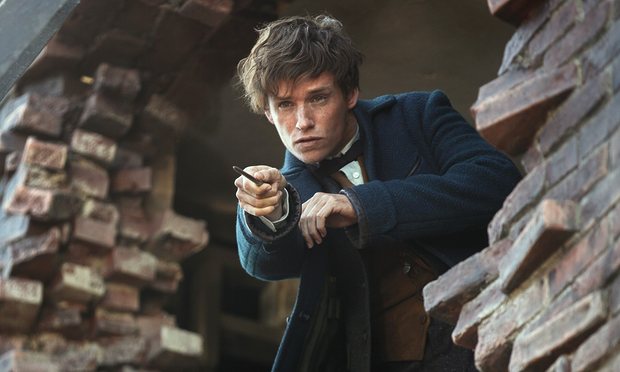
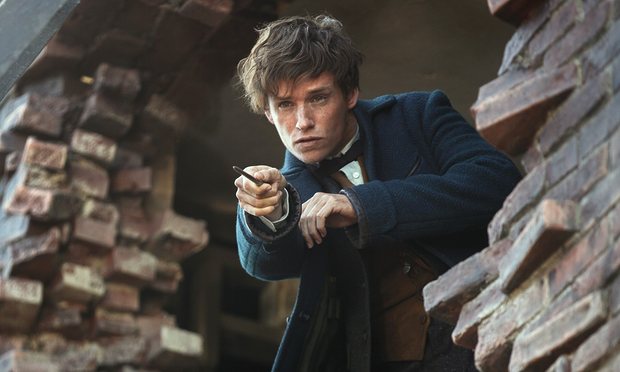
Copyright 2016 Warner Brothers
Eddie Redmayne stars in the first film from the Harry Potter universe to be set the the past, the first to be set in the United States, and the first with a screenplay by author J.K. Rowling, who has promised that this film will be followed by four sequels. In an interview, Redmayne talked about creating his character, Newt Scamander, a Magizoologist. “One of the things I love is Newt, perhaps at the beginning of this film is certainly more capable of interacting with creatures than he is with human beings. A lot of that is about observing and listening and there is an empathy that comes in life through really listening rather than just sort of cosmetically listening that is super important. But sometimes life is so noisy and there is so much distress, everyone is shouting to be heard. Those people that truly listen, of which Newt is one, it’s an amazing quality.” His wife is an expert on antiques, so I asked which of the century items in the film she would like to bring home. “There was kind of a wizarding antique in there, in the Magical Congress of America, as Newt and Tina walked in there, there is a wand shiner which is a kind of feather-boa-ed antique machine that polishes wands and she had her eye on that.” As for him, he said he “thought long and hard” about which of the magical creatures he would like to bring home and “I couldn’t possibly say anyone other than Pickett who is the bowtruckle stick insect that has attachment issues and Newt knows he shouldn’t have favorites but he sort of can’t help it.”

While the first film in a series is often an introduction with a lot of exposition, “whetting one’s appetite, but what I loved about this script is it always stood alone for me. I found it very moving and cathartic and a whole piece. I love the character of Newt and I would love to get to re-visit him again but I suppose that will only happen if people enjoy this film so hopefully we’ll get to make more.”

He was especially grateful for a chance to work with costume design legend Colleen Atwood, and consulted with her “massively. I loved all of my wardrobe. Colleen Atwood is extraordinary. I think it was Newt’s coat that is my favorite. It was an amazing color and also I thought it was amazing how the coat could look very kind of sort of eccentric and English but then also when he whipped up the collar, he could turn into a bit of an action man. So I found that kind of cool. It’s always something that I use as part of the process of discovering who a character is. Often when you go and meet a costume designer they will have whole pages of inspiration, of photos from the period, of people’s different items of clothing. Sometimes it can be one little thing that makes a difference. In fact, in this film Newt has a little pocket watch that sits in his waistcoat that you never even see in this film but on the chain hangs a tiny little thing that Colleen found which has a little bird on it and somehow that clock, that little watch became a key into who he was, I don’t quite know how, but it was really wonderful. So I love that process and I find it a massively important part of discovering who a character is. We spoke quite a lot about the character, how the clothes would frame Newt. What I love is he hides quite a lot and it is almost as if everything is a size or two too small for him and that really affected his physicality. So when I first put the clothes on fully, I was sort of playing with his physicality and the two things merged in a good way, so that was quite reassuring.”

He had just made two period films, “The Theory of Everything” and “The Danish Girl,” and loved going back in time again. “Because of ‘The Danish Girl,’ which is also set in the 1920’s, I was kind of familiar with that period. I listened to some jazz and I got some amazing books. David Heymann, the producer of the film, give us a book of New York over the years from the 19th century into the early 20th century, sort of as photographs arrived, and so that was source material that was really useful.”

Related Tags:


Actors Interview
Interview: “Pete’s Dragon” Screenwriter David Lowery

Interview: “Pete’s Dragon” Screenwriter David Lowery

Posted on November 15, 2016 at 8:00 am

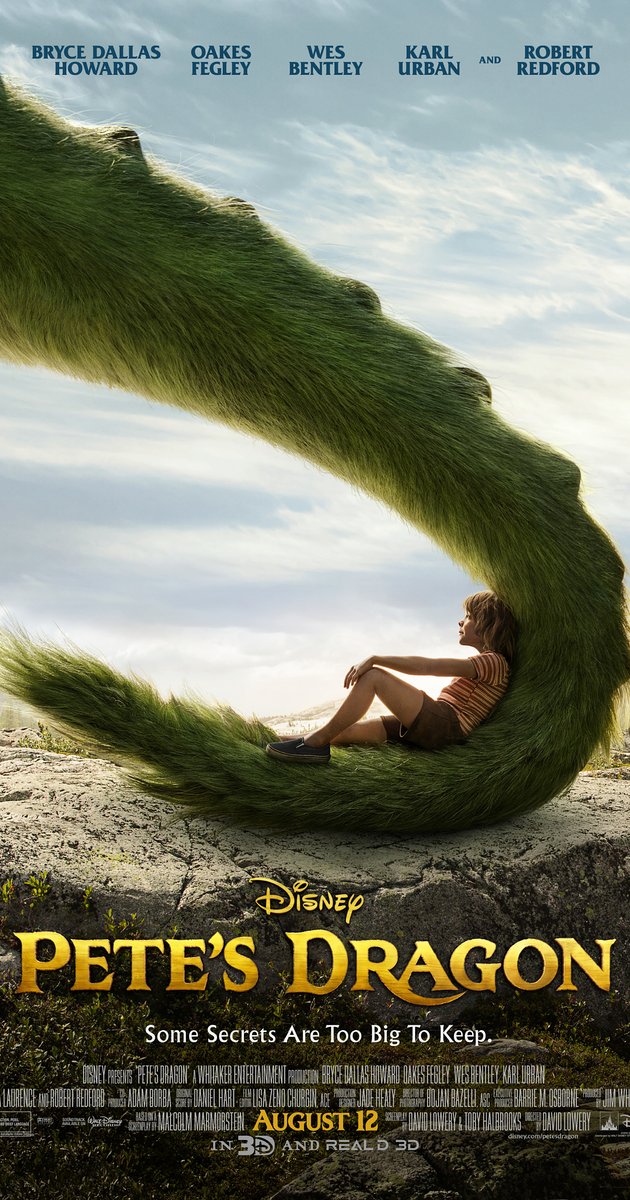
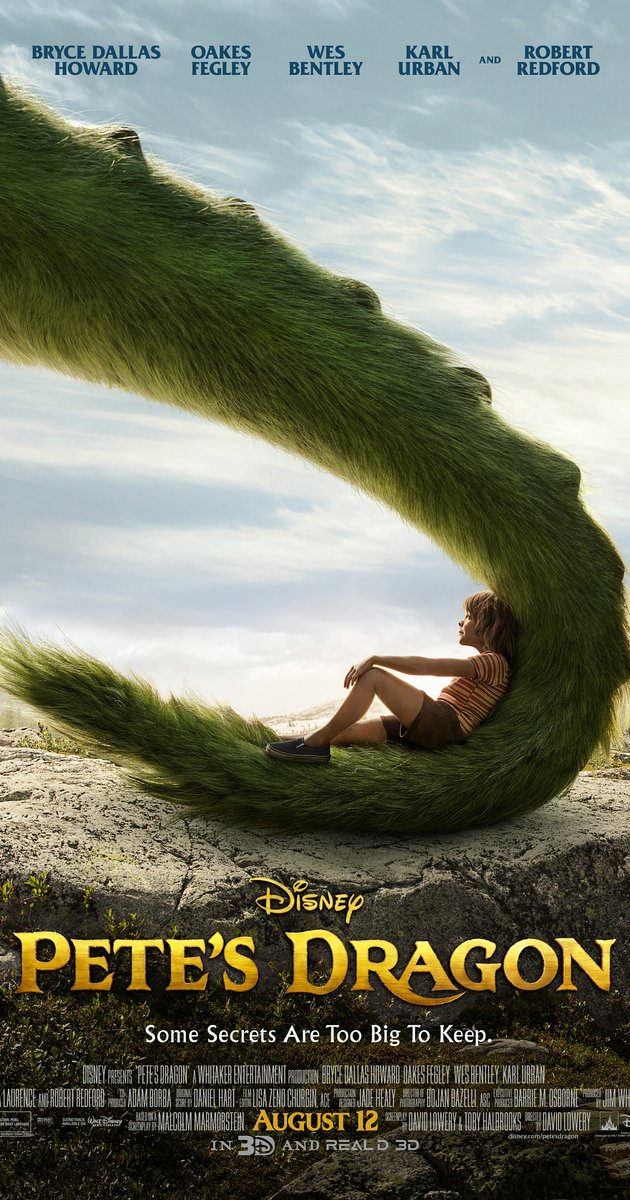
Pete’s Dragon” screenwriter David Lowery answered my questions about updating and transforming the Disney classic for a live-action 21st century remake, and how being the oldest of nine children helped him learn how to tell stories. The movie is available on DVD/Blu-ray November 29, 2016.

How did you decide what elements of the original were important to you to keep and what new elements you wanted to add?

The only elements I wanted to keep from the original was a dragon named Elliott who could turn invisible and a boy named Pete who was an orphan. And I took those elements and thought that if I just maintained those and kept the title I would have the flexibility to tell a completely new story that would stand alongside the original on its own two feet. And that was it, I took those elements, I didn’t go back and watch the original. I just really wanted to focus on telling a new story and creating something the audience could appreciate and love just as much as they loved the original.

How did growing up with so many younger sisters and brothers help you become a writer? Did you read to them, tell them stories?

Copyright 2016 Disney

Oh man, that is a great question. I have eight younger brothers and sisters and it really taught me how to tap into a childlike sensibility. I definitely read to them. We wrote stories together, we wrote comic books together, we made movies together. Whenever I made a movie, my siblings were the actors. So we were creative together all the time. My parents encouraged us to always be expressing ourselves creatively through the arts, whether that be through movies or music and books, or drawings or paintings. And it really, I think, has had a big effect on who I am today as a filmmaker, not only in terms of my sense of collaboration but also in the way I approach storytelling. I always approach every movie I make whether it’s for adults or families with a very childlike sensibility and I think that’s because I spent so much of my life growing up around so many other kids and it really has an effect on how I see the world, how I want to see the world and how I feel I can best tell a story.

When you began working on the film what did you learn about the capacity for special effects or technology that inspired some of the storyline?

One of the things that was fun about this movie was getting to do visual effects on a scale that I never had done before. I knew a little bit about how CGI worked and how visual effects worked and I knew that Elliot would be entirely created on the computer but there was a lot that I had to learn, especially once we got done shooting and were in post production and I saw all the work that went into making him do anything. If they wanted him to blink his eyes it required a lot of steps to get him to blink his eyes right. It is an incredible team at Weta who brought him to life. There are modelers and sculptors, there are animators, there are people who are in charge of putting the 20 million hairs of fur on the body and making sure that that fur moves right if the wind is blowing. It’s just really incredible and so I learned a lot. There is no shortage of boring technical details that I could fill in here but it’s really amazing what is possible with modern digital technology. At the same time it’s important to learn the limits of it. You don’t push it too far because at the end of the day you want the movie to feel real. You want to feel like it is really happening. You want actors to feel like they belong in this world and so you have to find the right balance with it as well.

Your work often focuses on children who are on their own. Why is that a good basis for a story?

If a child is on their own they have somewhere they need to get, there is somewhere they need to be and that automatically gives your story a narrative arc because all of a sudden you have a journey that must be embarked upon. Whether it is a little kid that has run away from home or a little kid like my first film “St. Nick” or a little kid who is lost in the woods like “Pete’s Dragon” or even a grown-up who thinks he’s still a little kid like in my last film “Ain’t Them Bodies Saints,” where the Casey Affleck character in that movie a full grown man who is on the inside just a 7 year old playing with a gun and trying to find where he belongs in the world — I have gradually realized it is one of the key tenets of all my movies. It wasn’t intentional but I think part of it comes from having such a strong home life, of having such a strong family that I’m coming from that the thought of not having that has been the basis for so many of the stories I have sought to tell on the big screen. You tell stories of what you know but also you imagine yourself in different circumstances and how you would react to that. And I try to imagine myself in a world where I didn’t have the things I had growing up or I wasn’t surrounded by such a strong family that cared for me. That is great food for thought but also a great basis for exploring various stories.

Okay this is a two-part question, do you remember the first Disney movie you saw?

The very first Disney movie I saw was also the very first movie I ever saw, period. and that was “Pinocchio.” It was re-released in theaters in the 80s and my parents let me go see it and I just was spellbound. I had a huge crush on the Blue Fairy. There was a big cardboard stand of the Blue Fairy in the lobby of the theater and I wanted to take it home. I was just madly in love with her at the age of three or four, however old I was. I guess my favorite Disney animated character would probably be Ariel from “The Little Mermaid” because I was just obsessed with that movie. I really love that I really connected to her character and I still love it. I remember when we were shooting “Pete’s Dragon” when we moved locations as I got to another hotel and turned on the TV and “The Little Mermaid” was playing and I just sat down and watched the whole thing and that was one of the happiest moment in the entire shoot.

One thing that I loved about the film is that the bad guy is not entirely bad. What do you think makes a good movie villain?

David: You know a really good movie villain is someone who you love to hate, who is very enjoyable to watch even though you don’t like him but also one who you understand. You might not agree with him but you understand where he is coming from. With the character Gavin, I think the character is kind of a big dummy, he’s not the brightest, he is not the sharpest tool in the set but he doesn’t want to be a bad person, he thinks he is doing the right thing, he thinks he is protecting the town or protecting the kids and I think that’s important. I think it’s really important especially in this day and age to have empathy for people you don’t understand and you don’t agree with. And to understand they are not necessarily evil even if you strongly disagree with what they’re doing. So Gavin does some horrible things in this movie, he does some really bad things, but I wanted to make sure he was someone who can learn, who can grow because I believe that all people can and who ultimately isn’t that bad of a person because I do believe everybody has goodness in them and I wanted that to be present in this character.

There are some great movie villains who are just purely evil, I certainly enjoyed a lot of them over the course of movie history and sometimes it’s really fun to see someone you just purely hate and you’re happy to see die at the end of the film but I personally wanted to make a movie where the bad guy was someone who wasn’t purely bad but who got better, who grew as a human being. I really think that it’s important, especially for children, to see that there is more than one side to every story. There are perspectives that you are going to have to learn to adjust to as you grow older and as you meet people of different beliefs and different values and to understand that people make mistakes and come back from them and be better for it. I think that all those things are important for kids to understand and I wanted to just touch on that a little bit with the character of Gavin.

The forest in the story feels magical all on its own. How do you see the role of the natural world in the film and why is that important?

I think nature is spectacular, I really think it’s full of mystery and wonder and so many amazing things that we don’t even, we can’t even see. The ecosystem in the natural world that is beyond our comprehension is proof that magic does exist in the world. I don’t think that magic exists in terms of spells or witchcraft or anything like that but I do think that magic exists in the natural world and the forest. And I wanted the forest in the film to convey that sense of wonder and awe and mystery and magic because I do believe that that’s what you find in the real world.

Related Tags:


Behind the Scenes Interview Writers
Interview: Co-Director Angus MacLane on “Finding Dory”

Interview: Co-Director Angus MacLane on “Finding Dory”

Posted on November 14, 2016 at 8:00 am

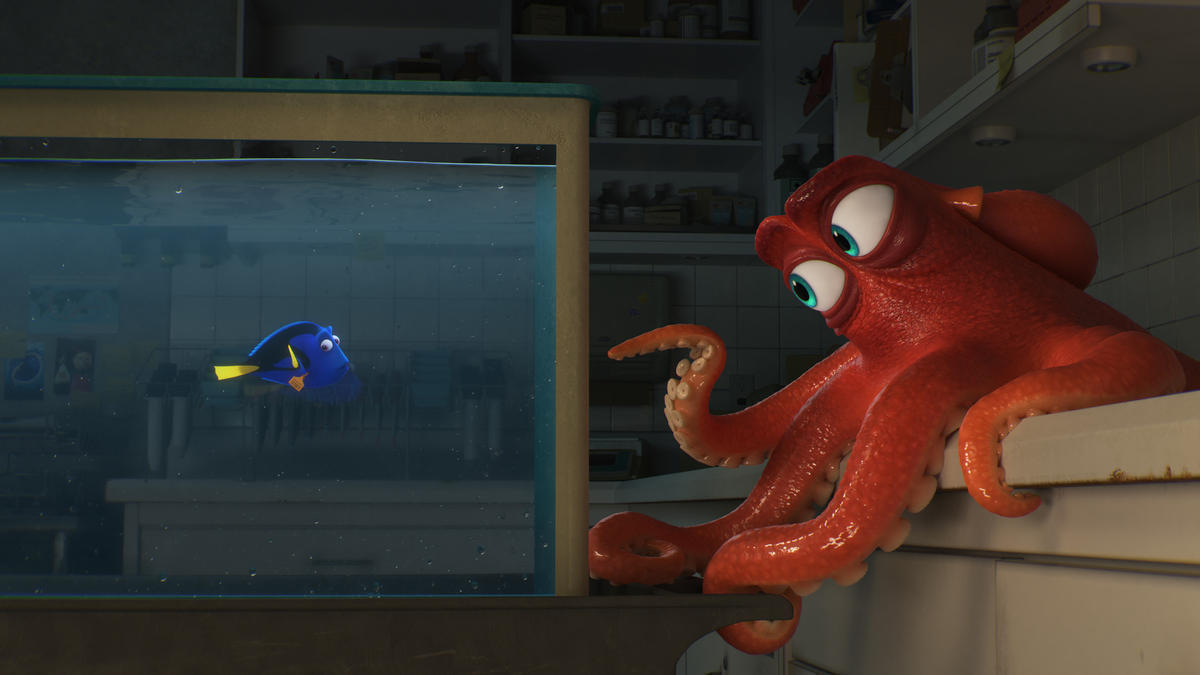
Angus MacLane is co-director of the adorable “Finding Dory,” the sequel to “Finding Nemo.” In an interview, he spoke about the changes in technology and the decision to shift the focus to the memory-impaired fish voiced by Ellen DeGeneres. The DVD/Blu-Ray is available November 15, 2016.

How has the technology changed since finding Nemo and how did that affect your story, the setting and the characters?

That’s a good question. I think that thirteen years from release to release is such a huge time technologically. And so there was a brand-new animation system, there were brand-new articulation tools for the characters, there were brand-new lighting tools that were entirely different. So basically the system from the ground up was different. I think that one of the things that was a challenge in the first film was that water was so difficult to do and very complex, so it was difficult. It is still difficult but the effects we could get were so much more satisfying technologically that what we wanted to do was not the challenge that it was in the first film.

And so it just afforded us the chance to not worry about how these characters could break the surface of the water, which would have been a challenge in the first film, or where we were going to really spend our dollars doing splashes or big effects. They weren’t insignificant but it wasn’t a major hurdle in the same way where we would have to carefully plan for each of those effects that would potentially affect our story thirteen years ago. The technology improves and the renders in the computer speed improve and we’re always asking the computers and everyone to do things that are infinitely harder to keep pace with the speed and the technology. So it wasn’t any faster necessarily but we did have a lot of new technologies and a very capable crew to implement them and try out a bunch of new and interesting things.

Most sequels continue the story of the main character but this one makes Nemo and Marlin secondary to Dory. What went into that decision?

Well I think that the reason to do this film for Andrew Stanton really rested in seeing “Finding Nemo” in 3D several years ago, long after its release. He was worried about Dory. And so the question about where she had come from and if she was going to be okay became the reason for him to make the movie, the question that he most wanted to answer. So the idea was after this film the audience members would not be concerned for Dory and feel confident that if she got lost she could find your way back again.

This film has at least five characters with disabilities including Nemo, Dory and Hank. What was most important to you portraying the way that these characters adapt to and think about these disabilities?

I think the thing that was most important to us was that we showed them as four dimensional characters. Everyone in the film is at kind of a different stage than Dory is about their disability. Dory over the course of the film — not to spoil it for those people that haven’t seen it — but she learns to fully accept and embrace her disability and work it in a way that she did not at the beginning of the film. Hank has already moved past that. He is already on to other things. He isn’t worried about it that much. I think that people with disabilities, they have everyday struggles but I think more than anything, the ones that we are familiar with are certainly very, very capable and it was about portraying the truth in that.

What exactly does a co-director do?

Copyright 2016 Disney

The co-director position is different for every movie. I had worked with Andrew most closely on “Wall-E” as a story artist and he was a Directing Animator and then he was the Executive Producer on “Burn-E,” the short film, and then on “Toy Story Of Terror.” So we had a wonderful creative partnership that continued on this film.

When I started working on the film, Andrew asked that I just try to do what wasn’t getting done and try to fill in the gaps. I was in pretty much all the meetings Andrew was in and there were some things that he delegated to me to manage. I would have input on pretty much everything with the understanding that it is ultimately Andrew’s decision. But he is a generous creative partner and an intelligent creative partner in the sense that he has surrounded himself with people who are not afraid to disagree with him if they have different opinions. And so a lot of the job is suggesting different ideas or trying to take a different point of view, and trying to drill down to get to the best idea. So it’s kind of a second opinion.

Do you remember your first Disney animated film you ever saw and what made the most significant impression?

It was either “Sleeping Beauty” or “The Rescuers.” For Sleeping Beauty it would have been that in the end Prince Philip has a battle with a dragon. And if it was “The Rescuers” I think it had this kind of really muted and dark and dirty colour palette that was kind of similar to or echoed a lot of the unease and uncomfortability of the 70’s animation. Most notable was the concept of a giant diamond inside this skull. It was kind of terrifying to me as a kid, so that kind of freaked me out.

And what was the best advice you ever got about directing, from Andrew Stanton or any of your other role models?

The most helpful stuff is just doing the job or being next to somebody that’s doing the job day in and day out and seeing the minutia that they deal with. But there’s something that John Lasseter said once about if you’re giving someone direction and they are not getting you what you want it’s not their fault, it’s your fault for not explaining it well. To me that’s just fantastic advice because in addition to being the person that explains what your vision is, it’s also your job to get other people excited about your vision. It should be a collaborative effort that involves all parties and it starts with the director and continues with the crew.

There are so many comedic moments throughout “Finding Dory.” Where do you guys fine inspiration to make it so funny from start to finish?

Angus: Most of it is trying to make each other laugh — to try to do something that’s weird, something that we think is funny. If you come with a gag that is in story, we try to make sure that that gag continues or is able to read as it goes through the production pipeline because jokes can be funny for different reasons and often jokes can be ruined if the elements that make it funny aren’t adhered to or understood as it goes through production. I’m glad you think it’s funny because I think we just are trying to make each other laugh, that’s kind of our rule.

Related Tags:


Behind the Scenes Interview
THE MOVIE MOM® is a registered trademark of Nell Minow. Use of the mark without express consent from Nell Minow constitutes trademark infringement and unfair competition in violation of federal and state laws. All material © Nell Minow 1995-2026, all rights reserved, and no use or republication is permitted without explicit permission. This site hosts Nell Minow’s Movie Mom® archive, with material that originally appeared on Yahoo! Movies, Beliefnet, and other sources. Much of her new material can be found at Rogerebert.com, Huffington Post, and WheretoWatch. Her books include The Movie Mom’s Guide to Family Movies and 101 Must-See Movie Moments, and she can be heard each week on radio stations across the country.

Website Designed by Max LaZebnik