Interview: Chad Hartigan on “Morris from America”

Posted on August 20, 2016 at 11:28 pm

Being 13 is agonizing because of the upheaval that makes you feel like an outsider from kids, from adults, and from yourself. In “Morris from America,” the title character is a 13-year-old who is an outsider. He and his father have just moved to Germany, where everything is different and he does not know anyone. He cannot speak the language, he is younger than the other kids, and he and his father are the only black people in the community, and, it seems, the entire country. Craig Robinson and Markees Christmas give outstanding performances as father and son. Writer/director Chad Hartigan has created a sensitive, funny, poignant film and it was a pleasure to talk to him.

I love that conversation between Morris and his father at the end of the film. Tell me a little bit where that came from.

It’s probably a little bit of a fantasy. I don’t have kids myself and so if I’m imagining what I might be like as a dad of course I’m going to come up with a sympathetic and wise version. I really like the idea of a dad who is really trying his best and a kid who is deep down a good kid. Two things that I think most people would find inherently undramatic but that I thought you could still have a dramatic relationship between them.

I understand that the movie is in some way sort of autobiographical, that you lived abroad when you were Morris’s age. Is that right?

Yes but that’s kind of actually maybe the least autobiographical thing about it. I did live in Cyprus until I was 12 or 13 and then we moved to the States. So it’s almost a reverse scenario. My mom is American and I have always had an American accent and I went to an international school in Cyprus so I was very well accepted there. In the States it took me a long time to make friends but no one ever thought or assumed I was a foreigner, so I kind of got away with it a little bit. The movie is autobiographical more in the sense of the specific things that happened to me during my painful adolescence and falling in love for the first time with a girl.

The bad hip hop in the film is what I wrote when I was young. I really wrote that when I was 12 and my teacher found it and gave it to my mom and I got in big trouble. When I was collecting anecdotes from my life I thought, “Oh, wouldn’t it have been funny if I got in trouble because these are so bad instead of what I actually got into trouble for, because of the content.” But when he raps well at the end that we had to outsource to someone who was better than me.

How do you find a person that age who is self-aware enough to be able to give such a sensitive portrayal?

It was extremely hard. It took months and a lot of looking and that’s also the quality that’s hard to kind of gauge. You can never really expect that one is going to come in and nail it from a technical acting standpoint so you have to be looking for other things and a lot of the times you are not even sure what those things are yourself. You are maybe just looking to be surprised in some way. Markees had a very stiff actual audition but he surprised me with the questions that he asked. I always asked the kids if there’s anything they wanted to know before we started, about if they thought of anything reading the scenes and he just asked the questions that in their simplicity made it seem like he was thinking about this in a much different way than all the other kids.

How do you make him comfortable with some of the sensitive and vulnerable scenes? He is so natural.

In January I did a call back with Markees and the call back was still a little bit stiff. I wasn’t totally sure if he was the one, to be honest, but we were going to shoot the movie in June and we had already spent so many months casting that I was faced with the decision of either keep waiting and hope that a kid walks in the door and blows my mind or cast someone now and use the time from January to June and work with him. And I decided to do that with Markees. I really just went to his house about once a week and not to rehearse or anything but just to hang out and for him to get a feel of who I was and build a relationship and to meet his friends. I think that in the end that was really was essential because on the set in a foreign place I was the one person that he was most familiar and most comfortable with.

It was a great pleasure to see Craig Robinson in a more serious role. He gives a beautiful performance.

He wasn’t the first person I saw in the role either, but sometimes the movie god is looking out for you and giving you what you don’t always know you need. We had another actor we were talking to and that broke down and then someone brought up Craig and I was like, “I love him but can he do this? Can he do the German, the monologue?” I wasn’t sure but I got to meet him and talk with him and I asked David Gordon Green who directed “Pineapple Express.” He spoke very highly of Craig. So that was another case where I was like, “Well he is willing to take a chance on me, I should be willing to take a chance on him.” We did and I’m very happy that we did.

What made you decide to set the film in Germany?

I knew I wanted to make a film in Europe just because I’m a dual citizen and feel like it’s a part of my identity that I want to take more advantage of. And then when I came up with the coming of age story I was like, “Well, since I lived there as a teen this one might make sense,” Germany was the most recent country I had visited so I started writing it for there. The more I put into it the more it the more it just felt like the right fit. They all speak English there. I tried to learn for the movie, I tried to really do a crash course and I did learn enough to get by ordering at restaurants, that kind of stuff but it was a fact that they all spoke enough English that’s that made it easy to work there.

There is a moment in your film when Inga has a difficult message to deliver about Morris and the father’s reaction to her is very surprising. Tell me a little bit about what you wanted to achieve with that interaction.

I believe that good screenwriting and the hardest kind of screenwriting is when two characters are at odds with each other or arguing and the allegiance of the audience can shift between them or that one half of the audience can be in one character’s side on the other vice a versa because it’s much more common and easier to just have one person clearly be right and that person is sort of the surrogate for the right. But I like the fact that some people think that she overreacts by even coming there in the first place and bringing this up and that some people think that he overreacts by really shutting her down and telling her to mind her own business. I’m always just trying to find a way to make sure that not one person is 100 percent right when I write a scene like that.

What advice do you give young filmmakers who come to you for help?

I like to tell young film makers, especially ones that are just graduating now, that there is no rush to either make films or if you do want to make films, to worry about them being successful. I really feel like I was lucky to come out of film school at a time when there wasn’t an intense pressure to be so productive and so successful so young. I just think that it really takes a lot of time, a lot of failure and also the more you live your life not trying to make films the more you’ll have to pull from when you do make films. So I think that if people can just have patience it really is a virtue in this career.
Related Tags:


Directors Interview Writers
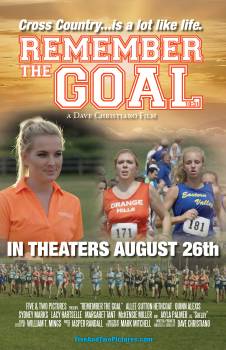
Interview: Dave Christiano from Cross Country Racing Movie “Remember the Goal”

Interview: Dave Christiano from Cross Country Racing Movie “Remember the Goal”

Posted on August 19, 2016 at 3:24 pm

Copyright 2016 Dave Christiano Films

In “Remember the Goal,” a new female coach fresh out of college takes over the cross country program at an all girls private Christian school and tries to lead them to their first state title. Real-life cross country coach Dave Christiano wrote and directed the film. In an interview, Christiano compared coaching and directing and what he did to make sure that this film, the first-ever to focus on girls’ cross country, was as accurate as possible.

What makes cross-country different from other kind of running events?

Cross country is an endurance race of 5000 meters in high school so it’s longer than any high school track running event. Cross country is a fall sport. Track is spring.

What do cross-country runners think about when they run?

Runners think mainly about their pace. If they are running too fast, they know a wall is coming and they will get very tired, start hurting and want to stop. It is so hard to run a race, say the last 1/3 of it, when you are dead tired and hurting from the pain of it. Correct pacing is very important and hard to do.

What did you to do make sure the cross-country running scenes were authentic?

As a former runner in high school and college, and a coach of two high school teams, I made sure the sport was portrayed with 100% accuracy. The pacing is right, the spacing is right, the finishes are right. The number of fans cheering is correct. I did no fantasy or foolishness to the sport that perhaps a movie would attempt to do. All of the lingo is correct that is heard at any meet. I did not need a technical advisor because I know this sport very well and follow it nationally.

Why is it especially important for young women to see female athletes on screen? Is it important for young men, too?

Girl’s athletics gets treated like a second hand sport and this is tragic. Girls compete just as hard as boys, just as well as boys, and are as athletic as boys. Because boys are bigger and stronger, they can run faster and jump higher. Everybody needs role models and each gender identifies with their own. It’s important to see strong female athletes and there are many, especially in running. Just look at the Olympics. The highest rated events are girl related in the Olympics. In cross country girls are closing the gap on boys when it comes to times. Girls playing sports build discipline and can keep them out of trouble. Cross country especially is a good sport for discipline.

How have the Rio Olympics inspired young athletes?

Everybody follows a winner and people are inspired by athletes who do well. Young athletes envision themselves competing for gold and it’s a motivation for them. Sports are a good thing.

How is directing different from coaching?

Directing and Coaching are pretty much the same. The key word is Preparation. Coaches and Directors must do their homework BEFORE the game or before you shoot a scene. They both guide, instruct, mastermind, and hopefully succeed.

What do you want people to talk about on the way home after seeing the film?

My hope is that people will be inspired and uplifted as a result of seeing the movie. I also hope the life lessons presented will be beneficial for tough decisions teens and parents have to make in their day to day living. Lastly, I hope that they reflect upon the Lord which can give the ultimate purpose in life.

Related Tags:


Directors Interview
Ben-Hur Interview: Roma Downey

Ben-Hur Interview: Roma Downey

Posted on August 18, 2016 at 1:21 pm

It takes a lot of courage to re-make a film that holds the record (tied with “Titanic” and “Lord of the Rings”) for the most Oscars, but producer Roma Downey has more than updated movie-making technology to bring to “Ben-Hur.” After the success of their previous Biblical epics “The Bible” and “A.D.” they wanted to tell a story from the era with another perspective. The 1870 Lew Wallace novel Ben-Hur: A Tale of the Christ is adjacent to the story of Jesus, and that gave them the chance to tell non-Biblical story about a personal journey with exciting adventures and profound inspiration.

In an interview Downey spoke about what led them to the project and what they hope people will learn from it — and about how many cameras were used to create the thrillingly dynamic chariot race scene.

How do you begin to think about topping one of the most famous scenes in movie history, the 1959 “Ben-Hur” chariot race?

It is the most breathtaking scene in the film, there’s no question about that. You will inhale when those chariots come out of the starting gate. Eight chariots, 32 horses come charging down that track and chances are you won’t exhale until one of them crosses the finish line. It is really amazing. Timur Bekmambetov, our director, did an incredible job. He studied at NASCAR, he looked at Formula 1. He figured out all these different and exciting places he can place a small camera, in the wheels of the chariot, between the ears of the horses, on the armor of the riders. He even put a GoPro in an old soccer ball in the middle of the track so the chariots rode over the top of it. And then when he cuts all these things together from all these different angles, it builds the most exciting sequence that you’re going to see on screen this summer.

And how did you select Jack Huston for the role that Charlton Heston made so iconic? Tell me about the cast.

He is just a really hot up-and-coming actor, and this role of Judah Ben-Hur is certain to be a star-making role for him. I’m sure it will make him a household name. He has all the qualities that we were looking for, an actor who could be princely, who could play the young Prince Judah at the start of the movie. And he played so well the physical; he is athletic. The chariot race isn’t just all stunt doubles and body doubles, this guy was really at the reins of these horses, he was really out there courageously coming down that track, riding that chariot. And he also has a beautiful vulnerability. Remember it’s a character who is confined with his heart set on revenge but because of an encounter with Jesus his heart softens and opens even into a desire to be reconciled even into forgiveness. We needed an actor who could display vulnerability for that broken period of life. So I think that you will agree that his performance is just amazing. And of course we also have Toby Kebbell who plays Messala, the adopted brother. Their on-screen chemistry is amazing. And last but not least the great Morgan Freeman playing the role of Ilderrim and the Brazilian superstar Rodrigo Santoro, who plays the role of Jesus for us, a very important role in this film, differing from the 1959 version that really had more of a sense of Jesus, we never really got to meet Jesus the man, we never got to see his face, we never really got to hear his message. In our film we made certain that Jesus was an important character and you get to see him interact with people, you get to see how he engages with the characters and you get to see how he transforms particularly the heart of our leading character Ben-Hur.

I’ve done a lot of research about all the various versions of this story going back to the book published in 1870. Was your first exposure the Charlton Heston movie?

Yes, it was. I have very vivid memories of curling up with my family every Easter in our little home in Northern Ireland watching Ben-Hur. I have the loveliest memories of that movie but you know the truth is it was fifty-five years ago. The world that we live in has changed since then and our expectations of what we hope to see on screen have changed since then, cinema has changed and editing styles are faster. It was a very long idea with an intermission in the middle of it and I don’t know if the audience really would be willing to sit that long for a movie anymore. And also I think the acting style has changed. We now expect a more naturalistic acting style. And of course what we are able to achieve through special effects has transformed amazingly in the last 50 years. We have kids at home, Mark and I, and when we told them that we were going to be on the producing team of Ben-Hur they actually responded, “Ben who?” indicating to us that there is a whole new generation that actually doesn’t know the story, hasn’t seen it, haven’t even heard of it and so we believe it’s a whole new audience who will be excited to see this great story back on the big screen.

What was it like to tell another Biblical era story from the perspective of a fictional character whose story only touches briefly on Jesus?

“The Bible” and “The Son of God” were 100% focused on the Bible or Jesus or the apostles. We loved making this movie which follows Lew Wallace’s story because of the way that he used Jesus as a smaller part of a bigger story. In the same way this movie will appeal to a very widespread large audience because in the end it’s an entertaining fun big action adventure movie. Woven through it however, is this beautiful story of an encounter with Jesus which changes everything and so I think we have been very faithful to the spirit and the intentions of Lew Wallace.

As the producer, you have to worry about everything. What worried you the most?

Copyright 2016 Paramount

We talked about the chariot race and you can only imagine what a logistically complicated project that was. It takes a village to make a movie and thank God on “Ben-Hur” the village was populated with the very best in business, the best horse trainers, the best stunt men, the best camera men, the best special effects team, an amazing director, cinematographer and so on, an incredible group. But I know that the one thing that weighed heavily on our hearts in the shooting of that sequence was safety, first and foremost, that there would be no injury to people and no injury to horses. And so we were very relieved when after two months of principal and second unit photography that sequence finally wrapped.

A scene that was also incredibly moving and extraordinary to recreate was the crucifixion scene. As producers it is our third crucifixion scene in our three years that we’ve got to do that with the Bible series of course which then became “Son of God” and then again with “A.D. The Bible Continues,” so Rodrigo Santoro was the third Jesus that we have cast in a picture and when we hung him from a cross it was the third time that we had re-created the scene. It is a somber set as it always is. Even though it’s a movie you can’t help but being moved by the violent nature of the method of murder and the intensity of just that scene and knowing that Jesus offered himself willingly is incredibly humbling.

It was an extremely cold morning, which presented its own set of challenges for Rodrigo, especially, who had to strip off. The rest of us had the luxury of warm coats and gloves, but he had to be stripped off and be hung from a cross for a long time. We filmed the entire sequence. We know that Jesus said seven things from the cross, so we actually filmed all of that. We weren’t sure what would end up in the movie but the words that Judah needed to hear, the most important things that he needed to hear was on forgiveness: “Father forgive them for they know not what they do.” It’s in that moment that Judah realizes that he could lay down his hate, that he could set down his anger. His heart is opened and he realizes the only way forward is to forgive and that ultimately is a message of the movie. That vengeance doesn’t work, that it will just leave you empty, it doesn’t to get you anywhere and as Jesus said the only way forward is love and forgiveness.

Related Tags:


Behind the Scenes Interview
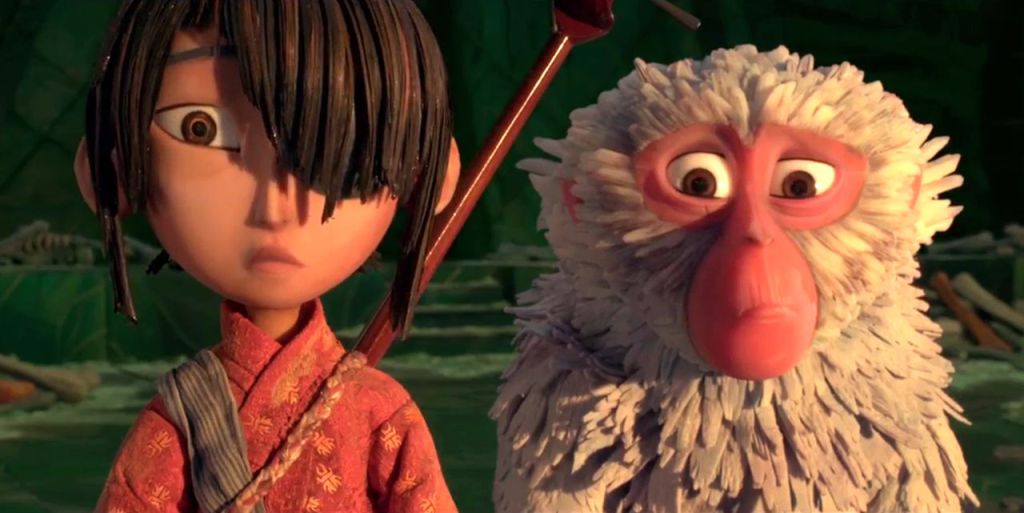
Interview: Travis Knight on “Kubo and the Two Strings”

Interview: Travis Knight on “Kubo and the Two Strings”

Posted on August 16, 2016 at 3:10 pm

On my visit to LAIKA, I spoke with producer/director Travis Knight about this week’s magical new release, “Kubo and the Two Strings,” one of my favorite films of the year.

Knight, who is also the CEO of LAIKA, said that the project started a decade ago, and “all of our lives poured this thing into the world….We have a multi-national crew pulled from around the world. We are magpies, scavengers, pulling from our lives, all swirled into a gumbo.”

This is LAIKA’s fourth film. All have created in their Portland, Oregon studio through stop-motion animation, but each has been a huge leap forward in ambitious use of materials and technology and each has been completely new in the world it has created. “There’s an inherent restlessness here.” And he believes that “there is an inherent humanity that comes in the process of creating art. You can’t separate it from the art itself. The act of creating things by hand imbues them with a humanity you can’t get any other way.” Stop-action animation “injects a different kind of life.

“Philosophically, it’s been important to tell new and original stories, reaching a kid in a darkened cinema, touching a part of yourself you didn’t really think of before. It is one of the prime functions of the mind. Good stories can change us and open up the way we connect to each other.” The basis for “Kubo” is an imaginary ancient Japan. Kubo is a boy with magical ability through origami who cares for his fragile mother, who relinquished her own magical power to protect him from his powerful grandfather and aunts. “The look is always rooted in the story. Each film has been different thematically and required a different look. This one was inspired by Japanese artists like Hiroshige and Hokusai.” The world of the film is inspired by Japanese woodblock prints, with strong colors, asymmetry, and striking, uncluttered composition. “We immersed ourselves” in the Japanese aesthetic, origami, poetry, late EDO period dolls, “the spareness and symmetry is woven through the design language.” The origami designs echo through the film in the simplified shapes, textures, and folds.

Copyright 2016 Focus

“I’m in no way a purist,” when it comes to what is a practical effect and what is CGI, Knight said. “But you want to capture as much in camera as you can to make sure it is unified.” He is grateful for the chance to combine art, science, and technology, “to make peace with it, embrace it, and use it. We have a big bag of tricks and will use whatever it takes to tell the story….It’s the astronaut and the caveman working together.”

Knight spoke about the films that moved him, starting with “E.T.” It was the first time a film made him cry. “The deep-seated loneliness and then the connection to the creature. That took me to Kurasawa.” He fell in love with “big fantasy epics.” He believes that the more specific the details, the more universal the reach of the story. But for him, this was very personal. “Kubo is me — a storyteller and an animator.”

Related Tags:


Behind the Scenes Directors Interview
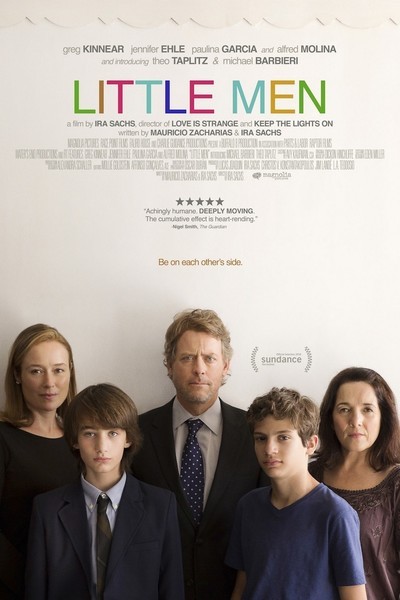
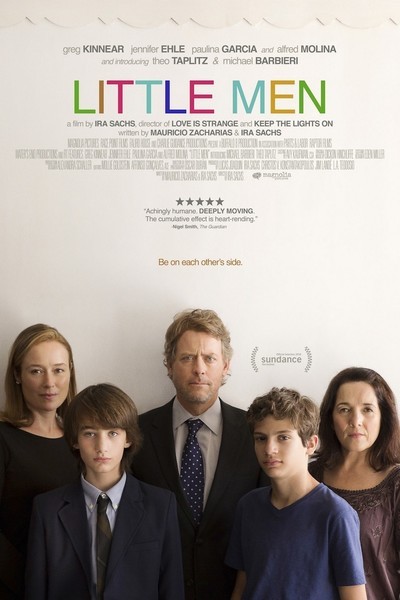
Interview: Ira Sachs on “Little Men”

Interview: Ira Sachs on “Little Men”

Posted on August 13, 2016 at 6:35 pm

Copyright 2016 Magnolia
Ira Sachs is one of my favorite filmmakers and one of my favorite people to interview. So it was a very great pleasure to speak to him about his new film, Little Men.

The last time we spoke, you were still a fairly new father. The parents in this film really struggle with their middle school children, especially when they decide to give their parents the silent treatment.

I actually think about the challenges of what it is to be a good parent and that’s something I totally empathize with Greg Kinnear’s character in “Little Men.” And I had thought even the last couple of days how challenging it is not to impose yourself and your own experience and your own ambitions on your children. So what I hope is that my kids in middle school can talk to me and I can listen, but it seems really a hard one. Like to maintain conversation with your kids, to be able to continue to be in dialogue with them. It’s what Greg Kinnear is not successful at in in this film on some level and why he regrets his own choices as a parent. He tried to cover up the tough stuff and I think kids pick up too much for you to do that. When I see parents who are not tortured by the teenage years is because somehow they were able to establish some version of that, some intimacy. Intimacy with your kids is not a given. And probably also to let your kids have their privacy, like not assume that everything is part of your story, and let them have their own stories, that’s what I think my parents did really well.

Tell me about my favorite scene in the movie which was that fantastic apparently improvised scene in the theater class.

Thank you. And thank those actors and kids. Michael Barbieri who plays Tony had gone to the Lee Strasburg Institute to study acting from when he was nine years old and when we shot the film he was 13. That is his acting teacher so they had this kind of warm familiarity. What was important to me in that scene was that the character Tony, his dream is to go to Laguardia High School for the performing arts as an actor and I wanted the audience to know how talented he was so that they could hope for him that he could achieve his dreams. I will tell you that Michael Barbieri has been accepted to Laguardia High School so he will be going there in the fall. That scene reminds me actually of “The Carol Burnett Show” in the sense that the wall drops for a moment and you feel totally included in what’s going on in the performance. I saw clapping during that scene is that that scene really lets the audience in, in a really entertaining way.

And your husband went there, right?

My husband also went there, yes. In a way art has the ability to transform lives in many different ways including a shift in kind of class experience that it can give access to. I

I loved it when Tony said he was reading the Eugene O’Neill play “Ah Wilderness.”

I’m glad you noticed that because I wrote that line and I think it’s one of the funniest in the movie personality. It’s the seriousness of kids. I was a theater kid. I was involved in the Memphis theater growing up and I remember how seriously we took ourselves and how we wanted to be good and all that. Michael has had a very interesting year since this film premiered. He was cast in “The Dark Tower” with Matthew McConaughey and he was just cast in the “Spider-Man” Reboot playing Spider-Man’s best friend. So he’s gone from never acting in a movie to spending eight weeks on a Marvel set and that’s because there’s something inherent, some star talent there.

Greg Kinnear’s character is an actor appearing in a production of Chekhov’s “The Seagull.” Why choose that play as a counterpoint to your story?

Chekhov is the playwright who gives me the permission to focus on the intricacies of everyday life and believe that if I do so with enough rigor and compassion that the stories will be monumental. Really I think that I don’t make small films, I make big films but I made them about the intimate things that happen between people in their everyday lives.

I like the way your films have nice people who have mostly good intentions and but who end up hurting each other. You do it in a very balanced way. And there’s a lot about real estate too I noticed in this one and in your last film, “Love is Strange.” That’s another areas where you Chekhov are alike.

Yes, totally. That’s also Henry James and Edith Wharton and Shakespeare. I mean the questions of home and property and holding on to what they have are the stuff of literature forever really. Oedipus has to go walking, he’s thrown out. These questions are timeless and meaningful. The moral ambiguity I would say, is something that I tried to construct from the screenplay forward. It was important not to stack the cards in anyone’s favor. So the landlord would not be super rich and the tenants would not be super poor. Yhey were both in fact pretty much middle-class families that are fighting for whatever space is left. And I think that creates the kind of suspenseful situation for the audience because they don’t know who to root for.

What I love about Paulina Garcia’s performance is she doesn’t shy away from the ugly, she doesn’t try to sugarcoat her character. This is a woman who is really pushed into the corner and just trying to fight. She’s also trying to protect her son and her livelihood. And she just continues to make some choices, and she continues to make the wrong choices strategically. I have great empathy for that. She used the tools that she has. She is also an actress who is able to sort of inject drama into a scene, you know as soon as you see her that something is off in the story and I think you’ll get unsettled and that’s what the film wants to do because everything unravels in the course of the story.

In the middle of the movie, we see a scene from the Chekhov play. What it was like to essentially direct Chekhov in the middle of all this?

Ira: To be honest it was not the same as what I wanted to achieve in the acting class, where I really wanted you to know this kid had brilliance as an actor. That was not so important for Chekhov. I feel like every small production of Chekhov in a basement in New York City is not stellar but I wanted it to be a good and respectful and I wanted you to understand his investment in it was real and serious.

I think that came across, I thought the detail that really nailed that was the set. It looked exactly like a thoughtful, creative, no budget set. A lot of artistic integrity behind it and no money.

And that’s exactly what it was. We didn’t have a lot of money to put into that scene but wanted it to be very good.

The credits show you’ve got an army of associate producers.

Most of them are people who generously supported the film with their investment. So it’s part of the way that I was able to continue to make films and also to do so truly and independently so that I don’t have one single financer. Instead I have a group of investors who come to the film with lots of different reasons for being involved and believe in me and my autonomy creatively. So it allows me to make very instinctual films.

I’ve begun to think it’s a dress shop like the one in the story and the film can serve as a metaphor to the place of personal and art cinema in our culture in the sense that the numbers don’t really work if you consider capitalism the defining arbiter of value. But if you consider value to be a number of other things including aesthetic, political, social, artistic, then there is a real need and purpose for films like this. But it’s a challenge within the larger structure to hold on.

I run a nonprofit called Queer Art. It was kind of a hobby for six years and then two years ago we formally began to file the 401(c)(3). We support LGBT artists in all disciplines, writers and filmmakers and poets and musicians and really what I believe is if you set up the apparatus which can support the individual artist that’s as significant as a building or putting money in any one film. It’s like a larger apparatus that kind of works the kind of help protect individuality. That’s why it is important for me that films like this find an audience because I think when people see the film they connect to it in a really personal way.

Related Tags:


Directors Interview Writers
THE MOVIE MOM® is a registered trademark of Nell Minow. Use of the mark without express consent from Nell Minow constitutes trademark infringement and unfair competition in violation of federal and state laws. All material © Nell Minow 1995-2026, all rights reserved, and no use or republication is permitted without explicit permission. This site hosts Nell Minow’s Movie Mom® archive, with material that originally appeared on Yahoo! Movies, Beliefnet, and other sources. Much of her new material can be found at Rogerebert.com, Huffington Post, and WheretoWatch. Her books include The Movie Mom’s Guide to Family Movies and 101 Must-See Movie Moments, and she can be heard each week on radio stations across the country.

Website Designed by Max LaZebnik