Interview: Composer Pieter Schlosser

Interview: Composer Pieter Schlosser

Posted on May 23, 2016 at 3:50 pm
Copyright Pieter Schlosser 2016
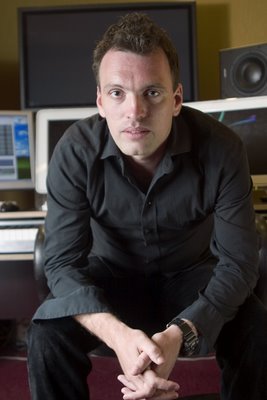
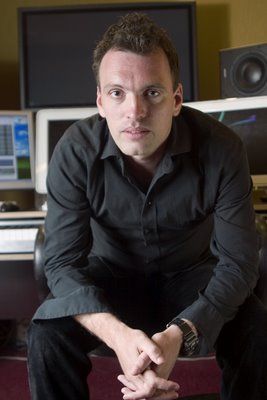
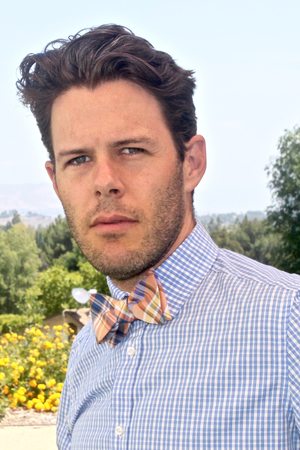
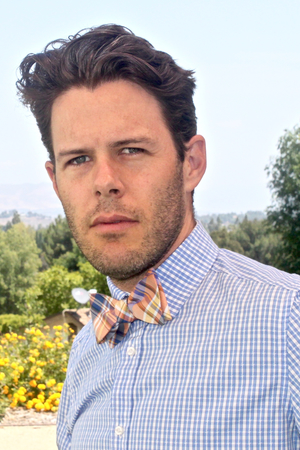
Pieter Schlosser is a versatile composer who has created scores for the retro fact-based drama “The Astronaut Wives Club” and the heightened comic surreal “You, Me, and the Apocalypse.” His multi-cultural outlook is based in part on his heritage, born in Guatemala, raised in Austria, and currently a dual citizen of the US and the Netherlands.

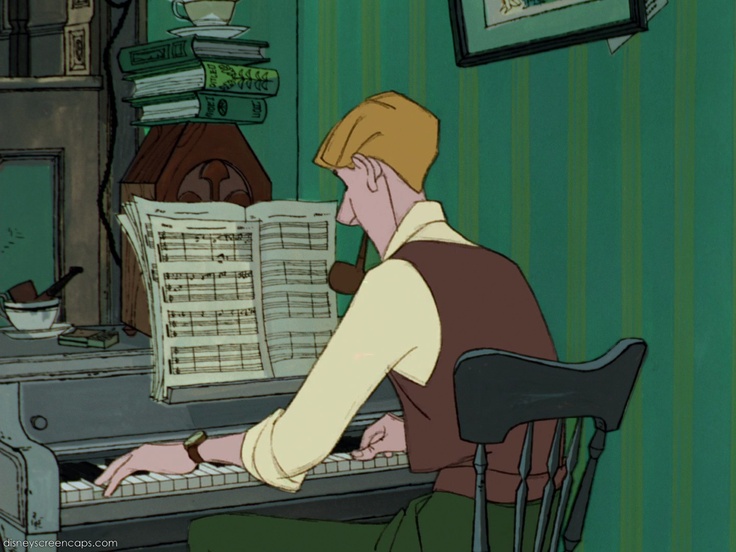
He began playing the piano when he was 9 or 10. “It was my mother’s instrument. we had a piano at the house so it was only logical and practical that that would be the first instrument that I learned. Initially it was me just being curious. This was in Guatemala where I was born and when we moved to Austria, that’s when I started singing in a couple of choirs at school. Music is very much a part of the curriculum there, and I began taking formal piano lessons with a teacher. I was surrounded by music all the time and there was a point that I was singing so much that I seriously considered joining the Vienna boys choir. I was sort of an unusual kid in that sense where I wanted to do things that ‘normal kids’ didn’t necessarily think of. My parents always had music around the house and of course living just outside of Vienna and Austria being the Mecca of music, it was very much a factor.” He was also influenced by the Disney movies he saw, especially “101 Dalmatians,” because “one of the main characters writes jazz tunes so there was always jazz in my life. Roger was essentially scoring his life so that was pretty fascinating to me to have all those elements combined, the guy actually writing jazz tunes and writing about this horrible woman who is in his life. So that is incredibly interesting and it was one of the first things that grabbed me. And then after that the next thing I remember was “The Little Mermaid,” which also sparked my love of redheads in my life.” (He is married to a redhead.)
Copyright Disney 1961

Schlosser has also composed the music for games. “What’s interesting about games is that they are very much nonlinear. They are linear only when you get to what is called cut scenes. So as a player to get to a certain point of the story, it’s basically the scene of the movie, to tell part of the story from a to b. So that one works very much like a film. As far as the gameplay it’s very much interactive and the score is really dependent on what the player does and what’s going on during the game which can vary, there can be nothing going on for 30 minutes and then all of a sudden a monster jumps out at the screen and you have got to find him and the music has to kick in. And so when you are scoring for a game all that has to be kept in mind and what’s interesting about the way that game consoles work now is that you can trigger all these different elements as things happens on screen. So you can write a piece of music that is pretty intense and full on from the beginning but you deliver it to the game company in such a way that they are able to then trigger these different tracks as the game play happens. Now with a film you have an entire arc of about an hour and a half that happened so you’re able to develop themes throughout the entire film and develop your music as the story develops. And in TV it’s a different. When you’re talking about the ‘normal’ TV channels that are dependent on advertisers like ABC, NBC, Fox, whatever, you have a TV show that’s broken up into maybe six or seven acts and those acts are about maybe eight minutes, maybe 10 minutes, maybe they have commercials in between so you have to build your music so that you keep your audience entertained and intrigued so when you cut for commercial they go ‘Oh my God what’s going to happen next?’ so they don’t switch the channel. And that’s changing a little bit now with Netflix and Amazon and Google where you have an arc of an hour or 45 minutes when there aren’t any commercials.”

This was a factor with “You, Me, and the Apocalypse,” which is a joint US/UK production. “So what Steve Jablonsky and I scored was the UK version which does not have commercials in between. So we scored it as a continuous 45 minutes thing sort of the way that maybe a NetFlix show works. And the acting and the story very much informed the way that we were going to approach the scoring of it. There are a lot of comedic moments but still it is about the end of the world. Steve had already discussed a lot of these topics with the producers so he called me and said, ‘Hey, I have this TV show. Do you want to do it with me?’ He had established certain themes and certain sounds like using the banjo for some of the characters and there was an organ also. Certainly tempo and instrumentation were very much a key factor in determining how we were going to score and what was interesting was that in the middle that changed quite a bit and we went a lot more electronic and left a lot of the acoustic instruments behind.”

He is currently working on “What About Love,” starring Sharon Stone and Andy Garcia, who play the parents of a girl who is injured on a trip to Europe. “The relationship between Andy Garcia and Sharon Stone’s characters is really on the rocks and their daughter being in mortal danger in a hospital makes them question everything and kind of go, ‘What is really important here?’ It is a Spanish and German co-production this time. And so they came to me, I scored a couple of scenes for them and somehow it resonated with Klaus the director and I ended up getting the job.” Whether it is television, a movie, or a game, he says, “ultimately it’s about story. So what is important to me that the story resonates.”
Related Tags:


Composers Interview
Interview: Whit Stillman on Adapting Jane Austen in “Love & Friendship”

Interview: Whit Stillman on Adapting Jane Austen in “Love & Friendship”

Posted on May 18, 2016 at 3:37 pm

Whit Stillman is known for his elegant, shrewd, and witty drawing-room comedies about the upper classes, which makes him a natural for adapting Jane Austen. His new film is called “Love & Friendship,” the title of an early Jane Austen novel, but it is based on a different book, the epistolary (told in letters) story of a widow described as “the most accomplished coquette in England.” Lady Susan is played by Kate Beckinsale and her close friend, an American, is played by Stillman favorite Chloe Sevigny. In an interview, Stillman talked about using costumes and music to tell the story and why it took him a few years to appreciate Austen.

How was it adapting a novel told through letters instead of a traditional narrative?

Copyright Amazon Studios 2016

I try to keep the letters to a minimum in it, because it could have been dominated by the letter format, so I had to stay away from that and try to make it pay off when it was used. It’s a long process and it takes a long time. It’s one thing to adapt a novel when you have the scenes and the dialogue from the scenes and you can the novel as written. In this case you had to kind of recast everything, shuffle the deck, and take at least two letters back and forth to make a dialogue scene between two people or various people. It could be more than five letters going into one scene with parts used in another scene. It requires some invention of additional characters and then those characters have their lives and preconceptions and their stories. Although people probably talk about the funny lines in their film and dialogue, everything in film has to be about the story and so it’s all leading to developments and story and characters and where they want to end up and where they’re going to end up.

The costumes are gorgeous.

Eimer Ni Mhaoldomhnaigh, who did the costumes, was one of the first crew names mentioned to me and was the first person of the crew we hired. She was also helpful with many of the other people who were very good in each department. We were talking about the period that it was earlier than what people think of as Jane Austen, the 1790s. It’s a little bit of a broad reach because we think she started writing in 1793 but she didn’t make a clean copy till 1805. So we thought that well if there are things we like in the earlier period we would use them and also the older people could be wearing things from the past and I don’t really like the lines of the later styles. Ladies’ fashion of this period gave us the opportunity to make Lady Susan and her friend, played by Kate and Chloe look sexy and interesting. Lady Susan was a widow and this whole thing of her widowhood was reflected in her clothes. She’s all in black with a veil the first time she is seen and that comes off and she seems sexier and sexier and the colours change over time. So that was Lady Susan’s progression and then the idea for Chloe was more cheerful, bright and colorful. We were down in costume departments in London for a lot of the male actors to make sure we were choosing the right costumes and right livery for the footman and everything.

Why did you switch the title?

I really believe like when you are making film just do everything the best you can. So if you don’t like the title, change it and I didn’t like the title at all. I really hated it and very early like right away when I started working on the adaptation I said I’m not going to work on a film called “Lady Susan” and I had seen Love and Freindship(sic) as one of her other titles and so I immediately titled it “Love and Friendship.” I’m surprised when people asked me, why did you re-title it? For me that’s twelve years old. She had this very Austenian title on a juvenilia story that’s not fascinating. She misspelt friendship and all that. So I thought it was good to have it in the Austenian later tradition. It’s the direction she generally went in. At first I didn’t think that the title bore any relationship to the story. After I finished the film actually I think the title is in the story.

In your first film, Metropolitan, the characters discuss Mansfield Park. So have you been an Austen fan for a long time?

Copyright Amazon Studios 2016
Yes, I have been. I have first, I wrong-footed it, because at 18 when I was in a bad funk and about to take time off from college to go to Mexico, I picked up Northanger Abbey and read it but which was a big mistake because I was an 18 year old guy and I had never read a gothic novel. I had no idea what they were. I had no idea what she was trying to do. I thought it was the most stupid thing and I would tell everyone like for the next five years, “You know I hate Jane Austen. She is so overrated. You know I don’t understand it” blah blah. But my sister is very good at reading. A lot of the good reading habits that I had came from my sister and brother-in-law so one way or another I read Pride and Prejudice and liked it. Then read everything and loved it and became a big Austen fan. Then back when I moved to Paris in 98, I think I was travelling around to promote The Last Days of Disco, I said, “Oh look there is Northanger Abbey. I will buy that and see if I like it now.” And of course I liked it because I’d been in publishing. I had edited Victoria Holt. I knew gothic novels and so I liked it.

I think your Lady Susan is more sympathetic than the one in the book, maybe because Kate Beckinsale plays her so charmingly. She is still manipulative and deceptive, but we can see the reason for it.

She’s not virtuous and but she wants to achieve things that are understandable. She sure wants to achieve them fairly dishonestly. But what she actually does ends up being positive for everyone and with a catalyst it doesn’t really matter what they want to do; it matters how they affect the rest of the world. She’s kind of like that bird on the rhinoceros. She eats the bugs and helps him while she’s riding on his back.

Related Tags:


Directors Interview Writers
Interview: Henry Jackman, Composer for “Captain America: Civil War”

Interview: Henry Jackman, Composer for “Captain America: Civil War”

Posted on May 17, 2016 at 3:37 pm

Henry Jackman is one of Hollywood’s most popular composers, writing scores for films of all kinds, from action films to period dramas to family films, including: “Captain Phillips,” “X-Men: First Class,” “Wreck-It Ralph,” “Puss In Boots,” “Kick Ass,” “Turbo,” “This is the End,” “G.I. Joe: Retaliation,” “Abraham Lincoln Vampire Hunter,” “Man On A Ledge,” “Winnie The Pooh,” “Gulliver’s Travels,” and “Monsters vs. Aliens.” I asked the Russo brothers, who worked with him on “Captain America: Winter Soldier” and “Captain America: Civil War,” what they liked about his music, and they said that his background studying literature gives him a unique understanding of the way music shapes narrative. I always enjoy talking to him.

It’s unusual to hear directors praise a composer for understanding narrative.

Copyright Disney 2015

It’s an interesting remark and it’s something I thought about actually. Sometimes you’ll get asked for the secret of trying to make your way into film music. The question might be to do with technology like what the best software or it could be like what composers to study. What musical background should I have? What orchestration should I be aware of? And the funny thing is, it is true especially in 2016 in order to be a successful or at least a diverse composer you really have to have a pretty decent command of the electronics music, electronic symphonic music, the orchestra. I would say you would want to know must composers from Thomas Tallis right through to john Adams and if you really want to be diverse you should want to know a lot about pop music and rock music and electronic and God knows what else.  But that is only 50 percent of it.

I think the point the Russos were making is that I’ve only retroactively appreciated one of the secret weapons with my literary criticism classes. I had an extremely disciplined and intellectually demanding tutor at school. Funnily enough it turns out that you can have a selection of people who are all fantastic at writing music, the act of writing interesting or creative music. But the secret to filming is that you are presented with a story and so you have to deconstruct the story and understand the story and figure it all out. There is a surface of the story and then there is subtext of the story and there is the structure of the narrative. How’s it working? Where’s the exposition? Where’s the motivation? Where’s the recapitulation. Where does act two begin? Where does act three begin? What’s the dynamic shape of character arcs. All these things are actually almost literary structural thoughts. It’s the sort of thing you did if you were at college and you were reading “The Crucible” and instead of just enjoying it you are sitting around talking about how you would put it together. If you are reading a novel not for enjoyment but in a literary criticism class it’s like taking apart a Swiss watch so you’re not just looking at the time you actually know how the cogs are put together to produce the time. Sometimes it can be very frustrating to a director to get the score and have to say, “It’s not that I don’t like the music. It’s that it’s not helping or enhancing the story. You’re missing the point of what supposed to be happening at this moment in the movie.”

Obviously music should be as well written as humanly possible but not only should it be well written music it should be music whose purpose fully understands the significance story-wise of what’s happening and act as something to enhance the story. When you do that the whole music experience suddenly goes up a gear. It is totally possible to write outstanding music that doesn’t help the film in the slightest, in fact it can even harm it and still be a fantastic piece of music but it’s not paying any attention because it’s wrapped up in itself instead of understanding the mechanics of the scene or indeed how that scene plays into other scenes and how you can even help the filmmakers enhance parts of the story that might not even be finished on screen and that you can complete with music.

That must be a challenge in a film like this where there are so many different characters, many of them with their own movies and memorable themes. I was thinking it might end up like “Peter and the Wolf.”

One of the quickest way to dissipate and dissolve this movie into an endless and unhelpful fabric of constantly different things would be that approach. But in fact, going back to my literary criticism point, if you really break the movie down even though on the surface we have loads of superheroes so what you don’t want to do every time you see one you get a different theme for each one because that’s not what the story’s about. What the story’s about is that extremely powerful entities who have the capability to cause collateral damage to the scale of thousands of dead people who ought to be answerable some sort of institution and the proposal that was put on the table splits the team right down the middle.  It’s “Captain America: Civil War.”  So the movie is about the big argument. Funnily enough, it turns out one of the most useful theme in the movie was the Civil War theme which does not pertain to a specific character but is a narrative theme toward which all the characters can gravitate. It wrapped them all up and it helped to bind the movie together rather than do endless disparate themes. That isn’t to say that there isn’t a Captain America theme in there, or a Spider-Man theme, or a Black Panther theme where appropriate but there’s a bigger story going on, the major conflict within the two teams of superheroes. And so you find with music you can help the directors bind things together narratively. It turns out that Civil War theme was actually very useful for that purpose.

It’s great in terms of visual spectacle. I know the fan boys and girls can go crazy about what happens when this character hits that one and the vibranium is hitting, all that kind of stuff. But on a deeper level what the film is about is consequences. Tony Stark he believes it’s not such a bad idea to have some oversight. He’s wracked with guilt and he’s questioning his relationships. It’s a tricky one. You can invent all sorts of amazing technologies but you can’t quite control who’s using them and what sort of damage and how many lives might have been lost as a result of your very clever technology and all the characters they are dealing with consequences. And we ended up having quite an intense philosophical discussion when I was working on the movie with the Russos because one of the reasons the movie is good is a genuine disagreement about that issue; it’s a genuine argument. I know it’s a Captain America film so people might feel inclined to side with him immediately but it’s a decent argument because there aren’t many structures in the world that can cause that much damage that have absolutely no accountability. It’s actually not a bad argument to go, “Well, maybe there should be.” But simultaneously it’s not a bad argument that Cap has, that his moral compass is so sound he will always rely on his version of what is the right thing to do and that some sort of structure even if it’s the UN and even if it contain the opinion of the entire global community is not be as good as his own internal compass because it will get bogged down in agendas and bureaucracy, which is true. Sometimes the UN is great but sometimes the UN takes about five months to decide whether to use the word “genocide” in a document because if they do they’ll actually have to go into a country and do something. So there’s lot of bureaucratic politics about even using a certain words because it means they’ll actually have to do something which could be controversial. But you can also say to Captain America, “You’re saying you are incapable of error and that you’re never going to make a wrong call.” So you don’t want to play all the different character themes. You want to keep the focus on having to cross the line or stay the other side of the line and it had consequences and it had musical consequences in the score which was the prevalence of that Civil War theme. If you take Captain America’s heroic theme for everything you’ll be telling the audience, “You don’t really need to watch the film because Cap’s right from the beginning and this whole augment doesn’t even mean anything.”

There’s a lot of action in the movie, of course. How do you work with the sound guys to decide what’s louder, the sound effects or the score?

By shouting a lot at the dub staging saying the music is not loud enough. No, it starts off as our own civil war and ends up in harmony. I mean fortunately because I had so long to work on it there are a lot of the cues written in demo form and the sound guys already had them so there could already be a strategy. There’s a lot of “Ok, the scene really kicks in here, so maybe we can find holes in places,” and it’s a balance. You get to the dub stage to do the final audio mix and when the sound effect guy been in there all day the music guy is going, “Wait a minute, you got to get some of the music too,” and when the music guys finish their part, it’s their turn to say, “Wait a minute….” And you get there in the end. It reminds me of parliamentary politics. As long as you have a healthy opposition by time they finish arguing it out you’re just about in the right place. If I were in charge of all of the audio for the film I may very well miss some very important sound effects cause I’m too focused on music and it’s the same with the sound effect guys only vice versa. So you sort of put us all in the room and at the end of it you’ll have everyone’s interest defended to the very last.

Related Tags:


Composers Interview
Interview: Director Rodrigo Garcia on “Last Days in the Desert”

Interview: Director Rodrigo Garcia on “Last Days in the Desert”

Posted on May 11, 2016 at 3:14 pm

Copyright Broad Green 2016

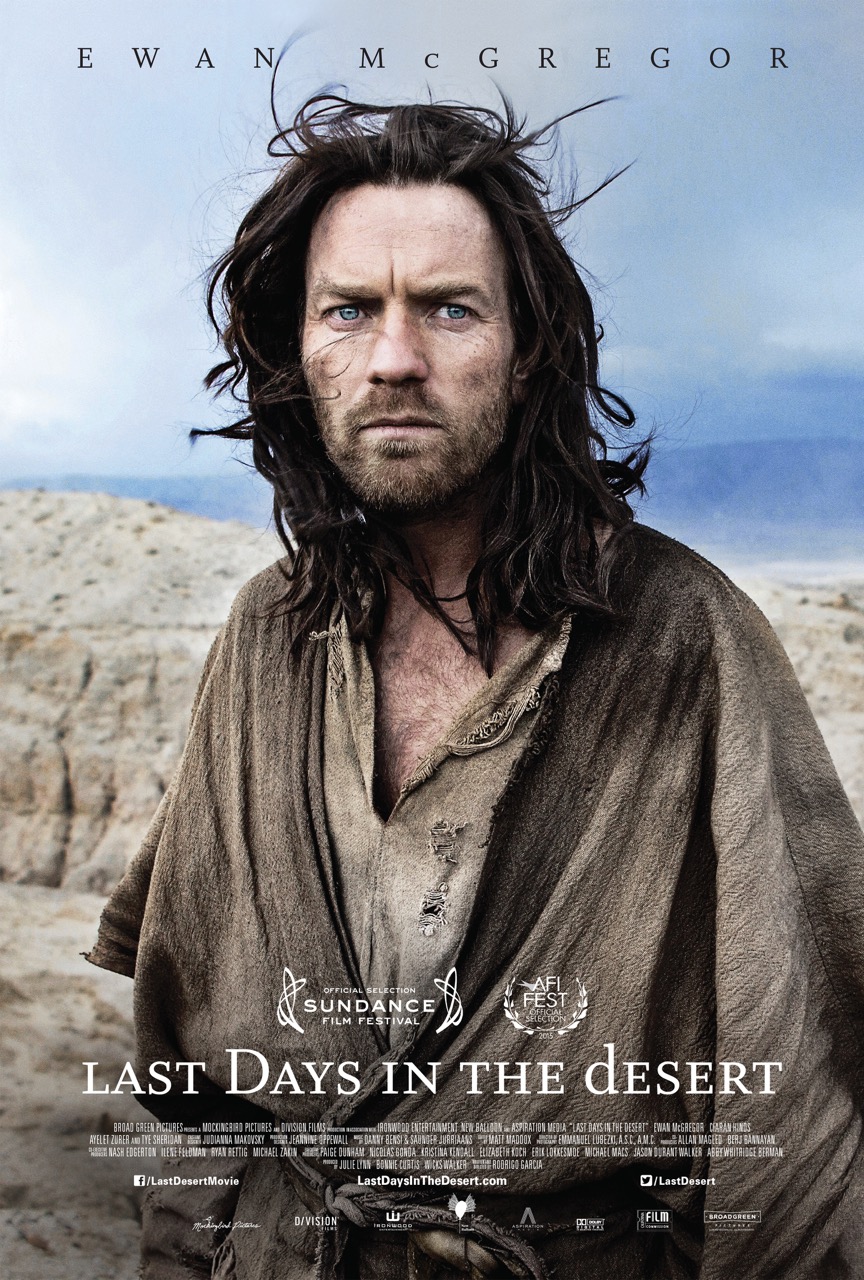
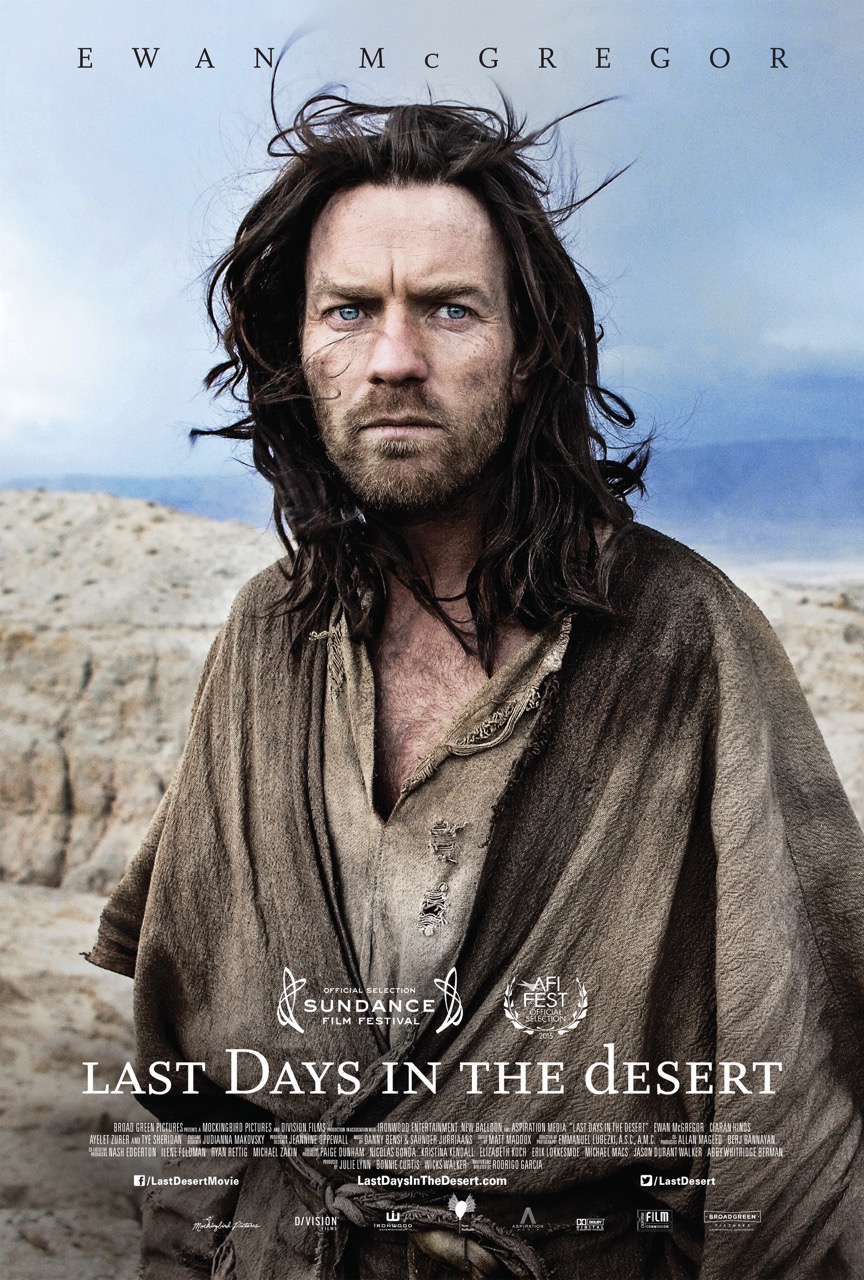
“Last Days in the Desert” is the story of Jesus in the final moment of his time of reflection before accepting his destiny as the Messiah. I spoke to director Rodrigo Garcia about creating the story of a critical moment that is not described in the New Testament and working with his international cast, the storyline about Jesus’ interactions with a family, and with three-time Oscar winning cinematographer Emmanuel Lubezki (“Gravity,” “The Revenant”).

How do you cast the role of Jesus, especially when you are going to have the same actor play the devil who tempts Him? In my opinion, the first requirement is kind eyes.

Well I think you know what I’m looking for because you’ve already said it. Ewan McGregor is a very good actor. I already knew that about him. I didn’t initially think of him because Ewan is in his early 40s and I was looking at men who are around 30, 31, 32. So I didn’t initially think of him but then I meet him socially and spent time with him and the kind eyes are there. Literally what Ewan has is a great human thing about him. He’s very likeable and he is very empathetic. You know he’s interested in other people. Her feels for other people. He is interested in human things. He doesn’t have a prejudiced bone in his body. He is just that person. That was very important to me. What I wanted was someone who has the kind eyes but also projected a real humanity, not a starry-eyed Jesus that seems of another world. Jesus is at least half human so I wanted him to feel like a person. I wasn’t going to deal with the divine side because how do you deal with that? How do you cast that? How do you play that? So we concentrated on the human side and his empathy and his kindness. It’s not without complication. Sometimes he says the wrong thing or might not make a good choice to intervene in the problems of the family. You could even argue that he helped but in helping he also hurt. He makes mistakes like humans make mistakes but he does have kind eyes and not just literally but as a metaphor. He sees the world and other with kindness.

You had a small cast, and each was from a different country, none of them from your home country. What does that international range bring to the production?

I think whether you’re working with actors from the same country or from different countries no two brains are the same. That’s the beauty about movies. When you work with other artists and things come together in a movie then they come together beautifully because it’s not just personality but also psyche comes together. Things people don’t know about themselves come out in the movie. Some people were religious and some people were less religious. A couple of people were Jews. It doesn’t matter. Everyone understood the theme of the movie. Everyone understood the movie was about fathers and sons and about the mysteries and about the incredible journey of Jesus. So when movie works it makes this infallible chemistry between those people of different origins come together, everyone’s conscious and unconscious is coming together around one idea.

What draws us to the desert, or the woods, or our own places of refuge and contemplation?

I think people of all faith and all religion and all spiritual philosophy go to the desert. You go to the desert, you go to the ocean. You go to where the noise stops and you can spend time with yourself and with the Universe, with the oneness. That’s what the desert is like. It’s both dangerous and ruthless but it’s also beautiful and you really get a sense of time. There are landscapes that probably haven’t changed that much in hundreds of years maybe thousands. So much of the movie was about men living in time. How we live and we move on. So, this movie was set at the end of something and at the beginning of something, it’s the last days in the desert for the mother and the father who stay and it’s the last days in the desert for the boy and for Jesus who go on to two very different destinies. The movie happens sort of at the first page of a book and at the last page of a book.

One of the things that I really like about your films is that you focus on those in-between moments not on the big climax or revelation but on the moments we may not understand until later.

A part of me is a minimalist. A lot of directors as they get more success they want to make that bigger movie on a bigger canvas with a bigger budget. I’m very Japanese that way. I’m always trying to see how can I do it simpler. I’m always fascinated by these Japanese artists that do calligraphy. They’ll work on a character forever, sometimes for life looking for that perfect stroke. I do like that. I like that minimalist thing and sometimes I have a lot of dialogue in films and I get a lot of praise for my dialogue but in the end all the important scenes in the movie have to be non-dialogue scenes. They have to be moments when people have to say good bye. Moments when people fall from cliffs or on crosses or just the silence, you know. I think sometimes in the movie the crucial moments cannot be dialogue moments. They have to be visual and silent moments.

In this film the characters talk about the most ordinary things in a very relatable way.

I wanted the conflicts to be simple but potent and they couldn’t be anything simpler than “I want my son to stay but my son wants to leave.” That’s a big conflict between a father and son wanting different things in life. That’s a conflict that is so relatable to any culture and any time and this looks small from the outside but for the people living in it, it’s brutal. It’s a really collision course and the mother is trying to intervene while facing death. Everything was as simple as could be. No matter when in human history, there will always be the issue: My father wants me to do this but I want to do something else. It’s certainly loaded because we know who Jesus is and what his destiny is. So anything that character does or says or doesn’t do or doesn’t say, we give it meaning because we know what awaits him.

Jesus and the boy are both struggling in that way.

My point of departure was Jesus was half human but that half is human. When you’re writing about a character you must think how is he like me, how am I like him. So the human half of Jesus must have confidence and insecurity, boldness and fear, fear of the unknown, a love for his father and of course some mystery about his father since his father was not someone you can just sit around with and talk things over. He probably had a sense of whatever the destiny was. He was probably going to make a grand gesture and maybe a big sacrifice. So the human man must have been, however committed he was, he just have been scared of what was ahead because who faces torture and death and crucifixion without fear. In fact if he had no fear the sacrifice would not have been the sacrifice that it was. I just dealt with the human side and the human side. I must assume is like me. Flaubert famously said, “Madam Bovary is me.” Well, that’s true of any character and I can only approach it if I am like him and he is like me and I think that’s what this one did.

What’s the best advice you ever got about being a director?

I was one doing a very emotionally loaded scene with Calista Flockhart. She walks into a room and find that her lover is dead. And right from the beginning she said we were going to do one take and I was already saying something to her and she said to me, “No, no I don’t want you in my head yet.” The lesson was don’t direct too soon. Let the actors, let your creative people, let the people you are working with come to the piece, bring themselves to the piece and along the way you are directing subtly but also hearing them out. You invite people and their subconscious to the piece. So I would say don’t direct too much too soon.

Related Tags:


Directors Interview
Interview: Writer/Director Rebecca Miller of “Maggie’s Plan”

Interview: Writer/Director Rebecca Miller of “Maggie’s Plan”

Posted on May 10, 2016 at 3:32 pm

Copyright Sony Pictures Classics 2016
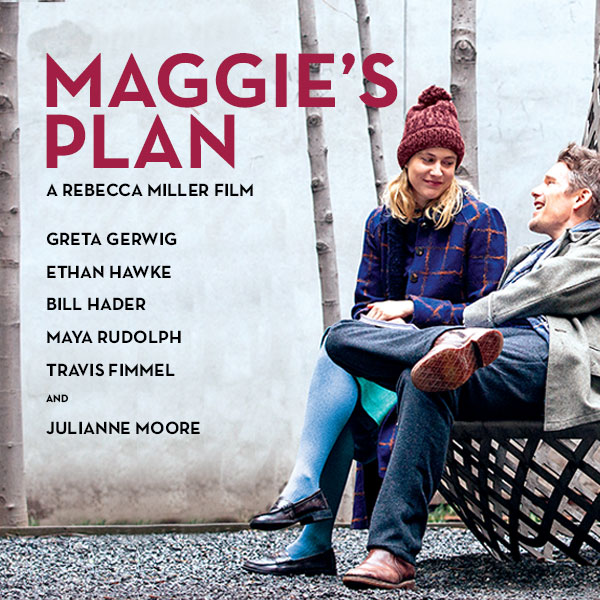
Rebecca Miller is the writer/director of the delightful new film, “Maggie’s Plan,” a witty romantic comedy with an unusual twist. Maggie (Greta Gerwig) falls in love with a married professor named John (Ethan Hawke), who leaves his wife, Georgette (Julianne Moore) to be with her. But this is not the happily ever after ending you might expect. Four years later, Maggie comes up with a plan to get John and Georgette back together.

Let’s talk about the hair in the movie, there’s a lot of very interesting hair.

Yes! It’s true, it’s true. I remember fluffing up Bill Hader’s hair myself. I was like, “It’s not fluffy enough; it has to be like this.” It needed to be fluffy, because it’s a little bit based on a friend of mine who had fluffy hair before he lost all of it.

And Julianne Moore’s character had that very severe pulled up hair.

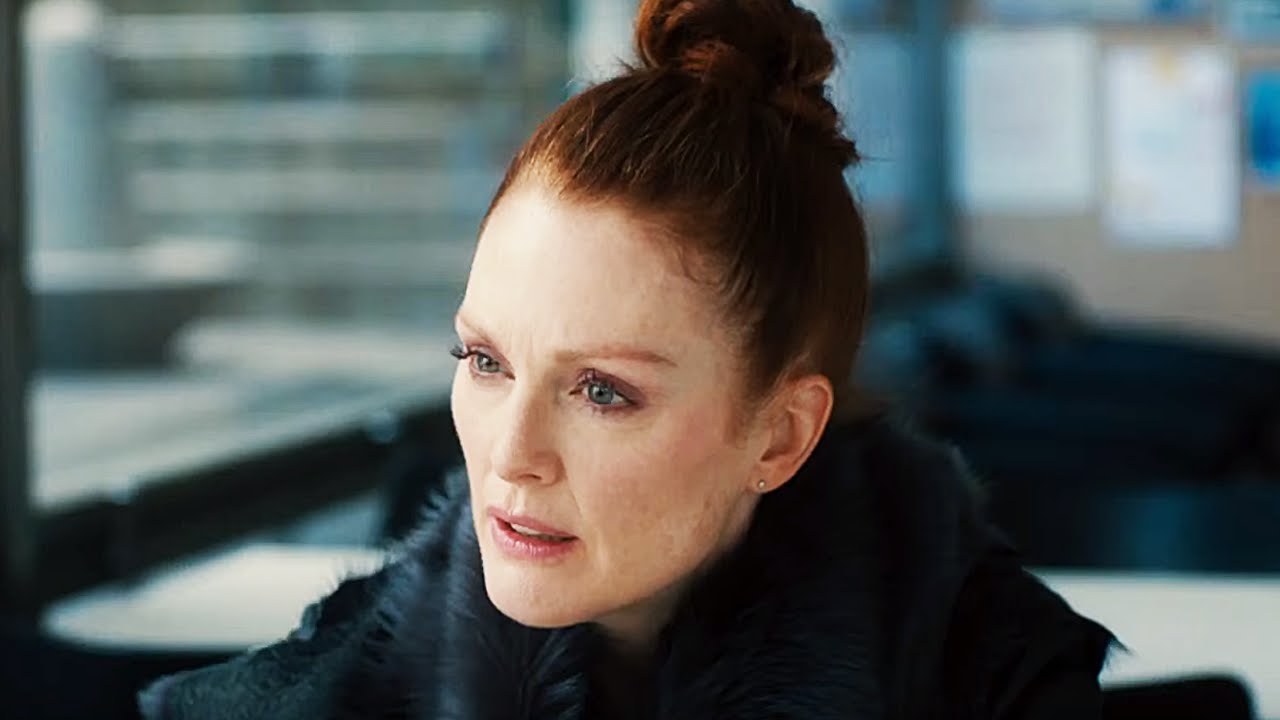
Yeah well that was Julianne’s idea; she said, “I really think it as to be wound up on the top of my head.” I thought it worked great, I mean it looks like there was some other little person In that bun. Actually I remember having a discussion like, “Do you think maybe we should have a moment where the hair comes down like after when she wakes up in the morning and she’s living it with Maggie.” And she said, “I think it should kind of slide off to the side.”

And her costumes are wonderfully tactile.

Malgosia Turzanska is a Polish designer. She’s a wonderful costume designer and she started talking a lot about fur, cracked ice, textures. Julianne wanted a uniform. Like something that was the same silhouette basically like all the time. She liked these boots, I forget what they are called but there is a certain brand of boots which are clogs and people wear them a lot in New York right now. She had them specially made into long boots so that there was sort of some heaviness to the shoe and kind of toughness to it but also elegance to these long things that go over jeans and then the tunic and then the fur vest because I wanted her to be like a Viking queen.

One thing I that I always love in movies and plays is when some of the characters speak a language that another character doesn’t speak, as Maggie’s stepchildren do in this film.

I just like the idea that they have their secret language that Maggie can’t penetrate. It’s just one more thing that isolates her in away in this family that she’s trying to be a part of or create, but also connects them to their mother.

You were an actress before you did what you’re doing now. Was that what made you want to direct?

I actually knew I wanted to be director before I started acting. In a weird way I fell into acting for various reasons but before I started acting I was making films that were really what we would now call video installations. I mean I was shooting on film and they were more connected to visual art and to painting. I started to act in films partly because I thought I had an opportunity to make money to make these sculptures I wanted to make. It began as a sort of lark and I then ended up working with all these wonderful directors. I started being able to imagine myself on a bigger set to understand how sets work, to understand how movies are really made because I was a painter, I didn’t know. So that really expanded my imagination and also I started to think I would love to make art that wasn’t so glorified, that was for everybody, more populist. So that how I started thinking about it.

Copyright Sony Pictures Classics 2016

The directors that I worked with were so wonderful. Mike Nichols was one of the great directors who I actually got to talk to a lot about this film before he died and was a kind of mentor on this film. I’ve studied and loved his work for years. His first film, “Who’s Afraid of Virginia Woolf,” is just one of the greatest films of the 20th century and then “The Graduate” and “Carnal Knowledge” and so on. So I got to work with him as an actress but I would have lunch with him and talk to him. I would talk to him a lot about pace and I would just listen to him. Pacing is very important to him and he was very open with actors. He didn’t try to cordon himself off from actors. He wasn’t afraid of actors. A lot of directors don’t really like actors that much and would prefer not to get down and not to kind of intermingle too much whereas I think Mike really loved actors. He treasured them and I’m more on that side of the fence. I really like working with actors. I really like that collaboration. I could just write books if I only want to control everything. Which I do. I do write books. But I could only write books. If I didn’t like the chaos of not knowing and being surprised then I wouldn’t make films because actors bring in the surprise element. All acting is improvisation and word wise very little of my work is in improvisation but to me every moment of interpretation is a kind of improvisation because it’s coming out directly out of the actor as a surprise.

You work with three of my favourite actors as your leads and all of them are writers too.

I certainly didn’t go out looking for a bunch of writers who were actors but at the same time I don’t think it was an accident that out of all this group of people, Greta, Ethan, but also Bill Hader, Maya Rudolph were all writers and Julianne writes also. So they’re all writers and serious writers and I think there’s just something about the way they transmit their minds, especially the leads who I had worked with really for a long time, like a year before we shot. They had really good ideas and questions that let me tailor the script to them. For example Julianne said, “I really think we need to see her working. We need to see her in an academic environment.” I answered that with that auditorium scene which is really a fun scene and that wouldn’t have happened if she hadn’t said that. I wasn’t going to get to know Georgette until later and then seeing her teach was such a great idea.

Another thing that I like about the movie is that you’ve made a movie that was so fearless about smart people who are engaged deeply with ideas.

I’ve never dumbed down one single moment in the movie because I feel like people like to think and have fun at the same time.

You had a great control over the tone of the film, with a slightly heightened slightly bubbly feeling. What creates that?

It’s a strange mystery. I don’t know how you describe how you do that. It is a combination of all those things and it’s the main job of the director. It starts with the script with the tone of the jokes, the slightly absurd quality to the whole thing. I mean in a way there is a whole absurdity to the whole set-up that already lifts it up off the ground then this is where using very talented actors comes in. It’s almost like a tuning fork, they hear each other and they feel each other. They know what movie they are in according to the signs and the scripts. Partly through direction pushing them one way or another but really they have to come in knowing.

That’s why you want to rehearse a little bit but not too much before. I love to work with actors a long time before on just character, building character, not necessarily saying the words because you want freshness there when you shoot. And then there’s the design. What color are the walls? What color is the jacket next to the wall? How do you create a world that’s just that little bit heightened, as you say? What color choice might be just a little bit more than what you might see in everyday life but yet still real, real enough? And the emotion I insist is completely real. So everybody is really emotional. These are very real problems that real people have. Everyone goes just a little bit further than most people would. You know it’s like a path we know to be our own. The actors go just that much further along that path.

Related Tags:


Directors Interview Writers
THE MOVIE MOM® is a registered trademark of Nell Minow. Use of the mark without express consent from Nell Minow constitutes trademark infringement and unfair competition in violation of federal and state laws. All material © Nell Minow 1995-2026, all rights reserved, and no use or republication is permitted without explicit permission. This site hosts Nell Minow’s Movie Mom® archive, with material that originally appeared on Yahoo! Movies, Beliefnet, and other sources. Much of her new material can be found at Rogerebert.com, Huffington Post, and WheretoWatch. Her books include The Movie Mom’s Guide to Family Movies and 101 Must-See Movie Moments, and she can be heard each week on radio stations across the country.

Website Designed by Max LaZebnik