Interview: Matt Charman, Co-Screenwriter of “Bridge of Spies”

Interview: Matt Charman, Co-Screenwriter of “Bridge of Spies”

Posted on January 25, 2016 at 3:31 pm
Copyright Touchstone 2015

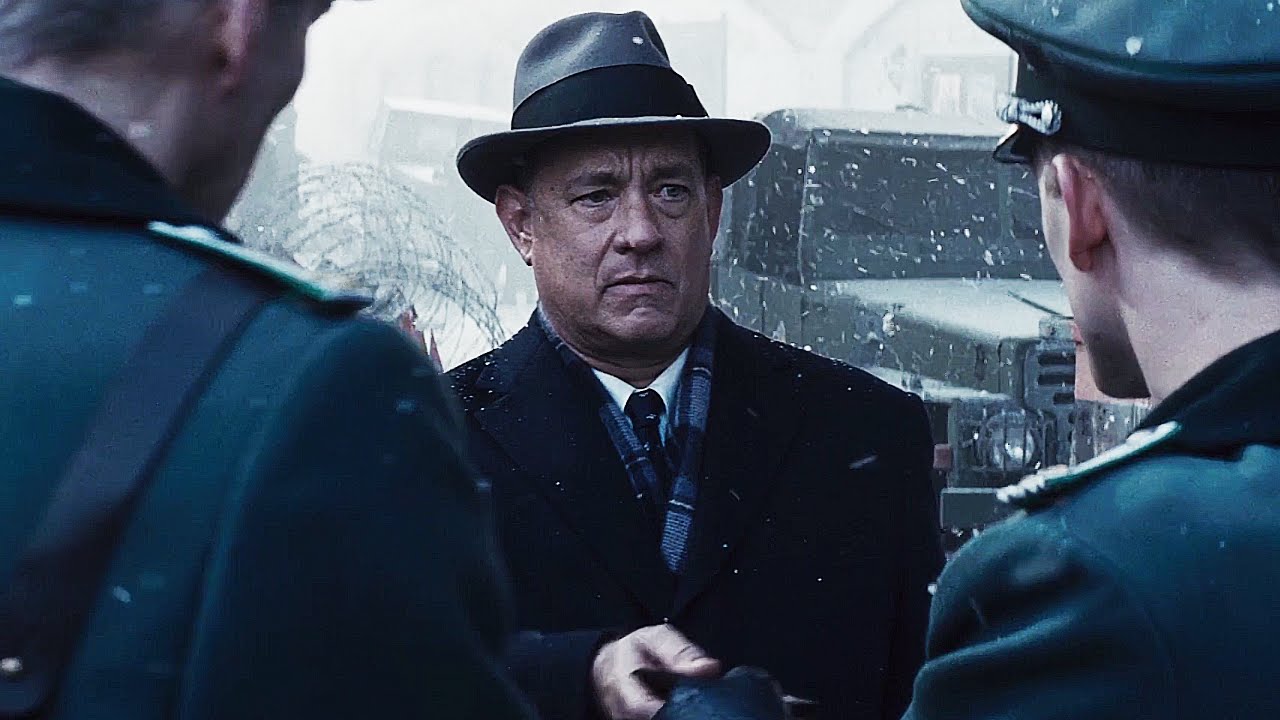
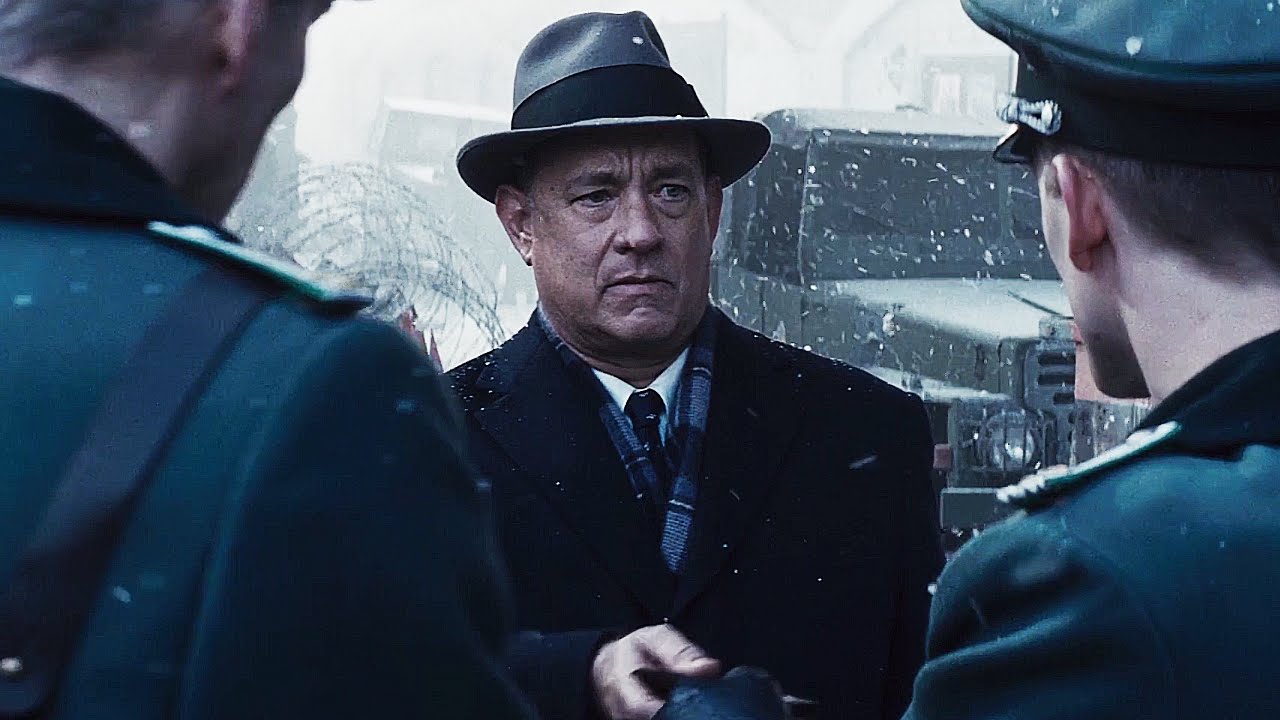
Matt Charman is a British playwright whose first script (with the Coen brothers) was for the Steven Spielberg movie, Bridge of Spies. It is based on the true story of an insurance lawyer named James Donovan (Tom Hanks), who negotiated a spy swap with then-communist East Germany in the tensest days of the Cold War. In an interview, Charman told me how he first discovered the story of Donovan, what he learned from Spielberg, and what he, as someone who is not an American, most admires about the US Constitution.

I had never heard the story of James Donovan.

I didn’t know all of that either Nell, I was reading a biography of JFK that Robert Dalleck wrote called An Unfinished Life and there is a chapter on Cuba. After the Bay of Pigs fiasco JFK sent somebody to negotiate with Fidel Castro for the release of the 1500 servicemen that had been caught and captured. And I was really amazed to learn that it wasn’t a CIA guy or anyone from the State Department; it was a lawyer. It was a New York lawyer, a guy named James Donovan. And in the footnote of the book it said “Donovan first came to prominence for the part he played in the spy swap with Gary Powers and Rudolf Abel.” That was it. The only mention in the book. And the hair on the back of my neck stood up. I couldn’t believe I never heard of this guy. It seemed to me that he had taken part in two really huge moments in history. The more I dug around the more I realized there really wasn’t any definitive account and there wasn’t anything out there that encapsulated the entire journey he was on. So I started to research the New York Times Archive and the Presidential Library and I went to meet with John Donovan, his son.

What I pieced together was what “Bridge of Spies” became, this remarkable untold story about a true American hero, a man who believed so strongly in due process and in the Constitution that he was willing to follow it all the way from a courthouse in Brooklyn to the Supreme Court through the Berlin wall in order to represent his client.

Your background is in writing plays. What did you have to learn how to do in telling a story cinematically?

There are huge differences. I grew up primarily with movies because I used to live in the middle of nowhere with my folks so I think I caught the bug for storytelling through largely watching American films. When I first came to London I started to have access to London theater and so I saw a lot of plays when I was studying in London. I mean it’s no surprise to me that Stephen Spielberg tends to work with a lot of playwrights who have become screenwriters, Tom Stoppard, Tony Kushner, who wrote the Abraham Lincoln film most recently. He gravitates towards writers who can build a scene, writers who can create a scene that have a start, a middle and an end, that have characters that want things, that make arguments, that believe strongly in certain values. They don’t have to be lawyers or presidents but these are people who stand for things. And I think my background playwriting meant that when I came to write this, this is my first original screenplay that I was really able to channel all the things that I knew about building characters to create this movie which is very much about a man arguing his case.

What did you find out about the British-born Soviet spy Abel, who is portrayed so brilliantly by Mark Rylance in the film?

His time in New York is sketchy. He was an enigma. He stayed undetected for 15 years operating as the top state of the art agent in America at the time. And one thing that I really, really sort of hung onto and was really impressed by was I read that he had a very bright sense of humor and I read that he had this very close relationship with Donovan, despite their different ideologies and their different backgrounds. There was something about both man that was very dutiful. Say what you like about Abel but he did his job, he executed his job in a way that was impressive and dedicated and it took him away from his family for a long time and yet he believed enough in what he was doing to kept going. And I think even though Donovan was completely at the other end of the political spectrum he admired the way in which Abel conducted himself throughout the trial. That blossomed into a friendship between them. So exploring Abel as an enigma but as somebody who slowly revealed himself through the movie was something that I was desperate to do. And really what was so exciting was when Steven said, “Listen, I’m going to call Mark Rylance.” I have known Mark Rylance from stage in London. But he hadn’t really done many movies, so suddenly an American audience particularly is seeing a man that they have no background for, they have no reference point, and they are seeing him slowly reveal himself to them through the course of the movie and I think that was genius in the casting from Stephen.

It’s always a challenge to introduce the main character to the audience in a way that is telling and gains our interest and loyalty, and as a lawyer I really enjoyed Donovan’s first scene, negotiating a settlement of an insurance claim.

The whole idea behind that scene really was to meet James Donovan as he was before he got this case which is in a way a challenge to an audience because he is an insurance lawyer. And furthermore he is an insurance lawyer who was trying to limit the liability of his client and therefore trying to deny claims against his clients. So I’ve always enjoyed the fun of that scene. You are expecting a Tom Hanks as Atticus Finch or whatever and what you meet is a guy in a bar or rather in this club who is kind of down and dirty negotiating and backing his client the full way. Steven always loved that scene because it’s such a playful way to meet Donovan. And then we take this guy from an insurance lawyer through this transformation into somebody who is really remembers his calling, and his service at Nuremberg, and he remembers all the good things that that meant to him and then hr ended up taking on this remarkable case. But it was fun to meet him in that way, I think.

Was it a challenge for you as somebody who did not grow up in America to tell such an American story?

I never saw that it as a challenge probably because I’ve always watched so many American movies and read so many American books, and also growing up being so influenced by Arthur Miller and Tennessee Williams and all of those American playwrights. So no, to be honest with you it wasn’t. What I always knew I was doing was telling a story of a man, he had a family, he had wife, he had a job, he had the hallmarks of the kind of person I would live next door to in London. So he felt utterly grounded and utterly normal to me so it was the most natural thing in the world really.

The scene that seemed to me to be the essence of America is when he talks about people coming to this country from all over but having one thing in common: The Constitution. His affection — and yours — for the Constitution is very touching.

The Constitution of the United States is the most beautiful thing and I think it’s something that anybody can look at and appreciate, and hold up as being a set of values and a codified way of governing in a way as being so aspirational and so inspirational as well. I think anyone from any country can appreciate that, so I’m a huge fan of extolling its virtues.

So tell me a little bit about what you learned from working with Spielberg about filmmaking. What was the most important thing you learned?

I had this remarkable experience with Stephen which was a true collaboration and really where he was so pleasant, he was so open to dialogue and to talking things through, just trying things and being able to, not pressured at all which was wonderful because this is a man who has so much filmmaking experience you could imagine that he knows a certain way of doing things, and he would want to do it his way. He doesn’t at all and when you sit with him on set he is thriving on people’s ideas and their contributions that they’re making in that collaboration.
So what I learned from is two things really. First, he’s the most organized man I’ve ever met in terms of his preparation. He is like a military general. Second, he knows exactly what he wants to do and how he wants to do it but he has his remarkable ability to improvise. There was a moment when we were filming where suddenly he looked down on the floor and saw all these flashbulbs lying on the floor in the courthouse in the scene where they come out after the verdict. And he grabbed the camera and he got down on the floor with the camera himself. He said, “Okay, this here is what we want to do,” and he suddenly built the end of the scene where they walk out with the flashbulbs all over the floor. it’s a gorgeous moment with a bit of texture. He didn’t storyboard that, he didn’t plan for that but he saw the opportunity and he grabbed the camera and did it. So you have this man who is able to build complex sequences but also somebody was able just like a student filmmaker to adapt and adjust and improvise and for me that was kind of inspiring to see.

Related Tags:


Behind the Scenes Interview Writers
Interview: Thelma Todd Biographer Michelle Morgan

Interview: Thelma Todd Biographer Michelle Morgan

Posted on January 9, 2016 at 3:03 pm

Copyright 2015 Chicago Review Press

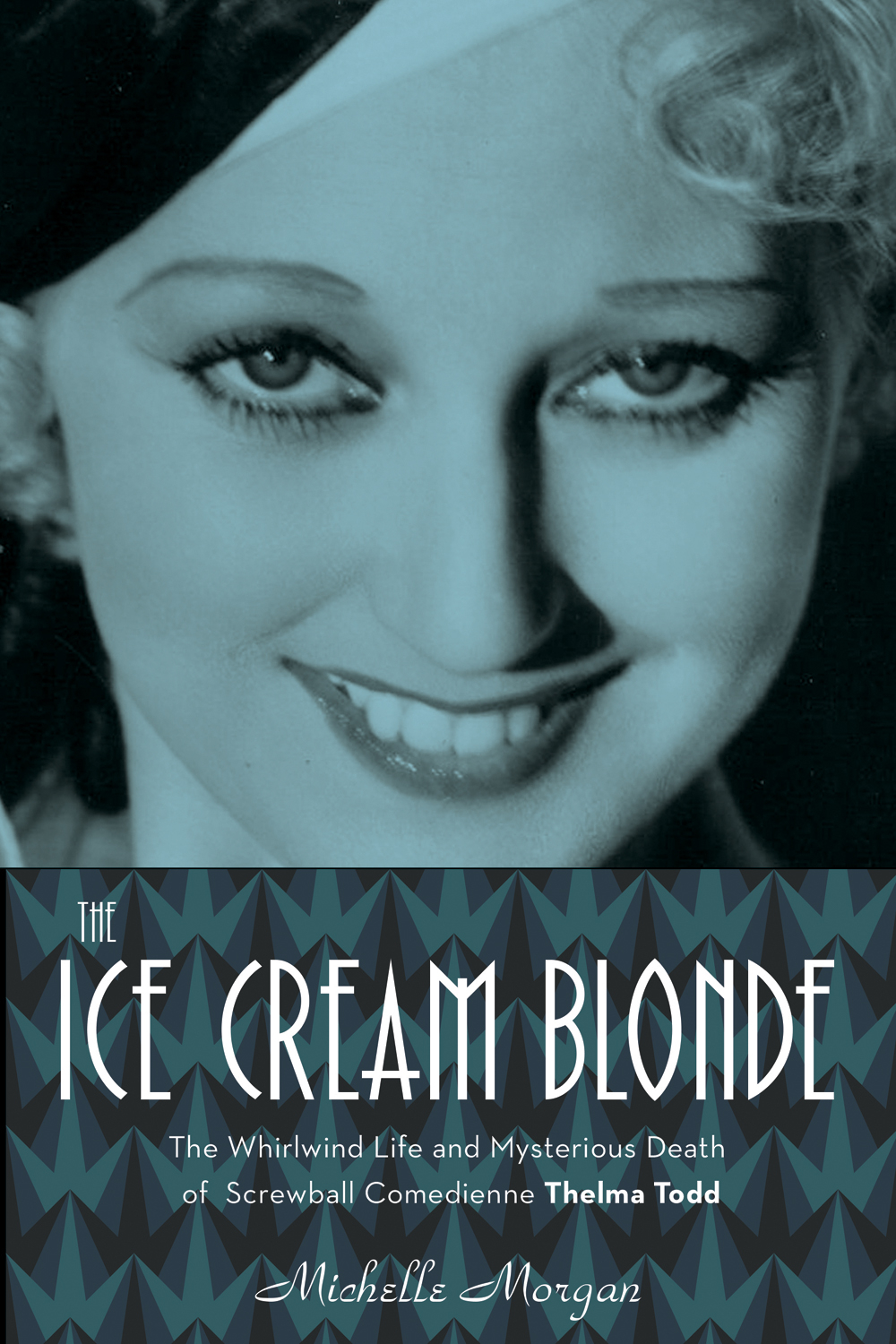
Michelle Morgan has followed her books on Marilyn Monroe and Madonna with a meticulously researched and insightfully written biography of Thelma Todd, a star of early Hollywood who appeared in films with the Marx Brothers and Buster Keaton but who today is best remembered for the unsolved mystery of her death. Morgan graciously took time to answer my questions about The Ice Cream Blonde: The Whirlwind Life and Mysterious Death of Screwball Comedienne Thelma Todd.

Which of Todd’s films do you think she was the proudest of?

I think it has to be ‘You Made Me Love You,’ which Thelma made in England with Stanley Lupino. She loved her time making the movie and often commented afterwards that it was a film she was very proud of. In fact, just days before she died, Thelma spoke to an English reporter and said she was desperate to return to England to make another movie. On her last night alive, she spoke to Lupino and the two made big plans to work together again.

Do you know if she preferred drama to comedy?

I am pretty sure she felt conflicted. In one sense she was hugely popular with comedy roles, but in another she desperately wanted to break into serious drama. Her role in ‘Corsair’ was supposed to be her big break but it was a disappointment in many ways, and critics made it clear that she was better suited to comedy. What really irritated Thelma was that she became stuck in short comedy movies for Hal Roach, and wanted very much to have larger roles. I don’t think she minded comedy half as much as she minded being pigeon-holed into these small parts.

Which is your favorite, and why?

I have two favorites. One is ‘Speak Easily’ with Buster Keaton and the other is ‘You Made Me Love You.’ ‘Speak Easily’ is hilarious and Thelma really shows off her comedy talents. Her part is substantial which is pretty rare for her, and there was a good chemistry with Keaton. I really enjoyed ‘You Made Me Love You’ for several reasons. Firstly it is a very funny film and secondly I love that it was made in England (where I live) and you get to see a lot of the English countryside in the movie. When I first watched the film, I could only do so online and the version I found was in a dozen parts in no particular order! It was really hard work to watch and discover what order the parts went in. However, it has just been released on DVD in the UK, and my husband bought it for me this Christmas. It was fantastic to watch it in one big chunk, instead of a dozen small ones!

What resources did you use in your research that had not previously been examined? Where did you find your most surprising information?

I was very lucky to have access to the Coroner’s Inquest, which is well over 100 pages long, and then literally thousands of pages of press reports, interviews, stories etc, from the 1920s and beyond. When I discovered Thelma had visited England, I was determined to find out a lot about the trip, so I started researching newspaper articles that were printed in the UK at the time. I found out that she had visited Scotland, and a lovely lady at the Glasgow library was able to send me some really substantial interviews that Thelma had done on her arrival. To my knowledge, these had never been used by a biographer before, and were of great interest in a general sense because she described her plans for the trip, her hopes and dreams etc. However, the most surprising information was when Thelma suddenly started talking about encounters she had had with gangsters in the USA. In fact she told reporters that one mobster had sent his men to see her safely on the boat to England. This was a brilliant find for me, because up until that point there had been no mention of Thelma ever talking about gangsters during her life. Of course underworld characters have been tied to her story for many years, so it was amazing and exciting to read Thelma’s view of them, over two years before her death. These interviews were gold to me, and I’m so grateful to the librarian who sent them to me.

Todd’s insistence that she was not “discovered” through a beauty contest and that she did not need to go beyond what the character was experiencing to call up tears show that she took acting seriously. Who do you think gave her the most significant guidance about acting?

Thelma went to the Paramount School, which was designed to train would-be screen actors and actresses. However, I don’t think she really got much acting experience out of it, and she also expressed that herself. Ironically, while she grew frustrated with her Roach comedy shorts, I do actually believe that it was Hal Roach who gave Thelma the most significant guidance. She made dozens and dozens of short movies and each one gave her a great deal of experience and confidence. Before she became a Roach player, Thelma was the first to admit how inexperienced she felt, but towards the end of her life you can really see her shine in those movies. Her confidence is everywhere apparent.

If you could interview Todd, what would you want to ask her?

That’s a great question! During the writing of the book, I’d have asked what the real story was behind her death. Now that the book is finished, I’d really like to ask if I did a good job with her story. If she approved of my work, then I’d be a very happy lady.

You lay out the possible scenarios to explain her death, from accident to suicide to murder. Which do you think is the most likely?

For me, I think the murder scenario is definitely the most likely. The idea of an accidental death is just not something I buy into. Why would Thelma walk 271 steps up a windy cliff-side, wearing an evening dress and high-heels in the middle of the night, to get to a garage because she was locked out of her apartment? The last time she was locked out she actually smashed the window to wake up her partner, Roland West. He said that no-one could keep Thelma out of a place she wanted to enter, so why was she kept out that night? Roland West’s window was incredibly close to the door she was supposedly locked out of. How could he not have heard her pounding on the door or window (especially since we know he had a dog in the room)? There are so many questions about that scenario. I explore it all in the book, but basically I find the entire accident story suspect at best. Others would disagree of course, but that is my own, personal opinion.

You seem to like writing biographies of beautiful blondes who have experienced great loss. What do we learn from their stories?

It has never been a conscious decision to write about blondes, but somehow I always seem to! My next book is about Carole Lombard who of course is another blonde with a tragic end. I think we all learn something different from their stories, and what I take away from it is probably in contrast to what others may take from it. For me, the most important thing as a biographer, is to show my subjects as human beings. Thelma was not just “the body in the garage;” Carole was not just “the one who died in a plane crash,” and Marilyn was not just “the blonde who might have committed suicide.” They were all made of flesh and bones like we all are. They had their good times and bad; their accomplishments and their regrets. If we all realize that these ladies were real-life people, not just images on the screen, then I know I have done my job.

Related Tags:


Actors Books Interview
Interview: Will Poulter on “The Revenant”

Interview: Will Poulter on “The Revenant”

Posted on December 23, 2015 at 3:09 pm

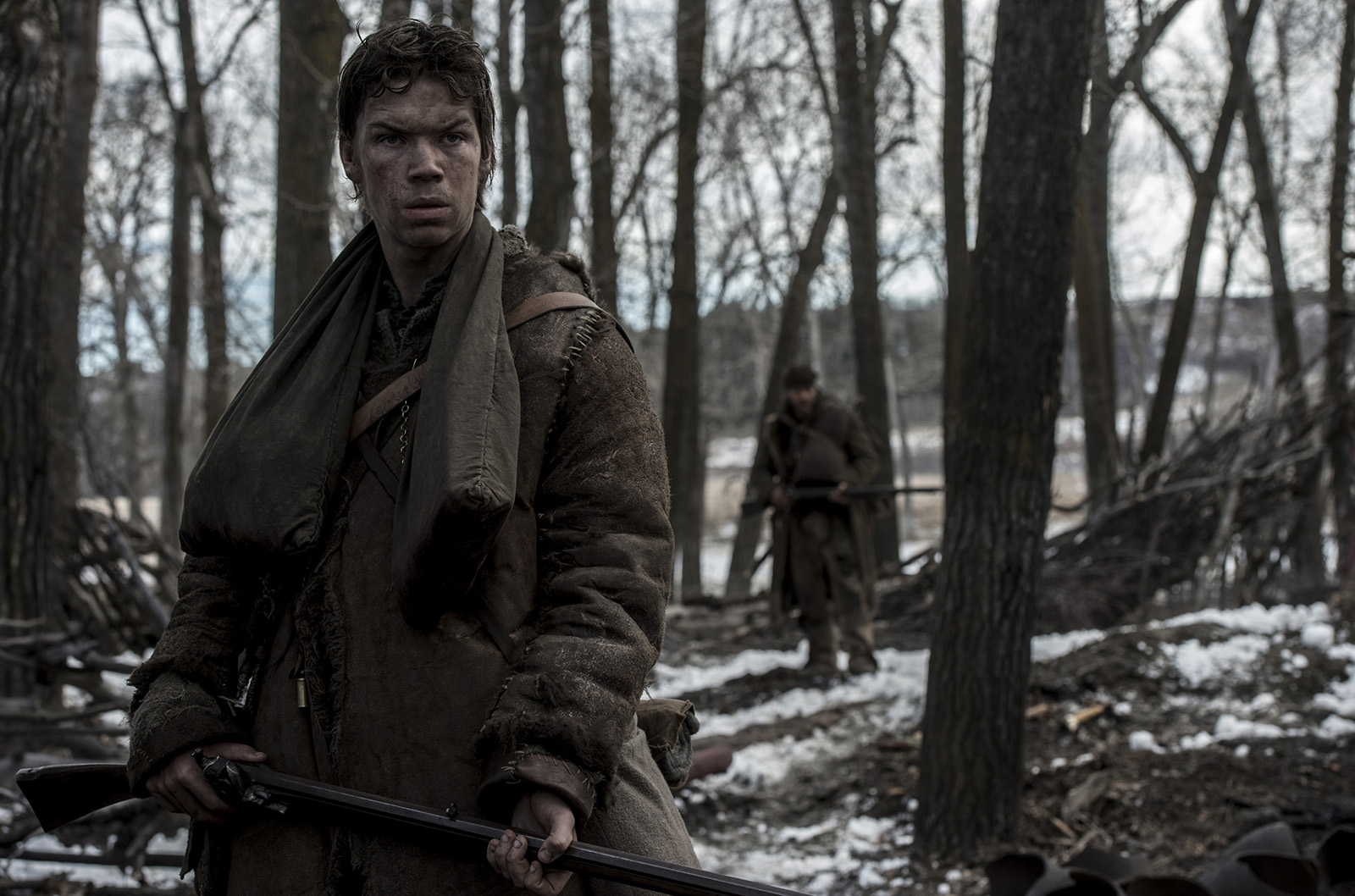
I’ve been a big fan of Will Poulter since he played a young filmmaker in the delightful Son of Rambow, and it has been a lot of fun to watch him grow up — and grow as an actor — in We’re the Millers, The Chronicles of Narnia: Voyage of the Dawn Treader, and The Maze Runner. In his new film, he co-stars with Leonardo DiCaprio, Tom Hardy, and Domhnall Gleeson in a fact-based story set in the brutal world of the early American frontier. He appeared in a Washington D.C. theater for a Q&A with me following a screening of the film and the next day we had a chance to talk about making the film in the Canadian wilderness and working with a Brooklyn-based accent coach to play the real-life frontiersman Jim Bridger.

In “Son of Rambow” you played a young boy who was determined to make his own “Rambo” film. Were you really interested in filmmaking back then?

Yes, it was always very interesting, of course performance in general, but as a kid I used to sit in front of the TV, probably a dangerously short distance away and watch black and white movies and cowboy films. Western upon Western upon Western. And that’s kind of how I initially got into it and then like a lot of kids I had this sort of classic upbringing on Disney movies and then I kind of progressed from there. I watched kind of everything and anything and when it came to performing at school I had the same ethos, I just wanted to be part of just as much as possible and sort of copied whatever I could.

What did you learn from this film about the kind of men you were playing, those early American trappers?

I learned that those guys were incredibly tough. Those conditions were very, very inhospitable and not to be taken lightly. The fact that they would survive through the harshest of winters all for the sake of that trade was kind of amazing to me. I mean really, really bewildering and certainly humbling when you look at what I do for living. So besides experiencing newfound temperatures I grew a great appreciation for the outdoors as well. I am very much a city boy and I really don’t get out into the countryside or the wilderness that much at all. There have been a lot of comments about how hard the conditions were but each of us was lucky to be working in such a beautiful part of the world as well, I mean it really was stunning.

Emmanuel Lubezki’s cinematography is stunning with the greatest depth of focus I have ever seen. And he and director Alejandro González Iñárritu insisted on filming only with available light, no artificial lighting of any kind. How did that affect you as an actor?

It was sort of a return to the filming approach of old, this kind of lost art now in a way these days, and we did rely solely on natural elements and didn’t use electricity to light the scenes and we shot all on location. That just improved for us I think the sense of realism, there was no need to suspend disbelief and there was less to act. When we were cold we were cold and when we were tired we were tired and when we were struck by the beauty of the scenery around us we were genuinely struck by the beauty of the scenery around us. There was no need to fake any of that and I think the authenticity of the experience does translate and I think it makes for much more wholesome and ultimately affecting experience of watching the film.

COURTESY KIMBERLELY FRENCH/TWENTIETH CENTURY FOX FILM CORPORATION
Courtesy Kimberly French/TWENTIETH CENTURY FOX FILM CORPORATION

You have said that your character, based on the real-life Jim Bridger, is interesting because he is just coming of age as a man. As I watched it, I thought your character was in many ways the most important because he was the only one who was still trying to decide what his moral code was, and he was watching everyone else to learn what he did and did not want to become.

He is yet to configure his kind of moral compass. I think it’s perhaps quite naïve and kind of a young mindset to assume the right thing, the absolute right thing can be done at all times. What these men around him have learned is that in this scenario in the wilderness it isn’t as simple as right and wrong and actually what you can be driven to do from a moral perspective, what feels innately right has to be reconfigured and redesigned for this context. It’s pretty unrealistic I think to assume that everyone can have a proper burial and we can carry a severely injured man until he passes away gently by natural causes, I think there are tough decisions that require a certain steeliness and a certain mettle that Bridger just doesn’t have yet. He’s having to make decisions and act in situations he’s just not equipped for at that age.”

Did you discuss the moral continuum issues with the rest of the cast?

There were certainly opportunities for discussion. One of the really gratifying things about being on this film set is regardless of how ambitious this was and the truly groundbreaking way that it was shot, regardless of all of the technical and highly ambitious camera work going on around us, we still had a opportunity to make the relationship between the characters and the interchange of dialogue and the emotional message of each scene, the focus. That’s testament to Alejandro as director. So we were all given the opportunity to discuss those things and ensure that we had what we needed to give the performance he wanted to give.

So we did discuss that and we quickly established our relationships with one another. I think we built some great foundations for that in just the friendships we developed off set and then from there we were able to chop and change things accordingly. Even if it wasn’t necessarily recognized or was clear, I think Bridger would have liked to have seen himself as sort of an understudy to Glass and Glass was pretty much a role model for him, his respect for nature, his kind of heightened awareness of the fact that the land was ultimately the natives’ and of native culture, all of this was something that I think Bridger probably aspired to build into his own life. I think it’s recorded that Bridger himself had a relationship with a native woman and had several children so that kind of continuity creates a connection to Glass. And he was a father. Bridger himself didn’t really have much of a father particularly out there in the wilderness. The group of trappers really does become your family. He joined the trapper community when he was 16 years old after his mother passed so it stands to reason that he saw these guys as family figures.

What was the most difficult day of filming?

I think being submerged underwater was a pretty tough day personally. I think for a lot of us it was when we actually stopped filming one day because of a snow blizzard. The camera froze but no humans froze which was good. And I think once the camera freezes up then it is kind of a license for everybody on set to head inside and call it a day. That was a tough day and that meant coming back and reshooting the scene where I am scratching the design into the canteen.

You had a very contemporary urban American accent in “We’re the Millers,” but this one was very different, an Early American from Virginia. Was that difficult?

I worked very closely with an accent coach Michael Howard who was kind of the accent expert for all of us and was on hand. One of the challenges obviously with doing an accent from a time period early in history is that there aren’t recordings. You would never really get the opportunity to hear exactly what you were shooting for. So I guess we sort of hoped we were in the ballpark of what one would imagine to be a early Virginia or in Leo’s case, early Philadelphia for or in Tom’s case, early Texas. But it was surprising to find out how many of the words sounded similar to English.

The filmmaking here was so natural and authentic. How did that compare to the Narnia film, which had so much CGI?

I enjoy the fact that without CGI there is less to invent. The acting challenge is a lot more manageable. The most challenging thing I think I have done in relation to CGI and interacting with CGI was probably fighting a mouse on a ship; that was pretty challenging. A sword fight on a ship with a mouse is pretty tough. But then again I think as actors I think we get excited by the opportunity to stretch ourselves and use our imagination so sometimes CGI is great. I think there is a real art in what Andy Serkis does certainly and even though perhaps I enjoy doing movies with less CGI I would like to experience working on the opposite end of the spectrum and then do something that’s almost entirely CGI. I would love to do some motion capture work just to be able to challenge myself.

What is next for you?

I just finished a film called War Machine with Brad Pitt and was directed by David Michôd and that was an amazing, amazing opportunity. I was lucky enough to play a Marine and represent the Marine Corps which was one of the biggest honors I have ever had. It was a challenge, though. I mean this was a long shoot. It was tough but I feel like after “The Revenant,” I was better prepared for it than I was had I not done “The Revenant.” 2008 Afghanistan shot in Abu Dhabi so the opposite end of the thermometer this time. And we all did boot camp, the toughest five days of my life I think, but I got incredibly close with the guys who I did it with. There were twelve of us in the platoon and we got incredibly close from the experience. I think we recognize that we were just experiencing a drop in the ocean of what Marines actually go through and even just a small taste of the work that they put in and what they go through to become Marines brought us so close so I can’t even imagine if we were going to do the full-fledged and maximum training available, I can’t even imagine how closely would have got or how painful it would have been.

Related Tags:


Actors Interview
Interview: Lawrence Kasanoff on the New Documentary “Mindfulness — Be Happy Now”

Interview: Lawrence Kasanoff on the New Documentary “Mindfulness — Be Happy Now”

Posted on December 19, 2015 at 3:55 pm

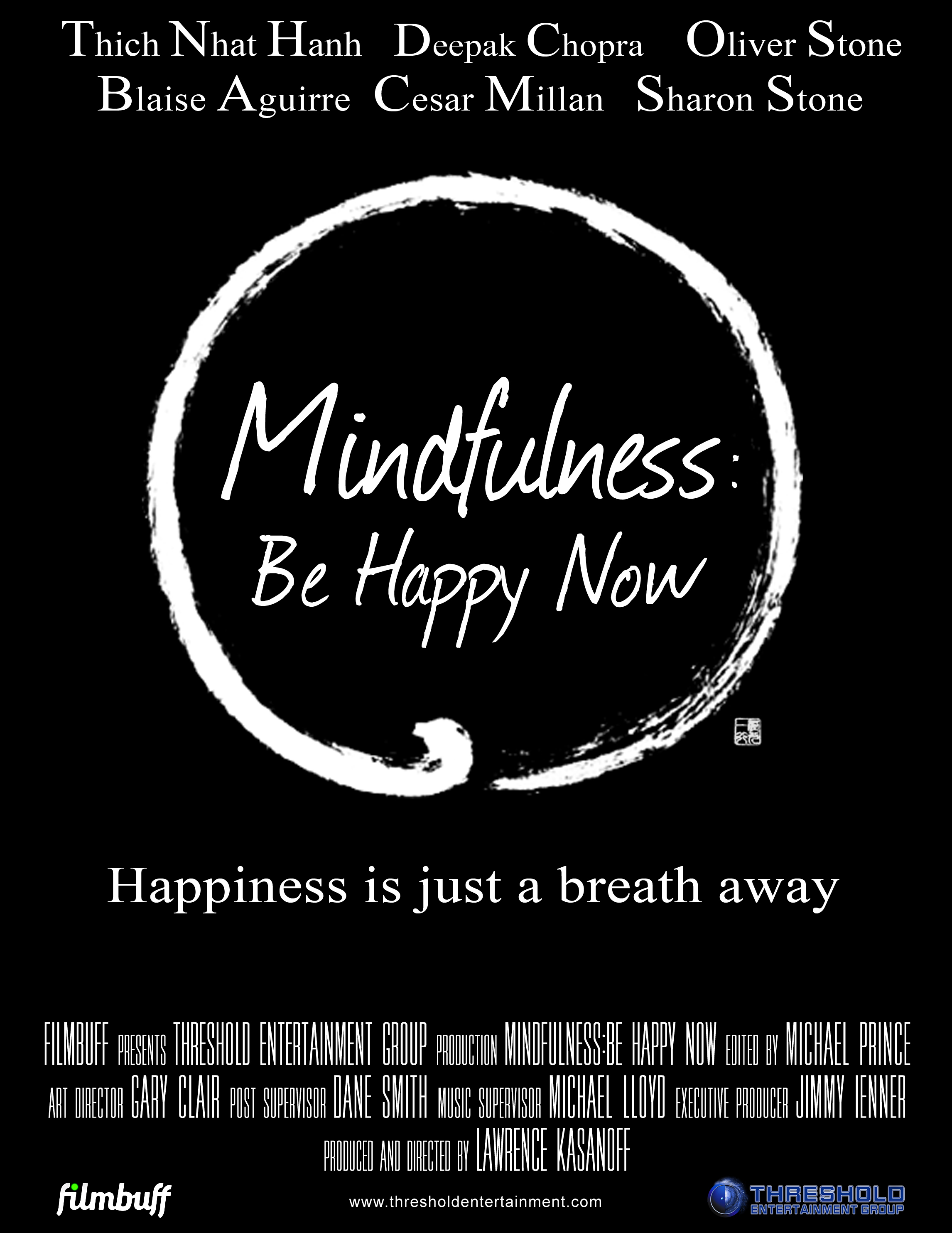
Hollywood producer Lawrence Kasanoff makes movies like Mortal Kombat. But his interest in mindfulness and its link to happiness has inspired a documentary called Mindfulness: Be Happy Now. In an interview, he talked about the difference between mindfulness and meditation and what Navy Seals and Buddhist monks have in common.
What’s the difference between mindfulness and meditation?

Meditation, in my opinion, is one of the ways you get to mindfulness. There are lots of ways to get to mindfulness.

At one time I brought Thich Nhat Hanh to Oprah; he was one of the first people she interviewed for her new network. I was sitting with them both. People call Thich Nhat Hanh Thay which means teacher, it’s an affectionate term. And Oprah said to Thay: “How often do you meditate?” And he said: “Everything I do I do mindfully so everything I do is a meditation.” When people think of meditation, they normally think of sitting quietly which is meditation but you can be mindful while taking a walk if you’re just taking a walk. You can be mindful while drinking tea while just drinking tea. You can be mindful while talking to Nell from Beliefnet if I am only talking to Nell from Beliefnet; if I am sending a text at the same time, I am not being mindful. So I think they go hand-in-hand. Mindfulness includes meditation but you can also say every act of mindfulness in itself is a kind of meditation.

Yes, we hear in the film that drinking tea and even washing your hands in the morning can be very mindful.

Yes, they can. When I first met Thay he said: wash dishes mindfully, enjoy the water running on your hands, go slowly, don’t try and finish and it works.

Copyright 2015 Threshhold Entertainment

It works how? Does it get the dishes cleaner?

You know what? It does get the dishes cleaner because you tend to not be washing the dishes while doing something else, so you focus on the dishes. I think all of this is a way to still your mind. Thay has a great expression and so I had this calligraphy on my wall which says “be still and know.” The analogy is: think of a beautiful mountain lake in Switzerland; if the weather is terrible and cloudy the lake windy, the lake is all choppy and dirty and unclear. If the lake is beautiful and calm on a Sunday spring morning it’s gorgeous and it reflects accurately the sky and the clouds and mountaintops. The first one, the agitated water, does not. So if you can still your mind like that lake, it does reflect and you see clearly. So meditation is not a way of going to sleep. It allows you to wake up and if you wake up you see things clearly, you do do them better. Now in my opinion, meditation is not just the purview of Buddhist monks, anyone can do it. I am doing another movie on the special unit of the special operations of the United States. These guys in my opinion, other than the monks, are the most mindful people I have ever met. They have maybe different philosophies but you’ve got to be pretty mindful standing in a field somewhere with people shooting at you for three days; you’ve got to be calm and still your mind. A boxer is mindful, a golfer is mindful if they are good, a painter is mindful, anyone can be mindful. So I think it’s important to distinguish that even when you are washing dishes mindfully, you do wash your dishes better but more than that, for two minutes you stop your mind, you’ve got nothing else, you’ve cleared your mind and that is a beneficial experience that makes you happier.

How are Special Forces military like Buddhist monks?

I believe the most mindful groups I know, and the two groups I think of the most in common are the Buddhist monks and the special operations soldiers because they both have developed extraordinary mind control to bring their mind to a still level in pursuit of peace. They have completely different tactics on how to find peace but it only diverges there. The Green Berets had a slogan: “slow is smooth and smooth is fast,” which any good athlete understands, too. You just are careful and you move deliberately and you are moving mindfully; It applies to so many many walks of life.

We debated putting Special Forces guys in the movie and putting some supermodel in the movie but we just didn’t want to do anything that would seem a little controversial and take things away from the great message. But the fact that we had an actor and a film director and a doctor and a dog trainer in the movie is just an example of how many walks of life you can apply this to. You can apply it anywhere and that’s what I think is the best thing about it, it works everywhere.

I liked it that throughout the film, the focus is not just going internally but also being mindful as a way of being a better listener or being more aware of what’s going on.

Especially in the world today. Have you been at a dinner or meeting where everyone is talking and texting at the same time? They are not listening. I believe in unitasking; you do one thing at the time. You can do 100 things during the day; just do one thing at a time. If you do that you are being mindful so when you have a meeting, that’s it. When you are walking to the next meeting, you are walking. When you are eating, you’re eating. No one is perfect in all of this, not even the monks but if you take one more deep breath today than you did yesterday that’s great. I think one of the things is this is fun and you don’t have to worry about: did I do it perfectly? Did I do it great every day? I don’t think that’s it. I think whenever you do it’s better than not doing it so that’s great.

Right at the beginning of the film we hear a word that I was not expecting: tenderness. Thay tells us we need to be tender toward our feelings of sorrow or pain.

The monks have this wonderful expression that Thay talks about in the film called the second arrow. So let’s say you stub your toe, now your toe hurts, so that’s one arrow and if you are mindful and you embrace it and you calm down, it won’t hurt as much and it will probably heal faster. But if you say:“Oh my goodness, I am an idiot for stubbing my toe,” boom then you’ve got a second arrow right in the same toe and it hurts more. Now if you say, “Oh my God, I am worried I stubbed my toe, I am going to collapse and die for my stubbed toe,” you’ve got a third arrow.

So if you have a piece of cake and maybe you didn’t want to have piece of cake, okay, then mindfully say: I had a piece of cake, I enjoyed the cake, I did it today. Okay, do I want to do this tomorrow? Let’s think about this; maybe I don’t and then you don’t. But if you then get mad at yourself for having your cake, now two things can happen, you have more calories than you want and you’ve added stress and the opposite of stillness, a kind of disturbance to your mind, you just made it worse. So no one is perfect, everyone makes mistakes and if you see it carefully and mindfully embrace it as they say you can calm it down.

Think about your boss coming to work and saying, “Listen, you should not have sent that memo but don’t worry, I know you didn’t mean it, it’s okay, we will fix it; maybe we should read our memos a little more carefully next time.” You feel much better that if someone comes in screaming to you that you sent off the wrong thing. I think it works with everything. But it doesn’t mean you have to become a wimp and a hippie and hug everybody all the time, you just have to be mindful of what you are doing so you do it with a clarity and a purpose.

Can you be an activist and have the kind of passion that you need to push for change and yet maintain a sense of acceptance?

I was worried about that too. A monk once said to me, “We do not lose sight of our goal. It is just that the anger doesn’t help us.”

I make a lot of martial arts movies. The true fighting Zen master is so incredibly focused that they don’t get angry. It is so hard not to get angry but my goal is my goal and if I get too angry then everyone will start up with their own egos and we will drift from the goal. So being mindful doesn’t mean you have to become a certain way. You can be a mindful Republican or a mindful Democrat or a mindful soldier. You can go to a strip club mindfully. You can play poker mindfully, you can do a lot of things mindfully. Mindfulness is not wimpy, it means doing it with presence and doing it with a clarity of mind. There is no scenario in which being mindful doesn’t help. I make so many fight movies; I own a fight channel. You will win so many more fights if you are not angry.

I think most of this is about eliminating anger, fear and anxiety from your life and if you eliminate anger, fear and anxiety from your life mostly, most people are still left with happiness. It is not antithetical to your goals. It is in fact completely the opposite, it accentuates your goals, it enables you to achieve your goals better. That’s why we love James Bond or old Clint Eastwood movies; we love people who walk in and are calm and present, clear and know exactly what they want and get it.

How did you get involved with mindfulness?

I produced these these big action sci-fi martial arts movies. I read a book by Thich Nhat Hanh about 10, 12 years ago and I thought it was great, I mean I am always interested in new things and I thought, “Hey, maybe we could use him as an inspiration for this character we have in Mortal Kombat.” He is kind of an Obi-Wan Kenobi character in Mortal Kombat called Rayden.

So I called him up and went to meet him really just for inspiration for a “Mortal Kombat” movie. But after spending two hours with him I felt like I had been on vacation for a week. And I said: “What’s your secret?” And he said:“No secret, practice.” And I said: “Wait, I could learn this?” We became good friends and I did start practicing and I did start learning and I got into other mindful things and met some other wonderful people, most of whom are in the film and then eventually he just asked me to make a documentary. Thay’s basic message is peace in yourself, peace in the world. If you find peace in yourself through mindfulness you will be happier. If you are happier, maybe the person you are with will be happier, maybe the guy you get coffee with in the morning will be happier and if everyone does it everyone will be happier.

That is the most simple nondenominational, nonpolitical but helpful message and my hope is that in some small way that the movie promotes that philosophy. So when Thay asked me to do it I just decided to fund the whole thing myself, put it out there and the goal is just to get it into the hands of anyone whom it might benefit.

Related Tags:


Documentary Interview Spiritual films
Interview: Oscar Isaac in 2006

Interview: Oscar Isaac in 2006

Posted on December 17, 2015 at 8:50 am

“Star Wars: The Force Awakens” star Oscar Isaac played Joseph in The Nativity Story and I have been a huge fan ever since. Here’s the interview I did with him back in 2006.
Copyright New Line 2006
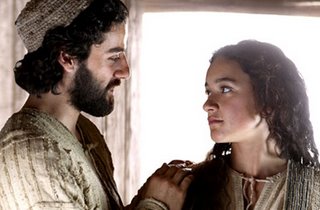
Oscar Isaac plays Joseph in the respectful new retelling of “The Nativity Story,” opposite “Whale Rider’s” Oscar-nominated Keisha Castle-Hughes as Mary. Isaac is a 2005 graduate of Juilliard with an impressively wide range of performances already. He plays a Russian gangster in the forthcoming “PU-239” and will be in Stephen Soderbergh’s “Guerilla” and has appeared on “Law and Order,” a musical version of “Two Gentlemen of Verona,” and in the title role of “Macbeth.”

He spoke to me about appearing as a man everyone knows, but no one knows well: Joseph, husband of Mary, the mother of Jesus, and the man who brought her to Bethlehem. We spoke on November 8, 2006, in the Ritz Carlton Hotel in Washington DC.

You had a very international cast and crew. How was that a help and were there any ways it made the project more challenging?

We agreed we would have one united “middle eastern-ish” accent for all of us. It was a lot of fun because I was the only American in the cast, so the others were constantly berating me with questions.

You were working opposite a very talented actress, but someone who was very young and did not have the benefit of your level of training. How did you find a way to work together?

She’s so naturally gifted, she is so natural, such a deep soul, so in touch with that, that it was easy to work with her. She had to ride a donkey for eight hours at a time with heavy robes and the fake plastic belly, and she always had a great sense of humor about it. I tend to be very serious and deep into the character. She’s remarkable, she has an old soul, very present for the performance but ready to laugh as soon as it’s done.

Director Catherine Hardwicke has shown as a director a real feeling for the point of view of teenagers. How was that a factor in telling this story?

I found out she was the director, I said “Really, that’s an interesting choice,” but I realized it is completely logical because she’s always done stories about adolescents going through intense periods and these are the most famous adolescents in history going through the most intense experience in history. She is great at cutting through stuff and getting to the heart of it, she’d take Keisha off to the side and when she came back she’d be more intense and focused. Catherine relates very well to adolescents and their perspective on what is happening to them.

How was your classical training helpful in developing this character? Did you focus more on research or on motivation?

Both. I do a mixture of inside-out and outside-in when I prepare for a role. In this case, the hands were very important to me. I thought about Joseph — he lives in the first century. The Jewish people at that time identified with two things most, the faith and their ties to the land. The key is in the hands. The script talks about his calloused hands. I worked with a technical advisor for a month with authentic tools of the period. I made the staff, the olive press, the walls of the house and I got the real calluses, making him a flesh and blood person, not a walking icon.

How do you take a character who is in some ways so well known and in others so little known and make him both a distinctive character and an archetype?

Joseph is going to be an archetype; the work has been done for you. But he is human. It’s not that he doesn’t feel fear, jealousy, betrayal, and doubt. The one word that describes him in the Bible is “righteous.” His actions are righteous. Courage is not being fearless but working through the fear. Joseph decided not to stone Mary or divorce her publicly, even though that was his right and that was the law. Being righteous in that case does not mean following the law; it means love and humility and faith. He’s in love with Mary and he believes in her. Where does it come from — that selfless, humble, love? The most amazing act of humility is the essence of the story, how God made himself flesh in the most humble of ways with the most humble people. Jesus was not born to kings or to wealthy people but to Mary and Joseph, poor but righteous.

How did the setting help you understand the characters?

When we were filming the scene out in the wilderness, when we were traveling to Bethlehem, starving, down to the last piece of bread, and I feel my bread to the camel — I wish there had been a camera behind me so people could see what I was seeing, the sun was setting, the moon rising at the same time. It was so stirring. For Joseph in that scene, the sign he asks for doesn’t come, but for me, for Oscar, the sign was there.

Who are some of your influences? What were the performances that led you to want to become an actor?

Pacino in “Dog Day Afternoon.” For any film I do, I watch it. I watch it once a month for homework; it taught me as much as Julliard did. I love “Midnight Cowboy,” “Taxi Driver,” incredible performances. I want to add to the medium the way they do. I loved Ryan Gosling in “Half Nelson”– so egoless, so into it, so all about the craft, Daniel Day Lewis in anything, a kind of inarticulation.

How does this movie appeal to believers who will want to see their own vision of the story and those who are not as familiar and approach it as a narrative rather than as worship?

It doesn’t follow one gospel. It incorporates a fuller, dramatic vision. For both believers and those who come for the story, the message of humility and love is an important reminder that it’s not about bombast and pride. God he has brought down the rich and exalted the humble and the poor. It is a huge epic adventure with this little intimate love story about these two people, and how they really become a family. This is a story of the Jewish people, we have to let people understand that, so it was critical to get the customs right, get the words right, get the prayers right. That’s why the message is so great; it is about humility and exalting the humble and those that react in love.

Related Tags:


Actors Interview
THE MOVIE MOM® is a registered trademark of Nell Minow. Use of the mark without express consent from Nell Minow constitutes trademark infringement and unfair competition in violation of federal and state laws. All material © Nell Minow 1995-2026, all rights reserved, and no use or republication is permitted without explicit permission. This site hosts Nell Minow’s Movie Mom® archive, with material that originally appeared on Yahoo! Movies, Beliefnet, and other sources. Much of her new material can be found at Rogerebert.com, Huffington Post, and WheretoWatch. Her books include The Movie Mom’s Guide to Family Movies and 101 Must-See Movie Moments, and she can be heard each week on radio stations across the country.

Website Designed by Max LaZebnik