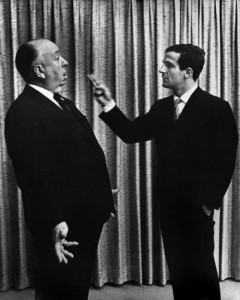
Interview: Kent Jones on the Documentary “Hitchcock/Truffaut”

Interview: Kent Jones on the Documentary “Hitchcock/Truffaut”

Posted on December 15, 2015 at 3:36 pm
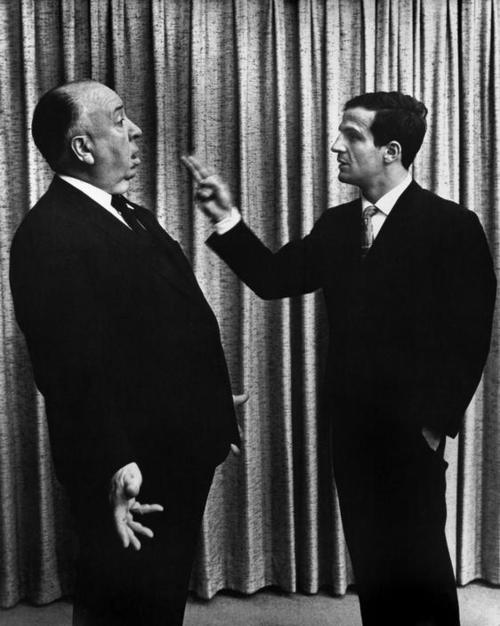
Copyright Philippe Halsman 1965

If you are very lucky, some day a book will change your life. And no book changed my life more profoundly than Hitchcock/Truffaut, a book-length interview of one of the world’s greatest movie directors by another who happened to be a former film critic and scholar. I was a movie-mad teenager when someone suggested this book to me, and it completely transformed the way I watched and thought about movies. So I was thrilled to see the wonderful new documentary “Hitchcock/Truffaut” by film critic/historian Kent Jones, with some of today’s greatest directors talking about how the book and Hitchcock’s work influenced and inspired them.

In an interview, Jones talked about his choice for the movie’s narrator, actor/director/screenwriter Bob Balaban. “I wanted only filmmakers in the movie. I didn’t want any experts or historians or actors or anything like that. I just wanted filmmakers because it was a dialogue between filmmakers. And so I wanted ideally somebody who was a filmmaker as well to be the narrator and Bob of course you know in addition to being an actor and director of movies and beyond that Bob also was Truffaut’s friend. They became good friends when they made ‘Close Encounter of the Third Kind,’ so for all those reasons and also I like Bob and I like his voice.”

The documentary includes some scenes with the translator who worked with the two men because their only real common language was the language of cinema. “It’s interesting, there’s a good rapport between the two of them and you could say between the three of them because she is very much a part of the conversation, in and of itself. There are moments when she and Hitchcock are talking. She was really attached to Truffaut as a friend, as a filmmaker, someone who was really smitten with him as a human being. But I don’t think that it really impeded the flow, I mean they had a good rapport. They were both filmmakers and the trends of the conversation were very clear. On the other hand there’s a lot of stuff that she gets wrong, like the names of certain film producers for instance when they were trying to talk about what movies he’s seen and what he hadn’t seen when he was young. There are different titles in different countries so try to figure out what movie it they were talking about was a little bit of a challenge. I think also Hitchcock understood French, he actually spoke it. But nonetheless throughout the tape, even in the movie when he’s talking about vertigo he doesn’t say ‘necrophilia’ he says ‘necrophilie’. You know he inserts a little French pronunciation. Truffaut on the other and really didn’t understand English but having said all that I think the flow of their conversation is pretty seamless.”

While Hitchcock was still dismissed as a genre director in the US of the 1960’s, the French “new wave” filmmakers and critics were the first to take him seriously as a master of cinematic storytelling. “What we call ‘auteurism’ now is very tied into the distance of time and the distance of space. It is very important that it was a group of people from across the Atlantic looking at America through different lens, looking at American filmmaking through their own lens. Obviously Hitchcock wasn’t alone, Nick Ray, Howard Hawks and all these people. Even people who say ‘I hate auteurism; it’s ridiculous’ when they write their reviews nonetheless they’ll refer to Michael Bay’s ‘Transformers 4.’ I mean they don’t know it but they have been transformed by the idea. And so I think that’s always a great thing when somebody gets people to accept something in a new light and gives people a new way of seeing the work that they thought that they knew. I think that that’s a great thing and it’s just really fruitful in this case, it just kind of opened the door to a really exalted idea in cinema.”
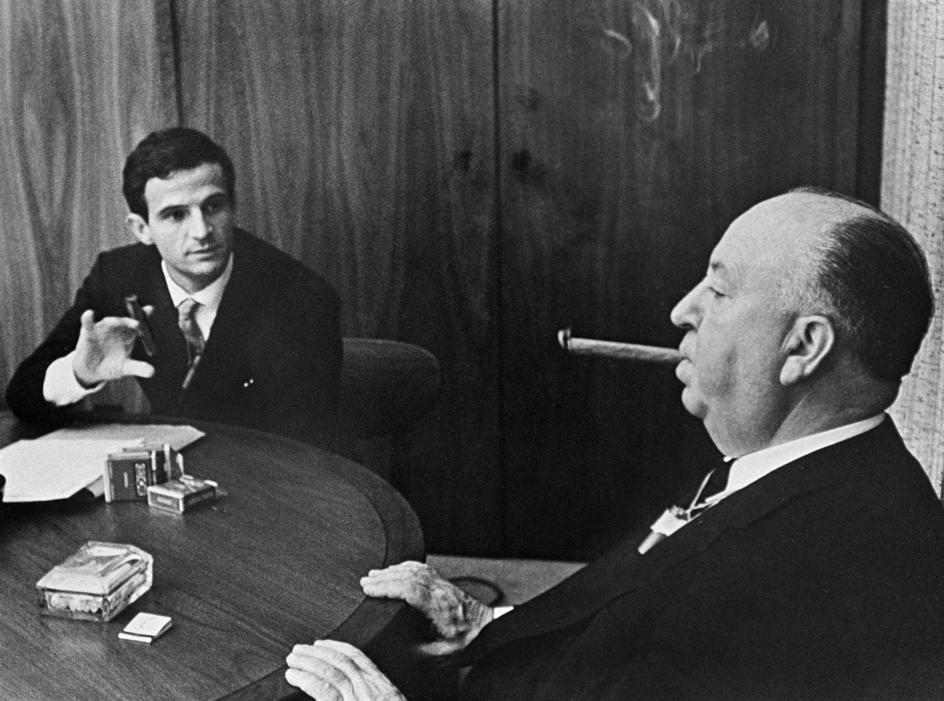
Copyright Philippe Halsman  1966
Copyright Philippe Halsman 1966

We agreed that the Montgomery Clift film, “I Confess” is one of Hitchcock’s underrated gems. Clift plays a priest who learns of a murder in confession and then himself becomes a suspect but cannot reveal what he has heard. “I love ‘I Confess.’ I think it’s great. Maybe you could say that in some of those 50’s movie things get a little telescoped at the very, very end. I really love the atmosphere of it, I love Clift, I love the presence of Québec City in the movie. I thought that those flashbacks were incredibly beautiful. It’s the film that my mother loved.” Jones objects to some of the conventional wisdom that Hitchcock did not work well with actors. He spoke about the special relationship Hitchcock had with Grace Kelly, James Stewart, and Cary Grant, who gave some of their best performances in his films. “Doris Day gives her most interesting and vulnerable performance in ‘The Man Who Knew Too Much,’ better than in ‘Love Me or Leave Me’ just riveting.”

Jones was reluctant to pick a favorite Hitchcock film because he likes to look at it as a body of work. “Within the history of Hollywood studio system of filmmaking, that’s the best body of work there is bar none. I mean the only body of work that I can think of that is kind of like it in terms of somebody working into the studio system where every film is as good is Yasujirō Ozu. There is no movie that he ever made that was at second gear, ever. And having said that I don’t know, I could narrow it down to about 10 or 12 or something maybe ‘Notorious’ or ‘Vertigo’ or ‘Rear Window.’ I don’t know it’s impossible for me.”

Related Tags:


Critics Directors Film History Interview
Interview: Jared Hess on the Biblical Archeology Comedy “Don Verdean”

Interview: Jared Hess on the Biblical Archeology Comedy “Don Verdean”

Posted on December 14, 2015 at 3:35 pm

Jared and Jerusha Hess are best known as the co-screenwriters of the offbeat comedy Napoleon Dynamite, which Hess also directed. Their latest film is “Don Verdean,” with Sam Rockwell as a hapless Biblical archeologist who commits fraud to satisfy backers eager for artifacts from the Biblical era, including Goliath’s skull and the Holy Grail.
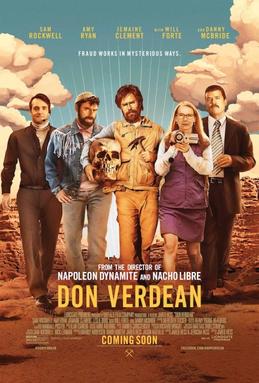

Tell me about the very funny dance number that appears out of nowhere in the middle of the film, when Boaz (Jermaine Clement) takes Carol (Amy Ryan) out to a club.

Jermaine is quite a dancer. It was just supposed to be a small little moment but it’s tough to pull that guy off the dance floor. So we rolled a couple of different takes and it was just him doing his interpretation of what he thought was some kind of traditional Israeli dance would be like if it was mixed with techno. It’s his seduction dance anyway but the subtleties of his moves are very funny.

And the dress Amy Ryan wears is in that scene is a hoot, sort of Disco Barbie Ice Skater.

Yes we wanted something that was over-the-top or what Boaz would think was sexy and beautiful and made somebody feel like a princess even though it was pretty hideous with how it’s bedazzled. It was like a competition gown from the 90s.

Copyright 2015 Lionsgate
If you yourself could find some holy artifact and assuming that there were no laws preventing you from taking it home what memento from the Bible would you want to get?

Oh man! You know I think The Holy Grail would have to be the one if all the legends are true about eternal life and all that good stuff. That would be a fun one to find.

What is it that is so endlessly interesting about people trying to cheat each other?

I always find it funny and probably it’s more tragic when people are lying to each other because they think it is for a good cause or for the greater good. In reality it’s just hurting themselves and everyone around them. To me that kind of tragedy lends itself to comedy.

What locations did you use for the Holy land scenes?

We actually did shoot a little bit in Israel believe it or not. It was mostly second unit stuff. Our cinematographer went over there and shot a bunch of locations. But then we shot the bulk of it in southern Utah. St. George Utah is where we shot stuff that doubled for Israel.

I really enjoyed the little short about Don Verdean at the beginning of the film that looked so authentically amateurish. How did you develop the cheesy, low-budget look?

It was funny because my grandma would buy all these different archaeological Biblical videos and a lot of them looked super homemade, shot on a VHS camera. I feel most comfortable behind the lens of a VHS camera myself because it’s where I got my start as much a kid making films and so it was such fun to shoot in that very low resolution format and then go in with an old title maker and do those transitions and wipes. There are so many videos like that that with people who discuss their discoveries and often times make up excuses for why they no longer have the evidence of their amazing find.

Is that where the idea came from?

Jason Hatfield, one of our producers, turned me on to the world of Biblical archaeology or at least pseudo-archaeology, with people who don’t have any credentials going out with the Bible and trying to find really sensational objects like the ark of the covenant or Noah’s Ark or any other big object in the Bible. They pop-up in the news occasionally and I read a story a couple years back about a group of Christian Chinese college students that were going out and thought that they had found Noah’s Ark and it turned out unfortunately just to be like a Ranger cabin and they were sorely disappointed. There was just something so funny about the idea of being an amateur archaeologist that isn’t formally trained in the discipline but with imagination and the Bible they can go all there and find it with the help of God.

Are you especially cautious about making fun of religious people?

Not really because to me, it wasn’t so much about making fun of religion as it was about getting caught up in a world of lies. It’s something that Don Verdean believes in. He is a believing Christian guy but he’s willing to commit fraud, to do what he thinks is going to help people find God. To me, that dynamic was funny that people do make really bad decisions when they’re trying to promote the religious cause. Christians are always looking to convert the world on some level and to what extent people will go to accomplish that I think is interesting. And so are their fears. In the 80’s and 90’s there was this big fear of the occult creeping into pop culture, cartoons, video games and that kind of thing and there was so many funny examples. My mom was like:“You know, a group of scientists at school were watching He-Man one time and they saw Satan’s symbols in Skeletor’s lair.” Even as a kid I am like, “What group of scientists watch He-Man for things like occult symbols?” There are people that were former Satanists turned Christian that go around and give these talks to different churches and groups about how they became saved and that to me is such a funny, silly world. It’s sensational and anything that will give your story some juice.

Related Tags:


Directors Interview Writers
Interview: Juliet Stevenson on Playing Mother Teresa in “The Letters

Interview: Juliet Stevenson on Playing Mother Teresa in “The Letters

Posted on December 12, 2015 at 3:26 pm

Juliet Stevenson plays Mother Teresa in William Riead‘s The Letters. In our interview, I began by asking her about playing the famously tiny nun when she is a tall woman. “

Copyright Freestyle Releasing 2015

You’re absolutely right and one of the first things I said to Bill Riead when he rang me and asked me to do it was, ‘I think you really may have got the wrong person here. I think you might’ve turned a couple of pages in Spotlight Actresses directory and got the wrong person because I’m five foot eight. I’m rather strongly built and I’m not a Roman Catholic.’ And he said ‘No, no I know exactly who you are.’ I’m physically quite wrong for her and that did worry me a bit, quite a lot actually because she’s so famously small. She is such a legendarily tiny person. The truth is that I think when you’re playing somebody who really lived, yes it’s great if you can find a look-alike but I think what’s more important than that is trying to find the quintessential center of somebody, the essence of somebody. When I started to research her and watched her in documentaries and interviews, her body language is so strong and so particular to her and I thought, ‘Well, maybe if I can really find that body shape, that body language, it wouldn’t matter that I’m a bit taller than her because the body will be very familiar, you know, the shapes. She has these quite tense hunched-over shoulders, her shoulders wrapped around her ears, her chest is quite concave, her head sort of stoops, and then she’s got these wonderful big, fluffy, tactile hands that are always stroking and patting and touching people when she’s talking to them, very tactile sort of touchy-feely hands but this body that’s quite tense and quite withheld and so there is this sort of very conflicting interesting story told in the body language. I thought that might be a route into her and it might mean that people didn’t mind the difference in heights very much as long as they could see that the body was sort of very recognizable, so that’s what I aimed for anyway.”

Stevenson spent a lot of time studying Mother Teresa, including watching her on film. “She’s a gift in a way because of course there is so much footage of her, there are miles and miles of documentaries, interviews, there was a vast amount of film to watch and I sat for long hours in the British Film Institute just watching this old footage. And I had tapes of her which I took in there with me when we filmed and had my little mp3 player on all the time on the set listening to her talking, and listening to her. So I got her rhythm of her speech into in my system. Her accent which is very strange and a real cocktail mix of Albanian where she came from and then India and English. It’s a really interesting, strange combination. So the accent and the patterns of her speech and her body language were my two sort of routes into her and then when eventually I felt they were coming, when they were sort if setting in I felt much more confident about being her.”

The movie makes clear that Mother Teresa had an unusual combination of determination and humility. “She includes great extremes,” Stevenson said. “She was very determined, very tough in a way. She demanded a lot of her girls, of her nuns. I spoke to nuns who had worked with her when they were much younger at the motherhouse and the working day was really tough, no breaks, no lunch hours. It started very early in the morning before dawn, they cleaned, they swept, they scrubbed, they went out to the sick and the poor and the students, they came back and they prayed. It was a really, really tough house and anybody who wasn’t quite up to it, well she was a taskmaster, or a taskmistress. On the other hand, she was extremely compassionate. You see great tenderness in her when she is with children or holding these orphans or with sick, the dying, stroking them, bathing them, talking to them, there is this tenderness and this compassion. So there is one contradiction, this wonderful sort of yin/yang quality. But there are many of those contradictions in her. She lived a very public life, she’s always surrounded by people, but she was very, very lonely I think in certain ways. She combined many opposites. We perhaps all do to some extent but she is quite an extreme version of it and I think that took great strength. I think it means that she actually understood a huge range of human experience and human qualities and I think the greatest paradox is that she had this great crisis of faith, this woman who seems to embody unflinching stalwart Christian values and steadfastness was actually privately in agony of doubt; thought that God had abandoned her, missed him keenly like a woman whose beloved husband has walked out the door and she doesn’t know why, she doesn’t know when he’s coming back or if he is coming back. Like such a woman she lived in grief and loneliness privately for over 40 years and that was what she wrote to the priest about, to her confidant, her spiritual advisor, Father Van Exem. I think in some way maybe she used this lowliness and disbelief to channel the work. She connected with those people more because they too were lonely and abandoned and she had something in common with them though she might not have known that she felt that. I am sure that might well have been what gave her some sort of strength. In the same way that when we are miserable in our private lives we often do plow ourselves in hard work schedules and whatever to escape and I think in a way you could see her as an example of that; now we know what she was privately going through.”

Stevenson also spoke about the experience of living and working in India, near the places Mother Teresa lived and worked. “India does change you, I have never been before and I was sometimes quite overwhelmed by the beauty, by the poverty, the otherness of it. I mean I have never been anywhere like it and I have traveled a lot in the world. I really got hooked on it. Then my children came out to visit for two weeks in the holidays and I think had a big influence on them. My son had never seen anything like it. We were staying in such a luxurious hotel and I am going out every morning to film in a slum and so he came from the hotel out to visit me with my husband and daughter. So he saw one extreme of India, the new wealth, very flamboyant wealth that India was enjoying in certain areas and then the extreme poverty in which is still experienced in other areas. And every day he went from one to the other and he found that very challenging. But he is very, very glad that he had that experience.”

And she talked about what made Mother Teresa an extraordinary leader, so inspiring to those around her. “I think we are in a world where we have to witness an enormous amount of poverty, bloodshed, destruction, malevolence, hostility, appalling stuff and we don’t know what to do about it. And it is the first time in history, just in the last hundred years when we we know what’s going on, perhaps we didn’t know much about what’s going on but now we have the media everywhere and we see all of this. We don’t know what to do about it. If somebody stands and says, ‘Hey, this is what you can do about it. It’s not difficult. You can do something and you don’t have to rely on the government. You can stand up. One person can make a difference. Just roll up your sleeves, pick up a bucket, go out and scrub or pick up somebody, lay them down, bath them, feed them.’ This idea that she personally picked up 40,000 people off the streets in a country where nobody at all paid any interest to them and — that is inspiring because you say, ‘I can do something, I too can do something.’ And it is not something beyond our reach, it is quite simple, practical stuff. She found an empty building, she cleaned it. She created mattresses that were clean. She had people that were washing everything, she bathed people, she loved them, she fed them, she stroked them, she prayed with them, she talked to them. These are all things within our reach, very easily within our reach and I think that’s what’s inspiring. You don’t have to have a degree, you don’t have to have a license, you don’t have to have anything to do that. It may not be so easy now but we can all do something. She is very practical, very realistic in a way. She fought the obstacles that were there and they could be overcome; obstacles in the church or obstacles in the community but she just believed in herself. She believed in what she was doing and she knew that she could make a difference. You could say that’s the message in the film — if you believe you too can make a difference, you can do it. And let’s make compassion something that we respond to by getting up and doing something not just talking about it or saying it is awful or it is terrible, do something, stand up, be counted. I love that idea.”

Related Tags:


Actors Interview
Interview: Trevor Habberstad on the Stunts in “Ant-Man”

Interview: Trevor Habberstad on the Stunts in “Ant-Man”

Posted on December 10, 2015 at 8:00 am

Trevor Habberstad, a second generation stuntman, coordinated the stunts for the Marvel movie, Ant-Man. In an interview, we talked about the special challenges of creating stunts for a superhero who is only a fraction of an inch high. “We had a lot of time during pre-production to work on it. We had three months of stunt preps, and daily meetings with Peyton , our director, with Paul , even with the Marvel executives Kevin Fiege and Victoria Alonso and all of them, talking about what his limitations were and we’d say, ‘Okay, well this works, that doesn’t. That seems like it could be feasible. Let’s see if we could come up with something cool where that could play into script and into the story.’ And then maybe we would think of something that we thought was maybe really cool and then we got into it and started rehearsing the stunts and it just may not have worked. So it’s a lot of collaborating with each other and sort of figuring out what we liked, what was fun, what was exciting, what was believable, but still made the superhero a superhero.”

He is small, but he has the same power he had at full-size. The question was not how to make the stunts obey the laws of physics but how to make them seem like they do. “Okay, if he is half an inch tall but he is normally a 6 foot tall guy, 180 pounds, you take all that power and energy into that small person, so as he shrinking down, is he dense? What would happen if he gets hit? Is he really heavy when he’s that way? No because you want him to run alongside people and they would notice if he is there and he still felt like 180 pounds just crammed into half an inch. Okay so that doesn’t work, so you know what, he is a superhero so we’re just going to go with that and that’s going to be our explanation for that one. He is small but he is still really strong. Most of what we were able to come up with a logical as far as a superhero movie goes. He could punch someone but he has to be careful because with the force of my fist hitting something if I took that same amount of energy and pass it into a fist that size then I can really hurt somebody with a punch. So a part of the movie is where he trains, he learns from Hope Dyne how to properly fight so he doesn’t kill people but he can still be strong and destructive and be Ant-Man.”

Copyright Disney 2015

ant-man crouchA highlight of the film is the fight on a train which is very intense — and then it turns out to be a child’s Thomas the Tanks engine toy train set. “We did all the movements with motion capture, so we had our stunt doubles, actors in motion capture suits on a sound stage and we were capturing all their movements with a bunch of cameras all over the place and they have these suits that look like pajamas with a bunch of shiny balls all over them, tracking every little movement. And then we would recreate the scene step-by-step. Our group would build a little set piece to mockup, ‘Okay this is going to be the train, and this is the engine, this is the caboose, is going to be standing here, he is standing over here.’ We were able to play pretend like you would when you are kid just on a really, really large Marvel-size scale.” One of the stunts that came out of this process was the idea that Ant-Man would run toward a door full-size, then shrink down to jump through the keyhole, and then be full-size again on the other side of the door. “That’s the awesome part for us; we get to help influence the story.”

Habberstad’s father is a stuntman, and so his first stunt job was riding a horse in the Andy Garcia film, Steal Big, Steal Little when he was just five years old.
He can do “anything movement-based, but in general I think my best skill is that I have a very diverse set of skills. I can do a little of everything and that make me more versatile, makes me more valuable to a production.” The best advice he ever got about stunts is equally applicable to any endeavor: “Shut up and watch and ask questions if you don’t know what something is. Ask because you’ve got to know what you don’t know.”

Related Tags:


Behind the Scenes Interview
Interview: Bill Riead of the Mother Teresa Film, “The Letters”

Interview: Bill Riead of the Mother Teresa Film, “The Letters”

Posted on December 8, 2015 at 3:58 pm

William Riead is the writer/director of the lovely film about Mother Teresa called The Letters. It was a great pleasure to talk to him about his dedication to sharing her story. “I wanted the story to be accurate when I started researching Mother Teresa’s life. What I wanted to do was let the chips fall where they may, if she’s a good person let’s find it out, if she is not who we thought she was let’s find it out, and so I just sort of let the story tell itself and let the script sort of take its own direction as I was doing my research. And when I came upon the letters that she had written, I couldn’t think of a better actor to cast than Max Von Sydow and let him tell her story through reflecting back on the letters that he received over a 40 year period. There were three of four trunk loads of these letters which told her story and I took it as a responsibility to let it be told truthfully by her own words.”

Copyright Freestyle Releasing 2015

He begins the film with an investigation to consider Mother Teresa for sainthood. “In real life the Vatican does assign a postulator for someone that they designate a candidate for sainthood. And in this particular case I created this character to go out and investigate whether she was worthy of canonization or not. And so little by little he concluded that she was beyond saint-worthy for sure. That was my conclusion when I finished writing the script and ultimately made the movie, I knew that there wouldn’t be one man, woman or child who left the theater who wouldn’t draw the same conclusion that I drew: that she is a saint.”

Mother Teresa’s letters created some controversy because she was candid about her doubts and frustrations. “People who know that I made this film would approach me and say, ‘You know Mother Theresa lost faith in God right? You know that?’ And I have to straighten them out and say, ‘No, Mother Teresa never ever lost faith in God. She felt like God had abandoned her, and lots of saints do, it’s called the dark night of the soul. And she experienced that like all the saints.’ She was very human. We can all aspire to be as selfless as she was but she was very much a human being. All sainthood really means is someone who the Vatican has declared for sure has made it to heaven and is experiencing God and so that could be any of us. And my feeling is if Anjezë Gonxhe Bojaxhiu who would become Mother Theresa of Calcutta didn’t make it to heaven, none of the rest of us have a shot at it.”

The movie shows her experiencing what she called “the calling within a calling,” when she was already a cloistered nun but felt that God told her to work with “the poorest of the poor.” Riead said, “Her first calling was she wanted to be a missionary when she was a little girl and that didn’t become practical. Where she got the thing with the poor is she would be sitting at the family dinner table in Albania and her mom would go to answer the door and there would be a poor family who would be at the door because mom was out somewhere that day, found the poor family and invited them to her home to have dinner with them at the dinner table. She didn’t just give them money and give them food out on the street. She would say, ‘Come eat with us.'”

“So Anjezë experienced this sharing and decency from incredibly wonderful parents and then when she went off to become a nun and then ultimately settled into the life of a teacher at the Loreto Convent School. Her mother sent her a letter saying, ‘Anjezë do not forget why you became a nun.’ That was to help the poor. But she was a cloistered nun, she had taken the vows of a cloistered nun, which mean you cannot go outside of the convent walls. She realized that her mother was right and that her true calling was to help the poor and to be a selfless person and so she gave her life to God and said, ‘I’m going to do everything I can to honor what I think you put me on this earth for.’ And so she then absolutely dedicated her life to helping the poorest of the poor and that ultimately led to her having to start her own order because Mother General didn’t want her to leave. She was simply protecting her turf and when students started abandoning the Loreto Convent School and going off to join Mother Teresa, she had not started her own order yet but they just wanted to help, Mother General became extremely upset and said she was pilfering their students and so forth. I did not put that in the film because I felt that that would upset the Catholic community even though it’s the truth. There’s nothing about my film that is not the truth. I spent twelve years as a journalist so I wanted to get this right but Mother General eventually came around. Mother Teresa’s kindness, goodness and selflessness eventually so impressed Mother General that she became a fan as well.”

Riead was impressed to learn in his research that Mother Teresa was both driven and egoless, a very rare combination. “How can you be that driven without an ego? Because she felt she was a pen from God’s hand. When I was putting this project together I experienced the same thing. When I set out to make this film I became obsessed and the more obsessed I became the less ego I had. The more exposure I had to Mother Teresa the more I became like Mother Teresa. When we were filming in India there wasn’t one of us on the cast or crew who didn’t feel Mother Teresa’s presence. All of us left India and went to our respective homes Juliet Stevenson to England, and me to Los Angeles and so forth and all of us left not the same people we were when we arrived there, none of us. We all felt Mother Teresa’s presence.”

Related Tags:


Directors Interview Writers
THE MOVIE MOM® is a registered trademark of Nell Minow. Use of the mark without express consent from Nell Minow constitutes trademark infringement and unfair competition in violation of federal and state laws. All material © Nell Minow 1995-2026, all rights reserved, and no use or republication is permitted without explicit permission. This site hosts Nell Minow’s Movie Mom® archive, with material that originally appeared on Yahoo! Movies, Beliefnet, and other sources. Much of her new material can be found at Rogerebert.com, Huffington Post, and WheretoWatch. Her books include The Movie Mom’s Guide to Family Movies and 101 Must-See Movie Moments, and she can be heard each week on radio stations across the country.

Website Designed by Max LaZebnik