Interview: Leonard Maltin on His New Classic Movie Guide
Posted on October 25, 2015 at 3:10 pm
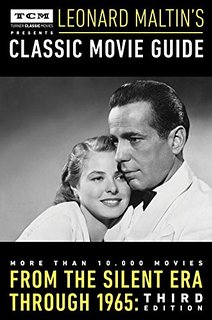
The third edition of Leonard Maltin’s indispensible guide to older movies is now called Turner Classic Movies Presents Leonard Maltin’s Classic Movie Guide: From the Silent Era Through 1965. It is even more important than ever in the era of universal accessibility to the classics (and the enjoyable non-classics) via cable and Netflix, and it is easier to use than ever if you have a Kindle. It was a thrill to get a chance to interview Maltin, not only one of the most knowledgeable and thoughtful film historians of all time, but the very essence of a gentleman, gracious and considerate. His Maltin on Movies podcast is a pleasure to listen to, especially when his daughter Jessie is included.
Copyright TCM 2015
When you and I were young, the quest to find classic old movies and neglected gems was, well, like something out of a movie. Did you take any extraordinary measures or have any adventures in tracking down movies you wanted to see?
When I was a kid, I sometimes forced myself to go to sleep early, set the alarm for 2am, and woke up to watch a film on the late, late show. I had to keep the volume down so I wouldn’t wake the rest of the household. Then I had to try to get back to sleep so I could function in school the next day—which wasn’t easy. I never could have foreseen that there would be a day when thousands of movies were easily and instantly accessible on video or through streaming. The question is whether or not today’s young people are curious to see, or seek out, older films.
How has the broad availability of movies on DVD, cable, and streaming changed the questions you get about movies? How as it changed the way people think about movies?
I worry that people accept the availability of movies at home as an adequate way to watch them and don’t value the opportunity to see vintage films on a big screen—the way they were meant to be seen. But I think the biggest change is that people can now obsess about movies they like and watch them over and over again. They’ve memorized some films and know them much more intimately than I do. I don’t have the luxury of doing that because I try to keep up with the latest releases and also enjoy diving into films of the past.
How has the style of acting changed since the classic era covered in your book? Which actors do you think come across more as relics of their eras and which do you think still seem timeless?
Some actors of the 1930s and 40s used a declamatory style of acting that came from the stage, while others had a more naturalistic approach and delivery. I don’t think Humphrey Bogart or Spencer Tracy are dated at all.
You have very limited space to write about each film. Once you have indicated the plot and quality, what are some of the elements you like to point out to readers? Cinematography? A great performance in a supporting role?
The answer is: whatever stands out to us. If the cinematography is exceptional, we like to point that out, but the same is true of a great music score, or a scene-stealing performance in a supporting role.
You have from the beginning been a stickler for getting the movie’s running time right. How do you get the definitive number?
Nowadays it’s easy with access to DVDs and downloads. In the past it was a great challenge, because no two sources seem to agree. I once asked a guy at United Artists how they determined accurate running times for films in their library and he said, “Uh… we used your book.” It was flattering, of course, but not terribly useful.
I enjoyed your podcast discussion with your daughter about “comfort movies.” What are some of your favorites and what makes them so comforting?
Often, it’s movies I saw while growing up. They’re like old friends, in a way. When I revisit Singin’ in the Rain or Yankee Doodle Dandy or any number of others, I’m not just enjoying the films all over again but recapturing my youth, I suppose.
Copyright 20th Century Fox 1940
Sherlock Holmes has been portrayed more times on screen than any other fictional character. Who is your favorite?
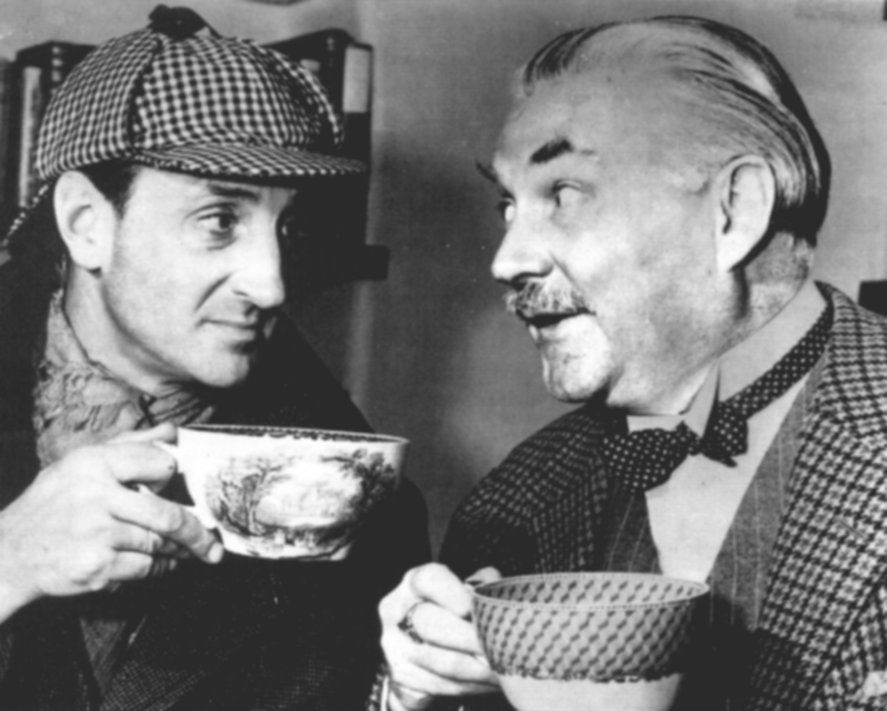
I grew up on Basil Rathbone as Holmes with that wonderful character actor Nigel Bruce as Dr. Watson and retain a special fondness for them. But I enjoy and appreciate many other Holmses over the years—the latest being Ian McKellen in Mr. Holmes.
Abraham Lincoln has been portrayed on screen more times than any other historical character. Who is your favorite?
That’s another one that’s hard to choose. Daniel Day-Lewis was magnificent in Steven Spielberg’s recent film, but that doesn’t prevent me from still enjoying Henry Fonda in John Ford’s Young Mr. Lincoln.
One thing I especially enjoy in your write-ups is your mention of unexpected appearances, sometimes by directors but usually by actors who were not yet famous. Do you have a favorite example?
It’s always fun to spot an up-and-coming actor in an early role. I can’t pinpoint a favorite off the top of my head.
When you and the brain trust that works with you on this book disagree about the quality of a film, how do you decide the rating?
That’s the benefit of being editor-in-chief: I have the final say.
Interview: James Vanderbilt on “Truth,” With Cate Blanchett and Robert Redford
Posted on October 22, 2015 at 3:06 pm
James Vanderbilt wrote and directed Truth, based on journalist Mary Mapes’ book about the controversial story that ended her career at CBS News. Working with Dan Rather, she produced a news story with explosive allegations about President George W. Bush’s National Guard service in a story broadcast on “60 Minutes Wednesday” shortly before election day 2004. The allegations were based in part on two memos purported to be from the personal files of Bush’s late supervisor. After the broadcast, bloggers claimed they were forgeries. CBS organized a commission led by former Attorney General Dick Thornburgh and former Associated Press President Louis Boccardi, which produced a 224-page report, finding that the story was biased and inadequately supported.
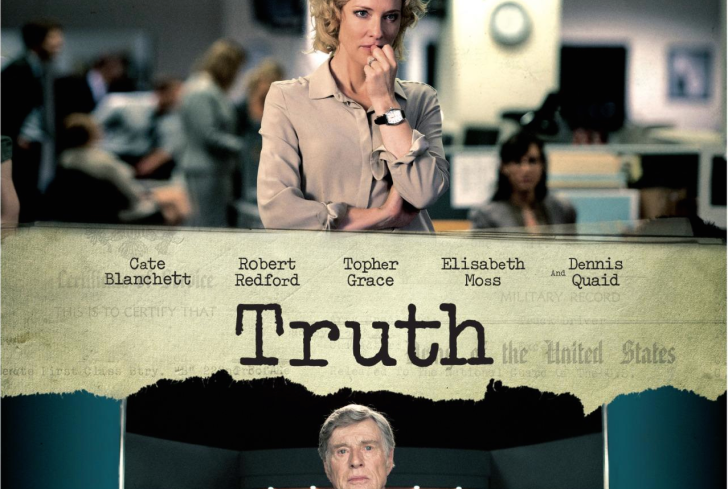
The movie is based on the book by Mapes, with her side of the story. It stars Cate Blanchett and Robert Redford. Vanderbilt talked to me about his film, journalism, and legal standards of evidence and how all three relate to the challenges of truth and storytelling. “There are no rules and regulations in terms of how you put story on the air. It’s always a judgment call which is not obviously how things are done in the legal profession. So felt, I think, that they were in very new territory speaking to people who were Lawyers about how news is built and delivered and what their process was.”
Copyright 2015 Sony PicturesThroughout most of the film, Mapes is exceptionally strong and decisive. But when her father publicly accuses her of having a left-wing agenda, she is painfully vulnerable. “I think it was the moment that broke her a little bit. One of the things that drew me to the story was her as a person and her as a character. You meet this woman who is at the height of her powers in many ways. She is extraordinarily bright and funny, she has the best job in her field, the perfect job, she works with the face of CBS news and she’s the one behind that putting those stories together for him. She’s just done the story of her career with , she has a great husband, she has a great kid. And so when we meet her it seems like it’s perfect, everything is perfect. As all of this goes down those pieces of armor that we all sort of have starts to get stripped away. We all have that scared kid inside us and those pieces of armor of protecting that kid, but they can disappear. And that moment with her father near the end was finally exposing her as a raw nerve. You think that scene is going to go one way and it goes another. And she just can’t do it. And when she told me that story I was floored that that really happened. And also seeing the relationship that she and Dan had first-hand from watching them interact I started to kind of go, ‘Oh this is what this is about, about this relationship, and fathers and daughters,’ and that’s really the emotion behind the piece. And that’s really why that whole storyline matters.”
Eleven years after the events of the film, Vanderbilt says that “Investigative journalism is in a very dangerous please right now. And I think investigative journalism is incredibly important and longer lead stories don’t get done. In the film there’s a moment where they go ‘Oh my God we only have five days to put this together’ and journalists I talk now go ‘God, I’ve got five days?'” He does not confuse his role with journalism, though. “My job first and foremost as a filmmaker is just to make an interesting film. I have to tell a compelling story. It’s up to you to decide whether we succeeded or not, but that’s the most important part of it for me. The subject matter in the story we are telling obviously is about investigative journalism so I wanted to do as much of that for ourselves as possible to try and put as many different ideas and point of view in the film as possible, too.”
Vanderbilt said that he especially loved talking to Dan Rather as a part of his research for the film. “The great thing about what I get to do is I get to sort of step into everybody’s job. I sit down and say, ‘Okay so what’s your day like? When do you wake up? Do you read papers in the morning, do you go online?’ And I love that process. Journalism is the only other thing besides what I do I ever considered going into because they are both storytelling. So I’ve always been fascinated with that world. Getting to sit with Dan Rather, just to sit with him, forget about the movie,0 was a great experience and getting to pick his brain, getting the details, not in terms of the factual like ‘Did this happen and this happen and this happen,’ because that is recorded other places and of course we went through that with him as well, but the feeling of the newsroom: ‘How did you feel when this happened? What was your experience like when this happened?’ And getting to watch him — you get to go to dinner with him and you can ask him questions — but then you observe, how is he treating the waiter. How is he having a conversation? My wife was at the dinner and at one point, like we all do, he used a curse word and he immediately apologized to her and immediately for me as a writer I go, ‘Oh, that’s great! That’s such a personality telling detail.’ And so there’s a moment in the film where he says ‘bullshit’ and then he apologizes to the makeup artist. But that’s the stuff that makes him human. And so with Dan a lot of what I was trying to do is to portray him as he really is in life and take this, the human quality of him, the stuff that you don’t always see through the television and bring that into the character. He was absolutely and extraordinarily gracious to all of us. And there were many opportunities for him to say during this whole process, ‘I’m anchoring the news five nights a week and doing all of these other stuff. I got that information from my producers.’ He could have thrown that team under the bus like that and that never happened and I felt that was a very telling interesting facet of him as a character.”
Cate Blanchett was so committed to the role that she actually learned to knit and practiced for hours for the few seconds her character was knitting on screen. “It is maybe five seconds in the finished film and Cate Blanchett was the type of person who goes and learns to knit for that moment. So that’s the level of actor you are dealing with.” And Vanderbilt encouraged Robert Redford to play Dan Rather by reminding him of the commitment to journalism he showed in producing and starring in “All the President’s Men.”
The title of the film is a bold choice. “The name of the movie is ‘Truth’ not because I know what the truth is. It is because it is the thing that everybody’s trying to get to in the movie. And it’s difficult to find. It’s elusive and tricky and you go down the rabbit hole looking for it sometimes. And clearly people lose careers over it but it still that thing that we all should be pulling for and we should want our journalists and media pulling for at the end of the day because that’s what keeps our society free.”
Interview: Reverend T.D. Jakes on His New Book, Destiny
Posted on October 19, 2015 at 3:35 pm
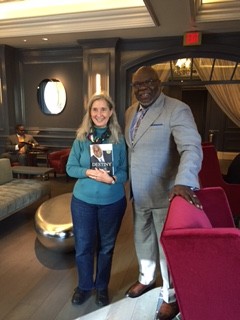
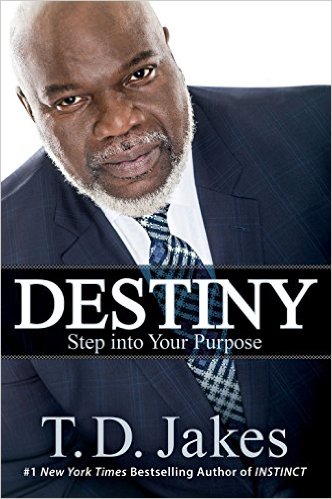
It is always refreshing and inspiring to talk to Reverend T.D. Jakes, and it was a great pleasure to have a chance to hear more about his new book, Destiny: Step into Your Purpose, a follow-up to his best-seller, Instinct.
Copyright Nell Minow 2015
You write that the conditions of our lives can distract us from meaning, allowing urgent to interrupt the important. How can people achieve some perspective?
We have confused busyness with effectiveness. We are busier than we’ve ever been before but perhaps less effective than we’ve ever been. And what I tried to lay out in the book is to cut away the clutter of all the things that you think you’re supposed to do that are not central to what your destiny or what your primary purpose is. And that’s why I devoted so much time to talking about priorities. Because I’m not saying that the busy things should not be done but they should not take priority over the purposeful things that we were created to do.
I sometimes think that that comes from a failure of courage. We are not comfortable thinking about our priorities and so we distract ourselves with a lot of busyness. Where do those messages come from?
A lot of it comes from our environment, our surrounding. We are often mentored by people who are mediocre, to be candid. When you get an opportunity to read or think or be exposed to somebody who is really progressive and got things done, their philosophical ideology is contagious. To find out from them — what did you prioritize, what did you make important, what did you regret, not just what you did right, what did you do wrong because we all do things that we look back on and say, “What was I thinking?” But to always remain a student, the liquidity of thought and nimbleness of mind to approach life from a perspective of a vacuum of “feed me, fill me,” not to always come into the class as a professor but to enter into the class as a student and to learn from your environment and the people that you are exposed to creates an environment to discovery.
A lot of us have become what our parents have modeled but we are not living in our parents’ world and they modeled to us something that may not work today. There were some things that my mother was diligently teaching me that are antiquated now that we don’t to be anymore. And so I think that we have to update and constantly remain relevant and I don’t think you get old until you stop learning.
I think we sometimes believe that the people who are achievers are in another category and that they are not still learning when in fact they are the ones who are still learning the most.
Absolutely! And the weirdest thing is that we do put them in another category and it is really not true. What is really beautiful is our ordinariness. Of course when you think about Jesus it doesn’t get any better than that and yet he looked so ordinary that the Roman soldiers had to hire somebody to point him out. And it was his ordinariness that made him special. It wasn’t like he was running around with some sign on him that says, “Hi, I’m Jesus.” He interacted with people who were flawed, who had different philosophical ideologies, who epitomizes what Beliefnet is doing. He engaged people where they were in a way that is non-traditional.
I find that we have slipped into so many silos, particularly in this country, where we only interact with people who vote like us, think like us and dress like us. And it has dumbed down our thinking. Nature teaches us that cross-pollination brings forth fruit but we have stopped cross pollinating, intellectually, spiritually when we only talk to people and we only watch on TV those programs that are a reflection of us.
How do we find people that are worth learning from?
You look for fulfillment in their eyes — and fear.
Fear?
Let me tell it this way, I recently was doing a test program for a talk show, I did a couple months of that and really, really enjoyed doing it, I was excited about it. I was lying in my bed in New York. I called my wife in the middle of the night and she said, “What are you doing up?” and I said, “I’m lying in the bed laughing” and she said, “What are you laughing about?” and I said, “Because I’m scared again.”
It is the beautiful gift of being thrown off-center. I am generally the interviewee not the interviewer so it was a role switch. And it threw me off, I wasn’t so sure of myself and I thought, “Oh gosh, suppose I mess it up, suppose I forget something I should’ve remembered.” And I thought what a gift it is to be a little intimidated, to be a little bit vulnerable, to be a little bit afraid. It makes us a little more prayerful, more careful and while God may have not given us the spirit of fear he was wise enough to give us the inclination to be afraid. It protects us in the jungle of life. And so I think when our lives become so predictable that we are not thrown off center we stop living. So that’s what I meant about fear. When you see somebody who is attacking something with intimidation like they are climbing up Mount Everest so to speak, get behind them, get behind them, get with them, join them on the journey. Because to get to see somebody struggle… My son said, “Daddy you taught me more by doing the talkshow than you did anything you’ve ever done.”
Do you feel that a fear mode is when you are most open to learning?
Oh yes, absolutely! And I was the most effective because I had told him things that he had never seen modeled. So he thought, “Dad is just confident, dad has just got a good ability.” But he knew daddy was nervous and he knew that he was intimidated and he got to see me fight my giant. That’s why I say if you see somebody with fulfillment in their eyes and fear get in behind them and follow them and you will learn things that are absolutely amazing.
Copyright FaithWords 2015
In the book you say sometimes we do not surround ourselves with the right people. How do we find the right people?
We can talk about that all day. One thing that I notice all doctors run with doctors, lawyers run with lawyers, preachers run with preachers and isn’t that boring? Because when everybody that you run with does what you do they compete with you, they do not complete you. One of the wisest things you can do is put around you people who are strong where you are weak, who were very different from you. I learned that the trick to having great party is diversity around the table. You know, smart people from different worlds who engage each other makes the whole night amazing.
And we don’t always do this in our lives. Sometimes we put around us people who need us but they don’t complete us. We put around us people who lead us but don’t feed us. So we’re always feeding and never been fed, we are always giving and never receiving and our ability to receive gets rusty because we are never thrown off kilter and brought into an environment where we’re not the smartest person in the world and that’s a good thing. I think one of the greatest blessings of my life is that I had been able to be in so many different worlds and rooms. I describe myself as one of the few people who could have breakfast with Pat Robertson and lunch with Jesse Jackson. You know those are two different worlds. To be able to interact with extremes and polarities has made me broader. It has helped me to have a point of view that is not easily categorized and I think those opportunities, both of them at different times have said some things I don’t agree with but that doesn’t mean that we can’t have lunch. And maybe I can include influence a conversation or maybe I can learn from them… There’s just so many things… I think we are becoming so tribal in a way that makes me wonder if we’re not digressing as a society by tribalism.
How does this book help people locate their destiny?
I’m coming to a place in my life where I am doing less and less things that don’t make me thirsty to get out of the bed in the morning. You know what I’m saying? I’m not doing things just because you expect me to. If I don’t feel the passion and I don’t see the purpose I’m not doing it. With the few years I got left I’m going to be picky. I’m going to do things that make me feel alive and make me feel thirsty and creative. And so I think that’s one of the things you can do, find the thing that makes your eyes light up, that makes you read, that makes you thirst. Look for your passion and you’ll find your purpose.
Don’t try to find that from copying celebrities. All of the famous and rich is the what’s, the purposes comes from why. Money without purpose is nothing. Fame is a platform through which you can be heard but if you have nothing to say, what good is it other than getting through the restaurant a little quicker. I think that we need to get back to the whys and not the whats. If you chase the why the what will chase you, if you find your purpose the provision will find you, if you go on to the provision and you have no purpose the provision serves no purpose at all. What good is a car if you’re not going anywhere?
And that’s one of the reasons that I kind of want to be in the position to get in the room with them because I think sometimes when the church thinks about evangelism we always go to underserved communities, as if our doctors or lawyers or movie stars, our actors, our CEOs, our producers don’t need Jesus too. So to share your faith with the wider array of people could fill that void. I think that we are suffering from not only their inability to be meaningful in those high-profile worlds but they are a result of our negligence to touch them. It is really our negligence that created that because I know a lot of them and they stopped by the church before they became who they were. It’s not like they haven’t experienced us but because we were too narrow to throw our arms around them and so judgmental we missed an opportunity to create a transformative experience for somebody who had a platform who could have made a difference in the world.
What do you mean by a “plus ultra life?”
You have to realize my father got sick when I was 10 and he died when I was 16. I was born in between two dead babies. My mother lost one before me; she lost the one after me. When other fathers were teaching their kids to ride bicycles, which I never learned how to do, incidentally, my father was sick and on a kidney machine. There is nothing like being raised by somebody dying that makes you appreciate life. There is no other gift to give you that give you that ‘this can be taken away” and it makes you live differently than other people who take for granted that tomorrow will be there waiting, I don’t do that, I don’t do that.
Why are the steps you set out so important?
That’s what sets this book apart from other books. It goes beyond talking about purpose and destiny and goes out to the practical pragmatic steps, and those steps are different depending upon what your destiny is. So it’s hard to say in an interview or even in a book what those steps are because it may be different for a plumber than it is for an actor, than it is for preacher but everybody starts as somebody who is an apprentice.
And I talk about the beauty of rehearsal rather than recital, that sometimes we are so engrossed in the recital that we missed the rehearsal. We have raised a generation of people who know nothing about rehearsal only recital. They want quick answers, they want the destination but they don’t have the transportation. So this book is about steps, practical, pragmatic, process steps that lead you around to an expected end, and to celebrate the process and not just the promise, to enjoy the journey. Like in the creation, “And the evening and the morning was the first day and God said that it was good.” How can you say it was good when you weren’t finished? Giving yourself the permission to not be finished and celebrate accomplishment is very important in creating an atmosphere where you can remain creative. Sometimes we don’t celebrate till everything’s finished, that’s too late. I’m not sure there is a finish line.
I like the your very clear message to people who say they will wait until they are ready by telling them that it’s never a convenient time.
So here’s the thing — I don’t know about anybody else in my generation but I am shocked that my hair is white. I just can’t believe it. Where did the time go? And if you put off for tomorrow what you have the strength to do today, who says the strength will be there even if you are there tomorrow? You have to do with while you can, you have to do it while you can. A guy asked me why are you doing movies and running companies and you are a Pastor and I said, “I did it because I can.” I might not be able to tomorrow but I had the strength and I had the opportunities and I had the gift to be able to do it. Doing thing when you can is important. My mom died of Alzheimer’s which tells me you could be here and not be able to. So while you have the liquidity of thought to do something or energy or influence or connections you have to do that with all diligence or you miss your turn.
So what is the best way for somebody no matter what their skill to make a real contribution that can feel meaningful to them?
I think one of the problems that we have is that we’re so aware of other people’s gifts and we never know our own. And to see yourself as a gift requires that you have some level of self-esteem and worth of what you bring to the table. And I think sometimes we are so busy looking at what they bring to us that we don’t appreciate you bring to them. And then ultimately over time after the luster leaves what they bring to us we resent the fact that they don’t appreciate what bring to them when we should start the dialogue from the perspective of strength to strength.
How do we as parents help our children understand these lessons?
As a parent the thing I learned too late is that we talk more than we listen. I think that sometimes there comes a point in parenting where you are not the star of the world and very few parents get make that transition. My mother said to me, “I taught you how to have a deeper appreciation for your thoughts by listening to you when you talk.” She said parents who don’t listen to their children teach their children that what they think is not important. Those very core basic things have a lot to do with how we end up as a people and as a society and what level. I think we all have dysfunction but what level of dysfunction we have can be determined and prevented by how we were parented. My all-time heroes are my mother and father. They were flawed, they were very human, but they were very committed and very focused and I learned as much from their flaws as I did from their strengths. Flaws don’t exempt you from succeeding. You can drive a broken car and still get to school, even though you had to kick the door then roll out the window you can get there. And we have broken people husbands and wives and moms and dads and kids but that doesn’t mean we can’t arrive, if you learn how to work through the brokenness.
Interview: Dan Romer, Composer of the Score for “Beasts of No Nation”
Posted on October 18, 2015 at 3:42 pm
Dan Romer composed the score for Finders Keepers, a documentary about two men fighting over the ownership of a severed leg. “I saw the film and I mean I love it. You know I was laughing all the way through, well you know, laughing and crying ultimately in that film. There is a lot of heavy, sad stuff in that movie especially in the story of Shannon. It’s a really interesting story of where one guy who is addicted to drugs and he is able to recover from it and the other guy is addicted to celebrity and he does not recover. When I saw it I knew that it would be a really good project for me and my old friend Osei Essed. I used to be in a kind of bluegrass Americana band in college. I played the accordion in the band. We scored another film that actually just came out now called “The Last Season” which is a documentary about mushroom hunting.
He also wrote the score for the new Idris Elba film about child soldiers, “Beasts of No Nation.” The main character is Agu, played by Abraham Attah. Romer told me that he did not want the music to be too specifically connected to the usual sounds Western audiences associate with Africa. “Cary and I wanted the score to not feel like it had a specific region attached to it. I mean we didn’t want to do like an African percussion sound, we didn’t want to do anything that suggests colonialism instrumentally and we didn’t want to do orchestra. We felt like we kind of just wanted to do vintage 70’s or 80s synth score. We just felt like it didn’t connect to any typical region, it didn’t carry like specific group of people. It felt better that way in a way when you’re kind of are seeing things more from Agu’s point of view where they use a thing to more represent fear, anxiety as opposed to sound of the actual places. But that movie is scored from the point of view of Agu for the most part so we wanted to just kind of highlight what he was feeling as opposed to highlight the sounds that he might have grown up around.” Romer said that the sounds he used included samples he created, wine glasses, tambourines, even the sound of the coyotes that come into his back yard. “I would run out the balcony and start filming them and if you shift them down a few octaves they sound very, very cool. You just hear this kind of yipping. Once one start yipping, twenty start yipping so you just have this sound like going on and they’re very very loud. And they are just like down in this little valley behind our house.”
Romer started playing the piano when he was five “but I gave it up very quickly. Probably because it was so music reading focused. I kind of have a problem with the idea of having to learn to read music right away. It’s kind of like teaching kids how to read words before they can talk. I was seven when I learned to play the guitar. I was taught chord shapes and started playing songs immediately. So I stuck with guitar for a bunch of years and then when I was twelve or thirteen maybe I moved back to piano and I started teaching myself. And then because I was playing in a lot of bands I wanted to learn how to play bass and drums just so I could talk to bassists and drummers. So I learned bass and drum and one I got the guitar right I started playing accordion, mandolin, banjo and whatever I could put my hands on.”
At SUNY Purchase Romer studied music production. He worked with Ray Tintori, providing the score for a short film called Death to the Tinman. Tintori introduced him to Benh Zeitlin, saying that “he doesn’t really know much about music theory or how to play certain instruments but Benh kind of understands how music works in a movie.” Romer and Zeitlin worked together on that film, and then Romer scored Zeitlin’s short film. “And then couple years later he said he had another feature called ‘Beast of the Southern Wild’ and we ended up doing that score too.” He also worked with “Beasts of No Nation” director Fukunaga on a short film called “Sleepwalking in the Rift,” which he describes as “a visually stunning film.”
After Romer saw the rough cut from “Beasts of No Nation,” he worked closely with the team that was bringing it into final form. “We were a little family doing scores together. I did some of the score out in my studio in LA and then Cary and I talked on the phone and decided it would be better if I finished up the score in New York with him in the same place he was working with Pete, the editor. And then I spent maybe two weeks there and we just decided it would be best if I just stayed all the way through the final mix. I‘m from New York and so I was happy to stick around there for a long time and work with them.” He worked with a full orchestra. “I did a bunch of the percussion. I recorded all my samples in LA that I used that I was manipulating. And then I did a little bit of funky drum recording in New York and a little bit of trombone recording and I did some guitar recordings in LA also, some electric guitar. So there’s very few actual performances that just are persons playing music and then we are recording it and that’s that, it’s very manipulated. You can take any part of any sample and then stretch it across the keyboard and play it as a keyboard instrument and then use all different kind of parameters from the manipulations that you have been trying, distortion, reverb, and you can just put one note of a sample you made and it becomes many, many octaves of a new sound of an instrument you never heard before.”
Romer says he enjoys working in different genres. “What I want to do is work with people who I think are just amazingly creative.”
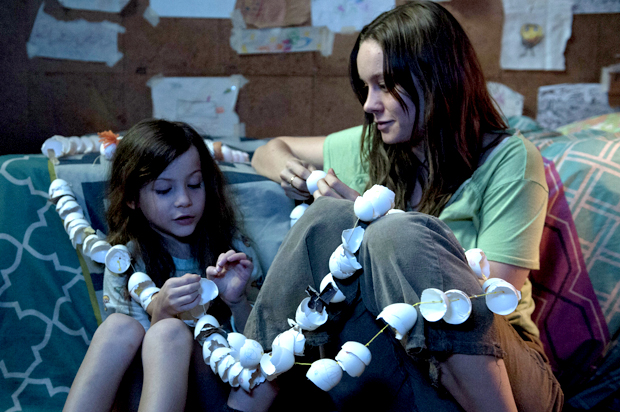
Brie Larson is one of the most talented and dedicated young actors in Hollywood and also one of my favorite people to interview. We first spoke when she was still a teenager about her appearance in Hoot. And I was honored to get a chance to interview her again, this time in front of an audience, when her film Short Term 12 was shown at Ebertfest. “Room,” based on the Emma Donoghue novel, is the story of a brave and resilient young woman we only know as “Ma,” who has been held prisoner for seven years in a locked garden shed by an abusive rapist. She became pregnant, and when we first see her it is the fifth birthday of her son, Jack, played by Jacob Tremblay. Ma has been careful and loving in explaining the world to him in a way that he can understand and a way that will keep him hopeful and confident. She tells him that “room” is real and everything he sees about the outside world on their barely functional television is pretend. But he is getting older, which means he is beginning to question some of what she has told him, to understand what he is seeing, and, maybe, to be able to help her escape.
One of the most painful scenes in the film comes after they escape, when Ma agrees to be interviewed by a television newscaster, played with just the right hint of oily charm by Wendy Crewson. Ma agrees to the interview to get some money so she and Jack can begin to become independent.
There was so much in that scene and it was one of the scenes that I was most excited about shooting because it has so much about our culture wrapped up in it. There are so many levels to it that fascinate me. It’s a moment where Ma is trying to take an easy way out and the easy way out is selling herself out and telling her story out and wanting to just get it over with. And it’s a chance for us to look at the media and the way that we sensationalize something that is extremely personal. You spend so much time with Ma and Jack and you get so close to who they are and the privacy of and almost sacredness of that space in room and you respect them both in a way that when it comes time to do that interview scene you feel that this interview is taking something that’s not hers to take. And I don’t think that’s a side that we see, we don’t see the personal side of these stories a lot of the time, we just see the interview. And we just want the baseline to be, ‘Oh good, they are okay’ and ‘Look at them back in normal society with the curled hair and the lipstick on, wearing a nice dress and pearls and she’s going to be okay.’
What we don’t see is the façade that we’ve created for us as human beings in a society and the codes that we have created as to what is socially acceptable, what’s good TV, what’s ours for us to know and take and even down to the makeup and the hair in particular. I was obsessed with it being the scariest and worst you’d ever seen Ma, that after watching her with this raw face for so long that you get so used to that as being her beauty. And when it comes to her joining society and doing what we’ve all agreed is beautiful it looks garish. It’s like a kabuki mask that you just want her to take off so badly. And then the question itself being whether or not she should have been given Jack up I think is one of the ultimate questions for any mother being, ‘Did I do well enough given the circumstances?’ I think every mom struggles with these moments when they feel that they let their kid down and they weren’t able to be the perfect mom. Ma did an extraordinary job given the circumstance but when that question arises after she’s lived five years with him feeling like the most selfless person that she could be at that age, given those circumstances to be asked that question I think is digging into the most tender wound that she has and the biggest fear that she has and the biggest regret and wish that she could have given him more.
One of the many challenges of the role was that the story is told not by Larson’s character but by Jack, from his perspective and in his voice. Larson, who began acting professionally as a child herself, understood the kind of support Tremblay needed while filming. “When I agreed to this movie, I agreed to explore motherhood. And so I knew that that job was not something that I was just going to play on screen it’s going to be something I was going to explore every way possible and Jacob, although he is such a brilliant actor and so much more than I could’ve ever imagined our Jack to be, there are still certain things that an adult can do, multitasking that the kid can’t. He doesn’t understand continuity; he doesn’t understand he can’t touch her hair in the middle of the scene and screw it up and then keep going. So I had to be constantly on watch to make sure that he was focused. If I noticed he was mumbling a line I’d just ask him to repeat it and kind of stay with him and stay on it and I found that for myself the fact that everyday shooting this movie the number one priority was him and I was second was my favorite part of it. Just like Ma herself, I never had the ability to be too precious with what I was doing. It was all about him and getting him to where he needed to be, and if I got something good then that was great. But it was all about him and I found that to be an incredible way to work. In my mind, if I’m uncomfortable with it, it’s an act of service. And so if I can be of service to him, then that was only going to help the overall finished product of the movie.”
To make him feel comfortable with her, “we just hung out. There is no trick, we just really like each other. We spent time in the room everyday for about three weeks and built the toys that you see in the room and made two portraits of one another. We laughed a lot and learned about each other’s favorite animals and favorite food and favorite color and just created the rapport that was really real, that we really felt comfortable being physically that close. We spent every second together. So we were pretty close by the time we started shooting by the end of the film we were absolutely inseparable.” When Larson and I spoke, she had just called to wish him a happy birthday.
The film is not about kidnapping and rape. It is a heightened version of the experience all parents have in balancing the desire to protect children by controlling everything around them with the inevitable loss of control as they grow up. Larson said, “It’s the Plato’s cave allegory, it’s mythology. You get to basically see the intensity and complication that comes with a parent-child relationship and all the ways that the beauty of the closeness and also the complication of that closeness and the ways that we have to learn how to grow up and the times that it feels like it’s just too soon and we are just too young but it’s what’s served to us and we have to try and find a way to make the best of it.”



 , a follow-up to his best-seller,