
Interview: Writer-Director John Swetnam of the Dance film “Breaking Through”

Posted on October 11, 2015 at 3:49 pm

John Swetnam is the director of “Breaking Through,” the story of a young dancer who achieves viral fame and then sees it strain her relationships with her friends. I talked to him about the best way to film dancers “There was a Fred Astaire number that I showed my DP . It was one of these numbers where it was incredible because the camera hardly moved, it was sort of this really long wide shot that panned back and forth as they danced and I just loved it because it was like — they can dance! That was one of the things that was really important to me. In a lot of dance movies what happens is, you get the best actors you can, but not necessarily the best dancers so sometimes you have to have a body double or you have to have a lot of editing tricks to make the dance look good and make it look like they can dance, where I was really interested in just showing amazing dancers. It was a thought that I had after seeing every dance movie probably ever made. But I just wanted to put a camera around them, just shoot it handheld, have long takes and just watch them dance, not try to do anything else just let them be dancers. So that was a huge influence for me and that was the first thing I said when I was making ‘Breaking Through.’ I said, ‘I just want a handheld camera and just point it at them and let them be great and not try to hide that in any way.'”

https://www.youtube.com/watch?v=yzrCnVMbpNs

The dances in the film are in a variety of settings, including one inside a car, a challenge, especially with a limited budget. “I’ve worked more in the studio system where you have lots of money and lots of time to do these things where with this movie the biggest thing from the beginning was we just want to make a movie. So we were just like: ‘What is it going to take?’ So we didn’t have a lot of money. We didn’t have a lot of time. And I’m working dancers who were not actors. Almost all of them I found through auditions or on YouTube and they never acted in anything before. So it’s like super challenging already because you have a tight budget and you have a tight shoot and you working with people that have never acted before. So the whole thing was really really difficult. But when we got to the dance numbers that actually became the easier part because they were comfortable compared to the dialogue scenes. So that was the fun stuff. It was just like putting them in a cool location. They had done the choreography a couple weeks before, they just shine. I always had the idea for the car thing as I always see YouTube videos where you put the camera up in the front and they came up with the choreography and did it really fast. They nailed it every time and had such a blast doing it, and I thought it was really fun. And then the couple dancing scene which is one of my favorites. Keone and Mari Madrid are a huge YouTube dancing couple and their choreography is really about couples and storytelling. That was the one number that they choreographed and it was incredible because you’re telling the story between two people. You have this amazing dance number going on at the same time it’s servicing the characters and narrative. I had originally planned to shoot that at an abandoned basketball court with a spotlight. So originally it was supposed to be on a cement parking lot and then Enis, the choreographer said, ‘What if we just move it over here where they shot that last scene where they’re talking on the bench?’ We moved it over there to the sand and the dust literally just happened. But we did not plan for that, nothing. It was this kind of one of those ‘Holy cow this looks pretty cool!’ It was one of those lucky moments.”

https://www.youtube.com/watch?v=fvkQEqypTpk

Swetnam is not a dancer himself (other than “the occasional wedding or night club”) but he loves working with them. “I really love the energy of dancers. There’s something about working with dancers. I don’t know if it’s because they don’t have the egos of actors but there’s something very sincere about them. It’s just so hungry and ambitious and cool. I’m actually doing another dance series that I am shooting in the fall. I do enjoy it. I do other things but hopefully the dance world will let me just stay in it as long as I can.” He wanted the movie to reflect the changes in the way that dancers and choreographers connect to their audiences. “They’re taking control for themselves now. Choreographers and dancers can create their own online presence, and they themselves become a brand, a name that you will recognize. And I think that that movement is already happening. The subculture that I talk about in the movie is not only real, but it’s growing exponentially. Bigger brands, bigger companies are getting involved. It’s blowing up where these kids have millions of followers that are making lots of money, making their own videos, and they are becoming sort of their own kind of celebrity. And I just think that for anyone who wants to dance they’re so many places to dance out there now. If you want to see a great dance number you can go on YouTube and there’s thousands of these really well done dance numbers. If you want to learn how to dance they have tutorials. It’s just opens it up to everybody I dig that and I think it’s just moving more and more in that direction and I want to be a part of that space as these online dancers and that community continues to grow.”

The movie touches on some serious themes as well. “I wanted to get as many ideas in it as I possibly could and one was seeing the other side of it. It’s not just about Youtube and celebrity. It’s about the access because of the internet. With kids whose videos get leaked there are sometimes pretty tragic consequences. So I at least felt like I had to try my best to get that in there because it’s part of that world. A lot of people just want to tape everything film it and get it online. And there’s a danger to that as well you know because anyone can do that and you have to be very very careful about what you put out there, and what you allowed to be put out there. So it was important to show that side of it as much as I could. It’s important especially for young people. Maybe they just feel like ‘Don’t let that happen to me’ kind of thing. So it was important. I like to try to have some kind of message. I don’t want to be a preacher or I don’t want to be on a pulpit I just like to put something out there for people to check out and talk about.”

Related Tags:


Directors Interview Writers

Interview: Jon Gries of “Endgame” (and “Get Shorty” and “Napoleon Dynamite”)

Posted on October 9, 2015 at 3:27 pm

I’m a big fan of actor Jon Gries, who always brings something very specific and interesting to his roles. In “Endgame,” the story of a championship chess team from a school in a poor community from writer/director Carmen Marron, it would have been easy to make the school principal just the usual clueless or bureaucratic obstacle, but in just a few scenes Gries created a character who was vivid and real. I was delighted to get a chance to talk to him.

“One of the things when I approached the role I tried to avoid is, obviously being so many different characters that have been regurgitated time and time again and they’ve become almost cliché. And I think I just try to find some bit of humanity. You know, I think it helps, I know somebody who is a principal and she would always talk to me about how difficult it is being a principal. Not so much because of the students but because of all the pressures that came from the Board of Education, and she had teachers that were underperforming, and that she could not fire them and that she had so many problems with just the way the structures were set up with just the teacher’s union. It totally shined a different light on that experience for me. And so I think that was the beginning, I think that started my quest for this role and probably how to play it. And it has its trappings and pitfalls and all you can try and do is cleave onto a little bit of sanity and a little bit of the right thing.” He admired Marron’s work in bringing it all together. “We shot of my stuff relatively quickly and she was always just very open. I think that’s very important for a director to be just open and trust that your performers are going to legitimately get you what you want or surprise you. And if they’re wrong or they’re not going the right way the you know, you just talk about it but until then the good thing about Carmen is that she is just not the kind of director who feels like they have to direct but that just kind of lets it happen. Those are the best directors because there is a sense of trust and a sense of allowing for the collaboration to really take hold. We talked about it. It’s not like I wanted to surprise her. We talked about where we were going with this and we were in agreement so it is good in that regard. Really there were days when she was under incredible stress because there was such a tight schedule. She really had to get it done. And it’s not an easy thing when you’re working with a lot of children. There’s a lot of kids who are non-actors in the movie so you have to educate them and at the same time not remove them from being kids because you want them to be able to be who they are. That’s what you really are trying to have in your film so I thought she did a really good job.”

He was brought into the film by his “Napoleon Dynamite” costar Efren Ramirez, who plays the chess team’s coach. “He contacted me and said, ‘Hey come on we’re doing this movie and there’s this part in it. I’d love to have you come down and do it.’ And you know honestly, normally I might have not even played the role because I’m always looking for more to do I’m just too greedy. I want to chew the furniture and whatever I can do and this guy was just kind of tapestry of the whole film. But once I got down there and I was getting involved and I was very pleased that I was a part of it and I was really happy to be there to support Efren as well because I think he’s so good.”

Gries also appeared in one of my favorite films, “Get Shorty,” where his character is a low-level hood who gets shot by both Dennis Farina and Gene Hackman. “That was a lot of fun to do and it was a lucky experience in the sense that when I got that job I was probably the 200th person who read for the part. My agent, she is now deceased, a woman named Suzanne Smith was quite an amazing agent. When she called me up she said ‘I don’t want you to ever forget this because this doesn’t happen. They’ve read Matthew McConaughey, Steve Buscemi, they’ve read a lot of people for that same role, and the fact that you got this part – it’s nothing short of a miracle.’ So I did. I felt lucky to be a part of that. I really was. To work with the amazing Dennis Farina and Gene Hackman, how lucky is that and the amazing incredible Delroy Lindo and John Travolta. With people like that, it’s just ‘Okay I have to really rise to occasion or shut up.'”

The best advice he ever got about acting: “Simply just tell the truth and just know who you are in the scene. Know your relationships and know who you are.”

Related Tags:


Actors Interview

Interview: Bryan Carberry and J. Clay Tweel on the Documentary “Finders Keepers”

Posted on October 7, 2015 at 3:30 pm

Bryan Carberry and J. Clay Tweel have made some of my favorite documentaries, including “King of Kong” and “Make Believe,” bringing us into worlds that at first seem exotic and downright weird and seamlessly making us feel a part of small fringe communities like competitive video gamers still in cutthroat battles via the near-antique “Donkey Kong” or teenage magicians. Their latest is Finders Keepers, the story of one of the most improbable lawsuits ever filed — over ownership of a severed leg. John, the man whose leg it was wants it back from Shannon, the man who accidentally and unknowingly bought it in the disposition of storage facility contents seized for nonpayment and wants to keep it because he thinks it is his ticket to fame and fortune. I spoke to Carberry and Tweel about finding the funding for the film via Kickstarter and normalizing a story that seems at first to be outlandish and grotesque.

Co-producer Ed Cunningham first started covering the story. Carberry explained, “Initially Ed was coming off King of Kong in 2007 and looking for his next thing so this was kind of like his baby for awhile. He went out of his pocket for a bit flying out there with his little handycam. After a couple of years there wasn’t really much funding behind this and I came across Ed’s footage and we thought, ‘Okay, this needs to happen.’ It’s amazing by then crowdfunding came along and we got the Kickstarter together for eighty thousand dollars. That paved the way. It got us go out and shoot the bulk of the story and get into the edit room.”

They talked about creating sympathy and even identification with the characters. Tweel said, “We try to structure our documentaries in the same way that a lot of narrative fictional films are structured, kind of like a screenwriting type of format and so in doing that we are trying to tell the most universal story possible, whether it’s about arcade video game players or teenage magicians or two guys fighting over a leg. We’re constantly in search of the underlying truth in the ways in which our audience can connect with these people. And so really we struck gold here not just because John and Shannon are funny and quirky but they are also very vulnerable and honest and so are their family members. And so we were able to get to the kind of deeper levels to the story that you can relate with, like you can relate with a sister who has a drug addict as a brother and she is trying to protect him but also he’s hurting her. We felt like the parallel stories of these guys kind of mirror each other in so many different ways and that was something Bryan and I were very much interested in exploring.”

Ed Cunningham was the one who first made the people in the film feel comfortable talking very candidly in front of a camera. Tweel said, “Basically, he just laid everything out on the line. A) He was able to give them “King of Kong” and say, ‘This is the treatment we give. This is just a fair account. We’re not going to be playing this up or anything.’ But once you have a camera pointing at someone for long enough, they are just describing it like you’re a friend on the block or something. It’s completely natural for them because they’re with it they’ve been with it for so long so when they are talking without grinning or whatever about them hanging the leg in a tree in the front yard or something it’s because that’s their life. It’s not strange to them. And after working with them for a couple years it wasn’t strange to us either. The first time we screened at Sundance for the people we couldn’t believe the laugh it was getting because it had become incredibly normal for us having worked with it every day.” It also helped that Cunningham and Carberry were both born in Virginia, so the people in the movie did not think of them as Northerners trying to make fun of the hicks in the South.

One of the most fascinating elements of the film is that the documentary itself contrasts with at least three different “reality” television shows that became involved, including Judge Mathis, who finally resolved the dispute and sent John to rehab. So this is a documentary that includes the impact of a more heightened version of what they do. Carberry said, “I think that the reality TV version of the story is they are coming at it from a different angle and they are not there to give more of the context behind the story that we are. So we as much as possible like to let people talk themselves and let things kind of happen organically where reality TV is more operating on machine, a little bit like they have schedule and they’re cranking up shows. We’re just trying to show how that affects our characters.” “They are more hands on and we are hands off,” added Tweel.

Related Tags:


Directors Documentary Interview
Interview: Adriana Trigiani of “Big Stone Gap”

Interview: Adriana Trigiani of “Big Stone Gap”

Posted on October 6, 2015 at 3:31 pm

Adriana Trigiani really is from a coal mining town in Virginia called Big Stone Gap and the biggest movie star in the world did choke on a chicken bone there.
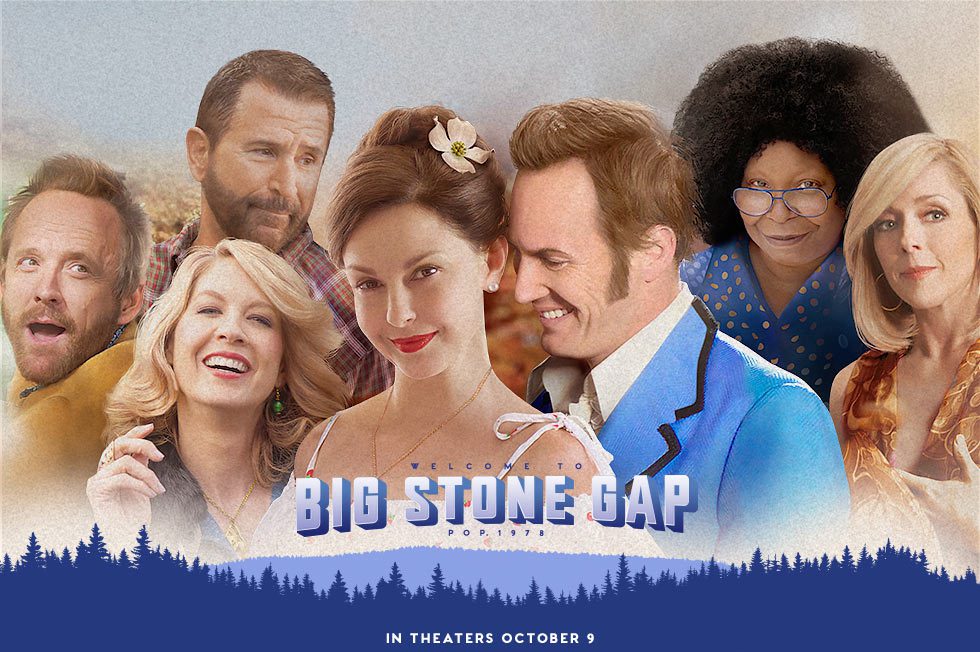
Now if that is not enough to inspire a book and a movie, I don’t know what is.

Elizabeth Taylor was married to then-Senate candidate John Warner when they came through Big Stone Gap on a campaign trip. And they offered her fried chicken and she choked on a bone. All of that happens in the film, Big Stone Gap but it is almost incidental as far more important issues and characters appear as well. Like Trigiana herself, Ashley Judd plays a resident of the town who is of Italian heritage, only in this case she does not find out the truth about her paternal side of the family until after her mother’s death. Her name is Ave Maria (like the hymn) Mulligan and she owns the local pharmacy and directs the annual outdoor musical, “Trail of the Lonesome Pine.” At age 40, she wonders if love has passed her by.

Copyright 2015 Picturehouse

I spoke to Ms. Trigiana about Big Stone Gap, “Big Stone Gap,” and the challenges of finding an actress to play the iconic Elizabeth Taylor. She said to find the town of Big Stone Gap “you can get in your car and if you are in Eastern Virginia, you just keep driving and if you drive and you look on a map it looks west of Cincinnati. It is deep in the corner of the state, shaped like a boot, and it’s the toe of the boot where the five states meet; North Carolina, West Virginia, Kentucky, Tennessee, Virginia West Virginia, and it’s gorgeous! I call Virginia the England of America. It’s very elegant. It’s a state I know like the back of my hand because I grow up there and you’ve got Charleston, you’ve got the Piedmont, you’ve got the ocean and that gorgeous coastline round the hills of the Piedmont that gives way to the Blue Ridge and the Appalachians and the Coleman Gap. The artist Cy Twombly said that Virginia was the best preparation for Italy. And he is right. The light, the sky, for an artist it’s the most magnificent place to grow up.”

They really do put on a production of “The Trail of the Lonesome Pine” every year in an outdoor theater. “It has been up and running since 1965. It’s an outdoor drama. You know, there is a certain amount of those put on in towns around the country and there’s a consortium. It’s the local actors that come together and sometimes they get a professional director and semi-professional company and it runs throughout the summer. It’s a great community activity. The original is written by Errol Hodgson Smith based on the novel the Trail of the Lonesome Pine which was published in 1903 by John Fox Jr. and when you come to Big Stone Gap everything is named for him. The outdoor drama is named after his novel; we have the John Fox Jr. house where he spent his summers. We have the June Tolliver house named for the character who is the lead in the drama. So it is really part of our local culture and it’s kind of our showbiz thing. And then in the spring we do a musical. So it was a very fabulous community we grow up in.”

The movie is set in 1978. “As you know, Nell, every great novel has to have a historical backdrop. Some people choose a famine, some people choose the World War, some people choose Armageddon and I chose Elizabeth Taylor the greatest movie star choking on a chicken bone in 1978 in my hometown. It’s a real thing and so I thought, well, I love to write comedy so I am going to redeem my little town because everyone remembers the ‘Saturday Night Live’ skit with John Belushi. This mortified us. Well it turns out that pretty much everybody in the county was in that room when she choked on that chicken bone including my parents. This thing was seismic and it’s just a part of history, in the town it couldn’t have been worse. Elizabeth Taylor is like the dream goddess of everyone because she was a horsewoman and she did ‘National Velvet’ when she was a little girl. You just doesn’t get any bigger than Elizabeth Taylor and here she had married candidate John Warner who was running for office. She came to Big Stone Gap and she’s trying to be on a diet and you know the fried chicken is the greatest in the south and she grabbed the piece of chicken and ate it too quickly and it went down wrong rushed her to the hospital.”

Copyright 2015 Picturehouse

She had two reasons for casting Polish actress Dagmara Dominczyk as Elizabeth Taylor. First, she is a beautiful brunette and a magnificent actress. (“She is also an incredible novelist.”) And she is married to the movie’s leading man, Patrick Wilson, whose family happens to be from Big Stone Gap as well. Their two sons also appear in the movie, along with some other members of the Wilson family. We don’t see Dominczyk’s face, but just with the set of her shoulders and the gesture of her hand, she evokes the star. You know I had big dreams for this movie and a lot of plans, big plans. Our cinematographer is Reynardo Villalobos. This is a lucky thing. He was scouting another film in Virginia. When I found out that film was not going to start until the next year, I really like hit the “Hail Mary” ready hard, please let him do it. He loved the script. I had written the scene of Elizabeth Taylor and what I wanted to do was recreate her entrance into Rome in the movie ‘Cleopatra.’ And I acted it out for Reynardo and I said tan-ta-tanna-nam-ta then I said okay, then the float, then this, then that, as it was in the novel. Okay because it’s fiction you can have a ball and then she was going to come in and almost fall off the convertible. So the scheduling you have 42 speaking parts, you have all these actors,you have people like Jane Krakowski who has limited availability. How am I going to get all these people to fly in and out? I am driving everyone crazy with this schedule. Well the filming of the choking of Elizabeth Taylor on the chicken bone falls on a Saturday and on Saturday in southwest Virginia is football day and there is no high school marching band, I had planned like marching band going through and all kinds of extra things happening. We scrapped it and what you see on that screen is very close to what actually happened. So I ended up with what really happened as opposed to my cinematic dream of what happened. It almost killed me. Now you might say, ‘But there is a band!’ Well, before I started crying that day I remembered when I was a kid in high school that they had a room for when kids forgot their instrument or you couldn’t afford an instrument in band. They had an instrument closet so like if you forget like your trumpet or your tuba or your sax. I said, ‘Just go and empty out the closet of practice instruments.’ So if you really study those scenes you going to see a bunch of people in the background blowing horns who don’t know how to blow horns but you see the brass and I told them to move like in a certain way.”

It took fifteen years to make a deal for the film, in part because Trigiani was determined to film it on location. “I think one of the reasons that the movie is so alive is because of this notion, like Frank Capra, that it is infused it with this very real element of the real people and different caliber probably different from everybody you usually see in movies. The smaller roles and some that aren’t so small were local cast and I had the Wilson family who actually had roots there playing alongside the local people who are from there. And Dagmara Dominczyk has the bone structure and the coloring of Elizabeth Taylor.

Trigiani was inspired by some of the women screenwriters and directors in the early days of Hollywood. “If one studies the history of movies, when movies began, the scenarios were written by women name Anita Loos, Francis Marion, the screenplay form was invented by a woman named June Mathis. People like Mary Pickford actually edited their own movies. Dorothy Arzner was a director. Women were front and center in storytelling of movies. The great stars like Mae Murray. Everything was geared toward getting women into the theater engaging women in telling the stories of women. The biggest star in the 1930s was Marie Dressler who was close to 60 years old. I am part of the living history and it is incumbent on me as an artist to make the movies that I believe should be made. I am going to make movies that I think the audience is craving and wants to see. So that’s why I made ‘Big Stone Gap’ and that’s why over 70 percent of the cast is women and that’s why the women are the ages they are because these are fascinating stories.”

Related Tags:


Directors Interview Writers

Interview: Adam LaVorgna of “Masterless”

Posted on October 2, 2015 at 2:58 pm

Adam LaVorgna became an actor very young and was in the cast of the television series “Brooklyn Bridge” and “7th Heaven” before he was out of his teens. He loved the cast but he felt lost. He tried to use drugs to feel better and tried rehab more than once. “And I always thought about God,” he said. “If He were to look at me, would He be proud? And I decided to go back to church.” LaVorgna, a Catholic, returned to the faith of his youth, much like his character “Kane Madison” does in his new film, “Masterless,” a dual story of two lost souls: Kane Madison, an architect in Los Angeles, and his spiritual counterpart, an 18th-century Ronin, a samurai with no lord or master, who is wandering a netherworld of masked demons and Japanese swordsmen.

I spoke to LaVorgna about his career and his return to faith. He told me he first got involved with acting because his older sister was acting and his mother would bring him along on auditions and jobs. “My sister used to model for Ford. I tagged along a couple of times and the people that were at Ford, the agents said, ‘Well, would your son like to model?’ My mom said, ‘He’s got a ton of energy and he tags along anyway, so sure, why not?’ She was the opposite of a stage mother. So I started modeling and I was really hyperactive and liked the spotlight and one thing led to another and I got an agent and the first audition I ever had was this movie called “29th Street.” I was eight years old and then that was really it from there.” But he did not think of himself as an actor growing up. “I thought of myself as a hockey player.” When he was working, though he enjoyed watching the older actors and learned from them about “being professional, just knowing your lines, hitting your marks, being on time, being nice to makeup and hair wardrobe, just basic things.” He does not consider himself “method,” but observing the way different actors behaved on and off the set gave him a lot to think about.

He first thought of himself as an actor when he left home at 18 to move to California so he could be in “7th Heaven.” “That’s when acting became like my sole backbone, became my chassis. I felt it was like something was missing. I loved this show and I loved everyone on it but as a kid you want to run around. I wanted to do films and wanted to go to different countries and different cities and work with different people. I was restless. I wanted to kind of get around. I was away from my family and I wasn’t happy at that point in my career. You take kids from East Coast, and I came out of Boston College, a Jesuit private university in Boston, and put them in LA and give them an absurd amount of money per week and I wasn’t working all that much time so I had a lot of time off and of course in Hollywood that’s like a recipe for disaster. One thing led to another and I got involved in the partying and the night life and that kind of thing. There are some people that are able to control it, there are some people who don’t do it at all. I let it consume me and then it got to a point where I was just like, ‘I can’t be here anymore,’ so I left ‘7th Heaven,’ we mutually agreed for me to leave the show, and it was the best thing for me at the time. And then I came back East.”

In “Masterless,” LaVorgna plays two roles.  One is “a samurai without a master, so he’s going through his journey alone.”  The other is a modern day architect in Los Angeles who is also alone.  “He doesn’t want help. He’s rejected God. He’s stubborn; he’s insolent about doing it by himself in the alternate world.  It’s interesting in the film because you don’t know who is the bad guy, so you think the good guy is the bad guy and then the bad guy might be the good guy and back and forth. But there is a wise man in the movie. He gives me the words of wisdom, but my character hears him and he doesn’t listen. He hears everything but he’s so stubborn that he neglects to let it seep in. He knows but he just doesn’t want to hear it. It’s like I went to church the past week and the priest’s sermon said ‘Just be open. just be open.’ What I want for the film is for people to watch and go like ‘There is something more.’This film I am hoping will get people to just think: ‘How I do find myself?'”

Related Tags:


Actors Interview
THE MOVIE MOM® is a registered trademark of Nell Minow. Use of the mark without express consent from Nell Minow constitutes trademark infringement and unfair competition in violation of federal and state laws. All material © Nell Minow 1995-2026, all rights reserved, and no use or republication is permitted without explicit permission. This site hosts Nell Minow’s Movie Mom® archive, with material that originally appeared on Yahoo! Movies, Beliefnet, and other sources. Much of her new material can be found at Rogerebert.com, Huffington Post, and WheretoWatch. Her books include The Movie Mom’s Guide to Family Movies and 101 Must-See Movie Moments, and she can be heard each week on radio stations across the country.

Website Designed by Max LaZebnik