
Interview: “The Nun Who Kissed Elvis” — Actress Turned Nun R.M. Delores Hart O.S.B.

Posted on June 8, 2013 at 4:35 pm
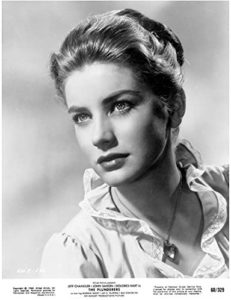
How could I throw away a promising acting career for the monastic life of a cloistered nun?

I left the world I knew in order to reenter it on a more profound level. Many people don’t understand the difference between a vocation and your own idea about something. A vocation is a call—one you don’t necessarily want. The only thing I ever wanted to be was an actress. But I was called by God.
Mother Prioress Dolores Hart in the Preface to The Ear of the Heart

Delores Hart was one of the most successful young actresses of the early 1960’s.  She starred in ten movies, with directors like George Cukor and Michael Curtiz, co-starring with George Hamilton, Montgomery Clift, and Elvis Presley.  She appeared on Broadway and starred in the classic “Where the Boys Are.”  And then she walked away from Hollywood and her fiancé to become a nun, joining the Abbey of Regina Laudis in Connecticut, a community of contemplative Benedictine women dedicated to the praise of God through prayer and work. The nuns of the abbey chant the Mass and full Divine office each day, while expressing the traditional Benedictine commitment to manual work and scholarship through various contemporary media and professional disciplines. The mission to praise God at all times is symbolized by the lyre on the abbey’s crest and by our motto, taken from the book of Judith – Non recedat laus: “Let praise never cease!”

Last year, a documentary about her called “God is the Bigger Elvis” was nominated for an Oscar.  Now she has written a book about her life called The Ear of the Heart.  It was a great honor to speak with her about her life and her book, and I was deeply touched by her open-hearted generosity of spirit.  She speaks quietly, but she still has that lovely voice that was so captivating in her films.

She talked about how being in one place, with the same routine and the same people, can expand the spirit.  “You have to start with how one perceives the world, reality.  You can be in the same place, a place that is given for hospitality, for prayer, for finding God.  Change comes because there is a mentality of looking for something different that will interest them, that will be more real — a new bauble, a new place to eat.  But in a monastery, the continuity is such a blessing.  You are going to the same place every day, sitting with the same people. The changes are the inner light of a person’s experience.  The inner grasp of what life means.  Every day you meet a new dimension — it may be the same person but you meet a new aspect of them.”

She quoted St. Teresa, who said that “prayer is the light of love between persons.  God is love. Therefore, wherever you find God, you find the human experience of God. That’s why I carry my camera,” she said.  She wanted to bring back to the convent the place and people she saw on her travels.  She laughed when I asked her if nuns were funny.  “A sense of humor is the top-notch gift for nuns.  They always have a new take on something.  You don’t have to be ugly or mean or dirty to have a funny sense of humor.  The capacity to see the elements of humor in life itself.  Finding the humor in life itself is what is funny.”

She spoke very warmly of Elvis.  “I was 18 and he was 20 when we first worked together in “King Creole,” she said.  He had so many fans that they had to say inside the hotel.  He would take out the Gideon Bible and ask her what she thought about different passages.  After she decided to become a nun he called to tell her he supported her choice and he continued to send greetings to her through a mutual friend who wrote to her regularly.  “I did not have an in-depth relationship with him.  We were too young.  He wanted to be a really good actor.  He wanted to be like James Dean. But Colonel Parker wanted the moola.”  I told her of my fondness for the movie “Come to the Stable,” with Loretta Young and Celeste Holm as nuns.  She told me that movie is inspired by the true story behind her order, and that Celeste Holm came to speak at the convent not long before she died.

She studied with two of the greatest acting teachers of the 20th century, Sanford Meisner and Uta Hagen.  Their advice, to find the truth and be true to yourself, was important for acting and for life.

She was surprised and happy that people still know her films.  “It was like I was moving completely out of any relationship with the movies,” she said.  She never anticipated the technology — or the interest.  “The experience of living in a monastic community allows you to see that every single moment is all you’ve got.”
Related Tags:


Actors Books Interview

Interview: Jordan Vogt-Roberts of The Kings of Summer

Posted on June 4, 2013 at 7:17 am

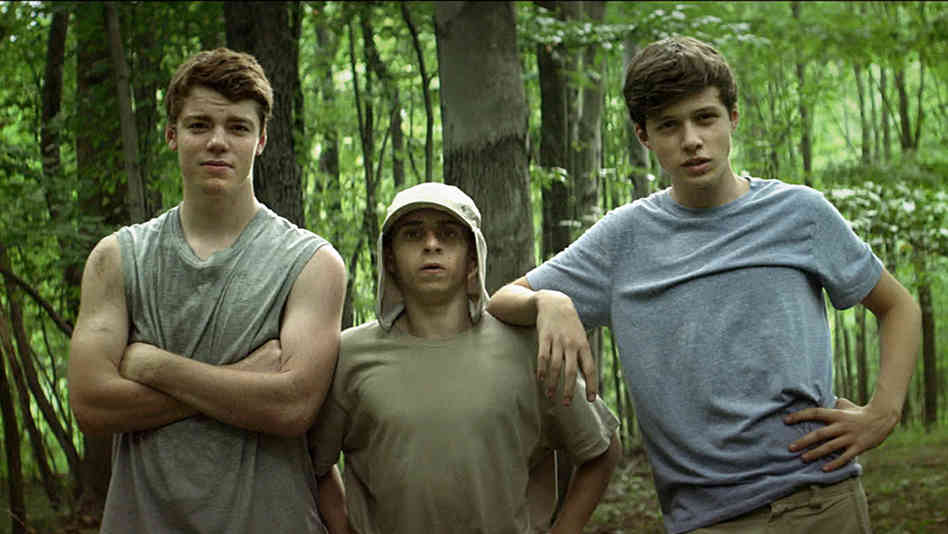
Jordan Vogt-Roberts’s first feature film is “The Kings of Summer,” the story of three teenage boys who run away and build a house in the woods.  It’s one of my favorite movies of the year, so I was very glad to get a chance to talk to him about it.

How did you get involved with this project?

I made a short a few years ago called “Successful Alcoholics.”  It balanced tone in a similarly tricky way, starting out funny and then getting more serious.  And the company that did “Little Miss Sunshine” had this script.  They were looking for a director and I was looking for a movie.  I got into this business because I want to make movies.  I’d been doing TV and commercials and that’s great to work your way up.  But then I read this script and I fell in love with it.  I knew it was exactly the movie that I needed to make.  Not that I could or wanted to  — I needed to tell this story.  So I just pitched my ass off, and spent the next couple of months trying to get the job.  I didn’t want to say that someone else beat me on merit.  It had a jumping off point I wanted for my first feature, a lot of different things at once, magic and beautiful and hilarious — there was so much fun that I could have with it.

You were working with young kids, which is a challenge. 

The movie lives and dies with the kids. I have an incredible adult cast — stand-ups and improvisers and brilliant comics like Alison Brie, Nick Offerman, and Megan Mullally.  But the movie rests completely on the kids.  All of them had to be good.  When you watch “Stand By Me” or “The Goonies,” all of those kids are great.  I couldn’t cast 25-year-olds.  I had to cast kids who  as much as they could go through what the characters were going through, who could be as real and awkward as the characters they played.  And Gabe and Nick and Moises really took over the roles at a certain point.  I forgot what the characters were as scripted and it started becoming them. We did improv training, not so they’d be super-quick and witty and punchy but just so they’d be comfortable enough in their own skin so that if I didn’t yell cut or changed something on the fly, they could adapt to it.  My favorite stuff in the movie, a really important part of the movie, is those moments, just glances or mannerisms, that’s what it was to be that age.  A movie like this is made up of small, little moments, where watch it and you say, “I love that.”  I just wanted to give those kids the trust and faith so they could elevate it themselves.

http://www.youtube.com/watch?v=kYQvwJ0G7qQ

The moments that I love are the three jump kids of him exiting the house in different ways, that’s how a kid would pass time.  That came from him and me just playing around about the best way to do it.  There are so many weird little moments that stem from them cracking me up.  I made a weird decision on set where I didn’t want them to think of me as the boss or watch themselves around me.  So they would punch me in the arm and treat me as though I was a kid.  We created a fun environment.  The stuff where they were banging on the pipe, finding out that Gabe played the violin and adding that to the movie.  That adds authenticity because it is so particular.  The unscripted things are what make me laugh.

In another movie, some of the things Joe’s father said could be disturbing, but you made it feel safe.

A lot of it is that it is from the perspective of the kids, so we know that it is heightened.  They can feel a little bit more overbearing or harsher because that is how the kids were perceiving it.  And we ran the spectrum of emotions without turning them into caricatures.  We did some ridiculously funny things but to ideally always have it be informing the character and the story and the moment.

Related Tags:


Directors Independent Interview

Interview: Rama Burshtein and Hadas Yaron of “Fill the Void”

Posted on June 3, 2013 at 2:23 pm

“Fill the Void” is an Israeli film with a rare, intimate, and very sympathetic portrayal of a very observant Orthodox Jewish community.  It is the story of a young woman, still in her teens, who is under pressure to marry the husband of her sister, who died in childbirth.  If this was an American movie, it would be about the girl’s rebellion.  But this is a far more complex, layered, sensitive exploration of the girl and her world, and therefore a much more fascinating  story.  The lead role is played by Hadas Yaron and the writer-director is an Orthodox woman born in America and raised in Israel, named Rama Burshtein.  We met at a hotel in Washington to talk about the movie.

What makes a good marriage?

RB: You’re good.  What makes a good marriage?  This is not a quite popular view I would say but I think it’s about defining men and women and knowing how they’re different.  Okay, this is how it works for me.  I need my husband to be a little bit more, for me to hold more, to hold that passion…to feel that sexiness.  This is what I need.  He needs to be a little more open and it’s me making that.  I have to make him want me.  Like especially if I’m like dominant and a strong person than I really have to work hard to make him more than me.  In a deeper way.  He’s got the stamina.  I know it is so not popular and some want to crucify me for saying that because it’s very not feminist to say.  For me, it’s only about being in love and being passionate so I don’t care about being equal.  I really care about really liking him for the rest of my life you know and really being attracted to him and that he’s going to be the center of my life.  It doesn’t mean I don’t do other things, I’m sitting here and yet when I ever, ever have to make a choice it will be him. It will always be him.

Okay, and what about you, Hadas?  What do you think makes a good marriage?

HY:Well, I’m not married.  It’s funny because I’ve been listening to Rama.  I have a boyfriend and the words you said really stayed in my head, the words you said to me about how God’s journey is planned in relationships and I really remember that.  The whole thing with two weeks of not touching and then two weeks of this and so holding it and bringing it back.  I remember I told him; maybe we can do that, like for one week to be a bride again after being separate.  I think it’s about being real with him and so that’s hard sometimes…to be really exposed and then feel that the other person really gets you.

One part of the most striking parts of the movie are these very structured “dates” where the couple essentially has just one meeting to decide if they can spend their lives together.  There’s this plate of cookies that no one ever touches.

RB:  No one ever touches it. You know if she asks her mother for more time, she will have more.  It’s about seeing if there’s chemistry and if you can go to the next date.  Actually, the first one is just to know if you can go to the next one.  And, by us we come and sit for three hours or four hours and some of that’s him being a man for the rest of my life and her being the woman for him for the rest of his life.  They’re both tuned in on it and the concentration is on that.  So, everything he says is very important and everything she says is critical and the concentration is so strong.  I got married like this.  When I sat with him for the first time every answer he gave was to tell me if he could be there for me forever or not.  It is amazing!  It’s so strong that when you decide to get married you actually nourish it from that first meeting for a long time.  Because like I said everything is there now it’s just puppy love but you felt everything there and you know what kind of home you can have.  How do you see life but in such a way you say that’s all I ever wanted, for him to really want me forever from the first time.  This is it!  This is what you want.

Did you intend the final scene of the film to be open to interpretation?

RB: The weird thing about this film is that people read it the way they read it.  Some people think her mother pressures her to marry her late sister’s husband, but the mother never pressured her.  She speaks to the father.  She speaks to the matchmaker.  The only time she speaks about it is when the mother and the father are in front of her telling her the offer and the father doesn’t want it.  We get the feeling that she’s pressured but there was not real pressure on her.  People really read into something that is not there.

I think she knew what her mother wanted.

RB: Wanted is not pressure.  Wanted is fine. For me it was really intentional that she will not pressure her, that she would keep her feelings to herself.  The mother is in sorrow.  She is mourning and she is trying to do her best and yet she does not really pressure.  The only one that she is a bit manipulative with is her husband, which is always what women do to their husbands.  She tells him “You have to ask her, I would die to go.”  This is what I believe.  I believe that everything at the end comes together and you see it in life.  There’s like a big plan because it’s really far out from what we want to feel.  It happens with feelings and emotions and then suddenly you are realizing things…it’s like combining with the big plan.  The big plan was for her to marry him.  Something had to be done…an offer had to be made.  The mother had to really push the father for everyone to actually get there.  First of all her husband is gorgeous and sexy…he’s there…he’s a man…why not?  In terms of the film of course.

And, then she’s beautiful and young and everything and all the complications and intentions are strong to say a true love story is not that complicated…and at that moment at the end where you don’t know what you’re feeling and you’re comfortable because it combines everything.  It’s easy for us to say just make it like a love scene.  It’s how you feel and wanting and not knowing where you’re going and the whole thing together …this is real.  It doesn’t mean it’s not about love.  It’s just a little different language, which is a true language because it is the way you experience it in your life.  Not Hollywood.

The last shot is a shot that says see the real thing…it’s real.  You can go all the way with everything in it.  Sometimes you use too many emotions and then the viewer doesn’t see all that.  They didn’t see the feel and they see the confusion.  They just went with her being excited towards that night.

So, how do you talk to Hadas about portraying all of that, without any lines of dialogue?

RB:  I think that when we did the film and we got prepared for it the one thing I knew is that it’s going to be a mixture of feelings of emotions and we were talking a lot about it…about trying to hold two different emotions together.  On the one hand you want that aand it’s not just doing that it’s just jumping from one emotion to another.  Right?  We talked a lot about that.  For me, this is being Jewish.  A good example for that is when I just got into the religion a friend of mine was about to marry her eldest son in the evening and in the morning her mother passed away very suddenly.  So, about 12 o’clock in the afternoon we buried her mom and then 7 o’clock that night her son got married.  And, I was looking at her because she was just for the ceremony then she had to go but, that moment he got married she was there, she was happy and like a few hours ago she was really sad because her mom in a very surprising way just passed away.  And, looking at that and looking at her, you think this is incredible…you can just jump from those feelings.  This is from me being Jewish…really this is Judaism to be able to hold two things together.

And, what do you want people to take away from the film?

HY: I guess it’s just about being real.  That’s something I learned.  It’s the most difficult place to get to…like the most real, deepest, and the best place to be.


Related Tags:


Actors Directors Interview Writers

Interview: Gabriel Basso of “The Kings of Summer”

Posted on June 2, 2013 at 7:18 am

“The Kings of Summer” is the story of three teenage boys who run away from home and build a house in the woods, and it is one of my favorite films of the year.  One of the boys is played by Gabriel Basso, who talked to me about making the film.

I suspect that it was not nearly as comfortable to be out there in the woods as it looked in the movie. 

Yeah. I grew up in the woods so it was fairly easy for me to readjust to living there. At the same time it was my first time in the Midwest, where it’s super humid and the mosquitoes are out. It was a hard working environment. But we adjusted to the surroundings and we were able to work really hard and produce a good movie.

How long were you out there working on the film?kings of summer boys

Jordan Vogt-Roberts was out there for two months maybe two and a half and I was there for a month. We started I think July 5th and ended at the end of August.

Tell me a little bit about the audition process. How did you come to be in this film?

I saw the script and I immediately fell in love with the script immediately.   I went in and a couple days went by and I went in again and then I was called back in again and there was a mix and match and that’s when I met Nick Robinson who plays Joe and we read opposite one another.  It was a real pleasure to work with them and thank God they asked me.

You and Nick play lifelong friends and it really comes across that way on screen.  Tell me a little bit about what the two of you had done so that you would come across as having known each other all your lives.

Jordan had us in an improv class before we flew out to Ohio. It gave us a chance to really to spend time with one another. In Ohio where we were staying we were kind of forced to spend time around one another and it was a pleasure. The first couple of days we were out there we had to find ways to occupy ourselves. Just because it was so boring and then the work kicked in. It gave us so much time to catch up and be boys in the woods. That you know thank God it came across as though we knew each other for a long time on camera but we really are friends. It was a pleasure to spend time with one another.

Your character has to do everything with his foot all taped up.  Did that make it more difficult?

Yeah. I had to do everything with that boot. Sometimes it was just impossible. No kid should do what I did with a boot, sprinting, jumping.  It was pretty ridiculous. But it got to be pretty nasty. By the end I had sweat in it. Like it was muddy. It was disgusting. But it was fine. Like I’m not going to sit here and complain about it. It was tough with most of the things with the cumbersome weight on your leg.

I loved your character’s frustration with his parents.  The way that you responded to them is very real and authentic. 

My parents were played by Megan Mullally and Mark Evan Jackson and they probably are two of the funniest people I have ever had the pleasure of meeting. It was very hard to work with them just because I had to keep a straight fact the entire time. And that one dinner scene where they are just talking and talking I was dying. Like when the camera was not on me I could not keep a straight face. They are just so funny. Whenever I was about to laugh I would have to eat the burger. And not laugh. But I held my own for most of that scene. And I did the best I could at keeping it together. But it was just so difficult. They were a pleasure to work with. It was really amazing.

I think all teenagers have at one time or another the fantasy of running off and building a house for themselves. What do you think teenagers will think of this film or what do you want them to think about it?

I really hope that teenagers get outside after seeing this film. Rarely do you walk down the street doing anything that my grandparent’s generation did. And half of that comes with the technology advances. You’d have to appreciate the outdoors. And you really have to get out there and see things. I really want to experience that and like live in the woods and be able to appreciate nature just because it’s such a beautiful thing.  You just sit there and appreciate even the heat and the mosquitoes. In its own way it’s something special. And hopefully after someone sees this film they can appreciate what we went through to make this film. And where we shot it. And there were times where we were shooting the film and I was like I’m so glad to be back in the Midwest. And to be here in the woods and see stuff like this because it really is amazing. And I would strongly advise someone to get out there and see what is nature and experience that.  Yeah I think as much as we rely on technology, part of us wants to escape our dependence on them. And I think this film really captures like what we don’t need. We don’t need those things in order to be successful and have fun. And it’s important to not rely on those things.


Related Tags:


Actors Interview

Interview: Alex Gibney of “We Steal Secrets: The Wikileaks Story”

Posted on May 31, 2013 at 11:13 am

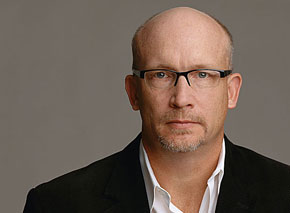
I spoke to Alex Gibney, one of my favorite filmmakers, about his brilliant documentary on Wikileaks.

The most interesting character in the movie is Bradley Manning.  Where is he now?

He’s in prison, finally Leavenworth, after eight months in solitary confinement and being kept in a cage in Kuwait.  While he was in solitary confinement, he was stripped naked, they took his glasses, they kept the lights on, sleep deprivation, no blanket.  It was abusive treatment that rose to the level of torture.  It’s really a shocking episode which I think was trying to send a message in the most brutal way possible.  Like the British navy used to hoist the wretch on the yardarm of the ship.  “Pay attention, if you’re thinking about leaking stuff.  This could happen to you.”  I made a film about the poor kid, Steve Bartman, the Cubs fan, and I think he’s a scapegoat. Governments and organizations go after someone who’s weak because they can.  And Manning was weak — in some ways.  In some ways he was very strong.  That’s what makes him such an interesting character.  He’s what Phil Zimbardo calls “an everyday hero.”  He’s not a Daniel Ellsberg type.  He doesn’t stand up there with his hands on his lapels and proclaim.  He has a lot of problems, a lot of issues, a lot of emotional turbulence in his life.  But he was determined to do something.  And so he is important to all of us because we are all weak, flawed individuals who can occasionally do something big.Alex-gibney

Why would the US military give a troubled, unstable person at a very low rank access to almost unlimited highly sensitive material? 

They are desperate for bodies, especially smart people.  He was in a discharge unit.  A guy who was in it with him says in the movie, “This is the most unlikely military man you could possibly imagine.”  But he’s in there because he wants to get a college education.  This is the route for poor kids who want to go to college.  The army doesn’t want to let him go because he is super-smart.  But he has a lot of emotional baggage.  He’s gay at a time of Don’t Ask, Don’t Tell.  He thinks he might want a sex-change operation.

The music choices in the movie were excellent.

I worked very closely with a guy named Will Bates, from a group called Fall on Your Sword.  He created these wonderful themes for each of the characters in an environment where you feel the space of the internet.  And all of these people live out worlds in their imagination, and there’s no place to do that better than rock and roll.  So you have Midnight Oil, which is a favorite group of Julian Assange.  You  have Radiohead for James Ball.  And for Bradley Manning — he himself says he was listening to Lady Gaga singing “Telephone” while he was downloading the documents.  It’s perfect in terms of what she’s concerned about — gender identity, bullying.  And then at the end, the Ink Spots, “If I Didn’t Care.”  There’s a ghostly quality to that moment, like “The Shining.”  It takes you into the past, like an artifact in space that seemed to be mythic in some way.

What did you have to cut out of the movie that we may see on the DVD?

I wish we could have kept more on Julian’s childhood on Magnetic Island off the coast of Queensland.  It got its name when Captain Cook sailed by there and said their compasses were “fouled.”  What a perfect metaphor for Julian Assange, messing with military compasses.  There was a big section we had on Tunisia, and a much longer section on Iceland.  That’s when the goal was at its purest and they were operating on this barren rock.  It was tough to let it go.  This version is a haiku — we had a three hour and thirty minute cut.  There are some interesting characters on the DVD extras.

Do we have too many secrets?

Maybe we don’t have enough.  You have to assume once you go online, anything you put there can be made public.  Yet while you’re online you feel like it’s a private, sacred space.  But you’re really broadcasting to the world.  When it comes to governments and corporations, we should demand that less is secret.  That’s where corruption flowers.  When two Reuters journalists are killed and they won’t give the video to Reuters, what’s that about?  What about when the images of Abu Gharib were made public?  Their concerns were not about what happened, but that when we released the photos we gave comfort to the enemy.

The New York Times and The Guardian play a crucial role in your film in acting as a filter for processing and providing context for the documents Manning provided, and making sure that what was made public was not detrimental to the safety of our troops.  What will happen to that function as traditional journalism is in collapse?

JulianAssangeThere’s a part of this film that argues for renegade organizations like Wikileaks, but there’s a part that argues very strongly for traditional journalism and the kind of decisions you have to make about what should and should not be secret and how stories should be properly contextualized.  When I began this movie, I was interested in the leaking machine, the technical challenge and the technical solution, which we may have to continue to pursue as the Obama administration makes journalism more of a crime.  But what Manning needed was a journalist, someone in whom he could confide and trust.  That relationship turns out to be terribly important.

Instead, he had a relationship — online only — with a man who had the wrenching moral challenge of protecting Manning or telling the police what he knew.

The biggest problem for him is that he lied to Manning.  He squeezed him like a lemon.  He said, “Your secrets are safe with me.”  Maybe he meant it at the time or maybe he had decided to keep probing so he could get more secrets.  He’s a complicated character.  If you’re a journalist, you have a bigger conundrum.  You have to examine whether this information is in the public interest, whether people will be hurt.  But Assange would say journalists are too subject to political pressure.

If everything becomes secret and leaking becomes a capital offense – which is what Bradley Manning is facing — where are we at now?  You’d think the law would provide us that easy guidance, but it’s much more of a gray area.  The job of a journalist is to find out stuff.  The job of the government — sometimes — is to keep stuff secret.  There’s a natural tension there.  But now they want to make finding out stuff a crime.

Who should decide what is private?

It can’t just be corporations or government.  It has to be all of us.

Related Tags:


Directors Documentary Interview
THE MOVIE MOM® is a registered trademark of Nell Minow. Use of the mark without express consent from Nell Minow constitutes trademark infringement and unfair competition in violation of federal and state laws. All material © Nell Minow 1995-2026, all rights reserved, and no use or republication is permitted without explicit permission. This site hosts Nell Minow’s Movie Mom® archive, with material that originally appeared on Yahoo! Movies, Beliefnet, and other sources. Much of her new material can be found at Rogerebert.com, Huffington Post, and WheretoWatch. Her books include The Movie Mom’s Guide to Family Movies and 101 Must-See Movie Moments, and she can be heard each week on radio stations across the country.

Website Designed by Max LaZebnik