Interview: Kiara Muhammad, Voice of Doc McStuffins

Posted on May 6, 2013 at 8:00 am

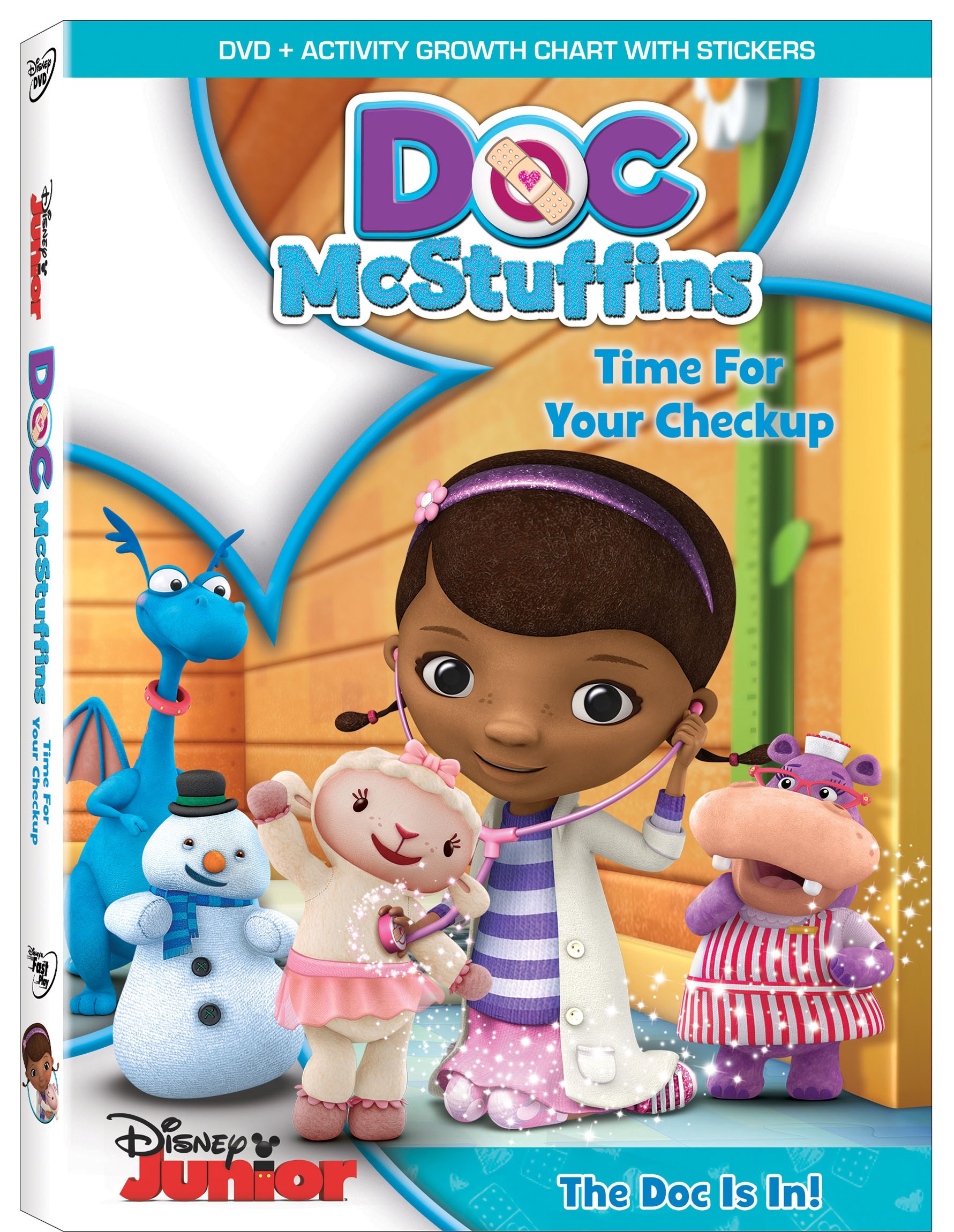
What a treat to talk to Doc McStuffins! Kiara Muhammed provides the voice for the little girl who diagnoses all of her toys’ ailments and teaches them to be healthy. The latest DVD, Doc McStuffins: Time for Your Checkup, will be released tomorrow.

Doc McStuffins Time For Checkup Box Art


Where are you when you record the voice for Doc McStuffins?

I am in a room by myself with a microphone and there’s glass so I can see the writer and director telling me how to say the lines.  I try to think of some things that she does already, how she would normally do it to keep it the same.  It would be a little weird if I did something totally different than what she normally does.  Like does she nod when she says “yes” or does she just reply — things like that.  I put my voice really high so I sound younger!

What is Doc McStuffins’ favorite thing to do?

Her favorite thing is helping toys.  But she also likes playing with her friends.  Family and friend time is important, too.

What should kids learn from Doc McStuffins?

The hygienic stuff is really important.  Washing your hands and eating well and exercising — it’s a problem now because kids have all these electronics and can get lazy.  They really have to take care of themselves.

Are you more careful about those things now?

I’ve been working out more and now actually like to go play.  I used to just be on my phone all day and watch TV.  Now I play basketball and tennis!

Do you have a favorite episode?

I like the episode where Lambie gets a rip and then I have to heal her.  It’s a really sweet episode!  I like the sweet episodes where I really try to help people out, not when they’re hurt but with their emotions.

What do you like to do for fun?

I really love movies!  I like Will Smith movies and animated movies like “Tangled” and “Up” and “The Little Mermaid.”  I like listening to music.  If it’s really loud and I can’t hear anything else, I’m really happy.  I like being with my friends.  I’m reading The Goddess Test series and it’s really good.  I hope she writes more of them.

What makes you laugh?

I like dry comedy — I find that hilarious.  If you have a dry sense of humor, I’m going to laugh at you a lot!

Related Tags:


Actors Interview

Interview: Tom Shadyac of Life’s Operating Manual

Posted on May 5, 2013 at 3:59 pm

I am always happy to get another chance to talk to Tom Shadyac, the mega-successful Hollywood director (Ace Ventura: Pet Detective, Bruce Almighty) who now devotes his time to exploring the meaning of life and sharing what he has learned. I last spoke to him about his documentary I AM.  Now he has written a book, Life’s Operating Manual: With the Fear and Truth Dialogues, and was nice enough to talk to me about it.

I like your imagined dialogue between fear and truth, especially when fear says you have to own things and truth says “I own this choice.”That was a really meaningful exchange.  Can you to talk a little bit about what ownership means?

We’ve limited ownership to things. And truth is saying is that ownership can be in a much larger context. So our society values ownership of material goods, properties, personal possessions and what I wanted to do is say you also must own the choices you make in your life. And so you must own the fact that you value community more than you value your things. You can own the fact that you value love more than you value profit. So it’s just a way again of looking at some of the concepts that we take as truth and turning them upside down.

If you turn it upside down you at least look what is scaring you right in the face and it’s generally less scary than you think.life's operating manual
That’s all how dragons disappear. Not only in mythology but in our lives. I believe that any fear examines and if it doesn’t dissipate it very well may be a truth. So I don’t run across the freeway because it’s true because I will get hit by a car. If my fear is telling me I can’t have an honest conversation with my spouse or my parents, examine it and you see that it dissipates. You can actually can stand up in your own voice and have a respectful conversation.

It seems we live in a moment in history where it seems very easy to feel despair. How do you maintain a sense of joy when it must feel very frustrating?

Well first of all the results are not up to me. So my job is to share what I’m experiencing and what I am seeing and then feed the results into bigger hands. But I also know that a body kicks the hardest when it’s dying. So fear often peaks when something is about to be lost. So I think we see a lot of that fear even in the way we do business with each other. I think that people can see that it’s built on a house of stone and see that it’s going to fall and so I think that at that point fear begins to peak. So I don’t know where we are in this cycle. But I know that regardless of late in the cycle or early in the cycle of change, the truth remains the truth and you just want to stand on that.

But you feel called upon to deliver the message, so doesn’t it get frustrating when people don’t listen?

Well I’m a human being and I am having human experience so I would be telling you a half-truth if sometimes I don’t become frustrated or sad. But I get a hold on that quickly because I can see the arc of justice, the arc of the universe is bending towards justice and it may a long arc but it is still bending toward justice. So I can imagine how frustrating the first twelve people who started the anti-slavery movement were. Because people just didn’t see that beauty in all races. And now you look back and you say, “Wow.” Because they were standing on a truth it was just a matter of time. The way it is now for the rights for the gay and lesbian and transgendered community. The result to me is already written. The arc is bending toward their justice. And it may be frustrating now in the immediacy of it today but if you look at human history we always move towards justice even though we don’t see it in the present. So if you look at the arc of the human species over time it is an evolving arc. You see these turns. We don’t see them because we stay stuck in the day to day, in the crimes committed today. But we don’t see the acts of love. We don’t see the tending in the overall towards justice. So slavery while it still exists its illegal and while women are no longer considered property in most countries they are gaining more and more right believe it or not wars are happening with less frequency. So I lean on that and I think whoever set this universe up knows what , that energy knows what it’s doing and I do believe that energy makes love more powerful than hate. And if it were the other way around I would have no hope. But because it is so I believe that I trust in that law and that we will eventually wake up.

You write about the idea that DNA somehow knows the difference between joy and negative feelings.  And that a lot of the feelings of isolation are loneliness that people have is because they just don’t open their eyes to see that everything is connected to everything else and that they are a part of that.

If you could use your question as my answer I would be very happy.

What can you say in a book that you could not say in a movie? There so many different ways of getting a message across. Why do a book?

A movie is for visual imagery.  In the book you can get more into the thought process. You can dive a little deeper into an argument and a discussion. A movie is grounded in the term “move” so you’ve got to keep moving from image to image.  In a book you get to move but you move from idea to idea. So they are both moving but one is using visual imagery and that can be expansive but it also can limit you. So in a book I got to expand somewhat on some of the ideas. And also I am creating a lot of questions. I am shaking people’s foundational paradigm. That’s where fear comes in, the dialogue between fear and truth. As I was writing this book I could hear the questions. I could hear them through my own fear and in the questions of others. So that’s why I believe I created and followed that thread and wrote the book, with half of the book in dialogue. Because it’s one thing to read an essay and talk about the economy of the way we educate and fear immediately rises up and tries to stand on what is known and not what could be. And so fear calls everything unrealistic. And I think a book can be a potent tool for answering that. So the conversation is furthered. It becomes furthered inside the book itself. Whereas if I had written this book as simply essays there could have been a million questions arising and I could have written a follow up to answer those questions but I think with this one  we are able to widen the conversation and include the answers or a perspective on some of those questions.

Your research is so far reaching and multidisciplinary. How do you go about it?

I am a layman when it comes to much of this stuff but I read a lot. I am fascinated and curious. So I look for evidence when someone tells me a philosophical trope I know that trope needs to stand in the world or it is a trope. It doesn’t have any bearing on how we live. I found a wealth of evidence that science is discovering. And I have had the fortune of talking with some of the leading thinkers in cellular biology. Or whether it’s in other of the physical sciences that some like Linda Kaggert who is a friend and whose research and she’s a journalist and whose writings have opened me up to, I’ve been fortunate enough to get a sampling across many disciplines. And it makes sense to me. This gives me the philosophical reading and the spiritual reading that I have been doing for my whole life. Those connective ideas that support all the major faiths. Even our laws, that laws that we write are under girded by the same principles that our moral leaders espouse. And now I’m finding that morality inside of nature. And nature can be what we call aggressive and cruel but it’s not how nature thrives. And the moralists are simply coming on to tell us that if you want to live and you want to thrive. If you want to be a system that works well this is what you’ll follow. You’ll follow those moral laws that have been set up inside of life. And I heard that many times from Gandhi and Martin Luther King that they believe the moral principles were actually physical laws like gravity is a law. And just like gravity that law exacts itself whether you believe in it or not. So if I go out and hate today the law will tell me that will somehow diminish my health and my path, the freedom of my path. And we see that all the time in the lives of others. From stories of people who have chosen lives of hate and aggression and murder we see how it breaks down from their cellular biology to their ability to be free if you will. A murderer whether he’s convicted or not is always a murderer. He has to lie he has to create a world of lies and a web of lies that he is now stuck in.

Would you describe yourself today as happy?

Yes but let’s talk about what happiness is.  I’m much happier than ever. But I prefer the word contentment. I don’t walk around 24/7 smiling and with birds chirping around me.

There’s a difference between pleasure and happiness.

Happiness to me as I write in the book is an indication of the system working well. Like you say your computer is happy and it’s working well et cetera. And it’s not up to me to judge whether I am working well. I can tell you that I am working in a more content, efficient and joyous way than I have ever worked before. I embrace the ups and downs.  I am in all kinds of uncertainties now. I have such joy and fulfillment and I have areas of deep sorrow. And I embrace them all. I think that life is symphony and without the low notes you don’t get the base for the explosion of the high notes. I’ve learned to embrace and continuing to learn to embrace all of life’s colors.

We make a terrible mistake if we think that happiness is the essence of all sadness. I don’t think that’s true.  It’s sort of like white is all the colors of light mixed together. Happiness is all the emotions together.

Beautifully said.  Once again I choose your answer.

What’s next for you?

Have you seen the French film “The Intouchables?”  We’re remaking that here. Most of the English speaking world has not seen it. So we are remaking it here and were getting our cast together now.  Iit was a beautiful film. Hopefully we can bring to America and English speaking countries what worked about the French film and then we can add a layer of depth and maybe even humor. Because we get a second crack at their brilliant work.

 

Related Tags:


Directors Interview Writers

Interview: Lynn Whitfield of “King’s Faith”

Posted on April 12, 2013 at 8:30 am

It was an honor to interview Lynn Whitfield, co-star of the new faith-based film “King’s Faith,” about a couple who take in a teenage foster child.

The scene where you are arranging the flowers while you were having a very difficult conversation with your husband was a really beautiful one.  You had to convey a lot with few words while you continued to make a beautiful flower arrangement.  How do you prepare for a scene like that?

I played Vanessa Stubbs and what she did in her life after the death of her son was withdraw from people. And so her relationship was with gardening, with her flowers.  Flowers can’t answer back, you know you plant them, you water them, they grow. You know that they die. But if they are perennials or whatever they come back. They don’t talk back to you. There’s nothing that it could offend. It was her place of comfort. And her escapism was into her gardening. And so that scene was all about that. And when her husband starts to bring the reality of the cold, hard world back to her about becoming more apart of society again, seeing her friends, it just sort of disrupted that. So the preparation was the comfort of that kind of escapism and once I was there the disruption as great even though without words.  Thank you so much for perceiving it because you got to kind of feel and see the thought process without words.

That is also true the very first time that we see you in the film, where you say very little but it is clear that your attitude toward the foster child is so different from that of your husband. Are you the kind of actress who spends a lot of time thinking about the backstory of the character and about where she has been?

Yes, about where she’s been. About her psychological state and emotional state at the time. When I got the script and read it I asked for that scene to be written because it wasn’t in the original script.  In the first version, he brought Brendan home and took him directly to the apartment over the garage. And I said to Nicolas , I said “You know that doesn’t really work.  I think we could set up better what is going on in this household and what the challenges are if we had a moment. Because any black family I know in America or maybe it’s because I’m Southern, it’s a regional thing, they’d never just bring somebody to their home and take them to their room. Have a meal together. A dinner would actually let you see the contrast in what Vanessa is going through with the husband and the discomfort of this boy to settle in. So yes, I asked for that scene and I think it was a right instinct. It works for the movie.

I think that’s fascinating that you asked for the scene to be written because that was a very important scene. So you’ve got a good story sense. Have you ever written a script yourself?

No I hadn’t but almost everything you have ever seen me in I come at it with those kinds of suggestions. You know very rarely are they taken personally in a negative way. And usually it does help to affect some enhancement of the story. I just always try to see either by performance or by text what we can do to make it richer, to make it better, to serve the story. As you can see it wasn’t about “Oh give me some more lines.” It was more about setting the tone for the whole movie. Not the whole movie but the tone for this family. And what they were going through, the differences. So, no but I am really interested in producing and I do work well with writers.

What is it that you look for in the parts that really speak to you and you feel that you want to explore?

Well the conflict in the character that I am playing. The roadmap to telling it. Whether or not it has any elements to it that will exercise me well as an actress. Whether or not it is something I would enjoy. And whether or not my doing it would enhance the story. So all of that comes into play. And you know whether or not it is something that I think I would make good on. You know? For all concerned. For the story itself, for me personally, for thematically, what it is about, all of that stuff comes into play.

You didn’t have a lot of dialogue to make clear the history of your relationship with your on-screen husband. How do you work with an actor to show that on screen?

Rapport. Talking through it. For me it works best when two people are comfortable with each other in a professional sense I mean, in an artistic sense, comfortable to try things as actors, this way or that. Where there is respect and regard. Not a sense of competition but of teamwork. Because really at the end of the day I’m only as good as my fellow players. Because if everybody is comfortable with each other, it makes it a better playground, a playing field for throwing the ball back and forth and getting it back over the net and making it  easy and agile and comfortable. And that makes for creating a good rapport on screen.

Now you were working with a much younger actor in this film. Did you give him any advice?

Every now and then I might throw out a suggestion or something. But what I was saying about before it’s the same thing with younger, less experienced actors at the end of the day.  When we’re shooting, we’re equal because we have a story to tell. We have a truth to tell. And if we can work together well, sometimes it doesn’t matter as much about the experience as the fact that someone feels safe with you to behave. You play it out. They are not threatened or intimidated or feel they are being judged. There’s a rapport. And that makes it much easier to connect when the camera is rolling. And to tell the truth of the scene. You know?

And what is it that you hope families who see this film will talk about after they see it?

That everybody deserves a second chance. There are second chances for everybody. And they come a lot easier when you walk by faith and belief that there is something around the corner good for you than if you don’t. So even though it doesn’t look like it. In the Bible they say “walk by faith and not by sight.” And we are our brother’s keepers. Seeing an African American couple take in this white guy from the other side of the track when he is aging out of the foster system. You see a community service group at a school decide to go beyond their reach and do something more for the community that’s deeper. You see a young girl who has everything, all the blessings but there is something she was ashamed of and didn’t know how to get around it to see that life had something better for her. So it all along the way I want people to believe to see that by doing good you create good for yourself.


Related Tags:


Actors Interview

Interview: Chadwick Boseman of “42”

Posted on April 11, 2013 at 8:00 am

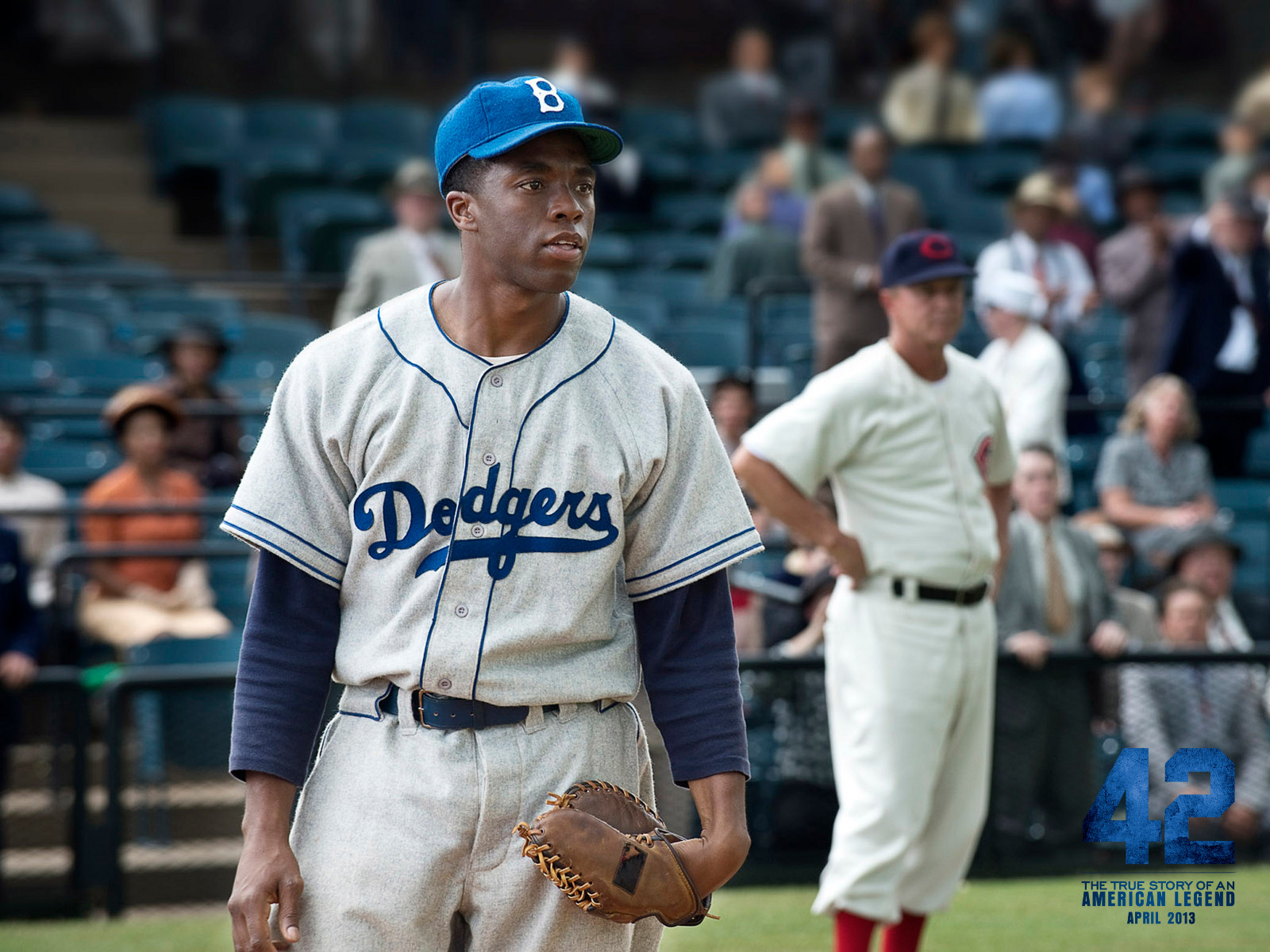
Chadwick Boseman plays Jackie Robinson in “42,” this week’s release about the first black player in major league baseball in the modern era.  Robinson’s extraordinary talent and grace under pressure was a powerful rebuttal to the racism that perpetuated segregation in sports and throughout American society.

Boseman spoke to a small group of journalists about preparing for the role and what it was like to work with Harrison Ford, who plays Branch Rickey, the man who offered him a job with the Brooklyn Dodgers.  He did not originally intend to become an actor.  He studied writing and directing.  “As a director, it is important to understand the actor’s process.  So, I took the acting courses at first for that, and then continued just because I caught the acting bug.  For me, they go hand in hand, but it was a gradual process.”

He told us that one of the challenges of the film was that he didn’t just have to play baseball; he had to play it the way they played it in the 1950’s.  “The uniforms changed!  What’s different is the tools, the gear, the bats were a lot heavier.  Not that you would know it from looking at the bats, but you can see it in the swings.  There’s not many hitters that have Jackie Robinson’s swing now.  It appears to be an unorthodox swing when we see it today.  The gloves are different and using those old gloves changes the way you play.  It’s fundamental to use both hands to get a ground ball if you can.  You can see why that’s the case with those old gloves, because you can’t depend on catching anything with one hand.  There’s no pocket.  When they say ‘Make a pocket,’ you have to literally make that pocket.  And shoes have come a long way.  That was one of the hardest parts of the physical aspect of the movie, wearing old-style cleats, take after take.  We went through four or five different sets of cleats and it took my feet a few months to heal.  I would get up in the morning even three or four months after we were done and I would still feel like I had cleats on.  It was like running on nails.  But the game is pretty much the same game.  And it has to be, that’s part of the mystique.  Baseball is about tradition and the scorecard.  You’re measuring players from the past against players now and if the game changed too much you can’t judge this person’s monumental home run season against another.  It’s about the stats.  The game is the game.”

He talked about how the athletes that have “reached that iconic status” have to be able to rise to that clutch moment.  “He had to live his live in the clutch.  It was never mundane because he was always getting judged on a different level.  You have to cherish things in a different way when you know the clock is ticking, you are under pressure.  It’s still human, it’s still detail, it’s still subtle like any other character, but the context that surrounds you has elevated.”  He prepared for the role by playing a lot of baseball, with practice five days a week, plus conditioning five days a week.  “That’s the physical part but there’s also the mental part of it, too.  While you’re out there, failing and succeeding, you get a sense of the kind of pressure he really is under.  You can’t play the role unless you know what it’s like to have the ball coming at you and it’s your assignment.  Baseball is a game of assignments.  From here to here, that’s your ball.  It’s the other guy’s job to cover you.  Or it’s your job to cover somebody else, or whatever it is.  You have to play it to get how much pressure this person is under and how that emotionally affects him, how a mistake could get in his head, how much having his teammates look down on him affect him.  I tried to figure out what he was thinking moment to moment because a lot of things he can’t say.”   He watched footage of Robinson and the Ken Burns series on the history of baseball.  He had to understand what the game was to the other players, too.  “I tried to take in as much as I could.”

“He was an opinionated, assertive, outspoken person.  That’s who he was.  This person, who would come to blows — not prone to fight but doesn’t back down from anyone, not the person to run from a fight” was put into a position where he had to hold it inside.  “He was not a passive person so you cannot play him passively.  You find the most active non-verbal choices.”

After playing two athletes (he also appeared in the fact-based football drama, The Express), he says he’s ready to try something else. “Maybe a musician.”

He said it was “amazing to work with a legend” sharing scenes with Harrison Ford.  “You get to see the shortcuts that they take.  Like Jackie’s swing.  He’s gotten to the point where he looks like he’s skipping stuff but he’s just short-circuiting it.  You’re like, ‘How’d you do that?’  He has a feel for the set, so in tune with all the equipment and knowing how to facilitate the process and that’s a fun thing to watch.  He doesn’t cherish this role any less than anything else he’s done.”

Related Tags:


Actors Interview

Interview: Henry-Alex Rubin, Director of “Disconnect”

Posted on April 8, 2013 at 8:00 am

Henry-Alex Rubin, director of the new movie, “Disconnect,” and I were were talking about the movie when his phone beeped.  He reached into his pocket to turn it off and we both laughed at the real-life example of the movie’s theme.   “Disconnect” has three stories about the ways that technology has affected our ability to connect to each other, and our conversation was being interrupted by a signal that it was his turn in an online word game.

“It’s not a social networking thriller,” he told me.  It is a drama about the ways in which we reach out to each other and how technology has changed that, for better and for worse.  Rubin is the award-winning documentarian who made the terrific “Murderball,” about wheelchair athletes  (watch for one of them in a brief appearance in “Disconnect” as a drug dealer).  In his first feature film, written by Andrew Stern, a young couple grieving over a devastating loss is hit with identity theft, a lonely teenager is pranked by classmates into thinking he is corresponding with a girl, and a reporter doing an expose of teens who perform for webcams finds that her judgement and ethics can be compromised.  Rubin emphasized that the technology leads to connection and support in some cases as well as inflicting damage in others.

He was brought to the project by the producers because they wanted the film to have a documentary feel.  “I filmed it like a documentary,” Rubin said.  Instead of cameras and microphones intruding on the space around the actors, he used long lenses and pin microphones to keep the crew farther away and promote a more natural, intimate atmosphere for the actors.  “And there were no mistakes,” he said.  Particularly with the younger actors, he encouraged them to try whatever was comfortable for them by telling them that whatever they did was fine.  “We kept rolling.  If I had a note, I would not say ‘Cut.’  I would just tell them to go again and we would keep going.”  For the older actors, like Jason Bateman, “who’s been surrounded by cameras since he was a kid and is completely comfortable,” it was less important.

But the film presented Batemen with a new challenge as well.  “This was his first ever full-on dramatic role,” said Rubin.  He plays the devoted but distracted father of the boy who is devastated by an online Catfish prank.  “I had him grow a beard, so he would look a little different, to help separate him from what the audience would expect.”

Rubin did something different with Paula Patten, too, who plays a grieving mother drawn to an online support group.  “It’s hard to make a woman as beautiful as she is look like a real person,” he said.  He encouraged her to work without make-up and leave her hair messy.  Her husband was played by Alexander Skarsgård, who also got a bit scruffy for the part, “with bags under his eyes and even put on a little paunch.”

Some things never change.  People want to feel understood and important to one another, and that can be difficult.  But it feels like technology has ramped up the stakes and we are still struggling to understand it.  “There’s a line in the film that I got from Frank Grillo,” he told me.  Grillo plays the single father of one of the kids who play the prank.  Even though his character is an expert in computer safety, he does not know what his son is doing.  “He says, ‘Computer time is up.’  He told me that’s what he says to his kids, so we put it in. ”  That line is a reminder that no one knows what the rules are with technology that brings us together and keeps us apart.

Related Tags:


Directors Interview
THE MOVIE MOM® is a registered trademark of Nell Minow. Use of the mark without express consent from Nell Minow constitutes trademark infringement and unfair competition in violation of federal and state laws. All material © Nell Minow 1995-2026, all rights reserved, and no use or republication is permitted without explicit permission. This site hosts Nell Minow’s Movie Mom® archive, with material that originally appeared on Yahoo! Movies, Beliefnet, and other sources. Much of her new material can be found at Rogerebert.com, Huffington Post, and WheretoWatch. Her books include The Movie Mom’s Guide to Family Movies and 101 Must-See Movie Moments, and she can be heard each week on radio stations across the country.

Website Designed by Max LaZebnik