Interview: Michael Damian, Writer-Director of “A Princess for Christmas”

Posted on October 19, 2012 at 5:23 pm

Michael Damian played heartthrob Danny Romalotti on “The Young and the Restless” for 18 years, returning for the show’s 35th anniversary.  He is an award-winning singer and songwriter and more recently he has been a writer and director.  He and his wife co-wrote the charming modern fairy tale A Princess for Christmas and he directed it as well.  He took time to talk to me about directing Roger Moore and the surprise actress he added to the film.

How does your experience as an actor help you in casting your films? 

I know what the actors are going through when they go into the casting room, and I do understand that it’s very important to have a director who gives, off-camera, really good readings to actors. I think it helps tremendously, and we were very fortunate that our casting director London did a great job; she gives fabulous off-camera reads to the actors and really helps to get in on the character. I’ve been in casting rooms where the person reading with you is so terrible that it’s just like… “So what do you need?” and like, oh my gosh, please tell me they’re not going to read every line like that (in my head, of course, I’m saying it.)
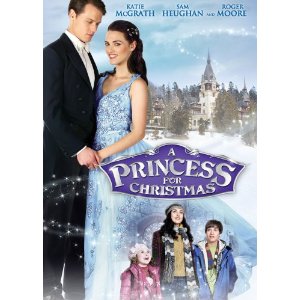
You have to find a way to rise above that, but fortunately, we have really good casting people that worked with us out of London and when Sam came in, you know, he was amazing. Right away when we saw him we’re like, “Okay, there’s Prince Ashton. There’s our prince.” He was dynamic, he was charming; he had a sensitive side you could see, there was warmth in his eyes—it wasn’t very difficult to make up our minds once we saw his recorded audition. I wasn’t in London when it happened, I was in Romania in per-production, but I got the feed over the internet of the casting session and we were like “Wow, he’s fantastic!” And he’s even better in person and did an amazing job getting him on camera.

Tell me about working with Roger Moore.

Sir Roger Moore is phenomenal. He is so funny, you know? He’s got an incredible sense of humor, and that’s really wonderful because you’ve got to have that when you’re not shooting, because otherwise it can be very, very uncomfortable on a set when you have a star of his stature to be just not having a good time—and Roger Moore just really enjoys the process. He gave 110%, he was there for all the off-camera line reads, he was present, he was just a total joy. All the actors loved working with him and he treated them with great respect and kindness. And I’m such a fan of Roger Moore, I mean, The Spy Who Loved Me is one of my favorite Bonds. I had such high expectations just from a personal level, you know what I mean? He met them and exceeded them and it was just such a pleasure and honor to direct him and his lovely wife, Lady Kristina, was fabulous.  I put her in the film because she was so gorgeous—and I didn’t realize that no one’s ever asked her to be in a movie. And I said, “Lady Kristina, you need to be in the film,” and she was like, “Oh, I would love to.” And I was like, “You’re in the next scene…” so in all the ballroom scenes, you see this beautiful, elegant, radiant woman in black that he says hello to at the entrance, and then you see her reacting during all the drama that unfolds…that’s his wife, Lady Kristina, she’s gorgeous.  They’re a great couple, and they’re so in love with each other. I got to have dinner with them on their anniversary.

Tell me about Romania.

Well, Romania was an amazing experience. First of all, to find a castle like Peles Castle up in the mountains with this beautiful, I mean, just stunning.  And to have the natural snow falling and the setting was so inspiring…it was a bit cold, 14 below zero, but besides that, it was a thrill.

Sam also did mention the cold.

Did he tell you how cold it was?

Yes, he did—and I thought, “well, if an English guy is cold, it’s probably pretty cold.”

It was cold, it was a crazy cold. But they were brilliant, nobody complained, Sam never complained and I hope he had a good experience, I mean, we had a great experience.

What were you going for in the costume designs to strike a balance between modern day and fairy tale?

First of all we’ve got this castle with all the staff and I wanted to keep them proper and dressed proper as staff, like “Remains of the Day” or one of those great films, you know? You keep everybody pretty formal. Katie’s dress, we had the costume designer, Oana Draghici, make several things for her and sometimes Katie McGrath would come in with something and she’d say, “What do you think of this?” and I’m like, “Great. Where did you get that?” And she’d go, “Oh, it’s mine, I brought it,” and sure enough, she wore it in several scenes and I’ve had so many people asking where they could buy it.  I think it’s in some of the artwork or the press photos, it’s kind of a knit, sweatery dress or something that she wears and everybody keeps asking about it. I go, “well, it’s Katie’s personal dress, so I can’t help you with that, you’re going to have to call her.” You mix and match, it depends on which character. The great thing about Castlebury is that it’s our own—we created this small country that’s kind of like a Monte Carlo, so we were able to have a little more free reign with certain styles and things that people wore, you know, and the family starts in Buffalo so it’s pretty straightforward, there. I pretty much know how they dress in Buffalo and have a lot of friends that live there, so just try to keep it real…really each character define them and make sure they have their own style and that you just don’t, “Oh, yeah, put that on him, who cares?” I want to really make sure that it works with the character and that it works with the scene. Unfortunately, sometimes, it could be freezing cold but you’ve got to make it work. You put too many jackets on and it’s really unattractive, do you know what I mean?

What is it that we love about fairy tales?

Well I think, first of all, there are a couple of things here. You’ve got one of the most beloved holiday seasons, Christmas, and it’s my favorite. My wife and I love Christmas movies, and so we thought, “okay, what if we made a Christmas story/fairytale?” and it started with just a line. We were sitting in our office and and you know, “Once upon a time in a land called Buffalo,” and then we just started, “okay, let’s start from there, okay…” and we want to make it modern day, so we take a modern-day family—and what would happen if they found out that half of them were royal and didn’t know it? And went on this journey to this magical place, this beautiful castle and found the rest of their family that they didn’t know? What would that be like during Christmas? Could they come together and resolve all their differences and find love and find romance (I’m talking about Jules and Ashton.) So there are several different kind of stories running simultaneously. You’ve got Jules and her journey just to be a good adoptive mother.  She’s young and she really hasn’t experienced love.  There are a lot things in her life that she, I’m sure, was hoping to do and life sort of threw a curve at her and she now has to adapt and make it work. Without giving away too much of the story, you’ve got that and then you’ve got a lot of the things that unfold at Castlebury and one, being, of course romance. Which hey, come on, who doesn’t like that?  You’ve got a Christmas movie, you’ve got a fantasy, you have the prince kind of story, you’ve got the family story and you’ve got the snowy white Christmas setting, so…there’s are all the big things that we talked about. Those are all the things we love, can we put them into a script? And shoot it and have people enjoy it and enjoy the journey, because you know really, as a journey, it’s about family coming together, resolving differences, it’s about forgiveness, which is very important.
Related Tags:


Actors Directors Interview Writers

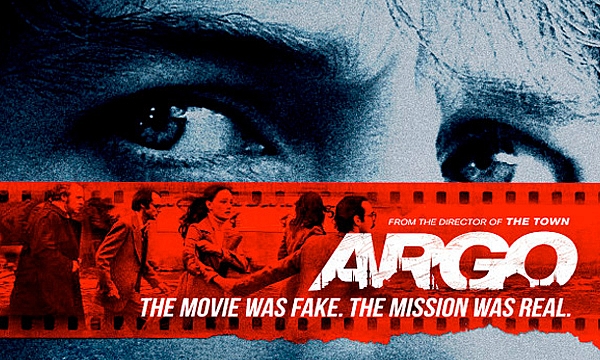
Interview: Bryan Cranston and John Goodman of “Argo”

Posted on October 17, 2012 at 8:00 am

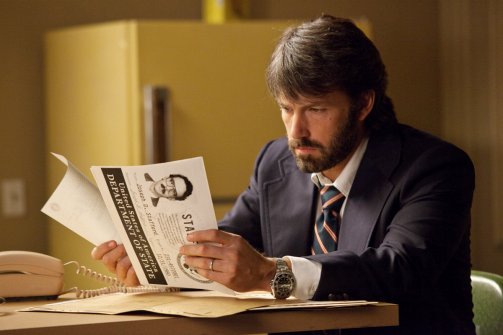
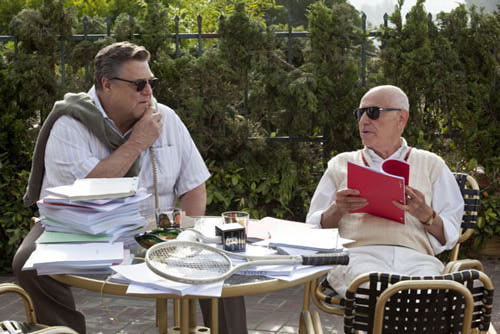
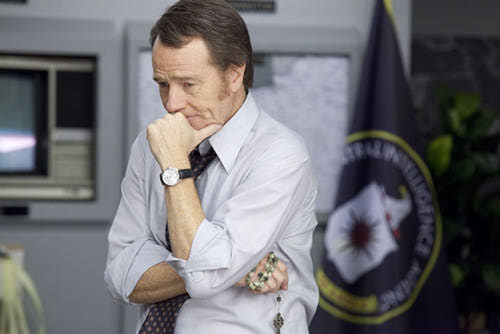
In Argo, Bryan Cranston (“Breaking Bad”) plays the CIA chief who supervises Tony Mendez, the character played by director Ben Affleck.  And John Goodman plays real-life Oscar winner John Chambers, the genius in make-up and prosthetics who secretly worked with the CIA on disguises.  Mendez called Chambers for help in setting up the fake Hollywood studio they needed to create cover identities to get the six Americans hiding out in Iran back home.  A small group of journalists met with Affleck, Goodman, and Cranston to talk about the film.

What is the challenge in playing a character based on a real person, knowing that people who knew him will see the film and people who didn’t know him will think that they know what he was like based on your performance?

John Goodman: First and foremost, I had a responsibility to the character I was playing because he actually existed. He was a well-respected makeup artist, so I just felt the responsibility to not step on my foot.

Brian Cranston: My character was a composite character, and I think it was carefully crafted that way because at the time that you keep cutting back to the CIA and finding out more information and what’s happening back there, it was important to not have the audience confused for a second.  If there was numerous people that were at the CIA giving him instruction and guidance, if the audience is going, “Which guy is it? Was that the guy from the White House or is that the guy…” then, we’re in trouble, because then they’re not listening. So, we didn’t want to slow it down and so my character became the composite character.  But you know, it’s interesting. Some people will say, “Well, actors, they’re liars, right? They get up and pretend and say they’re someone else,” and the truth is that we desperately seek the truth and the honesty of a character, and we don’t feel completely comfortable until we find out how to play someone with that integrity. But yes, I think Ben and John had slightly more sense of responsibility because they’re portraying real people.

What do you think was going on inside the minds of these men as they went through these extraordinary challenges?

Bryan Cranston: Well, I had the good fortune of coming to Langley, Virginia early on before we started shooting and I sat down with a few CIA officers of varying degrees of experience.  I wanted to get sort of a baseline of who these people are, and get a sense of the culture that they live in, and I guess what I came away with is that it’s not dissimilar from any other corporate structure.  They’re still complaining about the boss and his crappy idea, and “that’s not going to work,” and there’s stale coffee in the break room and there’s all these kinds of things that they have to deal with. I think at first they were a little reticent to open up to a stranger.  At first they would say, “There are several things we can’t talk about, you know, mission wise.”  And I go, “I’m actually more interested in what your personal life is like and what sacrifices that were made with your spouses, what were you able to tell your children? How did it affect you? Your relationships? Do you guys drink? Did you go to a certain place to associate with other officers?” And there’s very much a club, in fact, one of the things that I found interesting was that a lot of them will socialize within and marry within, so that one guy was married to a CIA officer and their daughter was a CIA officer, and so it’s the family business. What I thought, going in, was “This is going to be completely different from anything that I have ever known” but it became sort of familiar to me. I just wanted to craft this man being a dedicated servant, truly believing in the value of the CIA and what he’s providing for it. I had a sense that, if this worked, this would be Jack’s last mission, that I’m going, “it’s not going to be any better than this, so I’m going to get debriefed and walk away.”

John Goodman: It’s like the idea of a man who manufactures disguises, disguising a part of his life and hiding in plain sight and serving his countries with the tools of his trade.


Related Tags:


Actors Interview

Interview: Sam Heughan of “A Princess for Christmas”

Posted on October 16, 2012 at 11:10 am

The delightful fairy tale romance A Princess for Christmas is now available on DVD.  I spoke to British actor Sam Heughan, who plays the prince, about shooting in Romania, playing the son of 007 star Sir Roger Moore, and the very surprising part he played after this movie was completed.

Tell me first of all how you came to this project. Did you audition, did they call you, what happened?

I was working on a play in London.  I just went in to audition and after a couple of rounds with the guys the next thing I knew I was out in Romania with the whole cast.

It must be a challenge to play the Prince Charming character. Tell me about the role.

He’s quite uptight and was quite reserved and part of this very rich, very affluent family.  And I had to do horse riding and archery and dancing as well.  I added some dance moves of my own and I’m very proud of them, too. It really was quite fun, there was a lot of laughter on the set. It was very nice company to work for.

I have heard from other people who have made films in Romania that it is a very magical setting. Did that contribute to the feeling on the set?

Absolutely. I think Castlebury is sort of this magical place somewhere in Europe.  It is kind of a fairy tale place and we needed a location that reflected that.  This wonderful castle that we filmed at and the set, it was just beautiful, and I don’t think you can really get that anywhere else, certainly not in the UK and maybe not on such a grand scale.  It was great filming in that castle. The only thing was it was about minus 15.  Pretty, pretty cold. And actually by the end of the movie we had to try and get in some snow machines because it all melted and it was very warm–it went from one extreme to the other, but it was a great country to work in.

And I must ask you about Roger Moore. What was it like working with 007?

Wow.  We were all really excited to work with Sir Roger. He walked in the first day and really set everyone at ease. We just had lots of fun. He was very naughty, extremely flirtatious, with a lot of great stories to tell in between takes as well. He’s a real really great actor. It was kind of like a boy’s dream here to work with Roger, I’m sort of a huge fan of the Bond films and also “The Saint” as well. Playing his son is magical really, and I think everyone was really excited to meet him. There was a lot of photo-taking on the last day.

Would you say that you learned anything from him?

I watched him so much, especially during his own takes, and talk about the craft of acting, he did so little when you were watching him acting, but then on camera, it just was everything. There’s a scene where we are having an argument and we leave the room and he’s sort of left contemplating, holding a brandy glass, but it he made that moment so powerful and read a lot into it. It was a wonderful bit of acting. He’s just a real delight to work with.

What do you think is the reason for the enduring popularity of fairy-tales like the Cinderella story in this film?

The girl in this story is kind of an outsider, I guess, and she’s in this world that’s very magical and she doesn’t quite fit in. I think we all feel that, in life you sometimes don’t feel like you don’t quite fit in or you think there may be something destined for you.  And she stick to her own beliefs and be true to herself and I think that’s maybe the message that we were trying to put across. I guess that what happens in fairy tales as well, and hopefully, we all dream that that could happen in real life.

And what’s the next thing you’re working on?

Well, I literally finished, two days ago–I’ve been playing Batman on tour.  I just did Vegas last week, and I just finished now except I’ve been touring out for, since actually this Christmas, we’ve done the whole UK and Europe and South America.

So you’re playing another upper-class loner?

Another upper-class loner, yeah, not type-cast at all–but this one dresses up in strange costumes and flies around.


Related Tags:


Actors Interview

Interview: Ben Affleck, Director and Star of “Argo” (Part 2)

Posted on October 15, 2012 at 3:33 pm

More from Ben Affleck about Argo:

What were some of the tougher scenes to film?

The scenes with the actors were the easiest scenes. We have all these good actors, they know what they’re doing, it was really fun. I got to enjoy acting with really good actors.  Getting 2000 extras out in Turkey was really hard.  It was cold and people wanted to go home and the idea was like, “Every hour, we’re going to give away sweet rolls!”  But we’re still losing a lot of people who felt the sweet roll wasn’t worth hanging around and it was a lot of work. So that was tough. The car stuff wasn’t that bad. I was kind of excited, there was a car, sort of a Porsche Cayenne that has a huge crane on the back and it’s called “The Russian Arm” and they do incredible things with it. You can be driving like 100 miles an hour next to something else that’s 100 miles an hour and moving the crane around.  They use them a lot for car commercials and I had wanted for “The Town” and we couldn’t afford it.  This time I said, “We’re going to need the Russian arm” and we got it. I got play with it and that was a lot of fun.

This was something of an homage to the late 70’s, you know, with the clothes and all the TV and Walter Cronkite. Was that something that attracted you to the movie?

I’m the age of the kid in the movie and so I definitely identified with the child.  When I went into his room, with all the action figures and the Star Wars stuff, it really hit me: this was my childhood. And I got really fastidious about the sheets and everything.   There’s something remarkably innocent about that era. We think of the 70s as being slightly debauched in some ways, key parties and all those other sort of images we get from some other movies, but we had none of that technology, huge TVs, the people on television, you know, had these sort of crummy sets. Nowadays, we get a theme song and a graphic for every news story but then it was these gigantic cars that probably got 6 miles to the gallon, you know, it was the true sort of internal combustion engine in bloom and I don’t know—I thought there was something kind of sweet about it, sweet about the big answering machines and you just leave the house and that’s it. No one can find you until you come home. Put a quarter or a dime in a pay-phone slot…So I discovered a little bit more about it as I was doing it.

How are Hollywood and the CIA alike?

That is a good parallel, and it’s true, there is a symbiotic relationship.  People make movies about military and if  you go on a tour of the military, they’re all movie buffs, all these guys and women overseas. Movies are a big part of our culture, and both the movies and our military and our intelligence services (particularly our intelligence services) are inventing things, are filmmakers and actors for the sake of art and for entertainment and for our intelligence services, it’s for, God knows, skullduggery and spy-craft and all that kind of stuff. And they both tell stories.  One of the themes of this movie is storytelling and how powerful it is, whether it’s political theatre or relating to our children or trying to get some people out of a place where their lives are in danger.  Usually telling stories is incredibly powerful.  There’s this shot I really like where there’s this firing squad and there’s a firearm, a rifle and a camera, and hopefully it’s subtle, but suggests that the camera is much more powerful than the gun.  That has been really borne out, as in the YouTube era, as true.

You begin with strong criticism of the Shah and America’s support for him.  Were you as tough on the people who took over after the revolution?

I don’t think anyone would argue that the Islamic Revolution was good for the country.  It’s just that it was a reaction to the Shah who was not good for the country, who was embezzling a lot, and as you point out.  Unemployment was low, but a lot of those jobs were done by foreigners, because they didn’t have Persians who were trained to fly the helicopters he was buying and run the cranes and even drive trucks, so there was a lot of importation of labor that the people resented.  I didn’t have to show, in specific, what happened and how bad the revolutionaries became (so to speak) because you see them hanging people from construction cranes, you see firing squads happening impromptu in the streets, kangaroo courts, you see a place that’s living in fear under the revolutionary guard, so in that sense, you very much see what has happened to this country as the Islamic Revolution took hold.  It’s an extraordinarily complicated scenario. Part of it was a reaction against the Shah, you know, the Savak were sort of modeled after the KGB, they were extremely oppressive, but there were a lot of people who really prospered under the Shah and the revolution was not fomented strictly as an Islamic revolution. There were merchants and communists and secularists and students and Islamists and nobody would have engaged in this revolution with most of those other people if they thought, “Well, we’re all just going to end under Khomeini.” In fact, Khomeini was able to use the hostage situation himself, which he didn’t engineer, but was supposed to be the short-term two-day thing that the students did. He sent his son to say, “You know what? Let’s keep the hostages here, let’s hold out and see what happens,” and because he sort of controlled this event, he was really able to marginalize the moderates in government.  I was a Middle Eastern studies major, I took classes and classes and classes on this and still don’t feel I understood the Iranian revolution sufficiently. I do know that we tried to capture the essence of the truth; I absolutely standby the prologues, and people call it the history lesson, but I also acknowledge that we did not have the room, dramatically, to really get into the minutiae and the complexity and the nuance of what happened as the Islamic Revolution took hold. I do feel that we show it in a fairly negative light, but I also wanted to give people some context so that they see it just wasn’t just sort of mad barbarians who made a rush for a country, but that this was something that was developing over time as a reaction to the Shah’s policies.

Tell me about the character you play in the film.

I think Tony in real life was a guy who got his mission and got his orders and followed through, and it was rather uncomplicated. He had a certain amount of fear but he was going to do it. As a result, the story’s a little wonky, in a way, in the film, because it was really about the six people. If you want to talk about, like where your empathy is, where the line is that’s pulling you through the story, it’s the six people, not the guy on his horse with the sword who’s going to kill Saxons or whatever, you know. And then you start to be developed emotionally with these other characters who have different emotional relationships to the story, you know, John and Alan and Bryan and so on. I thought that was interesting, and I also sort of worked with Tony’s slightly passive personality, you know, that his focus was he was going to go and save these folks’ lives, and so they became a center of the wheel, the hub, in a way, and all of this other stuff was spokes in that way.


Related Tags:


Actors Directors Interview

Interview: Ben Affleck, Director and Star of “Argo” (Part 1)

Posted on October 14, 2012 at 3:11 pm

Ben Affleck directed “Argo,” the incredible story of a real-life 1980 CIA rescue mission, and he plays Tony Mendez, the “exfiltration” expert who came up with the idea to create a fake Hollywood film production company and get the six American out of Iran by convincing the people who had captured 52 other State Department employees that these six were members of a Canadian film crew, scouting locations for a big sci-fi/fantasy film.  I spoke to him about the movie with a small group of journalists, the day after a screening attended by some of the real people rescued by Mendez.

You did something really remarkable in combining what is really two movies with two completely different tones in this film.  How did you put that together so skillfully?

Well, I wish I could say it was my own skill, I don’t think it was.  They’re really smart actors, they kind of looked at the material on the page and did me a favor of playing it honestly.  Because it was played realistically it kind of blended anyway. If it hadn’t, I suppose I would’ve had a bunch of conversations about how we were going to get the jigsaw puzzles to fit, but all the parties, Bryan Cranston, John Goodman, and Alan Arkin were really pretty adept.  They knew how to play it real, and that kind of saved my bacon.

Did you anticipate that there would be so much connection to current events and what do you think the movie can say about where we are now?

I was kind of stunned, naturally, just to see that the material that I looked at for research from 30 plus years ago all of a sudden was looking exactly like what was on the evening news.  That surprised me and it surprised everybody and obviously, it was just a terrible thing for everyone. I expected the movie to be resonant to the sense of what happens when the United States gets involved with the government of another country and overlooks some of the negative things they may be doing because they’re pro-Western, the unintended consequences of revolution, those are the kinds of things I was anticipating. What it ended up being more about, in some ways, was an homage to our clandestine service and our foreign service folks, who, as illustrated by these tragic events do a lot, sacrifice a lot, put themselves in harm’s way, give up a lot to go overseas.  Our Foreign Service folks are doing a lot and making a lot of sacrifices for us, and sometimes it’s even the ultimate sacrifice.

It really seems like you shot it as if it was a film made in the 70s, starting from the old Warner Bros. logo. 

I thought it would be a trick of the brain, where, if you’re looking at a movie that looks like the kind of movie that was made in the 1970’s, it’s easier for the brain to subconsciously accept this notion that the events they’re watching are taking place during that period. Now, you can’t do that if you’re doing a movie about the Revolutionary War, but that’s why we had this interesting advantage. Even better, that era that I was trying to replicate, to sort of fool the brain, was a really great era for film-making, so I got to copy these great films and great film-makers, Lumet, Pakula, Scorsese.

How does it complicate things when you’re making what is basically a living history film, knowing that the people who were really there will see it?

It’s about a whole story, you know, and you have to maintain the integrity and the honesty of the spine of the story. That’s one profound responsibility because.  I want them to look at it and say, “Yeah, that’s basically it.” Now, the real takeover was four hours long, and we have five minutes. That’s the kind of thing that we need to do to sort of compromise. It was raining in the real takeover, it’s not raining there. There are some details that are naturally changed. But the essential spirit of it, that has to be preserved. You know somebody did find a picture of Khomeini with the darts in it and say, “Who did this?”  They really did blindfold people and things like that. I also have a responsibility to make a good movie, to tell a good story, because that’s what I do, and so those two things are constantly intentioned with one another, because I want to make it true, but I gotta make it good, you know?

How much was changed for dramatic purposes?

The main change, really, is the cars in the runway. They got to the third checkpoint, they got through, that was all the same, and they got there and sat there and they said, “Well, your plane has been delayed.” I thought, “Well, we’ve all been through that!” And then they got on the plane and left, and so in an effort to sort of externalize that and make the third act work, I added the sort of, them just barely getting away, when in fact they got away a little bit more ahead of the wire. But that really, fundamentally, in my view, doesn’t change the story. The same things happened, you know?  It was a close-call in terms of trying to get out in terms of their own deadline. Most of the sins, really, in terms of story-telling, are sins of omission, you know? Not being able to include the fact that Pat Taylor got money from her co-workers or that in Ottawa they approved this special session to make these passports that had never been done before.  You have people who are all alive, there’s a natural tendency to feel like, “Well, this is my story.” So you have to sort of do everyone’s story justice, and also take into account the sort of Rashomon phenomenon where you hear slightly different accounts from different people, and definitely maintain the realism of it while not sacrificing what’s really interesting about it.

What movies of the period ended up inspiring elements of this film?

There were a lot of them that I had seen and I still watched again, and I liked “The Thing” for my hair, and I liked Killing of a Chinese Bookie, the Cassavetes movie, for the sort of seedy LA, I just loved the look, the feel, the way they use zooms, the way it felt kind of raw but you also realized it was choreographed—and I didn’t expect to see that coming. There’s a movie called Let Me In that I watched, that’s really good, a guy named Matt Reeves directed it, the remake of the original one, and I thought it was really well directed and watched it with my DP, and we were looking at stuff that they did with focus in that movie, you know, keeping things in the foreground, focus, and maybe soft the background—that was something that I didn’t expect to influence me and it really did.


Related Tags:


Actors Directors Interview
THE MOVIE MOM® is a registered trademark of Nell Minow. Use of the mark without express consent from Nell Minow constitutes trademark infringement and unfair competition in violation of federal and state laws. All material © Nell Minow 1995-2026, all rights reserved, and no use or republication is permitted without explicit permission. This site hosts Nell Minow’s Movie Mom® archive, with material that originally appeared on Yahoo! Movies, Beliefnet, and other sources. Much of her new material can be found at Rogerebert.com, Huffington Post, and WheretoWatch. Her books include The Movie Mom’s Guide to Family Movies and 101 Must-See Movie Moments, and she can be heard each week on radio stations across the country.

Website Designed by Max LaZebnik