Interview: David France of “How to Survive a Plague”

Posted on July 7, 2012 at 8:00 am

“This isn’t a movie about what AIDS did to us,” writer/director David France told me as he was preparing to present “How to Survive a Plague,” his documentary about AIDS activism at the prestigious Silverdocs film festival in Silver Spring, Maryland.  “This is a movie about what we did to AIDS.”

France made the film because most of the cultural touchstones associated with AIDS like the award-winning plays “The Normal Heart” and “Angels in America” and the book and movie “And the Band Played On” document the early years.  They are filled with images of emaciated victims, weeping friends and family and bleak prospects.  But this is a story of inspiration and triumph, as one of the most devastating diseases in modern history went from being a certain death sentence to an illness that can be managed.  More than that, the people in this movie changed the way the medical and research communities interact with patients and their families who are coping with all diseases and conditions.

The film recognizes that the activists who led the fight in what became one of the most successful public initiatives in American history deserve recognition for their extraordinary accomplishment.  In less than 15 years they were able to transform the medical options for people with HIV and AIDS and the ways that all medicines and treatment are developed.  Along the way, they established the foundation for full integration of gay members of American society, with the freedom to be themselves and love the people they love.  I spoke to director David France about the unique opportunity he had to make use of the extraordinary archive of footage used to document the movement from its earliest moments.  This is not just the story of a brave and dedicated group of activists literally fighting for their lives.  It is the story of how a heroic and remarkably effective political movement came of age, with its internal conflicts as well as the external ones.  And it is the first time any movement has had the benefit of this range and depth of documentation, an explicit commitment going back to the earliest days.

“I didn’t want to over-burnish the halos of these guys, although I do think of them as heroic. But heroism is never a direct line; it is not a single path leading you straight to victory. And as in all movements, there are sharp differences and especially over time. ‘How to Survive a Plague’ covers nine years and four Presidents and in that period we see a lot of accomplishment and a lot of failure, as with any movement. The failures, despite the accomplishments, meant people kept dying. And people who were in the trenches, comrades of people I was following, didn’t make it. The desperation that underlay turned inward, as one might expect and ultimately created real battle lines among the activists. Those I thought were essential to tell, not just because they’re true, but because that’s human nature—and the fact that they were able to accomplish what they accomplished despite that was phenomenal. That made their triumphs even more unusual, that they worked through that anger and despair and self-doubt, suspicions among one another and still found a way to their end, and their end was the development of a drug that would finally make survival possible.”

http://www.youtube.com/watch?v=LQbM4bb6Zpk

What makes the film so remarkable is its use of the extraordinary archive of footage.  In all the political movements that have been recorded over the years, this one was probably the most thoroughly documented.  France explained, “It’s the first kind of self-documented movement.  HIV was first identified in the medical literature in 1981, the summer of 1981, and the camcorder hit the stores for the first time in the summer of 1982. So, in a way, they’re like siblings—sibling epidemics, really.  They grew up together and became pandemic, right? So people involved in AIDS saw the value of the tool at a time when no one was covering AIDS. AIDS suffering was not being paid attention to. AIDS activism was ignored and the only images that we saw through the 80’s and really through the 90’s about AIDS were skeletonized patients in bed. We saw them on the news from time-to-time. We saw victims, and the people who were doing AIDS activism and knew that that was only a small fraction of the story and that the story of what was going on was really about self-empowerment and that it was brilliant, and that it was new. There was never a patient population that had identified and developed the kind of strength that this group had, and in order to be able to capture that and reflect it back to the individuals, they’d use these tools—and they started shooting everything. By 1987 when AIDS activism took full force, cameras were everywhere. From the very beginning of Act Up, they had a committee called DIVA TV, Damned Interfering Video Activists, that’s what they called themselves, DIVA, and they created TV. It was also the beginning of cable, of public access—they grabbed a public access station—and every week they would, on their public access shows, show the footage of what happened last week in a way to build the movement and to reflect back to the people who were doing it, the beauty, really, of what they were doing and to show AIDS power, to show fierceness, to show agency in AIDS at a time when that was being denied. That footage was—my thought was from the beginning that there was enough of that, because I saw those cameras—there was enough of that footage that I could create a documentary that would bring us back to that time. I brought in, ultimately, footage from thirty-three different individuals.  It was shot by activists; it was shot by video artists who would come through like the Guggenheim program, by film-makers who are now well-known, and by loved ones who just wanted to capture what the people they love looked like in their youth, knowing that that’s all they were ever going to have.”
(more…)

Related Tags:


Directors Documentary Interview

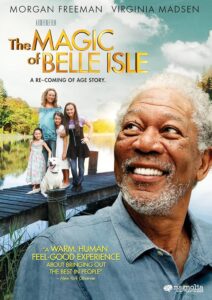
Interview: Virginia Madsen of “The Magic of Belle Isle”

Posted on June 28, 2012 at 8:00 am

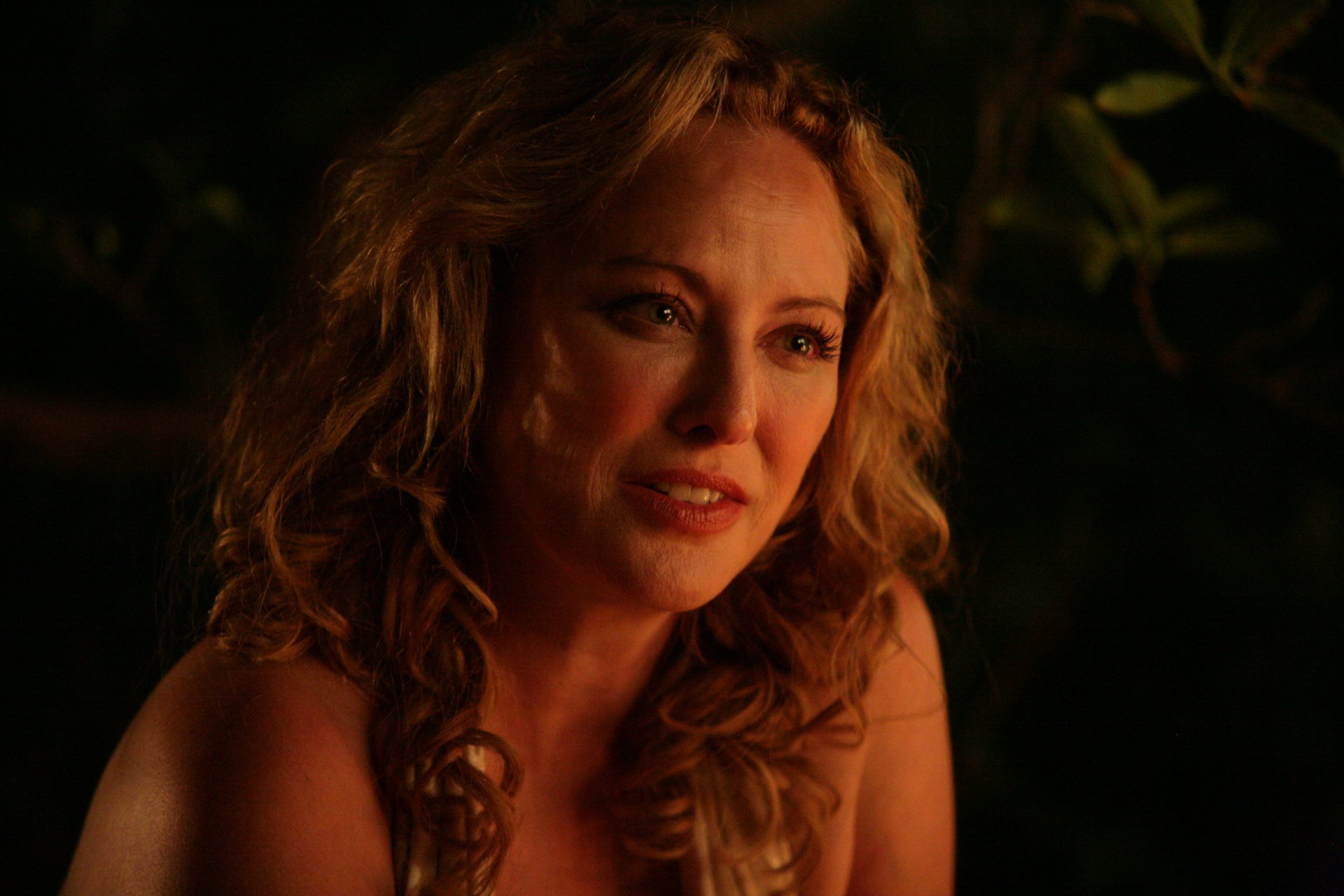
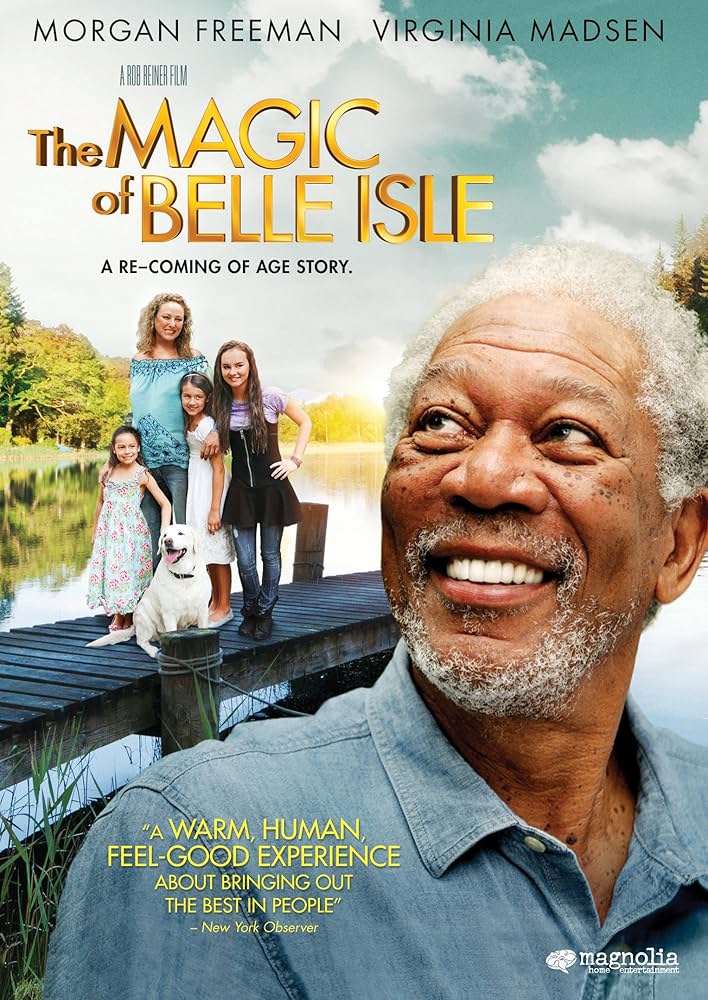
Virginia Madsen stars in the heartwarming story “The Magic of Belle Isle” as the recently-divorced mother of three girls who befriends the writer who moves in next door (Morgan Freeman).  I spoke to her about making the movie, which is available now On Demand and will be in theaters July 6.

What was it like for you working with three young actresses who played your daughters?  How do you develop a level of trust with them? 

Well, I raised a child. I had a boy child who’s now 17 and I’ve worked with kids before. I know that this was a big job. We had a lot to do, they had a lot of dialogue and I really, really wanted them to trust me. One of the greatest things is that they all had nice parents. We struck gold with that. They were nice kids, they weren’t Hollywood-ized and the mothers really allowed me to mother their children which was incredibly trusting and generous. Slowly, I gained their trust and they could see how I wanted to be with their daughters, and that I was going to take good care of them. Before the movie started, I asked the art director and Rob if I could have a space on the set, a room that I could set up arts and crafts.  Because that’s what I did with my son, and decided to bring music, and all the supplies.  I said, “Just give me this room, but no one is allowed to go in it but us, that is the O’Neil house, and I don’t want a sound cart in there, I don’t want lights being stored, no makeup touches go on in this room, this is the O’Neil house and this is our sacred space.”  And they loved it. And then the art department said, “Actually, there’s a sun room, we’ll make it a part of the movie.” And so when there was a break, this allowed me to keep us al together as a family and allowed them to remain focused and quiet when it wasn’t alright for them to play in the yard especially if it was raining. The next great thing was, they bonded as sisters.  Madeline Carroll is really something special, and she helped shepherd the girls, she really loved those girls. She would sit and make necklaces with them. She was never bored or impatient like a lot of teenagers naturally would be.

And like her character was!

She was the polar opposite of that character, the antithesis of that. She was—I maybe saw her texting twice during the whole thing. She just stayed with us.  All the girls are all so different, but then they all remained really bonded and then they brought their friends in, some of the little kids from the neighborhood came to the O’Neil house…and I’d play classical music.  Spanish guitar was the thing they liked the best, so I wasn’t playing any pop music. Everything was kind of our “Zen-space” and Maddy’s brother—they all had brothers, they were there with us. This allowed them to have a real relationship with me, and so that then when we went in on the set, I was taking the little one by the hand, or I was carrying her in, and then we would sit down and simply begin the scene and it worked very well. I loved it because it’s been such a long time since I’ve been able to do arts and crafts and I never had a girl! I never had a girl, so I was so happy that I had three! And they also went home at night!  Although they came over to my house quite a bit.

They did?

It’s on my twitter page somewhere. If you go into my videos, it’s a while ago…but they came over to the house and I cooked for all of them, and it was their friends, the siblings, the moms, everybody came over and I cooked this huge dinner. If you look at the video, it’s this moment that I had been building up about desert. I said, “This desert, you’re going to lose your mind. You’re going to lose your mind.” I kept saying it all day long. And now…and they’re all at the kitchen counter, and I’m standing on the other side of it and I was like…”And now…you’re going to lose your mind!” So I take out a giant, huge bag of cool-pops, you know those frozen sticks? And I held it up like the Lion King, and they screamed…”Frozen pops, oh my God!”  It was a massive, big, big pot of gold.

Do you really play the piano?

I played the piano until I was about 18 and then I left it when I came out to LA to be in movies.  I had to play in another movie, a western that I did with Tom Selleck called “Crossfire Trail” and I had to play Für Elise, which is something that every girl at the time played. Completely had to relearn it, it was a nightmare, but this was fun. They gave me a piano in my house—because I wanted you to see my hands playing it.  So when Morgan was listening to me, you’d already had the visual in your mind that it was really me. That was very important to me.

Was this the first time you had ever met Morgan Freeman?

No, he invited me to the AFI Lifetime Achievement tribute. Can you imagine, first of all, I meet him on the red carpet. He’s tall, he’s handsome, he was in a white tuxedo, a white jacket with black tie, and he just looked so cool, man. And I just went up to him and it was just, he had that big smile and the Morgan Freeman voice and I was like, “This is going to be just fine.”  We just had instant chemistry.  And then, not intimidating at all, to sit through two hours of magnificence and genius of Morgan Freeman and everyone telling what a genius he is…and I’m like, “I’m the luckiest girl in the whole wide world!” I was the luckiest girl in the room that night, and it did turn out to be just a breeze. It was easy to work with him.

There’s obvious chemistry between the two of you that’s very understated and nice.  That touch of the hands at the end, I have to say really got to me.

And I was trying to think, when was the last time that a touch of the hand meant so much in a movie? Thank you for noticing that.


Related Tags:


Actors Interview
Interview: Rob Reiner of “The Magic of Belle Isle”

Interview: Rob Reiner of “The Magic of Belle Isle”

Posted on June 27, 2012 at 8:00 am

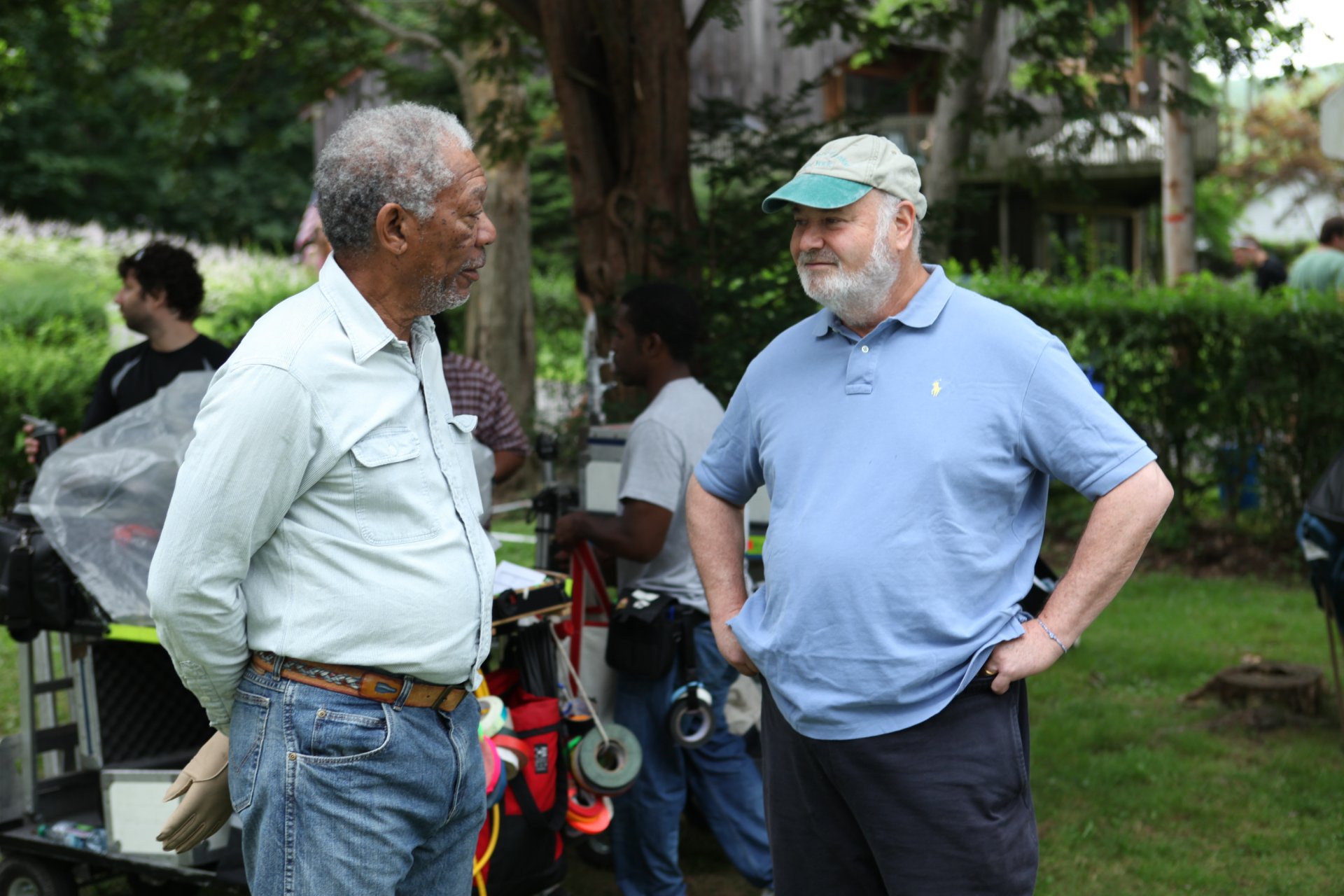
Rob Reiner (“The Princess Bride,” “When Harry Met Sally…,” “The American President”) is co-writer and director of the heartwarming new film, “The Magic of Belle Isle.”  Morgan Freeman plays a bitter wheelchair-bound writer who moves to a small town and is befriended by a single mother (Virginia Madsen) and her three daughters.  Reiner spoke to me about why this story was so important to him and the challenges of shooting on a very low budget.

Copyright Castle Rock 2012

Tell me why you chose this project.

When I turned 60 a few years ago, I started thinking more and more about my mortality—that’s what happens when you get older.  I thought of myself as a very, very, very young old person, like the beginning of old age. You start thinking about how finite your life is and how it becomes more precious, and that led me to wanting to make “The Bucket List.” No matter what your situation is, you try to find a way to enjoy your life and live it the best you can until you die. It was very similar when we got this script, it came in as a spec script and when I read it I thought, “Wow, this is also about a guy who has basically given up on life, he’s in a wheelchair, his wife just passed away, he can’t write any more and he’s drinking, and he basically shut the door on himself.”  I love the idea of moving into this lakeside community for the summer and over the course of the summer his interactions with the woman next door and her children and the people in the town make him learn how to live again. I love this whole idea that no matter what your situation is, you have to find a way to celebrate life.

I like that too, and I like the fact that the movie has a lot of really nice people in it. It’s so easy to make everyone crabby. 

There’s a speech that Morgan gives early on at this memorial service for one of the townspeople where he says, “You know, there’s something about this place that brings out the best in people.”  The speech was written by the Fred Willard character, but he has Morgan say it.  That’s why we call the movie “The Magic of Belle Isle,” because it’s all about how these people from this community interact with each other and do bring out the best in each other.

Fred Willard is one of my absolute favorites, and I was so delighted to see him in it.

He’s brilliant, he’s a great improvisational actor, he was in “Spinal Tap” and the Chris Guest movies, which have a lot of improvisation  So he gave me a few freebies—that’s what I love about Fred. When Morgan comes to the memorial service, he says, “I brought the Cheetos” and Fred goes, “Nice touch…” He ad-libbed that!  Not everybody can improvise the way he does, but when you hire him, you know you’re going to get a lot of freebies.

Tell me about working with Virginia Madsen and how she developed such a natural relationship with the girls who played her daughters. 

I’m going to credit Virginia for a lot of that because she took it upon herself to spend a lot of time with the girls when they weren’t working.  She really took it upon herself to make a family out of them and make them feel like she was their mother, and so I give her a lot of credit for that. I’ve always wanted to work with her in a bigger capacity than I did when I did “Ghosts of Mississippi” and this was a great opportunity.  She brought so much to this movie. She actually changed the ending of the movie because she did something that wasn’t in the script when they’re about to say goodbye on the porch at the end of the summer; in the script it just called for her to give him a little peck on the cheek, kind of a chaste kiss and she felt like her character had evolved to a point where, even though she had shut down emotionally and was going through a divorce and didn’t see herself getting romantically involved with anybody, this man had brought out all these feelings in her, had re-stimulated these feelings in her.  So, when she gives him that big, passionate, romantic kiss, Morgan’s reaction is very much the way I reacted, “Whoa! I didn’t see that coming!” And she said, “Well, if you want, we can do it the way it is in the script,” and I said, “No, you know something? I think you’re right, I think your instinct is right.  I know it ups the stakes of this movie but I think it’s the right thing,” and it made us have to change the ending of the movie, which is that he comes back. Initially, he was just going to drive off and leave them.

You always have a real gift, I think, in your musical choices for your movies. Do you want to talk a little bit about the music in this?

Mark Shaiman did the music again like he’s done for so many of my movies. Ever since we did “When Harry Met Sally” together, he’s worked on every one of my films.  He’s terrific and he’s incredibly versatile, and it was his idea at the end to bring back the Beethoven piece.  We had a piece of score, but he said, “No, no, we’ve got to bring back the Beethoven piece there!” And also using that kind of Dobro blues guitar was also something that we worked on together. I love working with Mark because he’s incredibly versatile, he can do any type of movie.

Was there anything in making the movie that was tougher than you expected?

Initially I thought it was going to be very hard to shoot it in 25 days because we only had 5 million dollars.  It was a small budget and a very short schedule, but I was very lucky because I had Morgan Freeman and Virginia Madsen, who are incredibly gifted, have great craft, and are able to nail it right away so we could move on very quickly, and that’s the way I love to work. If we get it right the first time, let’s move onto the next thing, and so that turned out to be okay. The bigger challenge was because we had such a small budget, we didn’t have enough money to buy two wheelchairs, and there was only one wheelchair.  The only place that made that wheelchair was a factory in China and at one point, the wheelchair broke down, and we literally had to call the factory in China and have it Fed-Exed to America and wait a day to get it.  That was a little bit of a nerve-wracking thing, but other than that we had a lot of rain and stuff, so we had to jump in and out of the houses, but we dodged rain drops and it was okay. It was the most glorious summer there and I had the greatest time.  It was like summer camp, like movie camp.

What do you want people to take away from this film?

I want them to take away the similar feeling that they had when they saw “Bucket List,” which is that you live life and—unless you’re Shirley MacLaine—you only get this one life, so you’ve got to live it to the fullest. You have to celebrate it every step, no matter what your situation in life, you have to find a way to celebrate it.

Related Tags:


Directors Interview Writers

Interviews: The Director and Stars of “Beasts of the Southern Wild”

Posted on June 26, 2012 at 3:55 pm

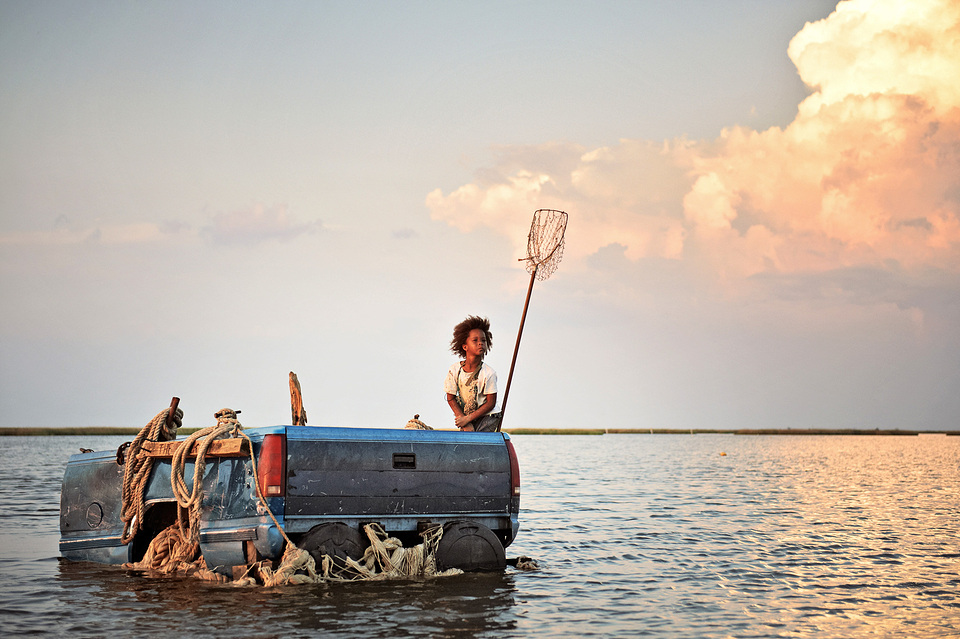
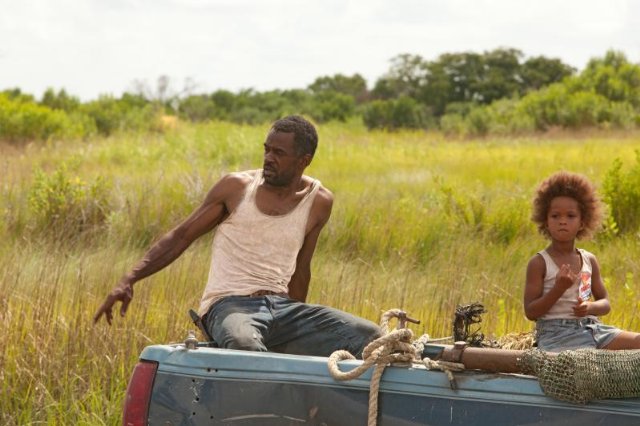
“Beasts of the Southern Wild” is a lyrical tale of a six-year-old girl and her father living in “The Bathtub,” a fictitious community based on condemned parts of southern Louisiana.  In an almost post-apocalyptic setting with no electricity, running water, phone, government, or business, they have a life filled with danger and deprivation but also with joy and a strong sense of home.  The film has won prestigious awards at Sundance and Cannes and opens in theaters this Friday.

A small group of journalists met with stars Quvenzhané Wallis and Dwight Henry and writer/director Benh Zeitlin to discuss the film.  Henry told us that he owns the Buttermilk Drop Bakery and Café in New Orleans, which was across the street from the studio where the auditions for the film were being held.  “All the guys from the production company would come over and get donuts, get coffee in the morning, back and forth for the course of about a year.  We would sit down and talk about a lot of things.  They would put flyers in the bakery if anybody wanted to audition for this upcoming film.”  Henry auditioned but then he relocated the bakery and the producers could not find him.  They finally found him and offered him the part but he could not take it because of the demands of the business.  He turned them down three times and then managed to work things out so he could do it.

He talked to us about his character’s behavior which at times seemed harsh and angry.  “I often throughout the course of the movie was trying to emphasize with a passion and an urgency for her to learn how to do these things I’m trying to teach her because her daddy’s dying….She’s the most important person in the world to me and she don’t have her mother.  So it is important to me as her father that she learn how to feed herself, take care of herself, and survive and be strong because Daddy’s not going to be here.”  He identified with his character.  “Everything I try to do in real life, the businesses that I’m building and everything that I’m doing is something to pass on to my children.  No selfish needs for myself.  Everything is for them.  I brought that same passion about working things out in real life to make sure my kids are all right — I brought that same energy and passion to the movie.  As fathers, that’s what we have to do.”

He had never acted before, but “you can’t get better than real life experiences.  You could have brought an actor from outside.  But I was in real water this high from storms.  I was two years old when my mom and dad had to put me on the roof in the lower 9th ward when Hurricane Betsy came and flooded the whole 9th ward.  I was in Camille.  What better experience than actually going through that versus bringing in some actor from the outside that never done this before, that never seen a hurricane, that never been in a hurricane, that never had to evacuate their home, that never lost their home, that never lost their loved ones?  I’ve seen bodies floating in the water after storms.  Seeing things like that gives you a passion.  I felt what they felt because I’ve gone through that in real life.”

Quvenzhané Wallis told us that the scariest part of the movie for her was the animals.  “I wasn’t a fan of the pigs.  I’d never even touched a big, I’d never even seen a pig, I didn’t know what a big looked like.  I just knew what a pig was.  It got me scared and they were forcing me to do it but I wouldn’t do it because I didn’t know what I was doing.   I just didn’t want to walk up to it and touch it.”  She said she enjoyed acting and wants to do more.  And she talked about trying different things as they would do many different takes.  “Every mood that’s in the catalogue or the emotion log, that’s what he wanted me to do….Benh just wanted to make it look like a real story.”  But it did not take a lot of acting to show her character’s strength and ferocity.  “That is me!”

Zeitlin told us the film is “a heightened reality that’s “a bit of a love song to the region.”  There’s no place that exists in the world that is The Bathtub, but it’s all built of real things.”  The crew would create the buildings the characters lived on out of trash, just as the characters would have.  “Every piece of every house is something that we found somewhere in South Louisiana.  It’s almost like a junk sculpture where you’re collaging together a lot of different things.  It isn’t real in that you could go make a documentary about it but it is real in that it is all made from real stuff.  It’s not a fantasy movie.  It’s about what the world seems like when you’re six.”  The movie is loosely based on a play where the character is an 11 year old boy and played by an adult.  But Zeiltin realized that the character would understand everything differently as an 11 year old and he wanted the poetry of a six year old’s point of view.

They looked at between 3500-4000 children and Wallis was “so clearly the person” that “we knew what we were doing from then on.”

The Deepwater Horizon explosion happened the day they began filming and Zeitlin talked about what it was like to film in the midst of the spill and clean-up.  “That cloud was hovering over the town, getting closer and closer every day.  It added a lot of weight to what we were doing that really transformed the film.”

“The film is almost to me like a jazz funeral.  No matter what is happening, you celebrate anyway.  Dwight talks about this.  He says, ‘We were partying before the storm, we were partying through the storm, and we’re partying after the storm.’  That’s not a superficial thing.  It’s a refusal to feel sorry for oneself or be crushed by the weight of tragedy, a refusal to get defeated.”


Related Tags:


Actors Directors Interview Writers

Interview: “Brave” Producer Katherine Sarafian

Posted on June 20, 2012 at 3:55 pm

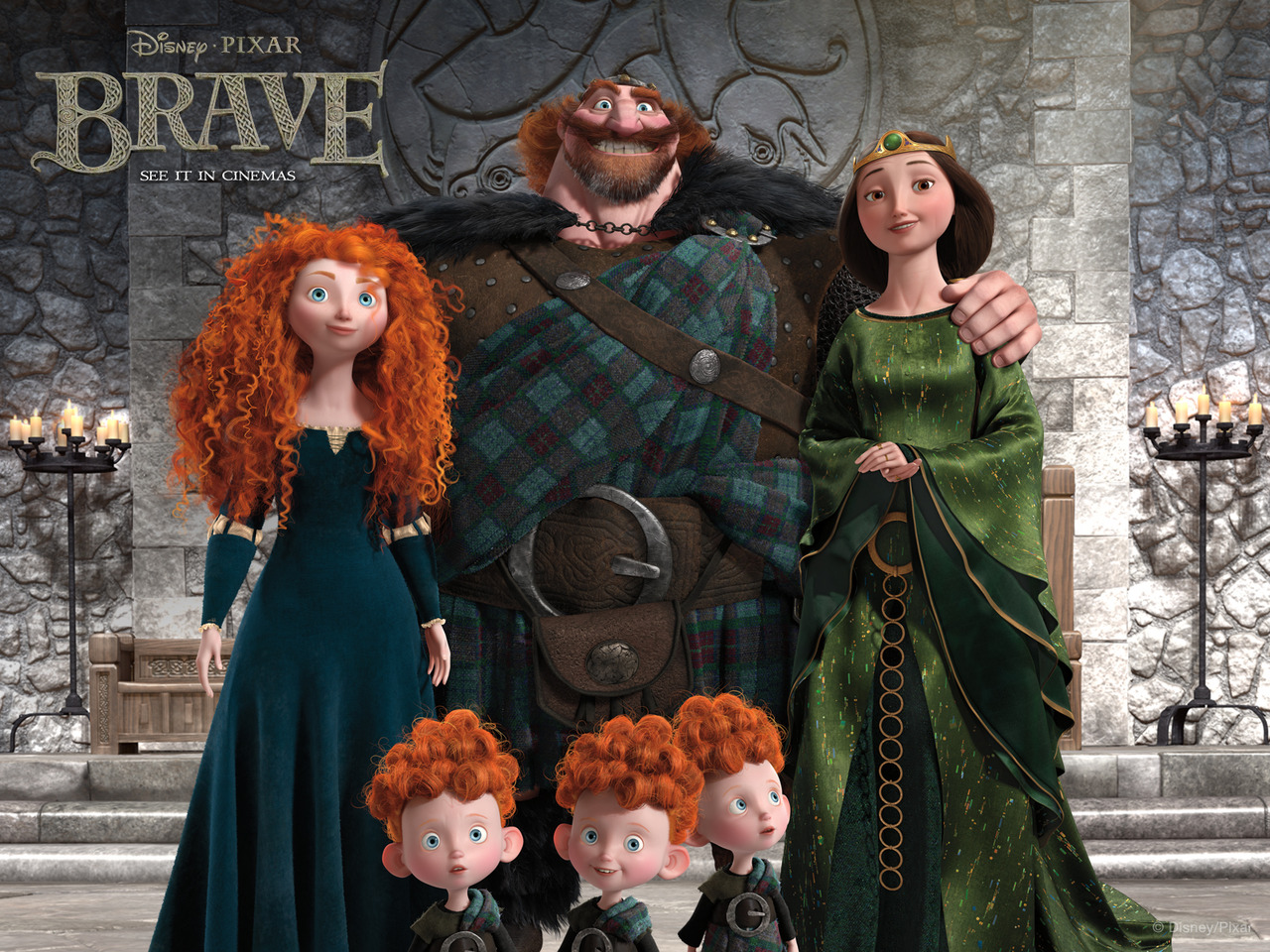
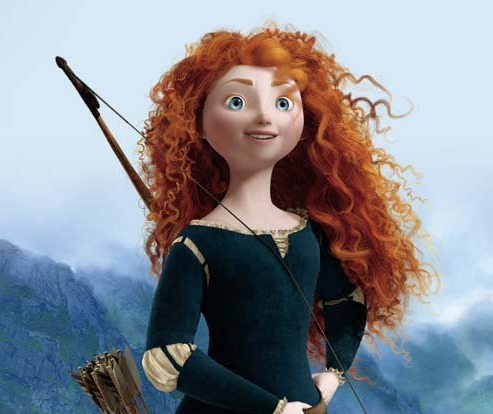
I love Pixar’s new movie, “Brave,” and it was a thrill to be able to talk to the producer, Katherine Sarafian, who told me what she learned from her trip to Scotland, what it meant to have a female lead character, and what matters most at Pixar.  And of course about the HAIR!

Merida is such a wonderful heroine!

It was really important to us that we create a girl who did not want to be a boy.  There are so many movies about tomboys.  She’s proud to be a girl, she likes wearing dresses, she’s quite feminine, and she is adventurous and likes driving things forward.

I remember Brad Bird telling me that the biggest technical challenge in “The Incredibles” was Violet’s hair.  And that was relatively short and very straight.  Here you have a heroine with a magnifient head of unmanageable curls!  It must have taken as many lines of code as a moon launch!

It was was quite intricate.  The character is this untamed, wild child teen.  When she walks into the room, before she even opens her mouth, we wanted you to know who she is, with that kind of presence and that rare shade of red.  It speaks to what a unique type of lass this is going to be.  The story required it and the technology didn’t really exist, so we had to build it, based on what we learned on previous films.  Brad Bird saw this and said he was jealous of how much we could do with the hair!  We really had an opportunity to let her act with the hair and had it as part of her character.

Tell me what your job was as producer.

I was responsible for bringing it in on time and on budget, assembling the crew of people, selecting the voice talent, working with the scoring, and keep everyone motivated over the long haul — six years.  I really try to get the director’s vision on screen.

What was your most difficult challenge?

The number one biggest challenge in all Pixar films is the story.  It’s really really hard to tell a good story.  It’s easy to shoot the first draft of any script.  It’s hard to say the first draft is the starting point of a long creative odyssey with a lot of twists and turns and challenges.  We do it the hard way.  We never give up on making the story the best it can be.  And that’s hard, a lot of toiling in the trenches of story for a long time.  It’s easy to fall into stereotypes of a teenager and conflict with parents.  But it is harder to make rounded characters and appealing and where they both grow and learn, and the kingdom and its mythology is all in there, too.

You were the producer of one of my favorite Pixar shorts, “Lifted.”

It was fun because it was without words, so every language can understand the idea of a teacher and a student in a sort of driver’s ed test on a spaceship.

And the short with this film is also worldless.

Yes, it’s an Italian family story called “La Luna,” but it is also very universal.

You have wonderful voice talent in the film.

We’re thrilled with our cast.  Billy Connelly and Emma Thompson as the king and queen brought the heft and weight and importance of a royal family but also the warmth and humor and heart of parents.  It would be easy to make the queen unappealing and the king a buffoon, but you really wanted them to have that rounded quality, real rulers with real problems and real heart.  And Kelly MacDonald has a beautiful voice and key into her teenage self so wonderfully well, and great humor, too.

Did you go to Scotland to research this film?

We had two significant creative research trips and I also went back for voice recording.  We trekked through the highlands in late 2006.  We studied the Gallic history and the rhytym of the accents and hiked through the dark forests and touched the heather and the guys even took a dip swimming in the loch.  It helped us understand the setting of the story better.  Scotland is almost a character itself in the movie.  The region is steeped in storytelling and folklore and myth.  The land itself has such diversity to it.  The glaciers melted and showed off this volcanic landscape with jagged peaks an crags and rocks and because of the dampness everything is covered in something, lichen and moss, so it’s totally softened.  There’s something growing on every surface.  And there’s design everywhere, very tactile, very rugged, Pictish carvings and ancient patterns, and the standing stones.  The texture of the land is very rugged.  And it changes so much and it moves so much from very wet areas and very rich areas to very barren, stark areas.  It changes and moves so much and that influenced every area of our story, the weather, the light, and the landscape change.  The story is about a journey and change and setting it there made sense to us.  The ruggedness of it and the dark forest made it a place for big adventures and it was a great place to set the story.

Related Tags:


Behind the Scenes Interview
THE MOVIE MOM® is a registered trademark of Nell Minow. Use of the mark without express consent from Nell Minow constitutes trademark infringement and unfair competition in violation of federal and state laws. All material © Nell Minow 1995-2026, all rights reserved, and no use or republication is permitted without explicit permission. This site hosts Nell Minow’s Movie Mom® archive, with material that originally appeared on Yahoo! Movies, Beliefnet, and other sources. Much of her new material can be found at Rogerebert.com, Huffington Post, and WheretoWatch. Her books include The Movie Mom’s Guide to Family Movies and 101 Must-See Movie Moments, and she can be heard each week on radio stations across the country.

Website Designed by Max LaZebnik