“A Buddy Story” is an endearing road trip movie written and directed by Marc Erlbaum. It is the story of a touring musician who is used to being alone and his neighbor who impulsively comes with him. The neighbor is played by “Mad Men’s” Elisabeth Moss and the musician is played by real-life musician and actor Gavin Bellour who talked to me about preparing for the role and what he learned. The movie also features real-life reggae star Matisyahu and is now available on iTunes.
How did you come to play this part?
I saw the breakdown and it was something I was really interested in — singer/songwriter, story of love, pursuit of one’s dreams — and the opportunity to do some music. There was not a completed script yet so it was great that I could contribute to helping shape the character and put more of myself into it, blur the lines a bit between Buddy and Gavin. The perception of acting is that it is all a put-on and in a sense it is but any truly good performance is going to bring as much of the actor to it. You can only draw from your experiences. Two amazing actors can read the same role and give amazing performances but each one of them will bring what’s best about them and what they have experienced. Casting can be like putting together the pieces of a puzzle.
What experiences did you bring?
I’ve been in bands and I’ve been on the van. I’ve been on the road, playing shows t for tons of people, one night for nobody where you booked the wrong thing or didn’t promote it right and nobody knows you’re there. I’ve lived in that world, where one night you’re opening for someone you really , so to take that experience of going back to the hotel room and having someone you can go out with and joke with and share it with. It can be incredibly fun sometimes when you have a great show and a great location but it can also have enormous lows as well as highs. Buddy was this poor guy demonstrating his belief in himself and what he did but being alone all the time. I like to read the lines and see what the scene brings and not overthink it. The script was written well enough and the environment and truth of the scenes was so real it was a very fun kind of project to work on. I brought my own experience and twisted in a way to make it more like Buddy. A bit more neurotic here, more shyness to make it more Buddy and less Gavin, and almost an element of desperation that I love about Buddy. He’s willing to do whatever just because he wants to keep playing.
Tell me about working with Marc Erlbaum.
He’s very hands-off, but he is there when you need him. He doesn’t do line readings, which I like a lot. He is a very deep guy, very spiritual. People sometimes exude that and it’s a bit of a put-on and they have to try to be serious but he has a rootedness that allows him to be very playful, and he brings a lot of joy with his depth. One day after I had to go to LA and was stressed out and I had to do the monologue and was under a lot of pressure because we had to finish before the light changed, and we were shooting things out of sequence and I snapped a little bit and just lost it. I was having a hard time wrapping my head around the whole thing but he made it he took me aside and took the responsiblity off of me and told me to just be in the scene. He allowed me to be in that moment and do what was in front of me and it made it tremendously easier to make a mistake — and when you’re not worried about it you don’t really make them, you know?
What does Buddy learn?
I think of that scene with him and Matisyahu. He likes doing what he is doing but he wasn’t really helping anyone. He has a dark night of the soul. But when he realizes he did help one person, that helps him to understand that if he inspired someone else he does have an impact and that inspires him to reconnect with his dreams. He did have some power — even if it is small, it is impactful, and sometimes that is the most important.
Interview: Oscar-winner Louis Gossett, Jr., Star of “Smitty”
Posted on May 15, 2012 at 8:00 am
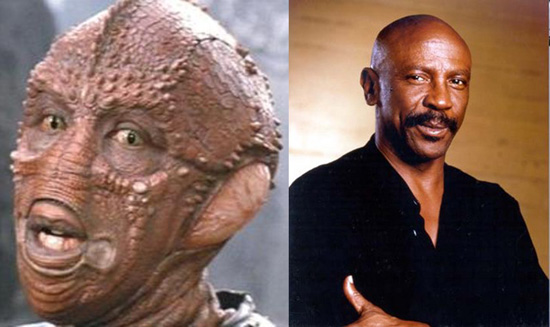
It was a great thrill and an honor to speak with Oscar-winner Louis Gossett, Jr., star of “An Officer and a Gentleman,” about his new movie, “Smitty.” He talked to me about starring in the original Broadway production of “A Raisin in the Sun” when he was still a teenager, about studying at the legendary Actor’s Studio with Marilyn Monroe (and what she smelled like), and about the trick he played on the medical assistant who came to treat his skin rash on “Enemy Mine.”
I’m such a big fan, and before we talk about this movie, I have to talk to you about one of my favorites, “Enemy Mine.”
Copyright 1985 20th Century Fox
Gurgling sound — the “Drac voice”
Oh you’re doing your lines! That’s wonderful. I love that movie and your performance is amazing, that must have been an incredible challenge because you were covered in the lizard alien make-up.
Before Wolfgang Petersen took over and we were in Vestmannaeyjar, Iceland with Richard Loncraine directing, after about the first couple of weeks, there was a little rash happening because of the make-up, right up to my ear, and they were going to get some salve or something to put on it, because they have to rub the stuff off with the spirit gum. It was harder to get something than they thought because we were in the isolated area where the volcano is. So, they can’t find a skin doctor in Iceland, so they finally found a lady, she’s a freshman, and she’s just studying anatomy, and they call her and have to helicopter her from Reykjavik to this place. So you see this young, impressionable young lady with her little small purse, scared to death, in my dressing room. And I come out with the make-up on, and I say, “Hi, Doc, I’m the one with the skin problem…” She ran for her life!
All the way back to Reykjavik! It is one of my favorite movies and it’s such a touching story. A lot had to happen with the eyes and you really made it happen.
Very challenging. That’s why I took it, because it was a challenge. There’s a lot of Jerry in me.
Speaking of challenges, I understand that there are two rules about acting: no children, no dogs. And yet in this movie…
Here I am.
There you are, so tell me a little bit about it.
I love children and I love dogs, so it’s okay. We hit it off, I like the kid a lot. I was there to help him be better, and he took it.
Well, you got started very young, too, didn’t you?
Started at 17 in the theater, still in high-school. There was a blacklist scare, it happened to the actors and it happened all across America and the intellectual cream of the crop ran from the universities and they changed their names and they settled in my neighborhood and others. As a result, all the Barbara Streisands and the Arthur Millers and the Neil Simons and the Harvey Keitels, and the Neil Diamonds, and Jackie Robinson and all of us, we got the benefit of those intellectual teachers. One of those teachers, who ran from the theater, who knew the trades, was saying, “They’re looking for somebody to play this lead in this Broadway show, I know you have never seen a play, but, tell your mother to take you down there Sunday, what could you lose?” And that’s how I got the part.
Wow, that was “Raisin in the Sun?”
No, that was “Take a Giant Step” in 1953. Then I was in “Raisin in the Sun.”
That’s one of my all-time favorite plays, I’m a big Lorraine Hansberry fan, I also like “The Sign in Sidney Brustein’s Window” and of course, “To Be Young, Gifted, and Black.”
During that particular time, they called her one of those rebels, and they figured she was a communist, so she had to run and write. Now, she’s just part of society.
Isn’t that the way that it always goes with artists? They’re perceived as destabilizing and subversive and then they become canon.
Right, they become part of America, that’s what America stands for.
You got started as a professional actor very young. Who were your great teachers?
My teachers were of course Paul Robeson and Josephine Baker, whom I didn’t know but who inspired me. My immediate teacher was Frederic O’Neil, the first black president of Actor’s Equity, and Estelle Hemsley and Estelle Devans, and Maxine Sullivan, who was a singer—and then of course among my immediate teachers was the late Peggy Fury, who was married to the writer Lou Peterson, he was black and she was white and she married him because he was brilliant, and she turned out to be the best teacher for Lee Strasburg, who started in the Actor’s Studio with her and all of her contemporaries. The first people who so honored me to teach me were Lou Peterson, Peggy Fury, Maureen Stapleton, John Stix, Frank Corsaro, and my main teacher was a man by the name of Frank Silvera. Frank was one of the few blacks in the actor studios, but he always played Italians and Greeks, he was in “Viva Zapata!” playing Huerta, he was in the Appaloosa, he was a great actor. And after that he created the American Theatre of Being. He was my main teacher.
Those are all method actors, aren’t they?
Yes. So I went to New York University—but at the Actor’s Studio, I was the kid at the back of the room. In the front of the room was Sydney Poitier, but there was Brando and Anthony Quinn and Lee J. Cobb and Nehemiah Persoff, I remember. I remember all of those great actors and actresses that I rubbed elbows with, Julie Harris, Lee Grant, and of course, the late Marilyn Monroe when she was married to Arthur Miller. She smelled like Lifebuoy soap. She took a liking to me, came in with her husband’s oxford shirt tied at the waist, with some jeans and some flip-flops, preceded by this aroma. I’d come in the room and she’d be going, “Where’s Lou?” I couldn’t do any scenes with her, she was just one of the most sexiest, most wonderful women I’ve ever met. I almost had to quit the class because of her. If she had stayed with Arthur Miller she would’ve had Oscars and Tonys and everything else. That’s how natural she was. She wasn’t Marilyn Monroe there, she was Norma Jean.
Do you have a favorite of her performances?
“River of No Return .and of course, I loved “The Misfits.”
What was your first film?
My first film was done in Africa, called “The Bush Baby,” during the time when Jomo Kenyatta was the president, and it was the year of the first national television network, and they imported films from England and America and at the time, the television and movie industry was in New York, so that there was of course, “I Love Lucy,” “Honeymooners,” and of course there was “Judd for the Defense,” and then there was “The Nurses.” When I did an episode of “The Nurses,” I played a juvenile delinquent. I was shot in the stomach and at the end of the movie I ran, the stitches broke and I died. So fade out, fade in, here I’m landing in Nairobi airport and I feel like a pied piper with people following me all over the place. So, I finally get to the Nairobi Hilton, and finally a brave young man comes up to me, “Would you please excuse me, sir,” I said, “of course, why?” He said, “Will you open your shirt?” And I said, “Why?” So I open my shirt and they started speaking in Swahili, and the translator says, “They want to know how you did that. How did you come back to life? We saw you die!”
Copyright 2012 TruCoast
What led you to take on this role in “Smitty”?
It’s a feel-good movie. I’m not offered any of the big ones for some reasons, but I take the job and I have to pick and choose, and sometimes those low-budget movies are better. Now they’re getting better, they’re not spending as much money and they’re getting into the quality of the movie rather than the money.
I saw “The Grace Card” also, I thought that was a very nice movie.
That’s a faith-based movie, but it speaks volumes.
What is it that you think families who see this movie should learn from it or take from it?
To be responsible for our children. More responsible than the media. To give them what they’re asking for, but they don’t know how to ask. Sometimes they go crazy trying to get our attention, it’s like a child in a high-chair in the kitchen with the food on the tray, and the momma’s on the phone talking about anything and all of a sudden, the child pushes the food on the floor. The child wants some attention. These children want some attention, and that kind of leads me to the subject of my foundation.
It’s called the Eracism foundation. I think the anatomy of the gang-banger and the young rebel is because we don’t get those lessons that we used to get in the family, they don’t get them; and they’re left to the recourses of television and themselves, and they make immature decisions. But we step in and teach them those lessons, their self-respect, their pride, their dress code, their respect for the elders and the knowledge of their culture, respect for the opposite sex, their hygiene, their disciplines, what they’re asking for. It doesn’t sound like it, but they’re asking for it. Then they go out the door and they have something to use to combat the evils of the streets and the public. By the time they get to school, there are more ladies and gentleman ready to learn. And the results of those kinds of children who have had it, like the Magic Johnson’s, they have to go through turmoil but they come out better, as opposed to the Daryl Strawberries who didn’t, but he’s also getting better. There’s a difference in the child, they’ve got that family support and learning those lessons, they can seek a higher knowledge. Our president is one of those people who did get that full family support.Our responsibility to give those children that, if we don’t know it, we send them some place where they can get it…supplying that compass.
What are you doing now?
I’m trying to get the first center built, and seven or eight mayors want me to start a center, so we’re talking to them. I’m setting up a state-of-the-art place where the kids can learn their physical fitness, spirituality, whatever you choose, but you need it, you need a dress code, your pride, why you’re important and why there are certain things about the law, certain respects for the elders and the opposite sex, the ladies and gentleman creation, the physical fitness, all of those things, apart outside from school, is what they learn hopefully, and when they come out of there and go into the workplace, and grow to be 18, 19, 20, 21 to be responsible adults, that’s their foundation. So if you do that to that generation, starting at about seven or eight years old, but the time they get to be responsible, even the issues of Congress and the things you read in the politics becomes a different thing. You’ve got more compassion for one another and your decisions are different, That’s what America should be about, and that’s what it originally wanted to be about, and to give kids that responsibility. Racism is a cancer, it comes from the old days, and things change and things are evolved and America looked differently from what we see on television these days. I take a lesson from Nelson Mandela, if anyone has a reason to go get revenge, it would be him, for he had a chance to go in there or either suffer or evolve, and he evolved, and as a result, South Africa is one of the greatest countries of the world.
I’ve been researching crowdfunding sites lately because we’re considering a campaign to raise money to do a soundtrack for my film “A Buddy Story.” I get requests all the time for the soundtrack of my last film “Café,” but the distributor never produced one, so this time we’re thinking about doing it ourselves. Simultaneously, we have this great facebook community for my company, Nationlight Productions, and so I’ve been spending a lot of time thinking about how to keep people entertained, engaged and energized on a regular basis. As I was exploring the crowdfunding sites, it occurred to me that it would be great to come up with a huge campaign to involve people in something big and meaningful and push the envelope a little bit.
What is crowd-funding and why is it the best way to launch this project?
Crowdfunding is this innovative and alternative way for people to get projects funded. Rather than raising large amounts of funds from traditional investors, it’s a way to harness the communal spirit of the internet to pitch a huge number of people on giving you a small piece of your goal. For the one raising the funds, it opens up a tremendous potential funder base. For those contributing, it offers the opportunity to get behind something from the inception and help it along toward realization.
As far as this particular project goes, crowdfunding is the best way to launch it for 2 reasons:
1) Pragmatically, it would be hard to convince someone to invest the requisite funds for this – the revenue potential is iffy at best, and frankly it’s a bit hair-brained (but in a good way!). With crowdfunding, the contributors aren’t looking at the financial revenue potential, they’re supporting something that interests them, and they’re more concerned with helping out and being entertained than they are with fiscal rewards.
2) Ideologically, I believe the “meaning of life” probably has something to do with community and generosity. Undertaking this kind of project with thousands of collaborators is much more exciting than going about it yourself or with a few people looking over your shoulders to see if you’re making the most commercial decisions. We’re going to be asking our contributors where to point our cameras – they’re feedback and participation is what’s going to make this interesting.
Where do most people get their ideas about the meaning of life?
Good question. My sense is that most of the time we’re too busy or distracted to think about the meaning of life. Those who are involved in some sort of spiritual practice – whatever it may be – do seem to tend to set aside a fixed amount of time either each day or each week to consider the bigger questions, but then we get engrossed in our mundane affairs and we may lose consciousness of what’s really essential. My goal has always been to try to keep my head in the clouds and my feet on the ground – engage in the world, but don’t lose awareness of a higher purpose, and never stop trying to figure out what that is at any given moment.
Where will you find your interview subjects?
From the Beliefnet files of course! The truth is that we’ll be doing a lot of research on our part to find both known and obscure figures who have something to say about life and its meaning. But we’ll also be looking to our contributors and fans to make suggestions – someone’s shoemaker may be an amazingly profound person who no one has never thought to interview before.
How will you keep your funders up to date?
We’re going to launch a website called lifemeanswhat.com (I’ve already paid $9.99 for the url, so I better raise this million dollars!) In addition to videos that we plan to post a couple times a week, we’re also going to have an ongoing blog which will keep everyone right there with us every step of the way.
Why is making a movie a better way to explore this question than writing a book?
The primary output of this project will be a year’s worth of web content which we may or may not decide to compile into a feature film when we’re done. Contributors are buying into a year long experience rather than a one-time program. I think this will feel more like one’s along for the ride rather than just getting it all at once. One could do it as a serialized print piece, but I’m a visual storyteller, so I’m probably a bit biased toward visual media. What I really love about doing this as a web project is the transmedia opportunity to document our search in so many different ways. There are some who love to read, and those who never read anymore – so I think we’ll have something for everyone.
Why is this question so hard to answer?
That’s too hard, I can’t answer that!
But that won’t stop me from giving my opinion of course. I think that everyone wants meaning, but a lot of people don’t want it to be shoved down their throat. And we’re suspect of those who try to push it on us. How do I know that your meaning is THE meaning? Is there only one meaning, or can everyone have his/her own meaning? Unfortunately, purveyors of meaning have often exploited something pure for purely selfish aims, so we don’t know who to trust and we’d often just prefer to distract ourselves with more immediate concerns than wander into those murky waters.
Why is it important?
My goal is not to push any one meaning of life. What’s important to me is to encourage people to search for it. There are those who believe there is no meaning, and others who have never really been encouraged to stop what they’re doing and look around. My feeling is that if we can make the search fun and relevant, people will be surprised what they find even if the ultimate riddle still remains to be solved.
Who have been your most important guides and teachers in answering this question?
My parents taught me to always think outside the box. My wife and children teach me that every moment is precious. The Baal Shem Tov taught that it is not enough to find one’s own way, but each of us needs to carry a torch that shines a light for those around us as well.
Interview: Simon Wincer of the Horse Racing Film “The Cup”
Posted on May 11, 2012 at 8:00 am
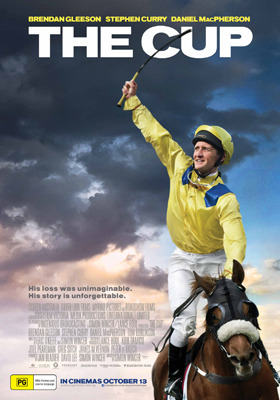
Australian director Simon Wincer specializes in movies featuring big animals. His most successful film is “Free Willy,” but his most frequent stars are horses, in films like “The Young Black Stallion,” “The Man from Snowy River,” and the fact-based “Phar Lap.” His newest film, “The Cup,” is based on the real-life story of the 2002 Melbourne Cup, when jockey Damien Oliver, devastated by the loss of his brother, best friend, and fellow jockey Jason Oliver in a tragic racing accident, rode the Irish horse Media Puzzle, to a triumphant win. I spoke to Wincer about working with the great Irish actor Brendan Gleeson, who plays the Irish trainer, about the real-life mother of the Olivers who supported her sons even though their father died in a racing accident, and what he wants families to learn from the film.
What were some of the challenges you faced in making this film?
Raising money to make it was one. It took a while but they were changing the track where we were shooting the film. I wanted to capture it as it was before it changed, so we had to shoot some of it in advance. Then eventually when we did start production, it didn’t take all that long, although because of Brendan Gleeson’s availability—he was just available for a very short window—we ended up having to shoot the film in winter. and of course, it was Melbourne’s wettest winter I think in almost forever. So the racing sequence had to be abandoned and shot in the spring when the tracks had dried out. It was an adventure, but it was fun. The weather is always a challenge. I’ve been to places in the world, as for example, in Turkey where it has never ever snowed on the Mediterranean, and of course we were shooting there and bang! Snow. I’ve seen it in the desert where it hasn’t rained in five years and guess what happened when we arrived to make a film? We got ten inches of rain, so that tends to happen to film crews, but that’s the whole fun of it.
It was a very big important story in the news when it happened, but what made you think it would be a great movie?
It was such an extraordinary story, the fact that the mother had been through it twice really interested me, how a woman can be so strong and put under such extraordinary stress in life. I suppose I’ve always wanted to do a film set around Australia’s biggest annual event, which is the Melbourne Cup. In Australia it’s called “the race that stops the nation” because literally everyone in the country stops—this is the Melbourne Cup and every office has a suite, everyone has a bet on. It’s a tradition and it’s part of our culture. This year it’ll be the 152nd Melbourne Cup, so it’s a very old tradition. It’s a public holiday and all that sort of stuff, so it’s just part of that culture, you know? And that fascinated me to build the story around that; you need a good story to do it and I felt that was the story.
Tell me more about Mrs. Oliver. She lost her husband and her son and still wanted her other son to keep racing.
She’s a very strong lady. She was very much part of a racing family and it was just their lives, despite the fact that it’s touted as the world’s most dangerous job. It’s highly dangerous, but it’s just in their blood. She’d seen these two little boys wanting to be like their dad and grandfather. I think she just wanted Damien to make up his own mind whether he decided to ride or not. She’s quite an extraordinary woman. She’s quiet, but she’s very strong and very, very brilliant to go through that emotionally, which I tried to capture when she walks into the hospital to see her son, flashing back to the memory of her husband, which was exactly what she had been through pretty much. It was extraordinary. I suppose it comes from a slightly different era when values are different and she’s just one of those stoic women, just extraordinary.
I want to ask you the same question I asked the director of “Secretariat,” which is how do you make a race exciting when everyone knows the outcome?
People have said to me in Australia, “God, you know, I was on the edge of my seat, thinking that he wasn’t going to win the race, even knowing that he won the race.” I wanted, first of all, to make it real. I didn’t want it be hokey. Quite often in these horse-racing movies you see the hero horse gallop past and if you look closely, the horses are being gently held by the jockey so the hero’s horse can run past them. I decided not to do that. Because I’m also a horse person and I’ve been riding and around horses all my life, I can certainly detect something like that, so I just wanted to keep it real. And I wanted to capture the sound. It’s incredibly dynamic when those horses go fast; I can remember every take, the crew— many of them hadn’t been to the races in their lives—just the excitement to see these things come passed us at extraordinary racing speed and so close together. Everybody just goes, “wow.” So, I wanted to capture that on the screen. I couldn’t change the result because there it was in history, but I just thought if we could make the staging and the filming of the race dynamic enough, people would get wrapped up in it because they’ve shared in this transformational journey before the race happens, and then they can share it and triumph when he eventually does win. The race which we restaged is almost identical to the actual race, and I was a slave to that and wanted to do it exactly the same. It’s been viewed by so many people, I didn’t want it to get it wrong, you know?
You had quite a casting challenge, not just to cast actors to play real-life people who were well-known, but also to cast the horses. How did you cast the horses?
We looked at about 800 horses, I think, before we eventually settled. We bought 60 and leased another 40, and again, I wanted them all to match the originals. In real life Media Puzzle wasn’t an easy horse, it was a difficult horse. Somehow of course, Damien has this incredible relationship with it, so you need to find something a bit special that’s got a bit of attitude and all that sort of stuff. You have to have several because one could get injured, and you can only do a couple of takes a day when you’re doing the racing scenes. Then you have to change the whole field. So we had more than one Media Puzzle. The main one who did the close-ups with the actors was a horse called Spike. He’s now in another show I did, playing a tribute to a famous horse called Phar Lap, which is another movie I made a long time ago. He’s just a wonderful horse because he just has this sort of attitude and you know, he’s a bit of a handful, but that’s what you want because they easily make wonderful trained horses. He does the most extraordinary act in this new show and it’s quite moving because he’s just so graceful when you see him galloping into the arena in the spotlight, all on his own, no bridle and stuff like that, it’s fantastic—and that’s what you look for, you just look for something just a little bit special with the right look in the eye and that sort of stuff.
Brendan Gleeson is wonderful in the film.
Brendan is another joy, yes, he is one of the world’s greatest actors, I don’t think anybody would dispute that when you look at the body of his work which is extraordinary. When I first talked with Brendan, I was introduced to him by telephone, and I was in Australia and he was in Ireland. He told me, “I’d just like to clear one thing up, I think that the Irish dialogue needs a little work,” and I said to Brendan, “That’s just what a Texan and an Australian think of as Irish dialogue.” That sealed the deal, because he was concerned that he didn’t want to change a word without our go-ahead, of course, but his input was fantastic. So, I happened to have to go to Dublin, and Brendan and I were able to spend a couple of days together going through the screenplay and all these scenes and then we were able to introduce him to the real Dermot and then he was able to go down and spend some time with Dermot, just outside Dublin and really get to know a bit about a trainer’s life and boy, he’s just wonderful—I guess when you work with a great actor, it raises everybody’s game, and it might be playing tennis with someone better than yourself and you rise to the occasion. I can’t speak highly enough about what a nice man he is and what a pleasure to work with and what he brings to the set, not only the energy and good vibes but just great ideas.
What lesson would you like families to take away from this film?
The theme is how we choose how we to want to live. Damien chose to do it by riding in this race. I suppose it is the drive and the human spirit. He was so down and everyone thought he shouldn’t be doing it and he had this terrible losing streak but persistence wins through in the end. It’s about dealing with adversity in a positive way. I think if people are lifted up at the end, then I’ll be very satisfied because while it’s extremely sad, it’s incredibly uplifting at the end when he rides — and that magic moment when you touch the heavens, it’s been forever etched in Sydney Australian sporting folk lore.
It was an honor to speak with show business legend Della Reese, who stars in the the heartwarming film, Me Again, the story of an unhappy minister who gets to find out what it is like to be someone else, and learns to appreciate being himself. Earlier I spoke to Ali Landry, who plays the minister’s wife.
How did you come to this project?
The script was submitted to me and it gave me a chance to be involved with something I espouse. It’s done in movie form but we’re all trying to regain ourselves and prove who we really are. That’s how you get to know who you are by identifying who you are not.
Why do stories touch us so deeply?
The Bible is an allegory. The stories say to us, “These things have happened before” and “With the proper understanding of your relationship with God, you can handle anything.” The Bible is my directions, a how-to book for me. Depends what valley I’m in or what mountain I’m on. There’s healing in the Bible. You have to find the one that speaks to you. The lady who touched the hem of his garment knew she did not want to be what she was. The man was sitting by the pool and could not get in the healing water. The nice thing about a direction book is there’s different directions for different people and everyone can find what he needs.
What is your character’s role in the film?
She is giving him love and understanding. She is the bridge over troubled water to him. She understands him and she wants what is best for him.
You have succeeded in every aspect of show business. When your fans come up to greet you, what do most of them talk about first?
All of them! People come to bring me love and I am receptive to them. It’s really a love affair between my audience and I.
In a way, you are a performer as a member of the clergy, too. Is that a different way of reaching people with the same message?
If you’re open to being reached, anything can reach you. There’s a little girl at the church and her mother has been taking classes and straightening out her life. But one day she was nervous and too involved and her six-year-old daughter said, “Why don’t you stop and sing something and you’ll feel better?” And she did. If you are open, the message will come. God supplies everything you need if you will be consciously aware of him. You can learn to do it.
The clergy’s job is to tell the truth. God doesn’t need fixing. He isn’t broken. We need to speak it in a way that people understand it so they can apply it and benefit from it. It’s not what I want them to get. Whatever part you need it is there for you.
You began as a singer. Why is music so important in church?
Music is important to our lives – the way we can speak the things we can’t speak without the music. Some people can’t say they’re in love but there’s a song that says it, some happiness you want to share, some music that’s good for you. You can just hum or stnap your fingers. Music is a great force in our lives. The first songs I sang were part of the church service. And I love all of the people who write music that says something. I’m not too much for only the rhythm and repetitiousness, I’m a lyricist, so I like lyrics. It all comes down to telling the story.