Interview: “Blue Like Jazz” Director Steve Taylor

Posted on April 18, 2012 at 8:00 am

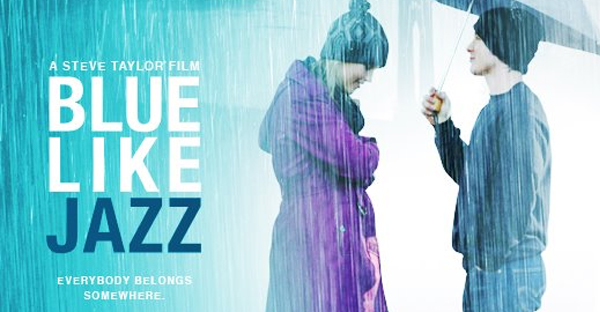
I love Steve Taylor’s new film, “Blue Like Jazz” and I loved talking to him about it.  Based on the best-selling book of essays about faith, Blue Like Jazz: Nonreligious Thoughts on Christian Spirituality by Donald Miller, it is the story of a sheltered young man from an evangelical family in Texas who goes to the famously intellectually challenging and spiritually even more challenging campus of Reed College in Portland, Oregon.  We talked about how how the film got 1600 associate producers and what it’s like to be on a the campus of a college where the student body annually elects a class “pope.”

How did you first come to the book and what made you think that a book of essays could make a movie?
I read it six years ago over Christmas and it’s not the sort of book you put down and say, “I see this movie in my head!”  But it struck me as, this would make a great movie, particularly that part about that guy growing up as a suburban youth as a Southern Baptist, really conservative culture, and then ending up at Reed College.  It would be hard to imagine a more opposite place. So I showed up for a reading, and they had a line wrapped around the block, and afterwards I pitched him the idea and from the beginning, told him, “Look, I think this’ll make a great movie, but I would love to end it with the confessional scene which is a really powerful scene in the book.  The big change I’d like to propose is that in the book, he’s a thirty-year old writer who lives off campus and audits classes. I just think a more interesting movie story would be if you were a college student.” You know, usually authors understandably are very protective about their work and what they’ve written, and particularly if it’s memoir-ish, but he just immediately sparked to that.  I think he would tell you it’s because he’s seen too many books, memoirs in particular, turned into movies where they tried to stick exactly to the book and it made for a bad movie.  He recognized that it’s a different craft, and that the goal is to keep the truth but to make a compelling movie story.  He was a quick learner, so I sent him to a screenwriting seminar, a famous one, Robert McKee, on story structure over three days, and he came back just fired up and he ended up being a great collaborator.

You made wonderful use of film vocabulary, and you don’t often see that in a film like this, which is telling a sort-of-true story.  You’ve done music videos, right?

Yeah, I’ve done music videos, music as a recording artist and producer. I studied them both in college, music and film, my idea was to get into film-making, but I thought it’d be easier to be a rocker in my 20’s, then a film-maker in my 50’s instead of the reverse.

The movie has a bit of a jazzy structure to it. How did you pick the music for the movie?

Portland, Oregon is arguably the capital of indie rock in the U.S., so I really wanted a soundtrack that reflected Portland’s music scene. There was one band in particular called Menomena that were the musical muse for the movie, and their drummer Danny, was also credited with writing the original score. There’s also this jazz component, which is certainly not really about jazz, but there was one jazz piece in particular, John Coltrane’s “The Love Supreme,” I just thought that if there were a piece of music that summed up what we were trying to get across, that was it.  So I worked for four years trying to get the rights to that piece of music. It was very complicated, but ultimately the estate of John Coltrane said yes, so I’m really grateful to them. It’s an iconic piece of music, but at the same time while a lot of people may have heard of it, they don’t really know it, but for people who know, the history of that piece of music and what it means, it’s like the perfect piece of music.

Tell me a little bit about the casting.  

Marshall Allman has been in True Blood, and prior had been in that show, Prison Break. I think I first saw him in this Bruce Willis movie called “Hostage.” He actually grew up in Texas and moved to LA when he was eighteen, and became an actor out there. That was just a happy situation. He pitched in, somebody had his home e-mail address, I’m supposed to send people scripts, actor’s scripts to their home e-mail, and I did like two years prior to when we made it, and he just sparked through it immediately and wrote back the next morning and said, “I don’t know who you are, but I’m your man. I love this screenplay. You’ve got to let me play this role.”  Claire Holt is actually Australian but she has a flawless American accent, and has since become well-known in “The Vampire Diaries” and another show called “Pretty Dirty Liars.”  Tania Raymonde was in “Lost.”  The role of the pope in many ways was the hardest role to pull off.  I must’ve seen 150 actors for that, and Justin Welborn was not only fantastic, but—it was either him or nobody—because nobody else was getting that part right.
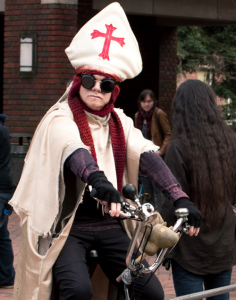
Is there really a “pope” at Reed College?

Not only is there a pope, but we met him last night! We were at Reed College and we were talking to some Reedies afterwards, and one of them said, ‘Hey, you know what, my boyfriend is the pope, he was elected pope in 2008, so, I guess he’s still sort of pope emeritus even though he graduated a couple years ago.’ So I have a shot of him posing with Justin’s pope, and the pope of Reed still had his mitre, so he put it on and it was pretty beautiful.

That’s part of the challenge in this movie. I’ve had people see it and push back, saying we kind of made like a caricature of a crazy college life, and I wanted to say, “You have no idea how much we toned it down.”   When Don wrote the book, his experiences are ten years old, and the school has changed since then. Unfortunately, we didn’t have the money to make a movie that was set in 2002 and only have cars that were ten years old and things like that, so we’re presenting a modern version of Reed. Interestingly enough, since Don wrote the book, there are a number of students who have come to Reed that say Blue Like Jazz was the thing that first drew them into Reed.  We did the movie because we loved Reed College, and spent a lot of time there, too, and Don rediscovered his Christian faith there after rejecting it.  It’s an atmosphere where people really want to find truth and meaning, but you can’t bring your ego into discussion about truth, you have to be able to follow it where it leads.

I liked seeing some meaty classroom moments there.

We worked hard at that because it’s always tricky, you’re not telling a story about academics, but it’s a very strenuous academic environment. The annual Renn Fayre is in many ways a revolt from that strenuous academic environment.  You’ve been through the ringer for nine months and people go blow off steam because it’s really tough. I think we got like three classroom scenes that are hopefully representational of the intellect there.  I just hung out with a student last night, she had just gotten back from six hours of lab work, doing studies on microbes in a certain environment and I was having a really hard time just keeping up with her because she was so smart.

I have to ask you about Kickstarter.  How many associate producers do you have in that sped-up crawl in the final credits?

I think they’re like 1600 associate producers.

And did you call them all?

I did!  I didn’t think the Kickstarter campaign was going to work, so I said give us ten bucks or more and I will call you and thank-you personally.  I ended up with a call-sheet of 3,500 names.  Thankfully, in Tennessee we can talk on the cell-phone while we drive, which I’m not saying is a good idea, but it’s definitely easier for me to get all those calls made.

A lot of them were fans of the book, some of them were previous fans of my music career, but they all just wanted to see this movie made, and they felt like they were pitching in for something they really believed in and was worth while. We kept contact with them over the last eighteen months since it happened, pretty regular contact. I was even doing more calls because this weekend we’re going to do more calls up at my house, have a good call-center and check in with people again. And so many times when I call people they want me to know what this project has meant to them.  It’s not just the movie itself, but also the bigger kind of community that folks have around it.

You say that it’s not a message movie but there is a message there about being true to yourself and being open to other people and being honest about who you are.

I think that that confession booth scene in the book was—it just hit me so strongly—because that image of a confession booth, there were just so many things, so many layers just to that—but I just thought, that was a really rich scene and a rich environment, and I was hoping we could get it right in the film, because in the book it’s really powerful.

Related Tags:


Directors Interview
Interview: Michael Madsen

Interview: Michael Madsen

Posted on April 16, 2012 at 3:55 pm

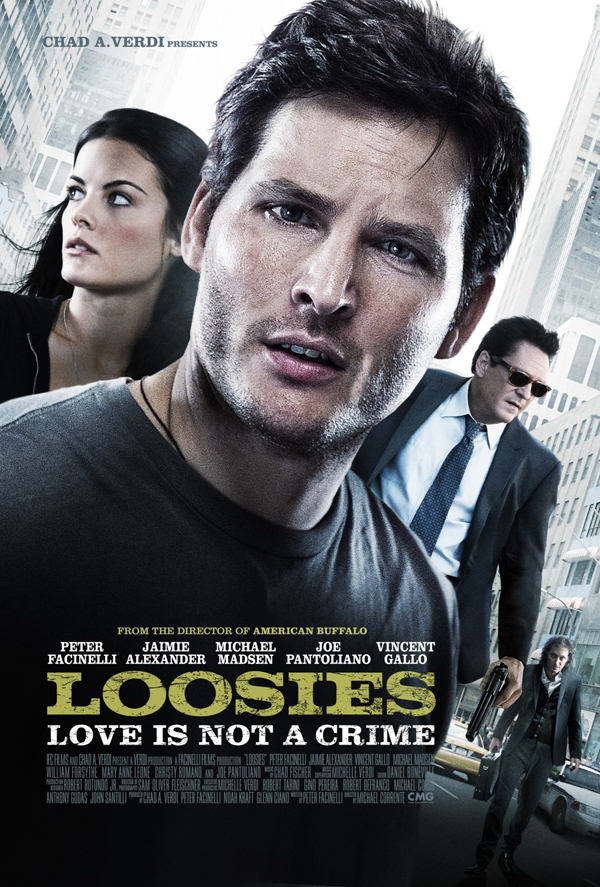
Michael Madsen is a favorite actor of writer/director Quentin Tarantino (Reservoir Dogs, Kill Bill: Volume One). He appeared in Thelma & Louise and on the television series “24.”  And he is a published poet, about to release his second collection.  I had a wonderful time talking to him about growing up in Chicago, meeting his idols, and the two movies he just made back to back.  In “Loosies” he plays a cop chasing a pickpocket played by writer/director Peter Facinelli of “Twilight.”  And “Infected” is about the spread of a deadly Lyme disease-like virus.

Copyright 2012 IFC Films

We both grew up in Chicago — do you get back there often?

Well my father still lives in Chicago.  He’s a retired fire-fighter. He was a Chicago fireman for thirty years…and he made lieutenant and he retired, so I go once in a while to visit him.

As an actor, you are especially good at the quiet moments, at listening and at waiting.  Is that something that comes naturally or are you very conscious of it?

I think what it is, is that I don’t know.  If I knew what it was, I might not be able to do it.  I don’t think it’s an actable quality. I just think it’s something that is or isn’t.  I can tell you that when I was a kid, I noticed that in Steve McQueen, and I read a lot of books about Steve, and I know he used to cut a lot of dialogue out of his movie scripts because he didn’t like to talk a lot. And I noticed that in Robert Mitchum. I met Mitchum and I know he was very much like that in real life.  Humphrey Bogart had that.  I don’t know, but I consider it a compliment.

You remind me of Mitchum.  What was it like to meet him?

Well, he was making a picture with my sister, he was doing that Hearst and Davies thing in Toronto, and I really wanted to meet him, because he made this movie called Heaven Knows Mr. Allison directed by John Huston, with Deborah Kerr, he played a marine that gets washed up on an island.
And she’s a nun.

I don’t know, his performance in that movie is about—I would say—75% responsible for my even fantasizing about being a film actor. And I had always wanted to meet him because of that movie, and I actually went to Toronto under the guise of visiting my sister, but the real reason I went is because I wanted to meet Robert. And so, you know, there he was, eating breakfast and he was sitting there eating his waffles, and my sister brought me over and introduced me, and I sat down—and he kept eating… and he didn’t even look up at me! And I was sitting there thinking, “Well, ok, that’s it,” and I was just starting to get up to leave and I suddenly heard him say, “What are you going to do with yourself, son?” And I realized, he was actually talking to me, and I sat back down and I looked at him and I said like an idiot of all the things in the world I could’ve said, I said, “Oh well, I was thinking about…I’m an auto-mechanic and I’ve been doing a few things here and there, but I’m working on a film-career. I was thinking maybe I could make it as a film actor.”  And he put his fork down, put his knife on the plate, and he looked up at me and leaned forward and he said, ‘Why?” It was kind of funny, I started laughing. It was just so ironic that he was so much the way that the character that he plays—he really was like that! And we had a good laugh about it, and I’m just glad that I got to meet him that day.

Oh, he was good. He was really nice to me.  I asked him if he had any advice for me, and he said, “Yeah…Smirnoff!” Ok, alright. And he goes, “Forget about all that working out stuff, don’t start trying to turn yourself into Hercules, just get a padded jacket.”

Tell me about the characters that you played in “Loosies” and “Infected.”

I did “Loosies” because of the kid Peter Facinelli, from Twilight. He wrote the part for me, and when I met him he was such a great kid, I couldn’t turn it down. I mean, I’m a New York detective, and he plays a pickpocket, and he gets my gold shield, and he’s running around New York with a gold shield, and kind of making a fool out of me in the newspapers, because I’m the pretty big-time New York detective. So, I’m basically chasing him throughout the movie trying to get my shield back. Vincent Gallo is in the movie, and he’s a great, great kid, a good actor, and it was great to have him on the set and Michael Corrente directed it and we shot in Rhode Island. The fact that he wrote the role for me, and I’m not a villain in the picture — it worked out pretty good and I ended up making “Infected,” another film for the same production company.

Well, it’s a first-time director, Glenn Ciano, and Quentin Tarantino was a first-time director, and a lot of times, they don’t want you to get involved in movies with first-time directors because you never know, but if you don’t give somebody a chance, you’re never going to know.  Like if I had turned down “Reservoir Dogs” because Quentin was a first-time director…you know, that would’ve been a big mistake.  And so, it taught me a lesson. You never know the way that these things are going to go, and Glenn Ciano, it was his first shot…and I had never done a horror picture before and it was a horror genre of movie about a family that goes off into the woods and stay in a cabin and everybody gets this crazy Lyme disease that turns everybody into cannibals.  I end up having to shotgun everybody with a Winchester pump.

Oh my gosh!

Yeah. It sounded exciting and I wanted to give Glenn a shot as a first time director, and it was the same production company that produced “Loosies,” and so there was no reason not to do it.

And plus you get to shoot everybody!

Yeah, plus I get the pump. It was a nice gun, it was an older shotgun, it was really a highly effective weapon, let’s put it that way.  I don’t know if you saw Vice, but there was some shotgun action in that movie—it was my idea—I rewrote the whole beginning, I rewrote the whole ending of that movie. I like shotguns.

Would you like to write an entire screen play? Would you like to direct?

Well, I’m going to do a movie with a woman director, her name is Heather Ferreira.  She used to work with Quentin a few years ago, and we’re doing a picture in New York City, it’s called “The Little Matchstick Boy,” and it’s about a Vietnam vet, and I’m excited. I’ve wanted to work with a woman director, I think it really kind of changes things up a little bit.  I’m looking at stuff all the time, now, for directing and producing. I produced “Vice,” and you know, most people can write it off as a B-genre movie, but if you really  watch it closely with attention to boot, maybe watch it twice…there’s a lot going on in that movie. There are a lot of subliminal, subtle things that are happening in that film that could easily be not recognized because it wasn’t theatrically released.  I was really involved in locations, I wrote and rewrote the beginning and the ending, I cast the whole thing. Getting involved in all this other stuff, just besides playing a character—it makes it a lot more fun. It makes me feel a lot more responsible for the end product. I can’t take responsibility for some picture that’s horrible, that people wouldn’t take my advice on certain things, you know?

What got you started writing poetry?

When I was still in Chicago, I was painting houses and working at a car wash.  Like I told you, I saw “Heaven Knows Mr. Allison”   I must’ve been around seventeen or eighteen years old.  So, I got curious about actors and I was in a library with a friend of mine and I found myself in the biography section so I read the biography of Clark Gable, I read Spencer Tracy’s biography. That’s the first time I read Hemingway. While I was there I got For Whom the Bell Tolls, which was Hemingway, and I guess after reading the biographies and reading the Hemingway book, I realized that I think about a lot of stuff. I started writing it down. When you’re making pictures, you’re often on an airplane or in a motel, and you have a lot of down-time in travel, or sitting around in your camper waiting for something to get set-up, and I would just start writing down poems and short stories and events that have happened in my life. I never really intended for it to be a book, but I spoke to a publisher and now I’ve just finished another one—it’s coming out in September. It’s called, Expecting Rain. It’s a book of photographs and short stories and poems. Jerry Hopkins, who wrote the biography of Jim Morrison, he wrote The Lizard King—he’s going to write the foreword.

 Are there poets that you like, that inspired you the way that Robert Mitchum inspired you as an actor?

I would say Loren Eiseley and Hemingway was a terrible poet, but some of his books, though, his way of writing inspired me, his early stuff. And of course, Charlie Bukowski, you know, I can’t really think of anybody else. Robert Frost, maybe a few of those.  Kerouac—I’d love to play Jack in a movie, but nobody’s ever asked me, which is bewildering, because I think I’d make a pretty good jack.

What else would you like to do?

To be honest with you? A long time ago, what I really wanted to do was drive in Nascar. Richard Petty was my big hero, I wanted to drive a Nascar and that’s what I wanted to do, and that’s what I was thinking I was going to do. I built a couple of cars, and I actually ran a few quarter-mile drag cars, and I drove a Nascar when I was making The Getaway.  James Woods’ character has a race car, and we shot a couple of scenes up in Phoenix International raceway, and I got to drive the Citgo Dirt-Devil Nascar. I did five laps in that thing on an open track and it was one of the highlights of my acting experience.  By the third lap, I did about 160, and the car is so well-built and balanced that it really does all the work for you. I was so happy I got to do that. It was so exciting. I was having a lot more fun doing that than I was shooting the movie. I’ve been convinced for years that some day I’ll be able to take advantage of that, but as time goes by it seems less and less likely that that’s going to happen. I would like to do a movie about a Nascar driver.

 

Related Tags:


Actors Interview

Interview: Morgan Spurlock of “Comic-Con Episode IV: A Fan’s Hope”

Posted on April 6, 2012 at 8:00 am

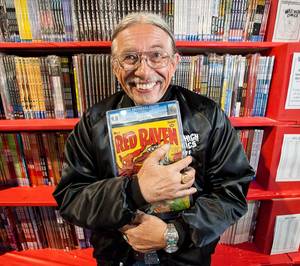
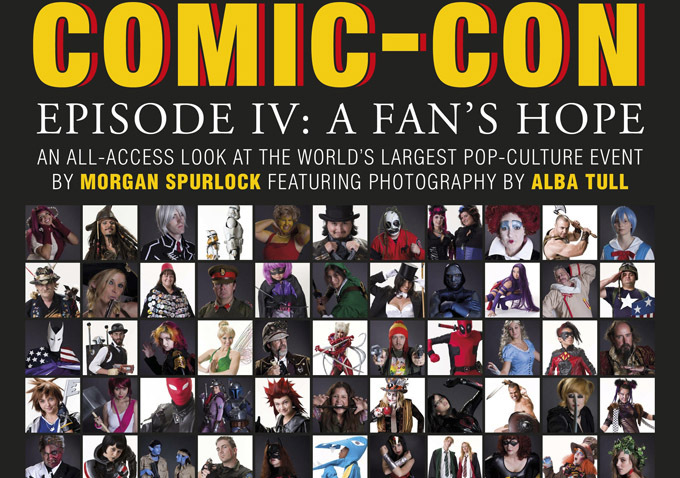
I was especially excited to talk to Morgan Spurlock about his newest documentary because it is about one of my favorite events of the year, San Diego’s Comic-Con.  Produced by Comic-Con heroes Stan Lee and Joss Whedon, the film follows five people — two artists with portfolios who want to become professional comic book artists, a costume designer who is participating in Comic-Con’s famous Masquerade competition, a dealer hoping to sell his $500,000 Red Ryder comic to keep his business going, and a fanboy hoping to propose to the fangirl he met at Comic-Con the year before, with a ring modeled on the one in “Lord of the Rings,” of course.  The movie was filmed during Comic-Con 2010 and it includes some of the people and events I saw when I was there.  The movie is available everywhere On Demand today.

http://www.youtube.com/watch?v=hqC1pGb89XQ

Your movie makes clear that Comic-Con attracts the most passionate fans of comics, movies, games, and television in the world.  What makes people into super-fans?

I think that if you can openly profess your love for something, then that makes you a real fan. I think that for a long time, a lot of things that were in the film weren’t cool to like, whether it was comic books, or video games, or collecting toys—it was one of those things that was shunned. We live in a world where we’re told to grow up and throw away childish things, and we live in a time now where these are things that really do start to define you as a person, as a character, as an individual, as a creative person.  They kind of shape your world around you, whether it be a hobby or a desire that can’t get fulfilled anywhere else.

One of the things that struck me about this film is the way that it  presents a more gentle and affectionate view of commercialism than your previous films. You’re looking at it from this consumer side this time. Do you think that there is a beneficial side to the commercialism that you’ve been critical of in previous films?

Well, I don’t know if it’s beneficial. I think that if you’re a fan of something you’re going to buy whatever you want and get whatever you like. Anthony Calderon, nothing was going to stop him from getting his 18 inch Galactus, no matter what it was, and if he didn’t get it then he would’ve been online that night buying one on eBay. I feel like when you are a collector and you buy certain things, you’re supporting that hobby. I collect art, I buy a lot of low-brow and street art, pop-art—and it’s one of the things where it is a constant desire for me to seek these things out, and I think that it’s just part of who you are. It does really start to define a part of your psyche and your individuality.

How did you find the people that you focused on?

We put out a kind of mass casting call through websites, through comic book shops, through Ain’t It Cool News. Harry Knowles came on as a producer for the film, and we just got this deluge of submissions, probably around 2,000 people from around the world—e-mails, videos—and from there we started to whittle it down. We wanted to find people who were going their own, to find people who already had tickets, you know, we weren’t giving people tickets, we weren’t flying you there, we were just coming along for the ride. We wanted to find people who were going with a real purpose. We didn’t want somebody who’s just like, “Yeah, it’s my first Con, I’m so excited, I can’t wait to see what it’s like!” That’s not a good story. You want to have somebody like Holly Conrad, who’s like “I’ve already competed in two masquerades, this is the final time I’m allowed to compete, if we don’t win I don’t know what’s going to happen, I really want to use this to break into the costume design business.” That’s a great story, she’s a great character, and she’s incredibly talented. Eric Hansen and Skip Harvey, who are going to comic–con for the first time to try and finally get this closeted desire to draw comics out into the world. They’re basically putting their egos on the table in front of the likes of Marvel and DC and Dark Horse; those are great stories, and those are the things you never get to see or hear about when it comes to Comic-Con.

 That’s right.  The news reports are always about thousands of people waiting in line for the big events at Hall H with all the movie stars.

And that’s what people love to talk about, they say, “How do you feel about movies taking over Hollywood?” And it’s always journalists who ask this, and I say, “Well, just to be clear, movies haven’t taken over Comic-Con. Movies have taken over your coverage of Comic-Con, because somehow somebody said that this is all that matters, this is all that’s important at this giant, pop-culture Mecca. And, we’ve turned it into, “Here’s Angelina Jolie, she’s putting out her new movie—and look at these freaks in costumes,” that’s all the media ever wants to talk about. I went there in 2009, and there’s a much deeper story to tell here that isn’t being realized in any of the coverage.

I think it’s also fair to say that Comic Books have taken over movies.

That’s true.  Comic books have become this never-ending well of brand-new characters and entertainment for the studios, and for television, and so now the comic-books, the guys who are actually trying to sell these paper comics are saying, “We’re getting pushed to the side, we’re getting shoved out of the convention.” They’re getting shoved out of everything. The reality is, the comic book business is a dying business.. The Comic Book industry is not a dying industry, but the actual idea of printing paper comics is, just like printing paper books is dying. We don’t even buy paper books. I don’t even know the last time I bought a book, but since I’ve gotten my iPad, I’ll tell you what—I buy more comics now as an adult than I did probably in like 10 years as a kid, because it’s much easier to download them straight to my iPad.

I love that there is still a real heritage to Comic-Con, there’s still a respect for that heritage, the artists who dated these comics are still there, so I disagree that comics are getting pushed out of comic-con. I think it is transforming into something else.

Tell me a little bit about the guy who proposed to his girlfriend at Comic-Con. Did he get in touch with you and not only wanted to propose in public, he wanted to propose to her in a movie?

He wanted to propose to her at Comic-Con.  It was part of the casting that we sent out, we wanted to find a couple who fell in love because of a mutual appreciation and passion for some geeky thing, whether it was “We both love Star Trek” or  “We both love that video game.”  We got a ton of submissions from people who fell in love or got married because of that and this story of James Darling and Se Young Kang was so fantastic because they had met the previous year as they were both getting ready to go to Comic-Con and fell in love because they both love these things at Comic-Con.  So they basically talked about, “We’re going this year, we both love Kevin Smith, we’d love to be in the film,” and after the end of their joint submission video, they cut to James Darling in a closet, holding the camera next to his face, and he goes…”but what I really want to do is propose to Se Young at Comic Con this year.”

Some people say that Comic-Con is so driven by big business products that there’s no imagination any more and people are just taking the imagination that’s imposed on them from a commercial entity. How do you respond to that?

Well, I think there’s a tremendous amount of creativity in the world, it is exploding with creativity. You see it in this movie, you see it in people like Holly Conrad, you see it in people like Skip Harvey and Eric Hansen, and so I disagree with that. I do think that there’s a tremendous amount of spoon feeding of genres. The fact that we’re continuing to make remakes of movies that have been made, we’re continuing to reboot the franchises, that’s the more frustrating thing—that there’s not a search in that world for new ideas, or that many new ideas. So when someone like Christopher Nolan comes along and makes a film like “Inception,” you’re like, “Oh my God, this is the greatest thing ever,” because it’s not derivative, you’re not living off of something you’ve seen seven, eight, nine times.

Which is even more reason for everyone to stay home this weekend and watch “Comic-Con: Episode IV,” to put on your costumes and have a fantastic geek-out party.

What’s the best way for them to watch it? Is it on Video-On-Demand?

We’re opening this weekend in select cities, so this weekend it’ll be in theaters in Los Angeles, San Francisco, Portland—if you live in any of those three cities, you should put on your costumes and come to the theater and create the new “Rocky Horror Picture Show.” I feel like everyone one of these screenings should feel like Comic-Con. I encourage people all the time, “Wear your costumes, come to the movie, and let people see what it’s really like.” That will be awesome. If you can’t come and you want to see the movie, you should have a Comic-Con party at your house, have a little mini-con, play video games, bring your comics over, put on your Spock ears and your hobbit feet and your Wookiee mask, grab your light saber, and tell your friends, “We’re going to have a Con party!”

Not only is it on Video-On-Demand, it’s on iTunes, streaming, if you download movies through the  Xbox platform, it’ll be available there. It’ll be iTunes worldwide, so it’ll be iTunes streaming world-wide this weekend as well.

What do you, as a film maker, think about that kind of distribution method? Did that open things up more than traditional theatrical release?

With “Pom Wonderful Presents The Greatest Movie Ever Sold,” we had so much press leading up to that film, and the week before the movie opened I was on Conan, Colbert, Jimmy Kimmel, all within ten days and then the movie opened on 18 screens.  So the majority of the people in the United States couldn’t even see the movie. I’m a film-maker, and I have yet to have a movie show in my own home town in West Virginia where I grew up. There’s got to be a better way—especially when it comes to documentaries.

If you’re not making a big, giant, huge mainstream Hunger-Games-esque film that’s going out on 3000 screens, how do you start to compete with those movies? For me, the best way to compete is by collapsing the window, giving anyone across the country who wants to see this film access to it immediately. You know, there’s a great line in ‘The Greatest Movie Ever Sold,” “In today’s world, in today’s media landscape, there is a cultural decay rate of ideas that is about two weeks.” So you basically have two weeks to capitalize on whatever surge you have around your moment, your film, your music, whatever it is, get people to get excited about it, to see it, to consume it, to share it—because really soon, something else will jump in there—there’ll be another movie, there’ll be something else that’s the conversation driver. So, for me this weekend, I just wanted to make sure that anyone who wanted to see this film could see it.


Related Tags:


Directors Documentary Interview

Interview: Lee Hirsch, Director of “Bully”

Posted on April 2, 2012 at 8:00 am

Lee Hirsch is the director of “Bully,” the new documentary about the painful and pervasive problem of bullying in schools.  The movie is being released without a rating from the MPAA, after an appeal and a petition signed by more than half a million people failed to overturn the R-rating.  As producer Harvey Weinstein points out, this month we have a fantasy movie about teenagers killing other teenagers that gets a PG-13 but a documentary that includes the language used by actual teenagers in abusing each other is considered too adult for them to see.  I highly recommend Andrew O’Hehir’s excellent column about the MPAA’s hypocrisy in rating this film.  As he points out,

while the MPAA board pretends to be a source of neutral and non-ideological advice to parents, it all too often reveals itself to be a velvet-glove censorship agency, seemingly devoted to reactionary and defensive cultural standards. In the “Bully” case, the board has ended up doing what it usually does: favoring the strong against the weak, further marginalizing the marginalized, and enforcing a version of “family values” that has all sorts of unspoken stereotypes about gender and sexuality and race and other things baked into it. In short, the MPAA has sided with the bullies and creeps.

Hirsch spoke to me about the ratings controversy and the response to the film, including the reaction from a school administrator who is portrayed as unhelpful and out of touch on screen.

I’m sorry the MPAA gave it the rating that it did but it certainly has helped get the word out, don’t you think?

Yeah, it has. Kind of been amazing, actually, just seeing the sort of grassroots action has really moved me and kind of inspired me. It’s been amazing, it really has, and it’s great to have a celebrity, it’s great to have the politicians, but it’s the kids, seeing the kids step up. That’s truly awesome.

Tell me about Alex, one of the kids picked on in the film. I want to friend him on Facebook or something. I just love that kid. 

His parents have quite rightly kept him off Facebook. He is really such an extraordinary kid, he is really awesome you know, I want to describe it as he has “the shine” about him, and it really started at the premiere of the film at Tribeca.  That was the first time he got that huge affirmation of applause and support, and you know, it’s almost like he’s a different kid. He’s a little older, but, he is so confident, able to do press, and not just able, but he rocks it. He sat next to Harvey Weinstein, argued the rating before the MPAA, he just makes friends everywhere he goes, he hugs people wherever he goes, he is just amazing. Seeing his sort of growth is perhaps the thing or one of the things I’m most proud of in this whole process.

I loved all the parents in the film and I thought you busted a lot of stereotypes in a very nice way with the families.

Oh, thank you so much, yeah I love those parents, their families are extraordinary, they’re really all very special people..

For me one of the most moving moments of the film was the scene with him with his little, little sister when she was like two or something like that—he was so kind to her and it really shows you what a great guy he is.

When he helps her with the water? Yes that is amazing.

The scene that is the most disturbing is the one where his parents go to talk to the school administrator, and she’s just useless. I mean, it’s just horrifying. Has she spoken about the movie at all, has she learned her lesson?

I’m in no position to speak for her.  I can tell you that we a had a screening a couple of months ago, that was a free community screening, we thought maybe three or four hundred people would come and sixteen hundred people packed the house. She came; she was very brave, she had seen the film a number of times and it’s obviously very difficult for her.  She had some great courage to stand in front of the entire community and apologize. She said she had wished she had done more, and she needs to do better, and generally speaking, educators don’t necessarily have all the tools that they need.  So I think she really transformed that moment into a real teachable moment.  A lot of administrators who had seen this film had said, you know, if we’re really honest, we’ve all made these mistakes.

She said, “If my being in this film in this way contributes to change, then I’m ok with it.” It’s been a little bit worth it, because it’s obviously had deep impact on her life, but bullying has a deep impact on the lives of the kids who’re suffering.  So, it’s been a journey, but I think that what that school district gave us was really the most extraordinary gift they could give America, really. I can guarantee 99% of school districts would say, “No way can you film about bullying in our school and have editorial control, and have access inside that principal’s office, and on the busses. ”  These people embraced what it would mean to tell the story and let the chips fall where they may and just learn from it. So it really creates an opportunity for working with the Harvard graduate school of education, with many organizations to figure out, how can we make this into professional development, not only new teacher administrative training, but making use of books that have been in the field for 20-30 years. What impact will seeing this film have on them, and how do we support that and engage around that?  But not just administrators, I mean, one of our partners is First Student which is the largest school bus company in America, they bus over 30 million kids each day in our country.  And we’re in deep talks with them about how to bring bus drivers into this conversation in a meaningful way.

We see all of this as opportunities to create change and build community. We’re not against anybody, we see everyone as our partner and having a really great, natural conversation.

I read that Lady Ga-Ga’s anti-bullying initiative focuses on everyone, victims, bullies, and bystanders.  

Absolutely, I mean, they’re kids, too, you know?  Having empathy, empathy as a whole, if you’re wanting to increase empathy, you would want to, I would imagine, have a sort of global empathic response.   Bullies do it for the peer accolades they get for doing it. I think that’s the core relationship for them— it is with their peers and not with the person they’re picking on. So if you make it not cool to be a bully, then, that part of it would work.  That’s why there’s so much power in speaking to that middle, that 80% roughly, of kids that have the capacity to stand up to be upstanders and not bystanders.  To that end we’re working with so many great artists and working with DoSomething.org,  America’s promise, and Ashoka on how we can really ramp up youth engagement through this film and give them ways to engage on multiple levels and commit to being change-makers in their communities.  That’s a big piece of what our team does, separate from the film itself.

Do you find that people who see the film, adults who see the film want to talk to you not just about what’s going on today with children but what went on with them when they were children?  That adults are still traumatized by their own experiences?

More than you can imagine.

I mean, honestly, there’s not a day that goes by that I don’t have someone you would never expect.  And it comes from everywhere.  For the first time, Meryl Streep admitted to being bullied.

What do you want parents to learn from seeing this movie?

Well, I hope parents feel like the movie gives them cover to talk about this with their kids and I hope it helps them have those conversations as a family, with both their parents collectively, and then with their kids, to help them talk about what it means to be an upstander, to be a change-maker, you know, being more patient, I think, if the kid is being bullied, and understanding the importance about being smart about the fight and a lot of what we’re doing with our tools and with our resources is help equip parents to deal with that effectively, because certainly, as you see in the film, that’s where the system breaks down a lot—in that communications process.


Related Tags:


Directors Interview
Interview: Lily Collins of “Mirror Mirror”

Interview: Lily Collins of “Mirror Mirror”

Posted on March 29, 2012 at 8:01 am

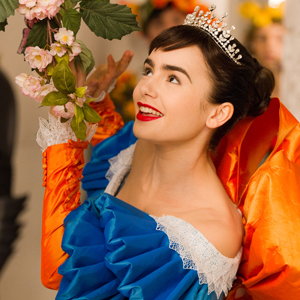
Lily Collins was so gracious I felt I really was talking to a fairy tale princess.  The daughter of rocker Phil Collins appeared in “The Blind Side” and this joyous, gorgeously re-imagined updating of “Snow White” is her first starring role.  She talked to me about learning how to sword-fight and her favorite advice about acting.


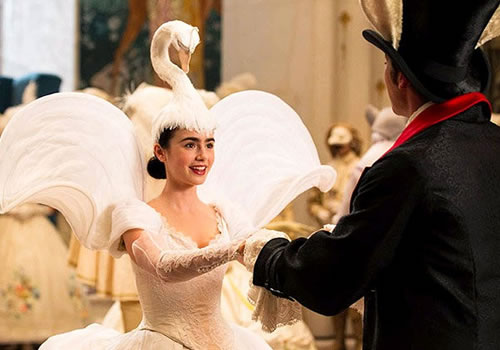
We have to talk about the swan dress.

I know, the head and the wings were just the most beautiful little accompaniment to the outfit…I would forget, though, that I had them both on, and I would go to squeeze by people and forget that my span was much longer and I would sometimes knock things over with them, but they were so beautiful and intricately made, so delicate and absolutely like pieces of art, they were an honor to wear.

How does it make you feel different to look at yourself fin the mirror and see that? 

Well, it definitely helps get into character when you’re wearing a corset everyday, you truly do feel like the character, it makes all the difference in the world. But also, they were so emblematic of who Snow was—and in the tone of the movie it just amped up the feeling of the film..

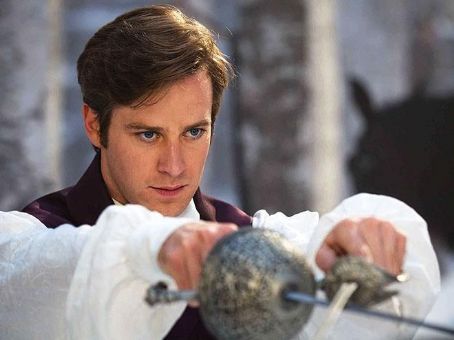
The sword fights are amazing!  Tell me what kind of training you did and what that was like.

Armie Hammer and I trained including during the filming for about four months.  It was very intense, lots of sweating and bruises, but it was so much fun and I had never imagined that I would get to do something like that before.

This is the first time we’ve seen him in a comic role.

He’s hilarious! He’s kind of the perfect mixture of being goofy and aloof in the role, as well as being a gentleman, totally regal, and very, very humble. Armie is, as a person as well, just kind of great mixture of all these different attributes. Most of all, I didn’t realize how much of a jokester and how funny he is, he can make you laugh at the top of the hat.

What was the biggest challenge of filming for you?

I’d never done a film a big as this before, or worked as many hours as I did—and I think it was just making sure I maintained that balance of work and being able to rest and take care of myself, because I did do so many different new things on this film, and I was in a foreign place and on my own there, and it was really just making sure I kept a defined balance between having my time to be myself as well as the character.

This is a very different version of Snow White than we’ve seen before, and not just different in the plotline, but a very different version of the characters. So if her name was Snow Jones, who is she and how did you imagine her?

I really wanted to play her, not as a caricature of a fairy tale princess or as an animated character; I wanted to make her a real girl who was feisty, and who really was passionate, and learned throughout the process that she went through with the dwarfs and experiencing new things, she learned to believe in herself and found that it was what was inside her that made her able to conquer her dreams and go after what she believed in. Never once does she look in the mirror herself, because she’s never aware of what her beauty means, or that she is even as beautiful as everyone says she is. It was really what she found within herself through her new friends and experiences. So, I think she was someone who was very open to spontaneity and life and love, and someone who wasn’t afraid to get a little dirty at times, to go and fight, be on par with the prince and not allow the fact that she was a girl change anything.

I was very touched by the scene near the beginning where you leave the palace for the first time.. The look on your face was so radiant and luminous, and you became aware for the first time what was out there. Tell me a little bit about your process, what was it that you were thinking and how did you achieve that?

I try to put myself in the shoes of whatever character I’m playing and I guess I just imagine the idea of really what it would be like if I was locked away and not allowed to go out and really had the courage to step outside my comfort zone, and experience what was outside of the castle.  I thought about the idea of meeting a man for the first time and how it kind of made me feel something other than what I was used to, and the idea of being shocked at the reality of a situation, not really knowing was evil was, because Snow was kept away so long that she doesn’t really see what evil is.  So when she goes through the village for the first time, she’s so genuinely hurt by it that she can’t help but show her sadness and kind of the inner-child quality of pure disappointment and confusion. So, I try to just put myself in the character’s shoes, and because it’s the beginning of the story, she’s still very much a child in that sense, seeing everything for the first time. I think of how a child would react—children react in such a genuine way and they don’t think, really, how their reactions are going to affect people, they just let it come out; that’s how she was at the beginning.

What was the best advice that you got about acting?

To remember that you are playing someone other than yourself, and so when taking on a role, of course, it’s you taking on a role, so you’re going to add a bit of yourself, but it’s okay to separate your own beliefs and your own characteristics from this character, because that’s what acting is—you’re taking on another role. If you’re going to go for it, go for it, and dedicate yourself 100% to something, because if you’re fully in a character and you go for it, there’s nothing like feeling that feeling of accomplishing, something as someone else, if you’re really going to be a part of the story and be a different character, you should put your whole heart and soul into it, because once you’re dedicated to it, it really comes across.


Related Tags:


Actors Breakthrough Perfomers Interview
THE MOVIE MOM® is a registered trademark of Nell Minow. Use of the mark without express consent from Nell Minow constitutes trademark infringement and unfair competition in violation of federal and state laws. All material © Nell Minow 1995-2026, all rights reserved, and no use or republication is permitted without explicit permission. This site hosts Nell Minow’s Movie Mom® archive, with material that originally appeared on Yahoo! Movies, Beliefnet, and other sources. Much of her new material can be found at Rogerebert.com, Huffington Post, and WheretoWatch. Her books include The Movie Mom’s Guide to Family Movies and 101 Must-See Movie Moments, and she can be heard each week on radio stations across the country.

Website Designed by Max LaZebnik