Interview: Matthew D. Kallis of “Most Valuable Players”

Interview: Matthew D. Kallis of “Most Valuable Players”

Posted on March 2, 2012 at 3:55 pm

Producer/Director Matthew D. Kallis answered my questions about Most Valuable Players, the marvelous documentary about three high school teams competing for the Freddy Awards, given for the best high school musical productions.  I asked him about his favorite musicals and what kids learn from putting on a show.

How did you decide to make this film?

I grew up in an environment where the arts were held in high esteem, and I was on the stage crew when I was in school.  So this subject matter was a good fit for me.   When I learned about the Freddy Awards, I was very impressed that this region of America, that’s so very sports-centric, would devote these kinds of resources and support to the arts.  It was a story I felt needed to be told.

What impact did the creation of the Freddy awards have on Pennsylvania theater programs and why?

It has increased awareness of high school performingarts.  Because the Freddy Awards is televised live, residents of the area flock to see all the shows, so they can judge the competition for themselves.   The schools are seeing an increased interest and more revenue as a result.   Like any trophy, the Freddy Award brings about a certain amount of respect for the winning schools.  Easton Area High School, for instance, was facing a budget cut that would have wiped out their performing arts program.  But when the school won the Freddy for Best Overall Musical (for RAGTIME), the school board reversed its decision. The Freddys have had a real, tangible impact on the arts.

Do you have a favorite musical?

This is a really tough question since there are so many musicals that I love for different reasons.  Although many newer musicals are superb, like THE DROWSY CHAPERONE and SPRING AWAKENING, I am still quite nostalgic about the classics.  The first opportunity I had to see musicals was in films like CAMELOT, FUNNY GIRL and THE SOUND OF MUSIC.  Later, my parents took me to New York where I saw great Broadway productions of MAN OF LA MANCHA, FIDDLER ON THE ROOF andmore.  I was hooked.  As a teenager, I saw THE WHO performing TOMMY, JESUS CHRIST SUPERSTAR at the Hollywood Bowl, Tim Curry in THE ROCKY HORROR PICTURE SHOW at the Roxy on Sunset Boulevard, and A CHORUS LINE on Broadway.  I just don’t know how to pick a favorite from the list.

However, if I must select a one, I guess it will have to be OKLAHOMA!  Of course, it is a great musical, but that is not the main reason.  When I was still in elementary school, my brother and sister allowed me to tag along with them to see a performance of OKLAHOMA! at Beverly Hills High School.  I was so impressed with the amazing production values and all the talented kids.  Everything seemed so dazzlingly professional.  I knew I wanted to part of it, and that is why I joined the stage crew.   The experience was fantastic.  Making MOST VALUABLE PLAYERS allowed me to relive those wonderful times vicariously through the kids that participate in the Freddy Awards program.

While most teens are listening to hip-hop and pop, what keeps drawing some kids to traditional Broadway show tunes?

Kids today are being brought up on different kinds of showtunes.  AMERICAN IDIOT, NEXT TO NORMAL, IN THE HEIGHTS or even THE BOOK OF MORMON, as examples, all have a cool, modern vibe to them with all sorts of influences.  As a result, these musical scores might pique their interest in other, more classic, Broadway shows.

What are the most important lessons high schoolers learn from putting on musical shows?

There are lots of important lessons.  They learn about responsibility and deadlines.  They learn about cooperation and teamwork.  Also, high school students can apply many of their reading, writing and arithmetic skills.  For instance, building sets takes an understanding of math and physics.  Scripts have to be read, analyzed and interpreted.  There are all different skills being used in the theater, so the list of educational benefits goes on and on.

What is the biggest challenge for school performing arts programs?

The biggest challenge remains staying alive.  Arts programs are always at the top of any “cut list” come budget crunch time.   It’s important that school boards and administrators understand that there’s more to the musical than just song and dance.  Yet arts programs must also learn to be more self-sufficient if they plan to survive.  Many of the schools featured in MOST VALUABLE PLAYERS get no money from their schools.  They raise all the funds on their own, which puts them in a more powerful position.
Related Tags:


Directors Documentary High School Interview
Interview: ‘Act of Valor’

Interview: ‘Act of Valor’

Posted on February 24, 2012 at 11:24 am

Copyright Relativity 2012


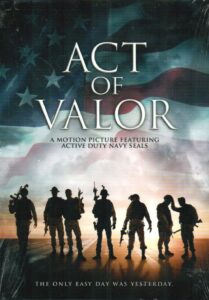
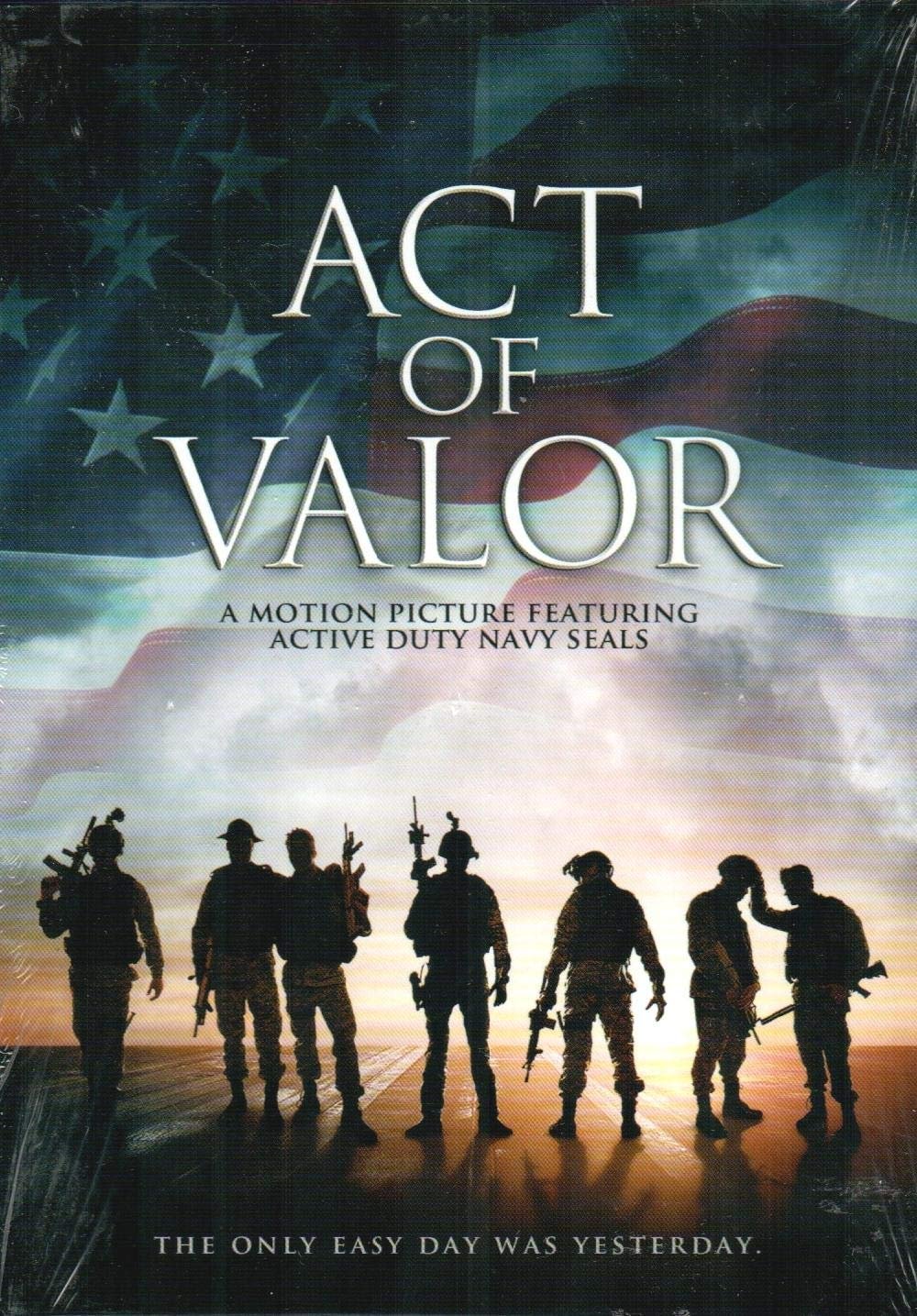
Act of Valor” features active duty Navy SEALS re-enacting some of their most dangerous missions.  The situations are fictional, but the tactics and operations are real.  So is the ammunition.  Instead of blanks and squibs, the SEALS used live ammo, just as they do in their training exercises.  I was privileged to spend a day discussing the film with some of the people behind the film and an extraordinary group of business leaders and policy makers at an event conducted by Ideas Salon.  We discussed the film’s lessons on leadership, inspiration, communication, and integrity.

I also spoke to producer Max Leitman and co-director Scott Waugh of Bandito Brothers about making the film and what they learned from it.  We began with some reflections on the Ideas Salon experience.  “Relativity put it together because they thought it would spark some really great discussions,” Leitman said.  Waugh agreed. “It was great to really hear people pull different things out of the film that really sparked conversation. I feel like these guys are a true representation of leadership, and it was really interesting to really dissect how they operate, to relate that to the civilian side, the private sector, and corporations, and all those things. It was really fascinating for me, too.”  Leitman added, ” I think part of making a film is you work so hard on something — it’s sort of like having a baby; you put it out into world. It’s really interesting to see just how smart and fascinating people will react and see how your baby’s doing. That was just a thrill for us”

I told them that what fascinated me most in the film was the way the SEALS communicated with each other — the economy, precision, effectiveness, and sheer variety of the forms of communication.  “I think what we were really after in the film was the authenticity of how their com talk is and how they speak to each other,” Waugh said.  “We refused to dilute that process and have them speak in layman’s terms. So all of the acronyms are true and authentic. Sometimes the audience can get a little bit lost because they are not in the know, but in general they can follow it and they can appreciate that this is exactly how this guys communicate with each other, whether it’s through hand signals or through the radios.”  Leitman added, “I think that, moving away from the actual mode of communication, there’s a great discipline that comes from having that group of guys trust you to tell their story. I think that they are just so honest, so straightforward, and authentic, that we all feel like we’re better people and try to live up to the standard than we have seen acted out in the last 4 years, by them in their personal lives. To me, that’s just a great lesson for how everybody can continue to live their lives and be better people.”

I asked how the men who face the direst physical danger every day felt about being in front of the camera and had to repeat scenes over and over again.  Waugh answered.  “We were augmenting their training, so they were in that mode already. We purposely really tried to film in a way to stay out of their way, and they were very good just being themselves. They do their job and they do it with such precision and such repetition that with us in front of them, they was really no distraction for them, and they were just truly incredible men and how they operate with us around them was awesome.  You’ve got to remember when they train, they do evolutions even 15 to 20 evolutions of the same operation. That’s how they train, so we would get multiple takes on certain situations.  The toughest part of the shoot was working on water, because you’re dealing with a moving mass that you can’t control and we are out trying to really find and locate the submarines. To me, it was always the most fascinating complicating piece of business because we had our own air assets and boat assets and they did as well. All those moving parts, getting the GPS coordinates, the time and location the morning of was really complicated, and I think Max and I are both very proud of what we are able to accomplish, with such limited knowledge prior to shooting it.” Waugh talked about working with the Navy to make sure that the movie was authentic but not revealing enough to give away confidential information.  “They were so involved during the process that we never actually filmed anything that was not supposed to be filmed. So they did do a heavy scrub with every single frame that was shot afterwards. The greatest reward we had was after the scrub, nothing needed to be subtracted.”

“The most important thing we learned from the SEALs was the ability to adapt and change with your surroundings,” Waugh continued. “With us, with film-making, you usually have something set in your head before you get to the set. And when those things change on you, it usually can rattle you, and you think ‘That’s not the way I see it!’ In the field teams, they are constantly doing that, that’s because that’s the way life is. We feel that we’ve learnt so much from the field platoon that we’ve modeled Bandito Brothers and our film-making style around that approach.”  Leitman added, “We started our company about 5 years ago, and I would say the best way to start a company is to go into business with the SEALs. You just learn a lot from them. And it recalls what you said at the Ideas Salon when you were talking about the secondary and tertiary extract. That is really the take away from who those guys are, adapting and having a plan and then making it work.”

Waugh talked about what led the SEALs to approach them about making a film. “They wanted their story authentically told.  They have been misrepresented for so long that they really wanted the world just to know who they are and the sacrifice that involves being a Navy SEAL. Not only what they go through, but most importantly, what their wives and the children didn’t go through. They really wanted that told properly.  My hope is that regardless of what branch the military you’re in, that people who see this film will take away that there’s so many men and women that are down range sacrificing for our freedom. That shouldn’t be taken lightly, regardless of your political opinion. We should respect those and honor those that do. When we see them coming back home, we should not only thank them for their service, but we should also open up our arms to embrace them into getting back into the civilian world.”


Related Tags:


Behind the Scenes Directors Interview
Interview: Emilio Estevez of “The Way”

Interview: Emilio Estevez of “The Way”

Posted on February 20, 2012 at 8:00 am

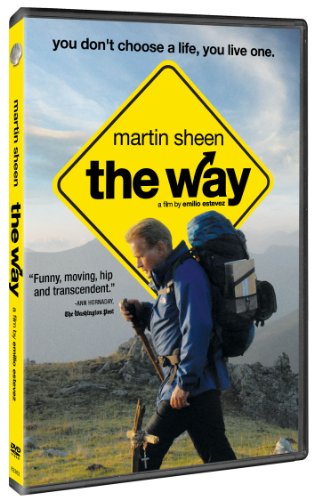
I spoke to Martin Sheen when The Way opened in theaters last year.  So it was a special treat to speak to the writer and director of the film about its DVD release — Emilio Estevez, Sheen’s son, who also appears briefly in the film.

I interviewed your father and, he spoke about you as a director so wonderfully that I’ve really been  looking forward to talking to you about it.

 All lies and half-truths, no doubt.

Your father impressed me tremendously because as he walked into the room in the hotel, before he said hello to me, he first said hello to the staff of the hotel, and was so warm and wonderful to them.  I just think he’s a very special guy.

He is indeed.  He is indeed.  He is one of a kind.

What is the challenge of working with him as a director?  He said that you were tougher on him than any other director.

Well I didn’t get him get away with his crap.  You know, my dad really hasn’t had a lead in a film for quite a while, and when that happens you oftentimes think “Well, as an actor I’m only going to get this moment and I’m only going to get that moment so I better give it my all.”  But I had to keep reminding him that we had an entire film to track his character.  He didn’t have to give it all up in the first act.  We had a long long way to go.  And we needed to dole out this emotion judiciously.  So, for my part, I just had to keep reminding him: “We’re not there yet, we’re not there yet, we’re not there yet.”  And it it took him a while to get it.  But I think it’s a it’s a really well-paced, very quietly nuanced performance that could very easily could’ve been scenery chewing. I had to keep reminding him that you’re playing a guy that is not a citizen of the world.  He’ll become that.  Let’s just remind ourselves that this is a guy that has two hours to evolve.  And you have to trust me that, I’ll get you there.

As you were writing The Way, were there elements of your father’s ability as an actor or his personality that you wanted to bring out that you thought had not been shown in some of his previous performances?

No, not necessarily.  It was a role that was so unlike who he is.  This is a guy who was a curmudgeon.  My dad is certainly not that.  He shakes everyone’s hand.  He got a nickname while we were on on tour this last year. We call him the fanstalker, which is a nickname my son came up with. If a fan didn’t get a photo he made sure that, they were acknowledged and did.  So he’d go out of his way to make sure, everyone was accommodated.  Meanwhile, you know of course the tour’s falling hours and days behind schedule.

Talk to me a little bit about some of the other casting.  I thought you chose the other performers very well.

Deborah Kara Unger was a friend of the producer David Alexanian.  I met her while I was writing the screenplay.  She asked what I was working on, and just sort through a series of conversations with her, I began to to tailor the role for her, for who she is.  By the time we got around to getting ready to shoot, she was available and willing to play that part.  Jimmy Nesbit, uh the character of Jack, came through more conventional channels.  He was somebody that an agent had pitched to the casting director in LA.  I saw a film that he did called “Five  Minutes of Heaven” with Liam Neesson, and I thought, “Wow, this guy’s terrific.”  He and I had a couple of conversations on the phone and I said, “Listen, he’s, he’s written as a Brit but let’s play him as an Irishman.  So you don’t have to affect an accent.”  He said great.  The role of Yorick, or the role of Joost really, played by Yorick, was a bit different.  We were about eight days out from starting the film.  And David. our producer. actually found five guys on the internet and said, “You’ve gotta pick one.” So we, set up a meeting to have Yorick fly in to Madrid to meet us.  And, he was given the wrong information and flew to Barcelona instead.  so that.  It further delayed us, but he ended up sorting it out and he showed up in Madrid the first thing he said he said “Man, I’m so sorry but for what it’s worth, it wasn’t a total loss.  I had the most amazing landing in Barcelona.”  And I said, “I think we have our Joost.”

What have you learned from some of the directors you worked with as an actor, that helped you as a director?

I’ve been fortunate to work with some great directors and some not great directors as well.  I think you learn just as much from the bad ones as you do from, from the good ones.  Robert Wise was the director of “Sound of Music” and “West Side Story.”  He was a friend of mine. He has a real understanding of film and film history, so he was my executive producer and my mentor in the first film that I, directed and I learned a lot from him.  He was just a very generous man.  And he taught me about preparation.  And anticipation, and communication.  Those were the three most important words that a director could ever know.  Really is it is all in the prep.  We spent a couple of months on the Camino, every day just preparing the hell out of this movie.  And by the time we got back to shoot in late September, I knew the Camino better than most painters.

Why, is it, in in 2012 so many centuries that these journeys are still so important to us?  That these old-fashioned, walk one step at a time journeys are still so important?

Aren’t they really a metaphor for life?  The path to Camino — are you walking in integrity?  Are you walking in truth?  Isn’t it really our first instinct, after breathing, and and eating, isn’t one of our primary instincts is to, to get up on two legs?  And move forward?  And take that step?  That’s a natural yearning, that we all have.  The fact that, that people,continue to go out, and continue to do, whether it’s this pilgrimage or Mecca or any of the other pilgrimages around the globe, they are an intense mediation.  An intense period of time where you are forced to look inward and we are currently living in a world that doesn’t really celebrate that.  You have to fight for that.  You have to fight for that time.


Related Tags:


Directors Interview
Interview: Michael Caine of “Journey 2: The Mysterious Island”

Interview: Michael Caine of “Journey 2: The Mysterious Island”

Posted on February 8, 2012 at 8:00 am

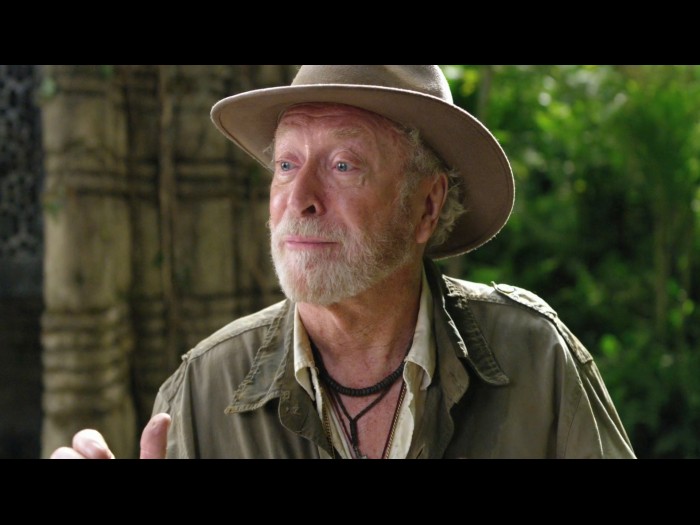
Michael Caine stars in the new 3D family movie “Journey 2: The Mysterious Island,” inspired by the Jules Verne adventure saga.  I spoke to him about what inspired him to take on the role and how it felt to ride on a giant bee.  Don’t forget to enter for a copy of the movie’s activity book!

I really enjoyed the movie!

I saw the movie, and I thought, well, it’s a movie for kids, but I thoroughly enjoyed it!  It goes down well with the kids and it gets some laughs — me and Duane .   The reason I did the film at all — apart from that it’s a fun script and all that sort of thing — is I have three new grandchildren.  And I never make any movies that children can see!   For their mother, I did “The Muppets Christmas Carol,” when she was a little girl, so this one I did for them.   She was about six or seven and a lot of the movies I’ve made are violent and with gangsters, so I wanted to do something she could see.   It comes around here in England every year, even now.  And I had never made a film in 3D, so that was the other reason.  I thought, I’ve got to do this — I’m nearly retiring, I’m 79 years old, and that was another great reason to do it.  I thoroughly enjoyed it, too.  It was great fun.  Where else do I get a chance to ride a giant bee?

Was that in a studio, in front of a green screen?

Yes, but we were really suspended!

Is it different for you as an actor to work in 3D?

No, not at all, it’s all special effects.  You don’t suddenly shoot your arm out and knock off people’s hats.   I thought their use of 3D in this was very clever.

I loved your uniform in the film, really the essence of an explorer.

It was easy!  It didn’t have to fit anywhere, it didn’t have to be clean and pressed, or rather it was pressed the wrong way, very badly!

What was it like to work with Duane “The Rock” Johnson?

He’s the nicest guy.  I suppose if you’re that big you can afford to be nice because no one’s ever going to be nasty to you!  But he’s the gentlest soul.  And he gave me the biggest surprise when he did his song.  When they said, “He’s going to sing the song now,” I thought, “Blimey, what’s he going to do with this?  I’ll bet he can’t sing.”  But he could sing!  He did a lovely little job with it, I thought.  It’s an amazing scene because that’s when the friendship starts.

Your character is very hostile to his character, right from the beginning.  Tell me how you established that relationship on screen.

There’s a sort of familial jealousy because he’s the new kind on the block.  But it was very easy because he’s a good actor.  I know he was an athlete and all that, but he’s done enough acting now to know what he’s doing and we had some good fun with the rows and everything.  They were also gentle rows.  It never looked like he was going to hit me or anything.  Thank God!  I thought the relationships were great in the film.

The production design is also outstanding.

When I first saw my place, made out of the hull of the ship, I thought it was wonderful!  I’ve never done a film like that before.  The closest I’ve come is “Batman.”  But that’s more grown-up, that’s not for little children.

It reminded me a little bit of one of my favorite of your films, “The Man Who Would Be King” because of the sense of adventure. 

I know what you mean!  Setting out to find your destination.  It was a journey — I wonder if there will be a “Journey 3?”

Are you going to do a sequel?

I’ll be 81 or 82 by then.  They’re going to the moon.  Not sure if I’ll want to spend three months in Iceland or something!

Where was this one filmed?

This was filmed in Hawaii in the English winter and we all got home for Christmas — another reason for doing it.  Hawaii has the strangest jungle.  It’s like an African jungle but because it is 2500 miles from the nearest land there’s nothing in it.  No insects, mosquitos, animals, reptiles, birds, nothing.  It’s quite weird because you go through this great big jungle and there isn’t a sound or a movement or anything.  Very spooky but at least you don’t get bitten or attacked.  There’s a couple of rats and snakes brought in by outsiders.

What was the toughest part of filming?

The most difficult part was the days in the deep jungle, walking uphill.  I am tough so it’s okay.

 I liked the way it was an adventure film with something to say about the relationships and especially what it means to be a father.

I was amazed at how a movie of this type, an adventure story for kids, the scriptwriters really went into the relationships.

What made you want to be in the movies?

I am the world’s biggest movie fan.  I used to watch a movie every day after school and I’ve seen every movie good, bad, and indifferent that was ever made.  I really am a movie buff.  I went to the movies when I was four, to the children’s show on a Saturday and fell in love with the whole thing.  The first person I ever saw on the screen was The Lone Ranger.  I thought, “I want to be The Lone Ranger.”  They were mostly American movies, because they made the movies for children.  I remember “Bambi” very well and “Snow White.”  The first time I ever cried in a movie was “Bambi.”

If you do make the next chapter and go to the moon, what do you want to see happen?

I’d like to see us get back!

Related Tags:


Actors Interview
Interview: Ali Landry of ‘Me Again’

Interview: Ali Landry of ‘Me Again’

Posted on February 2, 2012 at 8:00 am

"Me Again" starring Ali Landry

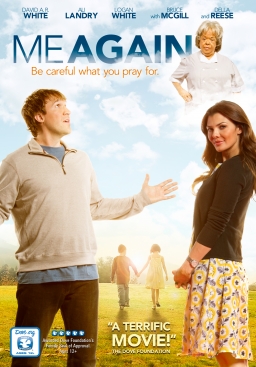
Have you ever wished you had taken another path?  We all wonder what our lives would be like if we had made a different choice and movies like “Me Myself I,” “The Family Man,” and “Sliding Doors” feature characters who get a chance to see the road not taken.  The latest film to explore this idea is “Me Again,” a funny and inspiring film about a middle-aged pastor (David A.R. White) who gets a chance to see himself in several different lives, from a wealthy businessman to a model and even a fish.

I spoke to the beautiful Ali Landry about her role as the preacher’s estranged wife and her faith as a sustaining force in her life and her relationships.

Why was this film something you wanted to do?

Me Again is a great little family film and very witty and funny and I liked the topic it tackled.

Is it important to you that your work be family-friendly?

Yes.  There are a lot of things I consider when I look at a project, but the most important is the takeaway for the audience.  Does it inspire them to take action?  What is the message behind it?

What is the takeaway for this film?

They say it several times in the film — happiness is a choice and before you start looking outside the place you are in, think about the blessings that you do have in your life.  My husband and I talk about it all the time.  We don’t understand how a marriage can survive without having God in it.  All you have to do is reach out and He will answer.  He is there for you.

What do you and your husband do to keep God present in your marriage?

We go to church of course.  We have a Bible study we go to — that’s where we met.  We surround ourselves with like-minded friends.  And we like to do business where everyone is on the same page.  My husband knows that his producing partners will hold him accountable and have his back in every situation.

Tell me a little about your faith journey.

I grew up Catholic and I was practicing to a certain extent but I was not walking the walk.  I was going through my life with blinders on.  I am very clear on the changing moment.  Before I met my husband I was in a relationship for six years.  There was infidelity and it really caused me to re-evaluate and change my entire life.  That was the moment I began seeking out God and needed Him to help me put one foot in front of the other.

Do you have a favorite Bible verse?

I didn’t have a favorite verse at the time when I was seeking God but I would pray before opening the Bible and ask a question and the passage I would read would give me a wave of peace and I always thought, “My questions were answered.”

How do you balance your home and work life?

That is the big question.  Every day I try to figure it out.  I go into every day with the intention of being the best I can be for my husband, for my children, for my work, for my friends.  But I try to give myself a break.  As a mom there’s the overwhelming guilt you always have about not doing enough but the next day is a new day and I will start fresh and try again.

Do you, like the character in the movie, sometimes wish you could see what your life would be if you took another path?

I don’t even go there.  I honestly feel like in that situation I told you about I heard God’s voice more clearly than I ever had in my life.  That’s where I was seeking Him out the most.  Even with the choices I’ve made since then I’ve felt I was swimming against the tide and out on my own.  I had a lot of pushback from my agents and managers when I gave them limitations on what I would and would not do.  But it gave me strength and I know I am doing exactly what I need to be doing in my life.  Any time I see a glimmer of “what if” or “I wish,” it’s about switching the gears in your mind.  I know I am where I am supposed to be and I’ve never been so happy and content.  That’s the difference in having the Lord in your life.  It keeps you in check.

Is it difficult to be a person of faith in show business?

Absolutely!  I have to say no to a lot of projects.  Thank goodness my husband and I are on the exact same page and he encourages me.  I was working working working for ten years with no breaks.  As soon as I took a stand, everything stopped and that was shocking.  But he encouraged me to take on my own projects and and I am working very hard and very excited and happy.

Tell me about your newest television project.

It’s called “Hollywood Girls Night.”  It was originally “Hollywood Moms Night.”   Alison Sweeney and I started it about 18 months ago.  We would invite our friends, other girls in the business and celebrity moms once a month, pot luck at each others’ homes, to be a support system for each other.  On television you see women so many times tearing each other apart.  One of my friends is actually on one of those shows and they pull her into meetings and say, “There’s not enough drama, you need to confront each other!”  We wanted to do something where we just showed up for each other, a support system both professionally and in our home lives.  People really responded to that and said they wanted to start their own groups.  So we decided to create a television show, and it premieres on March 5.  And I have another project called Spokesmoms, where every mom is a spokesmom, giving moms that really strong voice about the products they love.


Related Tags:


Actors Interview Spiritual films
THE MOVIE MOM® is a registered trademark of Nell Minow. Use of the mark without express consent from Nell Minow constitutes trademark infringement and unfair competition in violation of federal and state laws. All material © Nell Minow 1995-2026, all rights reserved, and no use or republication is permitted without explicit permission. This site hosts Nell Minow’s Movie Mom® archive, with material that originally appeared on Yahoo! Movies, Beliefnet, and other sources. Much of her new material can be found at Rogerebert.com, Huffington Post, and WheretoWatch. Her books include The Movie Mom’s Guide to Family Movies and 101 Must-See Movie Moments, and she can be heard each week on radio stations across the country.

Website Designed by Max LaZebnik