The Nice Guys

The Nice Guys

Posted on May 19, 2016 at 5:38 pm

B+
Lowest Recommended Age: Mature High Schooler
MPAA Rating: Rated R for violence, sexuality, nudity, language and brief drug use
Profanity: Very strong, crude, and explicit language
Alcohol/ Drugs: Drinking, smoking, drugs
Violence/ Scariness: Extensive graphic violence, guns, explosions, fighting, falls, many characters injured and killed, grisly images
Diversity Issues: None
Date Released to Theaters: May 20, 2016
Date Released to DVD: August 22, 2016
Amazon.com ASIN: B01F5ZY596

Copyright 2016 Warner Brothers
Shane Black at his best lives in the sweet spot he pretty much mapped out himself in his 20’s when he wrote the screenplay for “Lethal Weapon.” He figured out that hard-boiled action could be both exciting and funny. His characters have no illusions and few scruples, but in the tradition of loner anti-heroes from westerns to films noir, they have their own set of ethics. They do not like authority and they do not always obey the rules but they will represent the interests of their clients against corruption and bullies.

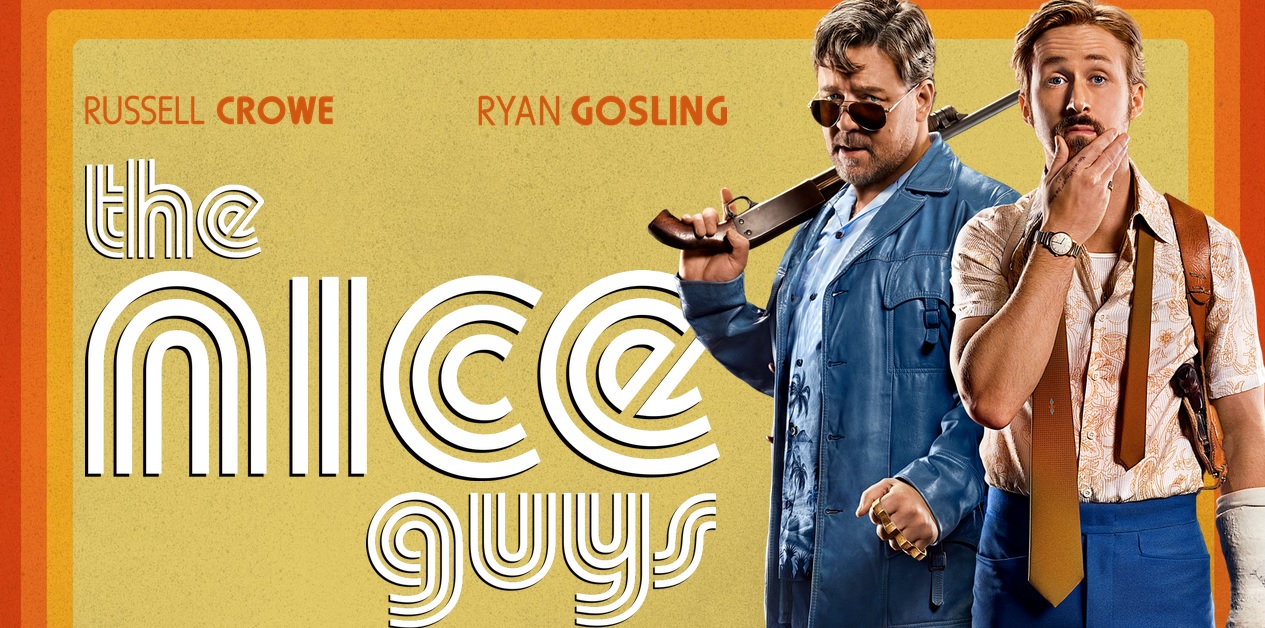
Black’s mismatched and yet perfectly yin-yang characters have included a “too old for this” cop paired with a wild younger one in “Lethal Weapon,” a cop and a thief-turned-accidental-actor in “Kiss Kiss Bang Bang,” and now a small-time private detective and single dad named Holland March (Ryan Gosling) and a muscle-for-hire guy named Jackson Healy (Russell Crowe). Healy, hired by a pretty young woman named Amelia (Margaret Qualley) to dissuade the men who are looking for her, goes to March’s home to punch him in the nose and break his arm. “We’re going to play a game. Shut up unless you’re me.”

March has been hired by a woman who says that her niece, porn star Misty Mountains (Murielle Telio), reported killed in an automobile accident, is still alive. March was looking for Amelia because he thinks she may have information about Misty. Healy is almost clinical in his communication with March. “Give me your left arm,” he says, not unkindly. “When you’re talking to your doctor, tell him you have a spiral fracture.”

But soon Healy himself is visited by some tough guys who rough him up for being in touch with Amelia. They even kill his fish. So he goes back to March to ask him to help find Amelia, and that leads them into a pervasive, murky mess of corruption, betrayal, pornography, a wild party, the Detroit auto industry, and a hit-man named John Boy (a “Waltons” reference, played by Matt Bomer), with many excellent 1970’s songs on the soundtrack.

Black is a master of the deadpan wisecrack that nails the essence of character, setting, and story, and Crowe and Gosling deliver with snap and relish. “There’s whores and stuff here,” says March’s young daughter, played by the marvelously poised Angourie Rice as Holly, the closest thing the story has to a grown-up with a conscience.” March, the sometimes hapless father who loves her dearly, is quick with a paternal correction. “Don’t stay ‘and stuff.'”

The mix of wit, slapstick, and mayhem has some dead-on period detail and some shrewd commentary on contemporary issues. Gosling’s comic timing is pure pleasure, especially in a gem of a scene where he juggles a lit cigarette, a magazine, and a gun, with his pants down. Crowe is fine, too, especially in his interactions with Rice. With any luck, they’ll be back for as many sequels as “Lethal Weapon.”

Parents should know that this film features extensive violence including mayhem, auto accidents, and guns, characters injured and killed, grisly and disturbing images, nudity, very explicit sexual references including pornography, very strong and crude language, smoking, drinking, drugs, and much of this is witnessed by a child.

Family discussion: How would this story be different if it took place today? What was the point of the Nixon story?

If you like this, try: “Kiss Kiss Bang Bang” from the same co-writer/director and “Get Shorty”
Related Tags:


Comedy Crime DVD/Blu-Ray Pick of the Week Movies -- format
Love & Friendship

Love & Friendship

Posted on May 12, 2016 at 5:54 pm

B+
Lowest Recommended Age: Middle School
MPAA Rating: Rate PG for some thematic elements
Profanity: None
Alcohol/ Drugs: Alcohol
Violence/ Scariness: Scuffles
Diversity Issues: Class issues
Date Released to Theaters: May 13, 2016
Date Released to DVD: September 6, 2016
Amazon.com ASIN: B01HE7NTX6

Copyright 2016 Westerly Films
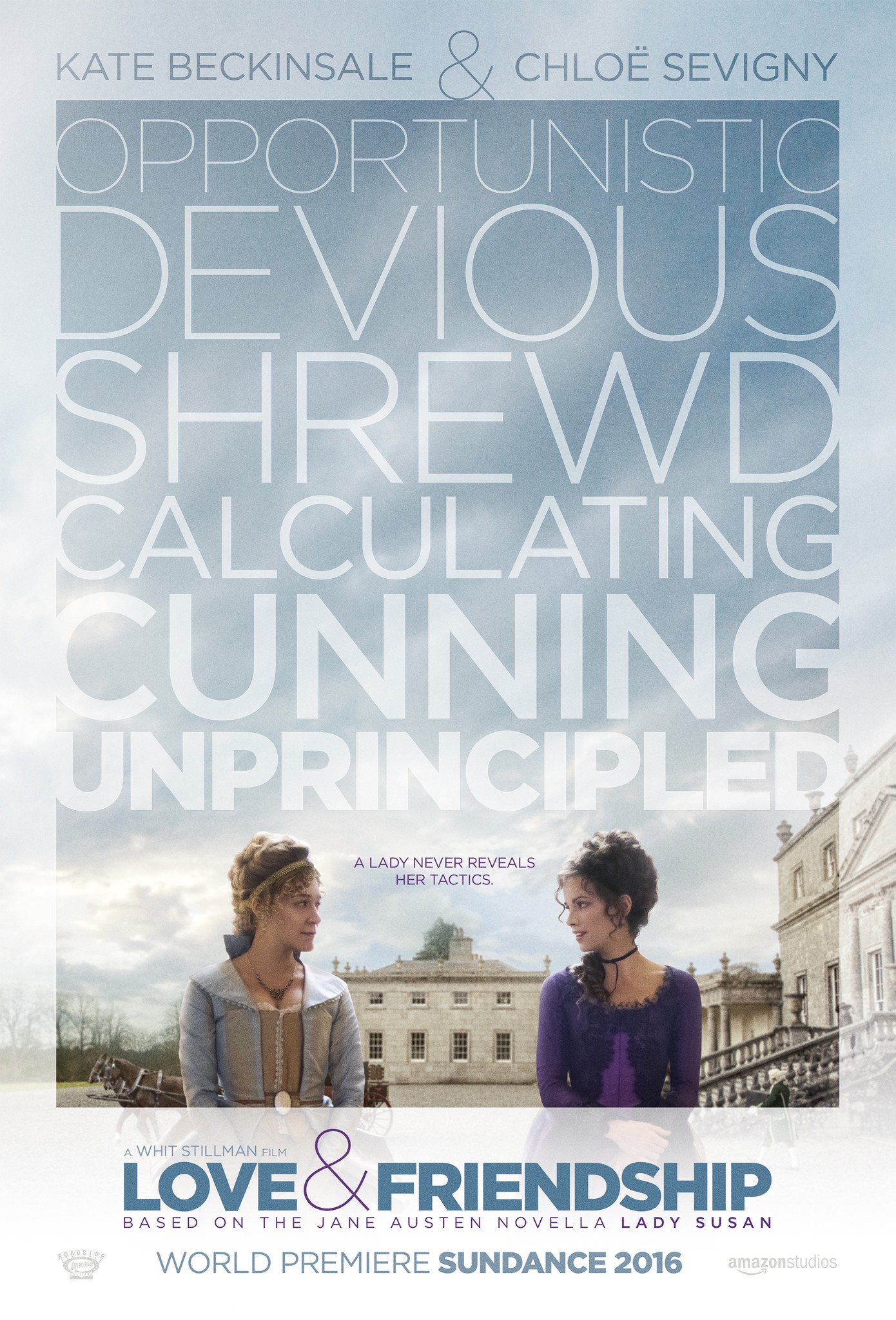
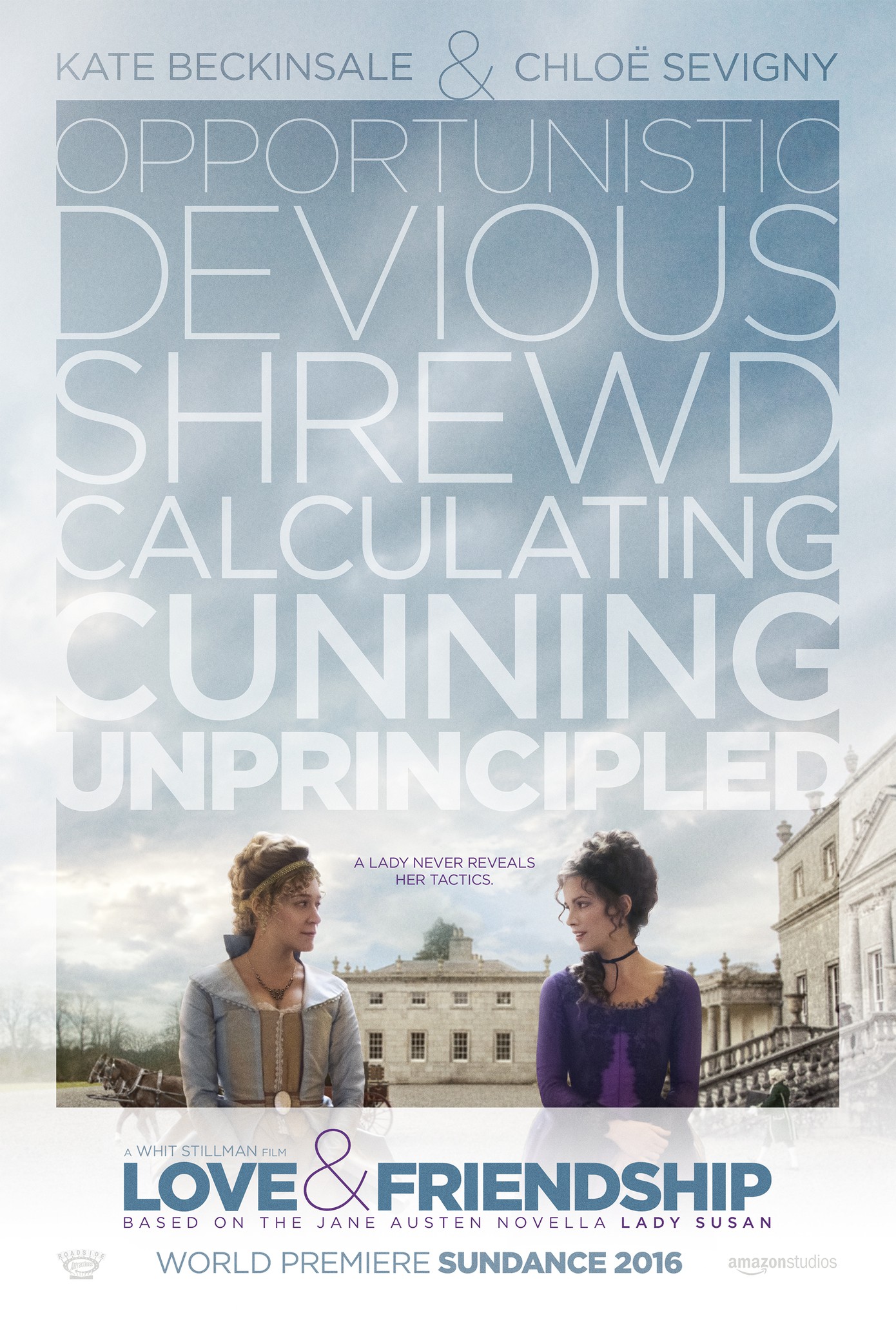
Who better to adapt Jane Austen’s epistolary novel, Lady Susan, for the screen than our finest contemporary observer of life among the “haute bourgeoisie,” Whit Stillman? A highlight of his first film was a conversation about Austen’s Mansfield Park, and his gift for epigrammatic dialog and understanding of class and money — and female protagonists — make it a natural fit. The result is a delightful confection about a woman described by Austen via one of the other characters as “the most accomplished coquette in England,” and one who “does not confine herself to that sort of honest flirtation which satisfies most people, but aspires to the more delicious gratification of making a whole family miserable.”

That assessment is not exactly accurate. Making a whole family miserable is somewhere between collateral damage and side benefit.

Lady Susan (fearless but effervescent Kate Beckinsale) is a recent widow with a teenaged daughter. In the manner of the era, when the gentry visited each other for months at a time, she has been staying with friends. First, she has no money and therefore her primary asset, aside from her guile and is her relationships with more comfortably settled members of her class. And second, the best chance for her to have a home of her own again is to marry her daughter off to a wealthy man. Stillman makes Lady Susan a more sympathetic character than Austen did, in part due to the vivacity of the actress who portrays her. It’s hard to have her believably portray such a captivating figure without our being captivated ourselves. But in addition, it is clear throughout that she may be ruthless and mercenary, but she has no other options. Her very status and gender constrain her from any other option, but she is undeterred. “In one’s plight is one’s opportunity,” she says. She has a gift for outrageous comments made with so much confidence they almost sound reasonable: About being sent away by her hostess: “If she were going to be jealous, she should not have married such a charming man.” About her daughter’s school: ““The fees are too high to even think of paying!” In the midst of an era of polite misdirection and euphemism, she is focused and direct, a hint of the coming modernity in the days of the harpsichord.

If she was around today, she’d be a CEO. Or a reality star.

Lady Susan has very little by way of education. She is not sure how many Commandments there are or what they contain. But she knows people, especially men. She knows her husband’s family has no socially acceptable vocabulary to tell her she can no longer stay with them. And when a handsome, eligible man warned about her skill with the opposite sex appears ready to resist her, she cleverly upends his expectations and before he knows it, he is captivated.

Stillman presents the story with wit and brio, introducing us to the characters with helpful on-screen descriptors: “his wealthy wife,” “a divinely attractive man.” The slight archness is his, or Austen’s, or Lady Susan’s; all are a bit reductionist when it comes to assessing everyone in the story according to his or her usefulness. He resists the usual musty respect for all classics, especially those featuring corsets, and presents the story with elegance and a refreshing briskness. Lady Susan would approve.

Parents should know that this film includes themes of deception and adultery.

Family discussion: Why did Lady Susan confide in Alicia? How did Lady Susan show her understanding of what it took to gain the affection of the different men around her?

If you like this, try: more Jane Austen films including “Sense and Sensibility” and “Pride and Prejudice,” as well as the books that inspired them

Related Tags:


Based on a book Comedy DVD/Blu-Ray Pick of the Week Romance
The Meddler

The Meddler

Posted on May 1, 2016 at 11:42 am

B+
Lowest Recommended Age: Mature High Schooler
MPAA Rating: Rated PG-13 for brief drug content
Profanity: Some strong and crude language
Alcohol/ Drugs: Drinking, marijuana
Violence/ Scariness: Sad offscreen death, minor accident
Diversity Issues: None
Date Released to Theaters: April 29, 2016

Copyright Sony Pictures Classics 2016
Marnie (Susan Sarandon) is the irresistible force who, just before this movie starts, meets the immovable object: devastating grief in the loss of her husband. She does not have the vocabulary to process this loss. And so she tries to hold onto the person she was before. And she tries to convince everyone around her — and herself — that she’s fine. “The Meddler” begins with a brief monologue about how much she loves living in Los Angeles, where she has moved to be near her only daughter, Lori (Rose Byrne). “It’s like Disneyland!” she says cheerfully.

But she has trouble filling her days and finding a place to use her generous impulses. And so, as the title indicates, she meddles. She calls Lori many times a day, and when Lori does not answer, she comes over — with a bag of bagels. Lori, grieving in her own way for her father and for a breakup with a handsome actor, does not respond, and so Marnie turns her attention to anyone who comes along, from Lori’s friends to the guy at the Apple store genius bar. What she does not feel ready to do yet is to say goodbye to her husband by burying his ashes and putting up a headstone in the family plot back in New Jersey. “It’s been a year,” she tells his brothers. But it has been two. And she is not ready to think about loving someone new, even after she meets a man who is from her home town and seems perfect for her (Michael McKean).

When Lori’s friend Jillian (SNL’s Cecily Strong) mentions that she needs a babysitter, and so Marnie shows up at her house — with bagels. Jillian says that she does not have a mother and she never had the dream wedding she wished for. So Marnie offers to give her a wedding. And when she encourages the Apple genius (Jerrod Carmichael of “The Carmichael Show”) to go back to school, she offers to drive him. She has so much to give, but the loss of her husband has left her with no place to give it and a fear of losing him even more if she changes too much or gets too close to someone else.

Sarandon gives one of her best performances, which means she is truly superb, and Byrne is excellent as well. When Lori’s ex and his new girlfriend find Marnie and Lori having dinner together on Valentine’s Day, there is a beautifully funny and heart-wrenching moment as both mother and daughter try so hard to appear to be doing fine that they do not notice they are undermining each other. In another scene of piercing bittersweetness, a day of emotional upheaval ends in mingled laughter and tears. JK Simmons brings dry wit and humanity to the role of an ex-cop and hen farmer whose quiet understanding gives Marnie her first chance to let go a little, and to acknowledge, after some resistance, that it is something she wants and needs to do, for herself and for Lori.

Writer/director Lorene Scafaria (“Nick and Nora’s Infinite Playlist” and “Seeking a Friend for the End of the World”) has a rare gift for finding the space in between joy and grief, and a rare understanding of the power of small moments to tell a big story. As Marnie watches Lori’s script being filmed, she is moved by the way Lori has used her writing to work through her grief, and as we watch this film, we share that feeling.

Parents should know that this film has some strong language, sexual references, and drug use.

Family discussion: Why does Marnie want to help people she hardly knows? What’s the difference between being supportive and meddling and how does that change in different circumstances?

If you like this, try: “Hello, My Name is Doris” and “Seeking a Friend for the End of the World”

Related Tags:


Comedy Drama Inspired by a true story Movies -- format Romance
Keanu

Keanu

Posted on April 28, 2016 at 5:58 pm

B+
Lowest Recommended Age: Mature High Schooler
MPAA Rating: Rated R for violence, language throughout, drug use and sexuality/nudity
Profanity: Very strong language including n-word
Alcohol/ Drugs: Drinking, drugs, and drug dealing
Violence/ Scariness: Extended action violence, many guns, characters injured and killed
Diversity Issues: A theme of the movie
Date Released to Theaters: April 29, 2016
Date Released to DVD: August 1, 2016
Amazon.com ASIN: B01DYX9Y9M

Copyright 2016 Warner Brothers
I laughed so much and so hard at this movie that by the time it was over I had become of those Key and Peele show parking valets. I just wanted to stand in front of a hotel in my red vest saying over and over, “How about them Keys and Peeles, though! How ABOUT them Keys and Peeles!”

Keegan-Michael Key and Jordan Peele, with a script co-written by Peele and directed by their series director Peter Atencio, have made one of the smartest and funniest comedies of the year, a film that works at every level from slapstick to sophisticated wit to social commentary and slam-bang action, with even a little romance.

Fans of the series will appreciate references like a trip to see a movie starring “Liam Neesons” but even those who have never heard of their Obama anger translator routine or their legendary East-West Bowl player names will immediately understand their characters and their situation.

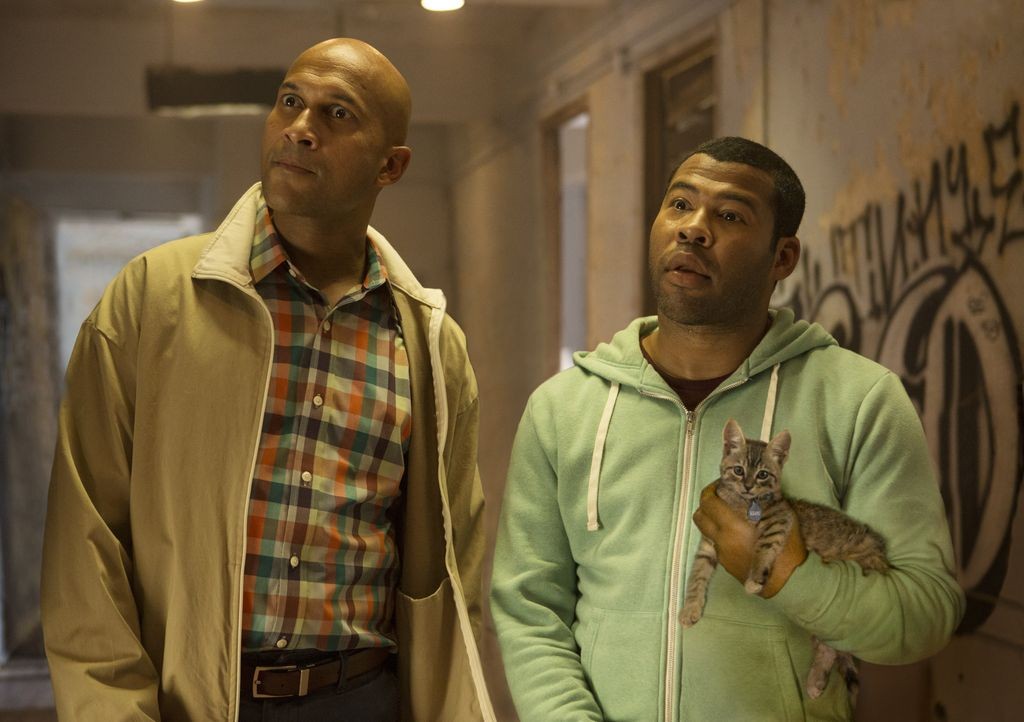
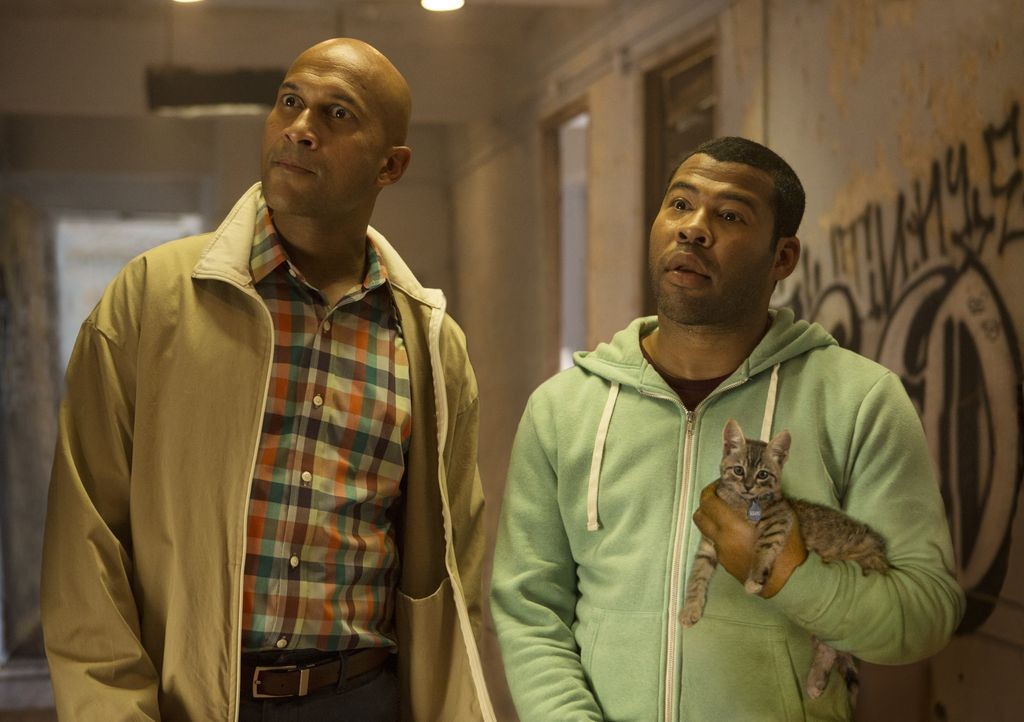
Clarence (Key) is a happily married father who drives a minivan and listens to George Michael. His cousin Rell (Peele) is a pot-smoking slacker who is devastated following a break-up. But when he adopts an abandoned kitten his spirits lift, and he names it Keanu. When Keanu is stolen by the 17th Street Blips, a gang made up of gangsters who could not make it in the Bloods or the Crips, Clarence and Rel decide to rescue him. This leads to a strip club called HPV with a two-for-one lap dance special, run by drug dealer known as Cheddar (Wu-Tang Clan’s Method Man). Clarence and Rell, trying to look tough, introduce themselves as Shark Tank and Tectonic. Clarence wonders how tough someone named Cheddar could be, but Rell points out that “You only name yourself something adorable if you can back it up.” When they explain to Cheddar that they are in the market for a “gangster pet,” Cheddar tells them they can have the kitten he has dubbed New Jack (complete with do-rag and gold chain) if they lead his gang on the delivery of an ultra-potent new drug. A series of encounters, escalating in peril, violence, and hilarity. It would be wrong to spoil more, so I will leave it at this: there is a very funny surprise guest star and Clarence’s professional team-building skills come in handy.

Key and Peele, both biracial, have always found comedy/commentary gold in their ability to reflect on race and culture. By casting themselves as highly and somewhat self-consciously assimilated black men who assume the media-created image of violent black drug dealers, they have added some sharp meta-commentary to a classic set up: fish-out-of-water, normal characters drawn into abnormal circumstances. Rell’s own weed dealer, played by SNL alum Will Forte, is a white man who is also taking on a stereotyped black persona, including cornrows. Clarence, who tries to order a white wine spritzer in the strip club and who tells Rell he sounds like John Ritter, swings into what he thinks is gangster mode when Chedder’s hostile n-word-spouting henchmen approach him. The transformation is wildly funny, both the specificity of it, and the way it fits so seamlessly into our own media-created notion of that archtype and the porous aspects of his new persona as the “real” Clarence keeps peeking out. Clarence and Rell are as innocent and helpless as the adorable kitty in the midst of druglord shoot-outs. Key and Peele are pretty adorable, too, in a gangster pet sort of way.

Parents should know that this film includes extended peril and violence, many guns, characters injured and killed, drugs and drug dealing, sexual references and nudity, strip club, and very strong and crude language including the n-word.

Family discussion: Where did Rel and Clarence get their ideas of how to behave with the Blips? How did Clarence’s team building training come in handy?

If you like this, try: the Key and Peele television series, “Date Night,” and “Analyze This”

Related Tags:


Comedy DVD/Blu-Ray Pick of the Week Race and Diversity
Mother’s Day

Mother’s Day

Posted on April 28, 2016 at 5:20 pm

Copyright 2016 Open Road Films
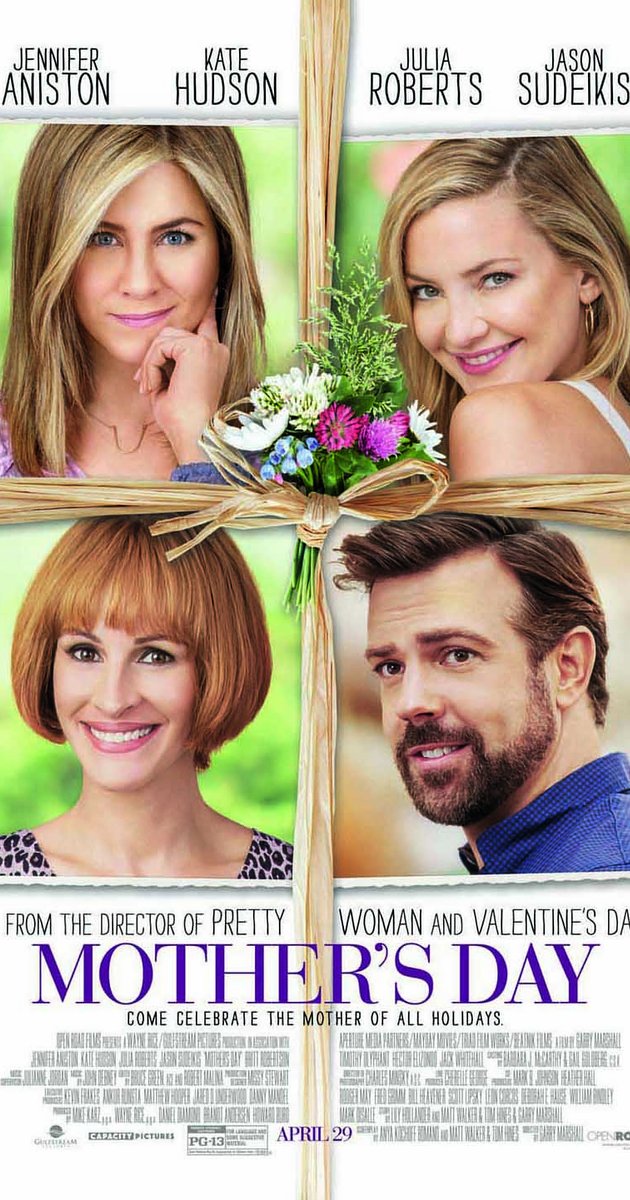
I tried, Garry Marshall, I really did, but you finally broke me. I did my best to enjoy Valentine’s Day (I called it a tweet of a movie but gave it a B for being mildly entertaining) and New Year’s Eve (I called it a big budget version of the old television series “The Love Boat” and gave it a C, but managed to find some genuinely touching moments). I was fully expecting to find some light entertainment with a galaxy of big stars showing that they can make lackluster material shine a little bit.

So, if “Mother’s Day,” the third in Marshall’s big star/tiny script mash-ups keyed to a holiday, was no worse than the first two, I was determined to give it the benefit of the doubt. I have a mom; I am a mom, I wrote a book about the best movie mothers, and so I’m the prime audience for a bunch of stories about the tenderest and often the most fraught of relationships, mother and child. If it managed to be inoffensive, I would have recommended it. But with this film, Marshall and his inexperienced co-screenwriters cross the tipping point from merely synthetic to downright vile, with apparently no notion of the difference between humor that points out the virulence of bigotry and “jokes” that treat racism and homophobia like just another cutesy personality quirk.

As with the earlier films, there are a lot of characters presenting variations on the theme. But the characters do not even rise to the level of stereotypes and the storylines couldn’t fill a fortune cookie. There is a chasm-sized disconnect between the film’s assumptions about our belief in any of them and its ability to deliver that level of interest. Not one thing is believable even in heightened, glossed-over movie terms. Everyone lives in gorgeous homes and there are no concerns about money. Intrusive product placement gives the film a sleasy infomercial vibe even as it pretends to make fun of home shopping channels hawking cheesy merchandise. Some odd random shots of individuals who have nothing to do with the story are either friends of the filmmaker or evidence that at one time the movie was even worse and got recut. It’s creepy that it takes place in the very diverse city of Atlanta but everyone is white except for the characters whose primary job is to serve as a racial stereotype. Pretty much everyone in the film is a stereotype, but the white ones are not offensive, just dull. The non-white ones are both.

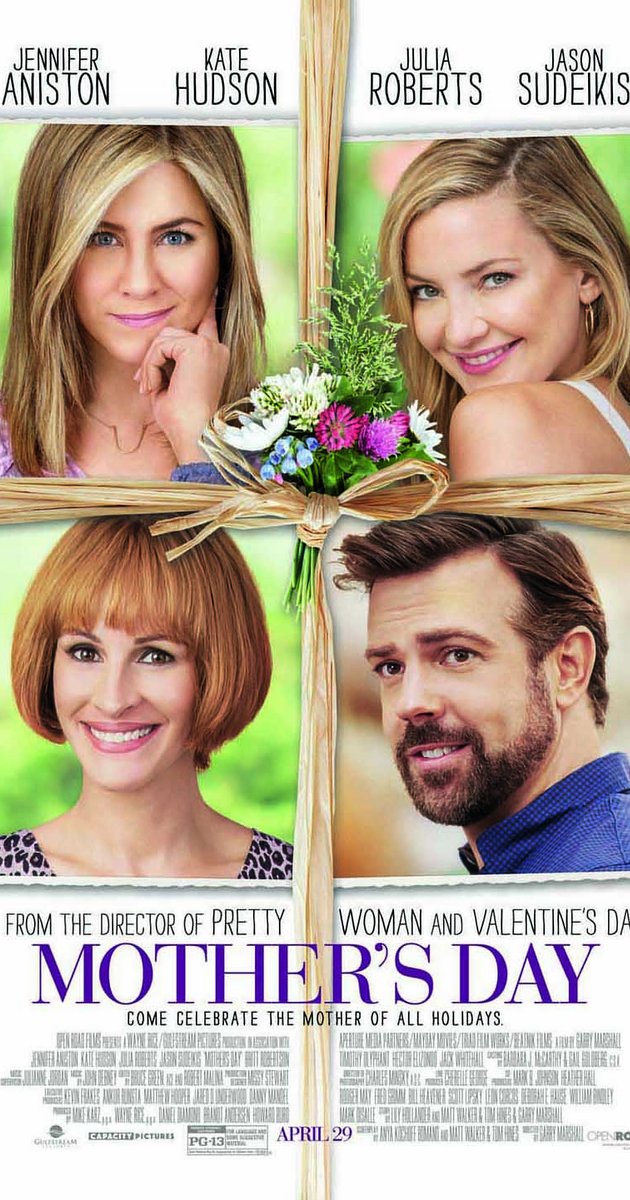
A quick recap of the set-ups — very quick so neither one of us will nod off in stunned boredom. Sandy (Jennifer Aniston) is a single mom with two sons who is upset because her ex (Timothy Olyphant) has married a beautiful young woman. Kristin (Britt Robertson of “Tomorrowland”) loves the father of her baby, an aspiring stand-up comic, but she won’t accept his marriage proposal because she was adopted and thus thinks she does not know who she is. Sisters Jesse (Kate Hudson) and Gabi (Sarah Chalke), who live next door to each other, have not told their bigoted, RV-driving, redneck parents about their spouses — Jesse is married to an Indian-American (Aasif Mandvi) and Gabi is married to a woman (Cameron Esposito). And sad widower Bradley (Jason Sudeikis) has to cope with being a single dad of two daughters. Julia Roberts, in a disastrous orange traffic cone of a hairdo (it’s actually a wig leftover from “Notting Hill”), is also on board as a shopping channel mogul presumably because Garry Marshall gave her her big break in “Pretty Woman” and she will do anything for him.

A series of exposition-heavy introductory scenes (Bradley and his daughters standing at the gravesite: “I can’t believe it’s been a year,” another character explaining, “I have abandonment issues,” Sandy, Jesse, and Gabi helpfully recapping everything that is going on in their lives to each other like the crawl at the bottom of the CNN screen) is followed by a series of micro-complications that fall somewhere between a 6th grade skit and a one-season basic cable sit-com, following by a series of contrived and cloying “resolutions.” The only clunky device left out is words of wisdom from a clown. Oops, no such luck. It’s there. And it’s not over! There are the most lifeless bloopers in the credits in the history of bloopers in the credits.

This is all larded with cornball slapstick wildly outdated “hilarity” that includes a man wearing a woman’s pink silk bathrobe, a man falling off a balcony, a man embarrassed at having to buy tampons for his daughter, a woman with her shirt ripped open holding supposedly professional design presentation model that looks like a third grade diorama, and the same woman getting her arm stuck in a vending machine.

It gets worse. Cops run down a speeding vehicle and make the only non-white character lie down on the ground. It gets resolved when one of the officers recognizes him; the issue of racial profiling is portrayed as a joke. So is a crack about a little person named “Shorty.” The stand-up comic ends up holding his baby and not delivering any jokes during his crucial make-it-or-break-it set, jokes which were not only funny but which might have made it funny and meaningful. Same for this wilted bouquet of a movie. Give Mom breakfast in bed instead.

Parents should know that this film includes discussions of bigotry but also insensitive portrayals of racism and homophobia, brief strong language, sad off-screen death of a parent, family issues about divorce and remarriage, some strong language, and alcohol, including scenes with a baby in a bar.

Family discussion: How did meeting Miranda make Kristen think differently about marriage? What should Jesse have told her parents about her husband?

If you like this, try: “Valentine’s Day” and “New Year’s Eve”

Related Tags:


Comedy Family Issues Series/Sequel
THE MOVIE MOM® is a registered trademark of Nell Minow. Use of the mark without express consent from Nell Minow constitutes trademark infringement and unfair competition in violation of federal and state laws. All material © Nell Minow 1995-2026, all rights reserved, and no use or republication is permitted without explicit permission. This site hosts Nell Minow’s Movie Mom® archive, with material that originally appeared on Yahoo! Movies, Beliefnet, and other sources. Much of her new material can be found at Rogerebert.com, Huffington Post, and WheretoWatch. Her books include The Movie Mom’s Guide to Family Movies and 101 Must-See Movie Moments, and she can be heard each week on radio stations across the country.

Website Designed by Max LaZebnik