Interview: Carolyn Jones of “American Nurse”

Posted on May 19, 2014 at 8:00 am

“American Nurse” is a deeply moving documentary about the men and women who are, as the bumper sticker says, “patient people.”  The film explores aging, war, poverty, and prisons through the work and lives of nurses.  Jason Short drives up a rugged creek to reach a home-bound cancer patient in Appalachia. Tonia Faust runs a prison hospice program where inmates serving life sentences care for their fellow inmates as they’re dying. Naomi Cross coaches an ovarian cancer survivor through the Caesarean delivery of her son. Sister Stephen, a nun, runs a nursing home filled with goats, sheep, llamas and chickens, where the entire nursing staff comes together to sing for a dying resident. And Brian McMillion, an Army veteran and former medic, rehabilitates wounded soldiers returning from war.  This film will touch, uplift, and inspire you.  It was a great pleasure to speak with writer/director Carolyn Jones.  I also spoke to Sister Stephen, and that interview will be published later this week.

Did this project start as a book?

Yes, it began as a book. I’ve actually published a number of books. And Living Proof: Courage in the Face of AIDS is probably the most similar for me kind of emotionally to this one, more so than any other project.  I’ve really spent my career taking pictures and telling stories of people that I think are admirable, that I think we can learn something from, that we can be inspired by. I’m always eager to shine a light on those stories. So I was asked to do a book that celebrates nurses back in the end of 2011 by a global health care company came to me. They wanted to sponsor a project that would be a photo-journalistic study of nurses all across America and show the best nurses, meet the best nurses. It was a perfect sponsorship for someone like me.  They had absolutely no editorial control and so it was kind of like a PBS sponsorship where they would just support the project and get behind what I was doing. I think they knew what kind of work I like to do so it was a really great match. Anyway it started off that way and I have to say as I travelled across the country my mind was completely transformed by the over one hundred nurses that I had the chance to photograph and interview. By the time I was two months into the project I knew this was an extraordinarily special group of people that I was going to want to get to know.

They’re really dealing everyday with this critical balance between being very caring and compassionate and yet holding on to some kind of sense of themselves where they don’t get washed away in it.

And that’s a very, very fine line to walk. I had no idea what nurses do. I mean zip! I had gone through chemotherapy with breast cancer and my nurse really got me through that on a personal level so I knew what that kind of nurse does. But I really knew nothing about the diversity and the depths of knowledge that nurses have and all the different things that they deal with so when that lid got blown off I was really struck. My first feeling was “Oh good heavens they’re all saints!’ and I honestly would talk to someone and just think, “You are just from a different planet than I am.” And it got very interesting: “Are you born like this? Are you born to be caring for your fellow man and completely non-judgmental?” They seemed to me, to be people that were just on a higher plane than the rest of us.

And then I kind of got comfortable and caught my stride and I realized that a lot of the qualities that nurses have are qualities that I believe as human beings are innate within us.  I believe we will care for our neighbor for the most part and I believe we will help one another given a certain set of circumstances. So I started to get a little bit comfortable with it. Maybe somewhere within me I had some of the qualities that let me inhabit the same earth that they do. And then by the end of the project I was convinced they were saints and decided that they have a completely different DNA structure than I do!  And I will never be anything like them, they’re incredible. Everything I want to be, everything that I think matters during life and at the end of life are things they think about and act upon everyday and just to be in their presence makes you a better human being.

Do you think that we as a culture do enough to support them, particularly with regard to the way that we structure health care?

No! I mean, not even close.

We’re so far off from understanding what nurses do and how they can contribute. We haven’t even begun to scratch the surface. We have got this group of people in this country that are non-political, can’t be bought, they see us holistically, they know how we suffer, they know what makes us healthy, they know where we find joy, they know how to make the hospitals run smoother, they know the full effect of war on our young men and women coming back from fighting, they know what poverty looks like, they know what working in the coal mines look like, they know what end of life is. They should be a part of every conversation, there should be always a nurse sitting at the table to remind us whatever choice we’re making, whether it’s about health care, going to war, food stamps, closing down a school, I don’t care what it is, they can tell us what effect this is going to have on our health and ultimately on our children.

And it’s critical that we stop and listen to them because we don’t have another group of people with this incredible treasure chest of knowledge. We don’t have them; there isn’t anybody else that we can turn to that is as, dare I say, pure and straight forward and non-judgmental and non-political as this group. They are capable of great things  because they do have something innate that they are born with that make them different than the rest of us. But they are educated constantly to be non-judgmental, to look at things at face value, to accept everybody and try to understand the cause of someone’s behavior rather than just react to it. And it’s absolutely invaluable and I think this country needs them desperately and doctors are great, this is not a project that is trying to say nurses are great and doctors aren’t. That’s not my message at all.

We don’t know many things about our nurses and “Nurse Jackie” just doesn’t cut it. I’m a huge fan of Edie Falco.  She’s brilliant and I wish she had lent herself to something else because it did a great disservice to nurses. I haven’t met a nurse in the last three years that had anything good to say about that. It’s not who they are. And I was lucky enough to meet some of the finest in this country.

How did you find the nurses you followed in the film?

First we would settle on a topic like returning war veterans and what the military had to say about what those women and men were facing. And so we went to the place in America that had more returning war veterans from Iraq and Afghanistan than any other place in the country. That was the VA Hospital in San Diego. Then we went to that hospital and asked them to nominate a few nurses that not only can speak to this issue but also represent the hospital really well, that are like the finest nurses in the industry.  So that’s the way we functioned all across the country.  We were able to meet nurses that were nominated by their peers and by their supervisors, and all of them are kind of the best of the nurses in that particular facility or place where we were. And so I say that because I’m not trying to say that all nurses are without fault either, they’re human just like the rest of us.  But there are more great nurses than any other pocket of a profession that I have certainly encountered in my life and I’ve been interviewing and meeting people for over 25 years.  This is an extraordinary group.

It reminds me a little bit of documentaries like “Twenty Feet from Stardom” or “Only The Strong Survive,” where we turn our focus to the people at the side and not the ones that usually get the leading role.  Their job is to help other people.

I happen to love stories like that because you find the richness in life there. And you can do a deep dive in and find out makes things work and I love that.  But I think in this case in the process of uncovering that I discovered that there is a reason that they don’t have a loud enough voice right now.  We don’t know what they do, we have this preconceived notion of what nurses do and it involves holding hands and taking your temperature, and caring for people and being empathetic and all of those things.

We don’t realize how smart they are; we don’t realize the kind of education it takes to become a nurse and we don’t realize how they continue to educate themselves. I heard this so many times, they’ll get a patient who…it could be anything, a burn victim that is hurt in a different way that they didn’t encounter before.  They dig in and find out how to help that person. And they get more certifications to be able to help the next person who is dealing with the same thing. That’s just the way their minds work. That’s why there are so many darn letters after all of their names. They have like this long list of number of letters, all of them. Half the time I couldn’t keep straight to who have what but that’s because they are so well educated and they continue to educate themselves because they’re driven by taking the knowledge that they had from the person that they just cared for and using it for the next person. And it’s remarkable.

And what do they do to keep from not falling apart over the tragedies they see around them all the time?

I was thinking, “Do you all get in your cars and drive for 45 minutes and sing Dionne Warwick songs or something to let it go?” But they all do different things. So for some of them there are groups of their colleagues in the hospitals, so there might be something that happens and they’re able to meet right after someone has died, and they can talk about it and kind of get beyond the moment by finding strength in others. Some of them actually do get in their cars and cry or sing or just try very hard to leave that moment behind them and drive home and then walk in the front door, take of their scrubs and make dinner for their families. That just blows my mind on so many levels, it’s incredible! And some of them aren’t able to cope, frankly. Some of them have a difficult time having personal relationships because it’s so hard to talk.  Nobody wants to hear that stuff.  Nobody wants to know what your day was like.

Naomi Cross is a Labor and Delivery nurse at John Hopkins and is also a Bereavement Counselor.  So she’s the one helping moms when their babies don’t live.  She’s married to this guy named Jason Cross.  We should clone him because he’s so supportive and so aware of how important the work that Naomi does is. And he cooks and he’s there and that’s the way they solve it. They have a young boy who is just adorable, he’s in the film as well, and they kind of have found this balance in life so that she can get in the car and go home and walk through the door and leave it outside most of the time and just enjoy and build herself back up with the love of her family.

But it’s not easy and it takes a very, very special person to be married to a nurse because of what they go through in a day.  The film takes us over the threshold into the patient’s room so that we can see them caring for other people.  You actually see a baby come into this world and you see a prison nurse attending to a nasty wound on a man’s leg and you get a little glimpse, a little understanding of how dramatic and profound these moments can be that nurses go through. And a lot of the nurses who have seen the film have said things like: “I can’t wait to show my sister and my mother and my cousin or even my husband or my wife because now they’ll get it.  Because there isn’t any way for us to understand.  They put their hands inside our bodies, they deal with gruesome things and they’re fearless.

I’m going to speak to one of the nurses in the film, Sister Stephen.

Oh my gosh! Sister Stephen transformed me, I want to you to know. There is more life at Villa Lerado than any place I’ve been. I live in Manhattan and I think we very often spend time in the here and now. Oh come on…we all do right? We are very focus on right now and one of the things I think is wrong with the way we live, we’re so trying to hang on to our youth we’ve forgotten that there is a cycle to life, that we’re born and we die. And we try to stay young for so long.

Sister Stephen has the full cycle of life at Villa Laretto. She’s got all these animals that she uses as animal therapy. I’m not just talking about a couple of ducks.  She’s got llamas and woodpeckers and monkeys and these animals all give birth and she brings those baby animals either into the facility herself and puts those little babies into the laps of the elderly or she puts the elderly in wheelchairs and takes them out to witness all those baby animals on the farm. And then on top of that this woman is a genius, she also brings in respite kids from the town, kids that have all kinds of different problems either developmental problems or problems at home. She brings them in and they help her care for the animals. And those young people relate to the elderly in such an extraordinarily beautiful way.

We need to be reminded that our time here is so precious. She reminded me of that. I think of her every day. She’s reminded me that we are born, it beautiful here, we are lucky to be here. We need to cherish it, we need to make the most of our time and then we leave. And that can either be a beautiful moment or a difficult moment but that’s the way it’s going to be for all of us. And I think she lives that every day.  She taught me more in the amount of time that I have known her probably than anyone else in my life and she’s a very, very special human being.

Related Tags:


Directors Documentary Interview

Interview: “Fed Up’s” Laurie David and Stephanie Soechtig

Posted on May 12, 2014 at 3:59 pm

Oscar-winning producer Laurie David is back with an even more inconvenient truth: our food is killing us and the government is powerless to stop food companies from making it worse. I spoke to David and director Stephanie Soechtig about the film.

I want to start with the end — to me the most interesting part of the movie was what I call the Citizens United problem,orporate involvement in making policy decisions about health and nutrition and disclosure. One of the most devastating revelations of the film was the story about the way the industry softened findings of a World Health Organization report on the impact of sugar on health.

SS: What’s interesting about the WHO report was just how hard it was to actually find that story. Peter Jennings, who appears in a clip, was the only American newscaster who covered that. I found it initially, in a paper from the UK, and I contacted the head of the World Health Organization at the time and asked him more of the story but I couldn’t find anything in the press on this other than that one Peter Jennings clip. We really had to dig hard to unearth that and it really didn’t get any mainstream press attention in the US. And the headline in the UK paper was “George Bush is beholden to sugar barons and he is jeopardizing the future of American children.” It was an incredibly damning letter the WHO had sent to Tommy Thompson at the time. I’m a journalist by trade and had I seen that, it would have been my lead story. It was a really damning letter and it got no coverage. So it was just interesting to see just how the media was a bit complacent in what happened as well.

fed up poster

And what do you think is the reason for that? Do you think it’s because of their advertisers? Do you think that they sensed that there isn’t an interest in this as an issue?

SS: Yeah, a hundred percent. Look at the recent effort of the voluntary guideline to stop marketing to kids. Some of the people that were up there lobbying against it were some of the major networks and you saw Viacom and Nickelodeon and all of them up there because they are reliant on the advertising dollars. So everyone has a dog in this fight it seems.

LD: No one cares about the health of the American public.

Another area where that came up was the lack of transparency around sugar on labeling of food. What went into the decision not to have a percentage displayed?

LD: I think that the industry has been fighting that from day one. I don’t think that anybody even tries to do it anymore. It’s all part of the conventional labeling, completely accepted. That’s got to be some serious under the table stuff that’s gone on to keep that off the label. But you know what’s funny about it? What the truthful daily recommended amount of sugar that you need per day is? It is zero, zero! You can imagine how damning that number would be for all these products!

That chart that you show about the amount of sugar in our food is really shocking. Every morning I take calcium vitamins and because of the movie I looked at the sugar content and I was shocked! As soon as I’m done with this jar I am going to try to find some calcium that doesn’t have sugar in it.

SS: Exactly! And that is the whole point of the movie. We want to level the playing field for people. It’s heartbreaking that families think they are doing the right thing, think they are making the healthier choice and what they are eating is making them sick. It’s not right! And just look at yogurt as a great example right now. Yogurt is marketed to death as a healthy choice for breakfast and if you look at the sugar content of most of these fruit filled yogurts, honestly it’s a dessert.

The other thing that surprised me was about the takeover of full lunchrooms by fast food companies. Is that based on lobbying at the local level or is that a purely economic decision — where did that come from?

SS: We met with a principal and she was just as distraught as anyone that her student body was able to buy diet soda and candy bars for breakfast. And she felt that her hands were tied as well too. She said, “There’s nothing I can do about it.” And I think everyone just feels a little hogtied about the policies. What is missing is a common sense approach. We all know that tomato paste isn’t a vegetable and that french fries aren’t vegetables. And I think that we were all really shocked when we saw the footage that these kids were sending us back that they had slushy machines and McDonalds in their cafeteria.

How did you find the kids that struggling with obesity and their and the families?

SS: We spent a little over a half a year just calling schools, churches, synagogues, different hospitals, doctors that specialized in diabetes and obesity and we’d say, “We’re looking for some families that could give us sort of a look into their world. What was making it so hard to make good food choices?” And it was incredibly difficult to find people. It was incredibly labor-intensive. But it’s incredibly courageous of the families. You saw how candid they were with. It all just kind of fell into place I think the way it was supposed to because we found these incredible families who really opened our eyes to things that we had no idea were happening.

And yet they didn’t really make much progress.

SS: We weren’t making a reality show. This wasn’t “The Biggest Loser.” We didn’t send trainers to them. This was asking them to show us what was happening in their lives. They were our field reporters on the ground showing us life on the front lines. So how could they make progress? What they showed us is how much misinformation is out there. And the answers to what is happening is this film. So I think the real story now is to see what happens once they’ve seen the film, what progress they make then.

LD: You saw the end of the movie that Tina and Brady started cooking real food and they changed their lifestyle. Tina has lost 100 pounds. Of course, Brady has had a tougher time. It’s the entire food carnival environment we are living in. So Brady went on to get a job at Bojangles and his school asked him to sell candy bars to raise money. Te second he left his house, this is what he is dealing with so it is not a big surprise he gained the weight back.

SS: I don’t know why are so shocked that his school asked him to sell candy bars. I mean, there are Girl Scouts selling cookies right on every corner. It’s crazy.

And the ads for these foods are always saying, “You deserve this,” or “This is going to help you get your energy back.” 

LD: “Open happiness.”

SS: And happiness is used as a marketing tool for everything! I mean it’s really outrageous, it’s outrageous!

What kind of research material are you developing for people to have to follow up and learn more?

SS: We have a great website. We have some school curriculum on there already and a discussion guide. And one of the goals of the movie to get our 60 minute version of it into every school in the country.  We made the movie with kids in mind, we want kids to see movie and be empowered by it. Another thing we are doing and it’s never been done before, we have dubbed a Spanish language version of the movie which is going to be released on May 16th in certain markets. So I think we’re doing as much as we can and we are hoping that the single most important thing is for people to come out to the theaters and see this film.

And I have to say, the things I think we put out are so powerful. I mean, look at our poster. I think the poster really breaks through the haze of media stuff out there. I think it is iconic. It was one of the most popular Instagrams the week it came out. We have an incredibly powerful trailer which kids are posting on their Facebook page and helping us get the word out so I think that we’ve got lots of ambassadors and social media support so I hope we are getting the word out.

LD: I think the film really unfolds like a murder mystery thriller. It is not a dry educational documentary. It really plays like a film more than a typical documentary.


Related Tags:


Directors Documentary Interview

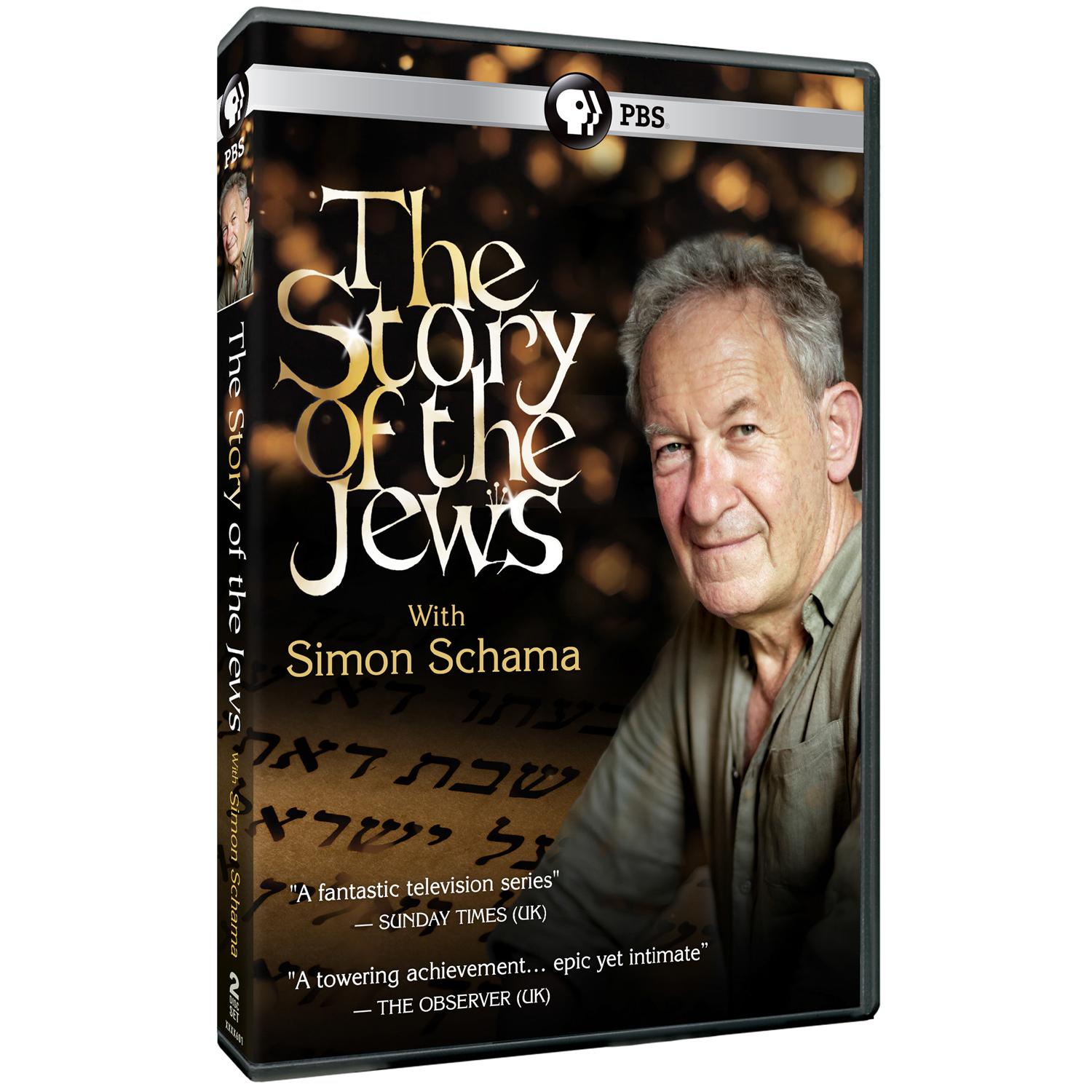
Contest: Win a DVD of “The Story of the Jews”

Posted on May 5, 2014 at 12:20 pm

I am delighted to have five copies of the outstanding PBS series The Story of the Jews with Simon Schama to give away.  The DVD is being released tomorrow from PBS Distribution, and it is also available on digital download.

https://www.youtube.com/watch?v=CjoH6oP3D2Y

Prize-winning author of 15 books and Emmy Award-winner Simon Schama brings to life Jewish history and experience in a new five-part documentary series follows Schama as he travels from Russia and the Ukraine to Egypt, Israel and Spain, exploring the imprint that Jewish culture has made on the world and the drama of suffering, resilience and rebirth that has gone with it.

The series is, at the same time, a personal journey for Schama, who has been immersed in Jewish history since his postwar childhood; a meditation on its dramatic trajectory; and a macro-history of a people whose mark on the world has been out of all proportion to its modest numbers.SJSS600

“If you were to remove from our collective history,” said Schama, “the contribution Jews have made to human culture, our world would be almost unrecognizable. There would be no monotheism, no written Bible, and our sense of modernity would be completely different. So the history of the Jews is everyone’s history too and what I hope people will take away from the series is that sense of connection: a weave of cultural strands over the millennia, some brilliant, some dark, but resolving into a fabric of thrilling, sometimes tragic, often exalted creativity.”

The series draws on primary sources that include the Elephantine papyri, a collection of 5th-century BC manuscripts illuminating the life of a town of Jewish soldiers and their families in ancient Egypt; the astonishing trove of documents – the Cairo Geniza – recording the world of the medieval Jews of the Mediterranean and Near East; the records of disputations between Christians and Jews in Spain; correspondence between the leader of the Arab revolt during World War I, Emir Feisal, and the leader of the Zionist movement, Chaim Weizmann.

Schama talks about the turning points of the drama with living witnesses like Aviva Rahamim, who, as a 14-year-old, walked across the Sudanese desert to try and reach Israel; Yakub Odeh, the Palestinian whose village was destroyed in the war of 1948; and Levana Shamir, whose family members were imprisoned in Egypt at the same time. He debates the meaning of new archaeological discoveries of the Biblical period with Yosef Garfinkel of the Hebrew University; the Dead Sea Scrolls with their chief curator Pnina Shor; the character of the Talmud with Leon Wieseltier, literary editor of the New Republic; the photographic record of Israel’s history with Micha Bar Am; German cultural treasures from Enlightenment Germany and the music of Felix Mendelssohn with the critic Norman Lebrecht.

The series, first broadcast in the United Kingdom on BBC in fall 2013, was acclaimed in the British press as “an astonishing achievement, a TV landmark, idiosyncratic, accessible but always authoritative.”  It includes new archaeological research that is transforming our understanding of the earliest world of the Jews, and highlights evidence from the visual arts — synagogue mosaics, spectacularly illustrated Bibles, the brilliantly colorful decoration of synagogues (contrary to impressions of a monochrome religion), as well as the glorious music that carried Jewish traditions through the centuries.

Whether he’s amid the stones of 11th-century Judea, the exuberantly decorated cemeteries of Ukrainian hasidic rabbis, the parlors of Moses Mendelssohn’s Berlin or the streets of immigrant New York, Schama brings together memory and actuality, past and present, sorrows and celebrations, vindications and challenges and makes felt the beating pulse of an epic of endurance that has been like no other – a story that belongs to everyone.

To enter the contest, send an email to moviemom@moviemom.com with “Story of the Jews” in the subject line and tell me your favorite Jewish author, performer, musician, or holiday.  Don’t forget your address!  (US addresses only.)  I will pick a winner at random on May 14.  Good luck and mazel tov!


Related Tags:


Contests and Giveaways Documentary Spiritual films

Bears

Posted on April 17, 2014 at 6:00 pm

Disneynature-Bears-Poster
Copyright Disney Nature 2014

This year’s Disney Nature release for Earth Day is “Bears,” the story of an Alaskan bear named Sky and her twin cubs, Scout and Amber, their trek from the den where they’ve hibernated all winter to a place where they can find enough food to sustain themselves through the summer and the next year’s hibernation.  John C. Reilly is the genial narrator in a highly relatable story that has adventure, humor, peril, discovery, and some very powerful maternal love.  There’s a reason that we call our toughest human mothers mama bears.

As in the previous entries in this series, the footage is stunning, both the breathtaking grand vistas of snow and mountains in the five million acre national parkland on the Alaskan peninsula to the tiny faces of the brand-new cubs.  And it is filled with “how did they get that” moments, with no indication until the final credit sequence of any human presence.  The water sequences are especially thrilling.

The narration is less intrusively anthropomorphic than some of the previous entries in this series.  While there are many dangers and some animal battles and predators, it is also less sad and scary than African Cats. Parents of younger children should know that it appears at one moment that one of the cubs has been killed, but it turns out that he is fine.
Sky and her tiny cubs wake up in the den she prepared for giving birth and dozing through the winter.  She is depleted and the tiny cubs are not quite ready for the week-long trek through the snow to find a place where the salmon are running, and Sky can have access to the 90 pounds of protein a day she will need to survive the next hibernation.  The trio face many threats.  They reach a pack of other bears (the cubs’ are very excited to find others of their species), but Magnus, the over-1000 pound alpha male, is capable of eating the cubs if no other food is available.  An outcast from the pack is also after them.  The hunt for salmon takes them to the shore, where there are clams to eat, but it is also dangerous when the tide comes in.

The devotion and persistence of these animals is a powerful reminder that family connections link all species.  With this peek into their world, we are more aware of our own.

Parents should know that this movie includes some peril and animal fighting.  It appears at one point that one of the main characters has been killed but he turns out to be fine.

Family discussion:  Why was Chinook an outcast?  How does Sky teach the cubs what they need to know?  Who is your role model and why is it important to have one?  How would the story be different if it was from the point of view of one of the other animals or the salmon?

If you like this, try: “Chimpanzee” and “African Cats”

Related Tags:


Animals and Nature Documentary

Interview: “Island Of Lemurs” Filmmakers

Posted on April 5, 2014 at 8:01 pm

I spoke with the humans behind the gorgeous new IMAX nature film, “Island of Lemurs 3D: Madagascar,” Drew Feldman (writer/producer), David Douglas (director/cinematographer), and Dr. Patricia Wright, about the challenges of making the film and the more daunting challenges of saving these precious creatures.

@ Warners
Copyright Warners

How do you get so close to the lemurs? What are some of the challenges that you face?

DD: We spent a lot of time scouting and looking for lemurs that would allow us to get somewhere near them.  We obviously picked the easiest ones we could find because our gear is big and heavy and it doesn’t take well to running after lemurs. So we found places where their movement was constricted by geological or geographical limits and that helped us to get closer to them and that often meant that we were working with the same lemurs scientists were studying.  Those lemurs had some experience with human beings already.

Patricia tell me a little bit about lemur families and the role of the females.

PW: There’s over 100 species of lemurs.  Each is a little bit different in their social structure except for one thing: they are all female dominant. The females are the leaders. They are the ones that call the shots.  When you watch a group, you can see the females are the first one to say “We’re going to move.”  Then she moves off and everybody just follows. And they follow her into a fruit tree and then she starts to eat the best fruits available at the tops of the trees and the males are required to just wait outside the fruit tree until the females have eaten the best fruits and then the males are allowed in. And if they don’t obey the rule, well then they are reprimanded. Sometimes it’s a slap across the face. Sometimes it’s just a vocal sort of “Don’t do that.”  And sometimes they bite them.

What other kinds of animals are unique to Madagascar?

PW: We have carnivores that are all related to the mongoose family. And they are very special to Madagascar, found nowhere else. There’s or no cats or no dogs on Madagascar. So instead, these kind of weasel-like creatures that have evolved into these much bigger predators. And most of the birds are found nowhere else either.

What is the Malagasy community doing to support the lemurs?

PW: When I first got there which now is well over 20 years ago, the Malagasy sort of had no idea that lemurs were special. And we spent, not just me but the environmental movement, spent a lot of time developing a National Park Service. There wasn’t anything like that before.  We also train tourist guides and work on getting the people themselves to really value the extraordinary wildlife that they have.  We have a education team that goes out to talk to the local villagers. We have a health team that helps them get healthier than they are now and we basically visit and talk and have meetings with the village elders and they get some jobs. Because at the end of the day it’s economics isn’t it? So we have been training them as artisans. We have been training them as construction, teaching them computers. The local people have really enjoyed the fruits of having a national park in their backyard.

You have a background in anthropology as well as primatology so I guess that applies to your work with the humans as well as with the primates.

PW: My first job was actually as a social worker. And then later, I got my PhD in anthropology. And I’ve always been interested in humans as well as primates. We are all kind of have the same emotions, the same goals and lives really. But to me, when I first got to Madagascar I realized that the lemurs lives are very closely related to what the humans are doing; partially because they’ve got both looking for natural resources. And if we can make some way that both humans and lemurs can live together peaceably and happily, that would be my goal for Madagascar.

Drew, tell me a little bit about how you first came to be interested in lemurs. 

DF: I’ve always been fascinated about Madagascar but to be honest I never really knew that much of lemurs growing up. Maybe they are just overshadowed by monkeys and apes and they’ve never really had their moment in the sun. And right after Dave and I finished Born to Be Wild I had a chance to meet Pat kind of by coincidence at some party. And after I heard her stories about lemurs, Dave cornered her and was like, “we’ve got to make a movie about Madagascar and lemurs.”

So, she invited us out and we went and she took us all around Madagascar for a month and showed us how extraordinary, fascinating, and just adorable lemurs were.

I was so struck by the eyes of these lemurs.  How do you capture that on screen?

DD: And it’s every color. The project that didn’t get done on this movie was that I wanted to do was a poster that was just pairs of eyes of those lemurs because there’s red, gold eyes and green eyes and blue eyes and every shade of in between. Crazy! Jewels! And yeah, just marvelous! So expressive also and of course because of the way they get around, they really need highly evolved stereo vision because they need very good depth perception to go blasting through the trees the way they do. They leap for long distances and actually get where they thought they were going to go. So they have a very, very well developed sight sense for sure as well as being pretty exotic and beautiful to look at in the eye department.

You had a big transition in technology between the last film and this one.  How did that affect the filming?

DD: This is a big thing. There’s three minutes in an IMAX film magazine but we’ve now transitioned to digital.  It makes an enormous difference; especially in 3-D because a 3-D film camera is almost a 300 pound instrument.  Two cameras built into one, enormous cost and weight and everything and in ways everything and noise. But now we’ve come up with a camera which is about 50, 55 pounds. So that’s like our old 2-D film camera and it’s a new kind of 3-D actually. We could put it on our backs and carry it down into the jungle as a single unit and put it onto a tripod and use it in a way that seems familiar.  The other thing that it has is the capacity to not run out of film.  When you’re working with wildlife, that’s a really good thing. The likelihood is if they do it and are pointed that direction, you’re going to get it. And that lets you plan for things and it also lets the crew relax. One of the things that I notice is that when the crew is all working, the crew is tensed up hoping an animal is going to do something in the near future that you want. Everybody gets a bit tense because once you can that big camera on, you’re basically spending a thousand bucks a minute as that camera is running and hoping that before three minutes, before $3000 goes by, that they did something that you like and they somehow ignored that floundering machine that you are standing with.  And not while you are changing magazines, which is the normal time for them to do things.

Drew, how do you go about imposing a narrative on this story?

DF: David and I spent a lot of time talking about that. Our first trip to Madagascar, I remember at the very end, we had some pretty interesting conversations about the just trying to piece together what this story is like about at its core; because obviously it’s about lemurs and the lemurs are amazing and all that but we are trying to make films that aren’t necessarily straight wildlife films that are more cinematic that have a sort of real cinema story to it. The thing we kept coming back to, really the defining characteristic of the lemur story is that they are really these accidental creatures in a sense. They came to Madagascar by accident. They found this Garden of Eden with no snakes and no apples and they flourished there for 40 million years before predators showed up.  It’s kind of this alternate reality of what happens, primate development in Africa. And the danger has finally reached them. All the troubles in the world after millions and millions and millions and millions of years have finally reaches their shores. And how are they dealing with that? And how are we going to deal with that? 

What have we learned about humans from studying lemurs?

PW: We have learned a lot of things. First of all, being primates, they live very long, maybe 30, 35 years in the wild.  So we begin to look at old age, what is old age in the wild? Does it slow them down? Are the older ones out-of-favor? Are they good grandmothers?  It was very charming to see they have great respect for their elders.  They don’t cast them aside. So that’s good and we’ve learned a lot about different kinds of social systems because some of that lemurs are monogamous pairs and others are kind of groups of males and females in one group. And we’ve learned about parent-offspring conflict and growing up.

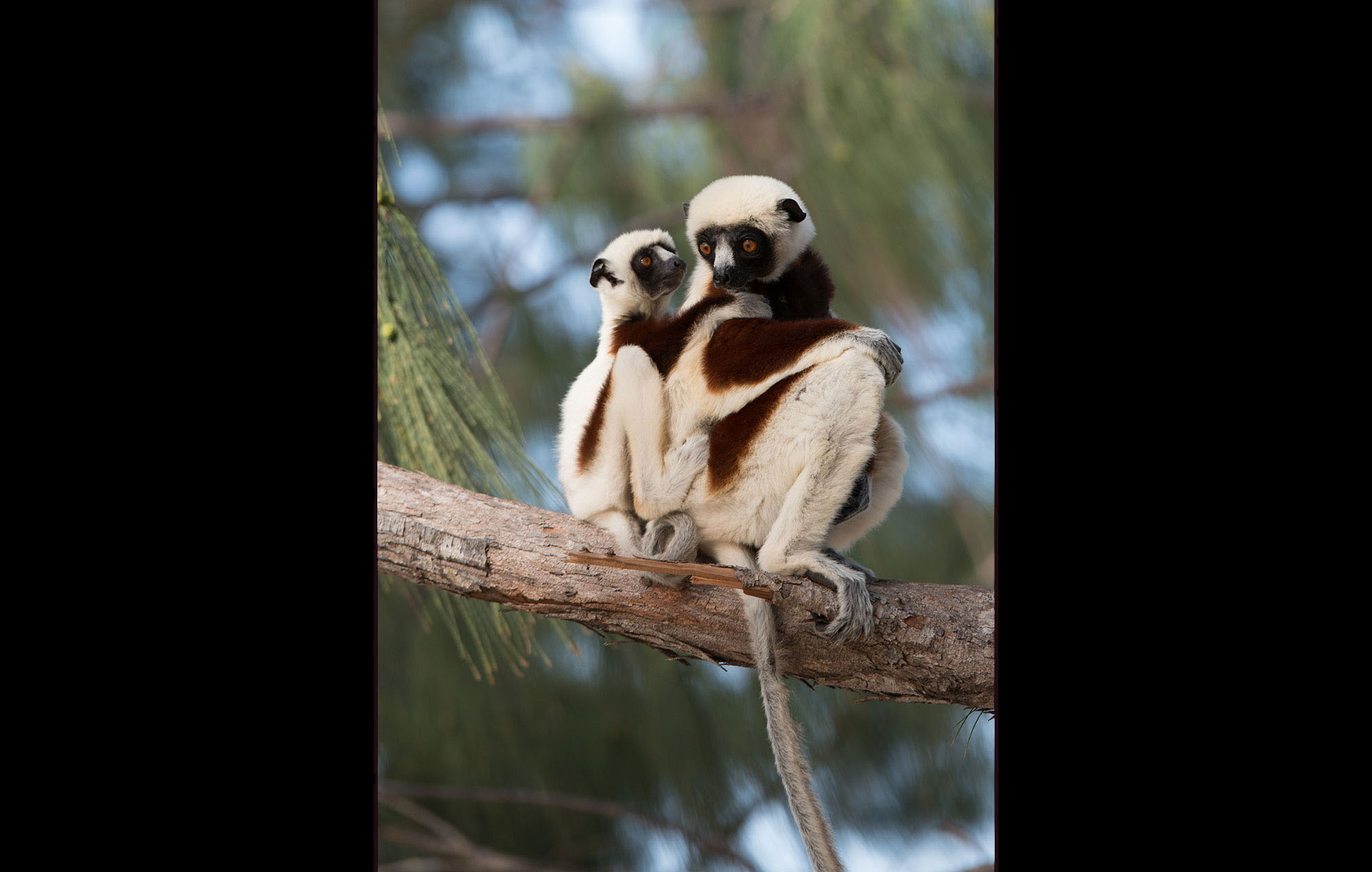
Lemurs are good parents but they do it in different ways. I originally studied father care. I was very interested in that and we saw that a lot of these animals that lived in pairs and the father wasn’t doing anything at all for the first month. But then suddenly, when the baby got to be a certain weight then the dads chipped in and started carrying the babies which was very nice. And then if there was twins or triplets then they helped, so that’s definitely true.  The black and white lemur, the one that relaxes on that branch, they actually have day care, like kindergartens; where all the mothers come together and they put all the babies into this one nest and they let dad watch it while they go out and have food and have a good time and then they come back in a few hours.  We’ve never seen that in other primates. This is the first time it’s been described so that’s major news.

Anybody who sees this movie is going to be utterly enchanted by the dancing.

PW: Lemurs are extraordinarily leapers. I mean they are just really going from tree to tree and then if there is not a tree, they just come down to the ground very gracefully.  But it is the music that makes them seem to be dancing.  They are basically getting from one place to another and that’s just natural for them. They are just natural acrobatic dancers, just the way they move. It’s beautiful!

DF: Music choices are totally fun and we certainly threw a lot of choices up against that to see what stuck. I mean we went through James Brown and all sorts of things. I remember asking one of the researchers in Madagascar who works with (19:45 inaudible), “what type of music do you think they would dance to?” She was like, “Jazz, they would dance to jazz.”

Related Tags:


Animals and Nature Behind the Scenes Documentary Interview
THE MOVIE MOM® is a registered trademark of Nell Minow. Use of the mark without express consent from Nell Minow constitutes trademark infringement and unfair competition in violation of federal and state laws. All material © Nell Minow 1995-2026, all rights reserved, and no use or republication is permitted without explicit permission. This site hosts Nell Minow’s Movie Mom® archive, with material that originally appeared on Yahoo! Movies, Beliefnet, and other sources. Much of her new material can be found at Rogerebert.com, Huffington Post, and WheretoWatch. Her books include The Movie Mom’s Guide to Family Movies and 101 Must-See Movie Moments, and she can be heard each week on radio stations across the country.

Website Designed by Max LaZebnik