
Spellbound
Posted on June 1, 2010 at 7:05 am
A+| Lowest Recommended Age: | 4th - 6th Grades |
| Profanity: | One very brief word |
| Alcohol/ Drugs: | A parent possibly impaired by drugs or alcohol at one point |
| Violence/ Scariness: | Tense scenes of competition |
| Diversity Issues: | A theme of the movie |
| Date Released to Theaters: | 2003 |
In honor of this week’s Scripps Spelling Bee finals, every family should see this m-a-r-v-e-l-o-u-s movie about the national spelling bee because it is about so much more. It is about the strength of American diversity and the commitment of this country to opportunity — the eight featured competitors include three children of immigrants (one’s father still speaks no English) and a wide range of ethnic and economic backgrounds. It is about ambition, dedication, and courage. It is about finding a dream that speaks to each individual. Most of all, it is about family — the opportunity to discuss the wide variation in styles of family communication and values is in itself a reason for every family with children to watch this movie together. Plus, it is one of the most genuinely thrilling, touching, and purely enjoyable movies of the year.
This is the true story of the 1999 National Spelling Bee in Washington, D.C., and especially of eight regional winners in the competition. They are: Ashley, a black girl who lives with her mother in a housing project in the city where the competition takes place, Harry, the youngest of the group, a slightly hyper kid who impulsively answers one interviewer’s question in the voice of a “musical robot,” April, whose fond but mildly befuddled parents cannot quite figure out how such a ragingly focused child appeared in their house, Angela, the daughter of an illegal Mexican immigrant who still speaks no English, Ted, a loner from Missouri, Neil, the son of Indian immigrants whose intense focus — including special spelling tutors and hours-long drills — has him the second member of the family to be a regional champion, Emily, the child of privilege, who wonders if she should bring her au pair along to the competition, and Nupur, another child of Indian immigrants, whose regional title is saluted by a sign on the local Hooters that reads, “Congradulations Nupur!”
These and 240 other contestants are all 8th grade and younger. They don’t quite understand what a heart-breakingly awkward and painful moment that is in their lives, but we do. As we watch these kids, girls towering over boys, more with braces than without, puberty’s uneven effects everywhere, many of the kids confessing that they feel all alone in their school, we see them hold on to this mastery of words eclipsing anything an adult can do as a lifeline, or maybe a flashlight, leading them to their adult selves. There were audible gasps in the theater as each new word was given to the contestants, including hellebore, terrene, logorrhea, kirtle, clavecin, heleoplankton, cabotinage, and opsimath. Half of those words are not even recognized by the spellchecker in my word processing program, but these kids, who learned how to read only a little more than half their lives ago, are able to handle an astonishing number of them. Meanwhile, some words recognizable to most college-educated adults turn out to be stumpers for the kids, sharply drawing the line between expertise and experience.
The movie is filled with brilliantly observed moments that illuminate the lives of the individuals but also the lives of all families and all dreamers. These kids, with their slightly old-fashioned area of expertise (this is the era of the spellchecker, after all, and as that list shows, these are not words likely to come up in conversation or even most college textbooks) have an engaging sense of adventure, affection, and wonder about words and language. One shows off her huge dictionary almost as big as she is and about to fall to pieces from use, and says she does not think she will ever part with it. Three boys talk about how they lost to Nupur. Ashley tells us she is a “prayer warrior” who feels like her life is a movie.
And we get to see every kind of family. All the parents assure their children that they are winners no matter what happens at the national bee, but some do so more convincingly than others. Each family has its own idea of what it means to achieve success and what they think success could mean for their future. One father hires special spelling tutors and runs constant drills. Others look on all but speechless at children whose talents seem as exotic to them as though they had sprouted feathers.
Parents should know that there are some tense and sad scenes. Children are upset when they lose (they are escorted onstage to a “comfort room”). One child uses a mildly bad word.
Families who see this movie should talk about how the families in the movie, especially the immigrant families and those at the lower end of the economic spectrum, see the importance of the spelling bee. They should talk about what it takes to be a winner in any category of achievement and how they measure their own successes (and failures).
Families who enjoy this movie will also enjoy Searching for Bobby Fischer, based on a real-life child who became a chess champion.

 Gary Cooper won an Oscar for his portrayal of WWI hero Alvin York, the pacifist from the hills of Tennessee who carried out one of the most extraordinary missions in military history using lessons from his life on a farm. He captured 132 men by himself, still a record for a single soldier. In addition to the exciting story of his heroism in war, this is also the thoughtful story of his spiritual journey. He is a pacifist, opposed to fighting of any kind. By thinking of what he is doing as saving lives, he is able to find the inspiration and resolve for this historic achievement.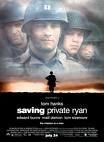
 Director Steven Spielberg salutes his father and the greatest generation with this story set in the D-Day invasion of Normandy. It frankly portrays the brutality and carnage of war and its wrenching losses, but it also portrays the honor, sacrifice, heroism, and meaning.
 There are battles — and heroes — of all kinds. Henry Fonda plays a Naval lieutenant assigned to a cargo ship during WWII who feels very far from the action. He learns that his defense of the crew against a petty and tyrannical captain (James Cagney), on behalf of “all the guys everywhere who sail from Tedium to Apathy…and back again, with an occasional side trip to Monotony,” is an important and meaningful contribution.
 Set during the Korean War but released in and very much a commentary on the Vietnam War, this is the story of surgeons stationed at a Mobile Army Surgical Hospital. The emphasis is on war’s essential absurdity — these are doctors whose job is to heal soldiers to they can be sent back into battle — and on the ways that different people respond to those situations, responses that often escalate the absurdity. See also “Captain Newman, M.D.,” with Gregory Peck as a sympathetic Army psychiatrist during WWII as well as the long-running television series this film inspired.
 The Civil War
  An all-star cast shines in this sincere re-telling of the events of the invasion of Normandy D-Day, one of the transformational moments of WWII. Many of the military consultants and advisors who helped with the film’s production were actual participants (from both sides) in the action on D-Day, and are portrayed in the film.
 This 10-part miniseries produced by Tom Hanks and Steven Spielberg is based on the best-seller by Stephen Ambrose about the WWII experiences of E Company (“Easy Company”), the members of the 506th Parachute Infantry Regiment, United States Army 101st Airborne Division and one of its officers, Richard Winters (played by Damian Lewis), from basic training through the American airborne landings in Normandy, Operation Market Garden, the Battle of Bastogne and the end of the war.
 George C. Scott won an Oscar for his portrayal of WWII General George S. Patton. The film also won six additional Oscars, including Best Picture. Its screenplay, co-written by Francis Ford Coppola, frankly portrays Patton’s mistakes and faults as well as his leadership in turning the tide of the war.
 9.
9.  /
/
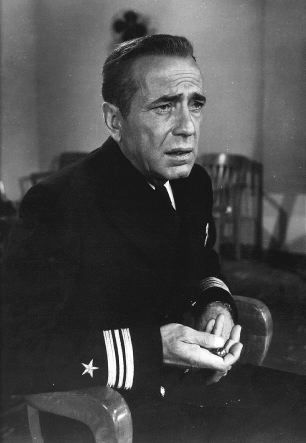
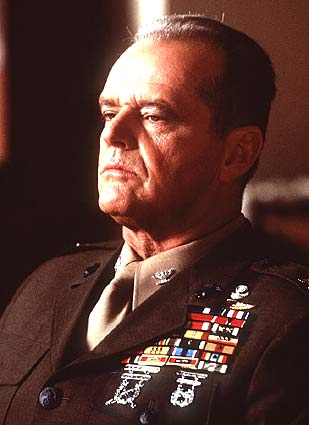 These two movies, one set in WWII and one contemporary, both center on court martial trials with similar themes — what price do we pay for the luxury of feeling safe?
 This underrated gem from Francis Ford Coppola about the “Old Guard,” the regiment responsible for the funerals at Arlington National Cemetery has beautiful performances from James Caan, James Earl Jones, and D.B. Sweeney and subtly but powerfully explores some of the deepest and most troubling questions about the price we pay — and the price we call on others to pay — for our freedoms.