Mother Mary

Mother Mary

Posted on April 23, 2026 at 6:04 pm

D
Lowest Recommended Age: Mature High Schooler
MPAA Rating: Rated R for some violent content and language
Profanity: Strong language
Alcohol/ Drugs: Pills
Violence/ Scariness: Graphic wounds, some self-inflicted, disturbing images
Diversity Issues: None
Date Released to Theaters: April 24, 2026

“Mother Mary” gets some points for the singular vision of writer/director David Lowery, striking images, and game performances by the supremely talented Anne Hathaway and Michaela Coel, but not as many as it needs to overcome its pretentiousness, its pointlessness, and, worst of all, its ultimate emptiness. It wants so badly to be provocative and artistic but it is just boring.

Copyright 2026 A24

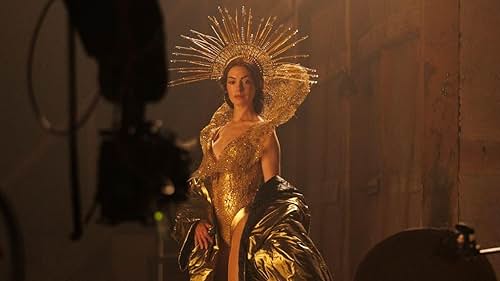
Hathaway plays the title character, a hugely successful pop star along the lines of Lady Gaga, Madonna, and Chappell Roan. We see her performing in gigantic arenas, with fans overcome with joy, waving lit up cellphones. Mother Mary performs in stunning costumes, with headpieces that recall the literally iconic images of Medieval saints. Those scenes are strikingly filmed and Hathaway looks sensational and her singing is fully believable as pop star. The original songs are co-written by Jack Antonoff, Charli xcx, FKA twigs, and Hathaway.  

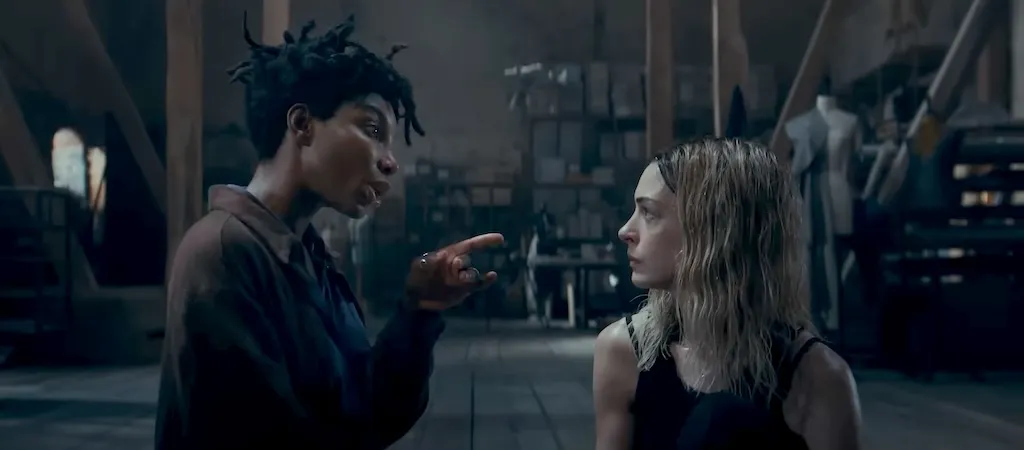
On a dark and stormy night (the first tired trope of many), Mother Mary arrives at the shabby chic ancient-castle-like atelier of a successful fashion designer named Sam Anselm (Coel). Despite the protests of Sam’s assistant, Hilda (Hunter Schafer), the rain-bedraggled Mary insists on seeing Sam, and pushes ahead, to tell Sam, “I need a dress.”

We can see that they have a history, and some of it will be revealed over the course of what is essentially the two of them verbally sparring for the rest of the film, one of those screenplays where every line is supposed to have a deeper meaning conveyed by the way it is delivered rather than by the words that are said. This means references to walls and doors that even the characters can’t decide whether they are literal or metaphor. The metaphors , including measuring Mary, some self-injury, and something between a ghost and a demonic possession are heavy-handed and not as meaningful as they intend to be. Either way, it’s more whiny than illuminating.

The posters say, “This is not a ghost story. This is not a love story.” But it is both, or at least trying to be. There are hints that the relationship between Mary and Sam may have been romantic. It was certainly an extremely close connection, as they worked together in the early days to create the Mother Mary persona. Sam was abandoned, and given no credit for her contributions.

Mary and Sam go back and forth, their conversation shifts from brittle jibes, with Sam insisting on a better quality of apology, and hopelessness, with Mary unable to say anything more about the dress she rejected other than “it isn’t me.” She cannot say what “me” is or should be. Sam tells Mary to perform the song she plans to perform in the dress she is asking for — without the music. Hathaway throws herself into this silent performance and throws herself around a bit, too.

It gets more theatrical, a flashback scene taking place through the doorway of the very iG-friendly barn-like atelier. The production and sound design deserve special note, with the crispness of the sewing shears and the tactile fabrics making a strong impression. But when paranormal themes come in, the storyline becomes as bedraggled as the storm-tossed title character.

Parents should know that this movie includes disturbing material, including graphic wounds, some self-inflicted. There are tense emotional confrontations with strong language and references to abusive behavior and a scary seance. A character takes pills.

Family discussion: Does Mother Mary remind you of any real-life pop stars? Why did she abandon Sam? Why did she come back? Should Sam accept her apology?

If you like this, try: “Vox Lux” and concert films/documentaries from Selena Gomez, Madonna, Billie Eilish, and Taylor Swift

Related Tags:


Drama movie review Movies -- format Movies -- Reviews Musical
Michael

Michael

Posted on April 22, 2026 at 12:04 pm

B-
Lowest Recommended Age: High School
MPAA Rating: Rated PG-13 for some thematic material, language, and smoking
Profanity: Some strong language
Alcohol/ Drugs: Smoking
Diversity Issues: Child abuse, parent whips a child with a belt
Date Released to Theaters: April 24, 2026
Copyright 2026 Lionsgate

To understand what kind of movie this is, you need to know that most, but not all, of Michael Jackson’s siblings and most, but not all, of his children were producers. His lawyer, John Branca, also produced and is played by Miles Teller.

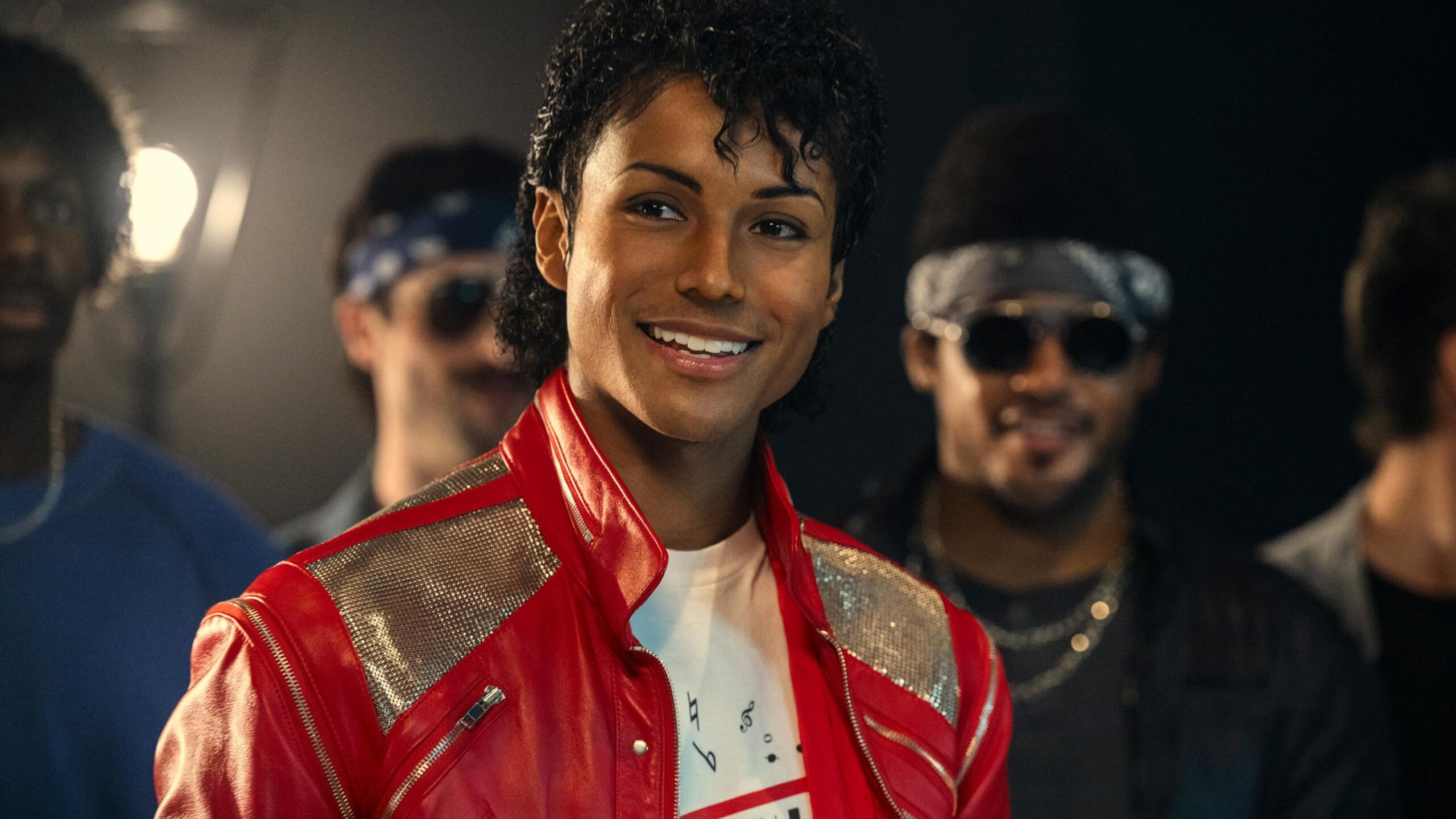
Janet Jackson, Michael’s sister and a musical superstar of almost equal prominence, who did not produce, is erased from the story. So his non-superstar sister Rebbie. So is any possible fault or flaw in the title character, and any effort to give the rest of the characters any depth or personality. What it does find time for is way too many scenes of ecstatic fans at concerts and Michael visiting sick children. The movie has its entertaining moments, mostly when Jaafar Jackson replicates some of his uncle’s most iconic performances, but the dramatic sections are weak and sanitized.

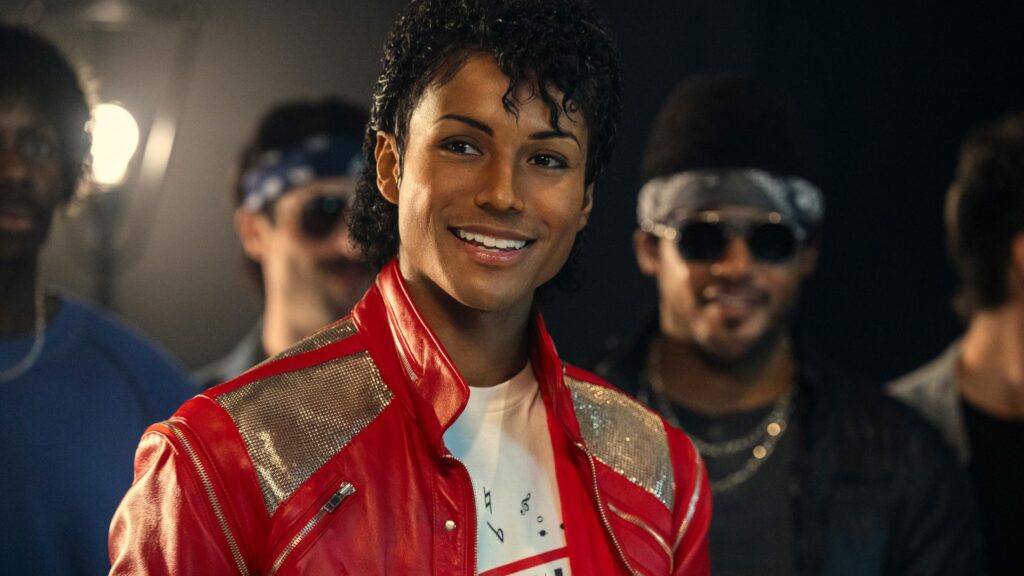
The late self-titled “King of Pop” is played by his real-life nephew, Jermaine Jackson’s son, Jaafar., who evokes the memory of his uncle with his look (before and after nose job) and moves. Colman Domingo is powerfully crafty and brutal as Joseph Jackson, the cruel factory worker who was determined to make his children his ticket out of Gary, Indiana, and did not hesitate to pull out his belt to whip them if he felt they were not paying him enough respect. Nia Long is warm and empathetic as Katherine Jackson, whose quiet support for Michael gives him something to hold onto and whose mild protests get less mild after Michael’s success.

A stand-out here is Juliano Valdi as young Michael Jackson, both in his ability to show us the then 10-year-old (but claiming to be 8) as an already-electrifying performer. (I well remember how dazzling my sisters and I were by the Jackson 5’s first national television appearance, introduced by Diana Ross.)

The Michael of this film is a 20th century Peter Pan and we are constantly reminded of how he identified with that character, writing his father’s name next to a depiction of Captain Hook. He is portrayed here as a gentle, almost angelic, innocent who considers his pets (including a giraffe, a llama, and Bubbles the chimp) as his only friends and who loves to be swept away by classic old films. His bodyguard, Bill (KeiLyn Durrel Jones) is sympathetic. But he seems to have no relationship with anyone in his family except his mother, and in the most simplistic and superficial terms the movie suggests that the only issue is learning how to stand up to his father. We learn little about what inspires his music and what performing means to him. There’s nothing here about “We Are the World” and the controversies over his marriage, his children, his mutilating surgeries, and the allegations of abuse.

The question you have to ask yourself about a musical biography is whether it has something to say beyond what we get from watching archival footage of the subject. The answer here is no. Weirdly, we see Michael tell director John Landis to shoot the dance in the “Thriller” music video the way Fred Astaire insisted his dance numbers should be shot: a steady camera showing the full bodies of the dancers, but the dance numbers here do not follow that good advice. They are dynamic but they cut away from what we want to see.

And the portrayals are paper-thin. We do not learn anything about Michael’s relationship to his siblings, what any human friendships he had were like, or what inspired his music. The movie is clear about Joseph’s exploitation of Michael, trying to control him to continue to do what is best for the family (meaning money and attention for Joseph), with no commitment or even recognition of what might be best for Michael. Joseph wants him to continue to perform with the family, making solo music only on his off hours. We are supposed to cheer for Michael when he gets a lawyer to stand up to Joseph and then stands up for himself. But it is hard to see this film as anything but continuing the family’s efforts to make money from Michael’s talent. At the end we wonder whether he would see this as just another attempt to profit from his legacy.

Parents should know that this film includes child abuse, smoking, body dysmorphia, and a scary accident when Jackson is badly burned. He also visits very sick children and patients.

Family discussion: Is this a fair representation of Michael Jackson? What more do you want to know? Why was he so beloved?

If you like this, try: “The Jacksons: An American Dream,” “This is It,” “The Jacksons: Road to Victory,” and clips of Michael Jackson singing and dancing

Related Tags:


Based on a true story Biography Family Issues movie review Movies -- format Movies -- Reviews Musical Race and Diversity
EPIC: Elvis Presley in Concert

EPIC: Elvis Presley in Concert

Posted on February 19, 2026 at 5:39 pm

A-
Lowest Recommended Age: Middle School
MPAA Rating: Rated PG-13 for smoking and some language
Profanity: Mild language
Alcohol/ Drugs: Smoking, some alcohol
Violence/ Scariness: Sad death of a parent off-screen
Diversity Issues: None
Date Released to Theaters: February 20, 2026

Until someone invents a time machine, this movie is the only way you will get a chance to experience one of the most electrifying performers of the 20th century at the absolute height of his charisma and musicianship. Go see it, and if at all possible, see it in IMAX.

Copyright 2026 Neon

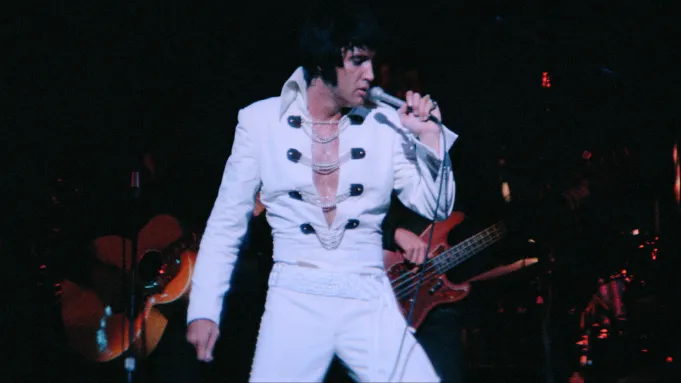
A professional film crew followed Elvis Presley for about a decade, with more than a thousand live concerts plus rehearsals, behind the scenes footage, and a remarkably candid audio-only interview that serves as the narration for this film. All of that footage was lost until director Baz Luhrmann tracked it down when he was working on his film with Austin Butler as Elvis. There were hours of footage, but the film was fragile and required extensive but very delicate restoration. (No AI, not a single frame, Luhrmann assures us.) That footage has now been assembled into an intimate documentary that shows us Elvis at his best, with the most touching and inspiring footage ever of this incessantly-filmed star, showing us, above all, his broad-ranging and deep love of music, of his audience, and of performing. In under two hours, we hear many of his hits, including my two favorites, “Poke Salad Annie” and “Burning Love,” but also his mastery of an astonishing range of genres: country, R&B, gospel, honky tonk, pop, and rock. When he sings Beatles and Simon and Garfunkel songs, it is not because he is trying to compete or keep up; he genuinely loves their music and brings his own understanding of what makes them great.

An introduction gives us an impressionistic mosaic of what has led up to his decision to focus on live performance. We see his early years and his being drafted into the Army and serving in Germany. That would be his only time outside of the United States, and we later hear his wistful longing for a chance to perform in Europe. (His manager, “Colonel” Tom Parker, would not allow him to tour internationally, for a reason we did not learn until both had died: Parker, a Dutch citizen, was in the US illegally and feared that if he left he would not be allowed back into the country.)

We get a sense of his overwhelming life. He is always gracious despite the obnoxious and insulting questions from the press and the constant attention and neediness of those around him. He jokes about Ed Sullivan telling the cameras to show him only above the waist, and about how his sparkly suit is too tight to allow him to kneel.

His interactions with his musicians are mutually respectful, friendly, good-humored, but very professional and specific. He knows what he wants to sing, when it should come in the show, and what it should sound like. He works very hard, telling us he loses 4 or 5 pounds with each performance. At times he looks as skinny as when he first appeared in public.

Elvis is too often reduced to the caricatures of his last years, overweight, ostentatious bling and caped jumpsuits, fried banana sandwiches, giving away cars. It is pure joy to replace that with these vibrant, pulse-pounding, genuinely thrilling performances, very skillfully edited to match the rhythm of the music. We see the wildly appreciative audience (including Cary Grant and Sammy Davis, Jr., who show up after the performance in Presley’s dressing room to say hello, and one-time co-star, dancer Juliet Prowse). Fitting for the gospel and gospel-influenced delivery, at times it feels like a soul-stirring church service. Some of the venues are quite small by today’s arena standards, giving it a palpable air of humility, grace, and connection. We are on stage with him, and one of the purest joys of the film is the private smile when he thinks he has done well. He comes alive in performative mode, drawing energy from the crowd. But that smile of satisfaction invites us into a world that is just Elvis and his music. Thanks to Luhrmann and most of all to Elvis Presley for reminding us — and making available forever — a genuine superstar.

Parents should know that there are some suggestive lyrics and some drinking and smoking.

Family discussion: Which is your favorite Elvis song? Who is most like Elvis today?

If you like this, try: “Elvis: The Searcher,” “Viva Las Vegas,” and “Elvis: That’s the Way It Is”

Related Tags:


Documentary movie review Movies -- format Movies -- Reviews Musical
Song Sung Blue

Song Sung Blue

Posted on December 24, 2025 at 9:27 am

A-
Lowest Recommended Age: Middle School
MPAA Rating: Rated PG-13 for Rated PG-13 for thematic material, some strong language, some sexual material and brief drug use
Profanity: Strong language
Alcohol/ Drugs: Pharmaseutical abuse, character is a recovering alcoholic
Violence/ Scariness: Offscreen serious injury and recovery
Diversity Issues: None
Date Released to Theaters: December 24, 2025
Copyright Focus 2025

First there was Neil Diamond, one of the foremost singer-songwriters of the 1970s-90s. And then there was a Milwaukee couple billed as Lightning and Thunder who described their act not as a Neil Diamond tribute act, but a Neil Diamond experience. (“Experience” in this case meaning a fog machine and a leaf blower to blow back their hair.) Then there was a documentary named “Song Sung Blue” about Lightning and Thunder (real names, Mike and Claire Sardina, about the success of their act but also about their setbacks and challenges, about the music and about their love story. And now, like the infinite regression of the girl on the ketchup bottle we have two huge Hollywood stars, very slightly dimming their imperishable glamour to star in a feature film of the same name, and it is one of the most purely enjoyable films of the year, with heartfelt performances and joyous music.

Jackman plays Mike, a divorced Vietnam veteran in recovery from alcoholism who has a teenage daughter. He is passionate about performing (a character astutely observes that a recovering alcoholic will find something else to be addicted to and his is music), and he is very specific about what he wants to do. His stage name is Lightning.

He first sees Claire (Hudson), a divorced mother of a teenage daughter and a younger son, when she is performing in a curly black wig as Patsy Cline. Back at her house, they start singing together and it is instant magic. Their chemistry as performers and as a romantic couple shines from the screen. Soon they get married (at the Wisconsin State Fair) and blend their families. One particularly nice scene is when the two teenage girls get together and form their own instant connection over their family upheavals and some weed.

There are some setbacks along the way, including a mistake in booking that has them performing their first gig not, as they thought, for a motor home convention but for a motorcycle club gathering. But soon, with the help of friends, their crowd-pleasing appearances lead to an enthusiastic local following. Those friends include characters played by Jim Belushi, as the gentle, very sincere tour bus driver who signs on to book their gigs, Michael Imperioli as a devoted friend and Buddy Holly impersonator who is thirty years older than Holly ever got to be, and Fisher Stevens as a dentist so on board he gets Lightning a replacement tooth with a bolt of lightning on it. All three give endearingly open-hearted performances. Lightning and Thunder sing the Neil Diamond songs like they are brand new, with superb musicality. We can see that they are most alive when they are on stage.

“I just want to sing and be happy and feel loved!” Claire tells her daughter. “I will be Neil Diamond, but I’ll also be me,” Mike promises. “He’s…artistic,” says Mike’s daughter to Claire’s daughter, meaningfully. “Most alcoholics trade one addiction for another. Music is that for Dad.” Those comments, along with impeccable work by production designer Clay A. Griffith and costume designer Ernesto Martinez tell us what we need to know about Mike and Claire. But writer/director Craig Brewer is also telling us a deeper story about the healing power of performing music to lift the spirits, bring people together, create a sense of meaning and purpose, and just make us feel good.

Claire is badly injured in a freak accident. Mike has heart problems. But they love each other and the audiences love them. And then they get a call from Eddie Vedder, who wants them to open for Pearl Jam when they play at a huge music festival in Wisconsin. (A terrific performance by John Beckwith as a slightly laconic but enormously decent Vedder and be sure to check out the footage of that real-life performance.)

Thanks to Brewer, the movie never condescends to Mike, Claire, or their friends. It takes the same joy in their performances that their fans do. Jackson is excellent as Mike and Hudson is a revelation here, never better, with a perfect Wisconsin broad A, exquisite harmonies, and so much joy on stage we cannot help but bask in it. As Claire recovering from her injury, depressed and knocked out on painkillers, she is raw and heartbreakingly vulnerable. We know she cannot give up the music, and seeing her back on stage, reconnecting with the pure joy of the music and the audience, connects us with all of that and with the love story, too.

Parents should know that this film has strong language, a recovering alcoholic, a serious injury and painkillers, and a teen pregnancy.

Family discussion: What’s the best Neil Diamond song? Were you surprised that Eddie Vedder invited Mike and Claire to open for Pearl Jam? If you were in the audience, how would you have responded?

If you like this, try: The documentary of the same name and of course the music of Neil Diamond

Related Tags:


Based on a true story Biography Drama movie review Movies -- format Movies -- Reviews Musical
Wicked: For Good

Wicked: For Good

Posted on November 20, 2025 at 5:37 pm

B +
Lowest Recommended Age: Middle School
MPAA Rating: Rated PG action/violence, some suggestive material, and thematic material
Profanity: None
Alcohol/ Drugs: Brief alcohol
Violence/ Scariness: Fantasy peril and violence, character killed
Diversity Issues: A theme of the movie
Date Released to Theaters: November 21, 2025

I liked “Wicked: For Good” a lot. But before I tell you why, let me warn anyone out there who is hoping that part two of the movie based on the Broadway musical, based on the book, inspired by the classic L. Frank Baum story will be a lot like part one that the second half of the story is much darker and less hummable than the first. If you want to revisit the magical college for teenagers, gorgeous songs and dance numbers, and ode to opening your hearts to friendship with those who you might initially consider to be too different, then watch the first one again.

Copyright 2025 Universal

“Wicked: For Good” picks up 12 Ozian years later, long past the days of the dorms, classes, and parties at Shiz University. But Galinda, now known as Glinda (Ariana Grande), is finally something of a teacher’s pet, though in this case she is more of an operative for the powerful Madame Morrible (Michelle Yeoh), the top advisor for the Wizard (Jeff Goldblum). So, she’s less “pet” as in favorite as “pet” as in being a convenient (not asking questions) and attractive (yes, popular) spokesperson. As a student, Glinda was unable to get Madame Morrible to teach her. Indeed, she was blunt in telling her would-be apprentice that she had no talent for magic. As an adult, Madame Morrible found her to be an ideal focus of attention for the population, reassuring them that all was well.

Glinda loves being adored by the population and does not think too hard about the cruelty of the Wizard’s reign, even when her one-time friend Elphaba (Cynthia Erivo) is now public enemy number one, with wanted posters all over Oz declaring her a threat. Fiero (Jonathan Bailey) is now an officer in the Wizard’s guard, feeling conflicted about Elphaba. But when Glinda announces to the crowd, that they are engaged, Madam Morrible’s idea as the latest entertaining distraction, Fiero goes along with it.

Nessarose (Narissa Bode) has now taken over the position of her late father and is governor of Munchkinland. She is still in love with Bob (Ethan Slater), not knowing that he only asked her to the school dance because Glinda told him to and he only stayed by her side after her father died because he still wanted to be a support for her. When he tells her he thinks it is time for him to leave, she impulsively imposes travel restrictions to keep him from going. Both Bok and Fiero do not want to let down the women who love them, though they long to be with someone else.

Glinda tries to get Elphaba to join the Wizard, and she almost agrees, after he promises to release the flying monkeys and allow the animals to return. When she learns he has not been honest, she resolves to become his enemy.

We know where this is going. While some of the details of the very familiar story are changed, including the origin stories of the Tin Woodman and Scarecrow, the little girl in the checked dress from Kansas and her dog arrive in a storm (the origin story of the storm is well handled) and most of the consequences for the characters remain the same. There are even touches from the MGM movie, for example, when Madame Morrible says a line Margaret Hamilton delivers so memorably about what “must be done delicately.”

Almost all of the now-iconic musical numbers are in the first movie. Despite the best efforts of two powerhouse singers, the songs from the play’s second act and a couple of new ones do not reach those soaring heights. Some reprises come as a relief. The new songs are less tied to defining character developments or crowds performing lively dances. The storyline nearly tips over into making unrequited love the motive for the main characters’ anger, hurt, and motivation for bad behavior, before remembering that the real heart of the story is about choosing trust, kindness, and inclusion over fear and grabs for power.

Production design by Nathan Crowley remains stunning, from the most intricate details to the grandest visions. The same goes for Paul Tazewell’s fabulous costumes. Erivo and Grande sing, never less than transcendently spectacular. Jonathan Bailey gives Fiyero a quiet smolder as he goes from dancing through life to thinking about choices to following his heart. It is subtle, not a term that comes to mind when considering the joyful maximalism of the “Wicked” film and therefore exceptionally moving. And, with credit to director John M. Chu and his outstanding cast, somewhere in all of the eye candy and bombast there are some meaningful comments on the path to power through spreading fear and making the population distrust one another. And there is a tender-hearted story of love and loss, of selfishness and the courage to oppose it, and of the people we love because they see our best selves even before we do.

Parents should know that this film has fantasy peril and violence, and a character is killed. There are brief references to paternity/adultery and a non-explicit sexual situation.

Family discussion: Pick a favorite story and see if you can imagine it from the point of view of one of the other characters. Why were Glinda and Elpheba friends? What did they learn from each other?

If you like this, try: “Wicked” and “The Wizard of Oz,” “The Wiz,” and the books by L. Frank Baum, and join the Oz Club!

Related Tags:


Based on a book Based on a play Drama Fantasy movie review Movies -- format Movies -- Reviews Musical
THE MOVIE MOM® is a registered trademark of Nell Minow. Use of the mark without express consent from Nell Minow constitutes trademark infringement and unfair competition in violation of federal and state laws. All material © Nell Minow 1995-2026, all rights reserved, and no use or republication is permitted without explicit permission. This site hosts Nell Minow’s Movie Mom® archive, with material that originally appeared on Yahoo! Movies, Beliefnet, and other sources. Much of her new material can be found at Rogerebert.com, Huffington Post, and WheretoWatch. Her books include The Movie Mom’s Guide to Family Movies and 101 Must-See Movie Moments, and she can be heard each week on radio stations across the country.

Website Designed by Max LaZebnik