Spinal Tap II: The End Continues

Spinal Tap II: The End Continues

Posted on September 11, 2025 at 5:17 pm

B +
Lowest Recommended Age: High School
MPAA Rating: Rated R for language and some sexual references
Profanity: Strong and crude language
Alcohol/ Drugs: Alcohol
Violence/ Scariness: Comic peril and violence
Diversity Issues: None
Date Released to Theaters: September 12, 2025
Copyright 2025 Bleecker Street

Remember that iconic moment in “Amadeus” when Salieri composes a simple little piece in honor of Mozart’s arrival, and then, the greatest composer of all time, only 25 years old and incapable of imagining Salieri’s bitter jealousy, sits down to play the piece and cannot help turning it into something magical. I could not help thinking of that moment when the real-life Sir Paul McCartney, after a flawless faux interview where he, seemingly sincere, describes a very crude lyric from one of fictional metal group Spinal Tap’s songs as “lit-ra-tchure.” It is followed by the genuine look on his face when he struggles to appear to enjoy their rehearsal performance. Then he sits down at a piano to show them some suggested tweaks, which they immediately reject.

I did not expect a sequel to exceed or even meet the level of the original Spinal Tap movie, which ushered in the era of the mockumentary and remains, to my mind, in the top ten funniest and most quotable feature films of all time. But whether you are a fan who has seen the original multiple times or are coming to these characters with no preconceived notions (but come on, watch the original!), you will have a lot of fun at this one, like the first a take that perfectly balances comedy with authenticity down to the details and a deep, unqualified affection for the souls who just want to share their music with an audience. Hey, Ozzie Osborne said he didn’t laugh at the original because it was too close to the truth.

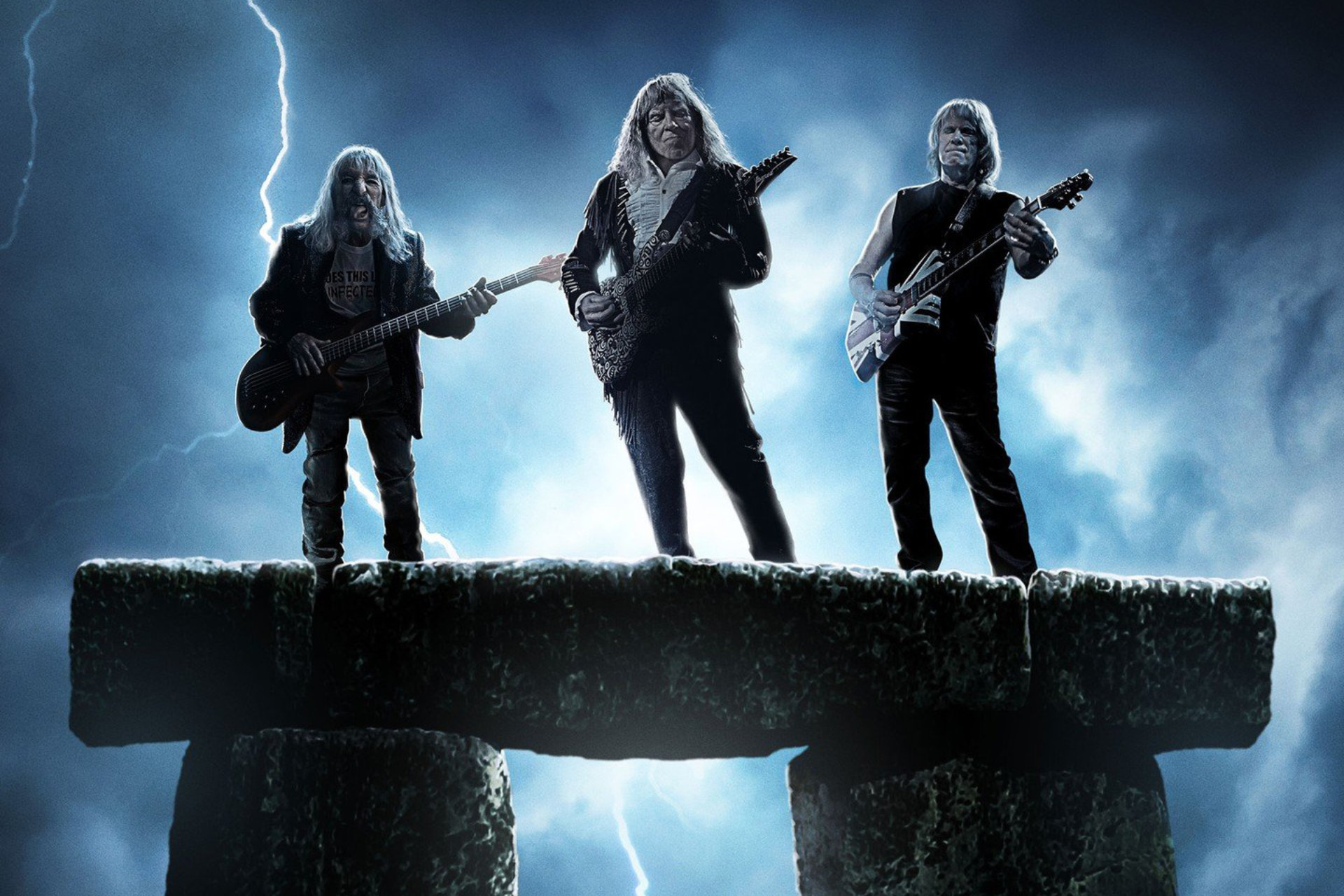
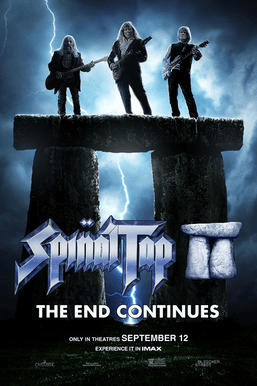
I’m not going to spoil the surprises, the visits with characters from the first film and cameos from real-life legends. I’ll just say that it is extremely funny and point out that on the poster the number 2 is represented by a close-up of one of the megaliths from Stonehenge.

“The End Continues” begins with the classic premise: getting the band back together. They have not spoken in years and all seem settled with projects they like. But when the daughter of their late manager discovers that she has inherited their contract, she books them for one last performance, in New Orleans.

As fans well know, the band has lost a number of drummers over the years, apparently 11 of them, so one of their first tasks, after three star drummers turn them down, is to audition prospects, find one brave enough to take the job (Valerie Franco) and then rehearse to get ready for the show.

That’s pretty much it, but we do not need anything else except to revisit some of our favorite moments from the first film. It’s great fun to get a reprise of “Listen to the Flower People,” and yes, Nigel Tufnel (Christopher Guest) is still captivated by the possibilities of music technology. I hope the end does continue forever. Rock on, Nigel, David, and Derek, rock on!

Parent should know that this film has strong language, crude humor, sexual references, and bawdy lyrics.

Family discussion: What do the occupations of the musicians at the beginning of the film tell us about them? What real-life musicians do they resemble?

If you like this, try: the Christopher Guest films featuring many of these performers, including “Waiting for Guffman,” “Best in Show,” and “A Mighty Wind”

Related Tags:


Comedy movie review Movies -- format Movies -- Reviews Musical Satire Series/Sequel
KPop Demon Hunters

KPop Demon Hunters

Posted on July 3, 2025 at 10:19 am

B +
Lowest Recommended Age: 4th - 6th Grade
Profanity: None
Alcohol/ Drugs: None
Violence/ Scariness: Extended fantasy-style violence, sad death
Diversity Issues: None
Date Released to Theaters: July 3, 2025

Let me be the first to suggest that “Golden” be nominated for a Best Song Oscar. This animated story of a Korean pop trio who battle demons to save humanity has a bunch of bangers, but “Golden” is not only the best on the soundtrack but better than several recent Oscar winners.

“KPop Demon Hunters” is an unexpectedly entertaining mash-up of two seemingly unrelated genres. It works because it is colorful, funny, imaginative, and above all heartfelt and sincere.

Copyright 2025 Netflix

Rumi (Arden Cho), Mira (May Hong), and Zooey (Ji-young Yoo) are the pop trio Huntrix. They are not only musical superstars and demon hunters; they are the best of friends. They are the inheritors of the skills and responsibilities of demon hunters through the ages, protecting the world with mad fighting skills and the magic of music and its connection to the fans, which spreads a protective shield called the Honmoon over the earth, woven from their music. (There is a charming glimpse of their forebears, trios through the decades.) If they can eradicate the demons completely, the Honmoon will turn gold.

This has a personal importance for Rumi. She has not told Mira and Zooey that she is half demon, as revealed by the “patterns,” markings on her arms and neck. Turning the Honmoon golden will make her fully human.

The demons are ruled by Gwi-Ma (Lee Byung-hun). When he becomes angry at the failures of his demons to defeat Huntrix, a centuries-old demon named Jinu (Ahn Hyo-seop) makes a proposal. If Gwi-Ma will erase the memories that haunt him, he will fight Huntrix on their own turf: he will form a boy band, the Saja Boys. Their first song, “Soda Pop,” is an instant hit. The battle is on — musically and with weapons. A devastating diss track is as important as the swords. But so is the the power of telling hidden truths.

The voice talent includes Ken Jeong as Huntrix’s manager Bobby, and Joel Kim Booster and Daniel Dae Kim as multiple characters. There is some silly humor but there are also are intense fight scenes and a sad death as a character who sacrifices himself to save others. There’s also a six-eyed bird wearing a hat and pajama pants with teddy bears and “choo-choo trains.” And, as noted, some excellent songs.

Parents should know that this film includes a lot of fantasy-style violence and a sad death. There are references to despotism and evil.

Family discussion: Why did Rumi think she could not tell Zoey and Mira the truth? Why did she trust Juni? Why did he trust her?

If you like this, try: the music and videos of BTS

Related Tags:


Action/Adventure Animation Fantasy movie review Movies -- Reviews Musical VOD and Streaming
The Ballad of Wallis Island

The Ballad of Wallis Island

Posted on April 3, 2025 at 5:40 pm

B +
Lowest Recommended Age: Preschool
MPAA Rating: Rated PG-13 for some language and smoking
Profanity: Some strong language
Alcohol/ Drugs: Drinking and smoking
Violence/ Scariness: Reference to sad death
Diversity Issues: None
Date Released to Theaters: March 28, 2025

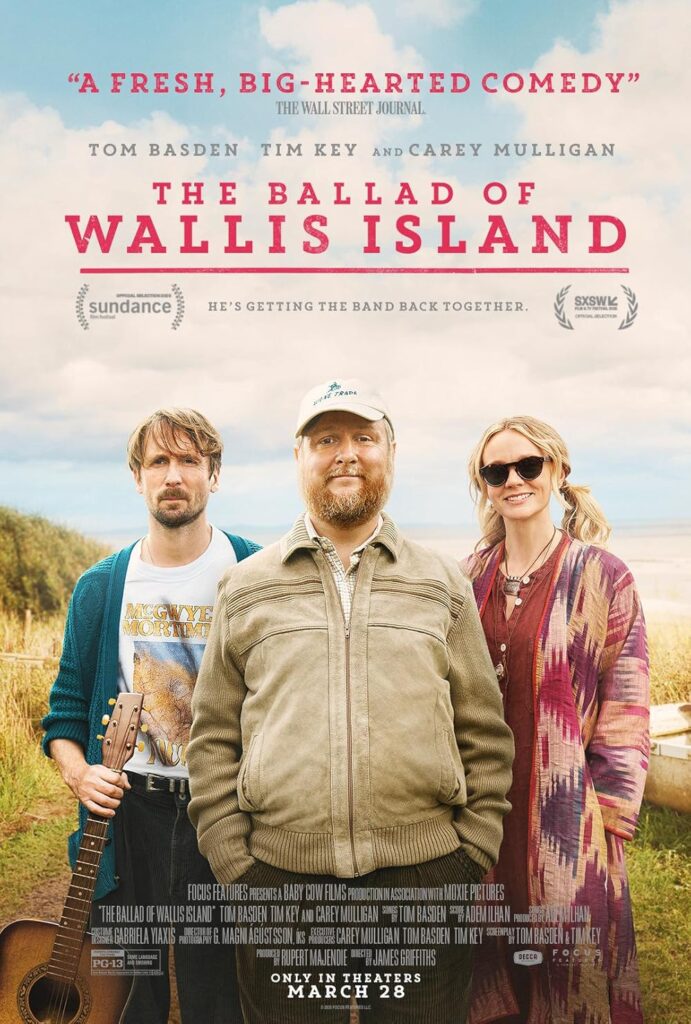
Come on, admit it. Somewhere secretly stored away in your heart, you know what you would do if you won the lottery. “The Ballad of Wallis Island” is a wonderfully warm and touching film about a male nurse who won the lottery twice. The first time, he and his wife travelled all over the world. The second time, now a widower, he decided to spend it all on a concert for an audience of one, reuniting his all-time favorite musical duo for a performance on a very remote island.

Copyright 2025 Focus

That duo is McGwyer & Mortimer, who last performed together 15 years earlier. Herb McGwyer (Tom Basden, also co-screenwriter and composer of the songs) is cynical and detached. He has no idea what he is getting into, even when it turns out he has to disembark from the small boat bringing him to the island by wading to the shore. He assumes that Charles Heath (co-screenwriter Tim Key) is something like a bell boy come to carry his bags. And Charles’ natural awkwardness, compounded by five years of near-complete solitude and being overwhelmed by the presence of his idol, is no help in clarifying the situation.

Furthermore, Charles has not told Herb that Nell Mortimer (Carey Mulligan) is coming and the performance will be the songs they recorded together. Also, she is married and living in America, where she now sells chutney at the farmer’s market.

Herb needs the £500,000 Charles is paying to make his next solo record. So, even though each new piece of information he learns about the gig is increasingly distressing, he agrees to stick it out, with the exception of the time he tries to leave and finds out that the one boat that takes people to the mainland does not come in bad weather. He is stuck. And then Nell arrives, with her husband, Michael (Akemnji Ndifornyen), an easygoing American who spends just long enough at Charles’ house to unsettle Herb and then departs for a birding tour.

This gives Herb and Nell a chance to practice for the upcoming performance. And it gives Charles a chance to go from extremely annoying to less annoying to endearingly annoying.

That’s a tricky challenge for any actor, but Key and Basden created these characters to play to their strengths as performers and it works beautifully. Key shows us that Charles is shy, lonely, sad, and vulnerable. He is not good at showing how much he cares. Basden shows us that Herb is lonely, too, and his songs are everything a character with Herb’s level of success should have in his set list. Mulligan harmonizes beautifully and we see what her experience after the break-up has been when she says what she misses is the music, allowing Herb and us to fill in what she leaves out: she does not miss him. Seeing each other does, though, allow them both to go forward with a better sense of what they have and what they want.

Sian Clifford is terrific as the proprietor of the tiny local store on the island, which never has anything the mainlanders want, like rice to cure a phone that fell in the water (“We have pasta?” she asks hopefully) or a Reese’s Peanut Butter Cup. We may all wish for a visit to Wallis Island when the movie ends.

Parents should know that this movie has strong language, smoking and drinking, and some mild sexual references.

Family discussion: If you won the lottery, what would you spend the money on? Why is the music so important to Charles? Herb left two things for Charles — what was the reason for each of them? What will Herb do next?

If you like this, try: “Once” and “Sing Street”

Related Tags:


Comedy Drama movie review Movies -- format Movies -- Reviews Musical
A Complete Unknown

A Complete Unknown

Posted on December 25, 2024 at 9:00 am

B +
Lowest Recommended Age: High School
MPAA Rating: Rated R for language
Profanity: Strong language
Alcohol/ Drugs: Drinking, smoking, and marijuana
Violence/ Scariness: References to war, some scuffles
Diversity Issues: None
Date Released to Theaters: December 13, 2024
Copyright 2024 Searchlight

“A Complete Unknown” is the story of Bob Dylan’s early years in New York, based on Elijah Wald’s book Dylan Goes Electric!: Newport, Seeger, Dylan, and the Night That Split the Sixties. It begins with Dylan’s first stop after he arrives from Minnesota, a visit to see Woody Guthrie (Scoot McNairy), who was paralyzed and unable to speak, with Huntington’s disease. Guthrie has another visitor, Pete Seeger (Edward Norton, capturing Seeger’s nerdy, generous, gentle optimism). Dylan (Timothée Chalamet) takes out his guitar to play a song he wrote in tribute to Guthrie. The two folk singers are impressed. We then follow the 21-year-old singer/songwriter as he creates some of the century’s most groundbreaking and influential music while mistreating most of the people around him, until he creates a near-riot at the Newport Folk Festival by plugging in his guitar and “going electric.”

Biographical films, especially those about musicians, tend to have the same format, as so devastatingly destroyed in the parody “Walk Hard.” There’s the precocity and one or two formative childhood experiences, then the moment someone on the board in the recording studio says, “Hey, wait, this kid can play/sing!” Success, setback, moments of inspiration, fights with managers/bandmates/romantic partners, often a descent into drugs and/or alcohol, various breakups, possibly a health crisis, and then either an early death or some kind of rebound.

Wisely, this film, from director James Mangold, who co-wrote the screenplay with Jay Cocks, avoids most of the cliches, and makes no kind of effort to understand or reveal the inner workings of the famously inscrutable Dylan. The title of the film, of course taken from the lyrics of “Like a Rolling Stone,” applies to its subject. It is not that the movie tries and fails to help us understand Bob Dylan; on the contrary, it recognizes that Dylan defies that kind of simplification. And that he doesn’t need it and we should not attempt it. Anything we need to know is in the songs.

And so, this movie does give us the songs, full performances with Chalamet’s singing close enough to Dylan’s voice in the 60s, and perhaps with just a bit more lyrical clarity and tunefulness. The movie thus seems like one brilliant song after another, with interludes of Dylan being a terrible boyfriend. For the fans of Dylan the icon as well as Dylan the musician, there are several well-known highlights of his biography, like encounters with other future luminaries. Joan Baez is played with verve and a sweet, clear singing voice by Monica Barbaro, but with no sense of the complexity and conflicts portrayed in the recent documentary . The most amusing is Boyd Holbrook as a young Johnny Cash, who exchanges supportive letters with Dylan and, when they finally meet at Newport, encourages him to “muddy the carpet,” and stir up some trouble. Elle Fanning plays Sylvie, a character based on Suze Rotolo, the young woman pictured holding Dylan’s arm on the cover of his Freewheelin’ Bob Dylan record. She is credited with exposing Dylan to social activism. She tells him songs should be about more than Johnny Appleseed and the Dust Bowl, but Fanning’s scenes are mostly about being disappointed at what a bad boyfriend Dylan is.

At first, Dylan says all he wants is to be a musician and eat. But then he gets successful. He feels oppressed and under pressure. The fans want him to stay the same. He wants to try new ideas. More than that, he does not want to be told what not to do. He gets more reserved, more internal. but his hair keeps getting fuzzier.

The best scene in the movie is when Pete Seeger is hosting his low-key public access television show. He thought Dylan, by then very famous and very busy, was not going to show up. He invited a back-up guest, a Black folk musician. Dylan does show up. Another performer might have apologized and taken over or just rescheduled and allowed the substitute musician to play. But Dylan lights up at the prospect of jamming with him. He starts to play. Seeger joins in. It is the most illuminating, touching, and engaging moment in the movie.

Parents should know that this film includes some strong language, drinking, constant smoking, and marijuana. There are some unhappy confrontations and references to wartime violence.

Family discussion: Was Dylan right about what people wanted to hear when they asked where the songs come from? Which song means the most to you and why? Was he wrong to play electric music at a folk festival? Why did he do it?

If you like this, try: the classic documentary about Bob Dylan during these years, “Don’t Look Back” and a later documentary, Bob Dylan–The Never-Ending Narrative

Related Tags:


Based on a book Based on a true story Biography movie review Movies -- format Movies -- Reviews Musical
Mufasa: The Lion King

Mufasa: The Lion King

Posted on December 19, 2024 at 1:35 pm

B
Lowest Recommended Age: 4th - 6th Grade
MPAA Rating: Rated PG for action/violence, peril and some thematic elements
Profanity: None
Alcohol/ Drugs: None
Violence/ Scariness: Characters in peril, flood, animal fights, references to predators, some injured and killed, attacks by predators, some disturbing images
Diversity Issues: A metaphorical theme of the movie
Date Released to Theaters: December 20, 2024
Copyright 2024 Disney

On the 30th anniversary of “The Lion King,” Disney tells the story of Simba’s father and uncle, how they met and grew up together, considering themselves brothers, and the betrayals that tore them apart. This version is “live action,” meaning not traditional animation but realistic CGI so that we can see every detail of fur and landscape. The action and drama is punctuated with songs (Lin-Manuel Miranda taking over from Elton John) and some silly humor to sweeten the tension.

The frame story is set as an adult Simba (Donald Glover) and Nala (Beyoncé Knowles-Carter) have a daughter Kiara (Ivy Blue Carter). As a storm comes up, Kiara is scared. Her mother is away and her father leaves her with old friends the warthog Pumbaa and the meerkat Timon (Seth Rogen and Billy Eichner repeating their roles from the 2019 “live action” “Lion King”). Rafiki (John Kani, also returning from the 2019 version) tries to comfort Kiara by telling her the story of the grandfather she never got to meet, Mufasa. (The movie is dedicated to the original voice of Mufasa, the late James Earl Jones.)

Like Kiara, Mufasa was once a young cub afraid of storms. And like Kiara, he had loving parents, Masego (Keith David) and Afia (Anika Noni Rose, already Disney royalty as the voice of Tiana in “The Princess and the Frog). The area they live in has not had rain in many months and the land is parched. They decide to go in search of Milele, a land they believe is filled with lush growth and peaceful animals. On the way there, a storm creates a flood and the young cub is separated from his parents.

He is spotted by Taka, a cub his age with an English accent (remember, in the original film, Scar was played by Jeremy Irons, “brother” to American-accented Mufasa). Taka fishes Mufasa out of the water and brings him home. Taka’s father, Obasi (Lennie James) wants to eat Mufasa. He has a firm rule against outsiders. But Taka’s mother, Eshe (Thandiwe Newton) is a warm, loving, generous soul and Taka wants a “brother.” Obasi gives Mufasa a chance. If he can beat Taka in a race, he can stay. Taka allows him to win, knowing that Obasi will judge him harshly for losing. Obasi grudgingly allows Mufasa to stay, but treats him as “other” and less than by ordering him to stay away from the male lions. This allows Eshe to teach him to hunt the way the lionesses do. They become very close. Mufasa (as an near-adult lion voiced by Aaron Pierre ) has an exceptional sense of smell that allows him to identify animals and their environments even if they are far away.

Obasi’s lions are attacked by a group of pale, ghost-like lions led by Kiros (Mads Mikkelsen). Knowing they cannot survive, Obasi and Eshe send Taka (now voiced by Kelvin Harrison, Jr.) and Mufasa away, making Mufasa promise that he will protect his friend.

The two young lions have many adventures along the way. They are joined by Sarabi (Tiffany Boone), an independent female lion with a lookout bird named Zazu (Preston Nyman) and Rafiki, a wise mandrill (frequently mistaken by the other characters for a baboon). The group learns to trust and rely on each other. But Taka begins to develop feelings of resentment and jealousy.

The movie looks beautiful and the CGI allows more expressiveness than the 2019 “Lion King” remake. The songs by Lin-Manuel Miranda are not his best. They are placed at points that evoke comparisons to Elton John’s music at similar moments in the original film and the remake. The framing story, with an elderly Rafiki telling Kiara about her grandfather, is sometimes jarringly different in tone, with Timon and Pumbaa making meta jokes. I mean, a joke about getting a call from legal for using too much from a song in the earlier film? Who is that for? And since Disney owns both properties, who is going to argue about intellectual property rights being violated? At least this time they acknowledge that predators are better off than prey. That jump from the cliff moment is awfully similar to “Butch Cassidy and the Sundance Kid.” There are touching moments, but a lot of loss (even with much of it delicately off-screen) for young children.

I’m losing count of how many prequel/sequel/origin stories I’ve seen this year: “Furiosa,” “Wicked,” “Lord of the Rings: War of the Rohirrim,” “Gladiator 2,” “Transformers One.” It is hard to think of these films as anything more than fan service and brand extension. “Mufasa” is fine and most families will be satisfied. But the jubilant imagination that went into the original, make this one look as pale as Kiros.

Parents should know that this film has a lot of peril and many animals are injured and killed, mostly off-screen. Characters are caught in a flood, and a young cub is separated from his parents, who are assumed to have died. A lion speaks of eating outsiders and is bigoted of those who are not of his blood. A male cub is punished by being forced to stay with the females.

Family discussion: How were Taka and Mufasa different? Why did Taka want to change his name?

If you like this, try: the earlier “Lion King” movies and the very cute “Lion King 1 1/2”

Related Tags:


Fantasy movie review Movies -- format Movies -- Reviews Musical Series/Sequel Talking animals
THE MOVIE MOM® is a registered trademark of Nell Minow. Use of the mark without express consent from Nell Minow constitutes trademark infringement and unfair competition in violation of federal and state laws. All material © Nell Minow 1995-2026, all rights reserved, and no use or republication is permitted without explicit permission. This site hosts Nell Minow’s Movie Mom® archive, with material that originally appeared on Yahoo! Movies, Beliefnet, and other sources. Much of her new material can be found at Rogerebert.com, Huffington Post, and WheretoWatch. Her books include The Movie Mom’s Guide to Family Movies and 101 Must-See Movie Moments, and she can be heard each week on radio stations across the country.

Website Designed by Max LaZebnik