Michael

Michael

Posted on April 22, 2026 at 12:04 pm

B-
Lowest Recommended Age: High School
MPAA Rating: Rated PG-13 for some thematic material, language, and smoking
Profanity: Some strong language
Alcohol/ Drugs: Smoking
Diversity Issues: Child abuse, parent whips a child with a belt
Date Released to Theaters: April 24, 2026
Copyright 2026 Lionsgate

To understand what kind of movie this is, you need to know that most, but not all, of Michael Jackson’s siblings and most, but not all, of his children were producers. His lawyer, John Branca, also produced and is played by Miles Teller.

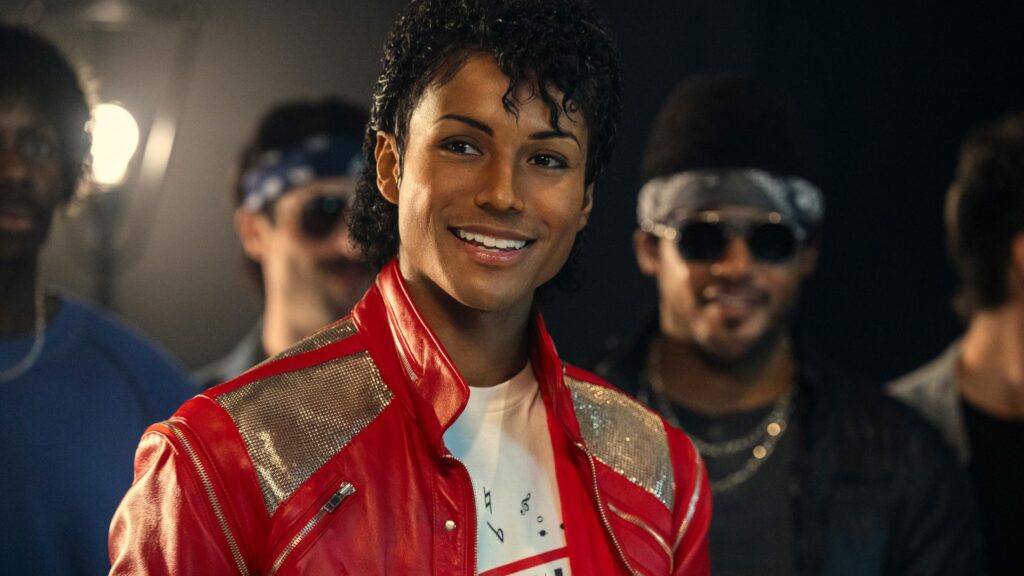
Janet Jackson, Michael’s sister and a musical superstar of almost equal prominence, who did not produce, is erased from the story. So his non-superstar sister Rebbie. So is any possible fault or flaw in the title character, and any effort to give the rest of the characters any depth or personality. What it does find time for is way too many scenes of ecstatic fans at concerts and Michael visiting sick children. The movie has its entertaining moments, mostly when Jaafar Jackson replicates some of his uncle’s most iconic performances, but the dramatic sections are weak and sanitized.

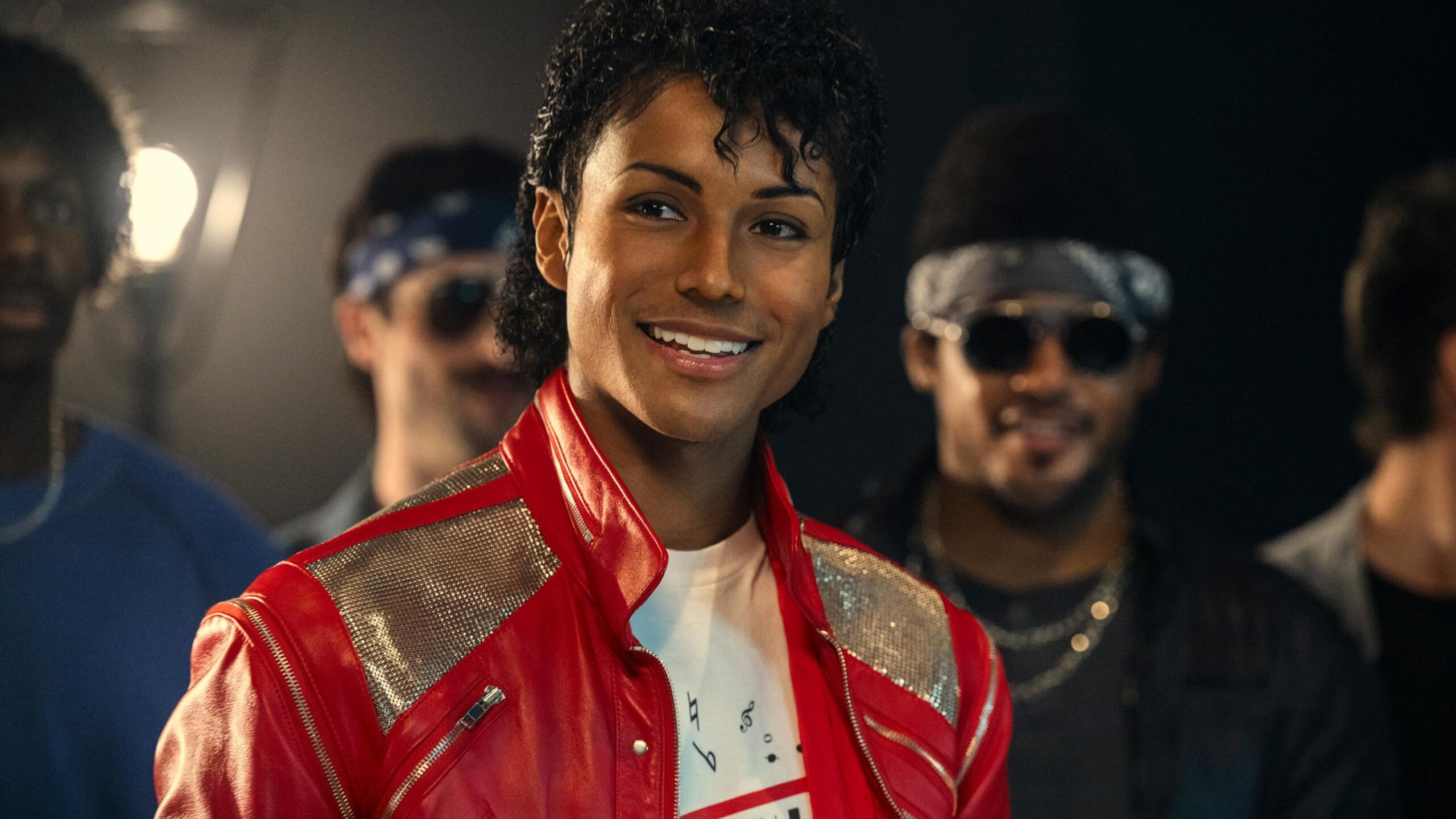
The late self-titled “King of Pop” is played by his real-life nephew, Jermaine Jackson’s son, Jaafar., who evokes the memory of his uncle with his look (before and after nose job) and moves. Colman Domingo is powerfully crafty and brutal as Joseph Jackson, the cruel factory worker who was determined to make his children his ticket out of Gary, Indiana, and did not hesitate to pull out his belt to whip them if he felt they were not paying him enough respect. Nia Long is warm and empathetic as Katherine Jackson, whose quiet support for Michael gives him something to hold onto and whose mild protests get less mild after Michael’s success.

A stand-out here is Juliano Valdi as young Michael Jackson, both in his ability to show us the then 10-year-old (but claiming to be 8) as an already-electrifying performer. (I well remember how dazzling my sisters and I were by the Jackson 5’s first national television appearance, introduced by Diana Ross.)

The Michael of this film is a 20th century Peter Pan and we are constantly reminded of how he identified with that character, writing his father’s name next to a depiction of Captain Hook. He is portrayed here as a gentle, almost angelic, innocent who considers his pets (including a giraffe, a llama, and Bubbles the chimp) as his only friends and who loves to be swept away by classic old films. His bodyguard, Bill (KeiLyn Durrel Jones) is sympathetic. But he seems to have no relationship with anyone in his family except his mother, and in the most simplistic and superficial terms the movie suggests that the only issue is learning how to stand up to his father. We learn little about what inspires his music and what performing means to him. There’s nothing here about “We Are the World” and the controversies over his marriage, his children, his mutilating surgeries, and the allegations of abuse.

The question you have to ask yourself about a musical biography is whether it has something to say beyond what we get from watching archival footage of the subject. The answer here is no. Weirdly, we see Michael tell director John Landis to shoot the dance in the “Thriller” music video the way Fred Astaire insisted his dance numbers should be shot: a steady camera showing the full bodies of the dancers, but the dance numbers here do not follow that good advice. They are dynamic but they cut away from what we want to see.

And the portrayals are paper-thin. We do not learn anything about Michael’s relationship to his siblings, what any human friendships he had were like, or what inspired his music. The movie is clear about Joseph’s exploitation of Michael, trying to control him to continue to do what is best for the family (meaning money and attention for Joseph), with no commitment or even recognition of what might be best for Michael. Joseph wants him to continue to perform with the family, making solo music only on his off hours. We are supposed to cheer for Michael when he gets a lawyer to stand up to Joseph and then stands up for himself. But it is hard to see this film as anything but continuing the family’s efforts to make money from Michael’s talent. At the end we wonder whether he would see this as just another attempt to profit from his legacy.

Parents should know that this film includes child abuse, smoking, body dysmorphia, and a scary accident when Jackson is badly burned. He also visits very sick children and patients.

Family discussion: Is this a fair representation of Michael Jackson? What more do you want to know? Why was he so beloved?

If you like this, try: “The Jacksons: An American Dream,” “This is It,” “The Jacksons: Road to Victory,” and clips of Michael Jackson singing and dancing
Related Tags:


Based on a true story Biography Family Issues movie review Movies -- format Movies -- Reviews Musical Race and Diversity
Song Sung Blue

Song Sung Blue

Posted on December 24, 2025 at 9:27 am

A-
Lowest Recommended Age: Middle School
MPAA Rating: Rated PG-13 for Rated PG-13 for thematic material, some strong language, some sexual material and brief drug use
Profanity: Strong language
Alcohol/ Drugs: Pharmaseutical abuse, character is a recovering alcoholic
Violence/ Scariness: Offscreen serious injury and recovery
Diversity Issues: None
Date Released to Theaters: December 24, 2025
Copyright Focus 2025

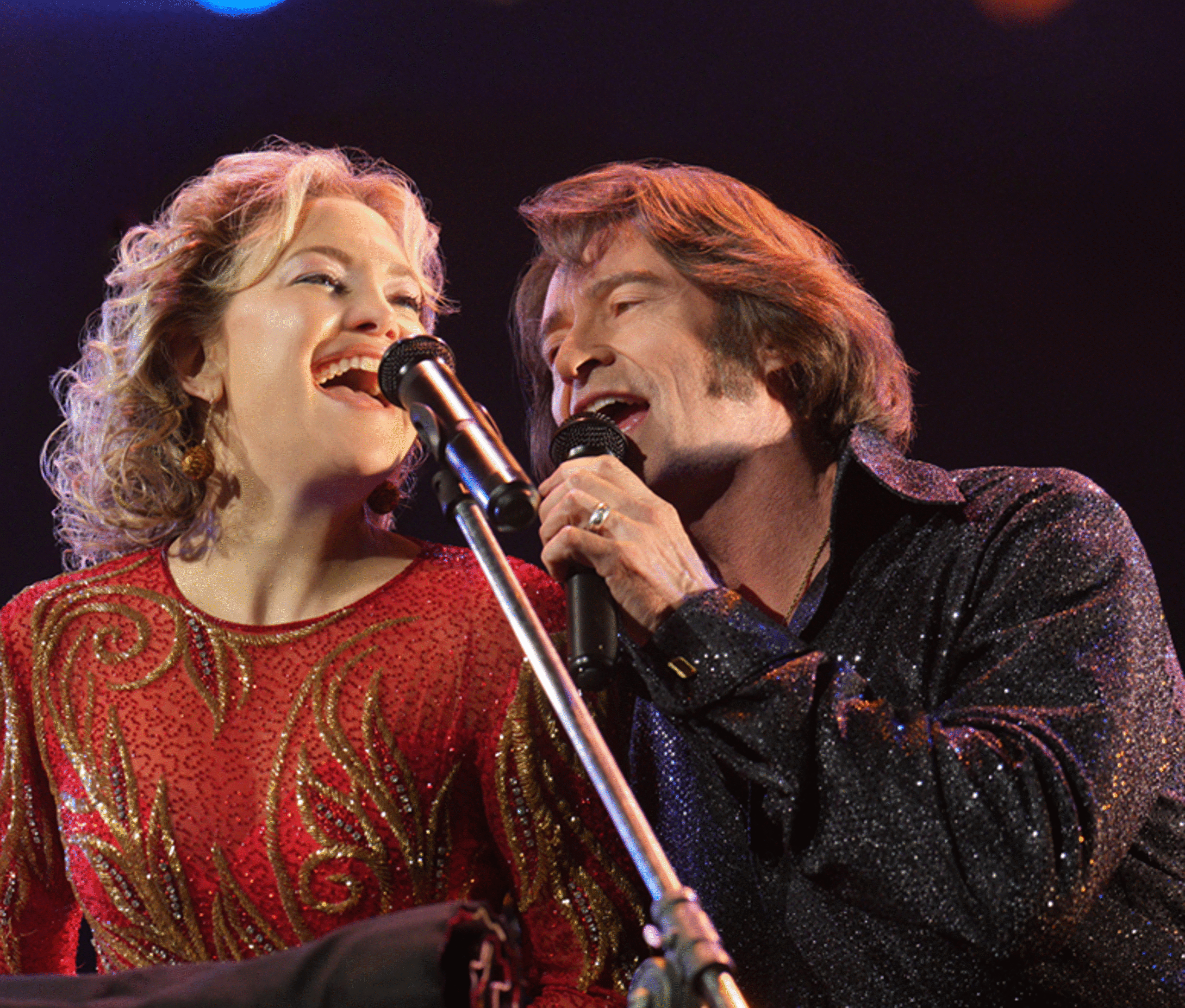
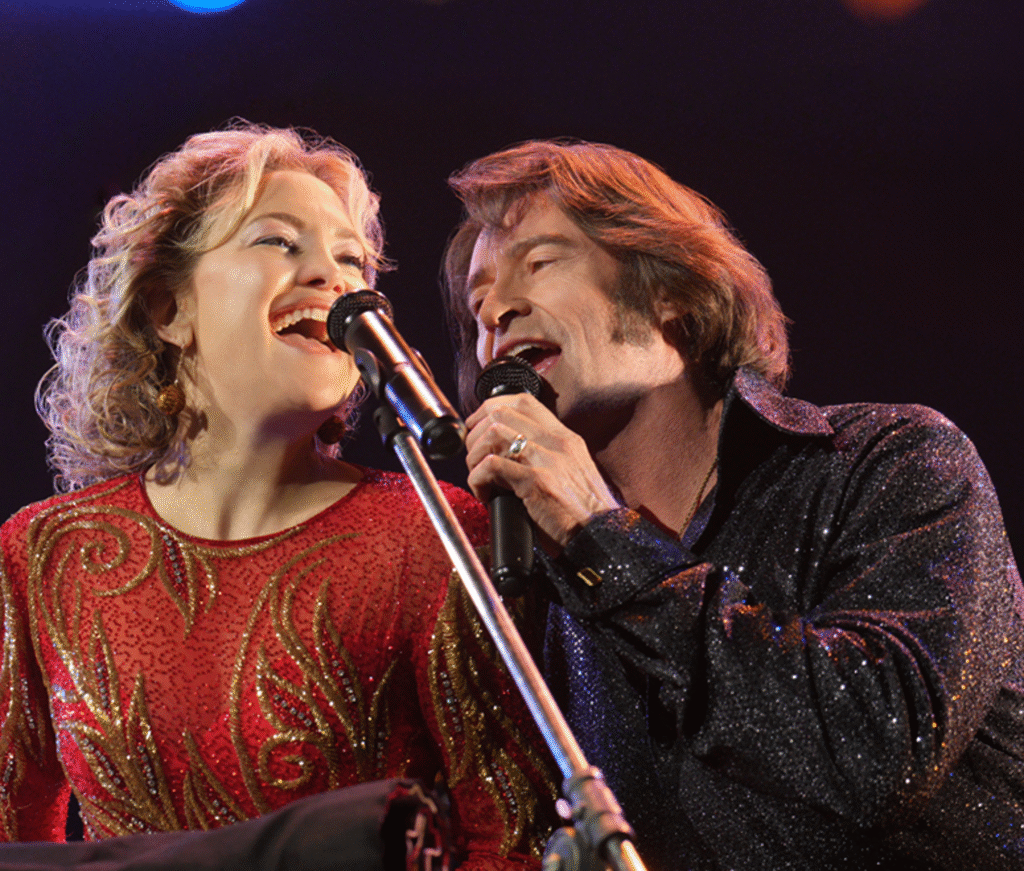
First there was Neil Diamond, one of the foremost singer-songwriters of the 1970s-90s. And then there was a Milwaukee couple billed as Lightning and Thunder who described their act not as a Neil Diamond tribute act, but a Neil Diamond experience. (“Experience” in this case meaning a fog machine and a leaf blower to blow back their hair.) Then there was a documentary named “Song Sung Blue” about Lightning and Thunder (real names, Mike and Claire Sardina, about the success of their act but also about their setbacks and challenges, about the music and about their love story. And now, like the infinite regression of the girl on the ketchup bottle we have two huge Hollywood stars, very slightly dimming their imperishable glamour to star in a feature film of the same name, and it is one of the most purely enjoyable films of the year, with heartfelt performances and joyous music.

Jackman plays Mike, a divorced Vietnam veteran in recovery from alcoholism who has a teenage daughter. He is passionate about performing (a character astutely observes that a recovering alcoholic will find something else to be addicted to and his is music), and he is very specific about what he wants to do. His stage name is Lightning.

He first sees Claire (Hudson), a divorced mother of a teenage daughter and a younger son, when she is performing in a curly black wig as Patsy Cline. Back at her house, they start singing together and it is instant magic. Their chemistry as performers and as a romantic couple shines from the screen. Soon they get married (at the Wisconsin State Fair) and blend their families. One particularly nice scene is when the two teenage girls get together and form their own instant connection over their family upheavals and some weed.

There are some setbacks along the way, including a mistake in booking that has them performing their first gig not, as they thought, for a motor home convention but for a motorcycle club gathering. But soon, with the help of friends, their crowd-pleasing appearances lead to an enthusiastic local following. Those friends include characters played by Jim Belushi, as the gentle, very sincere tour bus driver who signs on to book their gigs, Michael Imperioli as a devoted friend and Buddy Holly impersonator who is thirty years older than Holly ever got to be, and Fisher Stevens as a dentist so on board he gets Lightning a replacement tooth with a bolt of lightning on it. All three give endearingly open-hearted performances. Lightning and Thunder sing the Neil Diamond songs like they are brand new, with superb musicality. We can see that they are most alive when they are on stage.

“I just want to sing and be happy and feel loved!” Claire tells her daughter. “I will be Neil Diamond, but I’ll also be me,” Mike promises. “He’s…artistic,” says Mike’s daughter to Claire’s daughter, meaningfully. “Most alcoholics trade one addiction for another. Music is that for Dad.” Those comments, along with impeccable work by production designer Clay A. Griffith and costume designer Ernesto Martinez tell us what we need to know about Mike and Claire. But writer/director Craig Brewer is also telling us a deeper story about the healing power of performing music to lift the spirits, bring people together, create a sense of meaning and purpose, and just make us feel good.

Claire is badly injured in a freak accident. Mike has heart problems. But they love each other and the audiences love them. And then they get a call from Eddie Vedder, who wants them to open for Pearl Jam when they play at a huge music festival in Wisconsin. (A terrific performance by John Beckwith as a slightly laconic but enormously decent Vedder and be sure to check out the footage of that real-life performance.)

Thanks to Brewer, the movie never condescends to Mike, Claire, or their friends. It takes the same joy in their performances that their fans do. Jackson is excellent as Mike and Hudson is a revelation here, never better, with a perfect Wisconsin broad A, exquisite harmonies, and so much joy on stage we cannot help but bask in it. As Claire recovering from her injury, depressed and knocked out on painkillers, she is raw and heartbreakingly vulnerable. We know she cannot give up the music, and seeing her back on stage, reconnecting with the pure joy of the music and the audience, connects us with all of that and with the love story, too.

Parents should know that this film has strong language, a recovering alcoholic, a serious injury and painkillers, and a teen pregnancy.

Family discussion: What’s the best Neil Diamond song? Were you surprised that Eddie Vedder invited Mike and Claire to open for Pearl Jam? If you were in the audience, how would you have responded?

If you like this, try: The documentary of the same name and of course the music of Neil Diamond

Related Tags:


Based on a true story Biography Drama movie review Movies -- format Movies -- Reviews Musical
Blue Moon

Blue Moon

Posted on October 21, 2025 at 5:24 pm

A-
Lowest Recommended Age: High School
MPAA Rating: Rated R for language and sexual references
Profanity: Very strong and explicit language
Alcohol/ Drugs: Drinking, smoking, alcoholism
Violence/ Scariness: Reference to sad death and wartime trauma
Diversity Issues: References to homophobia
Date Released to Theaters: October 24, 2025

Lorenz Hart, called Larry by most people, was one of the greatest lyricists of all time. He and Richard Rodgers created songs of ineffable wit and pure poetry, mingling melancholy with romanticism, songs like “My Funny Valentine” (“Your looks are laughable/unphotographable/but you’re my favorite work of art”), “Bewitched, Bothered, and Bewildered” (“I’m wild again, beguiled again/A simpering, whimpering child again/Bewitched, bothered and bewildered – am I”), and the song that gives this movie its title, “Blue Moon” (“And then there suddenly appeared before me/The only one my arms will hold/I heard somebody whisper, “Please adore me”/And when I looked, the moon had turned to gold”).

Copyright 2025 Sony Pictures Classics

This movie takes place on one night, almost entirely in one place, Broadway’s favorite bar and restaurant, the now-century-old Sardi’s. It is 1943, and it is a night that will change American theater and the fortunes of Rodgers and Hart forever. Unfortunately the fortunes of the two men will change in opposite directions. It is the opening night of “Oklahoma!” (with an exclamation point in the title), which moved Broadway musicals from fanciful light entertainment with forgettable plots and dancing chorus girls doing taps and kicks to stories about American archetypes, choreographed by Agnes de Mille, who made the dance help define the story and characters, and with songs by Rodgers and his new partner, Oscar Hammerstein, that moved the story forward.

Hart (played by Ethan Hawke, with a comb-over and some movie magic to make him appear to be under five feet tall), sees the opening number of the show and knows immediately that it will be a huge hit, that it is corny and superficial, that he could never produce anything like it, and that his partnership with Rodgers is doomed. So he leaves the play and goes to the bar, where he talks to a sympathetic bartender (Bobby Cannavale) and a GI on leave, playing the piano (Jonah Lees).

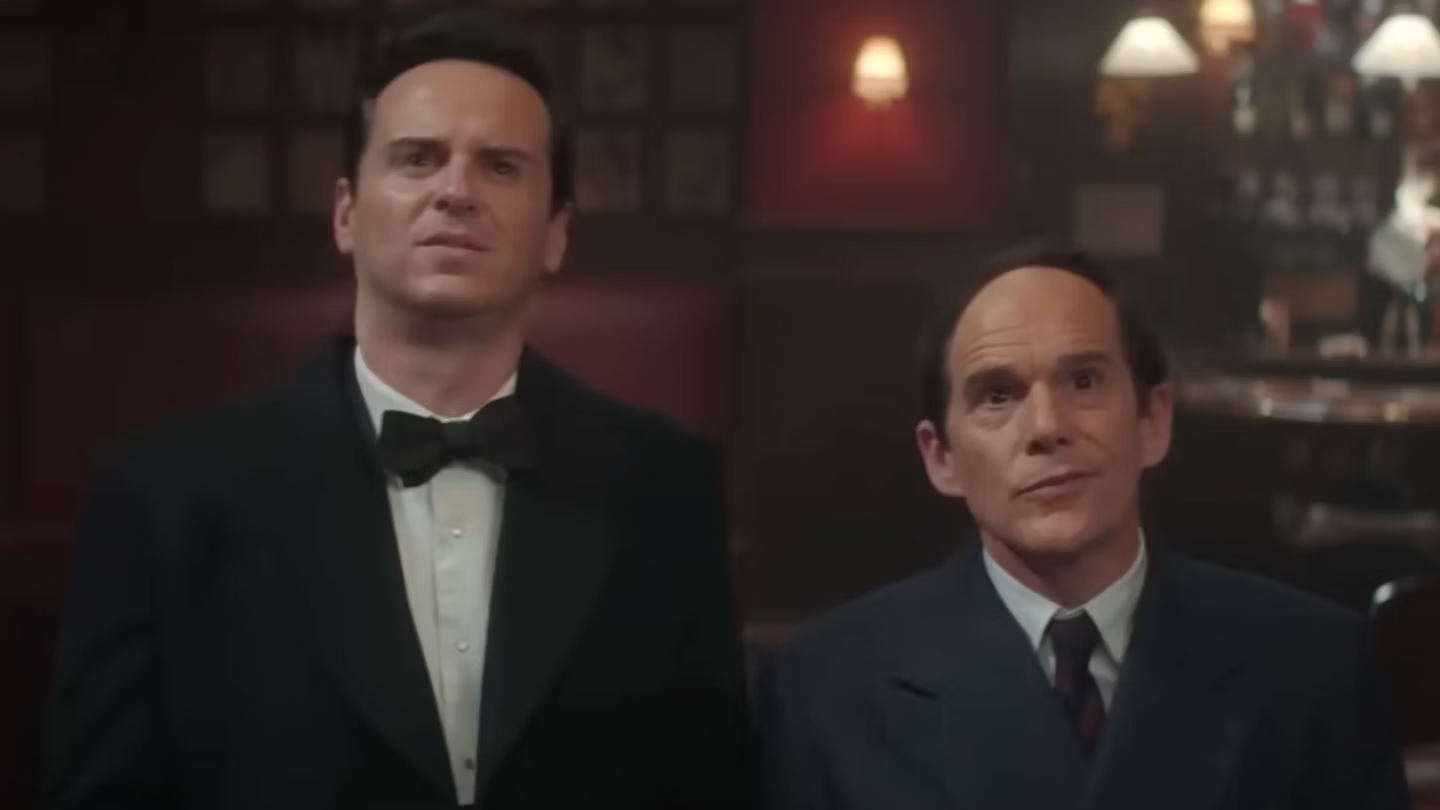
One of the most heartbreaking and beautifully written scenes of the year has Rodgers (Andrew Scott) and Hart talking about the possibility of working together again. They argue about the purpose and meaning of what they do. Hart wants to send a message. Rodgers wants to make people happy and be successful. Rodgers wants to meet at 9 and work on a schedule. Hart wants to struggle for inspiration. It is agonizing to watch as it is for the characters because they have obvious respect and admiration and gratitude for one another, and because they are both right, both wrong, and incapable of finding a way to reach one another. Another brilliantly conceived scene has two of the mid-century’s most gifted writers talking to each other, Hart and E.B. White (Patrick Kennedy). The dialog is gorgeously written, a conversation between two men who know what it is to appreciate language of precision and beauty.

The movie is about Hart’s fatal combination of sense of superiority and self-loathing. We sometimes see that conflict in his lyrics, as in “The Lady is a Tramp.” He is charming and seductive but he is also smart enough to deliver devastating barbs. Hart is anguished by longing for the impossible, here personified by a 20-year-old college girl named Elizabeth (Margaret Qualley).

He wants desperately to be loved. He quotes the line from “Casablanca,” “Nobody ever loved me that much.” But he is so terrified of the risks of intimacy that he is compelled to pursue the unobtainable or push away anyone who might get too close, to make sure he never gets another “I love you, but not that way” response. Elizabeth wants to use him to meet Rodgers, but she really does care for him. Unfortunately, what she loves about him is his endless, hungry interest in what she says, things, and does, which she is young enough to mistake for affection instead of manipulation and a twisted sense of himself as the participant in her stories rather than the one who hears them after the fact.

Elizabeth is based on a real-life character whose correspondence with Hart was part of the basis of the film. But the big scene between them is a disappointment, too long, too redundant. The brief appearances by not-yet-famous visitors to the opening night party whose names might be more recognizable today could be of interest to those immersed in theater history, but it becomes stunt-ish and distracting. That is just because the rest of it is so good we want to get back to what it does

Director Richard Linklater and screenwriter Robert Kaplow last worked together on the under-appreciated “Me and Orson Welles,” another story about a complicated creator of ambitious art. And Linklater has a second film coming out this year, “Nouvelle Vague,” about another complicated creator of ambitious art, Jean-Luc Goddard as he made his first film, “Breathless.”

In the film, Hart explains that he fell in love with intricate internal rhymes when he heard George M. Cohan’s “Over There.” Kaplow’s script is itself lyrical, a beautiful meditation one life, art, loss, and longing, and this film shows us that Hart is himself something of an intricate internal rhyme, complex, unexpected, and sometimes hard for others to understand.

Parents should know that this movie includes drinking and alcoholism, smoking, strong language, and explicit sexual references.

Family discussion: Why was it hard for Rodgers and Hart to understand each other and compromise? What do we learn from Hart’s conversation with E.B. White?

If you like this, try: Listening to Ella Fitzgerald singing the Rodgers and Hart songbook, and if you don’t mind its utter historical inaccuracy and just want to enjoy performances of classic Rodgers and Hart songs by Judy Garland, Lena Horne, Betty Garrett, and Mickey Rooney, watch “Words and Music”

Related Tags:


Based on a true story Biography movie review Movies -- format Movies -- Reviews
A Complete Unknown

A Complete Unknown

Posted on December 25, 2024 at 9:00 am

B +
Lowest Recommended Age: High School
MPAA Rating: Rated R for language
Profanity: Strong language
Alcohol/ Drugs: Drinking, smoking, and marijuana
Violence/ Scariness: References to war, some scuffles
Diversity Issues: None
Date Released to Theaters: December 13, 2024
Copyright 2024 Searchlight

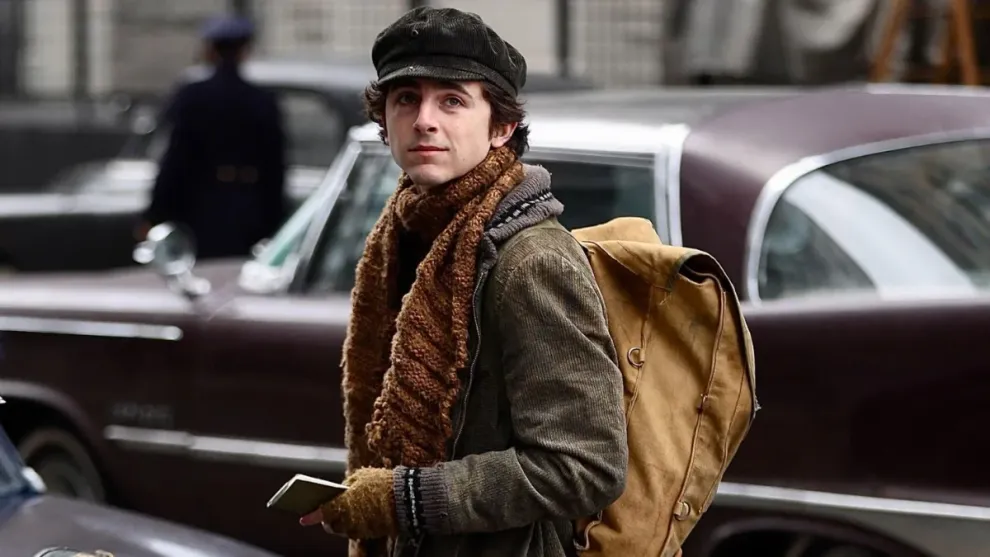
“A Complete Unknown” is the story of Bob Dylan’s early years in New York, based on Elijah Wald’s book Dylan Goes Electric!: Newport, Seeger, Dylan, and the Night That Split the Sixties. It begins with Dylan’s first stop after he arrives from Minnesota, a visit to see Woody Guthrie (Scoot McNairy), who was paralyzed and unable to speak, with Huntington’s disease. Guthrie has another visitor, Pete Seeger (Edward Norton, capturing Seeger’s nerdy, generous, gentle optimism). Dylan (Timothée Chalamet) takes out his guitar to play a song he wrote in tribute to Guthrie. The two folk singers are impressed. We then follow the 21-year-old singer/songwriter as he creates some of the century’s most groundbreaking and influential music while mistreating most of the people around him, until he creates a near-riot at the Newport Folk Festival by plugging in his guitar and “going electric.”

Biographical films, especially those about musicians, tend to have the same format, as so devastatingly destroyed in the parody “Walk Hard.” There’s the precocity and one or two formative childhood experiences, then the moment someone on the board in the recording studio says, “Hey, wait, this kid can play/sing!” Success, setback, moments of inspiration, fights with managers/bandmates/romantic partners, often a descent into drugs and/or alcohol, various breakups, possibly a health crisis, and then either an early death or some kind of rebound.

Wisely, this film, from director James Mangold, who co-wrote the screenplay with Jay Cocks, avoids most of the cliches, and makes no kind of effort to understand or reveal the inner workings of the famously inscrutable Dylan. The title of the film, of course taken from the lyrics of “Like a Rolling Stone,” applies to its subject. It is not that the movie tries and fails to help us understand Bob Dylan; on the contrary, it recognizes that Dylan defies that kind of simplification. And that he doesn’t need it and we should not attempt it. Anything we need to know is in the songs.

And so, this movie does give us the songs, full performances with Chalamet’s singing close enough to Dylan’s voice in the 60s, and perhaps with just a bit more lyrical clarity and tunefulness. The movie thus seems like one brilliant song after another, with interludes of Dylan being a terrible boyfriend. For the fans of Dylan the icon as well as Dylan the musician, there are several well-known highlights of his biography, like encounters with other future luminaries. Joan Baez is played with verve and a sweet, clear singing voice by Monica Barbaro, but with no sense of the complexity and conflicts portrayed in the recent documentary . The most amusing is Boyd Holbrook as a young Johnny Cash, who exchanges supportive letters with Dylan and, when they finally meet at Newport, encourages him to “muddy the carpet,” and stir up some trouble. Elle Fanning plays Sylvie, a character based on Suze Rotolo, the young woman pictured holding Dylan’s arm on the cover of his Freewheelin’ Bob Dylan record. She is credited with exposing Dylan to social activism. She tells him songs should be about more than Johnny Appleseed and the Dust Bowl, but Fanning’s scenes are mostly about being disappointed at what a bad boyfriend Dylan is.

At first, Dylan says all he wants is to be a musician and eat. But then he gets successful. He feels oppressed and under pressure. The fans want him to stay the same. He wants to try new ideas. More than that, he does not want to be told what not to do. He gets more reserved, more internal. but his hair keeps getting fuzzier.

The best scene in the movie is when Pete Seeger is hosting his low-key public access television show. He thought Dylan, by then very famous and very busy, was not going to show up. He invited a back-up guest, a Black folk musician. Dylan does show up. Another performer might have apologized and taken over or just rescheduled and allowed the substitute musician to play. But Dylan lights up at the prospect of jamming with him. He starts to play. Seeger joins in. It is the most illuminating, touching, and engaging moment in the movie.

Parents should know that this film includes some strong language, drinking, constant smoking, and marijuana. There are some unhappy confrontations and references to wartime violence.

Family discussion: Was Dylan right about what people wanted to hear when they asked where the songs come from? Which song means the most to you and why? Was he wrong to play electric music at a folk festival? Why did he do it?

If you like this, try: the classic documentary about Bob Dylan during these years, “Don’t Look Back” and a later documentary, Bob Dylan–The Never-Ending Narrative

Related Tags:


Based on a book Based on a true story Biography movie review Movies -- format Movies -- Reviews Musical
Widow Clicquot

Widow Clicquot

Posted on July 18, 2024 at 5:48 pm

B
Lowest Recommended Age: High School
MPAA Rating: Rated R for strong bloody violence, language, sexual content, nudity, and some drug use
Profanity: Strong language
Alcohol/ Drugs: Drinking, drugs
Violence/ Scariness: Very sad death, reference to war
Diversity Issues: A theme of the movie
Date Released to Theaters: July 19, 2024

I never knew that the legendary Veuve Cliquot champagne was named for the woman who created it in the late 18th century. Veuve means widow.

Copyright WME 2024

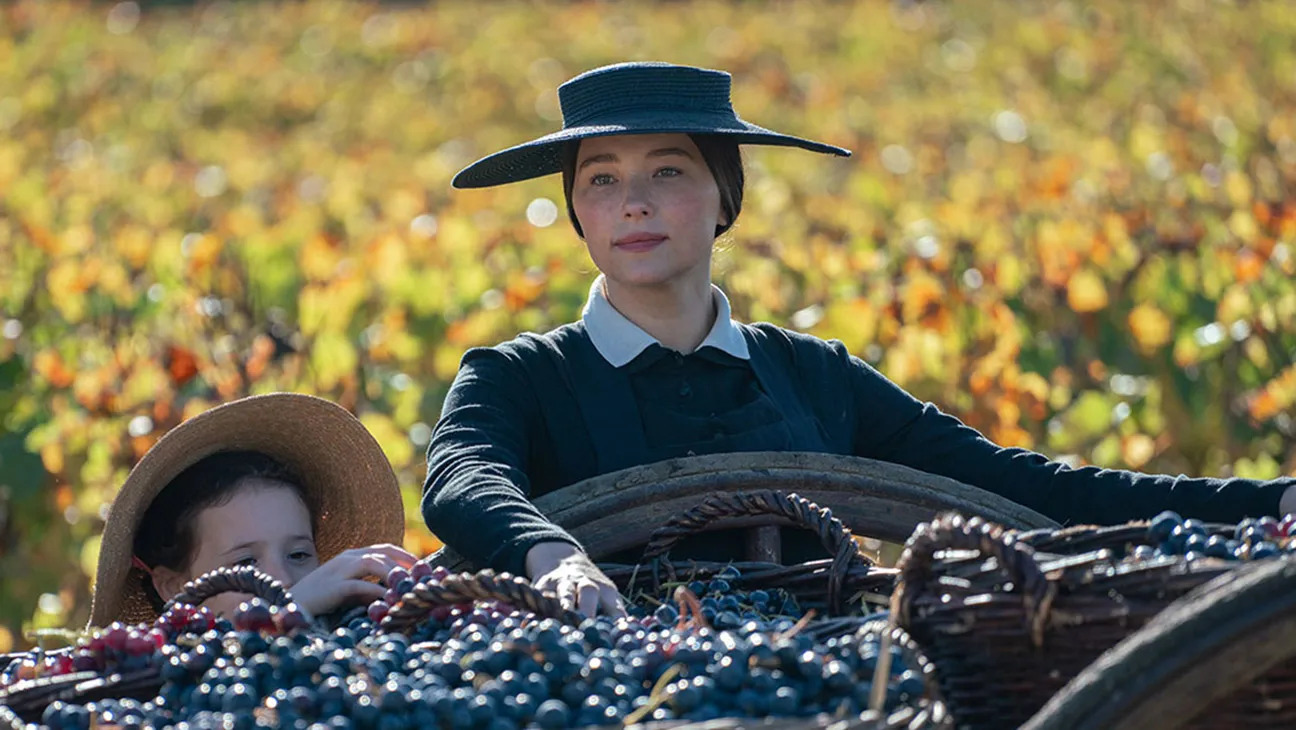
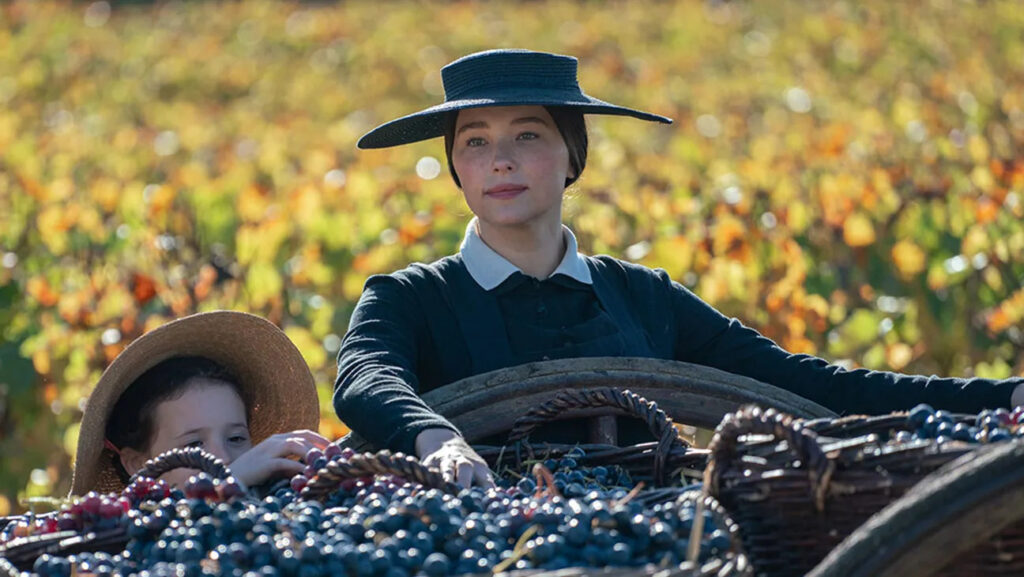
Haley Bennett, who also produced, plays Barbe-Nicole Ponsardin Clicquot, devastated by the death of the husband she adored when she was still in her 20s. In flashbacks (too many) throughout the film, we see that her relationship with Francois (Tom Sturridge) was deep, intimate, and meaningful. They were both committed to full partnership in the family wine business and he had complete faith in her judgment and taste. That is why, almost unheard of in that era, he made it clear in his will that he was leaving her the vineyards and the business. Throughout the film, she faces one crisis after another as her father-in-law, Philippe (Ben Miles), tries to seize control of the company, her less hierarchical and more inclusive relationship with her workers is challenged, and production and logistics problems make it impossible for her to sell her wine. She gets support (and more) from a man who was her husband’s close friend (perhaps more) and the sales and distribution partner of the business, (Sam Riley).

Trailer for Widow Clicquot

Cinematographer Caroline Champetier, production designer Stéphane Sartorius and the sound team have created an immersive world that makes us feel like we’re inside a Napoleonic era oil painting. The creaking floorboards, high ceilings, and flickering candlelight are in sharp contrast to the natural world of the vineyard, where Barbe-Nicole is happiest and most at home. Bennett has a quiet, almost serene, quality but seems to glow from within. Her scenes with Sturridge in the blissful early days and then as he became more unstable (there is an implication that he may have committed suicide) and when she makes the decision to send their daughter away to protect her from her father’s deterioration, are subtle but effective, as is Barbe-Nicole’s passion for the vineyard and for making the most delicious champagne ever created. As she talks about the flavors and the size of the bubbles, as she talks about evading Napoleon’s restrictions on international sales, she is quiet, but sure. A defining moment is when she explains that she wants to rotate the crops because the vines need to struggle. That moment and her literal final word tell us that one of the world’s most delicate and cherished drinks is the result of struggle, one that all who embraced considered worth it.

Parents should know that this film includes a mental breakdown and a possible (offscreen) suicide, grief, some sexual situations with nudity, and the misogyny of the era.

Family discussion: Why was Madame Clicquot so confident and determined? What was unusual about the way she treated her employees? Was she right to try to evade the trade restrictions?

If you like this, try: The book by Tilar J. Mazzeo, and Bennett’s film, “Cyrano.” And, if you’re old enough, try some champagne.

Related Tags:


Based on a book Based on a true story Biography Drama Epic/Historical movie review Movies -- format Movies -- Reviews
THE MOVIE MOM® is a registered trademark of Nell Minow. Use of the mark without express consent from Nell Minow constitutes trademark infringement and unfair competition in violation of federal and state laws. All material © Nell Minow 1995-2026, all rights reserved, and no use or republication is permitted without explicit permission. This site hosts Nell Minow’s Movie Mom® archive, with material that originally appeared on Yahoo! Movies, Beliefnet, and other sources. Much of her new material can be found at Rogerebert.com, Huffington Post, and WheretoWatch. Her books include The Movie Mom’s Guide to Family Movies and 101 Must-See Movie Moments, and she can be heard each week on radio stations across the country.

Website Designed by Max LaZebnik