Copyright 2021 Focus
The 2021 WAFCA AWARD NOMINEES ARE:
Best Film:
Belfast
The Green Knight
The Power of the Dog
tick, tick…BOOM!
West Side Story
Best Director:
Kenneth Branagh (Belfast)
Jane Campion (The Power of the Dog)
David Lowery (The Green Knight)
Steven Spielberg (West Side Story)
Denis Villeneuve (Dune)
Best Actor:
Nicolas Cage (Pig)
Benedict Cumberbatch (The Power of the Dog)
Andrew Garfield (tick, tick…BOOM!)
Will Smith (King Richard)
Denzel Washington (The Tragedy of Macbeth)
Best Actress:
Olivia Colman (The Lost Daughter)
Nicole Kidman (Being the Ricardos)
Lady Gaga (House of Gucci)
Kristen Stewart (Spencer)
Tessa Thompson (Passing)
Best Supporting Actor:
Jamie Dornan (Belfast)
Ciarán Hinds (Belfast)
Troy Kotsur (CODA)
Jesse Plemons (The Power of the Dog)
Kodi Smit-McPhee (The Power of the Dog)
Best Supporting Actress:
Caitríona Balfe (Belfast)
Ariana DeBose (West Side Story)
Ann Dowd (Mass)
Kirsten Dunst (The Power of the Dog)
Aunjanue Ellis (King Richard)
Best Acting Ensemble:
Belfast
The French Dispatch
The Harder They Fall
Mass
The Power of the Dog
Best Youth Performance:
Jude Hill (Belfast)
Emilia Jones (CODA)
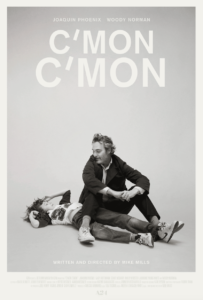
Woody Norman (C’mon, C’mon)
Saniyya Sidney (King Richard)
Rachel Zegler (West Side Story)
Best Voice Performance:
Awkwafina (Raya and the Last Dragon)
Stephanie Beatriz (Encanto)
Abbi Jacobson (The Mitchells vs. the Machines)
Kelly Marie Tran (Raya and the Last Dragon)
Jacob Tremblay (Luca)
Best Original Screenplay:
Kenneth Branagh (Belfast)
Mike Mills (C’mon, C’mon)
Zach Baylin (King Richard)
Paul Thomas Anderson (Licorice Pizza)
Fran Kranz (Mass)
Best Adapted Screenplay:
Siân Heder (CODA)
Jon Spaihts and Denis Villeneuve and Eric Roth; Based on the novel ‘Dune’ written by Frank Herbert (Dune)
Jane Campion (The Power of the Dog)
Steven Levenson (tick, tick…BOOM!)
Tony Kushner (West Side Story)
Best Animated Feature:
Encanto
Flee
Luca
The Mitchells vs. the Machines
Raya and the Last Dragon
Best Documentary:
The First Wave
Flee
The Rescue
Summer of Soul (…Or, When the Revolution Could Not Be Televised)
Val
Best International/
Foreign Language Film:
Drive My Car
A Hero
Lamb
Titane
The Worst Person in the World
Best Production Design:
Jim Clay, Production Designer; Claire Nia Richards, Set Decorator (Belfast)
Patrice Vermette, Production Designer; Richard Roberts and Zsuzsanna Sipos, Set Decorators (Dune)
Adam Stockhausen, Production Designer; Rena DeAngelo, Set Decorator (The French Dispatch)
Tamara Deverell, Production Designer; Shane Vieau, Set Decorator (Nightmare Alley)
Adam Stockhausen, Production Designer; Rena DeAngelo, Set Decorator (West Side Story)
Best Cinematography:
Haris Zambarloukos, BSC, GSC (Belfast)
Greig Fraser, ASC, ACS (Dune)
Andrew Droz Palermo (The Green Knight)
Ari Wegner, ACS (The Power of the Dog)
Bruno Delbonnel, ASC, AFC (The Tragedy of Macbeth)
Best Editing:
Úna Ní Dhonghaíle, ACE, BFE (Belfast)
Joe Walker, ACE (Dune)
Andrew Weisblum, ACE (The French Dispatch)
Peter Sciberras (The Power of the Dog)
Myron Kerstein, ACE; Andrew Weisblum, ACE (tick, tick…BOOM!)
Best Original Score:
Bryce Dessner & Aaron Dessner (Cyrano)
Hans Zimmer (Dune)
Alexandre Desplat (The French Dispatch)
Jonny Greenwood (The Power of the Dog)
Jonny Greenwood (Spencer)
Copyright 2021 Netflix“Was Santa ever a little boy?” This question from his young son inspired author Matt Haig to create an origin story for Santa Claus with A Boy Called Christmas, now an enchanting, star-filled movie on Netflix. In an interview, director Gil Kenan and young actor Henry Lawfull, who plays the title character, talked about creating the world of the story and what gives them hope.
Gil, there’s such a lushness to the soundtrack by Dario Marinelli. How did you talk to him about creating the score?
Gil Kenan: I’ve been a fan of Dario’s music for as long as I’ve been seeing his name associated with films. From “Atonement” to his work with Laika and “Kubo and the Two Strings.” And his work scoring the “Bumblebee” film, the Transformers film. He always brings such beautiful emotion, and musicality to his work.
It was a very natural process, actually. I reached out to him as a fan and I said I would love to have a conversation about a score. And he didn’t know much at the beginning of our conversations. But he read the script. And he came up to meet me in Prague, where we were based for pre-production. And we just had a wonderful conversation about the approach to making a classic film score that would allow us to let the character, the theme, and the adventure come together in a way that would lift all three up.
I loved our collaboration. He was so cool and inventive in the way that he approached the scoring. He brought in some classic Finnish instrumentation to the film that was such a joy for me to experience as a music lover. Some of the fiddle playing in the Resistance party in the film — the cues for the music played there is based on very old folk music from Scandinavia. The phrasing, the instrumentation, he just approaches it with so much passion and joy.
So for me, it was an absolute wonder seeing the music come together. And you get this wonderful experience when you’re in the scoring stage hearing the music start to play and come to life. All of a sudden the entire work of telling the story starts to lift up on its tiptoes. And you really feel that sense of life rushing through the story. I’m so glad you’re bringing it up. He deserves so much love and affection for the one that he’s done.
I also want to ask about the production design, which has such a rich sense of detail, just at the intersection of reality and fairy tale.
GK: The journey with Gary Williamson has been one of the great collaborations in my career. I’ve just so loved bringing the design of this world to life. Gary and I actually were the very beginning of this process. I came on to adapt, and then develop this, and Gary was my first hire. And he and I sat at a big table covered in white paper and drew out the entire film as a map. But it was more than a map, it was sort of a living illustration. And we kept growing it and elaborating, and when we came away from it, it looked like a future concept of what the film was going to be. And so it was an absolute joy. He pushed at every turn to build, and make things as real, and tangible as possible. And Henry will speak a little bit I’m sure to the performers side of that. But I will say as a storyteller, as a filmmaker to allow the camera to properly step into Elfhelm, to see the streets and all the buildings fully realized is an experience that you can’t replicate using digital tools. Even though they’re incredibly useful, and I love using them to show things that aren’t possible, there is a grounded quality to being able to have big real sets. That is something I’ll always push for. And Gary is a hero in my book.
Henry, let’s talk a little bit about the stuff that was real, and the stuff that was not real. How did you feel the first time that you walked into Elfhelm?
Henry Lawfull: It was incredible. I remember I first visited the set when it was in construction, and just saw basically the wooden framework of this crazy village as it was in construction, which is really cool. And then I remember going back maybe a month later and seeing it all painted. And like this magical incredible village. It was beautiful. And then obviously to work there, and to act with it just made you feel as if you were in that situation. And for me, it brought a lot to help me with my performance just to be surrounded by that real world and to feel the characters emotions seeing this crazy place. It was amazing for me, just to see what these people can do, to build some massive village out of wood just for a film.
So, what did you do to interact with the parts of the film that were not real, like the digital creatures?
HL: There were a lot of different methods we used for bringing the characters to life, especially Miika and Blitzen . And then obviously, the troll. It was all a great part of the experience. For example, the troll scene. I remember I spent a lot of time dangling from wires and doing stunt stuff as if I was being eaten by a troll, which was this massive, giant puppet that they’d built. So that was a lot of fun to do. And then the mouse for me was Gil. He did the voice of the mouse while we were filming. I never actually heard him as Stephen Merchant until we did the audio stuff in post-production, and it was so funny hearing his voice. Obviously, it’s a challenge just working with a puppet or a little wire with some green tape or a tennis ball or something rather than a real-life mouse. But they made everything around me, and this amazing cast, the costumes, the village made it all feel real. So although I might be speaking to a tennis ball at that certain point, everything else around me felt magical. And hopefully, you can see that.
GK: That’s good to hear. If I can just add to that having worked with performers of every age now in my career, I’ve learned that there’s never such a thing as giving too much input in the shooting of the film to help to fill in the empty spaces that will one day in the future become filled in. And so bringing in real puppeteers as part of our main unit of crew was indispensable in this process. They were so incredible at bringing to life the moments between the moments. And when Henry was in the snowy birch forest meeting Blitzen for the first time, we used three different techniques to bring Blitzen into life on the screen. But the one that for me brings the most emotion to the surface was a puppeteer shot where there was just unbelievable nuance in the movement of the two puppeteers working in tandem. And hopefully one day some of that behind the scenes gets released because you do see so much magic on the screen even with just these gray puppets interacting with Henry.
Copyright 2021 Netflix
You weren’t afraid to include some melancholy to keep the story from being too sugary. That was such a smart, brave choice.
GK: It was something that took me by surprise in Matt Higgs’ book the first time I read it. It made me realize that there was fantastic current in this story that could elevate the brighter moments, the joyous moments, the moments of hope. Because the truth is that those concepts, joy, whatever it is we think of as joy, whatever it is we think of as hope, all of those moments are only as bright as the darker moments that are around them. And so the truth is that for all of us, Christmas is a holiday that we come to with great expectation and nostalgia or emotional currents that remind us of moments from our childhood or families. But there is also weight to this time of year. And part of that is just calendar-based. The days are short, the nights are long, it’s cold out but also that in the great tradition of classic fairy tale storytelling there is an opportunity in a young person’s adventure to not hold back from the full scope of human emotion, and experience.
I remember as a young audience member watching films growing up, and the ones that felt like they actually connected with me were the ones that didn’t pander, that didn’t hold back from the full weight of human experience. And I remember thinking that as a very young kid in a darkened movie theater, thinking that the movies that showed me that life wasn’t all sugar, plum, and cakes were the ones that I respected because they respected me back as an audience. I believe as a storyteller that it’s my responsibility to try to respect the emotional intelligence of my audience no matter what their age is. So that was my approach.
The movie asks the question about what gives us hope. What gives you hope, both of you?
GK: Stories give me hope every time. Story and storytelling is where I find my inspiration. It’s where I refill and recharge. It’s a very difficult time for everyone right now. And what I find gives me purpose, and when I wake up in the morning helps me to focus on which direction I want to be pointed at, is thinking about what stories I’m going to be busying myself with. And it’s such an honor to be able to tell one that I hope will connect with audiences here.
HL: I think for me, seeing loved ones, friends, and family around me happy, and doing well, and succeeding is a massive inspiration. It makes me happy to see friends and family and loved ones happy. So I guess it could go both ways where I try and stay hopeful and optimistic and happy. And that gets me through some of the worst times, seeing loved ones happy. It goes both ways.
Rated R for language, graphic nudity, and some sexual references
Profanity:
Strong language
Nudity/ Sex:
None
Alcohol/ Drugs:
None
Violence/ Scariness:
Family stress, sad offscreen death, mental illness of a parent
Diversity Issues:
None
Date Released to Theaters:
November 19, 2021
Date Released to DVD:
April 11, 2022
Copyright A24 2021I can’t remember a movie that captured as well as Mike Mills’ “C’mon C’mon” the intense, constant feelings of terror, inadequacy, panic, exhaustion, that is parenthood, plus the tsunami of love and gratitude and hope and hilarity. He even captures the heartbreaking sorrow in understanding that childhood is fleeting and no matter what you do you cannot protect them from the injustices of the world. This is one of the best films of the year.
Writer/director Mills based his previous films on his parents. Christopher Plummer won an Oscar for his role in “Beginners,” based on Mills’ father, who came out as gay late in life. Annette Bening’s role in “20th Century Women” was based on Mills’ mother. In both films, there were son characters based on Mills himself. “C’mon C’mon,” filmed in gorgeous black and white and even more gorgeous, capacious humanity, was inspired by Mills’ experience of being a father.
Joaquin Phoenix plays Johnny, a “This American Life”-ish radio producer who is traveling around the country interviewing kids and teenagers about their thoughts on their lives, what superpower they’d like to have, and what the future holds (the interviews in the film are unscripted, real responses from students). His sister Viv (Gaby Hoffman), from whom he has been a bit estranged since the death of their mother, needs him to care for her nine-year-old son, Jesse (Woody Norman), as she deals with a family emergency. Her ex-husband Paul (Scoot McNairy) is bi-polar and is having a breakdown. And so Johnny, something of a loner who is most comfortable talking to others in the formalized — and one-sided — setting of an interview,” unexpectedly becomes the sole guardian of a nine-year-old for a period that keeps getting extended.
Johny and Viv are constantly on the phone as he needs advice or she needs reassurance that Jesse is okay. Johnny tells her, with mock mansplaining, “You know, as a mother, you’re not gonna understand this, but working all day and taking care of a kid is just a lot.”
There are so many movies that could be made about this set-up, and I think we’ve seen most of them, from cheesy slapstick to cheesy sentimental. Mills has something far more subtle, meaningful, and insightful in mind. Phoenix, known for showboaty roles like his Oscar-winning Joker, gives a career-best performance here as Johnny, and Norman is a wonder as Jesse, making it impossible to believe he can be acting because his performance is unaffected, pure, and in the moment. It is astonishing to learn that not only is he not Jesse from California; he is not even American. He is British and lives in London. His chemistry with Phoenix is so natural we do not just feel they’ve known each other forever; we feel we’ve known them both forever. They are our family; they are us.
Jesse, too, separates himself from the world by processing it through Johnny’s microphone. And, as children do, he processes the unthinkably sad and scary abandonments of his mentally ill father and devoted but conflicted mother through play and sometimes through acting out. Jesse pretends he is an orphan. Johnny looks away for a second and Jesse disappears. They laugh. They get angry. They make mistakes and they apologize. And Johnny begins to understand that you cannot be right all the time with a child and the best you can do is to be completely present, completely open. In its way, that is what the best movies do, and this is one of them.
Parents should know that this film includes very strong language, a sad offscreen death, and mental illness of a parent.
Family discussion: What mistakes did Johnny and Jesse make? What did they learn from them?
If you like this, try: “Beginners,” “Where the Wild Things Are,” and “20th Century Women”
Rated PG for some thematic elements and mild peril
Profanity:
None
Nudity/ Sex:
None
Alcohol/ Drugs:
None
Violence/ Scariness:
Some peril and family conflict
Diversity Issues:
None
Date Released to Theaters:
November 24, 2021
Date Released to DVD:
February 7, 2022
Copyright Disney 2021We all feel that way at times. It seems like everyone has something special except for us. “Encanto,” the new animated film from Disney captures that imposter phenomenon with a story set in Columbia about a girl who is the only one in her family with no magical powers. It is colorful and exciting and funny and warm-hearted and, something harder to find, it is also wise.
As we learn in one of Lin-Manuel Miranda’s bright, energetic songs early in the film, Mirabel (sweetly voiced by Stephanie Beatriz) loves her family and is very proud that her mother has healing powers and her aunt has superstrength. Other family members can understand animals, predict the future, or shape-shift. Mirabel’s sister’s superpower just seems to be perfection.
The Madrigal family has a rich, storied history. When her grandparents were young, they fled their home. Her grandfather was killed by the people they were trying to escape. But her grandmother, clutching her baby, was blessed with the powers to help her community survive. A generation later, the family is the center of that now-settled community, living in a home with its own magical powers and personality. That house, communicating with flipping floor tiles and steps that slip into slides and creating dazzling new rooms to recognize each family member’s powers, is one of the movie’s highlights.
The family has a ceremony when each member receives his or her magical powers. But for some reason, Mirabel’s never arrived. She even wears glasses (the first Disney lead character to do so) to show just how ordinary and relatable she is.
Unexpectedly, the magic the family has counted on and taken pride in — and taken for granted — seems to begin to be dissolving. And that is when the girl who does not think she is special begins to understand that she, and only she, has the qualities the family needs to keep them together.
That means adventure. It also means learning some lessons about how even the most loving, high-performing, and functional families have to deal with secrets and sometimes painful and scary truths. This insight is gently but thoughtfully explored, understanding that sometimes it is especially difficult to be honest with happy families for fear of letting the others down. But when family policy is “We don’t talk about Bruno,” it is time for someone to ask why. And when we do not leave room for family members to be less than perfect, it is time to tell them it is okay if they make mistakes and in fact if they don’t, it’s a good idea to tell them to make some. Families will enjoy “Encanto” but what may be more meaningful are the conversations we have afterward.
NOTE: Before the film there is an animated short called “Far from the Tree,” a gorgeously animated story about animal mothers and the curious babies they try to keep safe.
Parents should know that this movie includes some fantasy peril and some difficult family struggles.
Family discussion: Which magical power would you like to have? Why did one family member hide? How do you honor a miracle?
If you like this, try: “Brave,” “Raya and the Last Dragon,” and “Moana”
Copyright MGM 2021Remember the 80’s television series “Dynasty?” Combine that with the current HBO series “Succession” plus “The Godfather” and you have “House of Gucci,” the bananas real story of betrayal, ruthlessness, power, money, fashion, more money, and murder.
Lady Gaga gives everything she has to the role of Patrizia Reggiani, the ambitious woman who married into one of the wealthiest families in Europe, the people behind one of the top luxury and style brands in the world. We first see her working for her father’s trucking company when a friend invites her to be his date to an elegant costume ball. There she meets the shy, slightly awkward Maurizio Gucci (Adam Driver), a law student and the son of Rodolfo Gucci (Jeremy Irons), who runs the company with his brother Aldo (Al Pacino).
Patrizia perks up when she hears Mauritzio’s last name and becomes very flirtatious. He tells her she looks like Elizabeth Taylor, and she purrs back, “I’m more fun than Elizabeth Taylor.” When he does not call her after the party, she tracks him down, pretending it is just a coincidence that they have run into each other at a book store, though she admits she does not read.
Like all wealthy people, Rodolfo and Aldo are very concerned with maintaining the family fortunes. As Aldo ruefully admits to his brother, while each of them has a son, Rodolfo is proud of his but Aldo thinks his son Paolo (an unrecognizable Jared Leto) is an idiot. You can think of Paulo as this movie’s Fredo, especially when you see him with Pacino. Rodolfo, though, does not approve of Maurizio’s relationship with Patrizia because she is lower-class (she can’t tell Klimt from Picasso!) and, he correctly suspects, she is after the money. Maurizio defies his father and marries Patrizia. Cut off from the family fortune, he goes to work for Patriza’s father, and we see him happily wearing overalls and power-hosing trucks with the other employees.
But this simple, happy life does not last.
Rodolfo dies, as we know he will because he coughed in his first scene. By then, Patrizia has insinuated herself with Aldo, which helps Maurizio get back in the company. She may also have contributed her skills at forging signatures.
Family business can be an oxymoron. The more business there is, the harder it is on the family. The more family there is, the harder it is on the business. That’s where it all turns into a high-gloss, ultra-glam soap opera, not that there’s anything wrong with that. The various schemes are not always clear and, as noted widely in social media, the accents are inconsistent and sometimes distracting. In fairness to Lady Gaga, she is doing something very specific with hers, code switching to sound more upper class — or try to — in some circumstances. And, this will surprise no one, she is never less than fascinating to watch. Driver, always impressive, gives one of his best performances ever as Maurizio, from his shy, awkward meeting with Patrizia to his more confident, more authoritative time as head of the company. Even with all of the plotting and betrayal, though, we do not get much insight into the characters inside those clothes and mansions. The glamor and the family drama provide the icing and it is yummy enough you might not notice that there isn’t much cake holding it up.
Parents should know that this movie includes extensive material inappropriate for young viewers: sexual references and situations, very strong language, family confrontations and betrayals, and murder-for-hire.
Family discussion: Did Patrizia ever love Maurizio? What are the biggest problems for families who are also in business together?
If you like this, try: the Sara Gay Forden book that inspired the film and television series like “Succession” and “Billions”